Maximalist Accessories Trends Taking Over This Fall
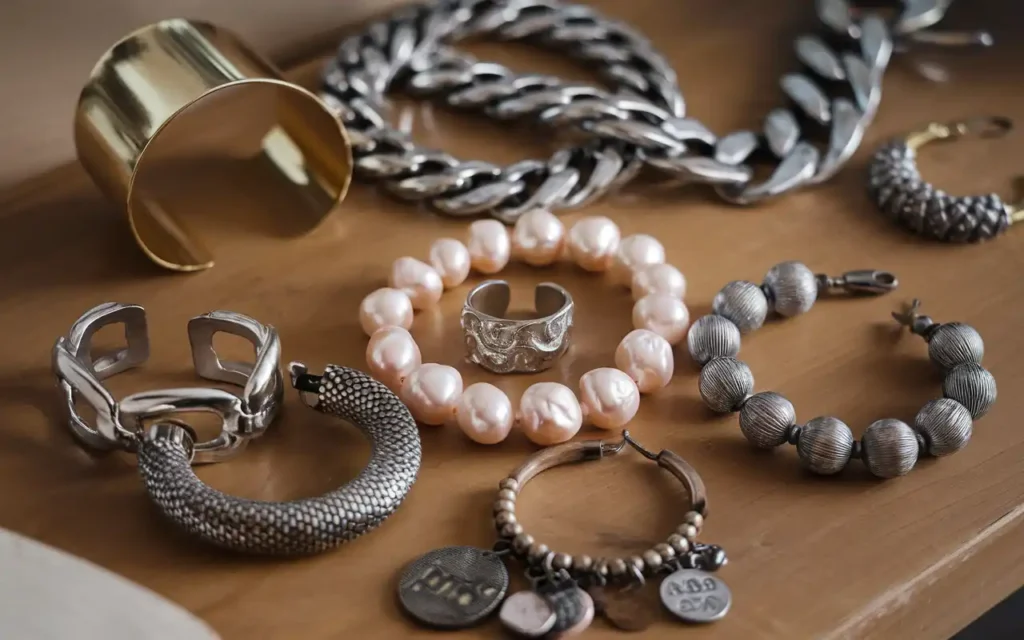
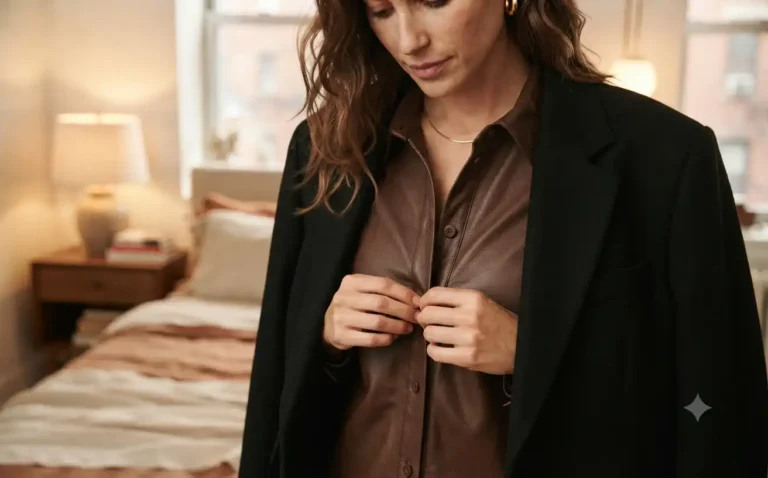
Fall closets get quiet fast. Brown coats, gray knits, black boots, and suddenly every outfit looks like the last one. Maximalist accessories fix that without a single new sweater. This season leans heavier and bolder, wide gold chains, seven bangles on one wrist, baroque pearls worn with a sweatshirt. The trick is knowing where to stop, since one extra piece turns a considered look into a cluttered one. Below you’ll find 20 trends worth trying, the fit and quality details nobody mentions, and honest prices so you can start with what actually works.
1. Chunky Gold Chains Are Back and Bigger This Fall
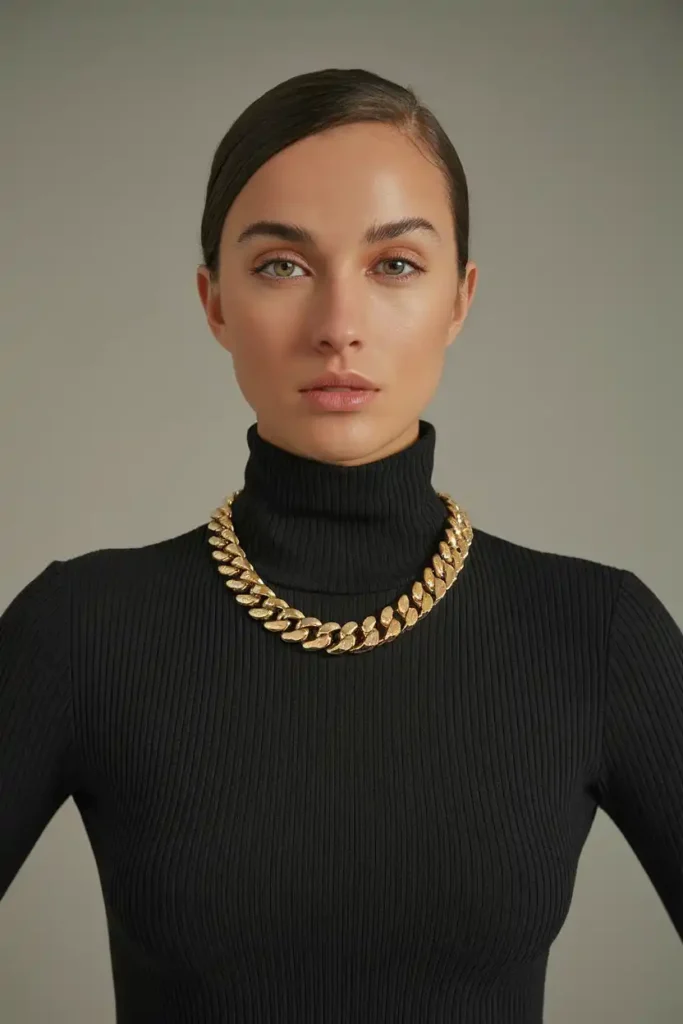
The wide link chain is doing the heavy lifting this season, and the shift is toward fewer pieces at a larger scale. A chunky gold necklace on a plain turtleneck reads as intentional. Three thin chains on the same neckline read as forgotten. If your jewelry keeps disappearing into your sweaters, that’s a scale problem, not a taste problem. Look for links at least 8mm wide and a chain that holds its shape when you lay it flat.
Weight matters more than karat here. A hollow chain flips and twists all day, which is why your necklaces always end up crooked by lunch. Solid or semi-solid brass with heavy gold plating sits still. Test it in the store by draping it over two fingers and seeing if it kinks. Start with one 16 to 18 inch curb or figaro chain in the $25 to $60 range before you spend more, since that length works on both crewnecks and open collars.
2. How to Layer Necklaces Without the Tangling Mess
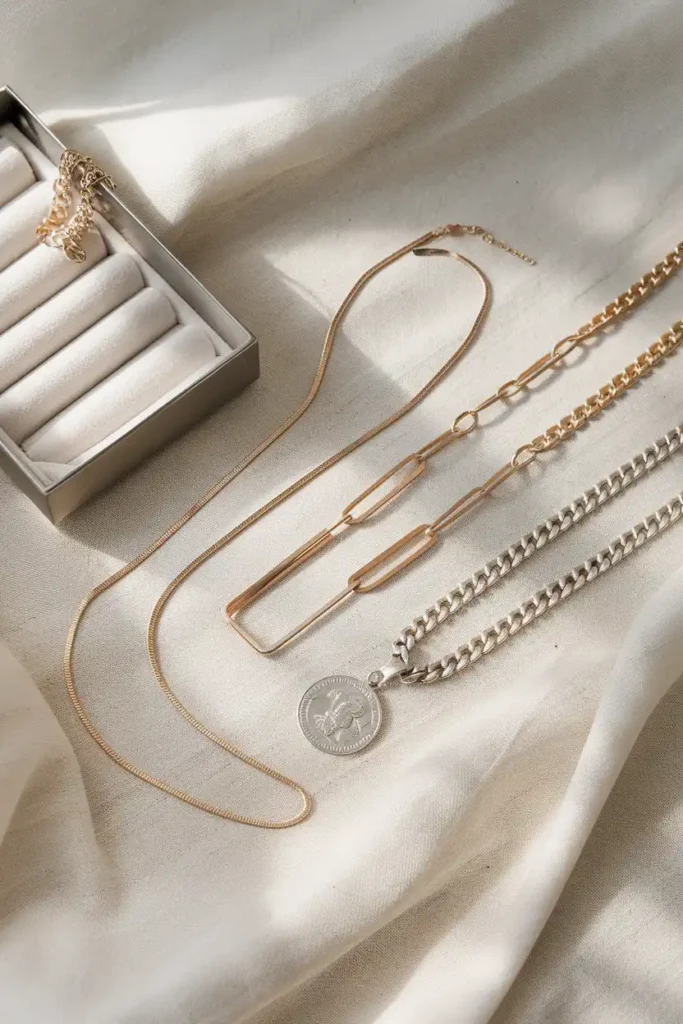
The jewelry layering aesthetic falls apart when every chain sits within an inch of the others. Give yourself a real gap. Two inches minimum between each piece, three if one of them carries a pendant. That single change fixes most of the tangling people blame on the necklaces themselves.
Here’s the stack I keep coming back to:
- A short choker or 14 inch chain as the anchor
- A mid-length 18 inch piece with visible texture
- One long 24 inch chain with a single pendant
- Different link styles in each layer so they don’t grip each other
Mixed metals are fine, and honestly the strictly matched sets look dated now. What does not work is three identical chains at three lengths, which just looks like you couldn’t decide. Clasp your longest piece last so you can adjust the others without lifting everything over your head. If you travel, thread each chain through a drinking straw before packing.
3. Maximalist Accessories That Rescue a Plain Outfit
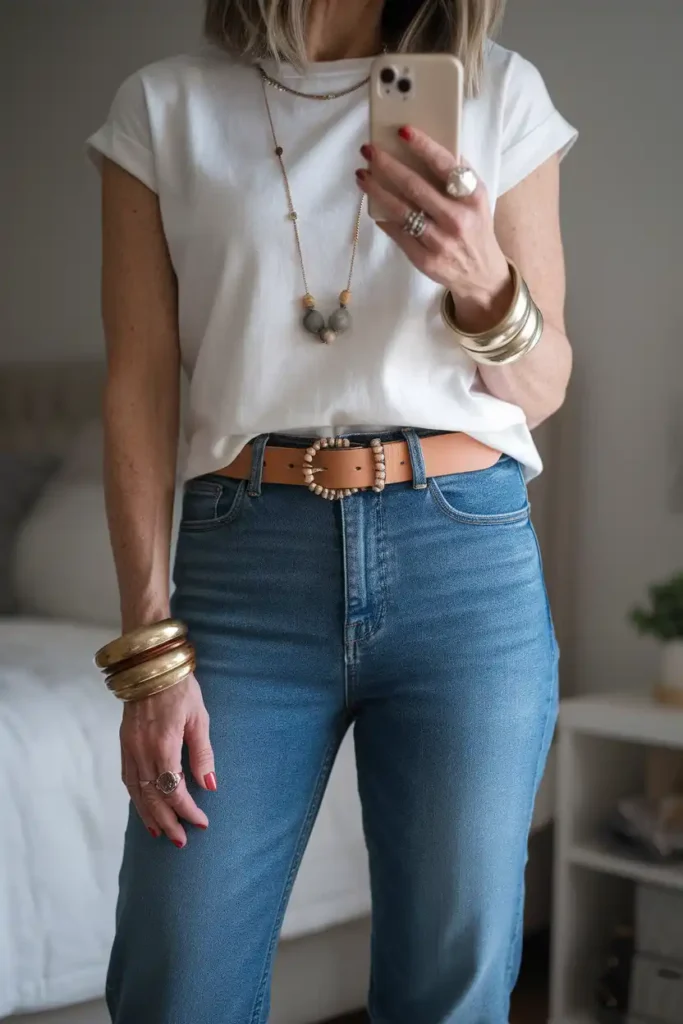
Jeans and a white tee is the outfit most people default to, and it’s the easiest base to build on. Because the clothes stay quiet, you can pile on more than you think without the result reading as chaos. The accessories become the outfit. That’s the point of maximalistic fashion applied to real life rather than runway photos.
Pick three zones and commit to them. Neck, wrist, and waist works well because those areas don’t compete visually. Skip ears and hair when you’re already wearing that much elsewhere. A wide belt over an untucked tee does more than most people expect, especially if you push the buckle slightly off center. Build the look once on a weekend when you have time, take a photo, then repeat it on busy mornings instead of restyling from scratch.
4. Streetwear Jewelry Pairings That Land
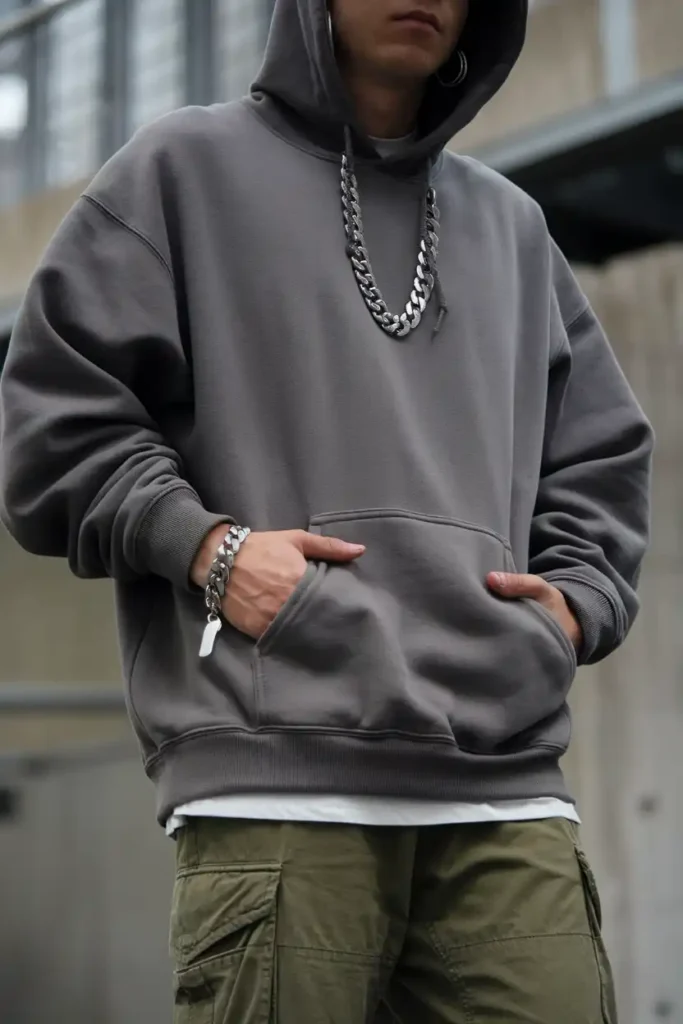
Streetwear style jewelry works when the proportions match the clothes. Oversized hoodies swallow delicate pieces, so wear the chain outside the fabric and go longer than usual, 22 inches or more. A box chain or Cuban link holds up against thick cotton. Thin cable chains look accidental on top of a hoodie.
Matte and brushed finishes suit this better than high polish. If you already own polished pieces, wear them in daylight and save the shine for evening. One heavy bracelet beats a stack here since sleeve cuffs will fight anything wide. I’d start with a single ID or curb bracelet in stainless steel, which runs $20 to $45 and survives being pushed up your sleeve twenty times a day. Add earrings only after the neck and wrist feel settled.
5. Stacked Rings and the Full Hand Look
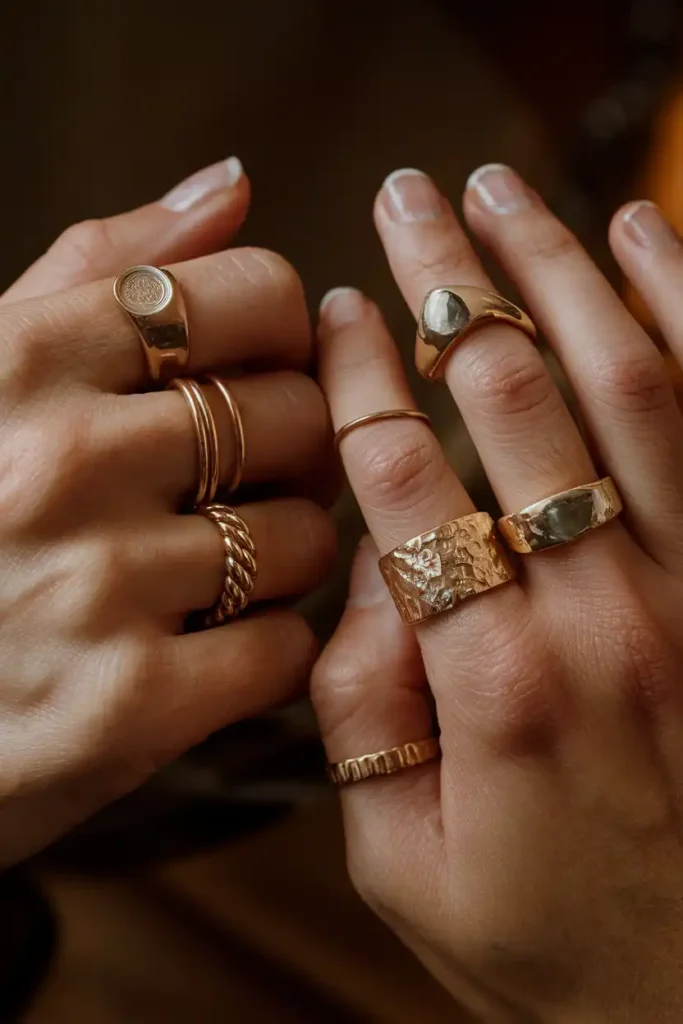
The hand jewelry aesthetic looks effortless in photos and feels awkward the first time you try it. Rings knock together, spin around, and slide off in cold weather. Fix the fit before you fix the styling. Buy half sizes up for knuckle rings and half sizes down for mid-finger bands, and use a clear silicone sizer on anything loose.
Balance across both hands instead of loading one up. Four rings on the right and three on the left reads intentional. Seven on one hand reads like you just got home from a market. A few placement rules that hold up:
- One statement ring per hand, maximum
- Thumb rings need width to look deliberate, 6mm or more
- Leave the middle finger of your dominant hand bare if you type all day
- Repeat one metal or one shape across both hands to tie it together
Wear the stack around the house for an afternoon before you take it out.
6. Y2K Chokers and Chunky Charms Are Everywhere Again

The Y2K grunge necklace has moved past nostalgia and into normal rotation, which means the styling standards went up. Flash photography flattens jewelry, so the pieces that photograph well are the ones with real dimension. Look for chunky charms, mixed bead sizes, and silver over gold for this specific look.
The mistake is treating it as a costume. Pair one Y2K piece with clothes you already wear rather than building a full 2003 outfit. A beaded choker with a plain black tank works. A beaded choker with butterfly clips, a baby tee, and a rhinestone belt starts to look like a themed party. Alternative style jewelry sits comfortably next to this category, so silver crosses, safety pin pendants, and chain link chokers all mix in. Buy one choker around $15 and see how often you actually reach for it before expanding.
7. Seventies Jewelry Shapes Worth Trying Now
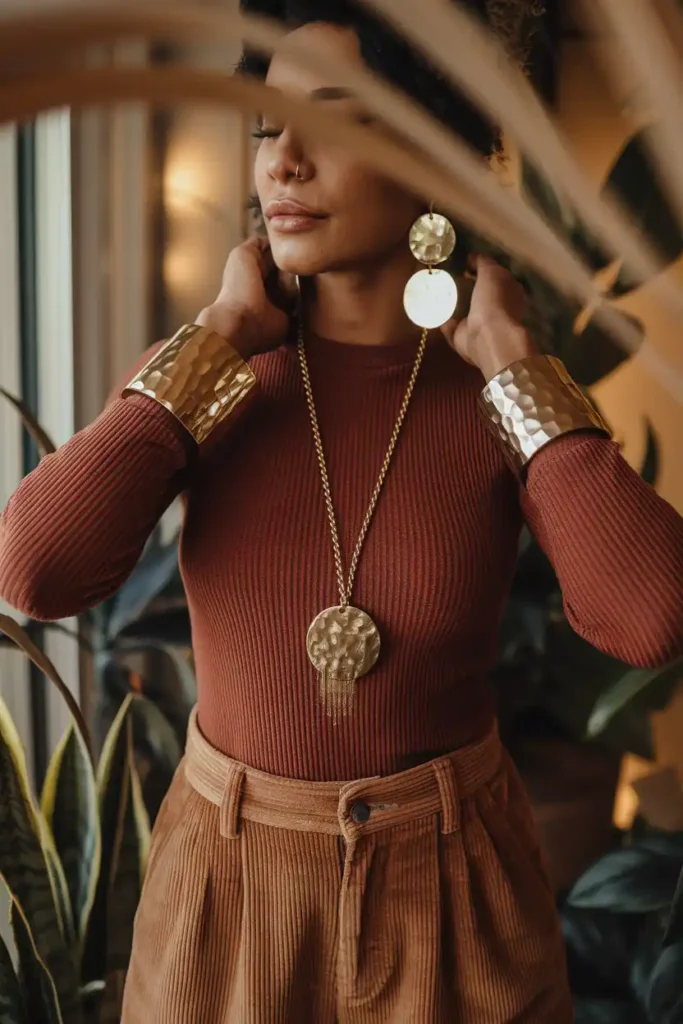
70s jewelry brings warmth that suits fall better than cool toned silver. Think hammered discs, rope chains, wooden beads, and pendants that hang past the sternum. The texture is what makes it work. Smooth polished gold reads as modern minimal, while hammered or brushed gold reads as seventies without any effort from you.
Long pendants solve a real problem if you feel short waisted in fall knits. A pendant that hangs 26 to 30 inches draws the eye down and breaks up a bulky sweater. Pair it with wide cuffs rather than bangles since cuffs sit still under sleeves. Oversized disc earrings finish it, though wear them alone if you have hair covering your neck. Try one long pendant with your existing sweaters before you buy anything else.
8. Boho Accessories That Skip the Costume Feel

Boho aesthetic accessories go wrong when everything is natural material at once. Wood, leather, feathers, turquoise, and raffia in a single outfit tips into costume territory fast. Keep two materials maximum and let one metal join them. Wooden bangles with a gold ring reads modern. Wooden bangles with a leather cuff and a feather earring does not.
Turquoise deserves specific mention because the fake stuff is everywhere. Real turquoise has irregular veining and feels cool to the touch longer than plastic does. Dyed howlite is the common substitute and it fades within a year. Expect to spend $40 or more for a real stone in a simple silver setting. If you’re not ready for that, go with agate or jasper instead, which cost less and don’t get faked as often. One good stone ring outlasts five plastic ones.
9. Chunky Pearl Necklaces Outside the Formal Rules
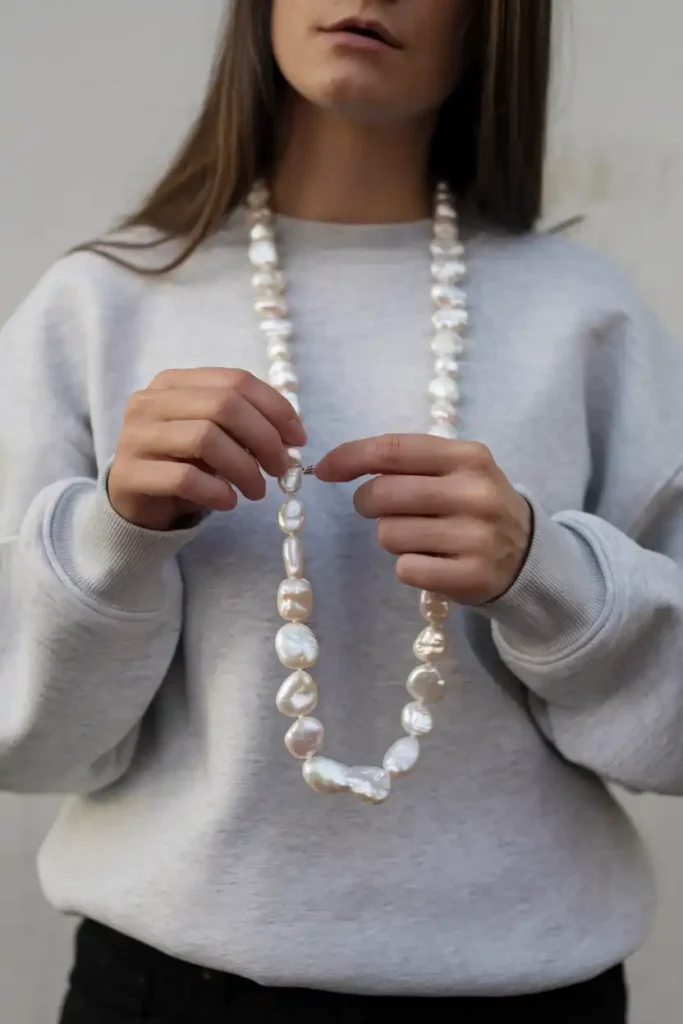
Chunky pearl necklaces stopped being formal a few years ago and nobody told the people still saving them for weddings. Baroque pearls, the irregular ones, do the casual thing better than perfect rounds. Their uneven surfaces catch light unpredictably, which keeps them from looking like a costume strand.
Wear them with the clothes that feel wrong. Sweatshirts, denim jackets, plain tees. That tension is exactly why the look reads current instead of dated. Size up on the pearls, 10mm or larger, since small pearls with casual clothes just look like you dressed in a hurry. Freshwater baroque strands run $30 to $80 and hold up fine with regular wear as long as you keep them off perfume and put them on last. Try one with your most worn sweatshirt this week and see how you feel walking out the door.
10. Alternative Style Pieces for Softer Wardrobes
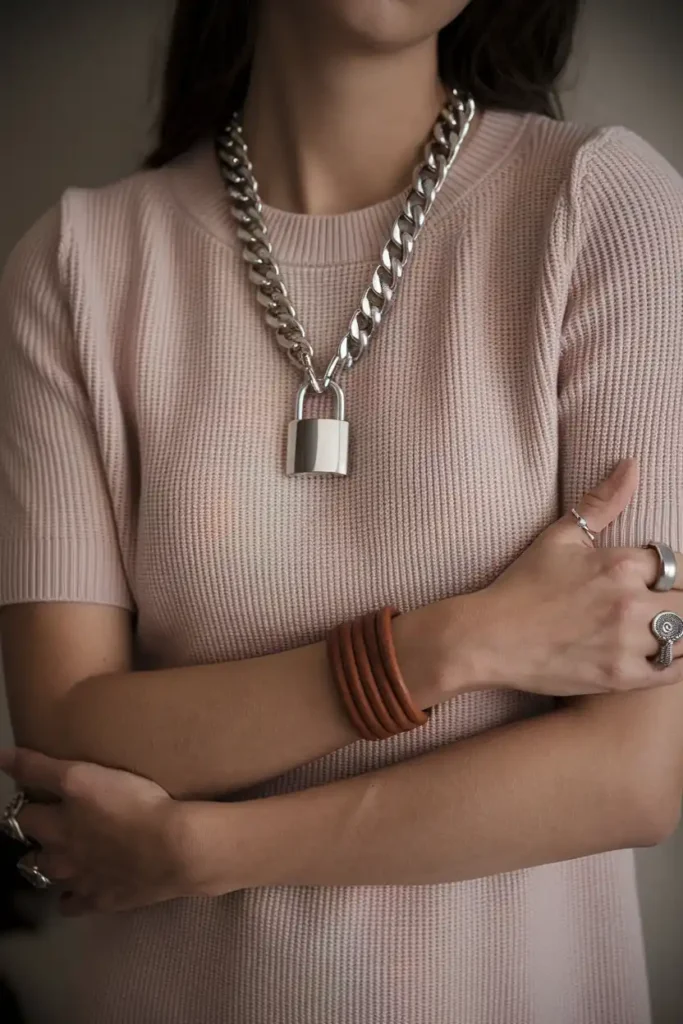
Alternative style jewelry does not require an all black wardrobe. The hardware against soft fabric contrast is where this gets interesting, and it works better than matching heavy jewelry to heavy clothes. A silver lock pendant on a pastel knit dress creates a look nobody else at the office will be wearing.
Pick weight over volume. One substantial silver piece with real heft carries more presence than five thin edgy looking pieces. Sterling silver tarnishes, which is actually useful since the darkened recesses add depth over time. Polish only the raised surfaces and leave the crevices alone. Stainless steel is the low maintenance alternative if tarnish bothers you. Start with a single lock, carabiner, or oversized clasp pendant on a heavy chain, then see whether you want rings to match.
11. Bangle Stacks and Knowing When to Stop
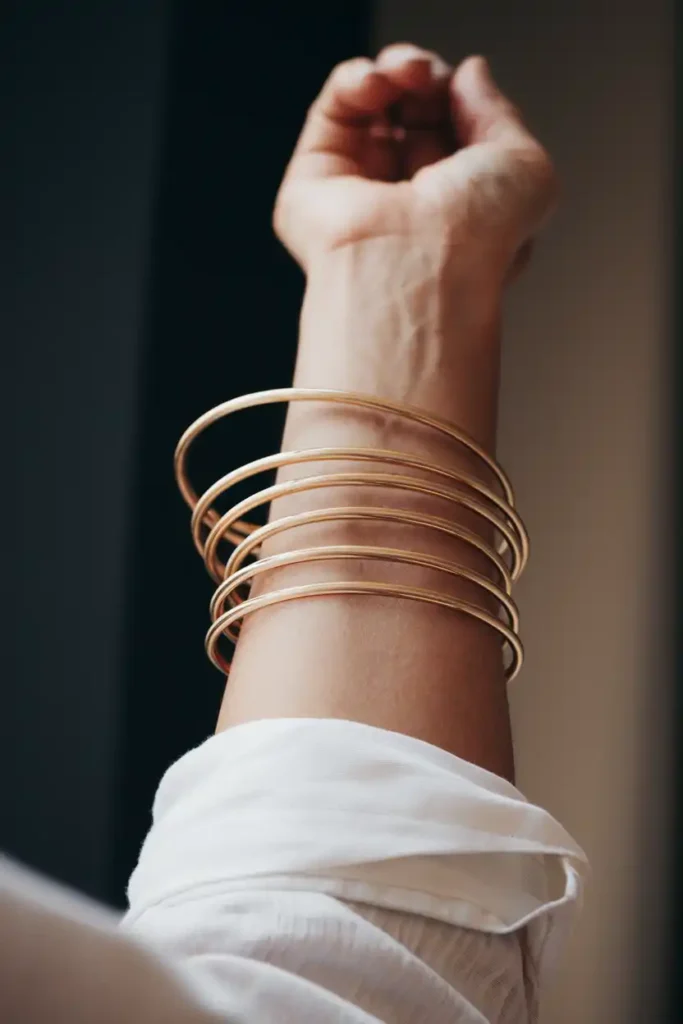
Bangle inspo photos always show ten or more on a bare arm, which looks incredible and sounds like a wind chime in a quiet room. That noise is the real reason people abandon the stack after a week. Reduce it by mixing widths and adding one bangle with a textured or twisted surface, which stops the flat edges from ringing against each other.
Practical rules that make a stack wearable:
- Odd numbers look less rigid than even, so try five or seven
- Include at least one wider bangle to break up the rhythm
- Size them properly, since oversized bangles slide to your wrist and clatter
- Keep the stack to one arm if you work at a desk
Thin brass bangles cost $3 to $8 each, so building a stack of seven is genuinely affordable. Buy a few extra widths and remove what annoys you after a full day of wear.
12. One Big Bracelet Instead of Ten
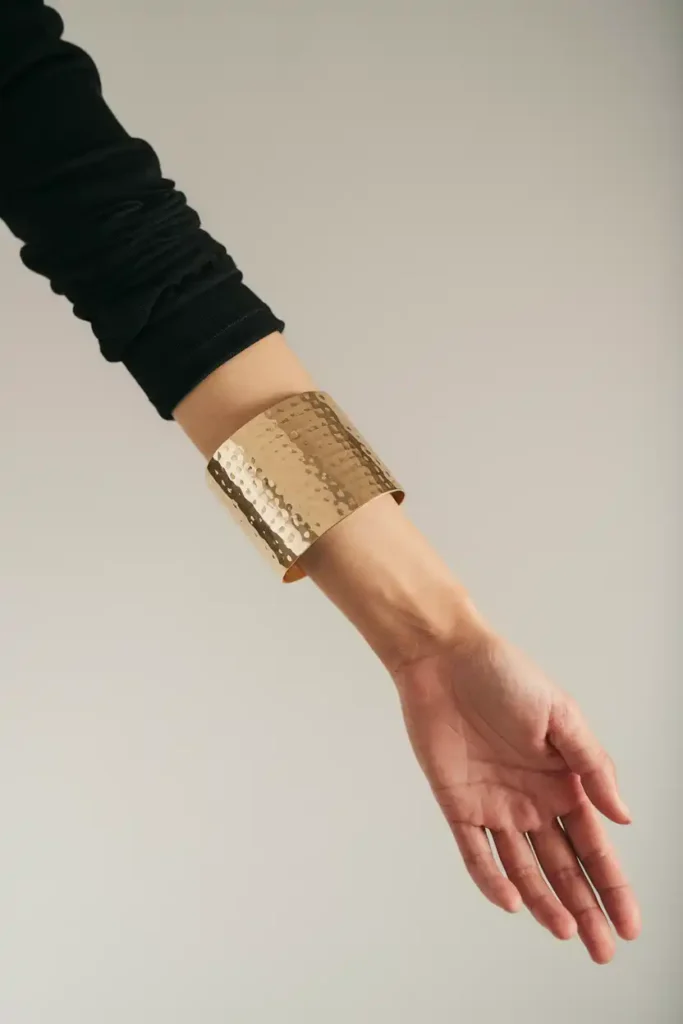
Sometimes the answer is a big bracelet and nothing else. A two inch cuff makes a clearer statement than a stack and it won’t catch on your sleeve every time you reach for something. If stacks have frustrated you, this is the version that actually stays on your body all day.
Fit is the whole game with cuffs. The opening should sit at the narrow part of your wrist, and you should be able to rotate it slightly without it sliding. Too loose and it spins to show the gap. Brass and aluminum cuffs bend to shape, so you can adjust them gently with your hands. Steel does not, so buy those in person. Expect $25 to $70 for a well made brass cuff with decent plating. Wear it on your non dominant wrist for the first week to see how it holds up.
13. Colorful Beaded Pieces for Gray Fall Days
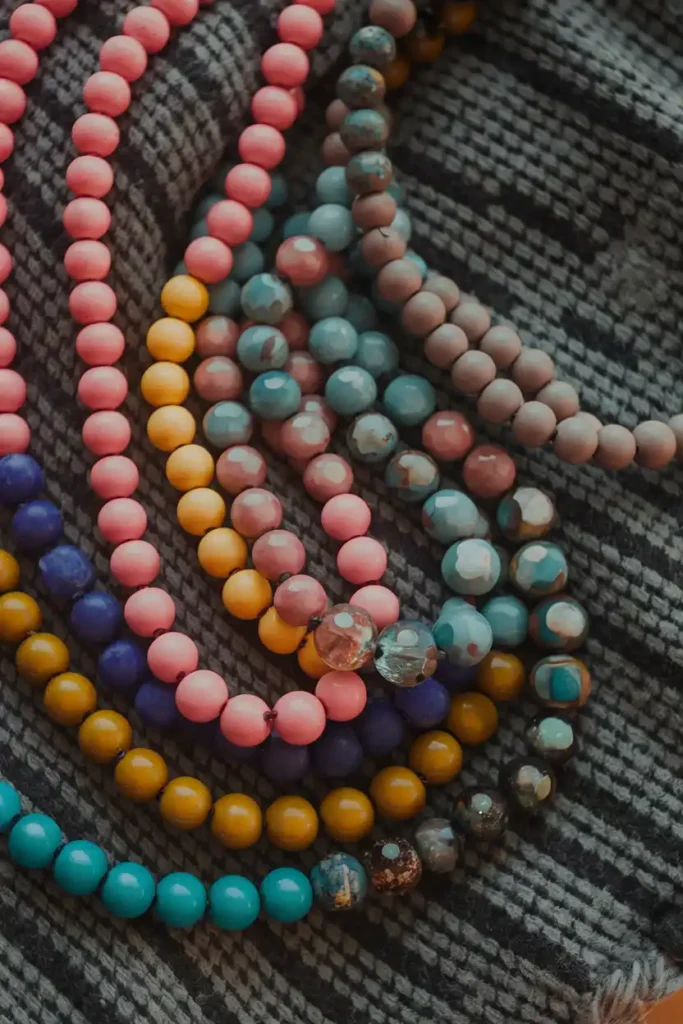
Colorful beaded jewelry solves the fall problem where your whole closet turns brown and gray. One coral or teal strand against an oatmeal sweater changes the entire outfit and costs less than a new sweater would. Glass beads read richer than plastic in photos and in person, and the weight difference is immediately obvious in your hand.
Pull your color from something already in the outfit rather than adding a random shade. If your boots are cognac, a mustard or rust strand ties in. If everything is cool toned gray, go teal or deep green. That one decision separates a considered look from a mismatched one. Mixing two beaded strands works if the bead sizes differ noticeably, say 6mm with 12mm. Buy one strand in the color you own least of and wear it three times before adding another.
14. Building a Gemstone Inspired Outfit Around One Color
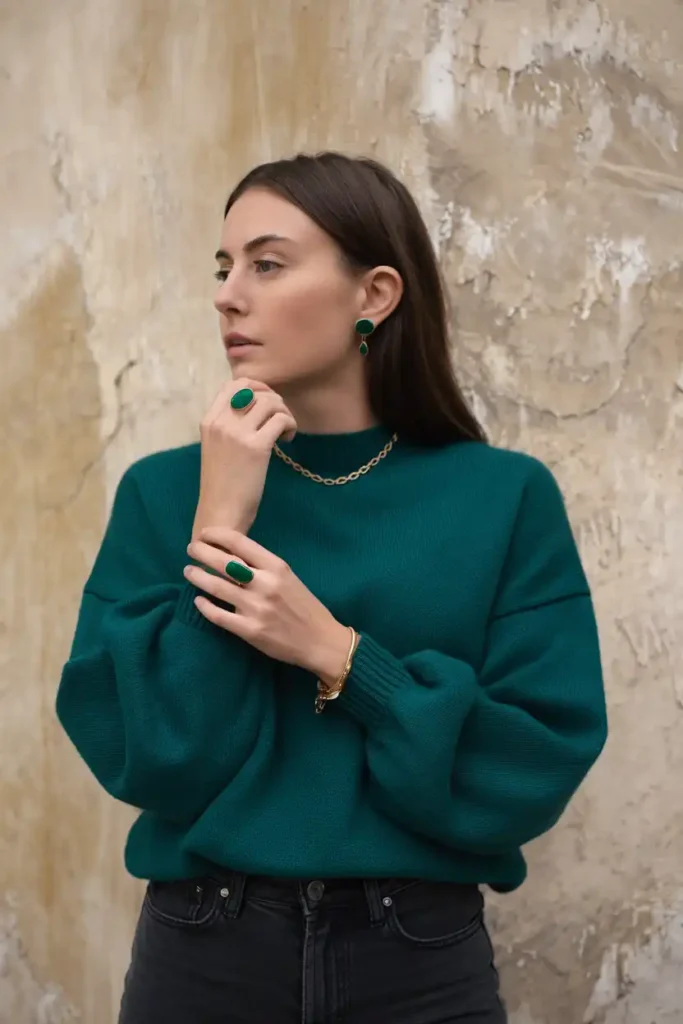
A gemstone inspired outfit means letting one stone color set the direction for everything else. Pick the stone first, then pull clothing in the same family without matching the exact shade. Emerald ring with a forest green sweater works because the tones differ. Emerald ring with an identical emerald top looks like a set.
Metal choice affects how the stone reads. Gold warms up green, blue, and red stones. Silver sharpens black, gray, and clear stones. If you own one good stone ring, that tells you which metal to build the rest of your collection in. Keep the stone count low, one or two pieces maximum, since multiple large stones in different colors start competing. Try this with a stone you already own before shopping, and pay attention to which outfit in your closet it improves most.
15. When Your Outfit Crosses Into Too Much
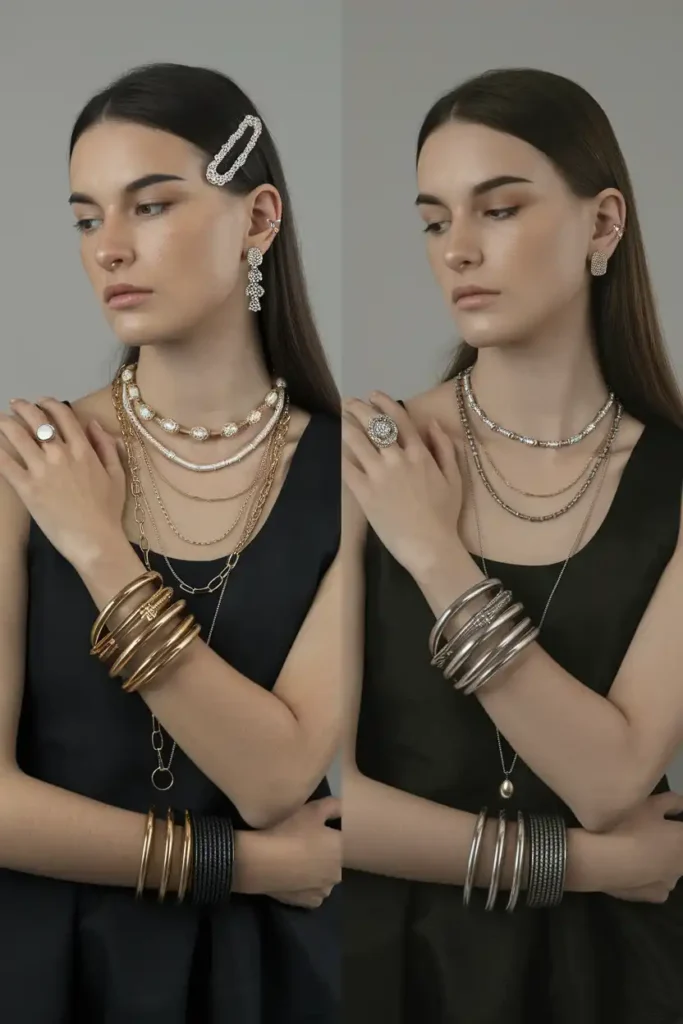
An over accessorized outfit usually has one specific problem, and it’s rarely the total count. It’s competing focal points. Large earrings and a statement necklace both pull attention to your face, so one wins and the other becomes noise. Same with a wide cuff and a full ring stack on the same hand.
Use this quick check before you leave:
- Count your focal points, not your pieces. Two is plenty.
- If two items are the same scale, remove one
- Bare skin between pieces gives the eye somewhere to rest
- Take a photo, because mirrors lie about balance
The excessive jewelry aesthetic that works in photos almost always has empty space built into it. Look closely at any image you saved and you’ll find one quiet zone. Remove the third thing you added, which is usually the one you were least sure about.
16. Trending Accessories for 2026 Worth Buying Early
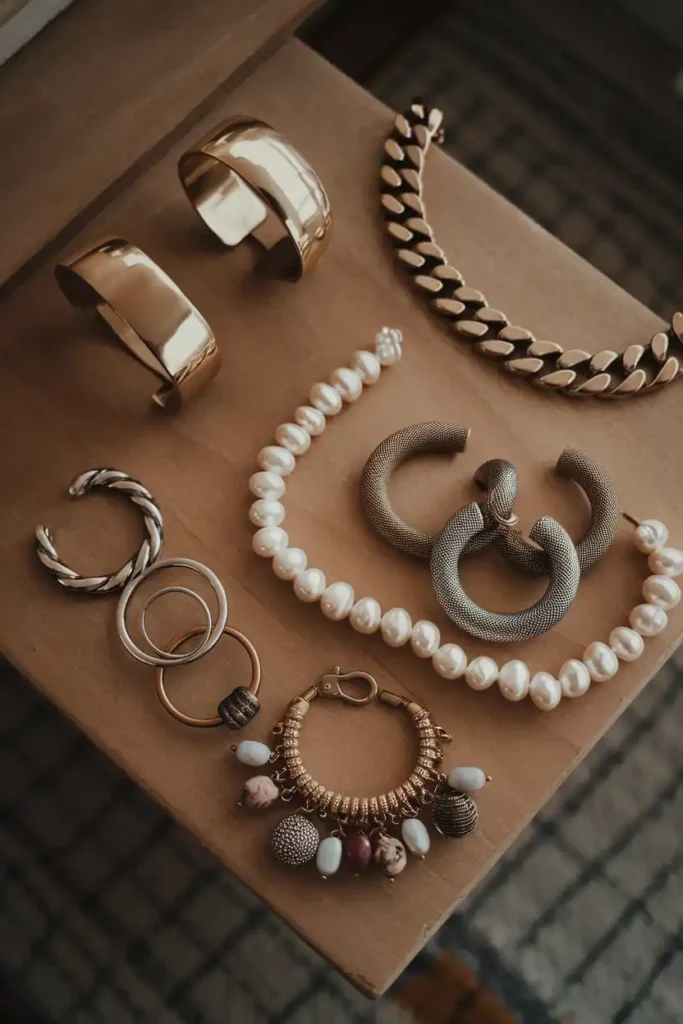
Trending accessories for 2026 are moving toward heavier metal, more texture, and mixed materials in a single piece. Snake chains, hammered surfaces, and pearls combined with gold hardware keep showing up. Buying early matters because the good versions sell out and the fast fashion copies arrive with plating that lasts six weeks.
Where to put your money if you’re picking two things:
- A heavy gold tone cuff, since it works across every look here
- One mixed material necklace combining pearl and metal
Skip trend pieces with resin, painted enamel, or glued stones unless they cost under $15, because those fail first. Check the clasp on anything you buy. Spring rings on heavy chains break, lobster clasps hold. Buy the cuff first since it needs no maintenance and pairs with almost everything you already own.
17. Pieces That Survive Daily Wear
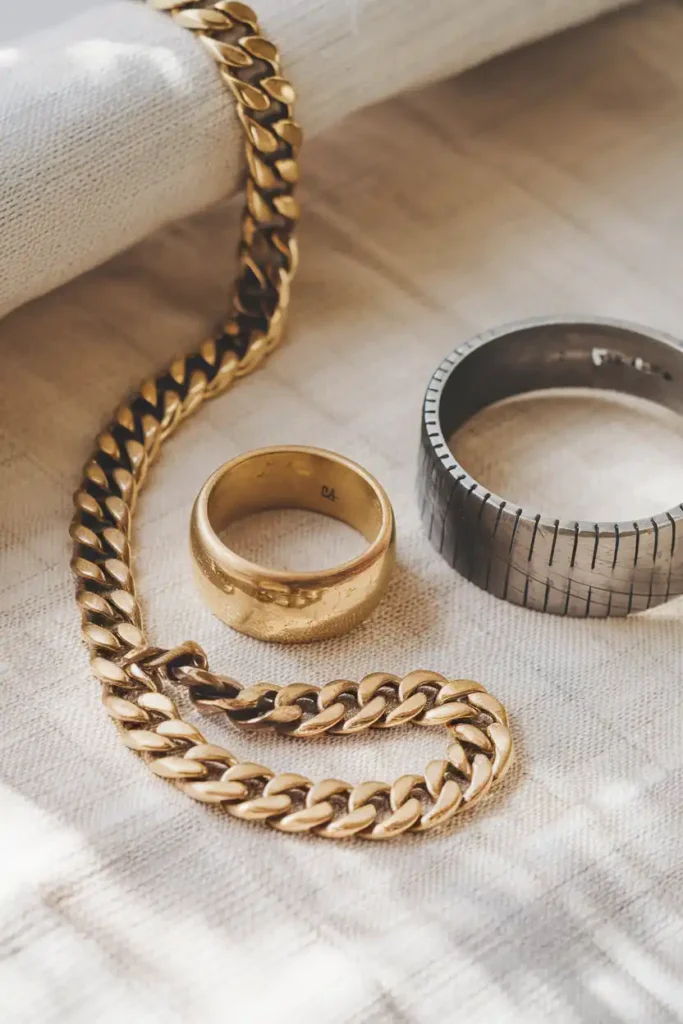
Maximalist accessories only earn their place if they hold up. Plated brass at $20 lasts about eight months of regular wear before the color goes patchy at the edges. Stainless steel lasts years and costs $25 to $50. Solid brass darkens rather than flaking, which some people like and some don’t.
What actually kills jewelry:
- Perfume and hairspray sprayed directly onto metal
- Showering in plated pieces
- Storing everything together in one pouch so chains scratch each other
- Sleeping in rings, which bends thin bands out of round
Put jewelry on last and take it off first. That single habit doubles the life of plated pieces. Keep steel and silver in separate compartments. If a piece you love is wearing through, a jeweler can replate it for $30 to $60, which beats replacing a well fitted cuff. Check your most worn piece tonight and see whether it needs cleaning or storage changes.
18. Belts, Scarves, and Bags in the Mix
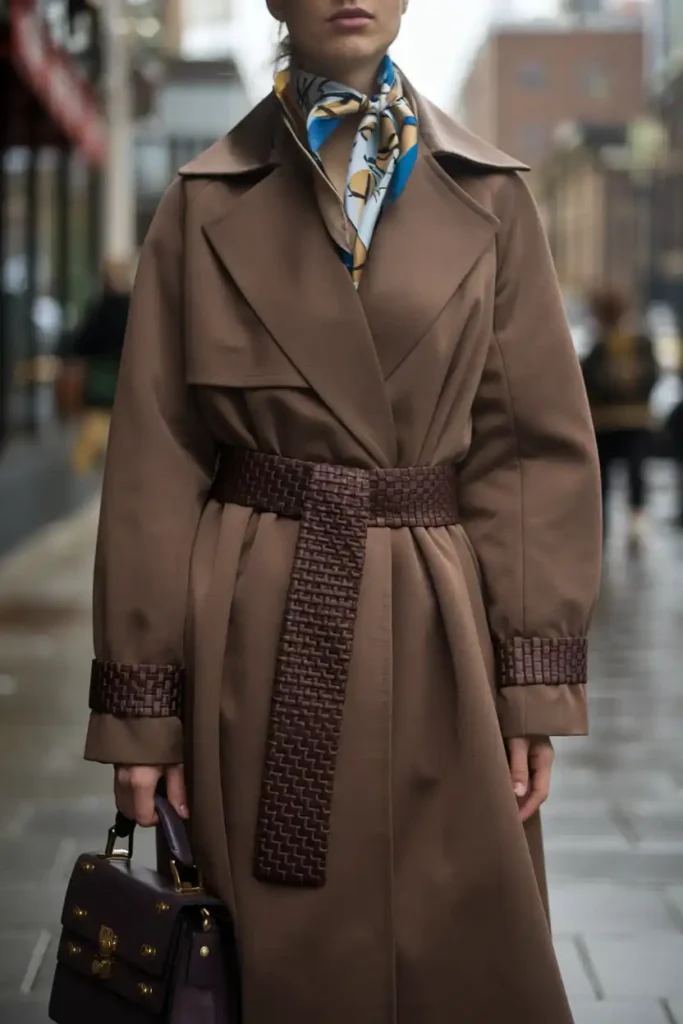
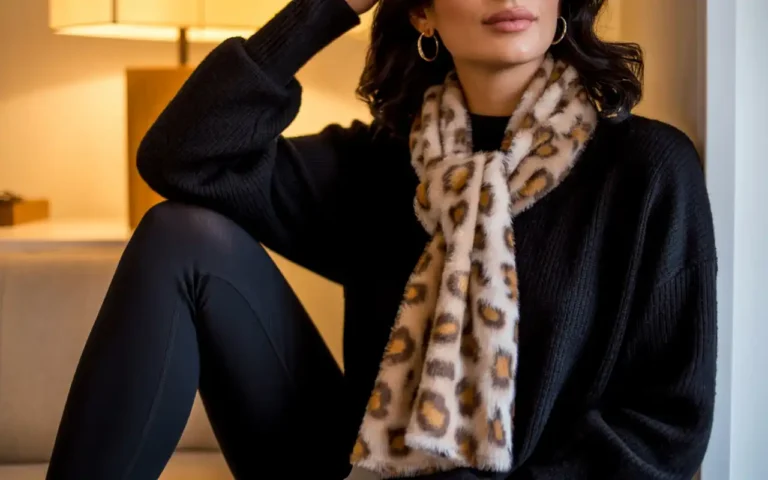
Jewelry is not the only category here. Belts, scarves, and hardware on bags all count, and adding them lets you get more visual weight without piling more metal on your body. A wide belt over a coat does more than a third necklace would.
Coordinate hardware, not colors. If your bag has gold hardware and your belt buckle is silver, that mismatch shows in photos even when nobody consciously notices it. Pick one metal for functional hardware and let jewelry be a little looser. Silk scarves work at the neck, on a bag handle, or through belt loops, so a single $20 scarf gives you three options. Tie it once and leave it on the bag if you never remember to style it in the morning. Start with the belt since it changes your silhouette, not just your surface.
19. Making It Work With an Office Dress Code

Conservative dress codes rarely ban jewelry outright, they just make anything noisy feel wrong. Sound is the actual issue in a quiet office. Bangle stacks and long swinging pendants draw attention during meetings. Rings, cuffs, and short chains do not.
Go for one heavy piece instead of several light ones. A single wide chain at the collarbone under a blazer reads confident and stays silent. Two rings, a fitted cuff, and studs complete it. Save the layered stacks for the commute if you want them, since swapping pieces takes thirty seconds. Watch metal tone against your blazer color, since bright gold against navy can look sharper than you expect in fluorescent light. Test your intended pieces at your desk for a full morning before wearing them to anything that matters.
20. A Small Collection You Reuse Constantly
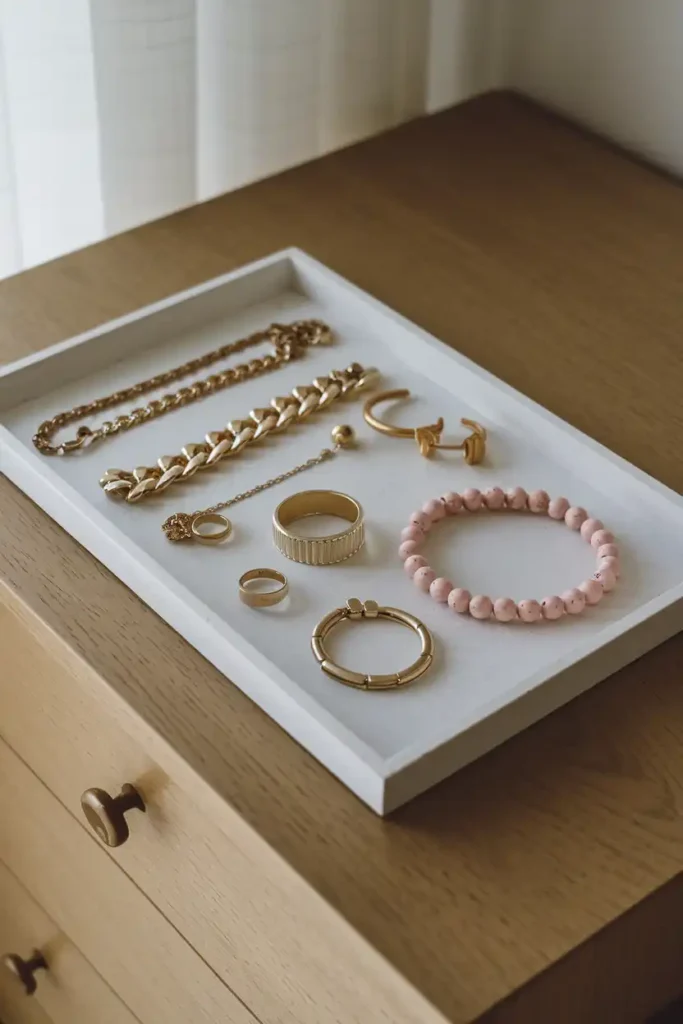
You don’t need forty pieces. A working set of maximalist accessories runs eight to ten items that combine in different ways, and most people wear the same six things anyway. Buy for combination, not for individual appeal.
The set I’d build:
- Two chains at different lengths and weights
- One wide cuff
- One bangle set of five
- Three rings, one wide and two thin
- One colored beaded strand
- Optional: one pearl strand and one long pendant
Keep it in a tray where you can see everything, because pieces in a drawer stay in the drawer. Total cost lands around $150 to $250 if you shop plated brass and steel rather than gold. Once you know which four pieces you reach for weekly, spend more on better versions of those and let the rest be inexpensive. Start by pulling out what you own now and sorting it into keep, repair, and pass along.
FAQs
How many pieces count as too many?
Count focal points, not pieces. Two is the limit. Large earrings and a statement necklace both pull attention to your face, so one cancels out the other. Eight pieces spread across neck, wrists, and hands can look balanced while four crowded around your collarbone looks messy.
Can you mix gold and silver?
Yes, and matched sets look dated now. Keep functional hardware consistent, so belt buckle and bag hardware in one metal, then mix freely with jewelry. Repeating one metal across at least two pieces ties the whole thing together.
What should you buy first on a small budget?
A wide gold tone cuff and one heavy chain around 16 to 18 inches. Together that runs $50 to $100 in plated brass or steel, and both work with clothes you already own. Skip resin, painted enamel, and glued stones unless they cost under $15, since those fail first.
How do you stop bangles from making noise all day?
Mix widths and include one twisted or textured bangle so the flat edges stop ringing against each other. Keep the stack on one arm if you work at a desk, and size properly so they don’t slide down and clatter.
Does this work with a conservative dress code?
Usually, since the real issue is sound rather than size. One substantial chain at the collarbone under a blazer stays silent. Add two rings, a fitted cuff, and studs. Keep layered stacks and long swinging pendants for the commute.