
20 Ear Stacking Ideas That Go from Work to Weekend

Your ear stack should not have to change every time your plans do. Whether you are heading into a Monday meeting or a Saturday brunch, the right combination of pieces works across both without looking out of place. These 20 ear stacking ideas cover everything from minimal lobe stacks to cartilage combinations, with practical guidance on what to wear, what to skip, and how to build a look that actually fits your life.
1. The Classic Lobe Stack That Works Every Day
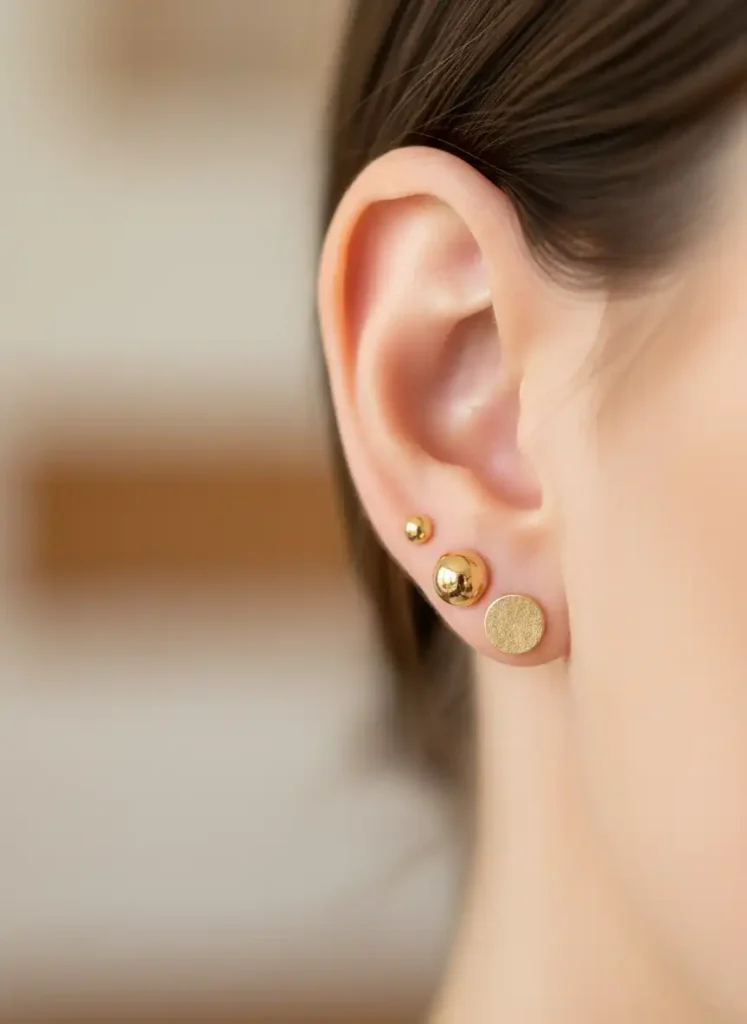
Getting three piercings on your lobe and not knowing how to wear them together is frustrating. The fix is simpler than you think. Start with your smallest stud at the top, a medium one in the middle, and your boldest piece at the bottom. This order draws the eye downward naturally and keeps the look intentional.
For work, stick to gold or silver studs in similar metals. On weekends, swap the bottom earring for a small hoop or a charm drop. You do not need to buy a whole new set. One statement piece at the bottom changes everything. Start with what you already own and build from there.
2. Elegant Ear Stack for the Office
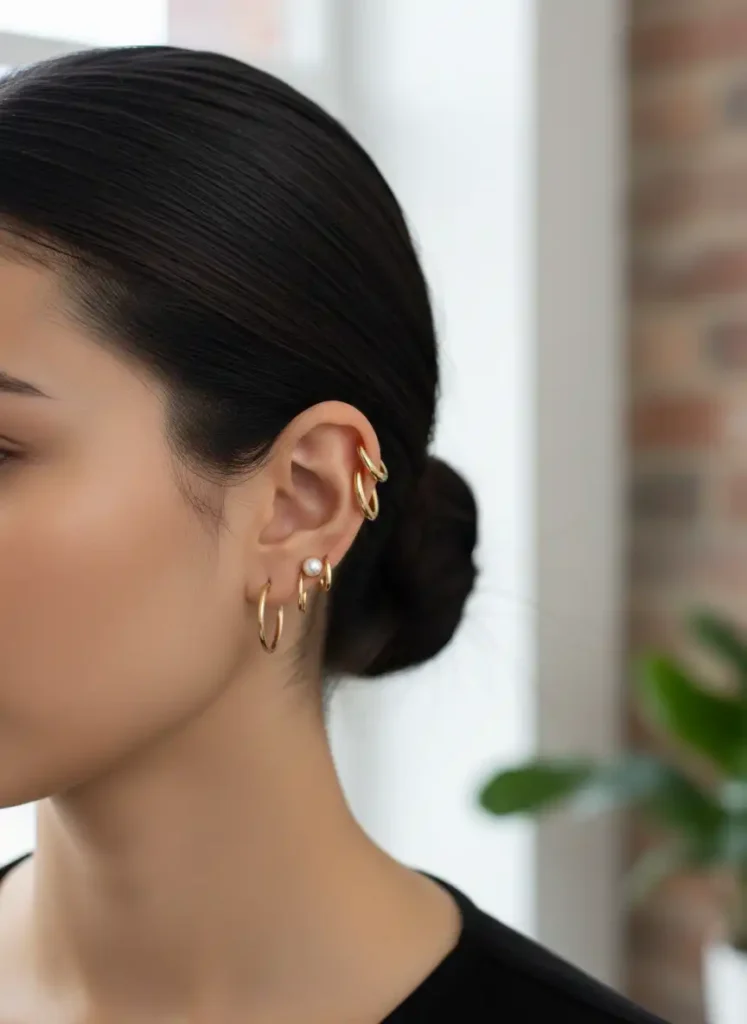
A lot of people tone down their jewelry completely for the office because they are not sure what crosses the line. You do not have to go bare. The key is keeping your metals cohesive and your silhouettes slim. Thin hoops under 10mm, small bezel-set studs, and a single pearl piece read as polished rather than distracting.
Avoid dangling pieces that move when you turn your head. They catch light in meetings and can feel unprofessional in more conservative environments. Stick to a two or three piece stack during the week. Friday is a good day to try something slightly more expressive before you carry that look into your weekend plans.
3. Cute Piercing Ideas for a Saturday Errand Look

You do not need a special occasion to wear a fun stack. A Saturday errand run is the perfect low-stakes moment to try something new. A small flower stud paired with two thin hoops keeps things playful without requiring a full outfit plan around it.
If you have two lobe piercings and one helix, try a small huggie hoop in the helix and two mismatched studs on the lobe. The combination works because the hoops tie the look together without feeling too matched. This is also a great time to test a new piece before committing to it for a longer event.
4. How to Mix Metals Without It Looking Accidental
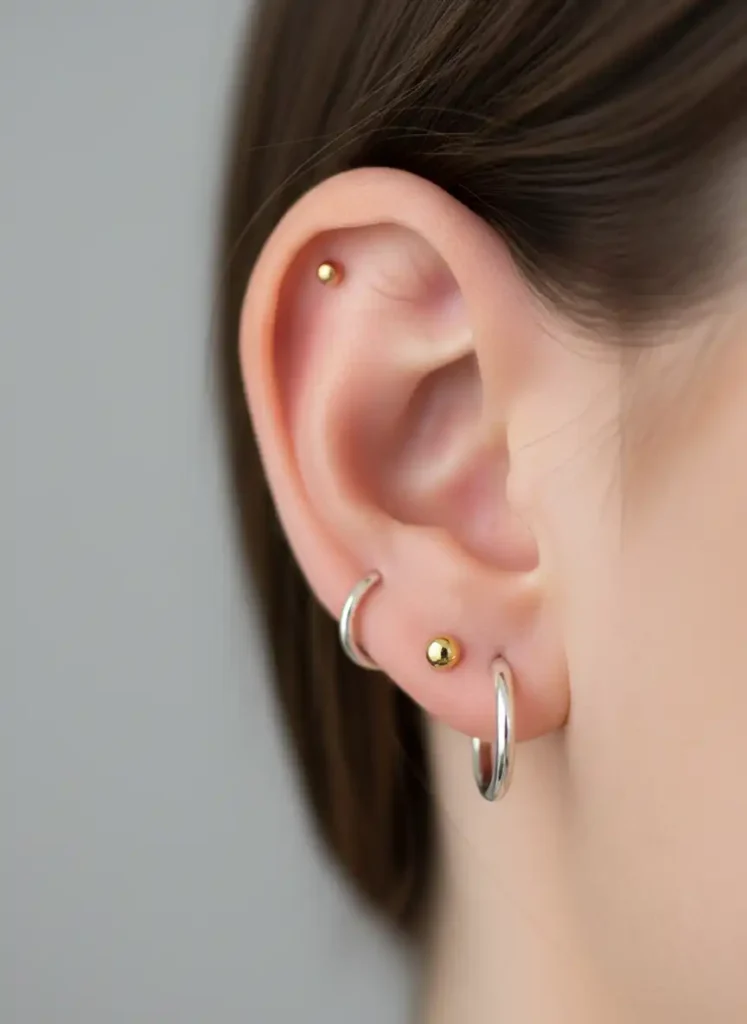
Mixing metals confuses a lot of people. The rule most stylists actually follow is to keep one metal as the dominant one and let the other appear once or twice. So if you are mostly gold, one silver piece adds contrast without looking like you grabbed whatever was available.
Anchor your stack with a statement piece in your primary metal, then echo it with a secondary metal in a simpler style. A gold cuff with two silver studs works. Two gold studs with one silver hoop works. What does not work is a random assortment with no clear through line. Pick a lead metal and build around it.
5. The Three-Piercing Stack That Needs No Cartilage Work
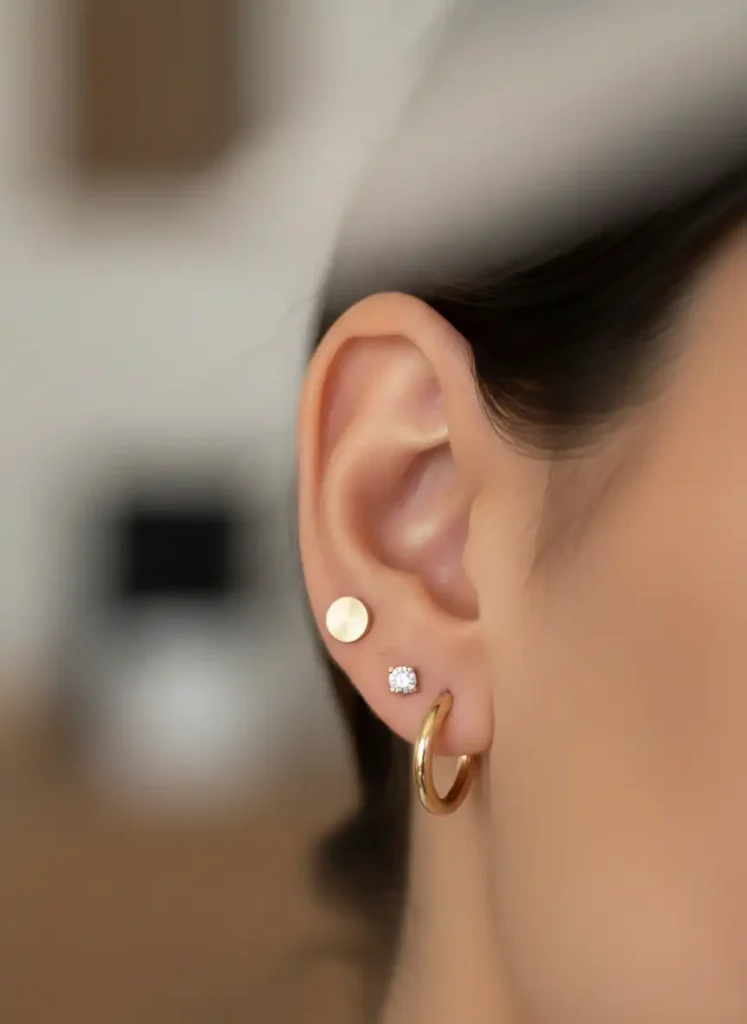
Not everyone has cartilage piercings, and that is completely fine. Three lobe piercings give you enough to work with for a full, layered look. The mistake most people make is wearing three identical studs. Varying the shape, even slightly, makes the stack look intentional.
Try one hoop, one stud, and one disc or flat piece. The different silhouettes give your ear visual interest without needing extra piercings. This is one of the most wearable ear stacking ideas for people who want a curated look without committing to cartilage work. It translates well from Monday meetings to Friday nights.
6. Piercing Jewelry Aesthetic: Choosing a Visual Theme
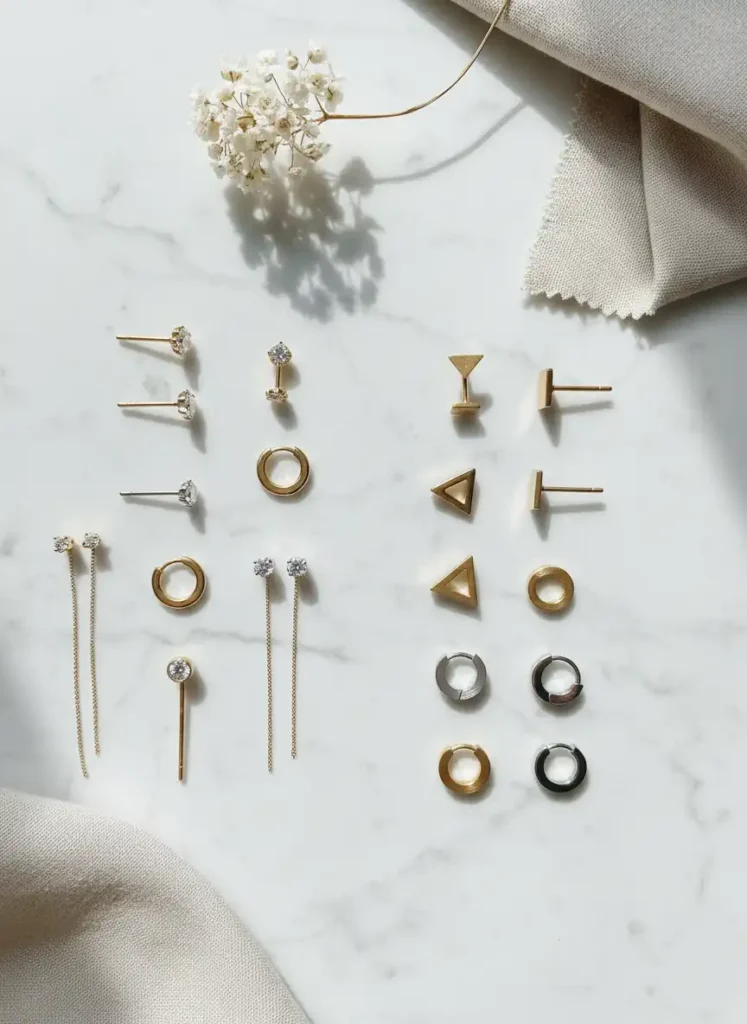
Walking into a jewelry store without a direction means you buy pieces that never quite work together. Before you add anything new to your stack, it helps to identify the aesthetic you are building toward. A few clear ones to consider:
- Dainty and minimal: Small gold studs, thin hoops, bezel-set stones
- Edgy and layered: Chunky huggies, geometric shapes, ear cuffs
- Vintage-inspired: Pearl drops, oval stones, antique gold finishes
- Modern and clean: Flat discs, bar studs, polished silver pieces
Pick one and use it as your filter when you shop. You do not have to stay rigid, but having a loose theme stops your collection from feeling scattered. Once you have a direction, building a cohesive stack becomes a lot more straightforward.
7. Anti Tragus Piercing Ideas for an Unexpected Detail
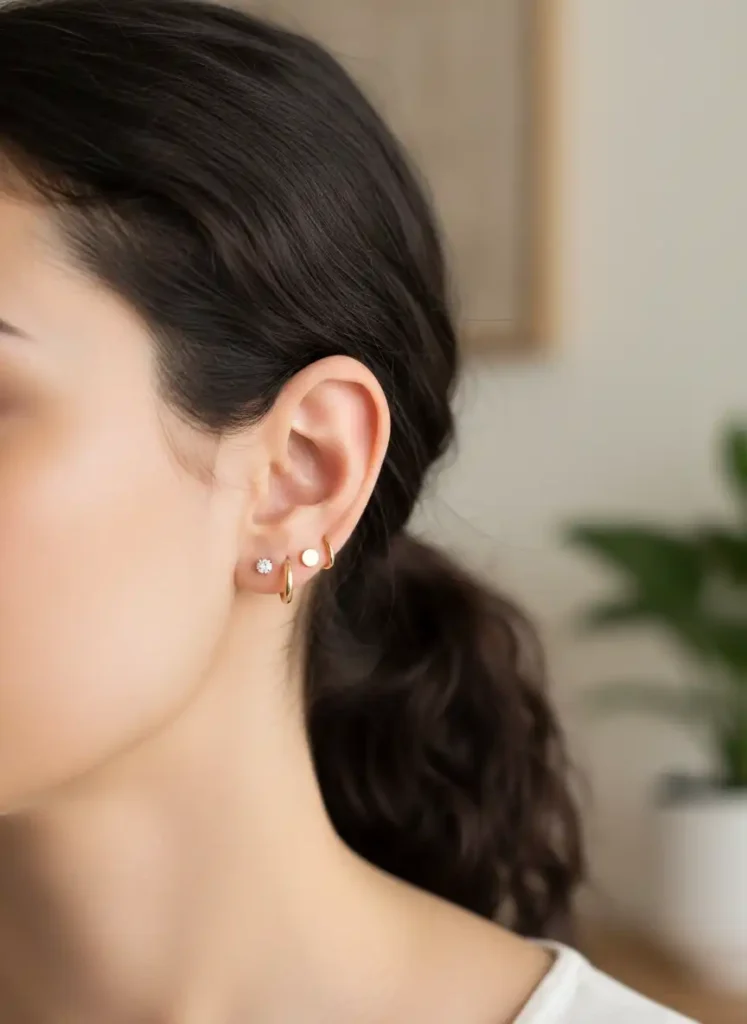
The anti tragus is one of the most underused spots in a stack. It sits right above your lobe, on the small ridge of cartilage opposite the tragus. A tiny hoop or curved barbell there adds an unexpected detail that most people do not have, which makes your ear look more considered.
Because the placement is subtle, it pairs well with a simple lobe stack rather than a heavily layered ear. Two small studs on the lobe and an anti tragus piece is enough. You do not need to fill every piercing. This spot is specifically good for people who want something different without going into full helix or industrial territory.
8. Helix and Lobe Combos That Actually Balance
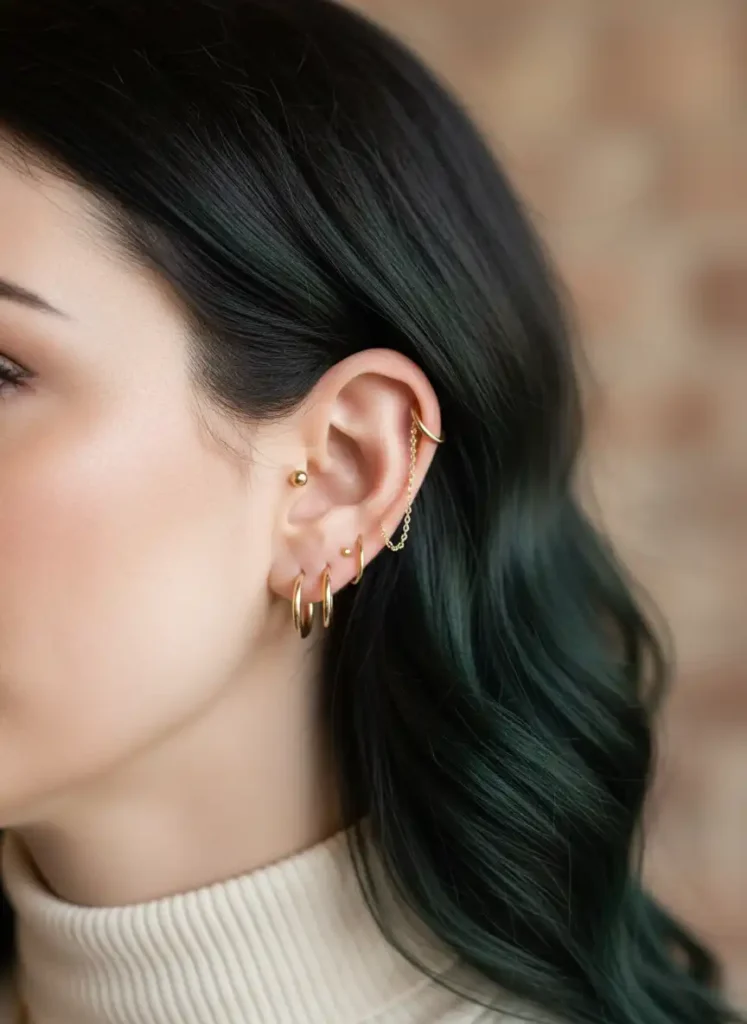
The helix and lobe are on opposite ends of the ear, so when you stack them together, the visual weight needs to feel balanced. A heavy helix piece with minimal lobes works. A bold lobe stack with a simple helix stud also works. What tends to look off is when both areas are maxed out at the same time.
If you are building toward this combination, start by anchoring one end first. Wear your lobe stack as usual and add one small helix stud. Live with it for a few days. Then decide if the helix needs more weight or if the lobe stack should simplify. Balance is easier to find when you add one piece at a time rather than planning the whole thing in theory.
9. Conch and Lobe: A Stack for People Who Like Structure
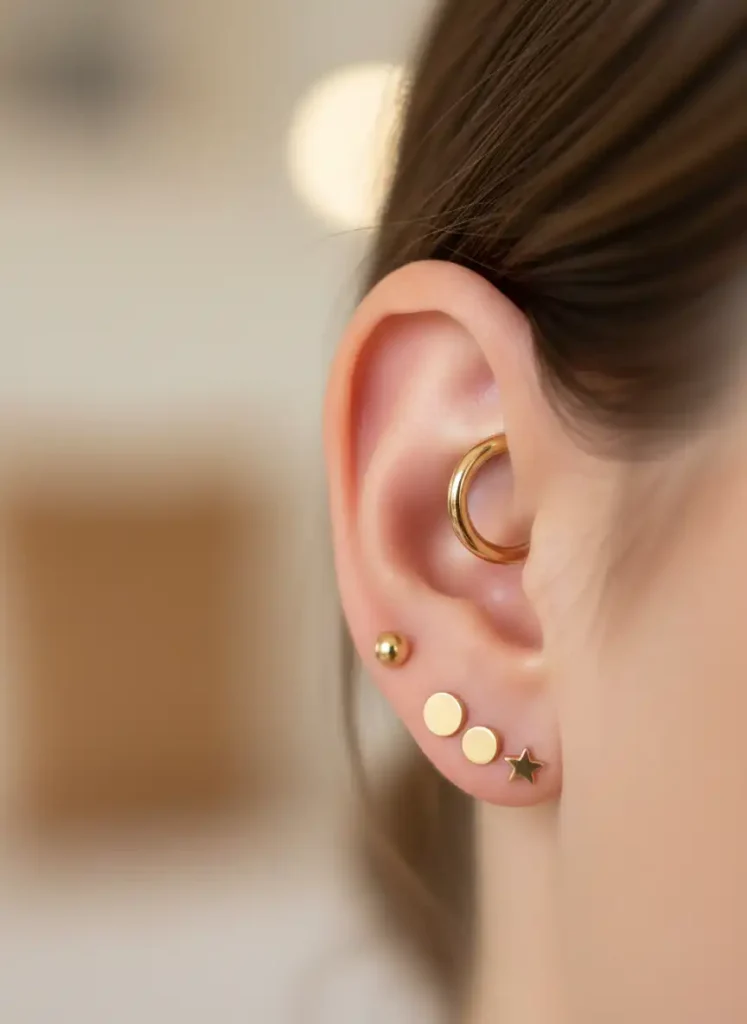
A conch piercing sits in the inner bowl of the ear, and a hoop there creates a very clean, geometric effect. Paired with structured lobe studs, this combination reads as architectural without being maximalist.
If you already have a conch piercing and are not sure what to pair it with, try keeping your lobe stack to two pieces maximum. A small hoop and one stud lobe combination lets the conch remain the focal point. For work, a simple gold conch hoop with pearl lobe studs is one of the most polished combinations you can wear. It photographs well and holds up across dress codes.
10. Huggie Hoops: The Most Versatile Piece in a Stack
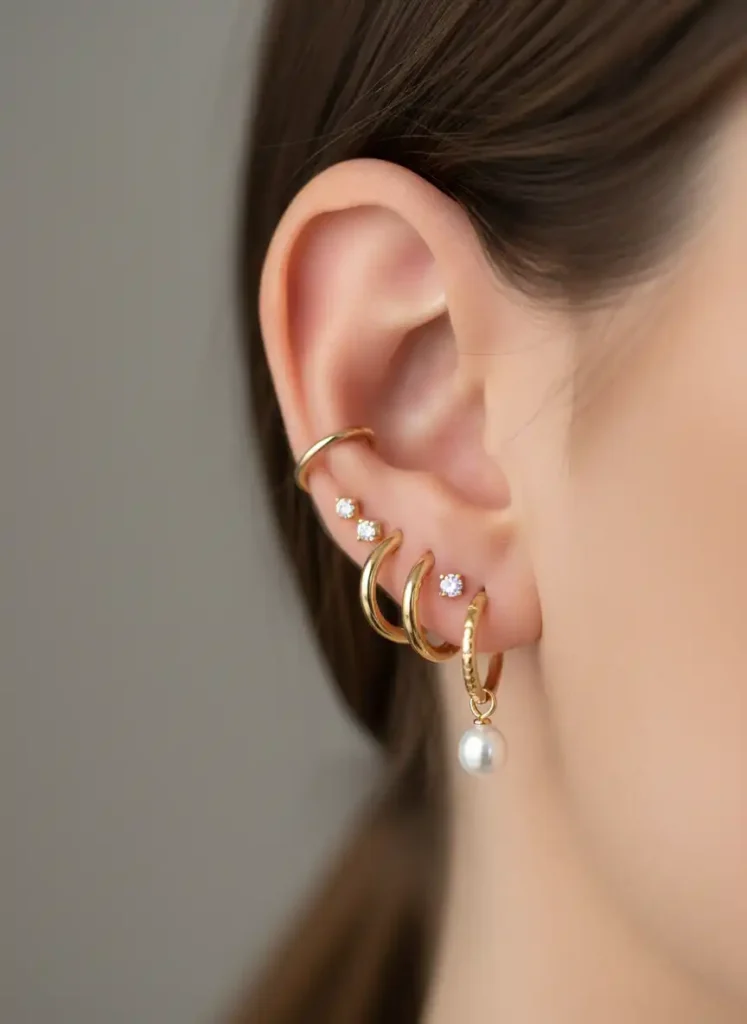
Huggie hoops are the most reliable piece in any stack because they sit close to the ear and do not move around. They work in the first lobe hole, the second, or even the helix if the diameter is right.
If you are building a stack and feel stuck on what to buy next, one good-quality pair of plain gold huggies is usually the answer. They fill gaps, they transition between looks, and they work under hair as well as they do when your hair is up. Spend a bit more on this piece specifically. Cheap huggies lose their shape quickly, which defeats the purpose of building a stack that lasts.
11. Ear Stacking Ideas for People with Only Two Piercings
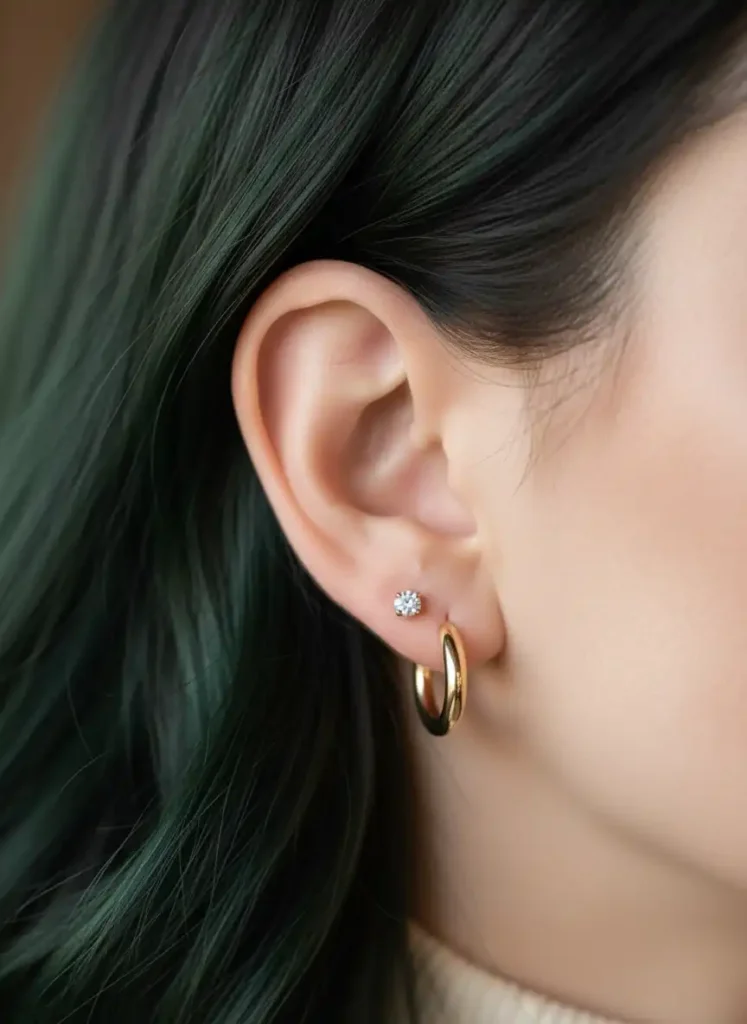
Two piercings are enough to create a real stack. The key is treating those two holes as a intentional pairing rather than just two random earrings. Contrast in shape works best here. One hoop and one stud read better than two identical studs.
For a work-to-weekend look specifically, wear a thin hoop in the lower hole and a small colored stone stud above it. During the week, choose neutral stones like clear, white, or black. On weekends, swap the stud for a colored gemstone or a charm piece. Two piercings, two different looks, no extra holes required.
12. Daith and Rook: Stacking in the Inner Ear
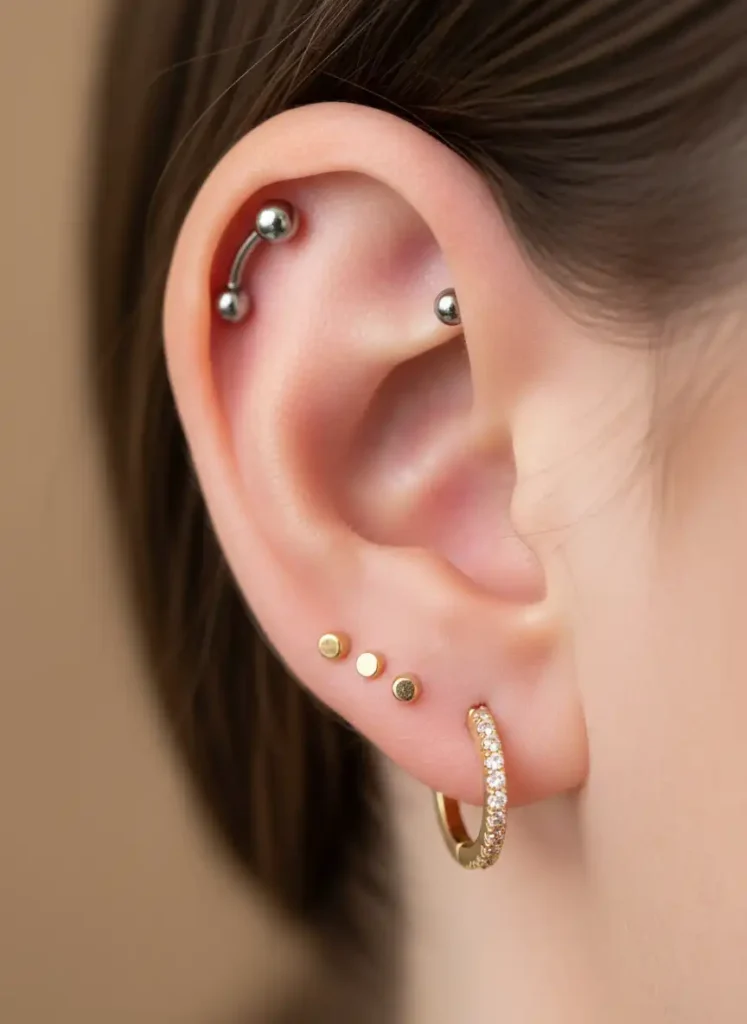
Daith and rook piercings are positioned in the inner ear, which means they add visual depth to a stack without competing with lobe or outer cartilage pieces. They work especially well if your outer ear is already busy.
Both piercings take longer to heal than standard lobe work, typically 6 to 12 months, so patience is part of the process. Once healed, a small clicker ring in the daith paired with a minimal lobe stack creates a layered look that feels complete without being crowded. These placements are not as visible in photos as helix or lobe pieces, but in person they add a detail that people notice up close.
13. Cartilage Studs That Work on Conservative Days
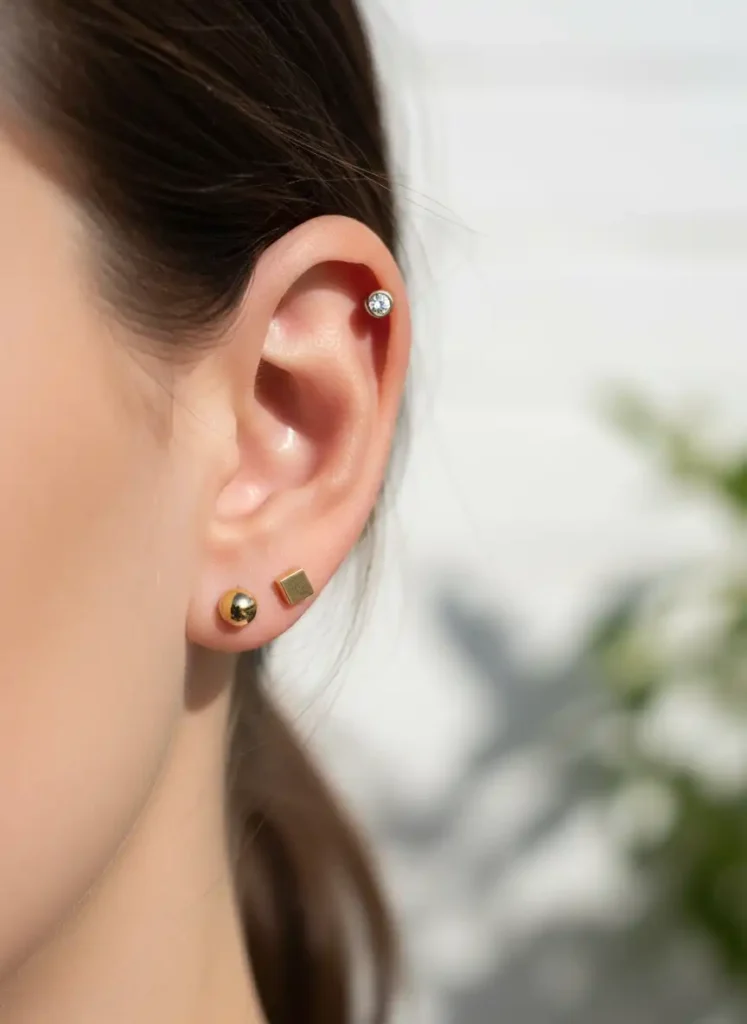
Not every cartilage piece needs to make a statement. On days where you want something subdued, a single flat-back cartilage stud in the helix is enough to signal that your ear is intentionally styled.
Flat-back labret studs are worth investing in specifically because they sit flush against the ear. They do not catch on hair or clothing, and they look clean from both the front and the back. A 3mm or 4mm stone in clear, white, or black works across most dress codes without drawing attention. It is the kind of piece that adds to your stack without requiring anyone to comment on it.
14. Staggered Sizing: Why Your Stack Looks Flat and How to Fix It
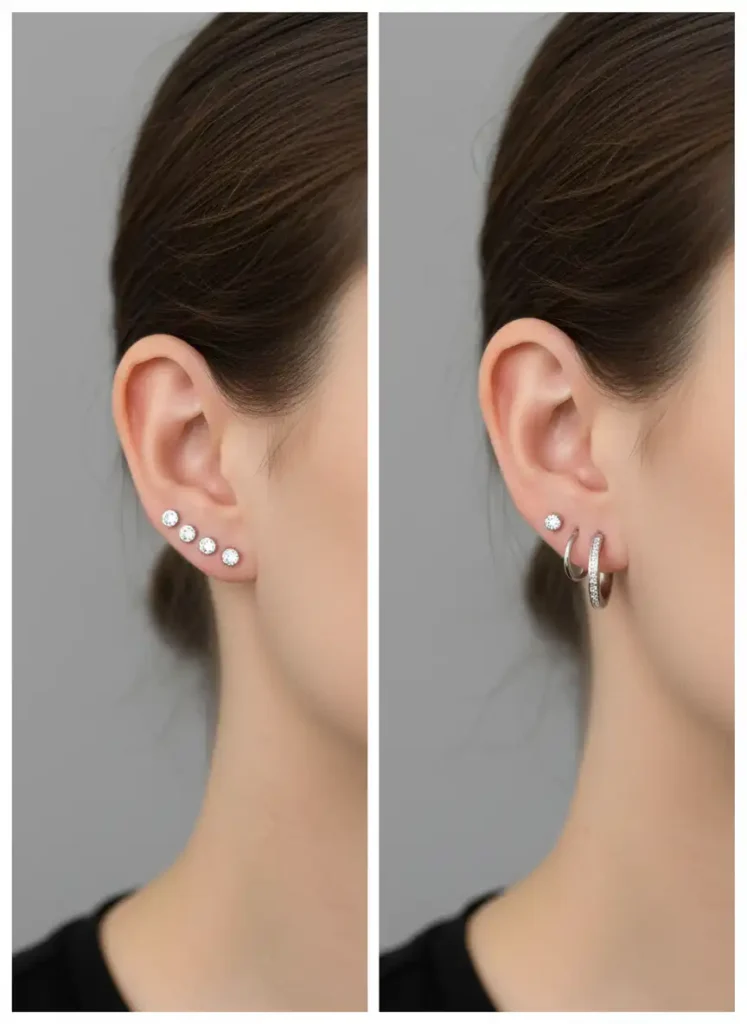
If your stack looks like a row of identical dots, the problem is usually sizing. When every piece is the same diameter or the same shape, the eye has nothing to travel across. Staggering your sizes fixes this fast.
A simple starting point:
- First lobe hole (bottom): Your largest or most detailed piece
- Second lobe hole (middle): A mid-size piece, different shape from the first
- Third lobe hole (top): Your smallest piece, ideally a flat stud or tiny hoop
This creates a natural visual gradient. It also means your most statement piece sits closest to your jaw, where it gets the most visibility. Try this with pieces you already own before buying anything new.
15. The Friday Stack: Going Bolder for the Weekend
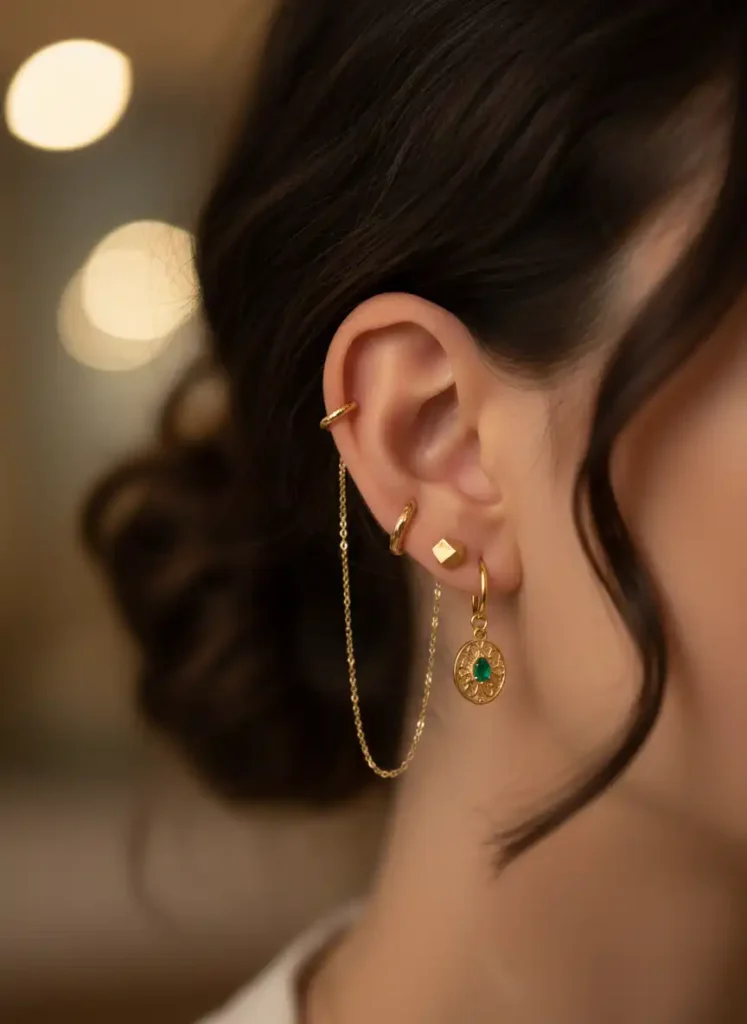
Friday is the best day to push your stack slightly past your usual comfort zone before committing to it for a full weekend. Swap one of your plain studs for a drop earring. Add an ear cuff if you do not have the cartilage piercing for a helix piece. Try two hoops in the same ear for the first time.
Small changes make a noticeable difference. You do not need to overhaul your whole stack to signal that it is the weekend. One bolder piece in your usual rotation is enough. An ear cuff is the easiest option because it requires no piercing, sits on the outer helix, and comes off as easily as it goes on.
16. Asymmetric Stacking: When Both Ears Are Different

Wearing the same stack on both ears is the default, but it is not a rule. Asymmetric stacking has been a consistent trend for a few years now, and it works because it creates visual interest without adding more jewelry overall.
The most wearable version is a simple ear on one side and a slightly fuller stack on the other. This is also practical if you are still building up one ear’s piercings and do not have matching placements yet. Lean into the difference rather than trying to work around it. It looks more intentional than it sounds, especially when the rest of your jewelry, like rings or necklaces, is kept minimal.
17. Pearl Studs in a Modern Stack
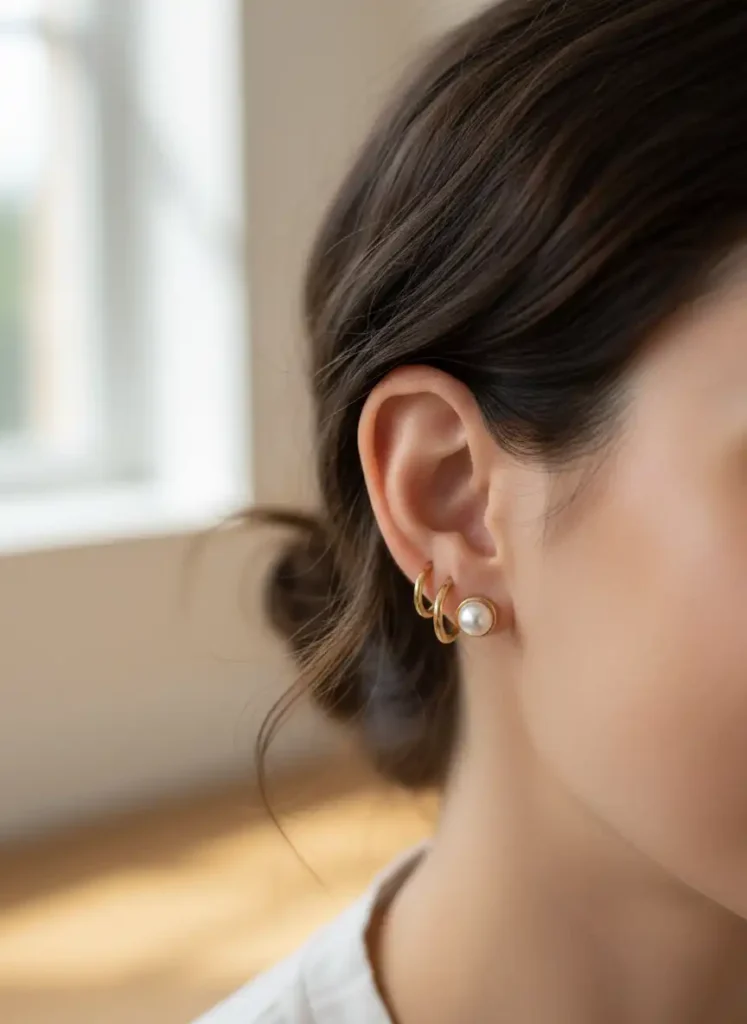
Pearl studs have moved well past the traditional single-pearl look. In a modern stack, one small pearl stud among gold pieces adds texture without looking old-fashioned. The key is keeping the pearl small, under 6mm, and pairing it with contemporary silhouettes like thin huggies or flat discs.
For a work look, a pearl in the middle lobe hole with a thin hoop below it and a small stud above reads as elegant without being formal. For weekends, swap the surrounding pieces for something more relaxed, like a small hoop with a charm. The pearl stays. It is one of the few pieces that genuinely works across both contexts without adjustment.
18. When Your Stack Feels Too Heavy: Editing Down
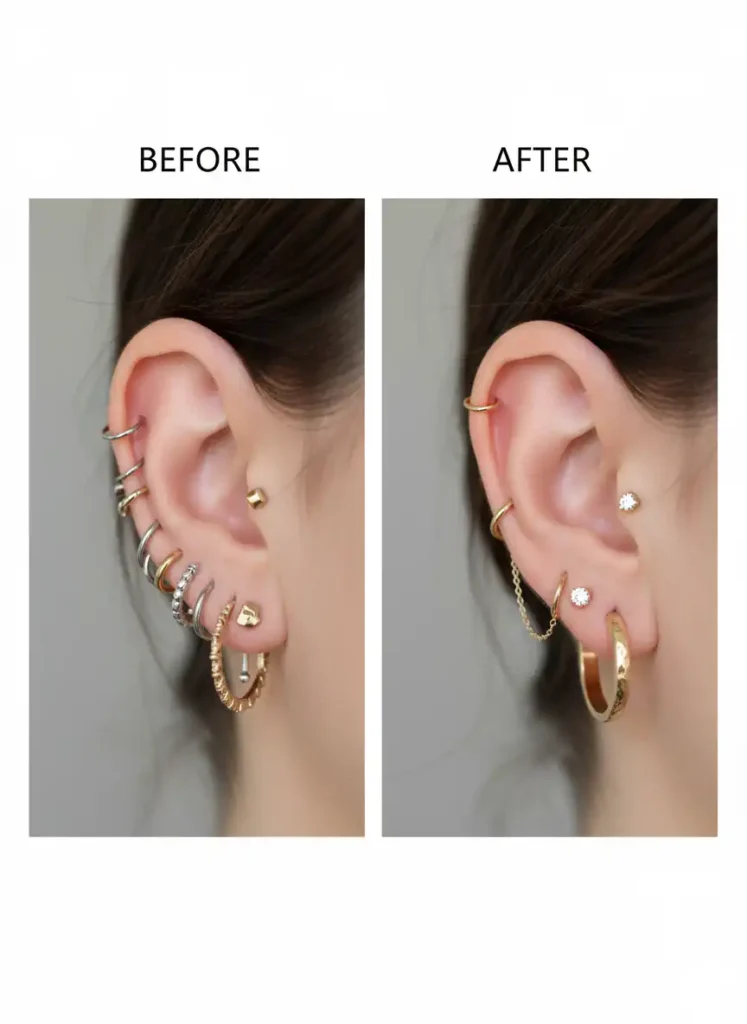
More is not always more with ear stacking. If your stack feels busy or heavy, the fix is usually removing one or two pieces rather than adding something new to balance it out.
A good editing rule: every piece should be visible on its own. If two pieces are sitting so close that they visually merge, remove the weaker one. Ask yourself which three pieces you would keep if you could only wear three. Start there. You can always add back in, but starting from a cleaner base shows you where the stack actually needs more and where it is already working.
19. Building a Stack Around One Statement Piece
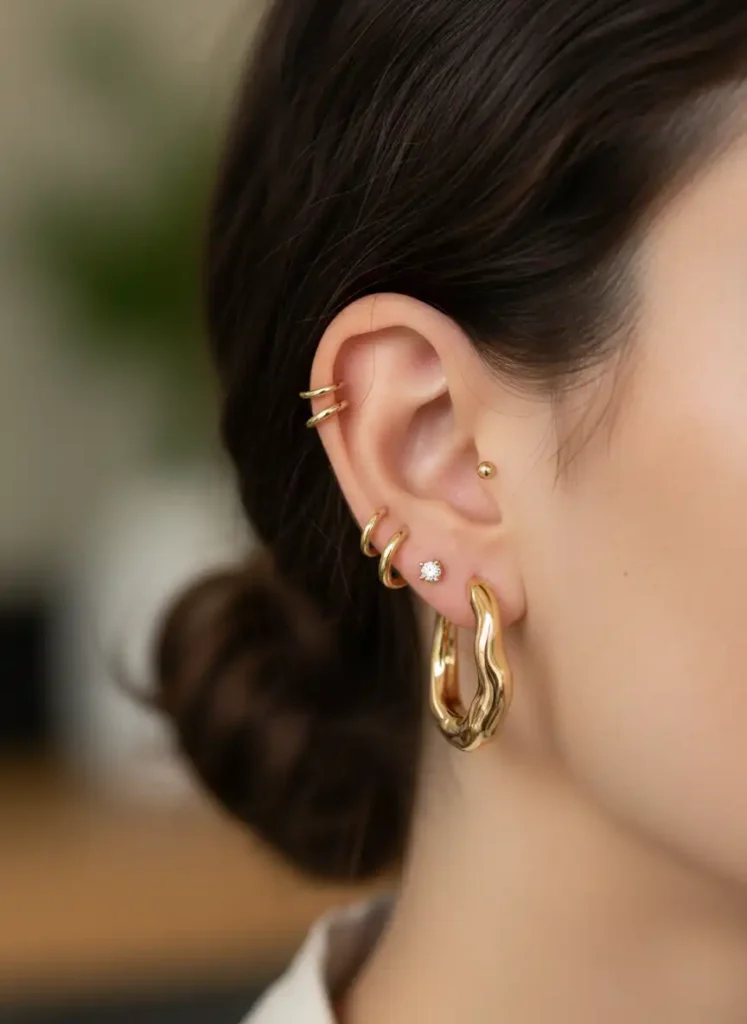
If you have one earring you love but cannot figure out how to wear it with other pieces, build the rest of the stack around it rather than alongside it. Treat it as the anchor and let everything else recede.
This works especially well with sculptural or oversized pieces that tend to compete with other statement items. One bold hoop in the first lobe hole, a tiny stud in the second, and a flat cartilage stud at the top gives you a full stack where the main piece still reads clearly. The supporting pieces add dimension without pulling focus. This approach also makes your statement pieces more wearable day to day.
20. How to Photograph Your Ear Stack for Reference

Photographing your stack is genuinely useful, not just for sharing. A photo shows you how the pieces read from a distance, which is different from what you see in a mirror at close range. It is also helpful for keeping a record of combinations that work so you can recreate them.
For the best result, use natural light from a window, pull your hair back fully, and tilt your head slightly away from the camera so the ear faces the lens. Take a photo from straight on and one from a slight angle. The angle shot usually shows depth and layering better. Keep a small folder of these on your phone. When you are in a rush and cannot remember what worked, you will thank yourself for it.
Know Your Piercings Before You Stack

Building your ear stack starts with one decision: knowing which piercings fit your lifestyle. A lobe piercing heals in just 6 to 8 weeks, making it the easiest starting point. Add a helix or conch at 3 to 6 months, and your stack starts taking shape. Cartilage placements like the daith take longer, up to 9 months, so plan those early if you want them in your final look.
You don’t need every piercing at once. Start with two or three, let them heal properly, then build. The stacks that look most intentional are the ones that were thought through, not rushed. Your ears, your timeline, your rules.
Conclusion:
A good ear stack does not require more piercings or more money. It requires better choices with what you already have. Start with two or three pieces that work together, then build slowly. The ear stacking ideas in this post are meant to be used, not just admired. Pick one combination, try it this week, and adjust from there. That is how a real stack comes together.