Simple Courthouse Wedding Dress Picks to Reuse

You want a courthouse wedding dress that looks beautiful on the day and does not sit in a closet forever after. That is smart. The best pick is one you can restyle for dinners, work events, and celebrations long after you say “I do.” This guide walks you through 22 simple, reusable styles, from short dresses and bridal suits to modest cuts and plus-size picks. You will learn what to check before you buy, which fabrics survive real life, and how to style one dress three different ways.
Start With a Dress That Earns Its Place in Your Closet
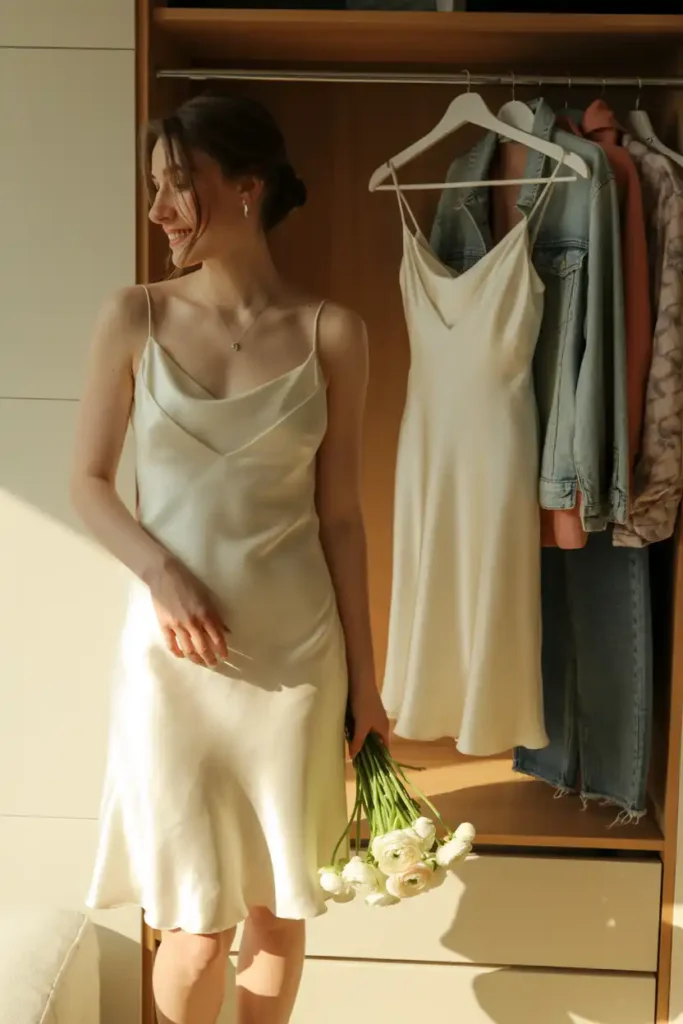
The best courthouse wedding dress is the one you reach for again three months later. Before you buy anything, ask one question: would you wear this to a nice dinner if the wedding never happened? If the answer is no, keep looking. A slip dress in ivory or soft champagne passes this test because you can dress it down with a denim jacket or dress it up with strappy heels.
Skip the corset boning, the detachable trains, and the beading that screams “wedding only.” Those details cost more and cut your wear count to one. A simple dress with clean lines does double duty. Buy the version you can restyle, then plan your outfit around shoes and jewelry you already own.
What Makes a Dress Actually Reusable
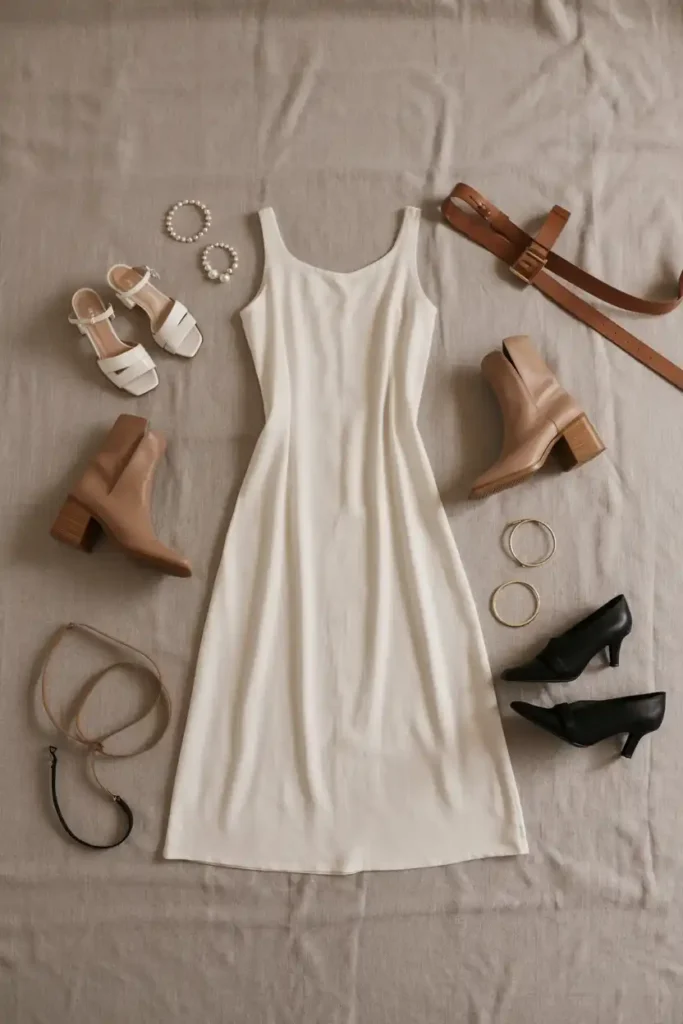
Some dresses look versatile online and disappoint in person. Here is what to check before you commit:
- Neutral color: ivory, champagne, sage, or dusty blue read as wedding-appropriate and everyday-appropriate.
- Machine-washable or easy dry-clean fabric: crepe, cotton poplin, and matte satin survive real life.
- A hemline you can sit in: knee to midi length works at a courthouse and a restaurant.
- No built-in bridal signals: heavy lace, veils sewn to the neckline, or cathedral trains limit reuse.
- Straps or sleeves you can layer: this stretches the dress across seasons.
Run your top picks through this list. If a dress checks four of five, it belongs in your cart. If it checks two, you are buying a costume, not a wardrobe piece. Choose the one that works past the ceremony.
The Short Dress That Works for a City Ceremony

A short wedding dress courthouse ceremony calls for something you can move in. Stairs, sidewalks, and a quick lunch after mean you want a hem that clears the ground and sleeves that photograph well. A structured mini in thick crepe holds its shape all day and never looks flimsy in pictures.
The reuse math here is simple. A white mini reads as bridal with pearl earrings and satin heels. Swap those for gold jewelry and ankle boots, and it becomes your go-to for birthdays and work events. Look for a boat neck or square neckline, both of which balance a short hem and keep the look grown-up. Buy one quality mini over three cheap ones.
A White Gown You Can Wear Past the Ceremony
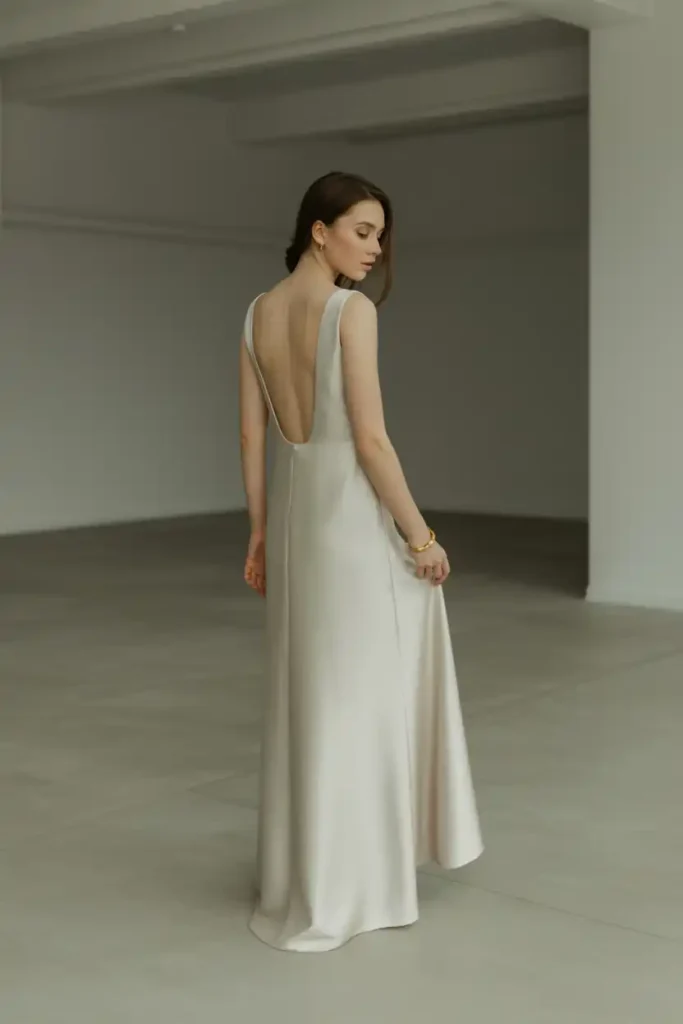
Not every white gown ends up in a garment bag forever. The trick is choosing a silhouette that reads as evening wear, not just bridal. A column or slip-style floor-length gown in matte crepe works at a black-tie event, a milestone anniversary, or a gala later on. Steer clear of ballgown skirts and heavy tulle, which lock the dress into one lane.
Think about the back, too. A low or open back turns a plain gown into something you would happily wear to a formal dinner. Keep the front clean so you can restyle it with different jewelry each time. For your courthouse wedding dress, a reusable gown costs more upfront but saves you from buying another formal piece within the year. Pick the cut you would wear to a party.
The Meshki Tamsin Dress and Why Brides Keep Buying It
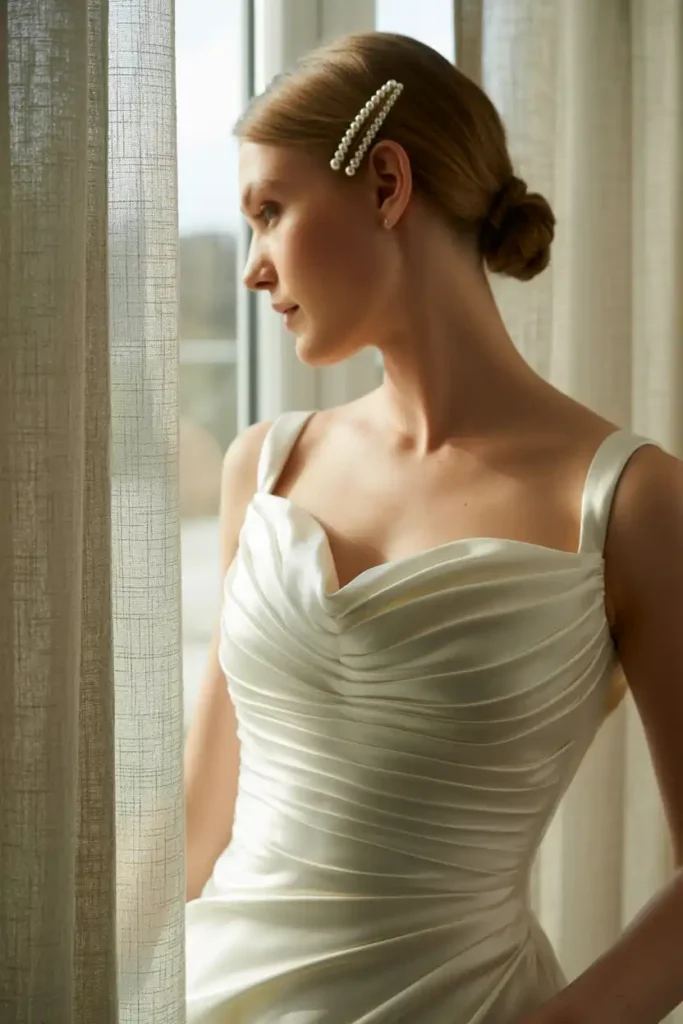
The Meshki Tamsin Dress shows up on so many courthouse brides for a reason. The ruched satin skims the body, the cowl or draped neckline flatters most shapes, and the midi length keeps it appropriate for a civil ceremony. It photographs like a designer piece at a fraction of the cost.
Here is the reuse angle you care about. In white or oyster, it works for your ceremony. That same dress in the brand’s other shades becomes a wedding guest outfit, a date-night pick, or a cocktail party dress. Buy the ivory for your day, then borrow the styling ideas for future events. One honest note: satin shows every line, so have the fit checked and wear seamless underneath. Order early since popular sizes sell out fast.
Civil Court Outfits That Skip the Dress Entirely

Some of you do not want a dress at all, and that is a smart move for reuse. A bridal suit gives you two separate pieces you can wear apart forever. The blazer goes over jeans for brunch. The trousers pair with a blouse for work. Together, they make a polished Court Marriage Outfit that looks intentional and modern.
Civil court wedding outfits work best when they fit well, so budget for tailoring. A white or cream suit off the rack almost always needs the sleeves and hem shortened. Choose a fabric with a little structure, like a wool blend or a heavy crepe, so the blazer holds its line. If white feels too bridal for reuse, a soft ivory or pale blue suit gives you the same effect with more everyday wear. Get the jacket tailored first.
Modest Styles That Feel Classy, Not Covered Up
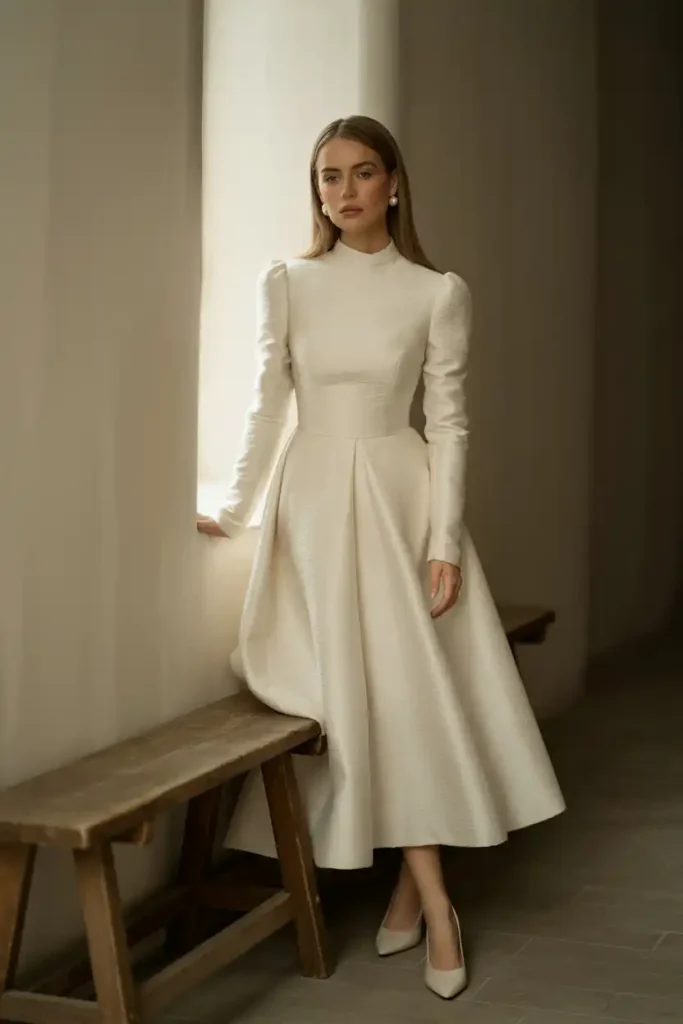
A modest classy wedding dress does not have to feel heavy or old-fashioned. Long sleeves and a higher neckline can look sharp and current when the cut is right. Look for a defined waist and a skirt that moves, which keeps a covered dress from reading as boxy. A cream or ivory crepe midi with sleeves works beautifully for a courthouse ceremony and photographs cleanly.
The reuse potential is strong here. A modest classy wedding dress in a neutral shade becomes your outfit for holiday dinners, work milestones, and religious events. Add a thin belt to change the shape, or layer a fine-knit cardigan for cooler weather. Choose a fabric with some texture so the dress looks expensive even at a modest price. Try it on sitting down to check the sleeve comfort.
Vintage Cuts That Never Look Dated in Photos
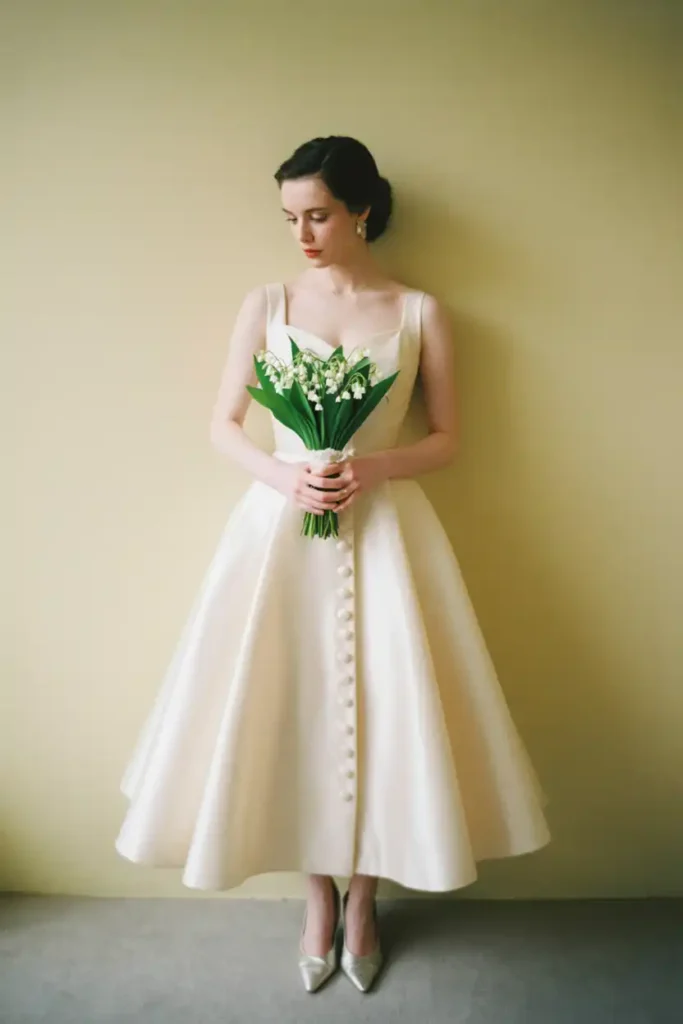
A vintage classic wedding dress gives you photos that will not look trend-locked in ten years. Tea-length skirts, sweetheart necklines, and small covered buttons feel timeless because they already survived decades. This is a good pick if you worry about your pictures aging badly.
For reuse, a tea-length vintage cut works at garden parties, anniversary dinners, and dressy events where a full gown feels like too much. A vintage elegant wedding dress in ivory or blush restyles easily with different shoes and a change of lipstick. Look secondhand first, since real vintage often costs less than a new “vintage-style” dress and comes with better fabric. Have any older piece checked by a tailor for weak seams before the day. Start your search at local vintage shops.
The Chic City Look for a Downtown Ceremony
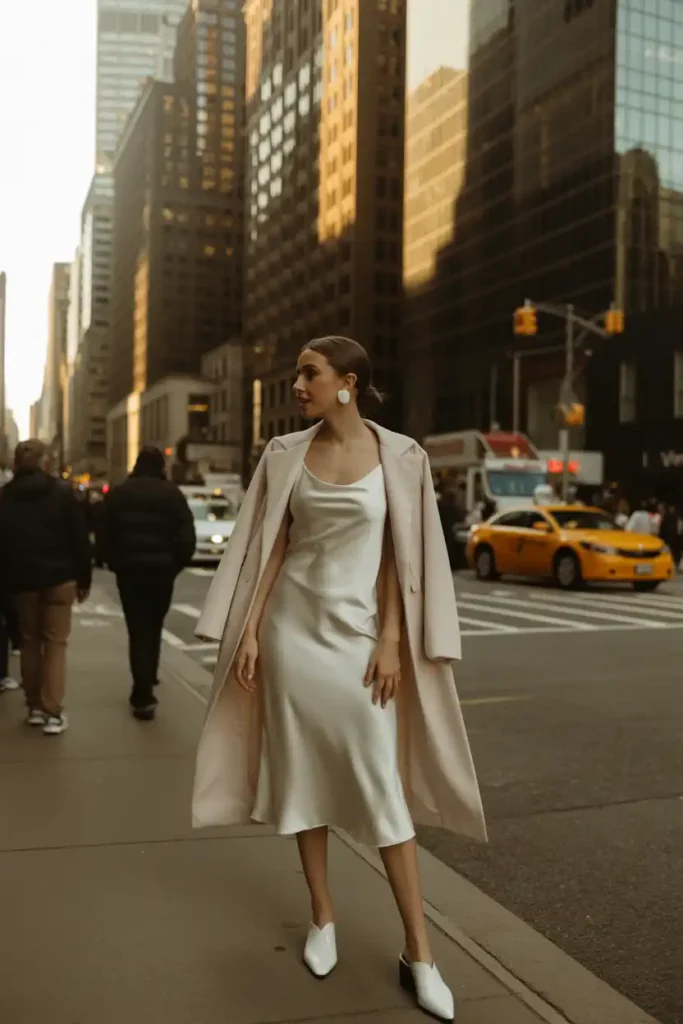
A chic city wedding calls for a look that moves with you through a downtown afternoon. Think minimal, sharp, and free of fuss. A slip dress with a tailored coat over the shoulders reads as polished without trying too hard, and it handles cabs, elevators, and city sidewalks with ease.
Here is where reuse pays off. The coat becomes part of your regular wardrobe the day after. The slip dress works for date nights and rooftop dinners. Keep the palette tight, one white and one neutral layer, so every piece plays well with the rest of your closet. Choose mules or slingbacks over anything with straps that dig in during a long day of walking. Buy the coat one size up so it layers cleanly over the dress.
Colors That Read as Bridal Without the White
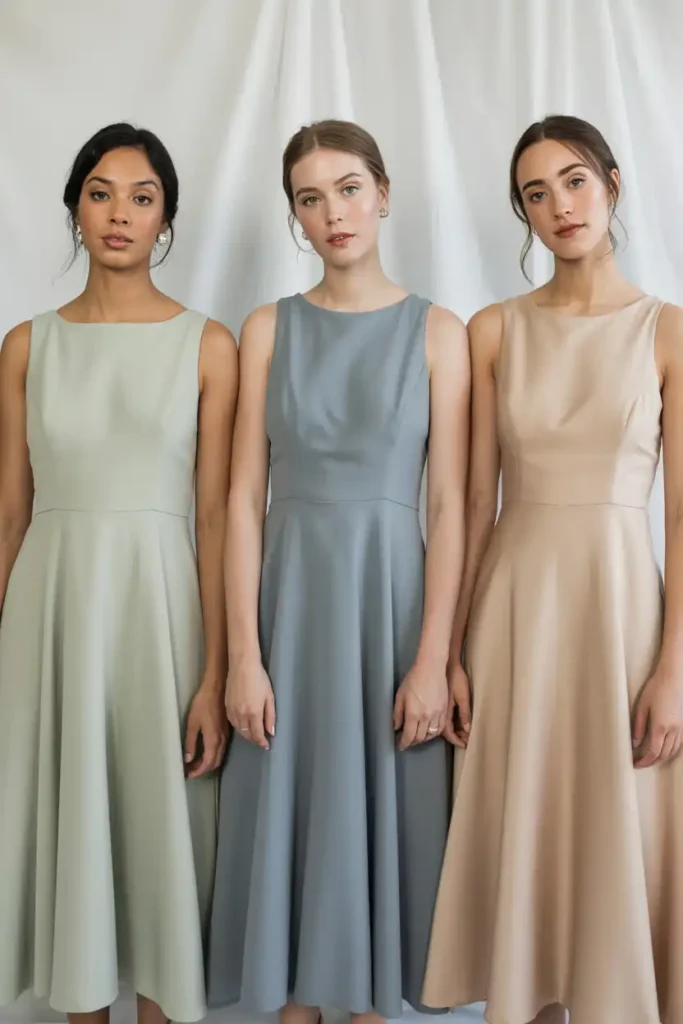
White is not your only option, and color often reuses better. A champagne, sage, or dusty blue dress still feels special at a courthouse ceremony and slides straight into your regular rotation afterward. Guests read these shades as intentional and elegant, and you get a dress that does not scream “worn once.”
Consider what suits your calendar:
- Champagne: soft, warm, and easy to restyle for evening events.
- Sage green: fresh, flattering on most skin tones, works spring through fall.
- Dusty blue: calm and photogenic, pairs well with silver or pearl.
- Blush: romantic without leaning too bridal.
Pick the color you already wear most, since you will style it more often. Order a swatch or check the dress in daylight before you buy, because screen color lies. Choose the shade that fits your real wardrobe.
One Dress, Three Ways: Ceremony to Everyday
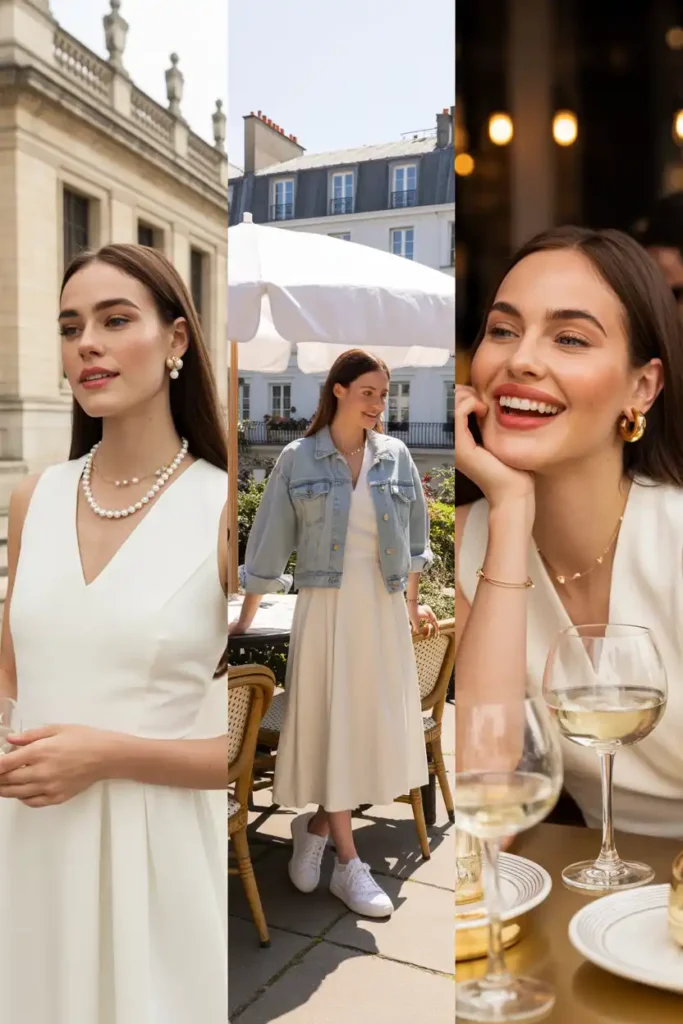
The reuse promise only works if you know how to restyle. Take one simple dress and build three looks around it. For the ceremony, keep it clean with pearl earrings and satin heels. For daytime after, add a denim or leather jacket and flat sandals. For evening, switch to a bold lip, gold jewelry, and heels.
None of this requires new shopping. You already own most of these pieces. The dress does the heavy work, and your accessories change the mood. Write down your three planned outfits before the wedding so you actually wear the dress again instead of letting it hang. Keep the dress in a breathable garment bag so it stays ready. Plan your second and third outfit now.
Fabric Choices That Survive Real Life
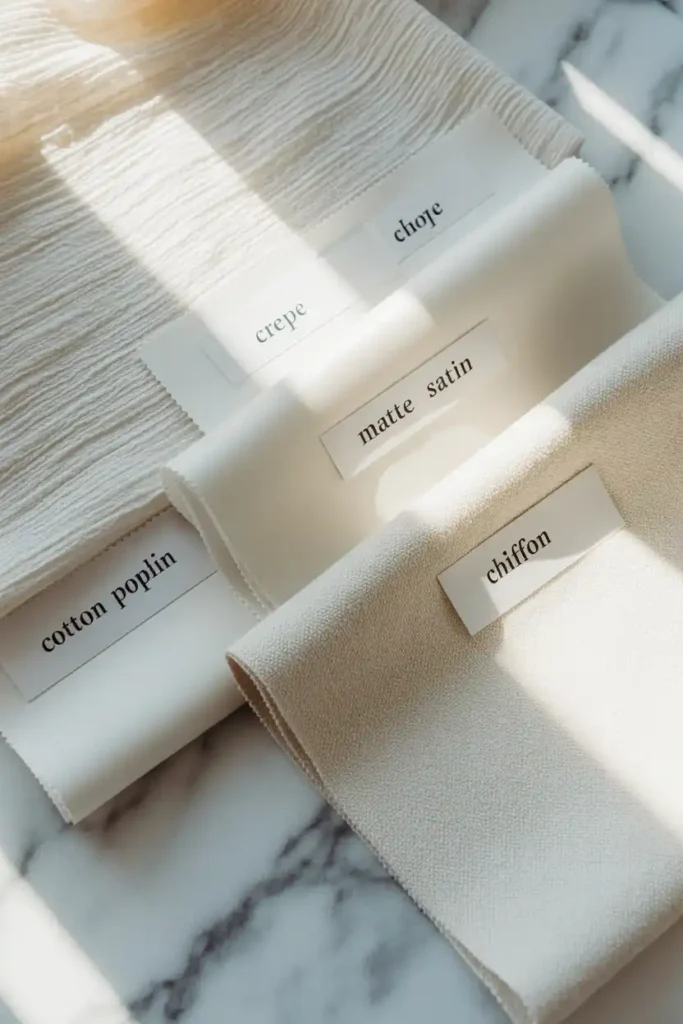
Fabric decides whether your dress reappears or hides in the closet. Delicate materials wrinkle, snag, and stress you out. Practical fabrics let you sit, eat, and wear the dress again without a dry-cleaning bill each time.
Here is how the common options hold up:
- Crepe: holds shape, resists wrinkles, travels well. A strong reuse pick.
- Matte satin: elegant and photogenic, but shows lines, so check the fit.
- Cotton poplin: crisp and washable, great for daytime and warm weather.
- Chiffon: pretty but delicate, better for one-off wear than daily use.
For a dress you plan to keep, crepe wins most of the time. It photographs clean and forgives a full meal. Feel the fabric in person before buying, since weight matters as much as the name on the tag. Choose the material that fits your everyday life.
The Rehearsal Dinner Outfit You Can Wear Twice
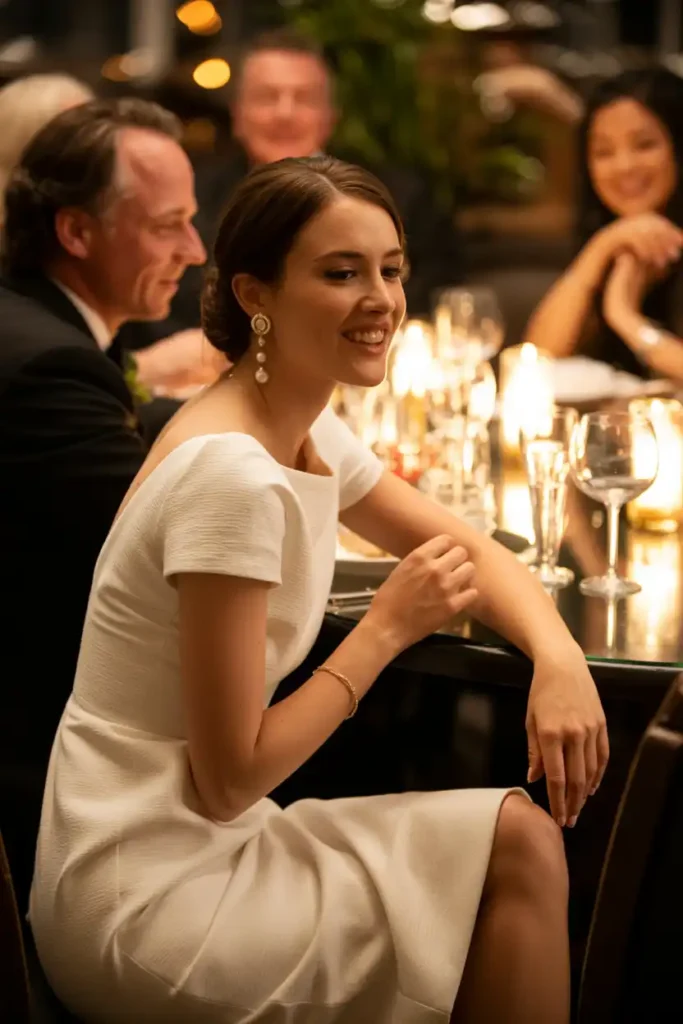
Your rehearsal dinner outfit deserves the same reuse thinking. Many brides buy a second white dress for the night before, then never touch it again. Choose one you can wear to future dinners, work events, or someone else’s celebration, and the cost makes sense.
A fitted knee-length dress in white or cream with a bit of texture works for the rehearsal and beyond. Keep the styling soft with drop earrings and a thin bracelet. If your main dress is long, pick something short for the rehearsal so the two nights feel different in photos. Look for a dress with pockets if you can find one, since it makes a long dinner more comfortable. Pick a piece your future self will grab often.
Shoes That Pull Double Duty
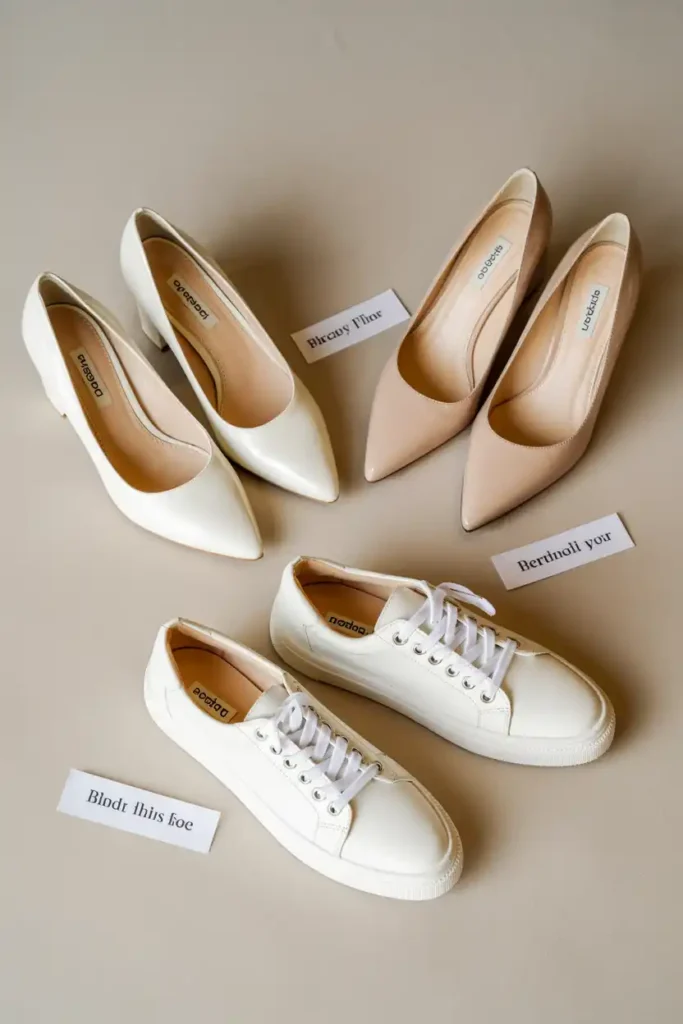
Shoes make or break your reuse plan, and comfort matters on a courthouse day full of walking. Skip the single-use satin heels you will never wear again. Choose shoes that work with the dress now and with jeans later.
Three pairs cover almost every ceremony:
- Ivory block heels: stable on courthouse stairs, easy to rewear for events.
- Nude pointed pumps: lengthen the leg, go with everything you own.
- White leather sneakers: modern with a mini, perfect for a city ceremony.
Break in whatever you pick at least a week before the day. Nothing ruins photos faster than a pained smile from tight straps. If you want one pair only, choose the nude pump, since it reuses across your whole wardrobe. Buy comfort first and style second.
Plus-Size Picks That Fit and Flatter
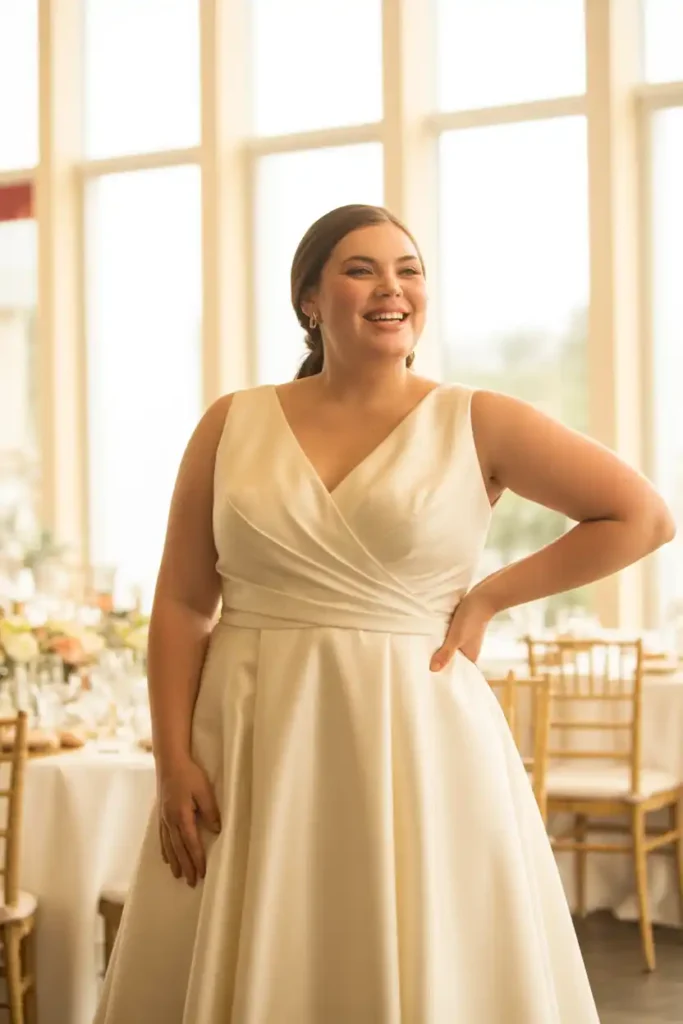
A wedding reception dress for bride plus size should fit at the shoulders and waist first, since those are the hardest spots to alter. A wrap bodice or defined waist flatters most shapes and gives you room to move and breathe through a long day. Look for stretch in the fabric so the dress works before and after a big meal.
For reuse, a wrap dress in ivory or a soft neutral becomes a wardrobe staple. You will wear it to showers, dinners, and events for years. Order two sizes if you shop online, since plus-size fit varies wildly between brands, and return the one that does not work. Build in time for alterations, because a small nip at the waist changes everything. Choose the cut that fits your bust cleanly.
Elegant Details That Make a Simple Dress Look Expensive
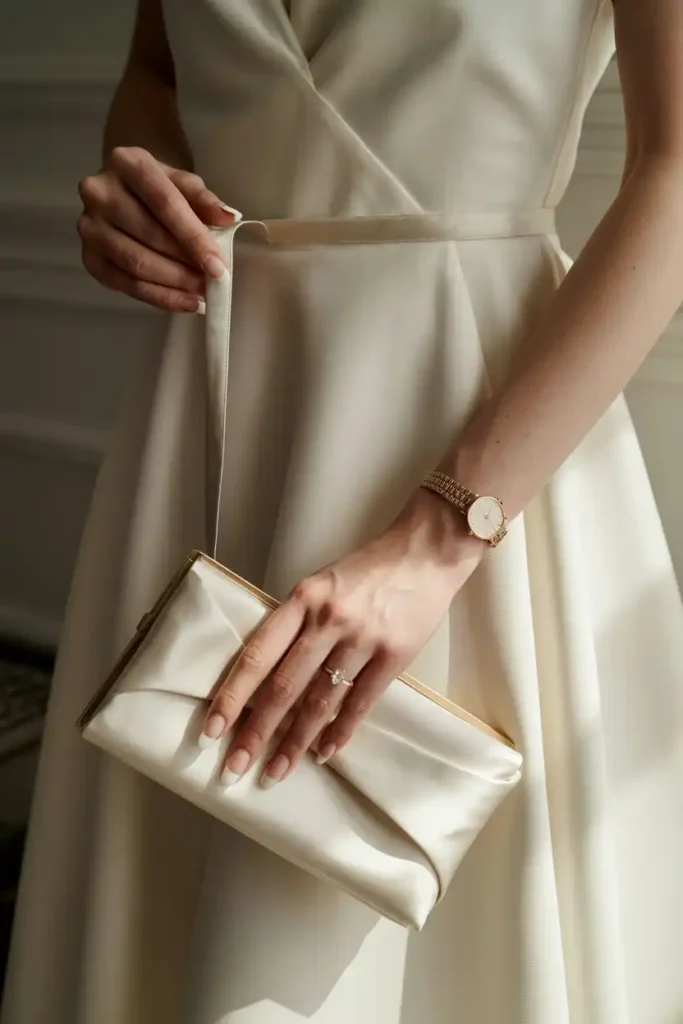
An elegant courthouse wedding often comes down to small details, not a big dress. A plain ivory dress looks polished the moment you add a satin belt, a structured clutch, and clean jewelry. These finishing pieces cost little and reuse endlessly.
Focus your budget on three things: a well-cut dress, one good pair of shoes, and quality accessories. Skip the trendy hair vine and the oversized bouquet, both of which date fast and rarely reappear. A single gold cuff or a strand of pearls does more for your photos than a pile of fussy add-ons. Keep your nails and hair simple so the outfit reads clean. Invest in accessories you will wear long after the day.
How to Style One Dress Across Seasons
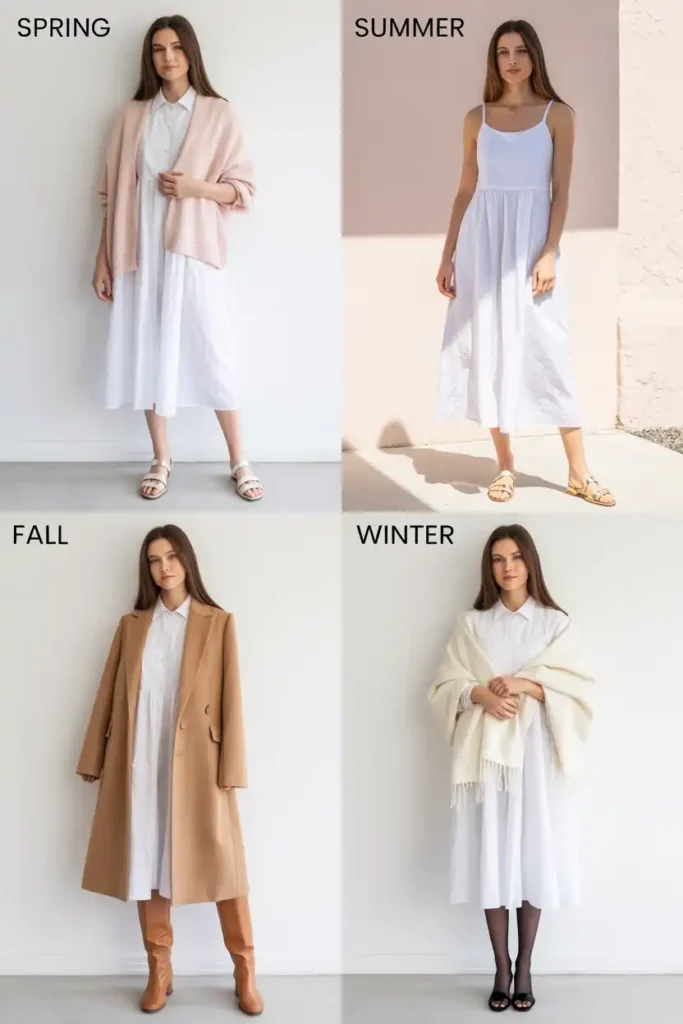
A dress you can wear year-round earns its cost several times over. The same white or neutral midi shifts through the seasons with a few layering changes. This is how one purchase becomes a dozen outfits.
Here is the seasonal breakdown:
- Spring: add a fine-knit cardigan and ballet flats.
- Summer: wear it bare with strappy sandals.
- Fall: layer a camel coat and ankle boots.
- Winter: add sheer tights and a wool wrap.
Buy the dress with sleeves or straps you can layer over, since a strapless cut limits your cold-weather options. Store it somewhere you will see it, because out of sight means out of rotation. Plan one seasonal outfit now so the dress goes back to work right after the wedding.
Where to Shop Without Wasting Money

Smart shopping saves you from a dress you regret. Start with brands known for reusable, minimal styles rather than traditional bridal salons, where prices climb fast for single-use gowns. Contemporary labels and secondhand sites often carry cleaner cuts at better prices.
Try this order when you shop:
- Secondhand and resale first, for real designer fabric at a discount.
- Contemporary brands next, for modern minimal shapes.
- Bridal salons last, only if you want a specific traditional look.
Read the return policy before you order online, and give yourself at least six weeks for shipping and alterations. Order two sizes when a brand’s fit runs unpredictable, then send back the one that misses. Set a firm budget before you browse so the process stays calm.
Fixing the Most Common Styling Mistakes
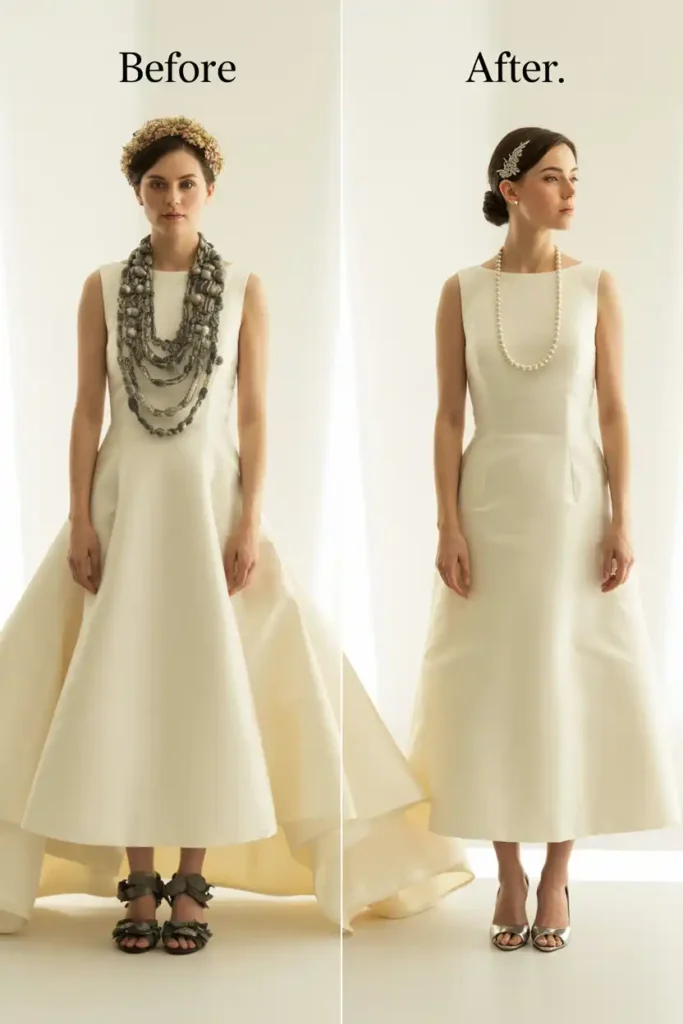
A few small mistakes make a good dress look off in photos. The most common one is over-accessorizing. When the dress is simple, one or two pieces of jewelry beat a full set every time. Another is the wrong shoe color, which cuts the leg line and throws off the whole look.
Watch for these traps:
- Too many accessories competing for attention.
- Shoes that clash with the dress undertone.
- Skipping alterations, which leaves the dress looking off the rack.
- Choosing a fabric that wrinkles the moment you sit.
Fix these before the day, not during. Do a full dress rehearsal in your complete outfit, sit down, walk around, and check the mirror. Photograph yourself to see what the camera sees. Edit your look down until every piece feels deliberate.
Building a Small Bridal Wardrobe Instead of One Dress
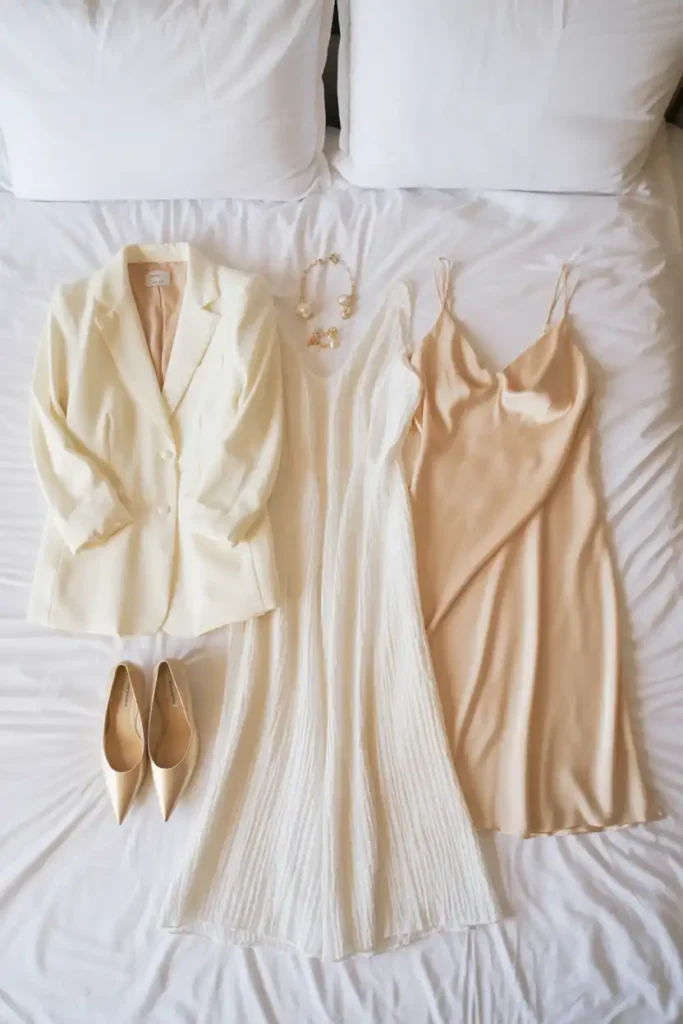
Think past the single dress. If you build a tiny capsule of two or three coordinating pieces, you get more outfits and more reuse for close to the same cost. A slip dress, a blazer, and one great pair of shoes can cover your ceremony, your rehearsal dinner outfit, and months of events afterward.
The pieces should share a palette so they mix easily. Stick to ivory, cream, and one soft neutral, then let accessories add variety. This approach suits brides doing more than one event, like a courthouse ceremony followed by a party. Choose pieces you already know flatter you rather than chasing new trends. Start with one anchor dress, then add around it.
A Simple Checklist Before You Buy
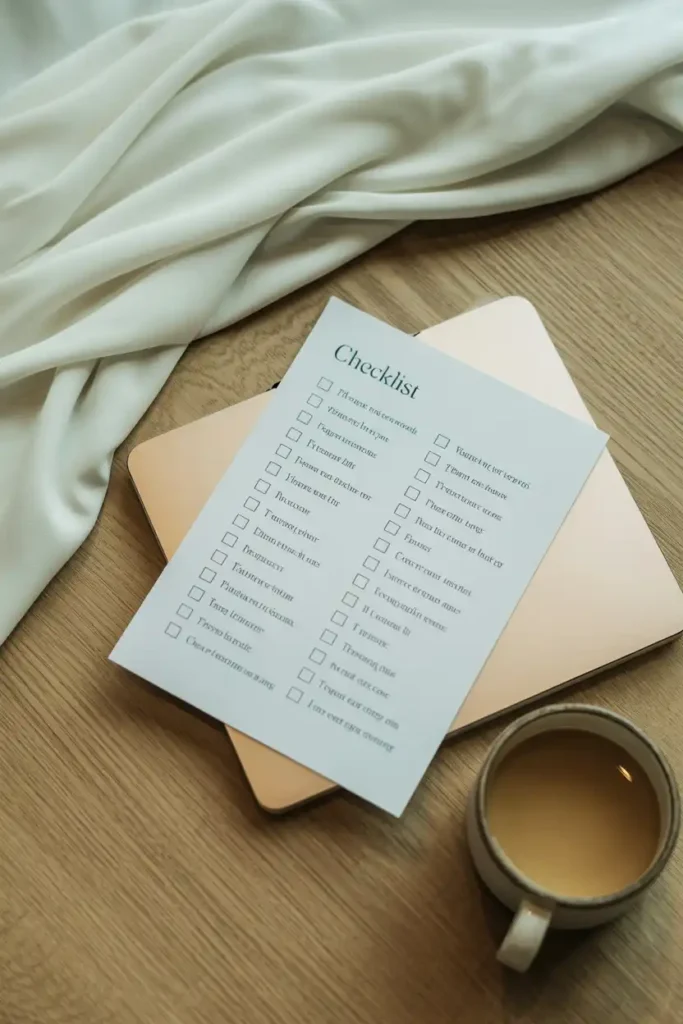
Before you commit to any Court Marriage Outfit, run through a final check. This keeps you from buying on impulse and regretting it later. A few minutes here saves you money and closet space.
Ask yourself:
- Would I wear this again if the wedding never happened?
- Does the color work with shoes and jewelry I already own?
- Can I sit, eat, and walk comfortably in it?
- Is the fabric easy to clean and store?
- Does it fit at the shoulders and waist, or need only minor alterations?
If you answer yes to four or five, buy it with confidence. If most answers are no, keep looking. The right dress feels good on the day and useful long after. Order early enough to leave room for alterations, then hang it where you will see and rewear it.
Conclusion:
Your courthouse wedding dress should earn its place in your closet, not just your wedding album. Choose a simple, well-cut style in a neutral color, pick a fabric that handles real life, and plan two or three outfits you can build around it later. Skip the single-use details and put your money into a dress, shoes, and accessories you will reach for again. Run every option through the checklist before you buy. Order early, leave room for alterations, and hang it where you will see it. The right dress feels good on the day and useful for years after.