21 Lace Wedding Dress Details Worth Paying Extra For
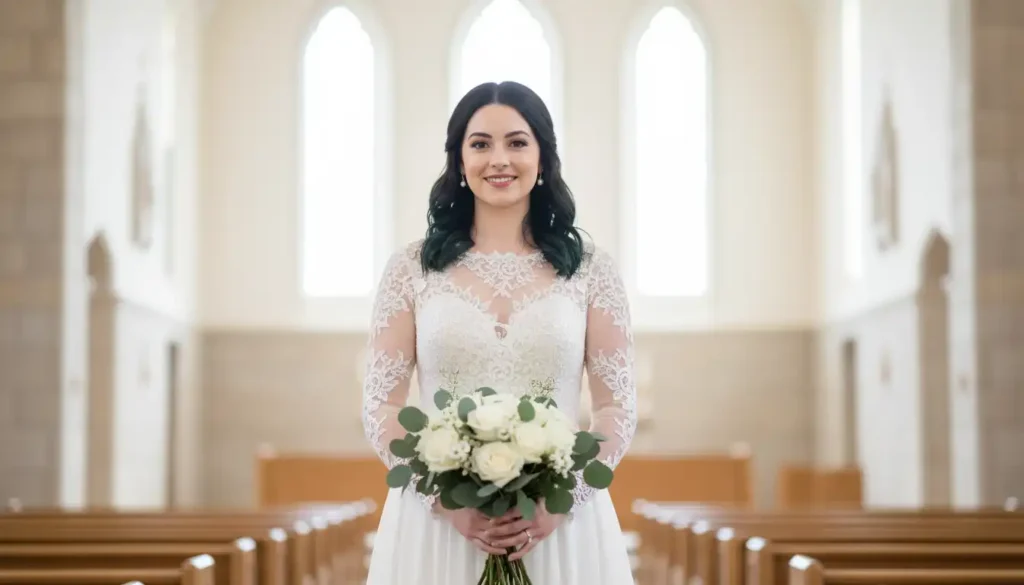
A lace wedding dress can look stunning or surprisingly flat depending on the details. The fabric, the finish, the way lace is applied, all of it shows up in photos whether you planned for it or not. This guide breaks down 21 specific details that genuinely change how a lace wedding dress looks and wears. No filler. Just the decisions that matter before you say yes to the dress.
1. The Long Slim Silhouette That Makes Lace Look Intentional
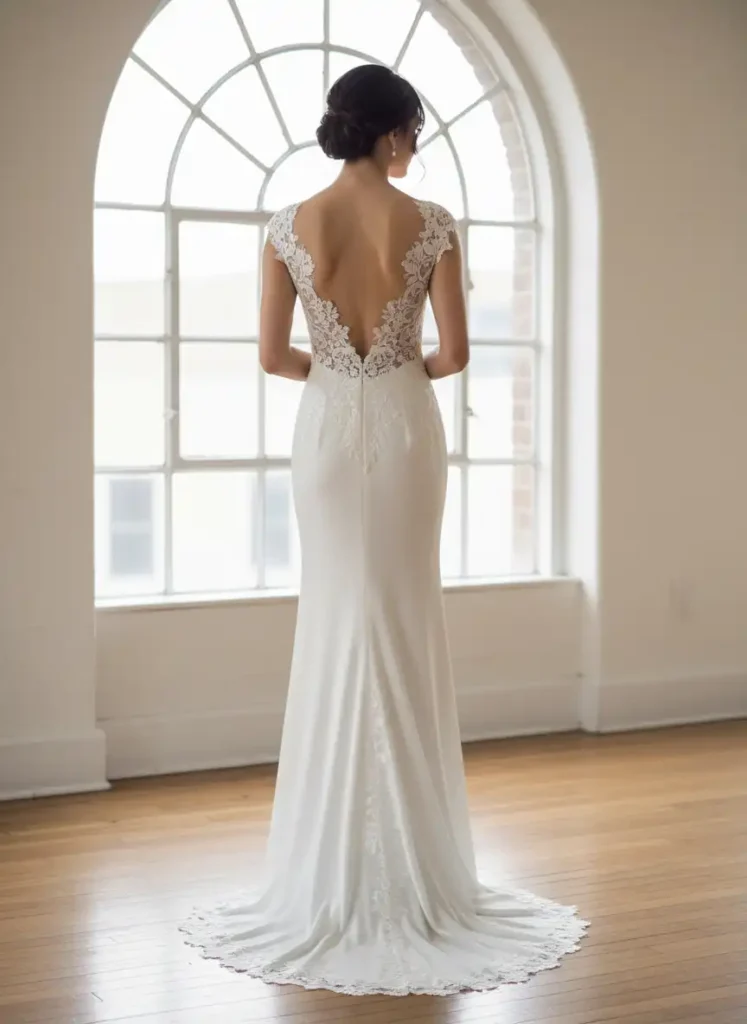
If you have a lean or athletic frame, a long slim silhouette is one of the best ways to let lace do the talking. The fitted cut keeps the dress clean while the lace pattern creates texture without bulk. There’s nothing fussy about it. It’s a dress that looks expensive because the structure is doing real work.
The key is finding lace that works with the silhouette, not against it. Chantilly lace lies flat and photographs beautifully on fitted cuts. Avoid heavy guipure lace on slim gowns since it adds visual weight. Ask your bridal consultant specifically for stretch lace panels if you want comfort alongside structure.
2. Boho Bridal Details That Still Look Polished
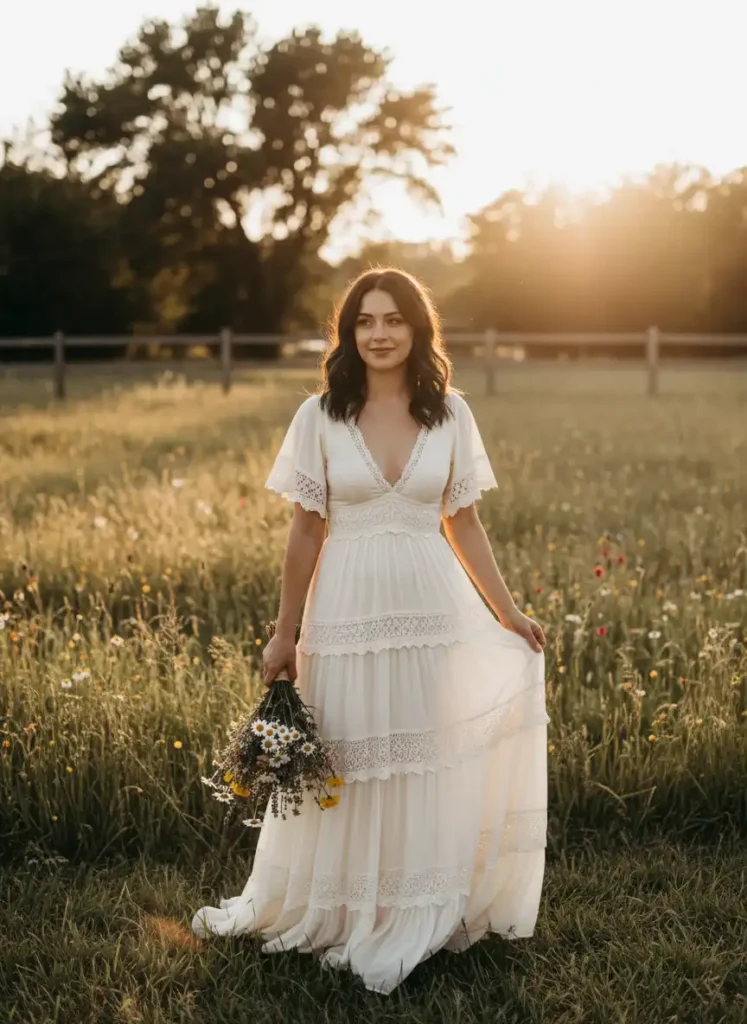
Boho bridal gets a bad reputation for looking too casual or unfinished. The difference between a boho dress that photographs well and one that doesn’t usually comes down to the lace placement. Lace at the cuffs, collar, or hemline adds definition. Without it, tiered dresses can look like they belong at a music festival rather than a wedding.
Look for boho gowns that use lace as a structural anchor. BHLDN and Free People Wedding both carry styles where lace grounds an otherwise relaxed silhouette. If you love the laid-back aesthetic but want something that reads bridal, prioritize lace trim over all-over embroidery. It gives you the softness without losing the occasion.
3. Wedding Dress with Lace and Sleeves: Why This Combo Works
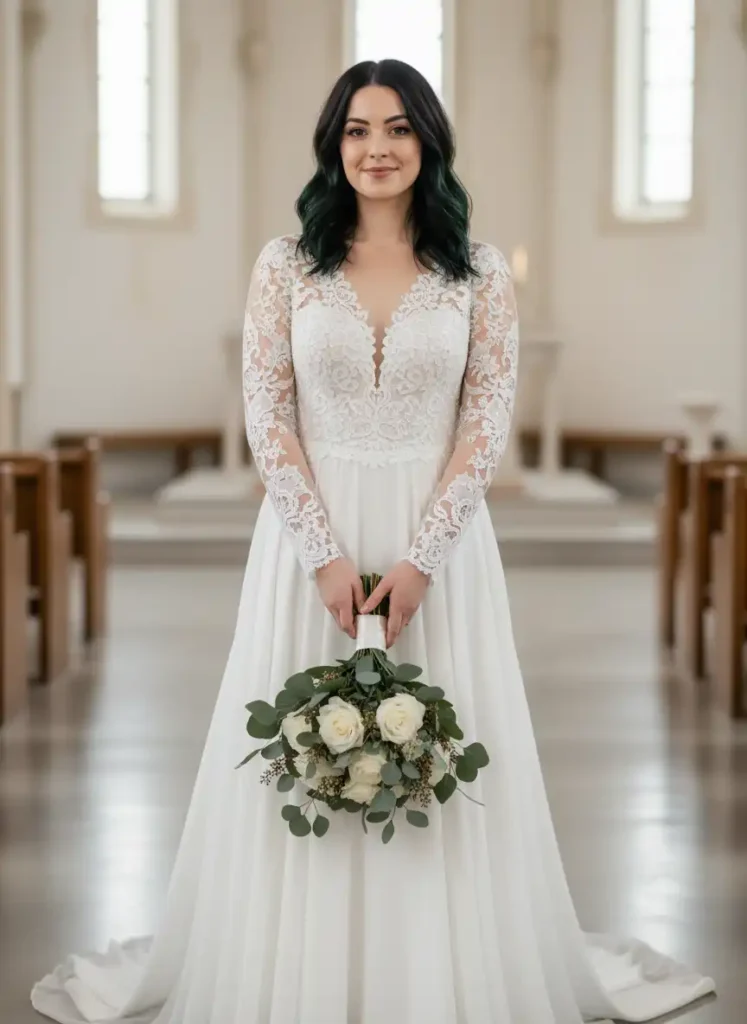
Lace sleeves solve a specific problem: you want coverage without heaviness. Sheer lace sleeves give your arms presence in photos without the stiffness of structured sleeves. They also photograph well in both natural and indoor light, which matters more than most people think when planning a ceremony.
What you need to watch out for is the lace pattern matching between the sleeve and bodice. Mismatched lace scales, like a large floral on the bodice paired with fine lacework on the sleeve, looks unfinished. Ask the bridal studio to show you gowns where the lace is cut from the same source fabric throughout. Monique Lhuillier and Stella York both do this particularly well across different price points.
4. White Wedding Dresses with an Elegant Edge
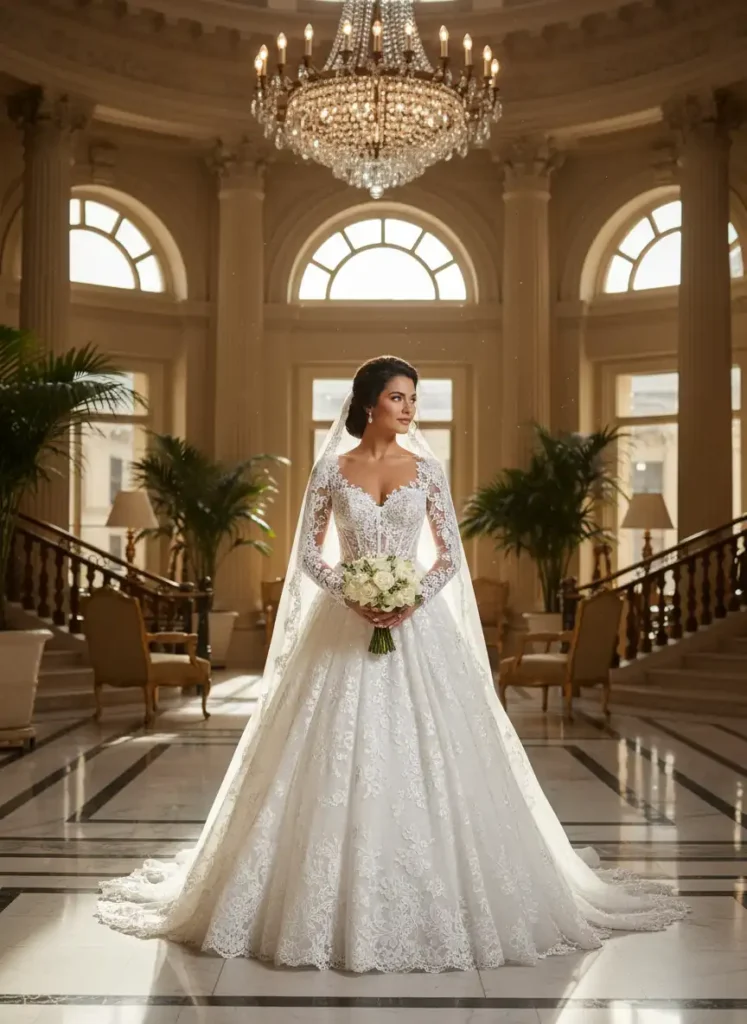
Pure white is harder to wear than ivory or champagne for most skin tones, but when it works, it works. If you’re set on white, the lace detail is what keeps it from feeling clinical. Dense floral lace softens a stark white gown and adds dimension that photographs as texture rather than just brightness.
Test white against your skin in natural light before committing. If it washes you out, move toward off-white or ask to see the same style in ivory. If the white gown has a lace overlay, the pattern itself creates shadow and depth, which reduces the harshness against your skin. Try both options before dismissing either.
5. Wedding Dresses for Brides in Their 40s: What to Look For
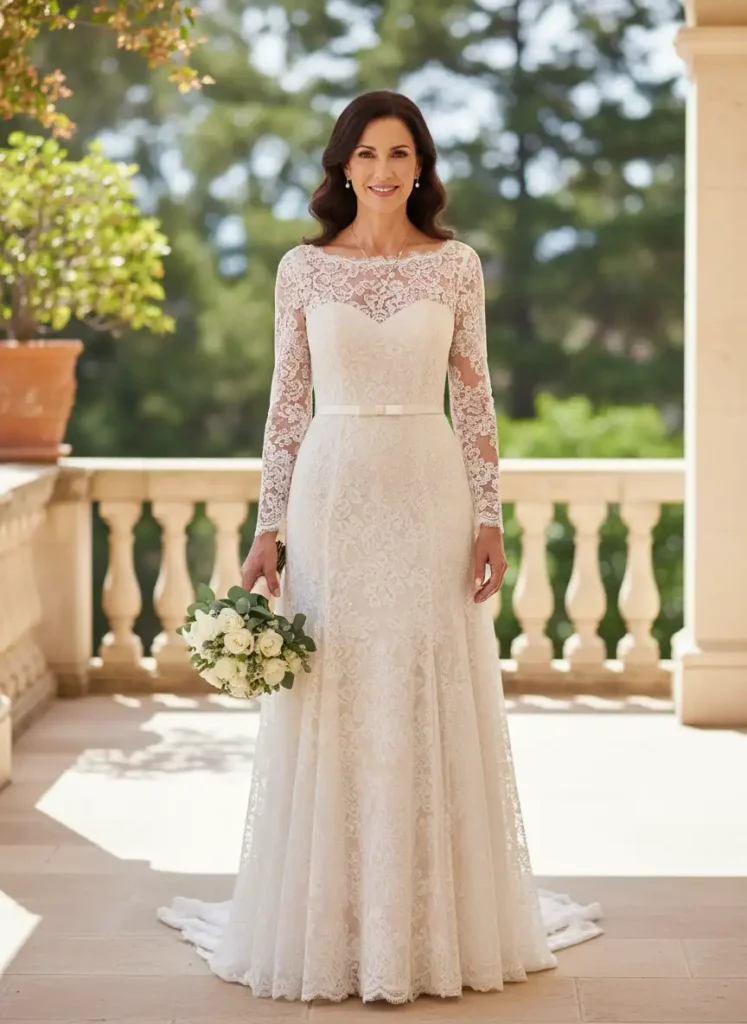
If you’re getting married in your 40s, the advice you keep getting, “wear what makes you feel good,” is true but not useful. What actually helps is knowing which lace details add elegance without adding visual age. Lace at the neckline and sleeves tends to work well. Heavy all-over lace can look stiff, especially in denser patterns.
Look for gowns with strategic lace placement rather than full lace construction. A crepe or silk base with lace appliqué at the bodice and sleeves reads polished and deliberate. It’s also more comfortable for a full day of wear. Designers like Pronovias and Augusta Jones consistently build for this kind of construction.
6. The Ivory Waltz Gown: A Length Worth Considering
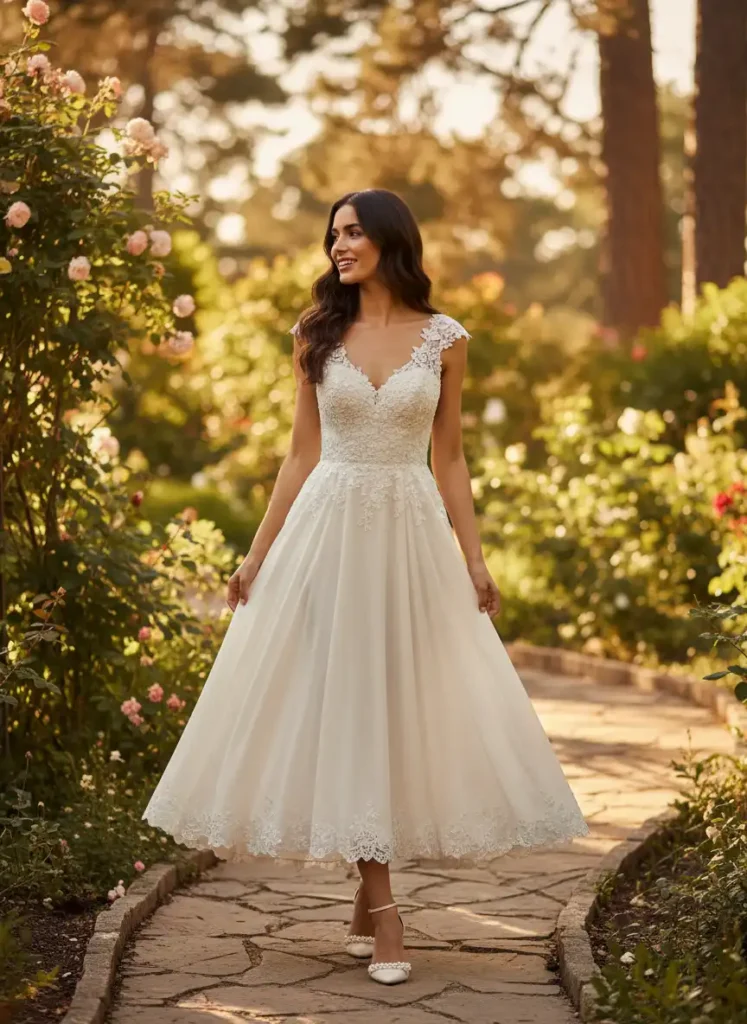
Waltz length, meaning ankle-grazing rather than floor-length, gets overlooked because most brides default to a full train. But if you’re planning a garden party wedding, a beach ceremony, or just want to actually move without lifting your skirt every ten minutes, this length is worth serious consideration.
Ivory works better than white for waltz-length gowns because the warmer tone makes the shorter hemline feel intentional rather than like an unfinished alteration. Lace hem detailing is the detail that seals it. A simple scalloped lace edge at the ankle makes the cut feel designed, not accidental. Ask your seamstress to add it if the gown you love doesn’t already have it.
7. Lace and Soft Chardonnay Sequin: A Pairing That Photographs Beautifully
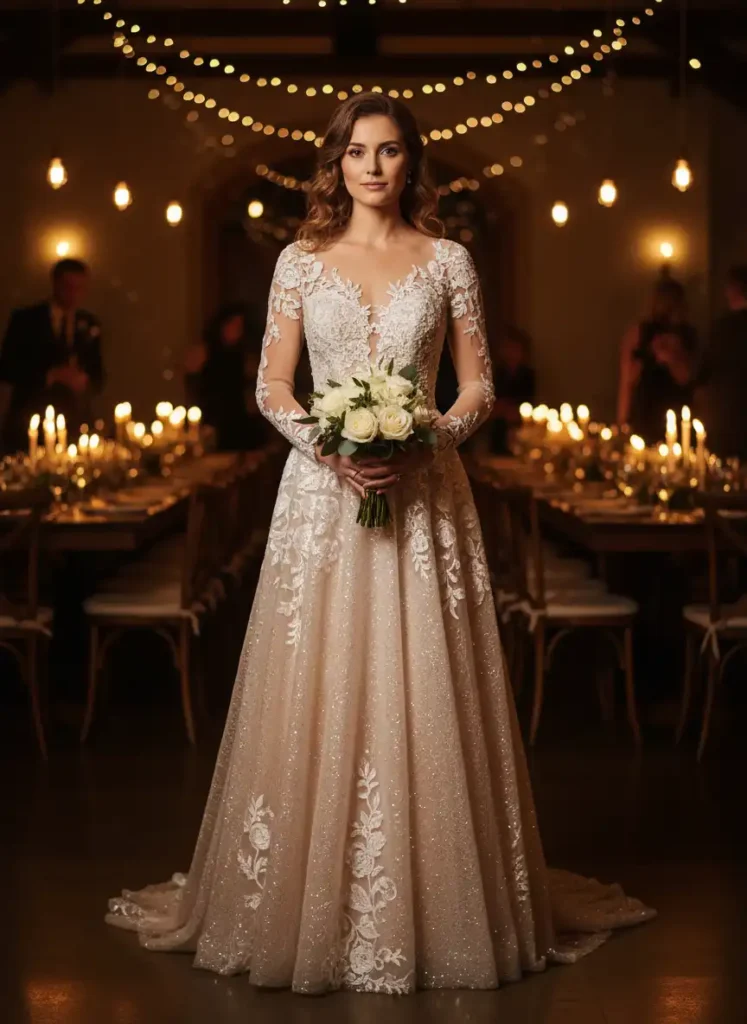
Chardonnay sequin is that specific shade of warm champagne that catches light without looking costumey. When it’s paired with lace, the texture contrast is what makes it work. The lace grounds the shimmer and keeps the dress feeling bridal rather than evening wear.
The risk with sequin and lace combinations is that they can look inconsistent if the lace color doesn’t match the sequin tone exactly. Always check in natural light and reception lighting. Gowns from Rebecca Ingram and Maggie Sottero carry this combination well and tend to nail the tonal matching between fabrics. Bring your veil fabric swatch when you try these on.
8. David’s Bridal Wedding Dresses: What the Lace Options Actually Look Like
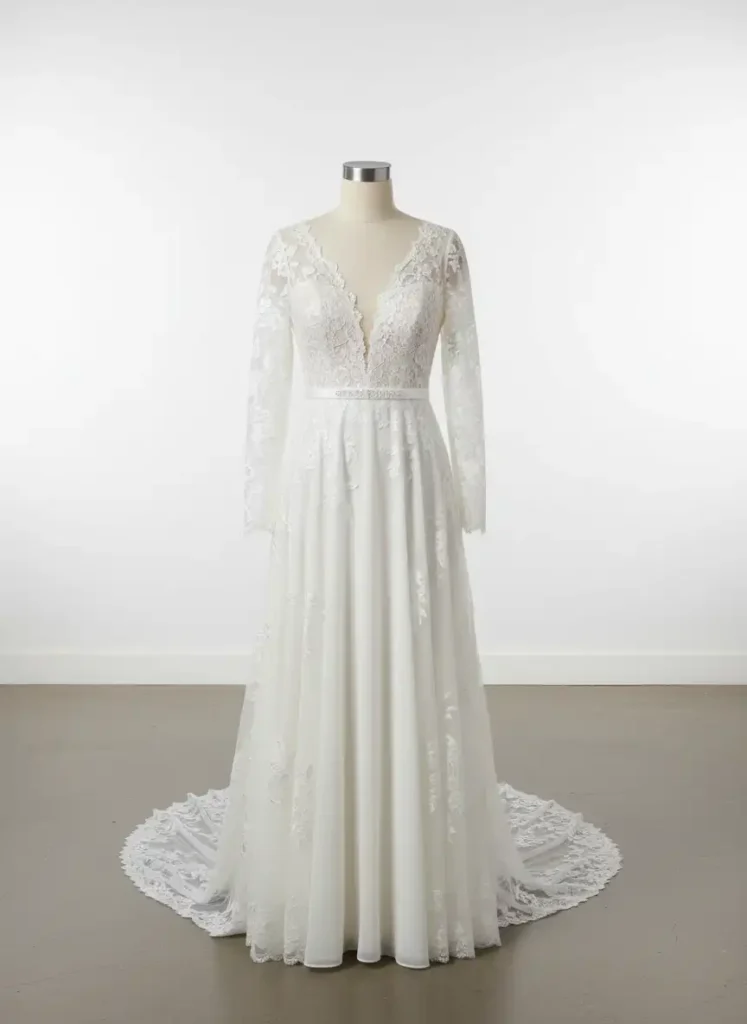
David’s Bridal gets dismissed by a lot of bridal communities, but their lace options have improved significantly. If your budget is under $1,500, they’re one of the most accessible places to find a lace wedding dress in multiple sizes with fast turnaround. The WG3964 and Melissa Sweet collection both feature quality lace appliqué that holds up in photos.
What matters when shopping there is to look at the lace construction, not just the style. Run your hand across the bodice. If the lace feels plastic or overly stiff, it will photograph flat. Their better lace options have a soft hand feel and dimensional texture. Try styles in person rather than ordering online if lace quality matters to you.
9. Plus Size Lace Wedding Dress: Finding the Details That Work For Your Body
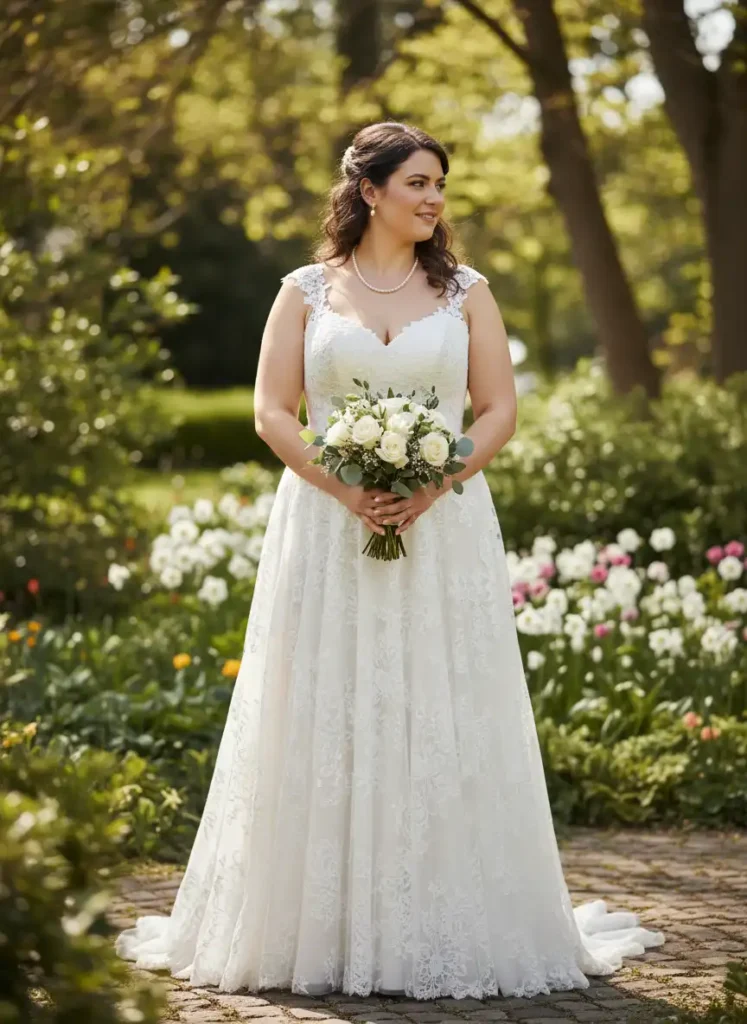
The plus size bridal market has expanded, but the advice around it hasn’t always kept up. Lace on a plus size gown works best when it’s used to draw attention where you want it. A lace bodice with a plain or minimally embellished skirt keeps the silhouette clean and the visual weight balanced.
Avoid lace with a very large repeat pattern if you’re concerned about proportion. Smaller floral or geometric lace reads as texture in photos rather than as a pattern that has to “fit” within the dress dimensions. Brands like Essense of Australia and Adrianna Papell carry dedicated plus size lines where the lace is scaled specifically to the larger cut, not just resized from a sample.
10. Wedding Dresses with Diamonds and Lace: How to Layer Without Overdoing It
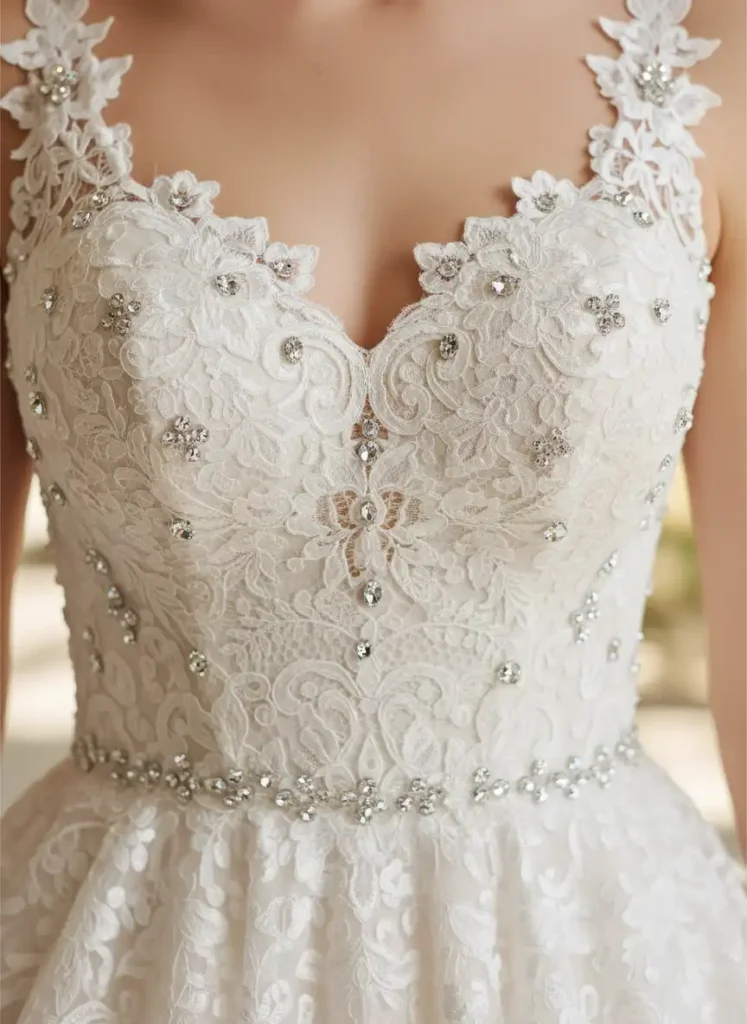
Beading and lace can work together when the placement is considered. The mistake most brides make is choosing a dress where both cover the entire bodice. That level of detail competes with itself and photographs as visual noise rather than intentional design.
Look for gowns where the crystal or diamond beading sits along a seam line, waistband, or neckline while the lace fills the rest. This gives each element its own space. Kleinfeld Bridal and Pnina Tornai specialize in this kind of layered construction. Before you buy, take a photo of yourself in the gown under flash photography. What looks subtle in the store often reads completely differently on camera.
11. Floor Length Wedding Dress: Getting the Hem Detail Right
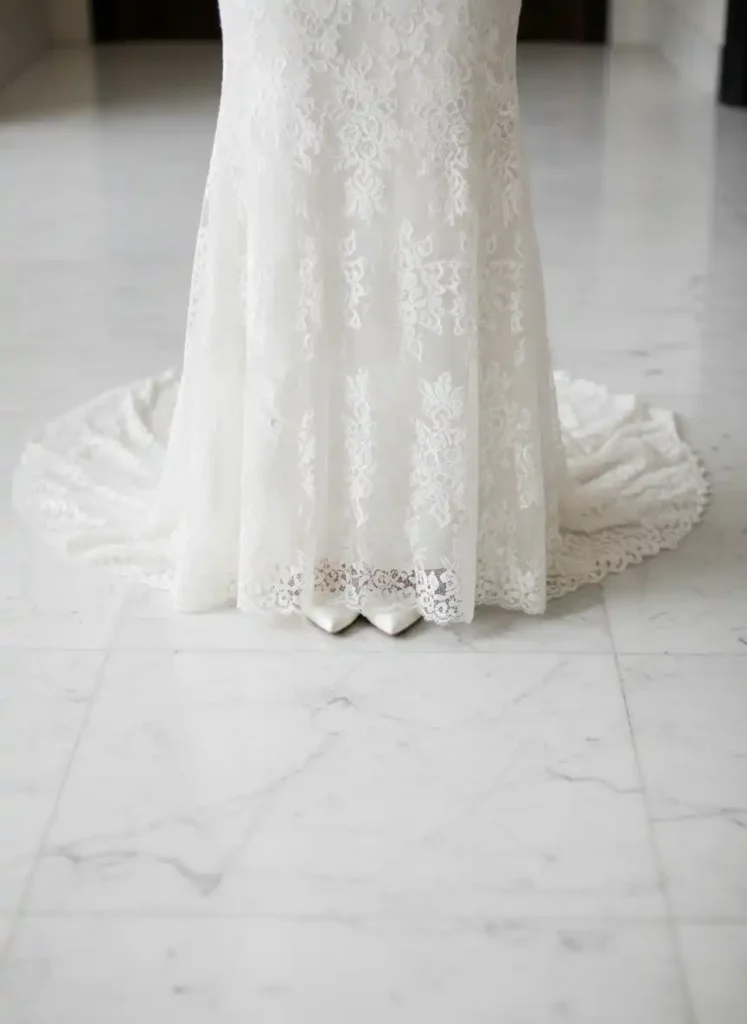
Floor length sounds obvious as a wedding dress choice, but the hem finish makes a significant difference to how the whole gown photographs. A raw hem, even on an expensive dress, looks unfinished in photos taken from ground level. Scalloped lace along the hem adds finish and makes the floor-length cut look intentional rather than just long.
If you’re hemming a dress to suit your height, ask your tailor to preserve the lace hem rather than cutting into it. On many lace gowns, the scalloped edge is the design anchor. Cutting it and re-hemming from a plain fabric edge loses the detail that justified the price. A skilled bridal alterations specialist can reconstruct the hem while keeping the lace intact, but it takes time and adds to your alterations cost.
12. Ballgown Wedding Dresses: Where Lace Has the Most Impact
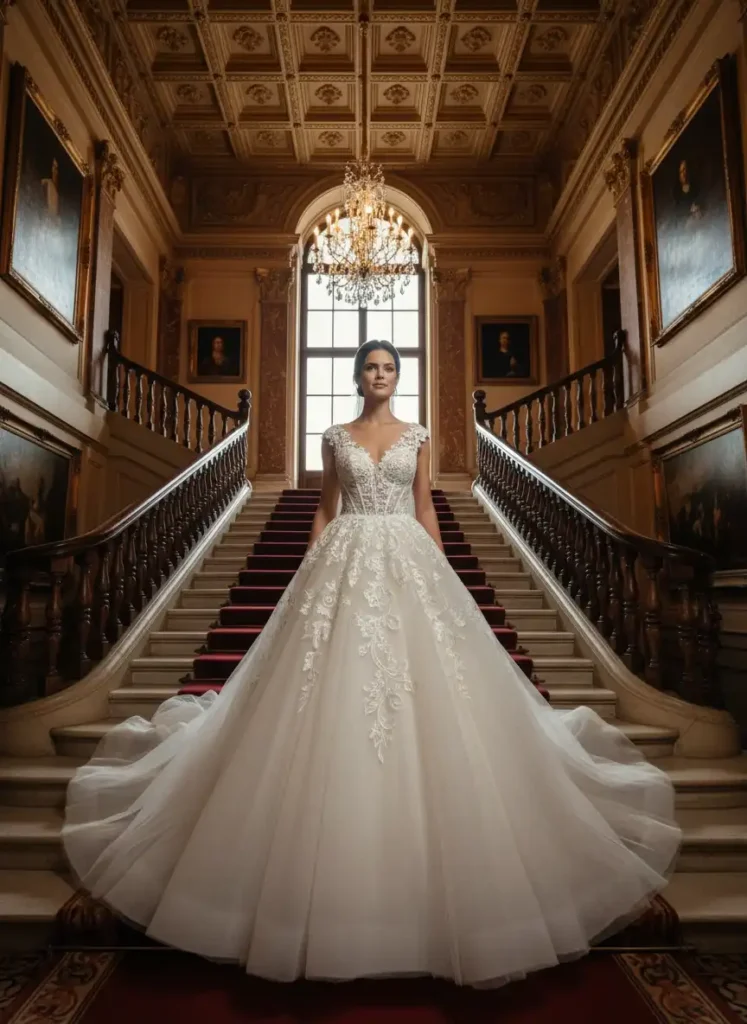
The ballgown silhouette gives lace the most surface area to work with. A lace bodice on a ballgown reads as bridal and formal. The contrast between the structured fitted top and the full skirt is what makes the silhouette so consistently popular for traditional church ceremonies.
If you’re choosing a ballgown, decide early whether you want the lace contained to the bodice or carried through the skirt. Full lace ballgowns are heavy and warm. A lace bodice with a plain or lightly embellished tulle skirt keeps the visual interest where guests spend most of their time looking, your upper half. Vera Wang and Justin Alexander both offer ballgown styles where this distinction is made well.
13. Pure White Wedding Gown: When Simplicity Requires Perfect Detail
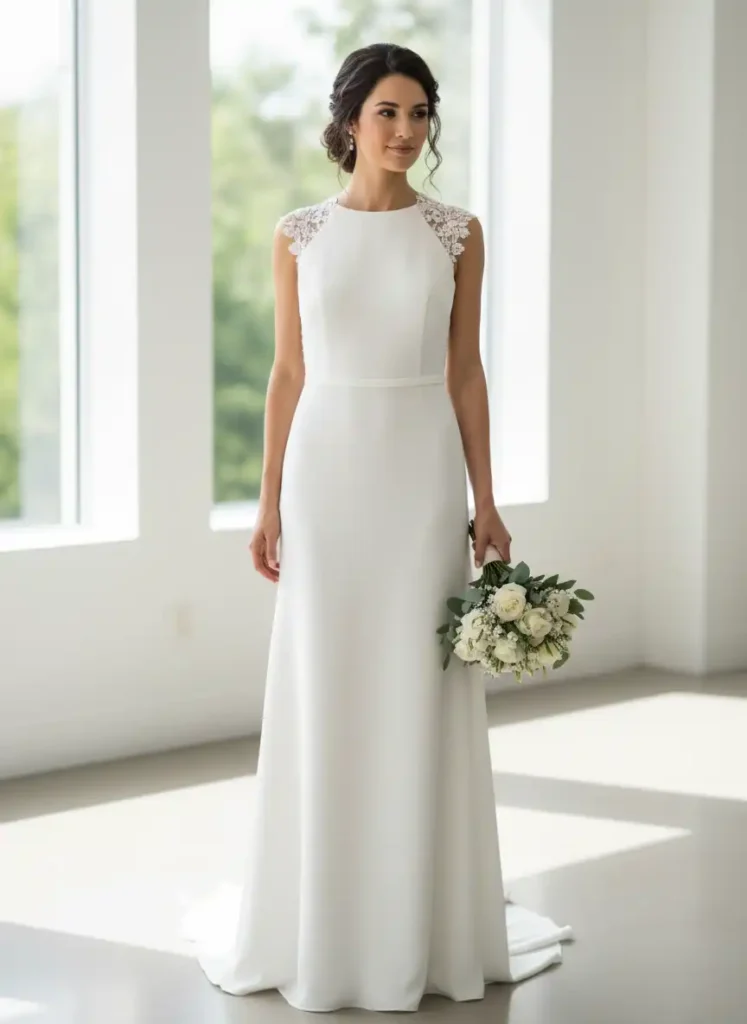
A pure white gown with minimal lace detail has almost no room for error. When the dress is simple, every detail gets scrutinized. Cheap lace on a white gown photographs terribly in natural light. It shows every puckered seam and uneven edge.
This is exactly the situation where paying extra for quality lace trim is worth it. On a simple white gown, Alencon lace at the neckline or Venice lace at the back is the difference between a dress that reads luxury and one that reads affordable. If the gown itself is on the budget end, consider a professional lace trim upgrade during alterations. A good seamstress can replace synthetic lace trim with cotton lace for a few hundred dollars, and it changes the entire look.
14. Romantic Lace Wedding Dress for a Beach Wedding
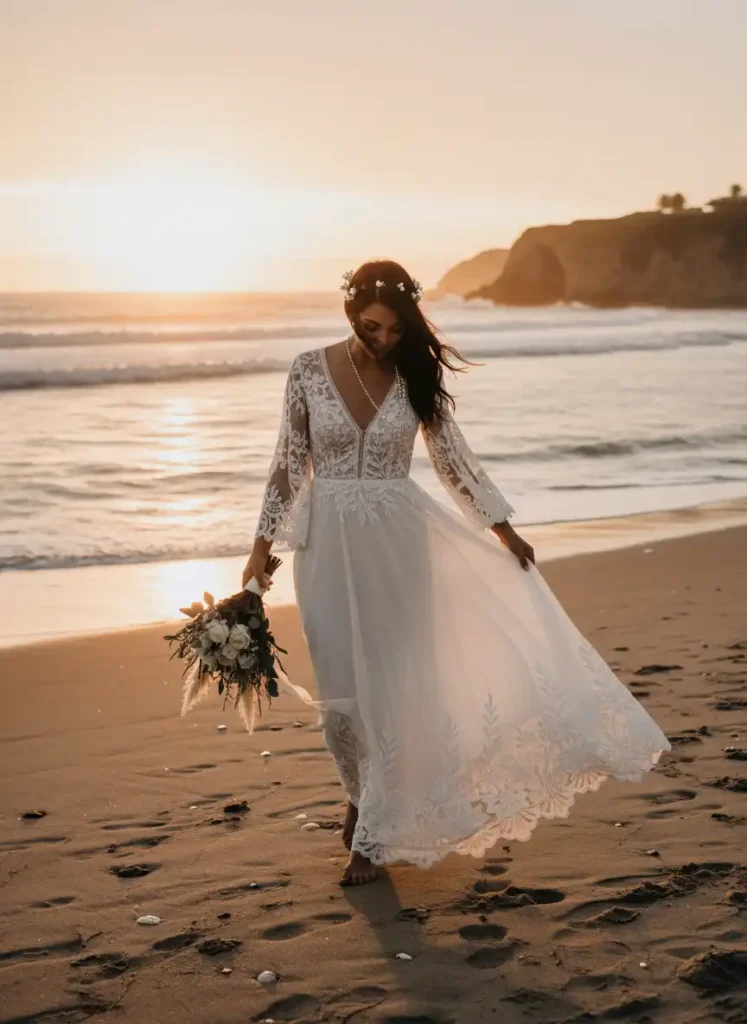
Beach weddings have specific dress requirements that most bridal guides skip over. Wind, sand, heat, and humidity all affect how a dress performs. Heavy lace constructions hold in heat and catch sand. For a beach wedding, you want lace that is light and open in its weave rather than dense and layered.
Guipure lace and eyelet lace are both better suited to outdoor beach ceremonies than Chantilly. They breathe, they photograph well in direct sunlight, and they’re easier to brush clean at the end of the day. Look for gowns with lace only at the bodice or as a trim element rather than full lace construction. Watters and Willowby both carry beach-appropriate lace styles that balance romance with wearability.
15. Different Shades of White: Choosing the Right Tone for Your Lace Gown
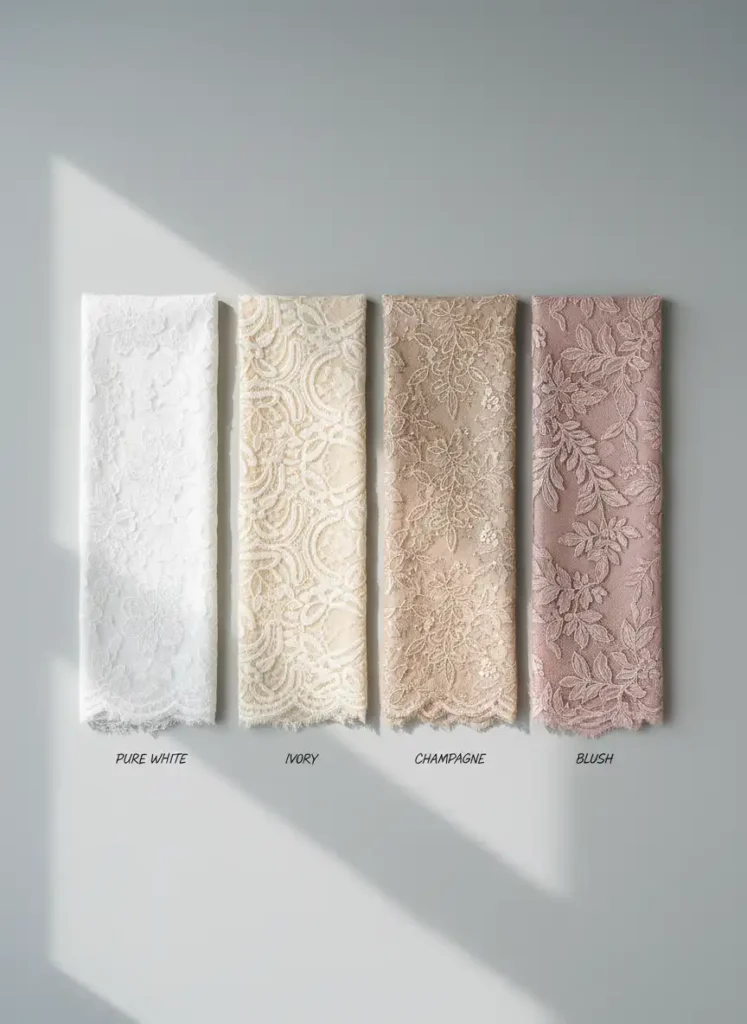
Most brides think of wedding dresses as simply “white” until they stand in a bridal suite surrounded by twelve different versions of it. The tonal difference matters. Ivory and champagne warm your skin tone. Stark white can flatten it, especially in photos under flash.
Here’s a simple guide to the most common shades and who they suit:
- Pure white works well for brides with cool or neutral undertones and looks crisp in photos.
- Ivory is the most universally flattering and pairs with almost any veil or accessory.
- Champagne suits warm or olive skin tones and reads as elevated without being stark.
- Blush is the softest option and reads well on camera without appearing pink in most light.
Test the lace overlay in the shade you’re considering against your bare arm in daylight before committing. The lace shade and base fabric need to match, not just coordinate.
16. Elegant Long Sleeve Floral Lace Wedding Dress: Styling the Full Look
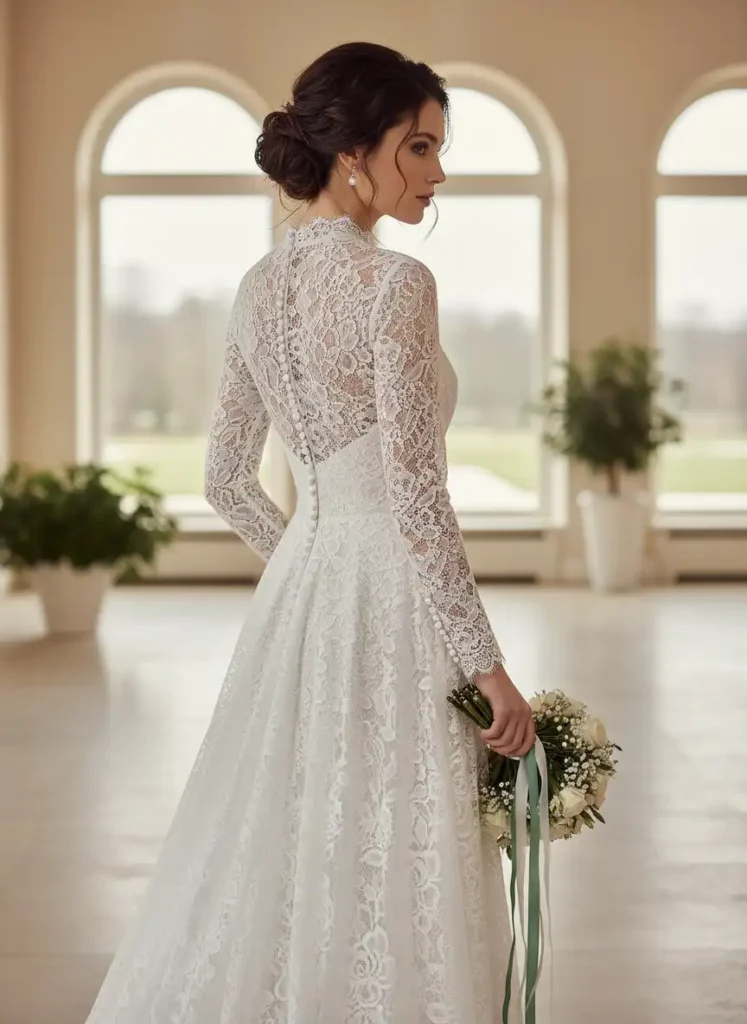
A full floral lace gown with long sleeves is a strong visual choice. It works because the pattern provides its own decoration. That’s also its risk. When a dress already has this much going on, the rest of your styling needs to pull back.
Keep jewelry minimal. A single strand or simple studs is enough. Your bouquet should be smaller and tighter since a large cascading arrangement competes with the dress. If you’re adding a veil, go plain cathedral or elbow length without additional lace trim. The dress is already the centerpiece. Everything else should support it rather than add to the noise. This combination works especially well for winter or autumn ceremonies where the sleeve coverage makes practical sense.
17. Winter Lace Wedding Dress: Details That Work in the Cold
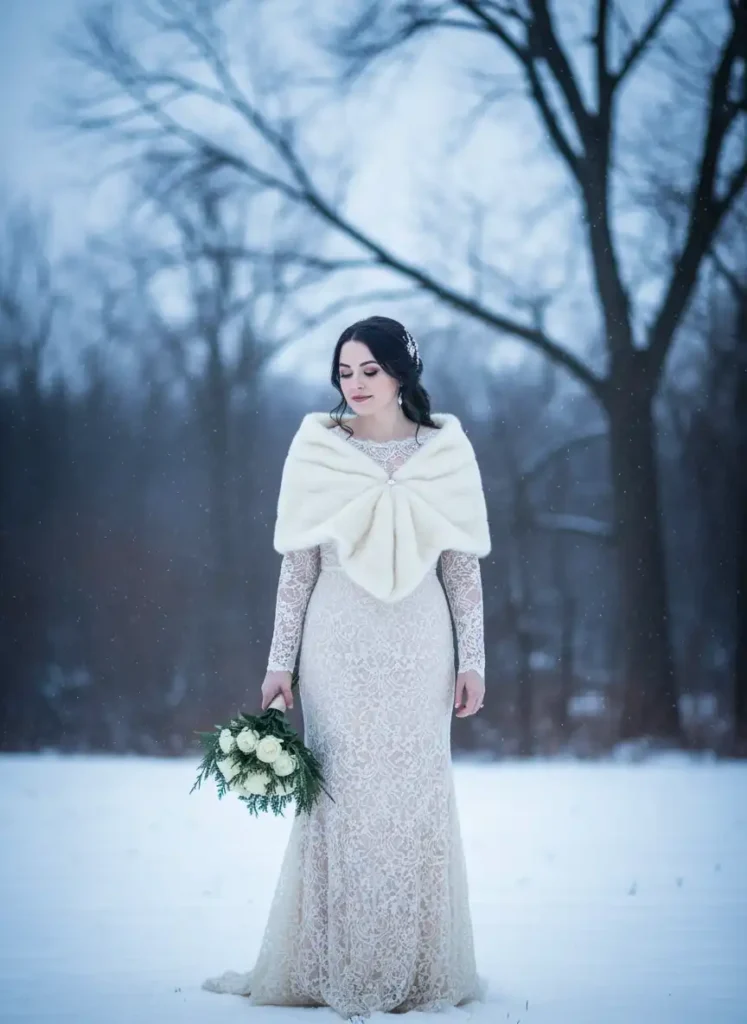
Winter weddings have a distinct visual language. Heavy satin and velvet work, but a winter lace wedding dress is particularly striking because the delicacy of lace contrasts sharply with a cold setting. If you’re photographing outdoors, that contrast is exactly what makes your dress memorable.
For a winter ceremony, prioritize lace gowns with long sleeves and a dense lace pattern. Venice or corded lace provides warmth while keeping the bridal aesthetic. Under-linings in silk or crepe add insulation without visible bulk. If you’re concerned about being cold, a custom lace cape or bolero in matching lace fabric is a far better option than a coat draped over your dress for ceremony photos. Several alterations specialists can make one from leftover fabric if your dress requires a length trim.
18. Luxury Lace Patchwork Details: What Makes Them Worth the Price
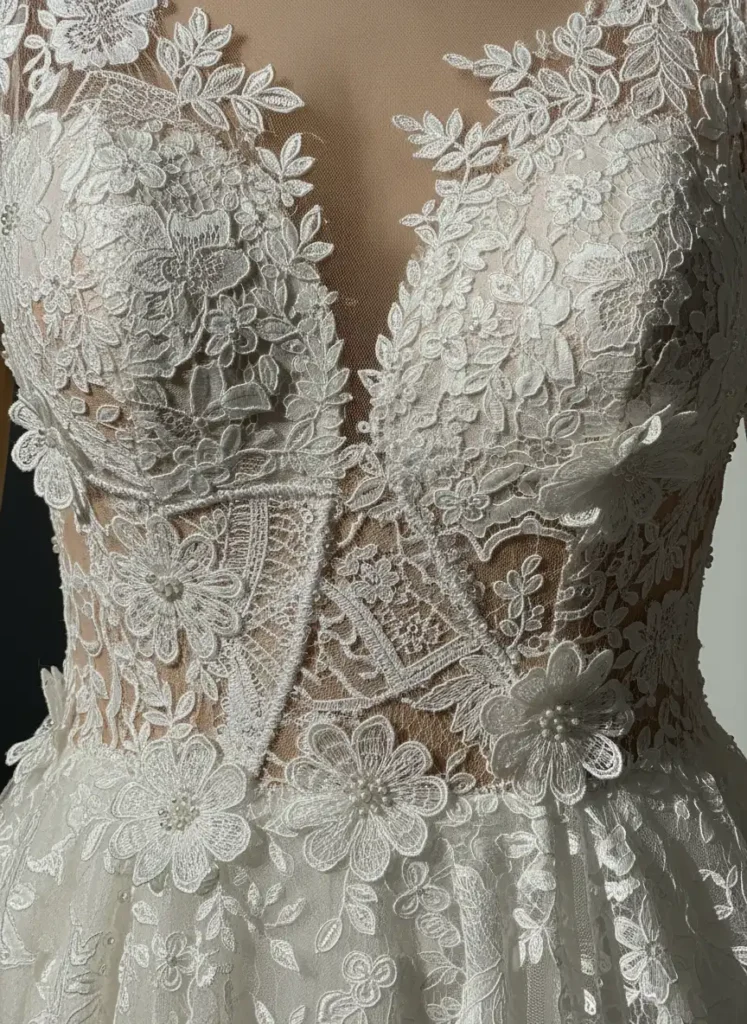
Lace patchwork is exactly what it sounds like: multiple lace types cut and arranged together on the gown to create a single pattern. Done cheaply, it looks chaotic. Done well, it’s one of the most distinctive details you can find on a wedding dress.
What you’re paying for in a luxury patchwork gown is the hand-stitching between panels. Machine-joined patchwork has visible seam lines. Hand-applied lace motifs sit flush with the base fabric and create a three-dimensional effect that photographs differently depending on the light. When you try on a patchwork gown, run your fingertip across the seam lines between lace sections. If you feel a ridge, it’s machine work. If it’s smooth, it’s hand-applied. That difference in construction is usually reflected in a $500 to $2,000 price gap, and it’s justified.
19. Timeless Wedding Dress Styles That Lace Makes Better
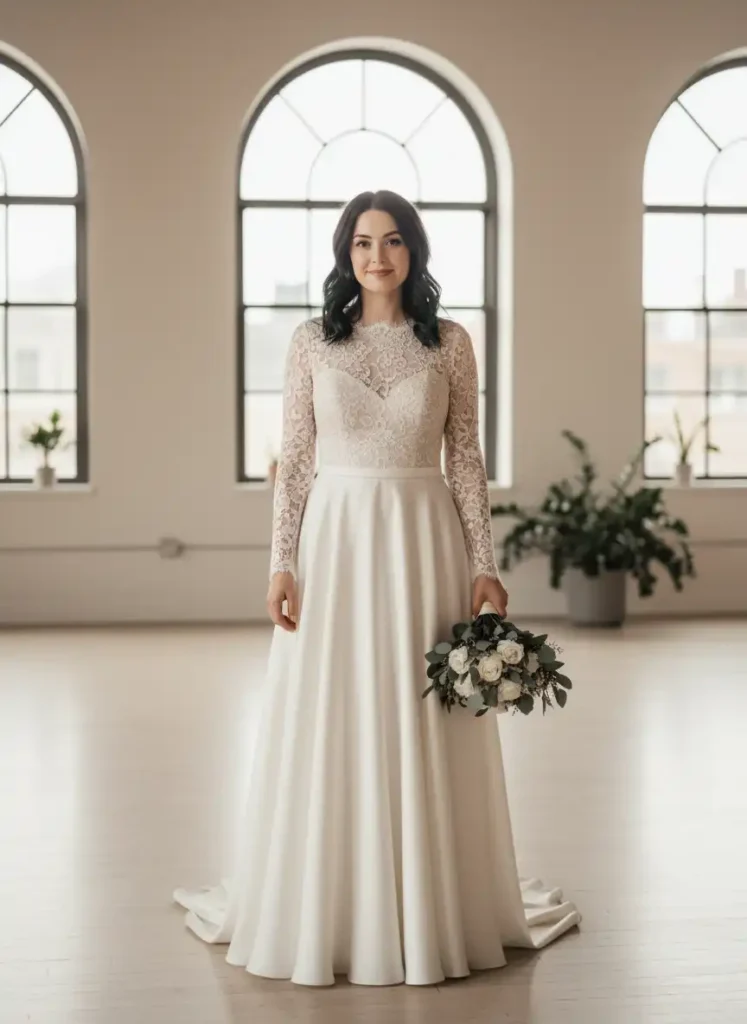
Trends move fast in bridal. What reads as current in 2024 can look dated quickly, and you’ll be looking at those photos for decades. The safest investment is a silhouette and lace combination that has proven longevity: an A-line gown with a lace bodice and a plain or subtly textured skirt.
This combination works because the A-line silhouette is universally flattering and the lace bodice keeps the dress from reading as too simple. You get the ornamentation without the risk of over-commitment to a specific trend. Brides who wore this silhouette in the early 2000s don’t cringe at those photos now. That’s a reliable test. If you’re torn between a statement gown and something more classic, ask yourself how you’ll feel about the photos in 20 years, not just next spring.
20. The Vintage Bride: Lace Details That Earn the Look
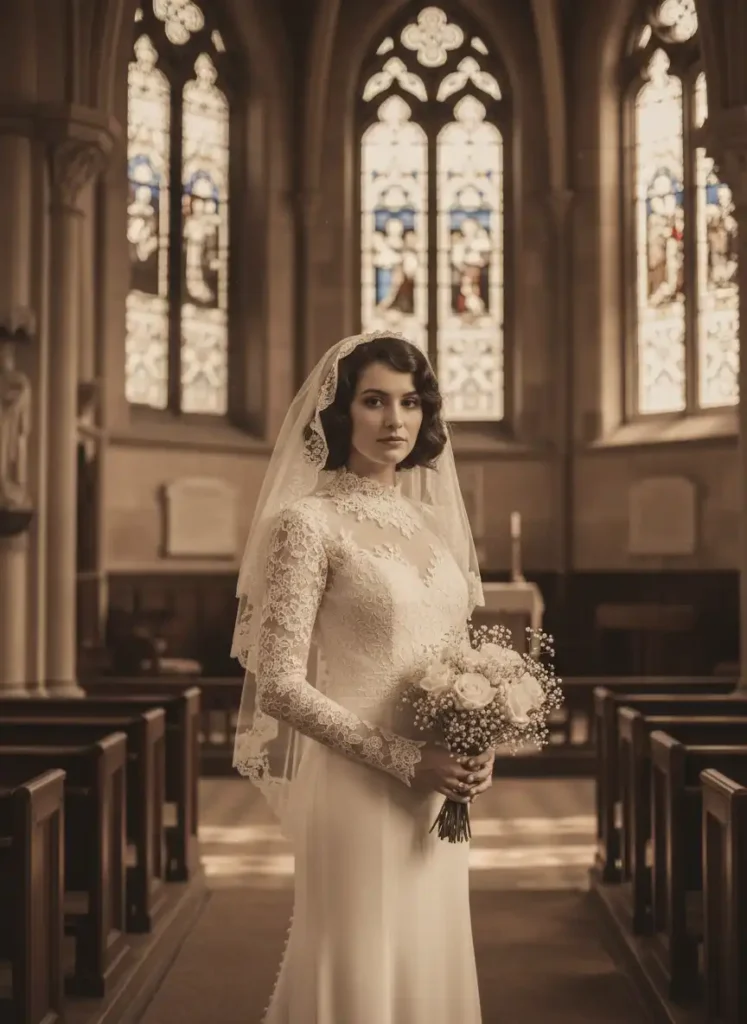
Vintage bridal isn’t a filter you apply with your accessories. The lace is either right or it isn’t. Authentic vintage lace, meaning Battenberg, Brussels, or heirloom needle lace, has a specific texture and coloring that modern reproduction lace can’t replicate. If you’re committed to the aesthetic, the lace is where you need to be precise.
You have a few real options here. First, have a family heirloom repurposed into your gown by a specialist seamstress. Second, source antique lace from a reputable textile dealer and have it applied to a new dress. Third, commission a dress from a designer who works exclusively in heritage bridal, such as Catherine Deane or Gemy Maalouf, who both incorporate genuine vintage-inspired lace construction. Reproduction lace from fast-fashion bridal brands won’t achieve the look you’re after regardless of how it’s styled.
21. The Lace Wedding Dress Investment: What’s Actually Worth Paying More For
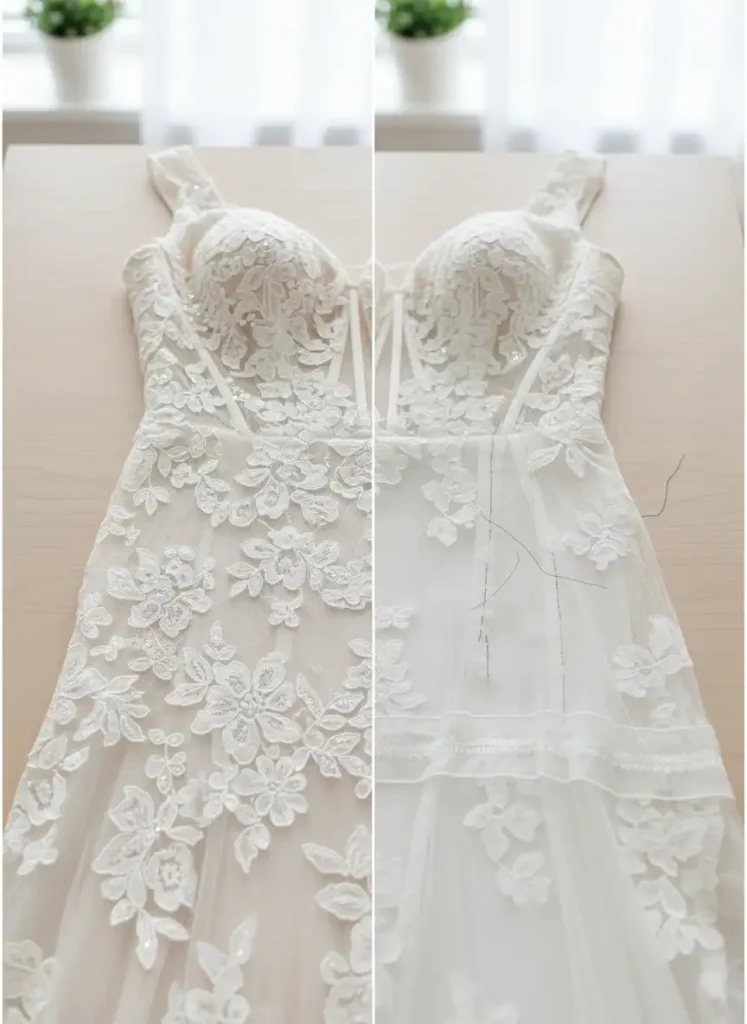
Not every expensive detail on a lace gown is worth the upcharge, but some are. Knowing the difference saves you money and frustration.
The details worth paying extra for:
- Hand-applied lace appliqué over machine-stitched. It lies flatter, photographs more cleanly, and holds better long-term.
- Lined bodice with boning rather than a simple corset insert. It distributes pressure better and holds the dress in place without constant adjustment.
- Scalloped lace hem on the train. A clean finish on a train that trails on the ground takes more wear than any other part of the dress.
- French or Italian lace over synthetic alternatives. The thread count is higher, the drape is better, and it photographs with visible depth rather than flat texture.
- Custom bustle construction on full-length lace gowns. A standard bustle on a lace train pulls the fabric and distorts the pattern. A custom-sewn bustle preserves the lace design.
Ask your bridal consultant directly: “Where does the price come from on this gown?” A good consultant will tell you. That answer will clarify what you’re actually paying for and whether it matches what you care about most.
Conclusion:
A lace wedding dress is a long-term investment. The details you choose now will show up in photos you’ll look at for decades. Prioritize construction over trends, ask the right questions in the boutique, and don’t settle for lace that looks cheap up close. The right gown exists at almost every budget. You just need to know what to look for.