Wavy Hair With Bangs: 12 Cozy Fall Looks

Fall is when your hair stops cooperating. The heating goes on, the hats come out, and waves that behaved all summer suddenly sit flat at the crown and frizz at the ends. Wavy hair with bangs takes the hit first, because your fringe touches your forehead, your hat, and your scarf all day long. These 20 looks are built around that reality. You’ll find cuts that suit your texture, styling that survives a beanie, and fixes for static, dry scalp, and second-day flatness. Practical advice you can use this week, not a wishlist.
1. Start With a Cut That Works With Your Texture, Not Against It

Most styling problems start at the salon chair, not the bathroom mirror. If your waves go flat on top and puff out at the bottom, the cut is usually why. A layered wavy hair cut removes weight from the interior so your natural pattern can lift instead of collapsing under its own length. Ask for internal layers rather than heavy face-framing chunks. The difference shows up on day two, when your hair still has shape instead of sitting like a triangle.
Bring photos of hair that matches your texture, not just hair you like. A stylist looking at a photo of loose 2a waves will cut differently than one looking at dense 2c. Say your density out loud, say how often you heat style, and say whether you air dry. Those three facts change the whole approach. If your last cut grew out badly within six weeks, book a consultation before your next appointment instead of walking in cold.
2. Curtain Fringe Is the Easiest Place to Begin

Full blunt fringe on wavy texture is a commitment. Curtain fringe is not. It parts down the middle, sweeps outward, and grows into your layers without an awkward stage. That last part matters more than anyone tells you. When you get bored in February, a curtain shape blends out in eight weeks instead of six months.
Ask for the shortest point to hit at your cheekbone and the longest to reach your jaw. That range flatters almost every face. Cut it dry if your stylist is willing, because wet waves shrink and a fringe cut wet can end up two inches shorter than you planned.
Three things that keep curtain fringe behaving in fall:
- Blow dry it first, before the rest of your hair, while it is still damp
- Use a round brush for ten seconds per side, no more
- Skip oil on the fringe even if you use it everywhere else
If your fringe separates into strands by noon, your product is too heavy. Switch to a light mousse at the roots only and see how the next week goes.
3. Wavy Hair With Bangs Looks Better on Day Two

Freshly washed waves are often too soft to hold a shape. Day two is when the pattern tightens and the fringe finally sits where you want it. Plan your wash schedule around your week instead of washing on autopilot. If you have something on Thursday night, wash Wednesday morning.
The problem is the fringe gets oily faster than the rest of your hair, because it touches your forehead all day. You do not need a full wash to fix that. Rinse only the fringe in the sink, blot it with a towel, and dry it with a round brush for under a minute. The rest of your hair keeps its texture. This one habit saves more days than any product I have tried.
Keep a small bottle of dry shampoo aimed only at your roots and fringe. Spray from eight inches away, wait thirty seconds, then break it up with your fingers. Try the sink rinse method twice this week before you write it off.
4. The Wolf Cut Gives You Shape Without Daily Effort

A long wolfcut with curtain bangs suits you if you want volume up top and length you can still tie back. The shape stacks short layers at the crown and leaves the perimeter long, so your waves get lift where they usually fall flat. It looks styled even when you have done nothing. The catch is that a wolf cut on fine hair can read thin at the ends. If your ends already look sparse, ask your stylist to keep the layering above your jaw and leave the bottom four inches untouched. On thick or dense hair, the opposite applies. You need more internal removal or the shape puffs.
This cut also handles a bad hair day well, because the layers already look undone. Scrunch in a texture cream, twist two pieces near your face, and you are finished. If you have been growing out an old blunt cut and hate the shape, a wolf cut is the fastest way to make that length look intentional again.
5. Butterfly Layers Add Volume Where Waves Usually Fall Flat

The butterfly haircut on wavy hair creates two visible lengths, short pieces framing the face and long pieces underneath. The short tier sits around your collarbone and flips out, which builds width at the top of your head. If your waves lose all volume by midday, this shape fixes it structurally instead of with product. It works best on medium to thick density. On fine waves the two tiers can separate too obviously and look like a mistake. Ask for the shortest layer to land no higher than your chin.
To style it in under five minutes:
- Diffuse the top tier only, upside down, for two minutes
- Leave the under-layers to air dry
- Finish with a light spray at the crown, nothing at the ends
Pair it with a soft fringe and the whole shape reads cohesive. If you are between a wolf cut and this one, choose butterfly layers when you want polish and the wolf cut when you want messy. Book the butterfly shape first, since it converts into a wolf cut later but not the reverse.
6. Round Faces Need Height, Not Width

A wavy haircut for round face shapes works when the volume sits above your cheekbones instead of beside them. Waves naturally expand at their widest point, which is usually right at your jaw. That widens your face. Move the volume up and everything looks longer. Two adjustments do most of the work. Keep your fringe parted off center or swept to the side so it breaks the circle at the top. Ask for layers that start above your chin so the widest section of your hair sits higher than your cheeks.
Avoid a blunt one-length cut at chin level. It draws a horizontal line across the widest part of your face and fights everything else you are doing. Also skip a heavy straight-across fringe, which shortens your face visually. Side bangs on wavy hair are a reliable choice here. They create a diagonal line that lengthens the face without a full commitment. Ask your stylist for a soft side-swept piece at your next trim and live with it for a month before deciding.
7. Side-Swept Pieces Work When a Full Fringe Feels Like Too Much

Not everyone wants a real fringe. Side bangs on wavy hair give you the face framing without the daily maintenance, and they hide behind your ear when you are tired of them. This is the low-risk version. The mistake most people make is cutting them too short. On wavy texture, a side piece needs to reach your cheekbone at minimum, because the wave pulls it up another inch as it dries. Cut it at your eyebrow and you will spend three months waiting.
Setting it takes almost no time. Blow dry the piece across the opposite direction from your part first, then flip it back to the correct side. That builds a soft lift at the root instead of a flat sweep. Ten seconds with a round brush finishes it. If you have tried a full fringe before and grew it out in frustration, start here instead. Ask for a long side-swept section at your next appointment and see whether you like having hair near your face at all.
8. Frizz in Fall Is a Moisture Problem, Not a Product Problem

Your waves probably behaved in September and turned rough in November. Indoor heating dries out the air, and your hair pulls moisture from wherever it can find it. When there is none in the air, the cuticle lifts and you get frizz. The fix is adding water back, not adding more oil on top of dry hair. Oil seals. It does not hydrate. Apply a leave-in conditioner to soaking wet hair, then a cream, then a gel or oil last if you use one. Order matters more than the products themselves.
Two habits that make a visible difference by week two:
- Dampen your hands with water before touching your hair during the day
- Run a humidifier in your bedroom overnight once heating season starts
The humidifier sounds excessive until you try it. My waves changed more from that than from any product swap. Start with the layering order this week and add the humidifier if frizz is still winning after ten days.
9. Static Needs a Different Fix Than Frizz

Frizz and static look similar and come from opposite causes. Frizz is dry hair absorbing humidity. Static is dry hair carrying an electrical charge, usually from friction against wool, polyester, or a car seat. Treating static with more conditioner rarely works. You need to break the charge. Run a dryer sheet lightly over the surface of your hair. Yes, a laundry dryer sheet. Keep one folded in your coat pocket through winter. A wooden or boar bristle brush also helps, since plastic bristles generate more charge than they discharge. Your fringe suffers most because it sits against your forehead and lifts every time you pull off a hat. Mist your hands with water, press them flat against the fringe, and wait. Do not comb it while it is charged, because that makes it worse.
Switch your winter scarves to cotton or silk if you can. Wool right under a wavy bang is the worst combination for this. Try the dryer sheet trick tomorrow and keep one in your bag.
10. Beanie Season Does Not Have to Flatten Your Waves

Hats crush waves because they press wet or product-heavy hair against your scalp for hours. Two things fix this. Make sure your hair is fully dry before the hat goes on, and put the hat on from the back forward instead of pulling it down over your face. The second one sounds minor. It is not. Pulling a beanie down over your fringe drags every piece flat against your forehead and it stays that way. Place the hat at the back of your head and tip it forward, letting the fringe fall where it wants.
For the flattened crown after you take the hat off, flip your head upside down, shake at the roots, and spray dry shampoo at the part line. Thirty seconds. A silk-lined beanie helps if you wear one daily, since the lining reduces friction and holds less moisture.
If you commute in a hat every morning, keep a small brush and dry shampoo at your desk. Fixing it on arrival takes less time than avoiding hats all winter.
11. Air Drying Works in Cold Weather If You Change the Timing

Air drying in November means walking outside with cold wet hair, which is unpleasant and rough on your cuticle. Shift your wash to the evening instead. Wash, apply product, scrunch, then let it dry while you do everything else. Sleep in a loose pineapple on top of your head. If you have to wash in the morning, get your hair to eighty percent dry before you leave. A diffuser on low heat and low speed for six minutes will do it without disturbing your pattern. Cup the ends up toward your scalp and hold. Do not move the diffuser around constantly.
Plopping helps too. Wrap your hair in a cotton t-shirt for fifteen minutes right after applying product. It removes water without roughing up the surface the way a terry towel does. Whatever you do, do not touch your hair while it dries. Every touch breaks the cast that forms around your waves. Set your product, clip your roots, and leave it alone until it is dry.
12. Wavy Hair With Bangs Suits 2c Texture Better Than Most People Expect

If your texture sits at 2c, you have been told a fringe will shrink and puff. It can. That does not mean you should skip it. Haircuts for 2c hair need a fringe cut dry, in its natural pattern, one small section at a time. Wet cutting is what causes the shrinkage disasters. Dense waves also need weight removed from underneath so the shape does not expand outward. Ask for internal thinning at the mid-lengths, never at the ends and never near the fringe.
Three rules that hold up for 2c:
- Cut the fringe dry, always, no exceptions
- Leave it two inches longer than the length you actually want
- Diffuse the fringe first, before it sets in a random direction
The overlap between 2c and curly hair means many curl products work well for you, especially gels with a firm hold. Scrunch out the crunch once dry and you keep definition without stiffness. If your last stylist cut your fringe wet, find a new one before your next appointment.
13. A Messy Finish Takes More Technique Than a Polished One

Messy wavy hair does not happen by neglecting it. Neglect gives you flat roots and stringy ends. The undone look comes from building texture first, then breaking it apart on purpose. Start with a texture spray or a light mousse on damp hair. Dry it with a diffuser or air dry. Once completely dry, separate the waves with your fingers, not a brush. Take one or two random sections and twist them tighter, then leave the rest alone. That asymmetry is what makes it read as effortless.
The fringe should stay slightly separated rather than sitting as one solid piece. Rub a pea-sized amount of texture paste between your fingertips and touch only the ends of the fringe. Skip hairspray unless you are outside in the wind. It flattens the separation you just built. If your undone attempts keep looking like a bad hair day instead, the issue is usually that you skipped the product step. Add mousse at the damp stage tomorrow and change nothing else.
14. Overnight Prep Saves You Twenty Minutes Every Morning
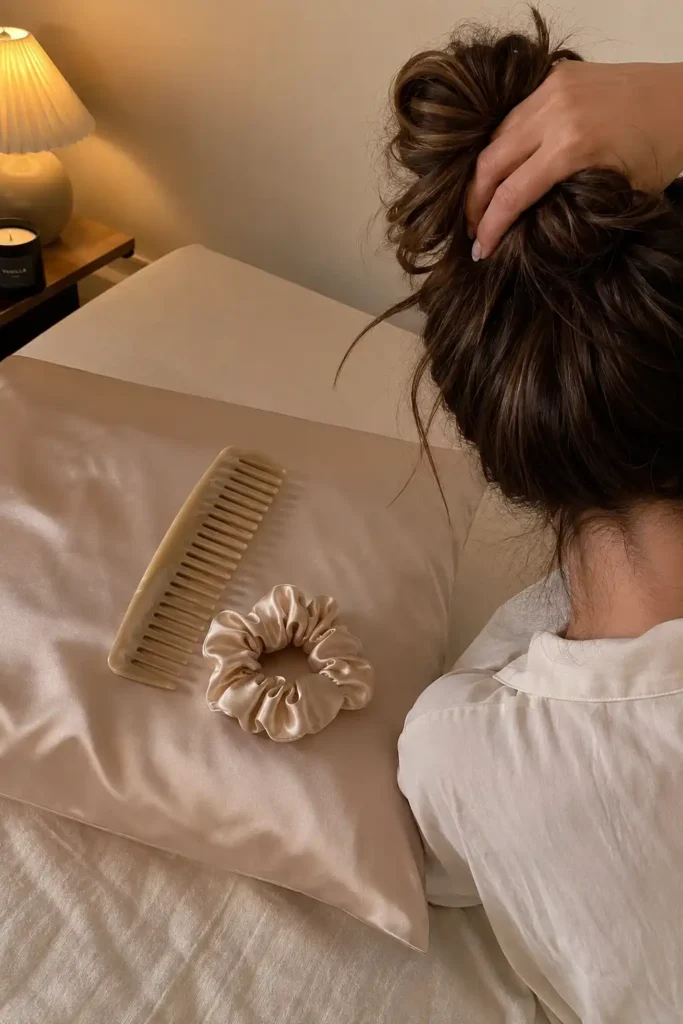
What you do at 11pm decides how your hair looks at 8am. Cotton pillowcases pull moisture out and rough up the cuticle, which is why you wake up with a flat crown and frizzy ends. A silk or satin pillowcase costs under twenty dollars and fixes most of it. The pineapple works for waves too, not just curls. Gather everything loosely at the very top of your head with a satin scrunchie, and keep it high enough that you can still lie on your back. In the morning, release it and shake at the roots.
For the fringe, clip it flat against your forehead with a duckbill clip before bed. It sounds silly. It also means you wake up with a fringe that lies in one direction instead of splitting into a cowlick. If your waves flatten every night no matter what, try the pineapple for four nights straight. Most people see a difference by the third morning.
15. Your Fringe Needs a Trim Long Before the Rest of Your Hair
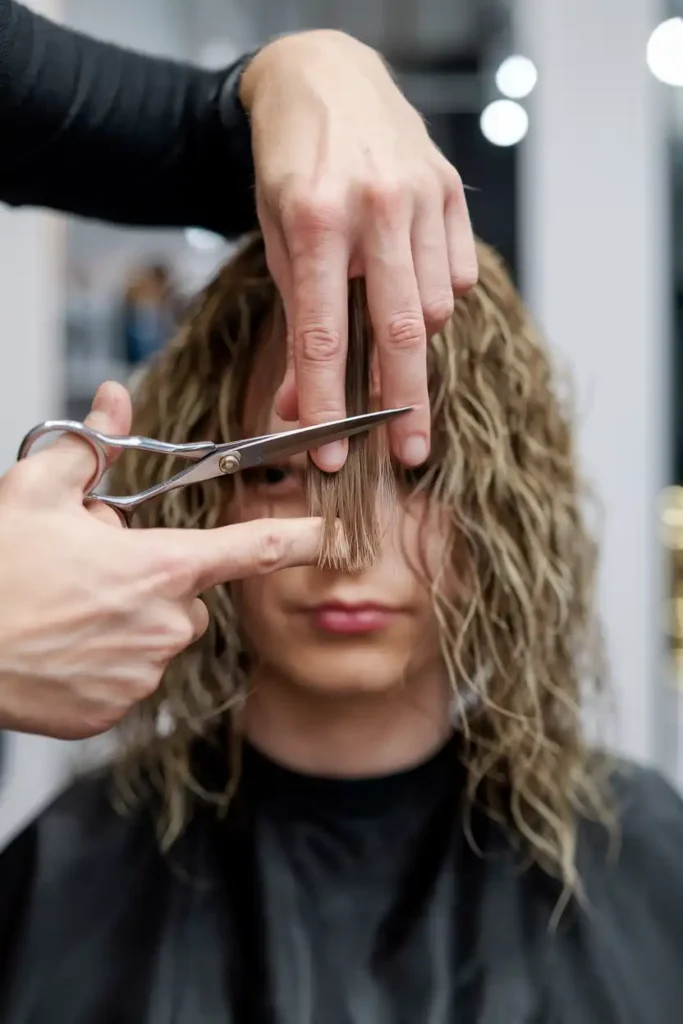
Your lengths can go four months between cuts. Your fringe cannot. It grows into your eyeline in about five weeks and starts fighting you. Most salons offer free fringe trims between appointments, and most people never ask. If you trim at home, three rules keep you safe. Cut dry, cut vertically into the ends instead of straight across, and take less than you think. Waves spring up after cutting, so what looks right in the mirror will be shorter in an hour.
Point cutting is the technique to use. Hold the scissors pointing up into the hair and snip small notches rather than making one flat line. That leaves a soft edge that blends into your waves instead of sitting on top of them. Never trim your fringe wet at home. That single rule prevents most disasters. If you are not confident, call your salon and ask about their fringe trim policy. A four-minute appointment every six weeks keeps the whole shape working.
16. Fine Waves Need Lightweight Products and Fewer of Them
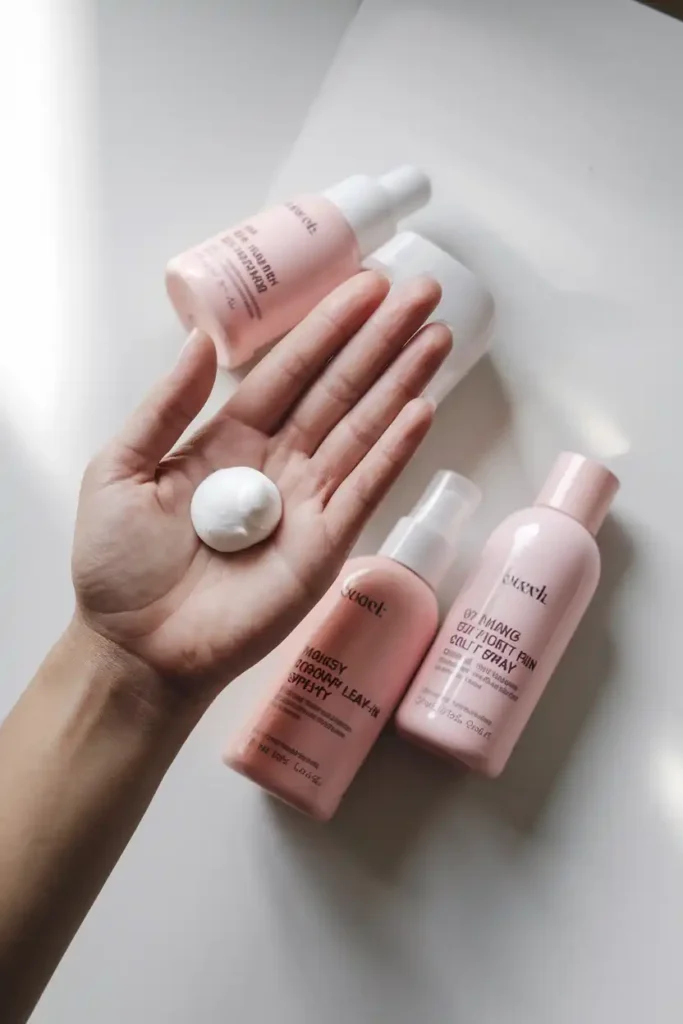
Fine wavy hair goes limp fast, and the usual cause is too much product rather than the wrong one. Heavy creams and oils weigh down the wave pattern until it drops into a soft bend and then nothing. Cut your product count to two. A mousse at the roots while damp, and a light spray once dry. That is the whole routine. Apply the mousse only from your ears down at the back, and keep the fringe area almost bare.
Root lift matters more than length product for you. Flip your head over, apply mousse directly at the scalp, and diffuse upside down for three minutes. That builds volume that lasts through the afternoon. Also wash more often than the internet tells you to. Fine hair holds oil at the roots quickly, and stretching to day four leaves you flat. Every other day is fine. If your waves have gone lifeless recently, strip everything back with a clarifying wash and rebuild with just two products for a week.
17. Perms Are Worth Considering If Your Waves Are Uneven
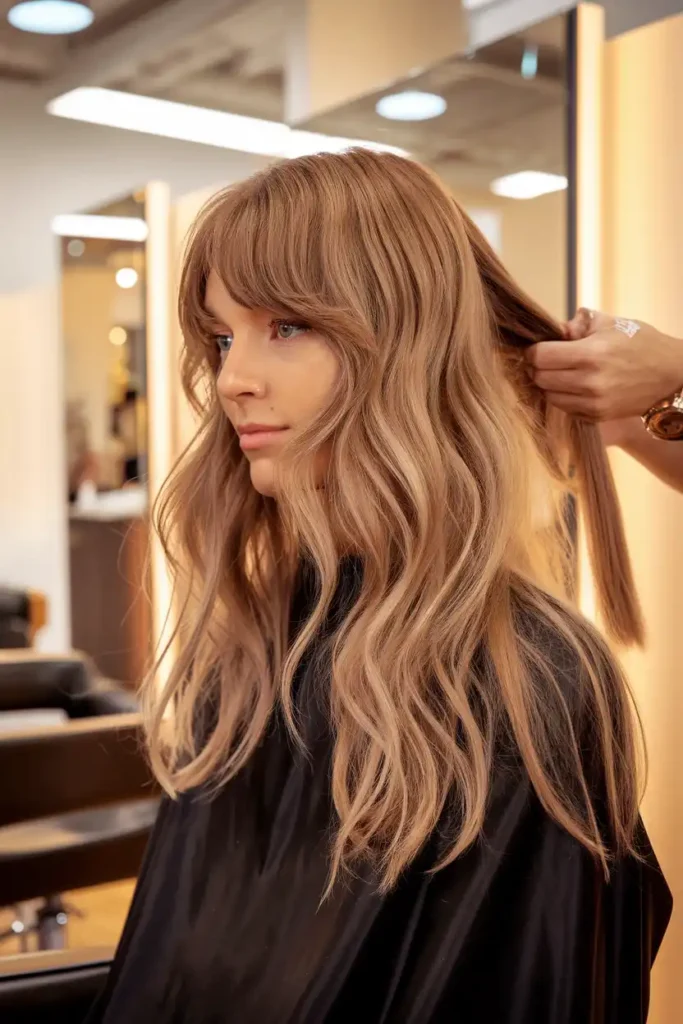
If one side of your head waves and the other hangs straight, you are probably restyling every day to compensate. Modern perm ideas focus on loosening or evening out what you already have rather than creating tight uniform curls. Ask about a digital perm or a body wave. The results last four to six months and cost between one hundred and three hundred dollars depending on your area. That is the honest range. Aftercare requires sulfate-free shampoo and no washing for the first forty-eight hours.
Two things to check before booking:
- Your hair should be free of recent bleach, since the two treatments together cause breakage
- Ask to see the stylist’s photos of loose perms specifically, not tight ones
Keep your fringe out of it. Permed fringe sits too high and is difficult to blend back into the rest. Most stylists will leave it, but say so directly during the consultation. If your uneven pattern has bothered you for years, a consultation costs nothing and takes fifteen minutes.
18. Holiday Styling Works Best With a Half-Up Shape

Party season arrives and everyone reaches for a curling iron. You do not need one. A half-up shape keeps the texture you already have and adds structure at the crown, which is where waves lose shape by evening anyway. Take the section from your temples back, twist it once, and pin it with two bobby pins crossed in an X. Pull a few pieces loose around your face. That is the entire method and it holds for six hours.
Your fringe stays out, which is the point. It softens the whole look and keeps it from reading too formal. If your fringe has grown past your eyebrows, sweep it to one side rather than fighting it back into place. Set the shape with a flexible hold spray from twelve inches away, not a firm hold. Firm hold makes the loose pieces look stiff, which defeats the purpose. Practice this once on a regular evening before you rely on it for a real event.
19. Dry Scalp in Winter Shows Up in Your Fringe First
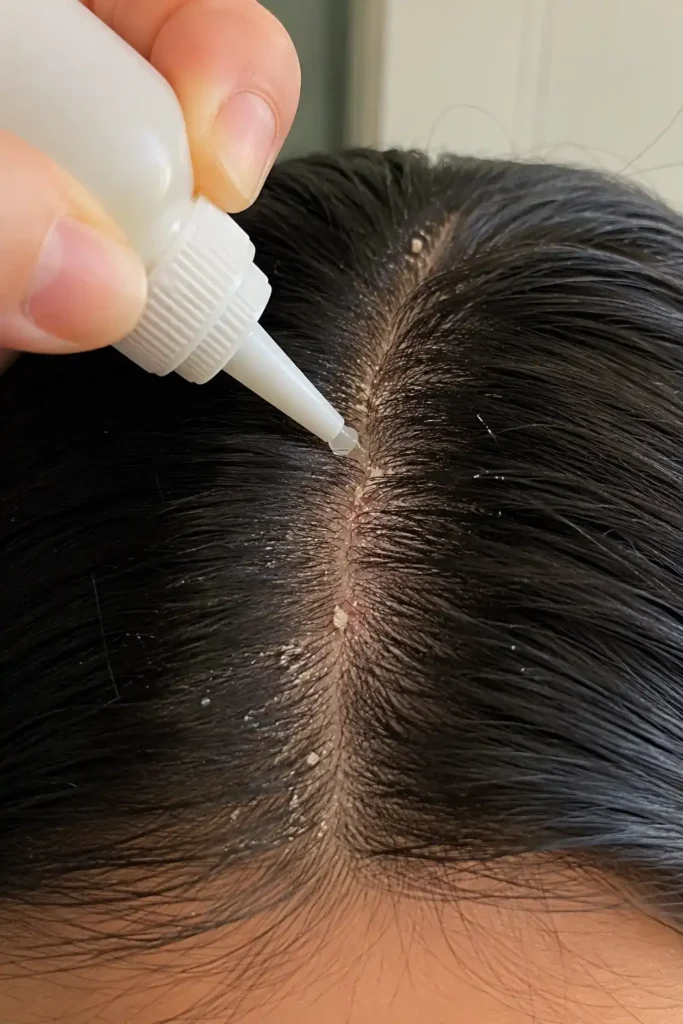
Cold air outside and heated air inside dry out your scalp faster than your lengths. You notice it at your fringe, because that hair sits closest to your forehead and shows every flake against darker strands. The fix is treating the scalp separately from the hair. Use a scalp oil or a salicylic acid treatment once a week, applied directly at the part with an applicator nozzle, then massaged in for two minutes before you shampoo. Do not apply oil to a dry scalp and leave it on all day, since that traps buildup.
Also check your dry shampoo habit. Daily dry shampoo without a proper wash builds up at the roots and makes flaking worse. Limit it to two days between washes. If flaking comes with itching or redness that lasts more than a few weeks, see a dermatologist rather than trying more products. Start with a weekly scalp treatment this Sunday and give it three weeks before judging.
20. Build a Fall Routine You Can Actually Repeat

The routine you follow beats the routine that works better on paper. If your current process takes twenty-five minutes, you will skip it by the second week of November and end up back where you started. Write down what you actually do and cut it to five steps or fewer. Wash, leave-in, styler, dry, done. Add anything else only after those five have been consistent for a month.
Change one variable at a time. If you swap three products at once and your hair looks worse, you learn nothing. Give each change ten days.
Seasonal adjustments that hold up:
- Add moisture in October, before frizz starts
- Increase wash frequency if you are wearing hats daily
- Trim your fringe every five to six weeks regardless of your main cut schedule
Take a photo of your hair on a good day and keep it in your phone. When something stops working, you have a reference for what you were doing differently. Start with the five-step routine this week and adjust from there.
FAQs
Do bangs work on wavy hair, or will they just puff up?
They work when they’re cut dry, in your natural pattern, one small section at a time. Wet cutting is what causes the shrinkage and puff most people complain about. Ask for the shortest point to hit your cheekbone, and expect the wave to pull it up roughly an inch as it dries.
How often should I trim my bangs?
Every five to six weeks, separate from your main haircut. Fringe grows into your eyeline much faster than your lengths need reshaping. Most salons offer free trims between appointments, so ask about their policy at your next visit.
What’s the easiest bang shape for wavy hair?
Curtain fringe. It parts down the middle, sweeps outward, and blends into your layers within about eight weeks if you change your mind. Side-swept pieces are the second easiest and tuck behind your ear when you’re tired of them.
How do I stop my bangs going flat under a beanie?
Make sure your hair is completely dry before the hat goes on, and place the beanie from the back of your head forward instead of pulling it down over your face. Pulling it down drags every piece flat against your forehead and it stays that way.
Why is my hair frizzier in winter than in summer?
Indoor heating strips moisture from the air, so your hair pulls it from wherever it can. Add water back rather than piling on oil. Apply leave-in conditioner to soaking wet hair, then cream, then oil or gel last. A bedroom humidifier makes a bigger difference than most product swaps.