Easy Low Maintenance Hairstyles You Can Do in 5 Minutes
You don’t need an hour in front of the mirror to look put-together. You need the right styles and about five minutes. Whether your hair is fine, thick, curly, or straight, low maintenance hairstyles exist for every texture and every schedule. This list covers 21 real options you can actually pull off on a rushed morning, with no special skills required. Some take 90 seconds. A few you can prep the night before. All of them work.
1. The Sleek Low Ponytail That Takes 90 Seconds
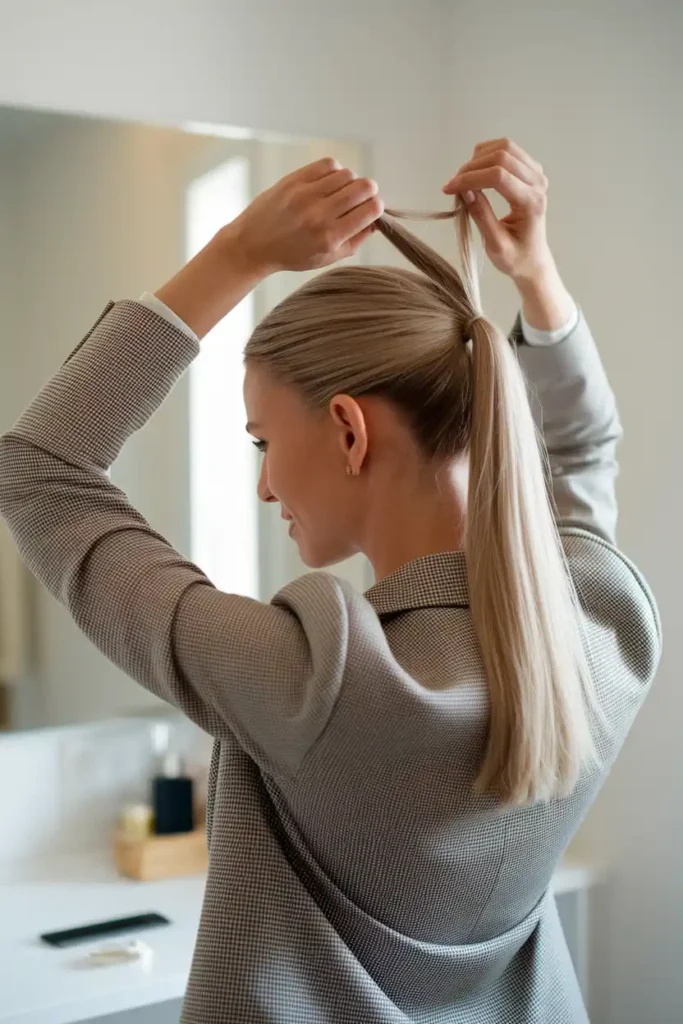
A low ponytail is one of those styles that looks intentional even when you throw it together in your car. Smooth your hair back with your hands, secure it with a clear or matching elastic, and pull a small strand of hair around the base to cover the band. That last step makes it look like you actually tried.
If your hair is slippery or fine, a light-hold hairspray misted before you gather it will keep flyaways from ruining the whole look. Keep a small brush and a few extra elastics in your bag. You will use them more than you think.
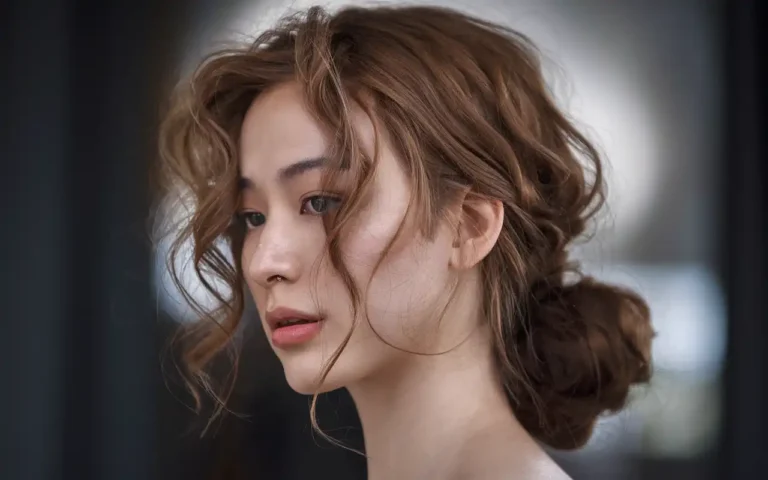
2. A Messy Bun That Actually Stays Put
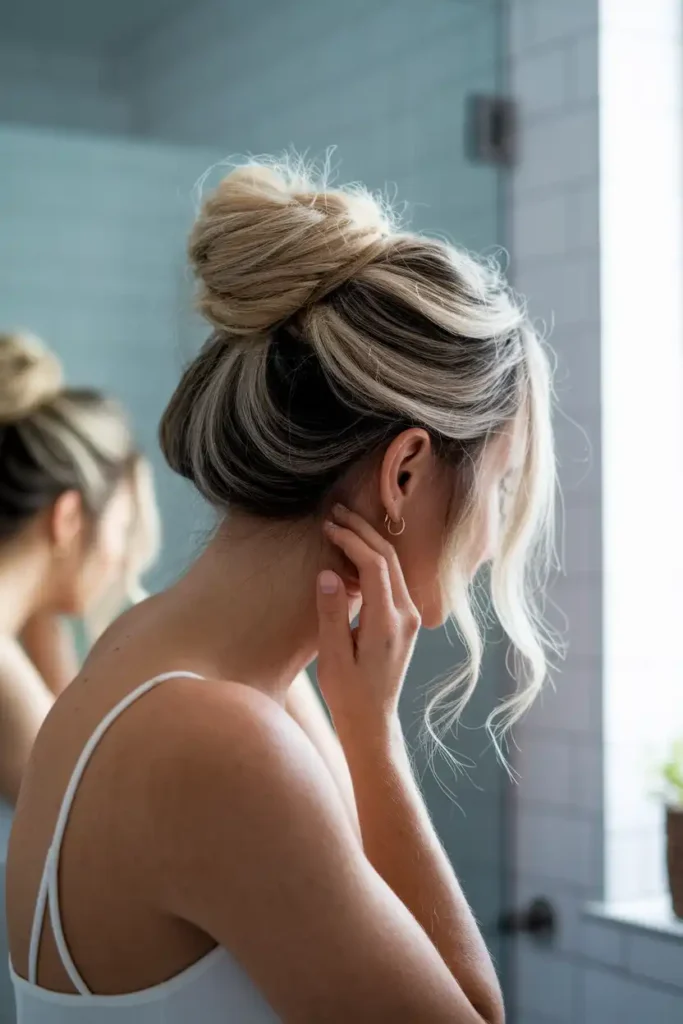
The messy bun gets a bad reputation because most people do it wrong and end up with a lumpy knot that falls apart by 10 a.m. The trick is to not fully pull your hair through the elastic on the last wrap. Leave it looped, then use two or three bobby pins to anchor the loose ends underneath.
For fine hair, backcomb the length slightly before you twist it up. This adds grip and gives the bun more volume so it does not look flat against your head. A small amount of texturizing spray beforehand makes a real difference.
3. Half-Up Half-Down for Days You Want Hair Out of Your Face
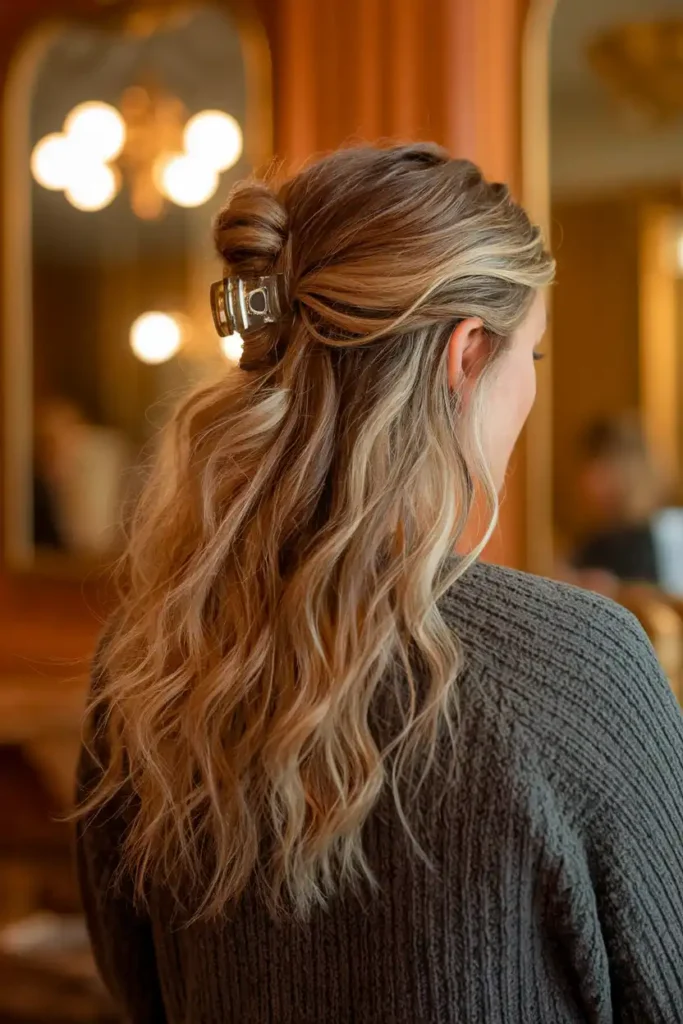
This style works on almost every hair type and takes less than two minutes. Grab the top third of your hair, twist it loosely, and clip or tie it back. Done. It keeps your hair off your face without committing to a full updo, which makes it great for days when your hair is not fully cooperating.
If you have curly or wavy hair, do not brush it before doing this. Just use your fingers to gather the top section so you keep the natural texture intact. Scrunching a little curl cream in beforehand gives you a better foundation for the whole look.
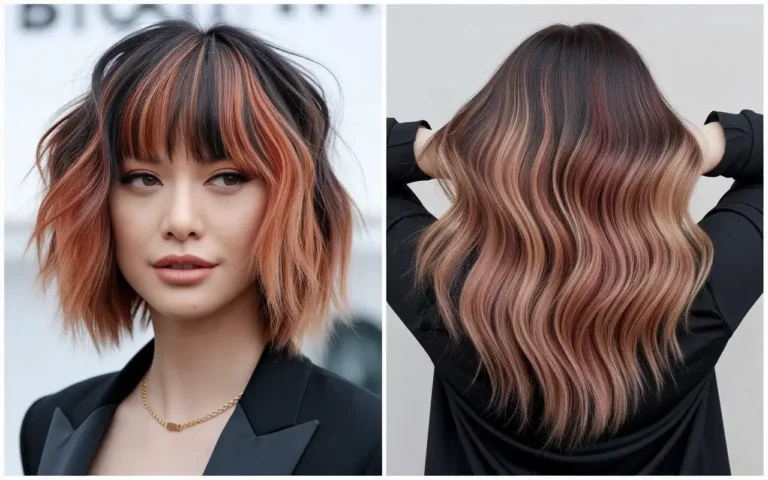
4. Curtain Bangs That Style Themselves While They Air Dry
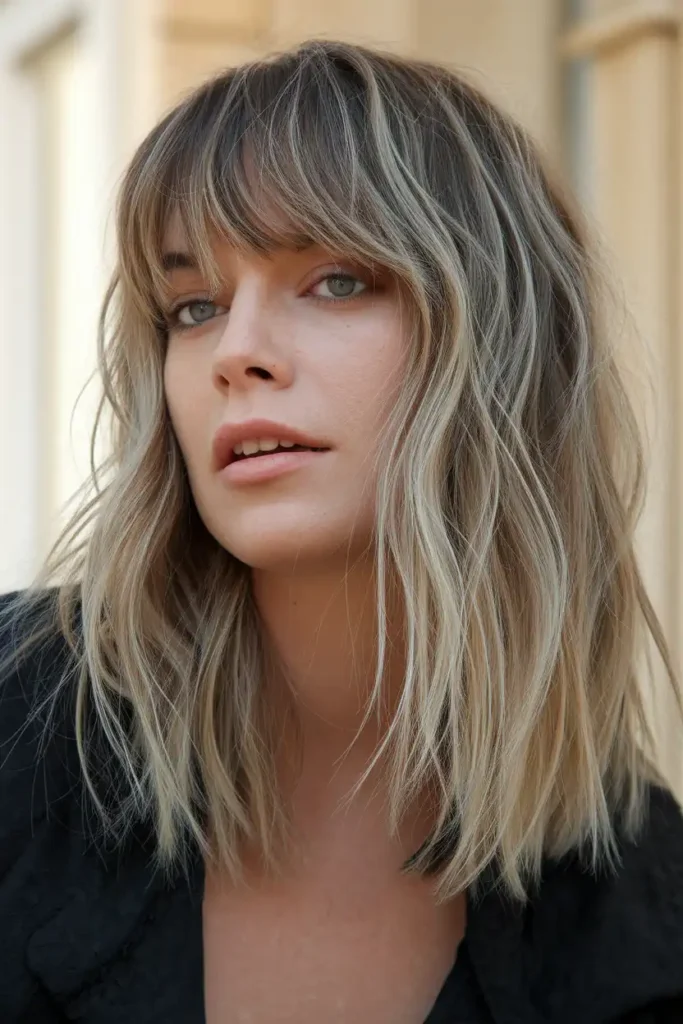
Curtain bangs are genuinely one of the lowest effort additions you can make to any haircut. When they are cut correctly, they fall into place as they dry without much help from you. The key is asking your stylist to cut them with a slight outward angle so they naturally curve away from your face.
To speed up the process in the morning, use a round brush on just the bang section while blow-drying on low heat for about 60 seconds. Everything else can air dry. This gives you that soft, face-framing shape without a full blowout.
5. The Claw Clip Updo That Works on Thick Hair
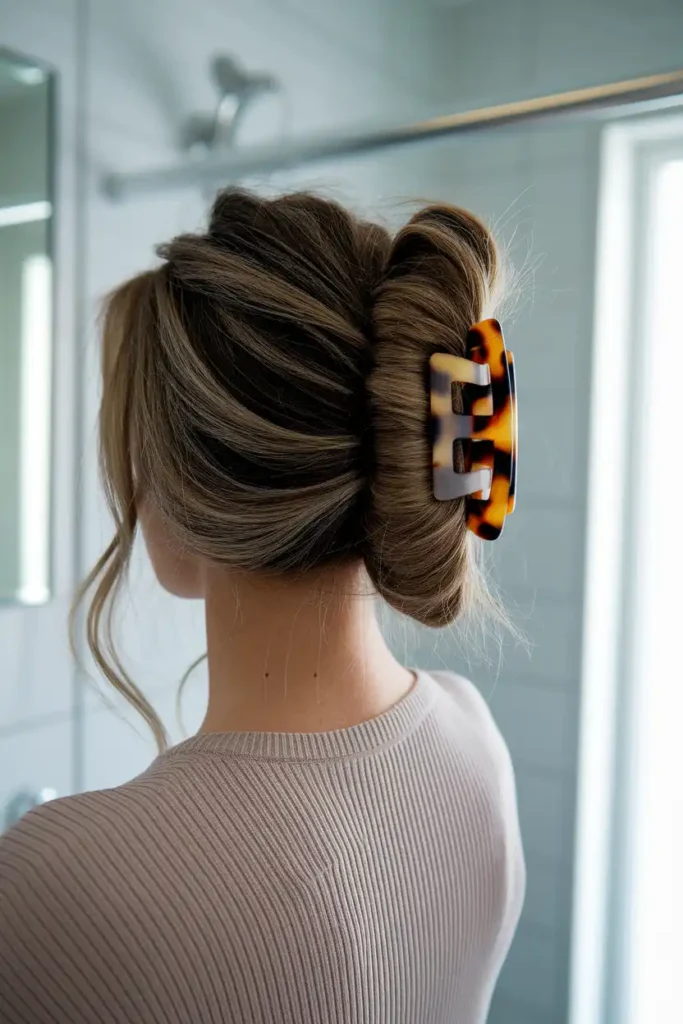
If you have thick hair, you know that most hair tools fail you before lunch. A large, high-quality claw clip is the one exception. Gather your hair into a loose twist at the back of your head and clip it at the base of the twist rather than at the top. This distributes the weight better and keeps the clip from sliding out by midday.
Look for clips labeled for thick or heavy hair, usually with a stronger spring mechanism. Acetate clips hold up better than plastic ones. Once you find a brand that works for your density, buy a few extras because you will reach for them daily.
6. A Quick Braid Style for Curly Hair That Fights Frizz
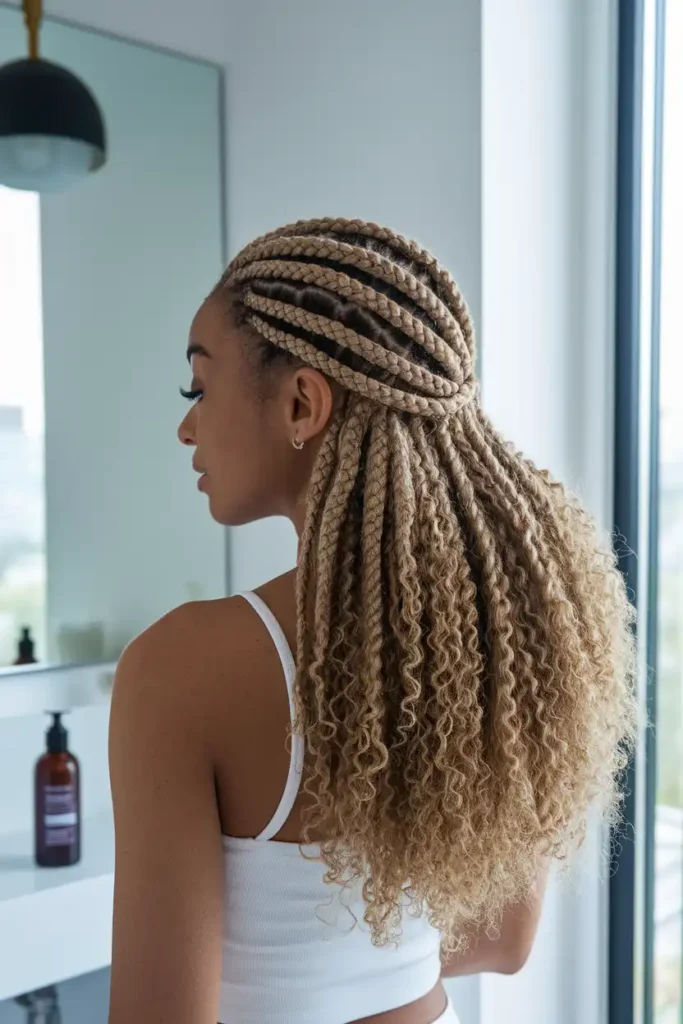
Curly hair and humidity are a constant battle, and a braid is one of the most practical ways to manage both. On freshly washed or refreshed hair, apply your leave-in conditioner, then braid loosely to avoid that tight, stiff look. A side braid or loose French braid down the back both work well and take under five minutes once you have practiced twice.
The mistake most people make is braiding on dry, frizzy hair with no product. That just traps the frizz inside the braid. Start with damp or product-refreshed hair and the result will look intentional and polished, not thrown together.
7. Hairstyles for Fine Hair That Add the Illusion of Volume
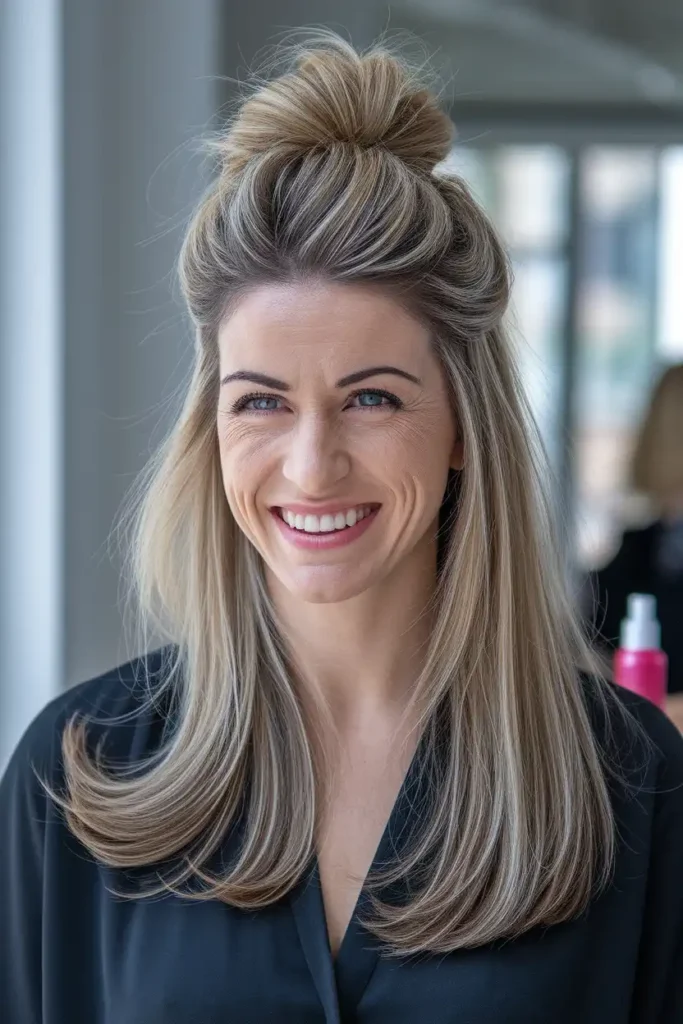
Fine hair goes flat fast, and most quick styles make it look even flatter. The single best habit you can build is using a volumizing mousse or root-lifting spray on damp hair before you even think about styling. Apply it at the roots, flip your hair forward, and let it air dry or use a diffuser for two minutes.
For actual styles that work:
- A high ponytail with a teased crown adds instant lift
- Loose pin curls set with a small barrel iron and left to cool before releasing last for hours on fine hair
- Dry shampoo at the roots before bed means you wake up with grip and body rather than flat, oily roots
- A slight side part instead of a center part creates the appearance of more volume
Pick one habit to start with, and add the others gradually.
8. Simple Styles for Thin Hair That Do Not Require Much Product
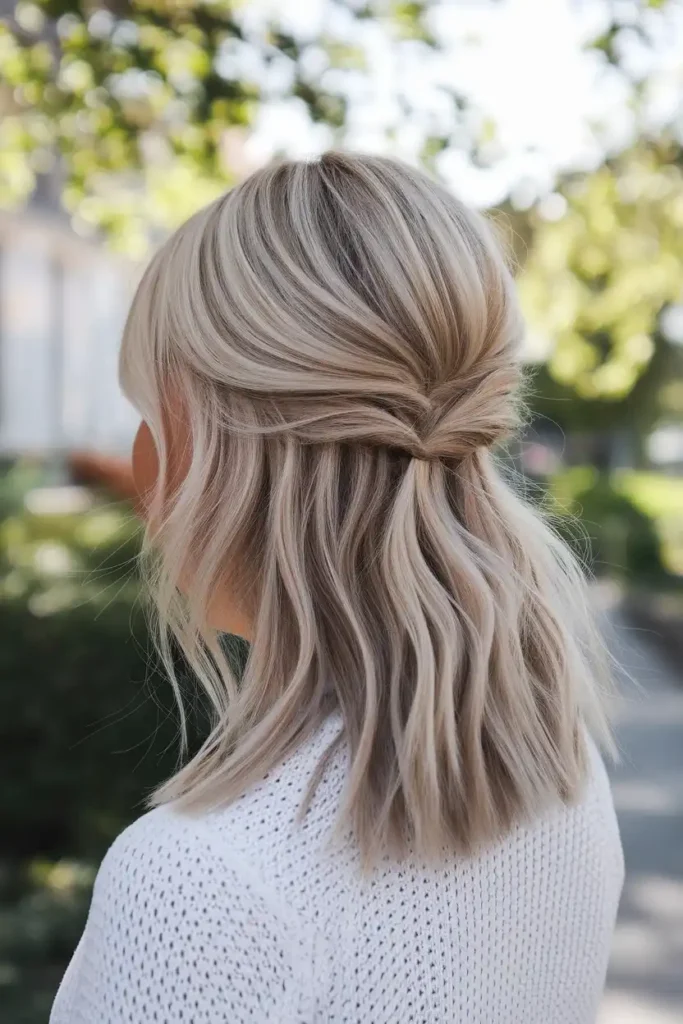
Thin hair and heavy products are a bad combination. Thick creams and serums weigh thin strands down within an hour, which defeats the purpose of styling in the first place. Stick to lightweight sprays and mousses, and apply them sparingly at the roots only.
The styles that tend to work best for thin hair are ones that do not rely on density for structure:
- Sleek low ponytails
- Twisted rope buns
- Simple half-up clips with a small clip rather than a bulky barrette
- Pin-straight blowouts with a ceramic brush
Less is more with both product and manipulation. The more you handle thin hair throughout the day, the flatter it gets.
9. How to Make Air-Dried Hair Look Like an Actual Style
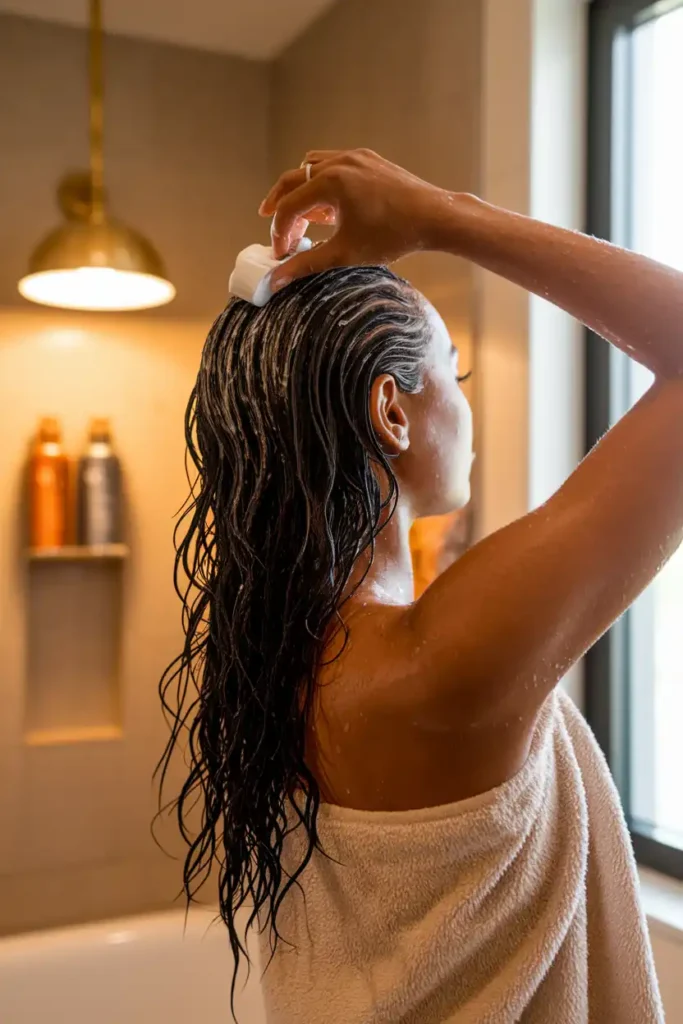
Air-drying is not just for curly hair types. If your hair has any natural wave or texture, you can work with it instead of against it. The key is applying product while your hair is soaking wet, not once it starts to dry. Lightweight mousse or a wave-enhancing spray applied immediately after towel-blotting gives you texture with no heat damage.
Scrunch, do not rub. Rubbing creates frizz. Scrunching encourages your natural pattern to form. Flip your hair forward while you scrunch to help the roots dry with some volume instead of going flat against your scalp. Once it is mostly dry, you can shake it out gently with your fingers.
10. The Slicked-Back Look That Works for Any Hair Texture
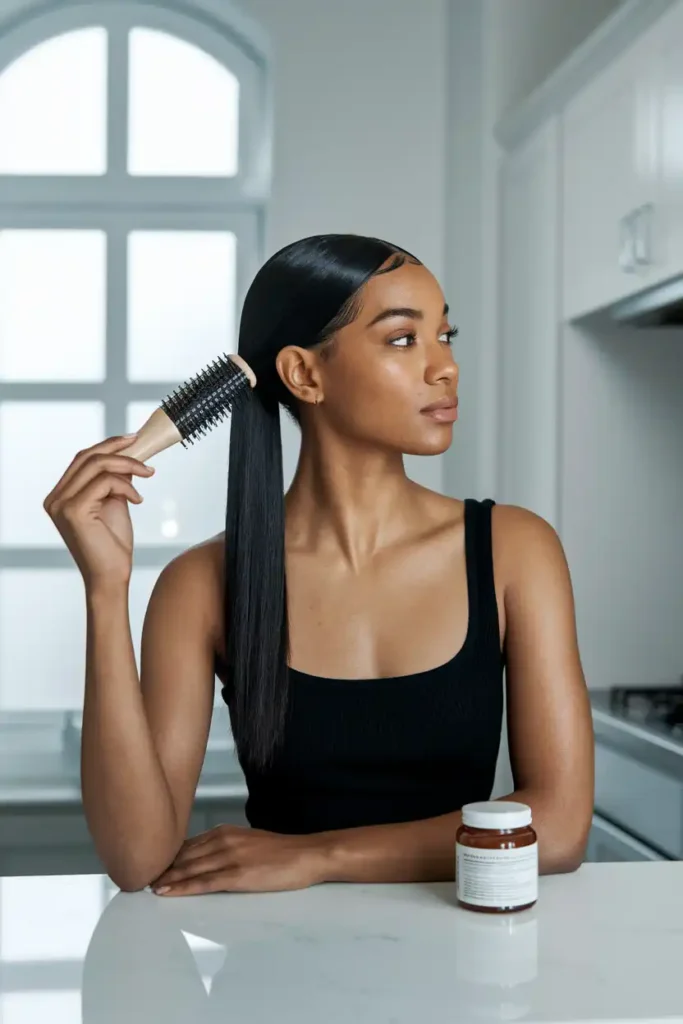
A slicked-back style works on every hair texture from pin-straight to tightly coiled, and it reads as polished in almost any setting. Apply a light hold gel or pomade to damp hair, brush it straight back, and secure it at your preferred height. The smoother you brush, the more refined it looks.
For coily or natural textures, edge control around the hairline makes a significant difference. Use a fine-tooth comb or a soft brush in small sections along your edges to smooth them before securing the rest of your hair. This step alone takes the style from casual to intentional.
11. Overnight Hairstyles That Buy You Time in the Morning
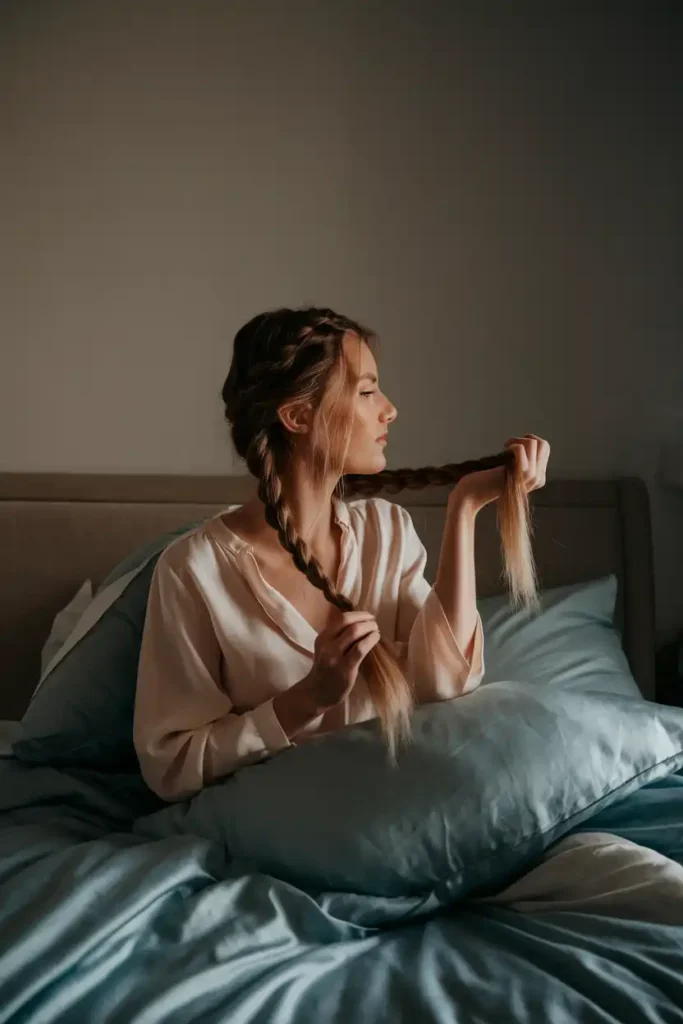
What you do with your hair the night before matters more than what you do in the morning. A loose braid before bed keeps wavy or curly hair from tangling overnight and leaves you with soft, natural waves by morning. Sleeping on a satin or silk pillowcase reduces friction and means you wake up with less frizz to manage.
For straight hair, a loose low bun or a soft scrunchie wrap overnight can actually create subtle volume. When you take it down in the morning, you get movement without heat. Add a quick spritz of dry shampoo and a little finger-combing and you are ready to go in under three minutes.
12. Fast Hairstyles for Long Hair That Actually Hold All Day
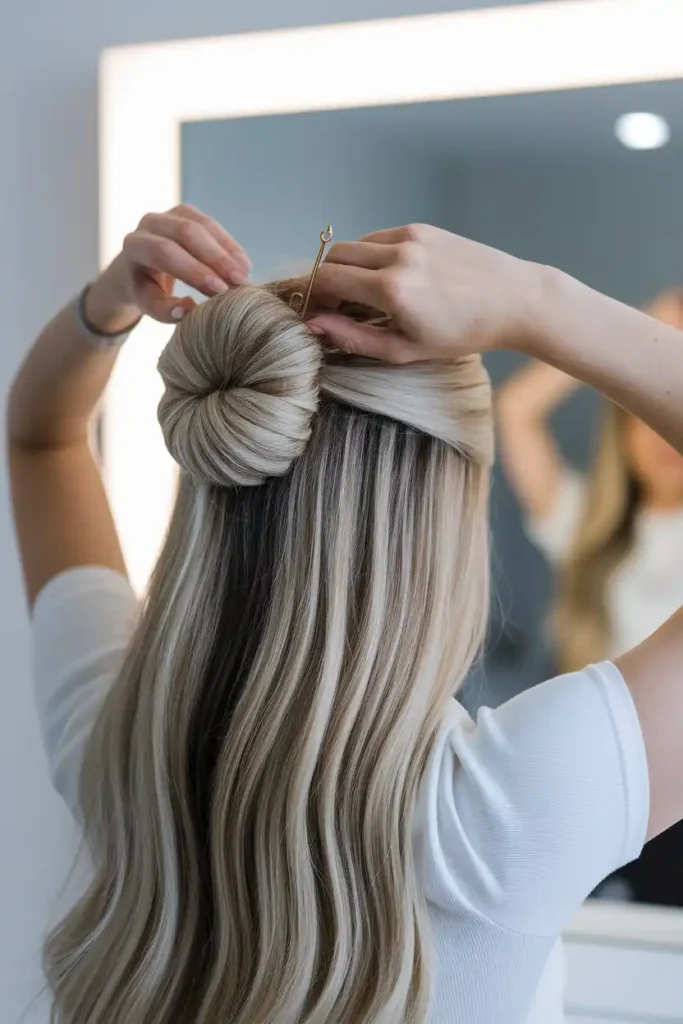
Long hair sounds like a commitment, but it is actually easier to style quickly than medium-length hair because you have more to work with. The styles that hold best on long hair are ones with structure at the base:
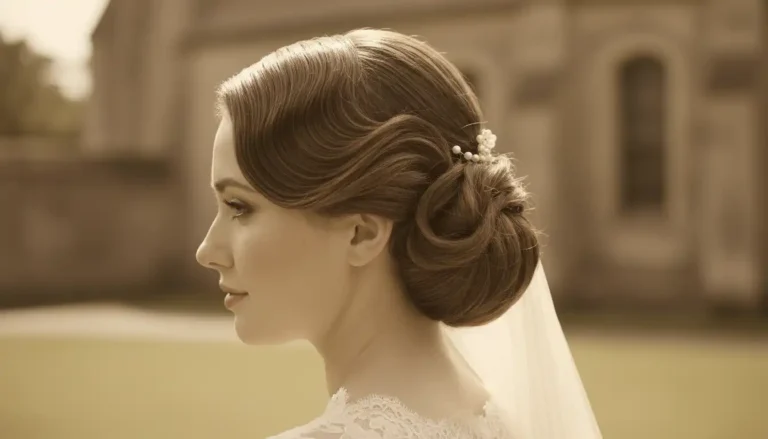
- A knotted low bun (fold, wrap, pin) stays put better than a simple twist
- A high ponytail secured with two elastics, one at the base and one halfway down, holds its shape all day
- Loose French braids take four minutes once practiced and hold for eight-plus hours
- A braided low bun combines both techniques and looks intentional
Whatever style you choose, anchor it with two bobby pins crossed in an X shape. It holds at least three times longer than a single pin.
13. Hairstyles for Busy Moms That Survive School Drop-Off and Beyond
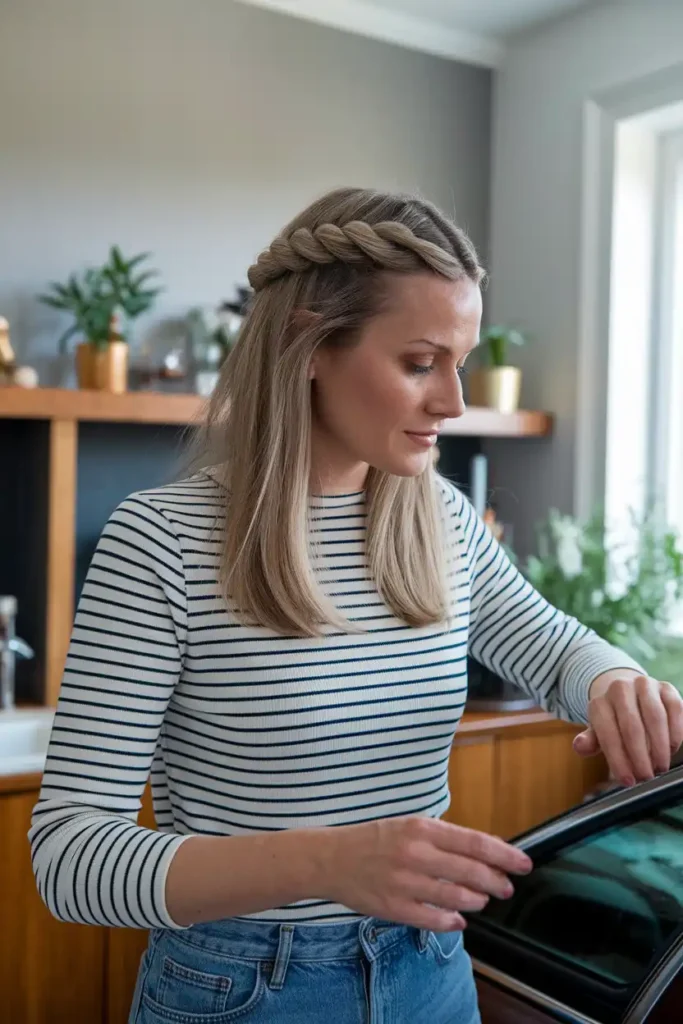
If you have five minutes in the morning, that is genuinely enough time to look put-together. The trick is having a go-to rotation of two or three styles you do not have to think about. When styling is automatic, you are not burning mental energy on it before your day even starts.
These styles work reliably fast:
- A twisted top knot using just your hands and one elastic
- A claw clip updo that takes under 60 seconds
- A side braid finished with a matching elastic
- A sleek low ponytail with one strand wrapped around the base
Pick your two favorites this week and practice them until they are muscle memory. That is the real time-saver.
14. Protective Styles That Are Also Quick and Stylish
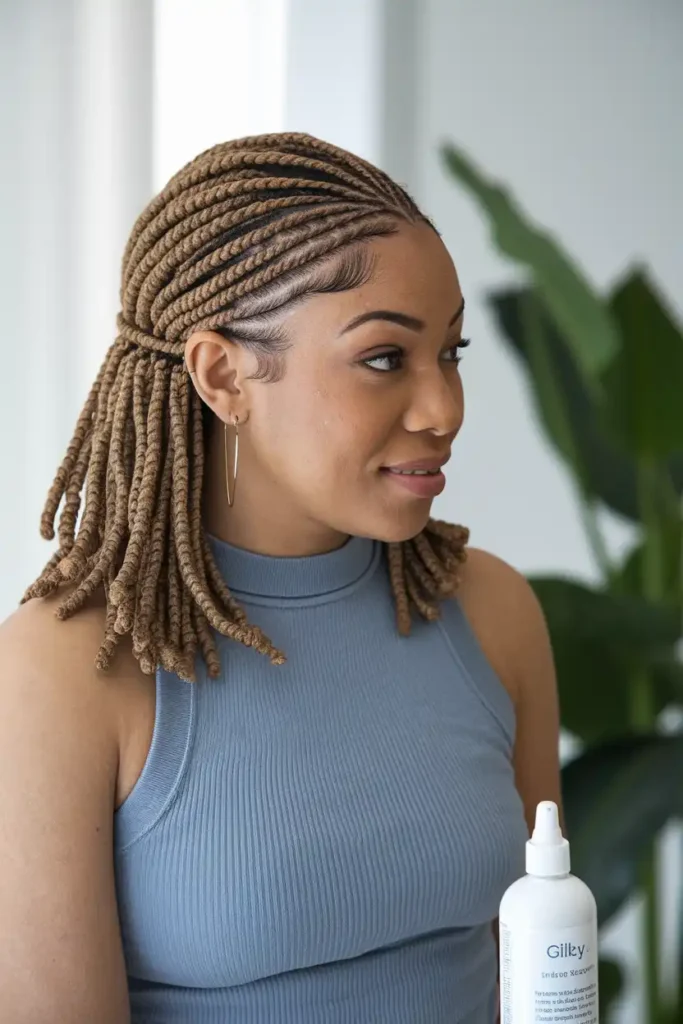
Protective styles get a lot of attention for long-term hair health, but they are also just practical on busy mornings. Flat twists, twist-outs, and braid-outs do not require daily manipulation, which means you style once and refresh for several days after. That is a major time saver across the week.
The most important step for any protective style is moisture. Dry hair does not hold a protective style well and it breaks faster. Apply a leave-in conditioner or a light oil before you style, and seal the ends. If you seal and protect your ends every time, you will notice healthier growth over the following months.
15. Natural-Looking Blowout Results Without a Full Blowout
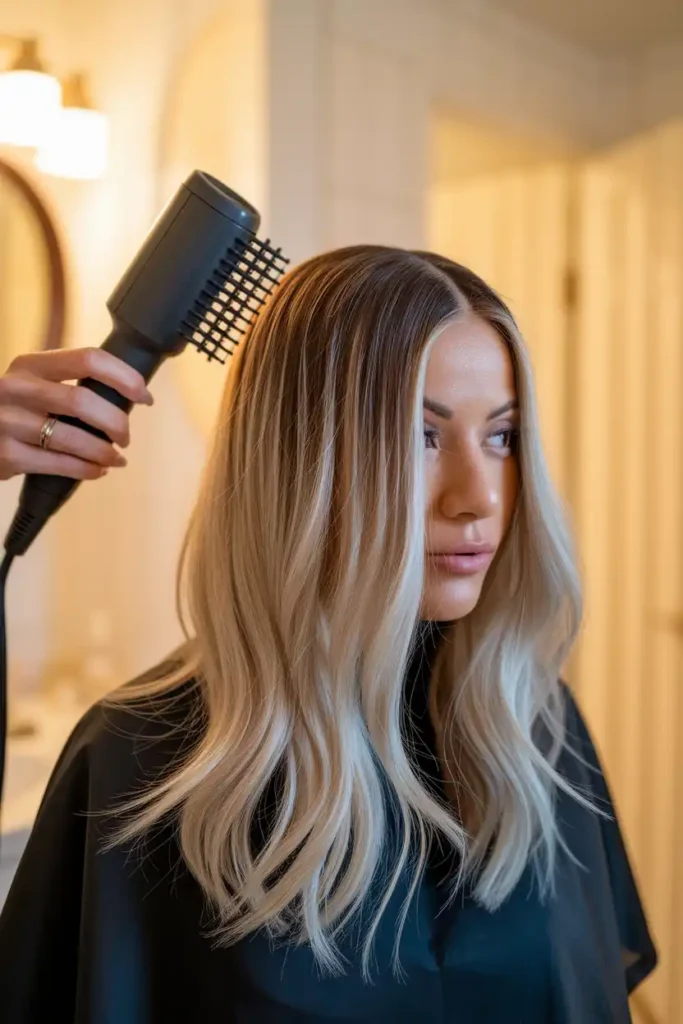
A full blowout takes 20 minutes minimum. You probably do not have that most mornings. But you can get 80 percent of the result by only blow-drying the sections that matter: your roots and your face-framing pieces. The rest of your hair can air dry while you do this, and the overall effect looks smooth and intentional.
Use a medium-size round brush and medium heat, not the highest setting. High heat on a rushed timeline causes more damage and does not actually dry your hair faster. Once your roots are smooth and your face-framing pieces are dry, flick the ends under or out slightly with the brush on the lowest heat. You are done.
16. Dry Shampoo Hacks That Extend Your Style Between Washes
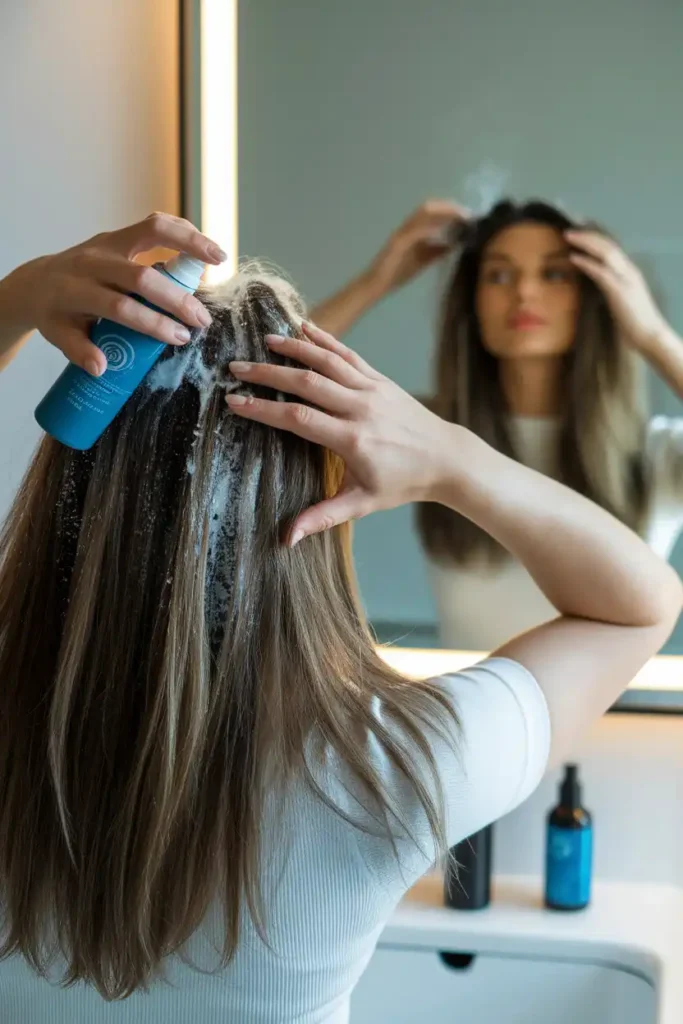
Dry shampoo is not just for skipping wash day. Used correctly, it is a styling tool that adds grip, volume, and texture to otherwise uncooperative hair. The most important thing most people get wrong is applying it too close to wash day when your hair is already clean and dry. It works best on day-two or day-three hair with natural oil at the roots.
Spray it six to eight inches from your scalp, let it sit for 60 seconds before touching it, then massage it in and brush or shake out. Applying it right before bed on day-one hair means it absorbs overnight and you wake up with texture already built in. That single habit changes your whole morning routine.
17. The Easiest Heatless Curls Method That Works While You Sleep
Heatless curls have genuinely improved in the past few years, and the method you choose matters. The satin ribbon or rod method works best on hair that is about 70 percent dry, not soaking wet. Wrap sections around the ribbon or foam in one direction, secure both ends, and sleep on your silk pillowcase. In the morning you get soft, uniform waves with no damage.
The curl size depends on how tightly you wrap and how thick each section is. Thicker sections give you loose beach waves. Thinner sections give you more defined spiral curls. Start with medium sections your first time to see how your hair responds, then adjust from there.
18. Hairstyles That Work With Humidity and Frizz, Not Against Them
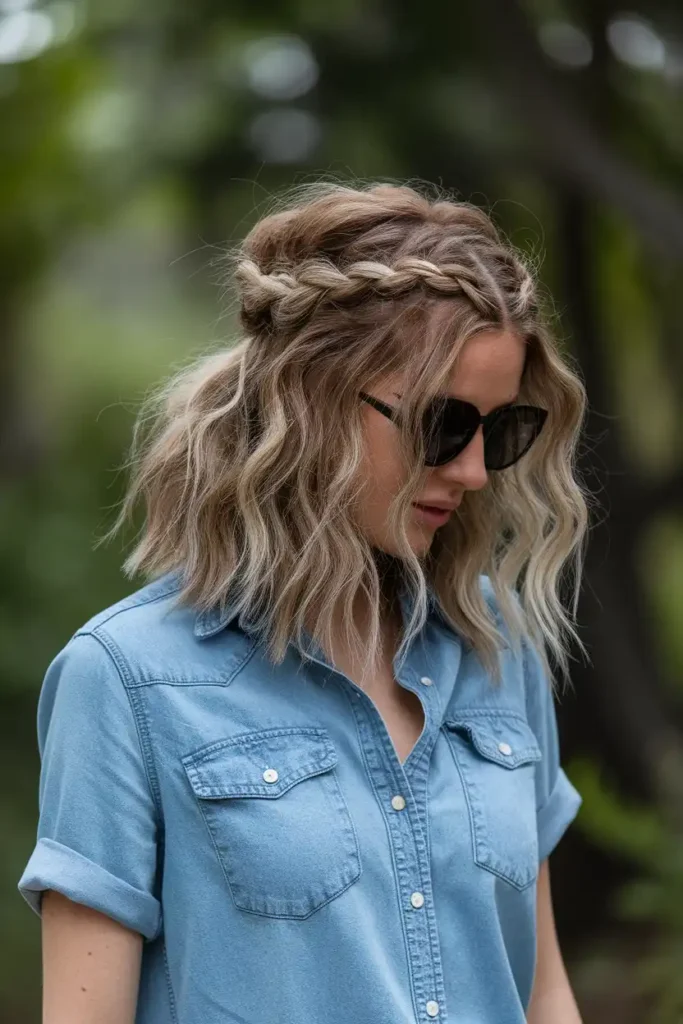
Fighting humidity with smoothing products is a losing battle for most hair types. Anti-frizz serums help, but they only go so far on a genuinely humid day. The better strategy is to work with your natural texture. If your hair waves or curls in humidity, lean into that and use a curl-defining cream instead of a smoothing product.
Styles that hold up best in humidity:
- Braids and twists (any variation)
- Buns secured with strong elastics and bobby pins
- Wash-and-go styles defined with a strong-hold gel
- Claw clip updos with texture left intentional
The one product worth keeping in your bag year-round is a small bottle of anti-humidity spray. Apply it as a finishing step over whatever style you choose.
19. A Simple Style Upgrade Using Just Bobby Pins
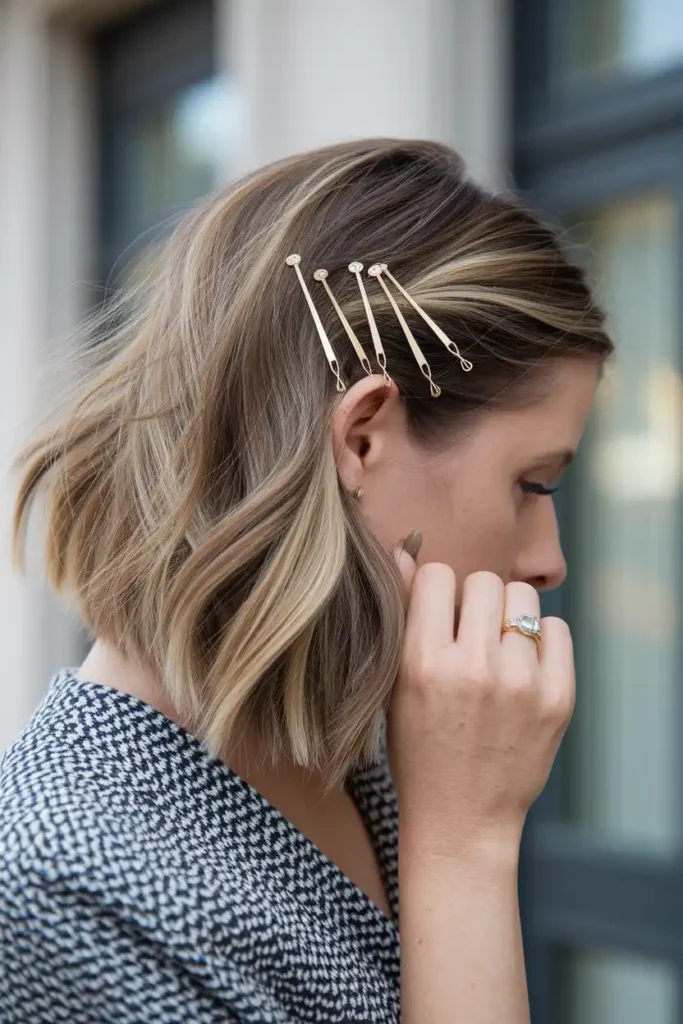
Bobby pins are underused as actual styling tools. Most people use them to hide flyaways, but a few strategically placed pins can create a style that looks like it took effort. A simple pinned-back section on one side with two or three pins placed in a row takes 90 seconds and completely changes the shape of a basic blowout or air-dried look.
The key is matching your pin color to your hair and inserting them with the wavy side facing down, against your scalp. This grips the hair better and keeps the pins from sliding out. For added hold, spray the section lightly with hairspray before pinning.
20. Hairstyles for Short Hair That Skip the Hot Tools Entirely
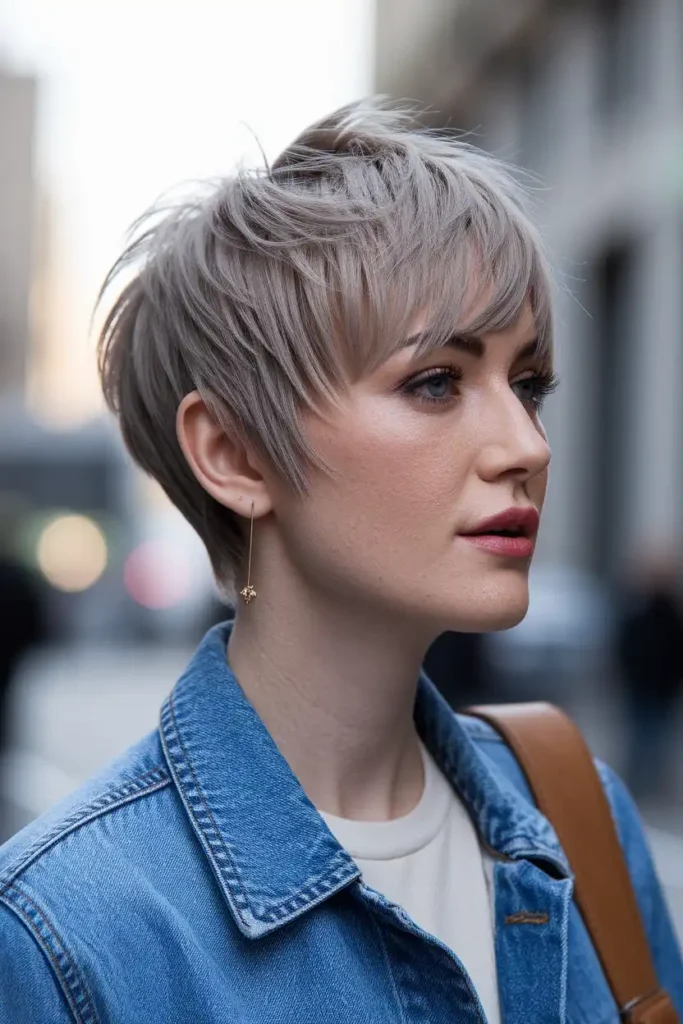
Short hair does not automatically mean low maintenance. It needs regular trims and the right products to look intentional without heat tools. A small amount of matte paste or texturizing clay worked through dry hair with your fingers is the fastest way to add definition and separation to short styles.
Apply a pea-size amount to your palms, rub together, then work it through from root to tip using your fingers to shape as you go. Matte products are more forgiving than glossy ones on short hair because they do not show every fingerprint or imperfection. Keep your product amount minimal, you can always add more but you cannot take it back.
21. Building a Weekly Hair Routine That Saves You Time Every Day
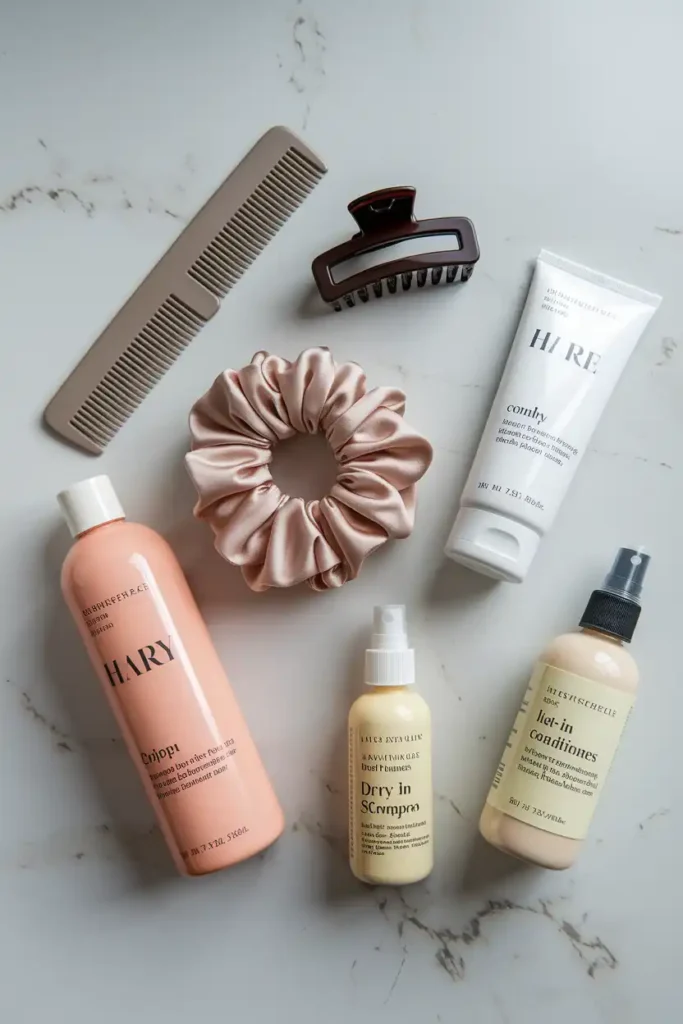
Having a hair routine does not mean spending more time on your hair. It means spending less time making decisions about it. When you wash, condition, and style with consistency, your hair starts to behave more predictably. You stop troubleshooting every morning and start working with a baseline you understand.
A simple weekly structure to consider:
- Wash day one or two times per week depending on your texture and scalp
- Protective or low-manipulation styles mid-week to avoid daily re-styling
- Dry shampoo refresh on the days between washes
- One overnight treatment, a quick oil or mask, every week or two for hair health
Start with wash frequency. Getting that right changes how your hair behaves for every style you try the rest of the week.
Conclusion:
Low maintenance hairstyles are not about doing less. They are about doing the right things faster. Pick two or three styles from this list that match your hair type and practice them this week. Once they feel automatic, your mornings get easier without your hair looking like they did. Start with whatever section matches your biggest hair frustration today, and build from there.