Tweed Jacket Outfits for Fall Weekends
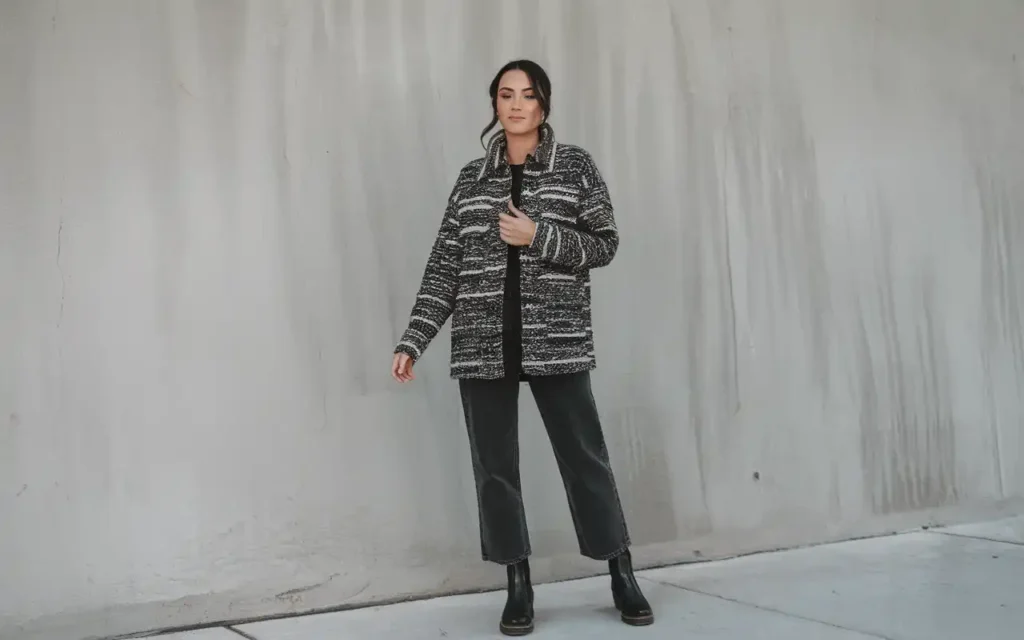
You own the jacket. It hangs there most weekends while you reach for the same sweater instead. The problem usually is not the piece, it is the two decisions underneath it: which bottoms, which shoes. Get those right and a tweed jacket handles Saturday errands, dinner, and everything between without any effort from you. Below are 20 outfit combinations, honest notes on what fails and why, and the fit details worth checking before you buy anything new. Start with the one closest to what is already in your closet. (89 words)
1. Build Your Fall Weekend Look Around One Jacket
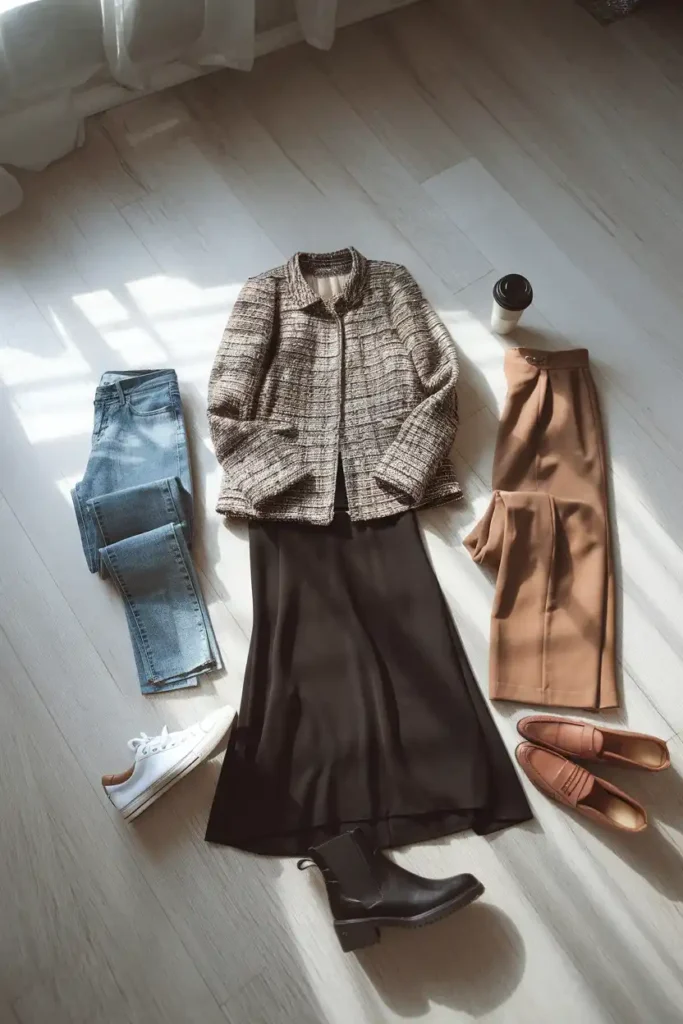
You do not need five jackets. You need one that fits well and three outfits you can rotate without thinking about it on a Saturday morning. Pick a neutral first. Oatmeal, camel, and soft gray all sit quietly next to denim, black, and cream, which means fewer decisions when you are already running late for brunch.
Here is the rotation I recommend testing this month:
- Jeans plus white sneakers for errands and coffee
- Slip skirt plus ankle boots for dinner
- Wide leg trousers plus loafers for anything in between
Wear each combination once before buying anything new. Most people find the gap in their closet is shoes, not outerwear. Start there and see what you actually reach for by week three.
2. The Cropped Chanel Jacket Trick for Shorter Torsos
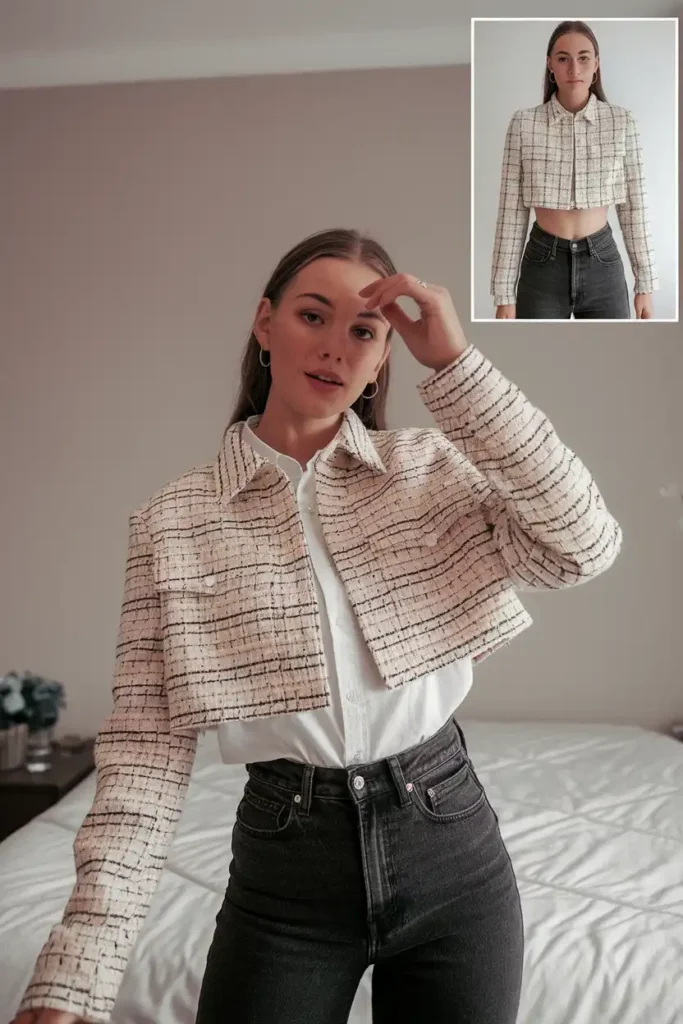
A cropped Chanel jacket only works when the hem stops at or just above your natural waist. If it lands two inches lower, it cuts your torso in half and shortens your legs at the same time. That is the single most common styling mistake I see with boucle, and it has nothing to do with the jacket quality.
The fix costs nothing. Pair every cropped style with high rise bottoms so the two waistlines meet. Tuck your top fully, not a half tuck, since the front tuck creates bulk exactly where you want a clean line. If you already own a cropped jacket that sits wrong, a tailor can raise the hem for around thirty to fifty dollars, though check that the pockets will not end up in a strange spot first. Try it with your highest rise jeans before you spend anything.
3. Chic Beige With Buttons for Easy Saturdays
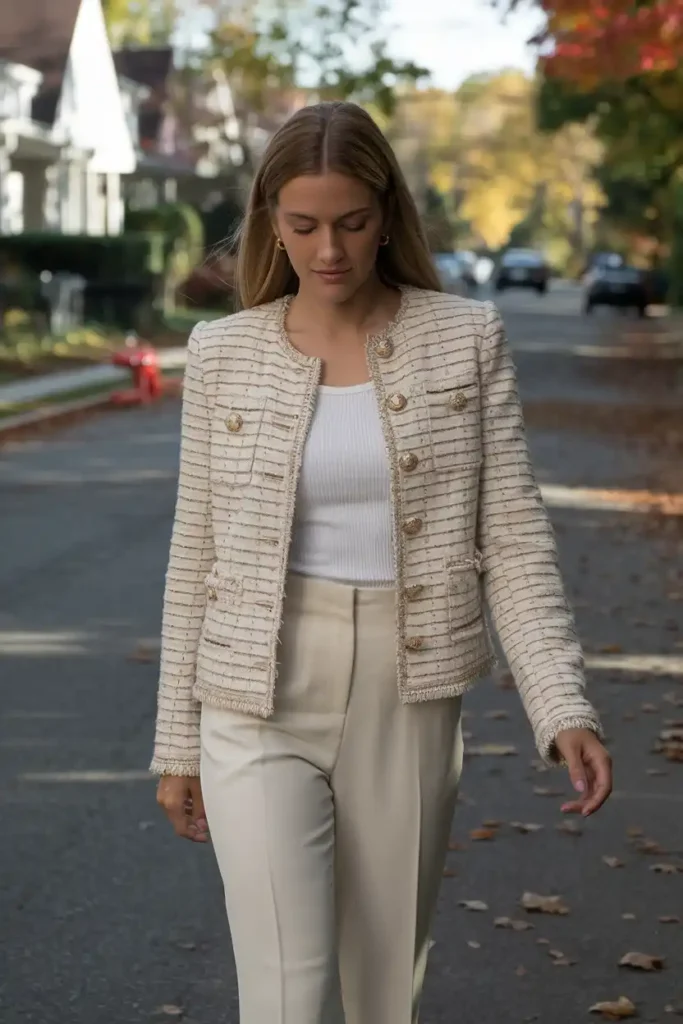
Beige gets called boring, usually by people wearing it with the wrong metal. Gold buttons on a warm beige weave read expensive. Silver buttons on that same warm beige read cheap, because the cool tone fights the yellow undertone in the fabric. Check your buttons in daylight before you decide the jacket is the problem.
A chic beige tweed jacket with buttons works hardest when you keep everything under it plain. White tank, cream trousers, done. The texture is already doing the visual work, so a printed blouse underneath makes the whole thing look busy. Match your jewelry to the button metal and stop there. If your buttons are the flat plastic kind that came with a fast fashion piece, swapping them for brass ones from a fabric store runs about eight dollars and changes the jacket more than anything else you could do.
4. Black and White Boucle Without the Costume Feeling
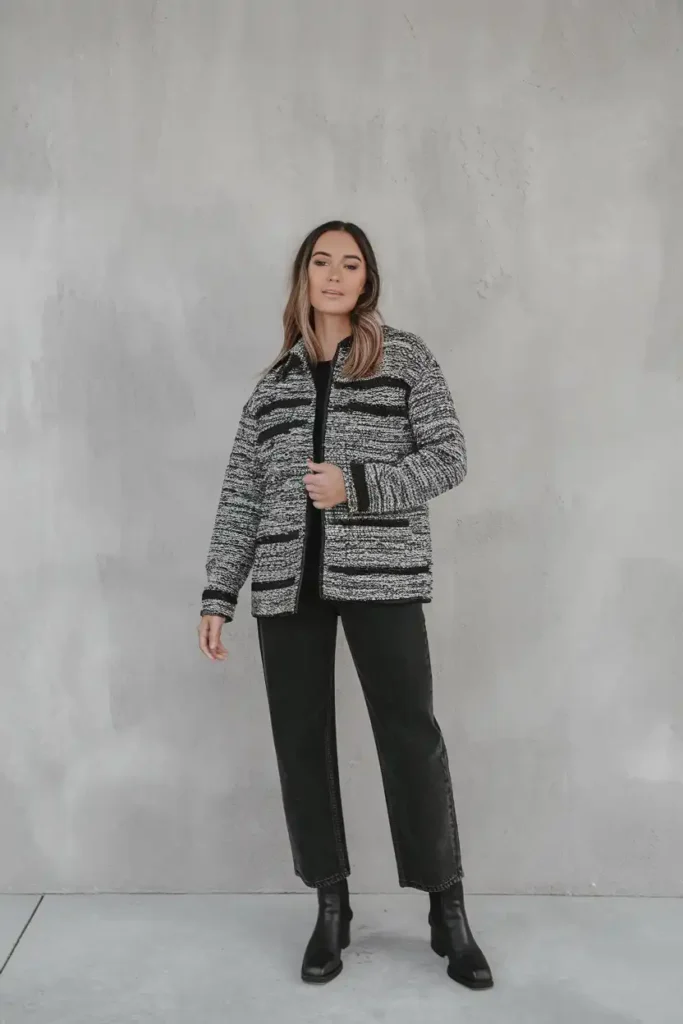
A Chanel blazer in black and white turns into a costume the second you add the expected accessories. Pearls, a quilted bag, a black bow in your hair, and suddenly you look like you are attending a themed party. The jacket is already recognizable. It does not need help.
Ground it instead. Dark denim, black boots, and either no jewelry or one thin gold chain. That combination lets the jacket read as clothing rather than reference. I have styled this exact look for clients who owned a Chanel jacket in black and white and never wore it, and the change that made them wear it was removing three things, not adding one. Try wearing yours with the plainest bottom half you own this weekend and see how differently it feels.
5. Why Burgundy Outperforms Black Every October
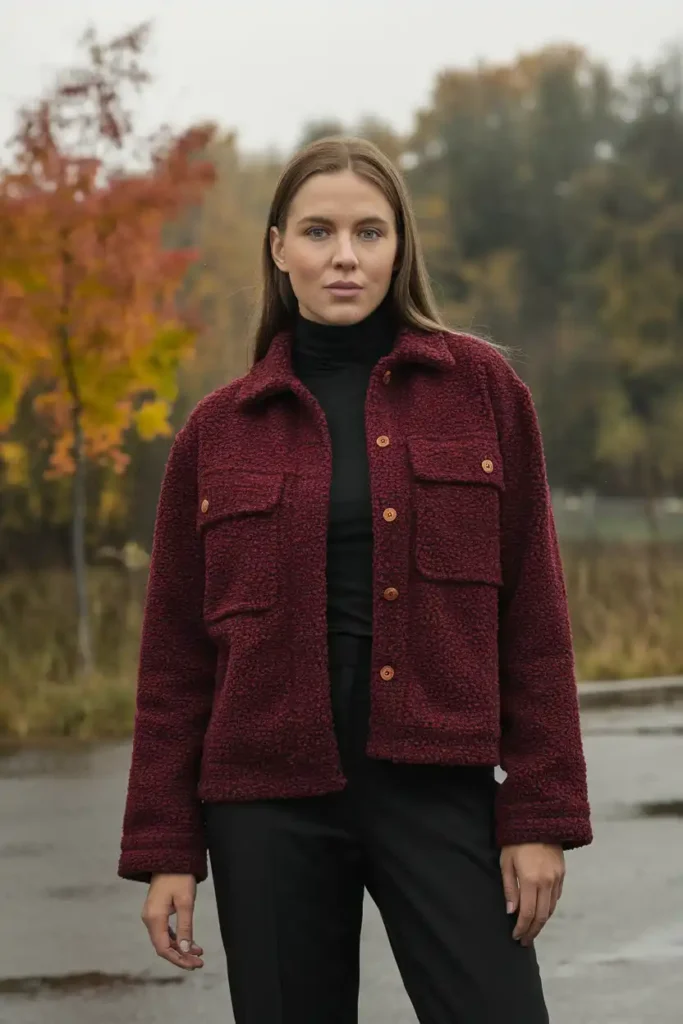
Black is safe and it disappears. In flat October light, a black jacket over dark trousers reads as one solid shape with no definition, especially in photos. Burgundy holds its color in low light and separates from whatever you wear underneath, which is why it photographs so much better on gray days.
If you already own black and want more from it, burgundy is the more useful second purchase than gray or navy. It sits next to camel, cream, denim, olive, and chocolate brown without any thought. It also handles a black turtleneck underneath better than most colors, since the contrast stays soft instead of harsh. Look for a wine leaning burgundy rather than a bright red one, because the deeper shade stretches from September through February. Hold it against your existing coats before buying to check the undertone matches.
6. Making a Pink Jacket Look Grown Up
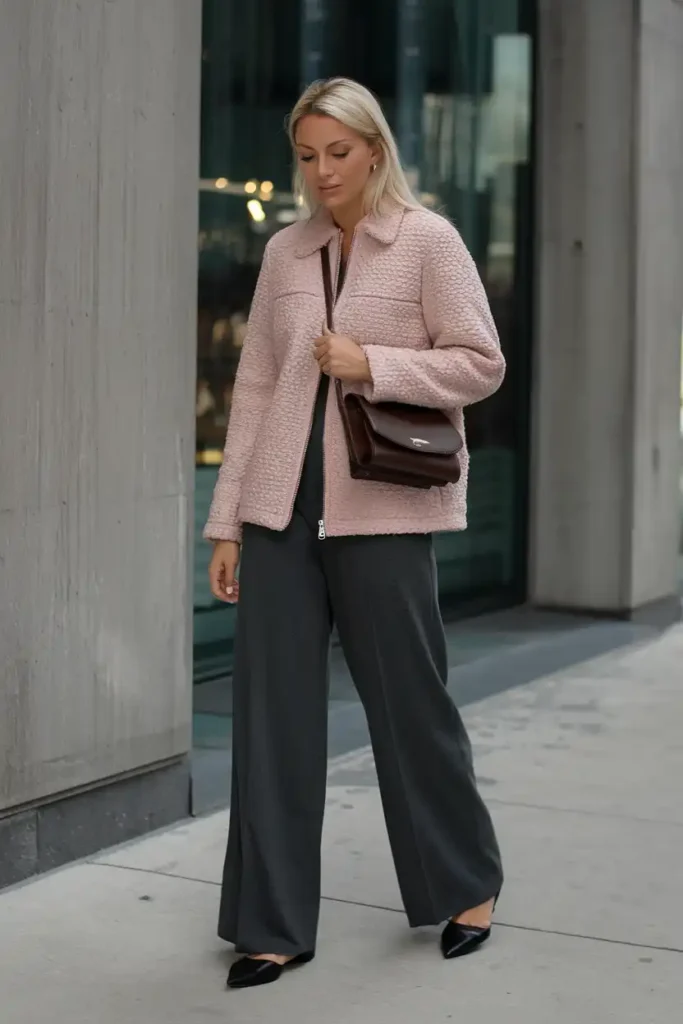
A pink tweed jacket goes sweet fast, and the culprit is almost always what you put with it. Pink plus cream plus light denim plus a pastel bag reads very young. The same jacket over charcoal, chocolate, or black reads completely different because the weight underneath balances the softness above.
My rule is one soft color per outfit, and if pink is it, everything else stays grounded. Charcoal trousers, black flats, brown leather. Skip the light wash jeans entirely with this one, since two pale tones together lose all structure. If the pink you own is very bright rather than dusty, wear it as your only statement and keep your makeup neutral. Try it with the darkest trousers in your closet first and adjust from there.
7. Which Jeans Actually Work Underneath
Straight leg in a dark rinse is the pair that works with almost every textured jacket you own. The clean line balances the volume in the shoulders, and the dark wash keeps the outfit from looking like two separate halves. Black wide leg comes second and looks especially good with cropped styles.
The pairs that fight you:
- Light wash skinny jeans, which make a structured jacket look top heavy
- Heavily distressed denim, which competes with the fabric texture
- Anything with a low rise, since it disrupts the waistline entirely
If your only jeans are skinny, a cuffed hem and a taller boot help more than you would expect. Otherwise, one pair of dark straight legs will do more for your fall outfits than another jacket will. Buy those before anything else.
8. Shoes That Change the Whole Outfit
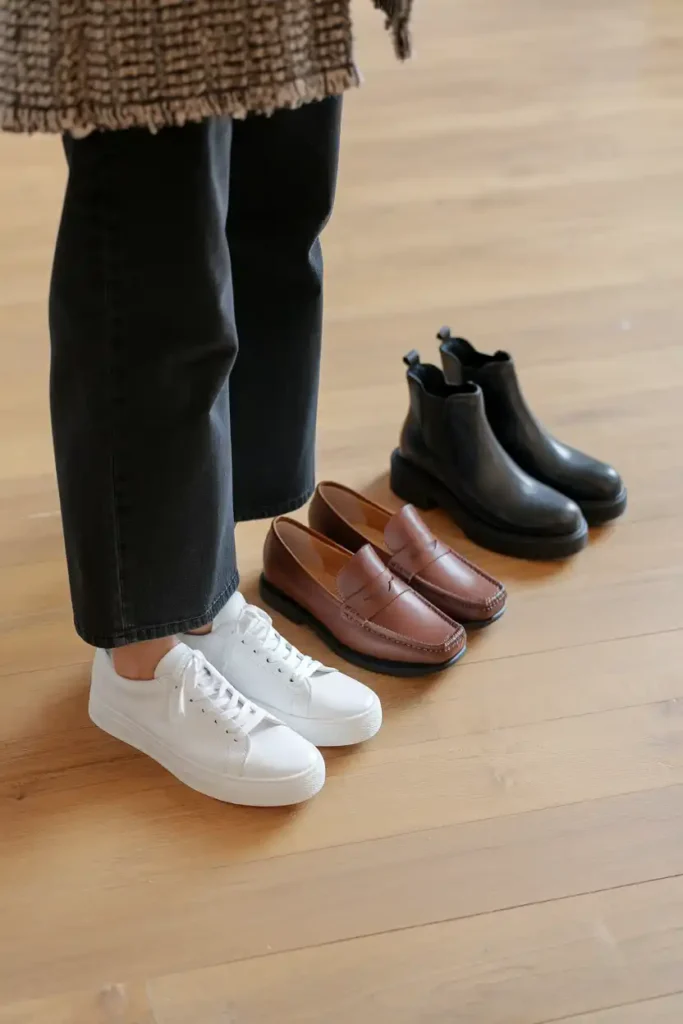
Your shoes decide whether the outfit reads casual or dressed. Same jacket, same jeans, three completely different results. White sneakers make it a weekend errand outfit. Brown loafers make it lunch with friends. Black ankle boots make it dinner. Nothing else needs to change.
Pick based on where you are going, not on what matches. That last part matters, because matching your shoes to your jacket usually makes the outfit look planned in a stiff way. Brown loafers under a black and white jacket look better than black loafers do, since the warmth breaks up the contrast. If you only want to buy one pair this fall, get the loafers. They cover more situations than the other two and they work with trousers, jeans, and skirts equally well.
9. Layering a V Neck Sweater and Tie Underneath
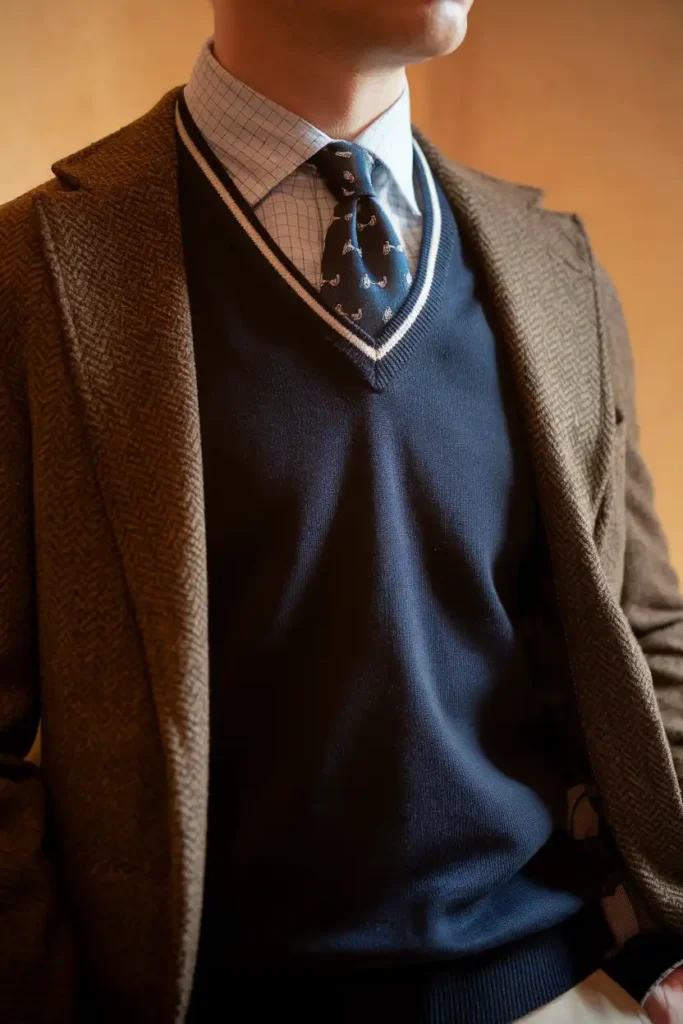
A tie with a v neck sweater only looks right when the knot sits fully above the sweater’s neckline. If the v is too shallow, the knot gets swallowed and the whole thing looks crowded. Check this in a mirror before you leave, because it is a two second fix and it changes how put together you look.
Keep the sweater fine gauge, merino or cashmere rather than chunky, so it layers under a jacket without adding bulk at the shoulders. Navy and charcoal both work under brown herringbone. A patterned tie is fine as long as the sweater stays solid, since two patterns plus a textured jacket becomes noisy. Test the combination sitting down as well as standing, because sweaters ride up and knots shift. If yours does, a tie bar solves it for under fifteen dollars.
10. Harris Tweed and Scottish Tweed: What the Labels Mean
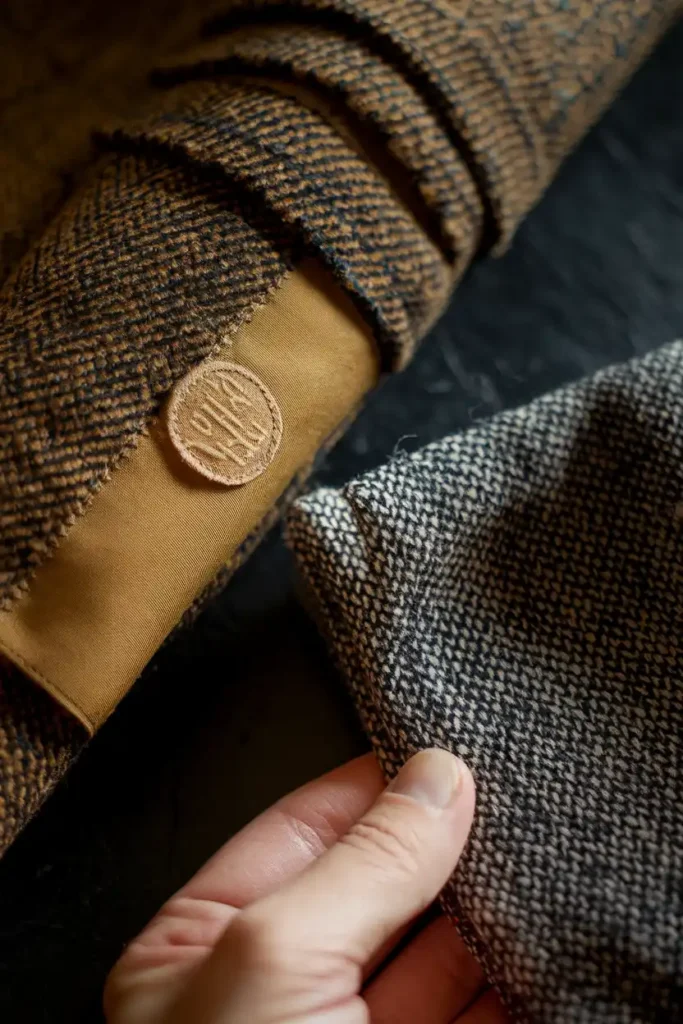
Harris Tweed is a protected term. To carry the orb mark, the cloth must be handwoven by islanders in their homes in the Outer Hebrides using pure virgin wool dyed and spun in Scotland. That certification is why the price sits higher and why the fabric outlasts almost everything else in your closet.
Scottish tweed is a broader description and covers cloth woven anywhere in Scotland by any method. Both are good. Only one is regulated. When you shop secondhand, look inside the lining for the orb label, since vintage Harris pieces regularly turn up on resale sites for under a hundred dollars and they are worth buying even if the fit needs work. Tailoring a well made jacket costs less than replacing a poorly made one twice.
11. Covered Buttons and Collars for Colder Weekends
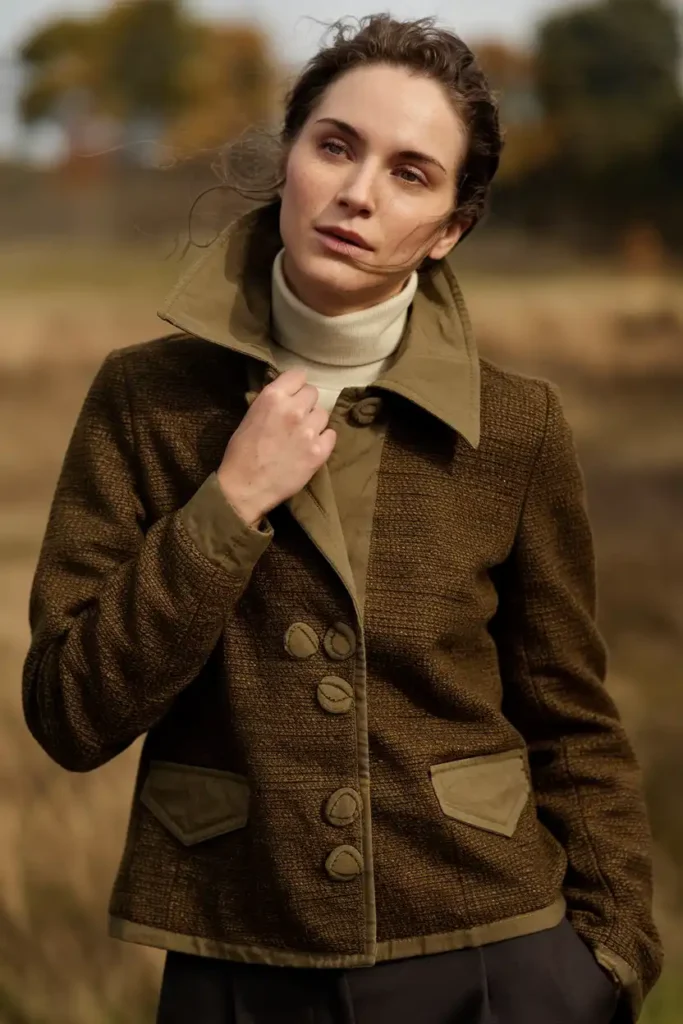
Collared outerwear with covered buttons for fall gives you something a collarless style cannot: coverage at the neck when the temperature drops. A turned up collar blocks wind and adds height to your frame, which helps if you find boucle styles make your shoulders look wide.
Covered buttons also solve a practical problem. They do not catch on knits, they do not tarnish, and they keep the front of the jacket looking quiet so you can wear a statement necklace without competition. Pair this style with a fine turtleneck rather than a scarf, since a scarf under a raised collar creates bulk right at your jawline. Deep olive, chocolate, and charcoal all work harder than black here because they read warmer against fall light. Try the collar up for one full day before deciding it feels too much.
12. Dark Academia Layers You Can Wear to Work
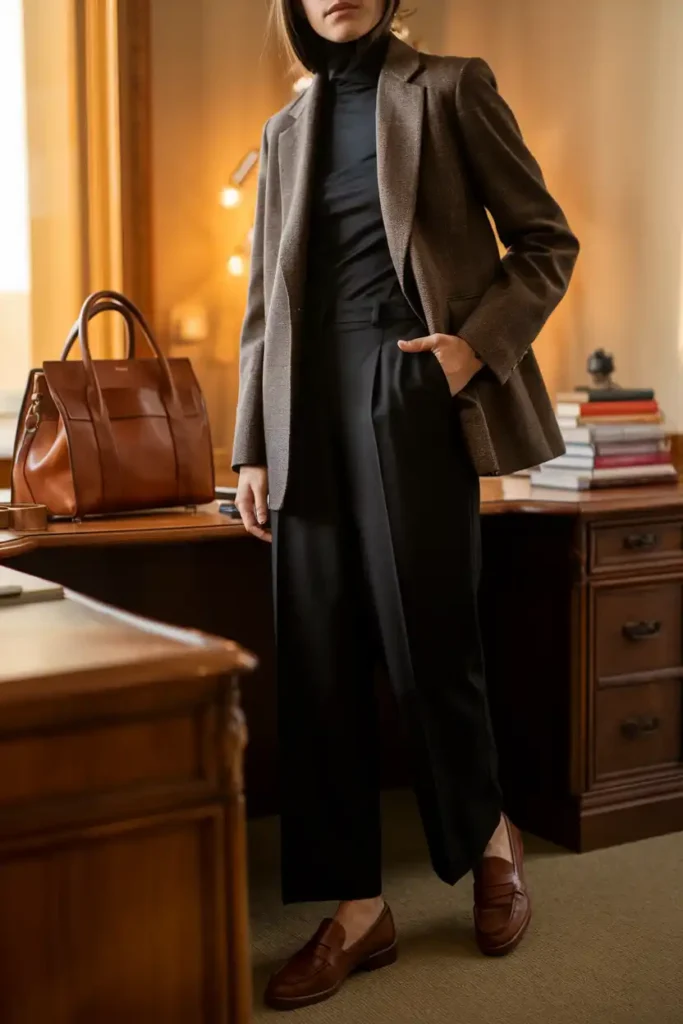
Dark academia works in a real office when you take out the theatrical parts. Skip the plaid skirt, skip the round glasses if you do not need them, and keep the color story to brown, black, cream, and deep green. What is left is a genuinely professional outfit that happens to have texture.
The pieces that carry it:
- Brown herringbone outerwear in a straight, non cropped cut
- A black or cream fine gauge turtleneck
- Straight leg trousers in black or charcoal
- Brown leather loafers and a matching bag
Match your leather tones, bag to shoes, because mismatched browns are the detail that makes this look thrown together. If your office runs formal, swap the loafers for a low block heel. Build the outfit once and photograph it so you can repeat it without rethinking.
13. Men’s Navy Blazer Styling for Weekend Errands
The mistake most men make with a navy textured blazer is wearing it exactly the way they wear a suit jacket. Dress shirt, dress shoes, and the whole thing looks like you left work halfway through. Swap the shirt for a crew neck sweater and the leather shoes for suede, and it becomes weekend clothing immediately.
Navy handles this better than black or gray because it sits comfortably next to denim without matching it. Keep the jeans dark and the sweater in a mid tone gray or oatmeal so nothing competes. Brown suede boots finish it. This is the classy outfit men style formula that works from September through November with almost no variation, and it takes about four seconds to assemble in the morning. Try it once with your existing blazer before buying anything.
14. Navy Suit and Brown Vest for Fall Occasions
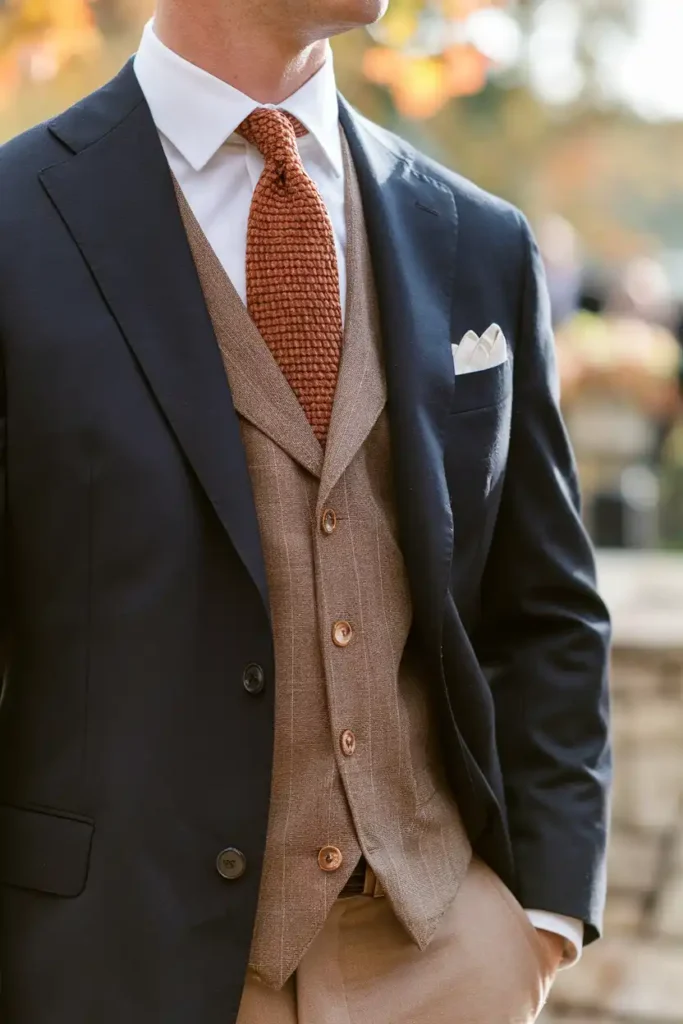
A navy suit with a brown vest works because the two tones are far enough apart that it reads intentional. Navy with a slightly different navy vest looks like you lost part of a set. Go for a warm brown, tobacco or chestnut, and let the contrast do the work.
Add a knit tie rather than a silk one for fall events. The texture matches the vest and keeps the whole outfit from looking like business formal. Brown leather shoes and a matching belt finish it, and the belt should sit hidden under the vest anyway. Check that the vest hem covers your waistband fully when you stand, since a gap there undoes the entire look. Try the combination on before the event rather than the morning of.
15. Coordinating Fall Outfits as a Couple
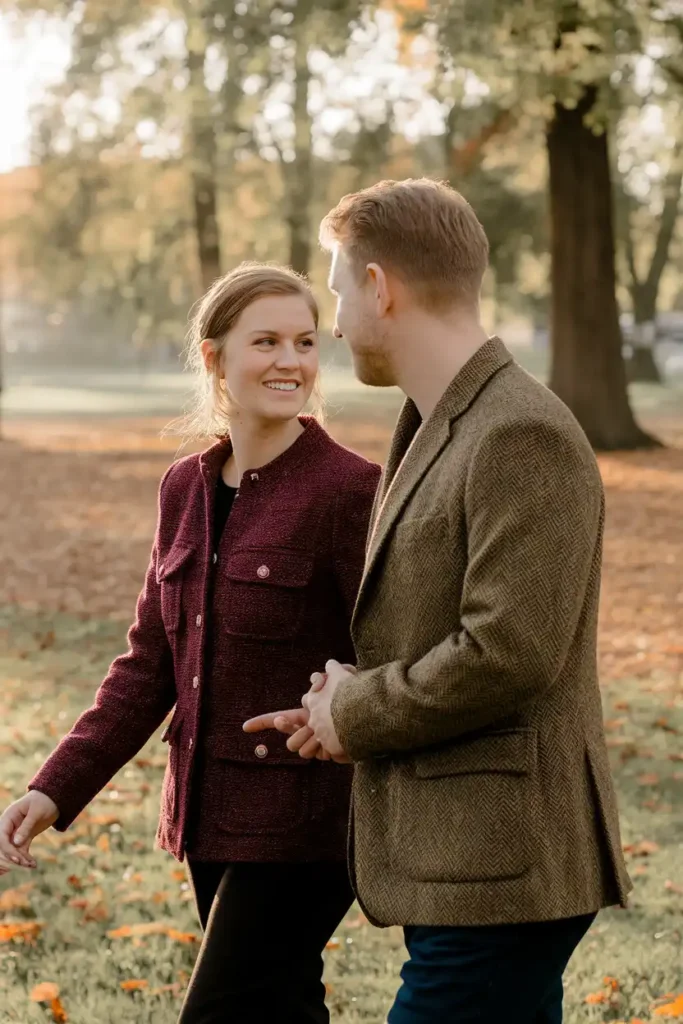
Couple outfit inspo goes wrong when both people wear the same color. It reads uniform. What actually looks good in photos is shared texture with different tones, so both of you in a woven wool jacket but one in burgundy and one in brown.
Pick one element to share and let everything else differ. Options that work:
- Same fabric, different colors
- Same color family, different shades and silhouettes
- Same neutral base with one of you adding a color
Agree on the shared element before you get dressed, since coordinating after the fact rarely works. For fall photos specifically, avoid both wearing black, because you will merge into one shape against a dark background. Test it with a quick phone photo at home first.
16. Jewelry That Finishes a Textured Jacket
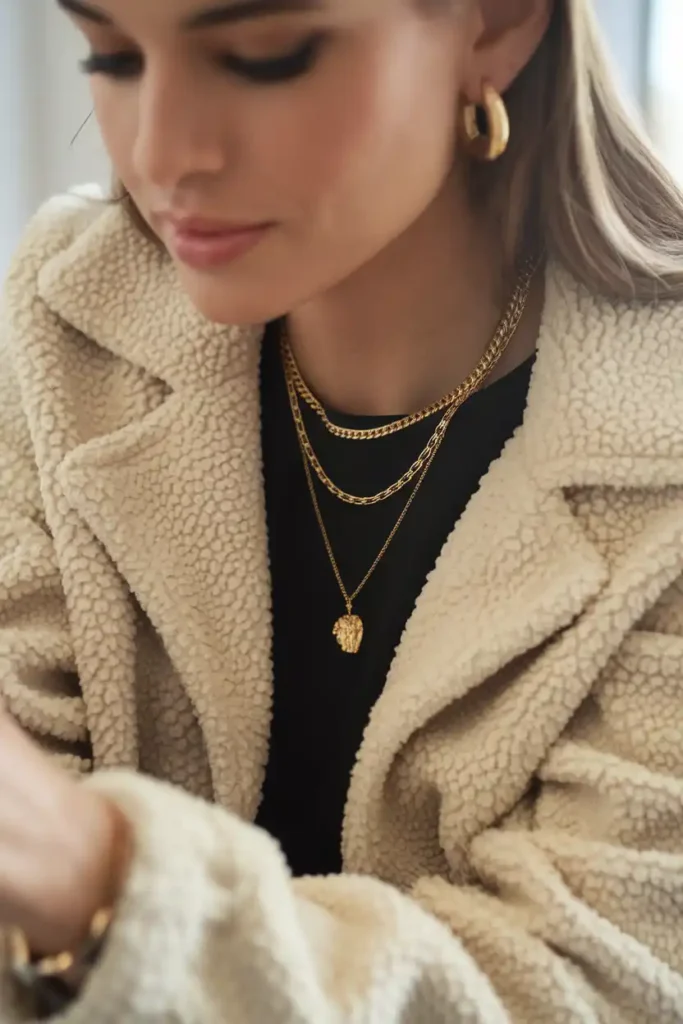
Textured fabric swallows delicate jewelry. A thin chain disappears against boucle, which is why your favorite necklace looks like nothing when you wear it under this kind of jacket. You need either more weight or more length so the piece sits below the jacket opening.
House Of Harlow 1960 does this well, with pendants and layered chains that hold their own against texture without going oversized. Layer two lengths so one sits at the collarbone and one sits lower on the chest. Match the metal to your buttons if your jacket has visible ones. Hoops work better than studs here because the texture in your outfit needs a clean shape near your face. If your jewelry keeps vanishing, the answer is scale, not quantity. Try one heavier piece before adding more.
17. Wool Coats or Textured Jackets: When to Reach for Each
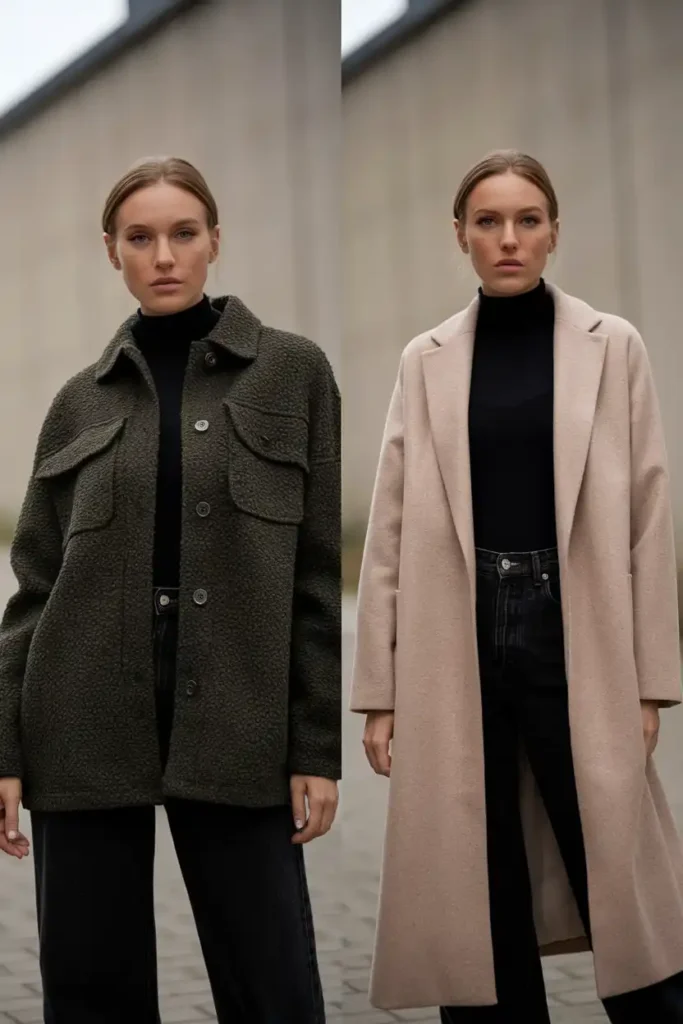
Wool jackets and textured weaves solve different problems. Wool blocks wind and holds heat, which makes it the right call below forty five degrees. A woven boucle jacket adds structure and texture but very little warmth, so it works best as a layer in the fifty to sixty five degree range or under a coat.
Do not ask one piece to do both jobs. The most common fall mistake is wearing a structured jacket alone in November and being cold all day, then deciding the jacket does not work. It works fine. The temperature was wrong. Keep the boucle for October weekends and early November, then layer it under a wool coat once things drop. Check your local average temperatures for the month ahead and plan accordingly.
18. Fixing Boxy Shoulders and Long Sleeves
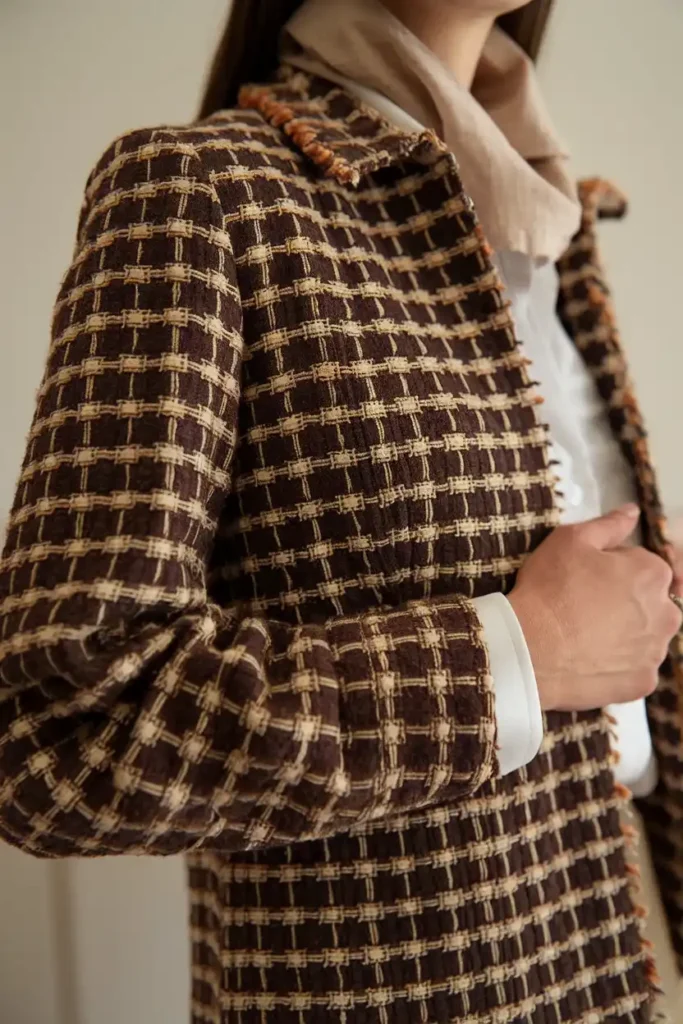
The shoulder seam decides everything. If it sits past the edge of your shoulder bone, the jacket looks borrowed no matter what you wear underneath. This is the one measurement you cannot fix easily, so check it before you buy rather than after.
Sleeves are the opposite. Shortening a sleeve is straightforward and usually costs twenty to thirty five dollars, though jackets with buttoned cuffs run higher because the tailor has to move the buttonholes. Aim for the sleeve ending at your wrist bone so a shirt cuff can show underneath. If you already own a jacket that feels boxy through the body, ask a tailor about taking in the side seams rather than the back, since the back seam usually holds the vent and gets complicated. Bring the jacket in and ask what is possible before you give up on it.
19. Winter Mode: Layering Under a Coat
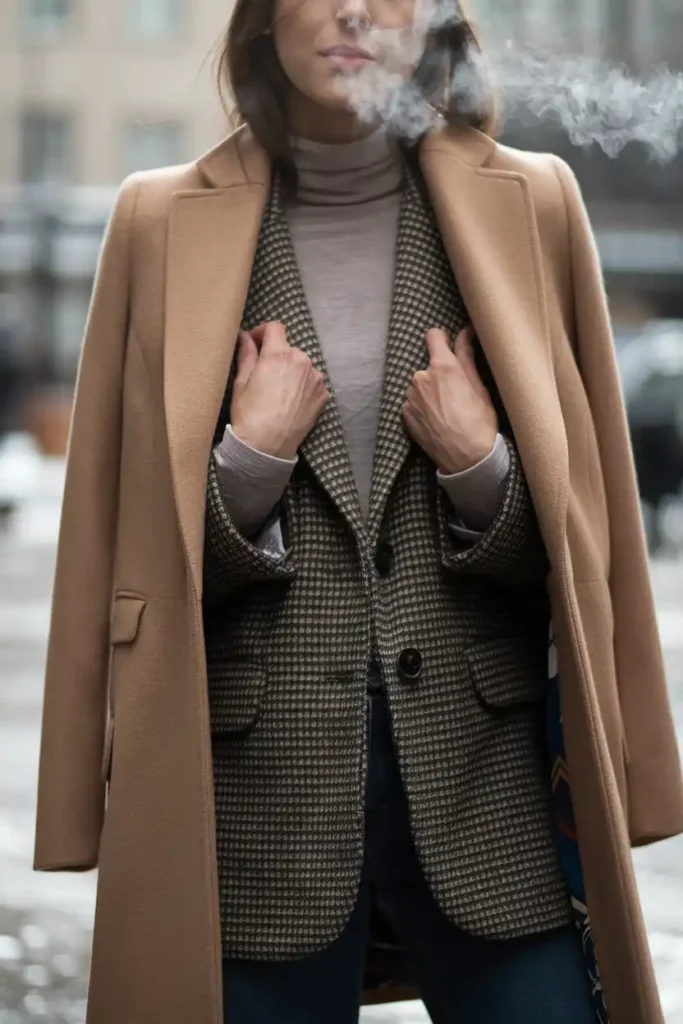
Winter mode means your jacket becomes a mid layer instead of your outermost piece. That only works if your coat has room in the shoulders and arms, which most fitted wool coats do not. Try this combination in the store before you commit to the coat.
Keep what goes under the jacket thin. A fine gauge turtleneck, not a chunky knit, because three thick layers restrict your arms and destroy the line at your shoulders. A camel or gray coat over a burgundy or black boucle looks intentional and adds a color break at the waist where the jacket hem shows. If your coat is too fitted for this, wear the jacket alone on milder days and save the coat for the cold ones. Check the fit while sitting down as well as standing.
20. Care and Storage That Keeps the Shape
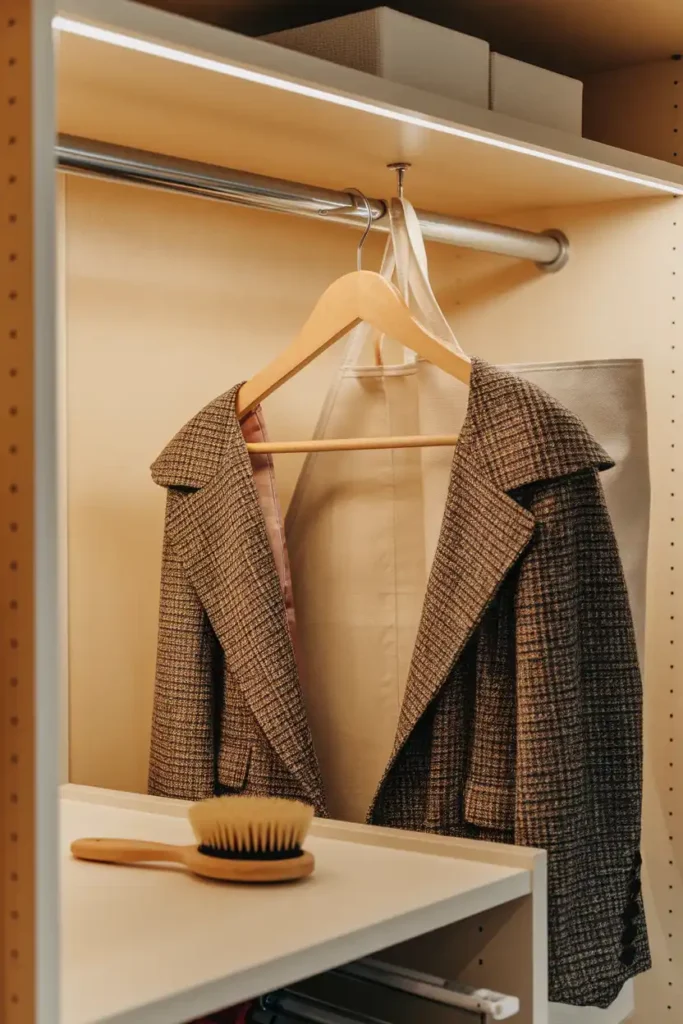
Wide wooden hangers, always. Wire hangers create shoulder bumps in woven wool within a season and those bumps do not steam out. Give the jacket a few inches of space on either side so the shoulders keep their shape, and brush it with a soft clothes brush after each wear to lift out dust before it settles into the weave.
Dry clean sparingly, twice a season at most, because the solvents dull the yarn over time. Spot clean instead and air the jacket overnight after wearing it. For summer storage, use a breathable cotton garment bag rather than plastic, and add cedar rather than mothballs. Handled this way, a good tweed jacket lasts fifteen to twenty years and looks better at year ten than year one. Check yours now for any loose buttons and fix them before the season starts.
FAQs
What can you wear with a tweed jacket in fall?
Dark straight leg jeans and brown loafers cover most weekend situations. Swap in white sneakers for errands or black ankle boots for dinner. Keep whatever you wear underneath plain, since the fabric texture is already doing the visual work.
Is tweed still in style in 2026?
Yes, and it has held steady for several seasons rather than spiking. Cropped boucle styles and brown herringbone both stay in rotation. Neutral colors like oatmeal, camel, and burgundy age better than trend colors if you want the jacket to last.
How do you know if a tweed jacket fits properly?
Check the shoulder seam first. It should sit right at the edge of your shoulder bone, not past it. Sleeves should end at your wrist bone. Sleeve length is an easy tailoring fix at around twenty to thirty five dollars, but shoulders are not.
Can you wear tweed in warm weather?
It works best between fifty and sixty five degrees. Wear it open over a short sleeve top and skip anything heavy underneath. Below forty five degrees, layer it under a wool coat instead of wearing it alone.
How do you care for a tweed jacket?
Hang it on a wide wooden hanger and brush it after each wear. Dry clean twice a season at most, since solvents dull the wool over time. Spot clean between wears and store it in a breathable cotton garment bag with cedar, not plastic.