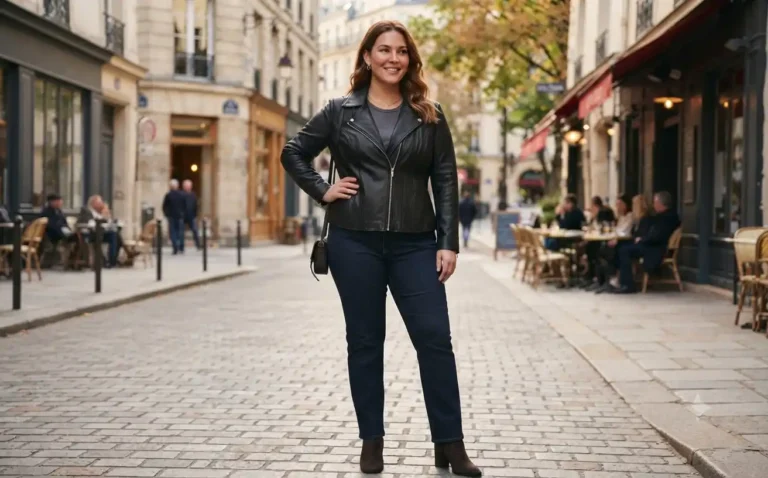
22 Black and White Outfit Ideas for Job Interviews
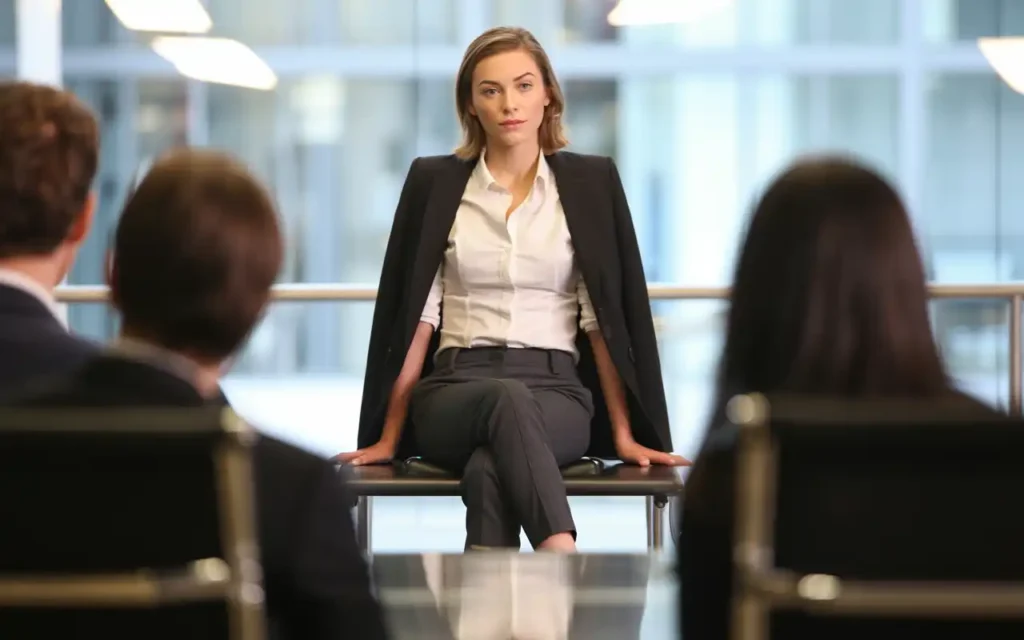
You have the interview. Now you have three days to figure out what to wear, and every search result shows the same stiff gray suit you will never wear again. A black and white outfit solves this faster than anything else, because it works in a law office and a design studio, and you probably own half of it already. Below are 22 combinations I recommend regularly, with the details that actually matter: where the shirt gapes, which fabrics survive a commute, and what to fix the night before.
1. The Two Piece Combination That Works for Almost Every Interview
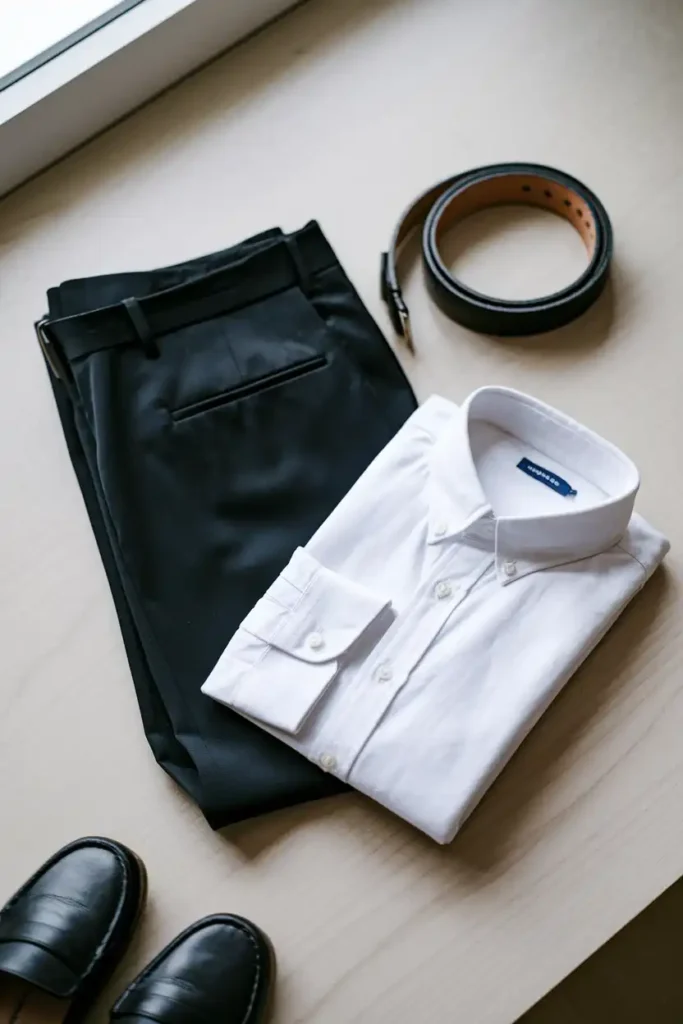
A crisp white shirt and black tailored pants will carry you through interviews at law firms, banks, universities, and mid-size agencies. You are not trying to be memorable for your clothes. You are trying to remove any reason for the interviewer to be distracted. This pairing does that job better than anything else in your closet, and it costs less than a suit.
The part people get wrong is the shirt fabric. Thin poplin goes transparent under conference room lighting and shows every bra line. Look for cotton with some weight to it, ideally a 100 to 120 gsm poplin or a cotton twill. Check the button gap at your bust while sitting down, not standing in front of a mirror. If it pulls, size up and have the shoulders taken in. A tailor charges around $20 for that, and it makes a $35 shirt look like a $150 one. Try the full outfit on three days before, then hang it and leave it alone.
2. Start With Trousers That Actually Fit Your Waist
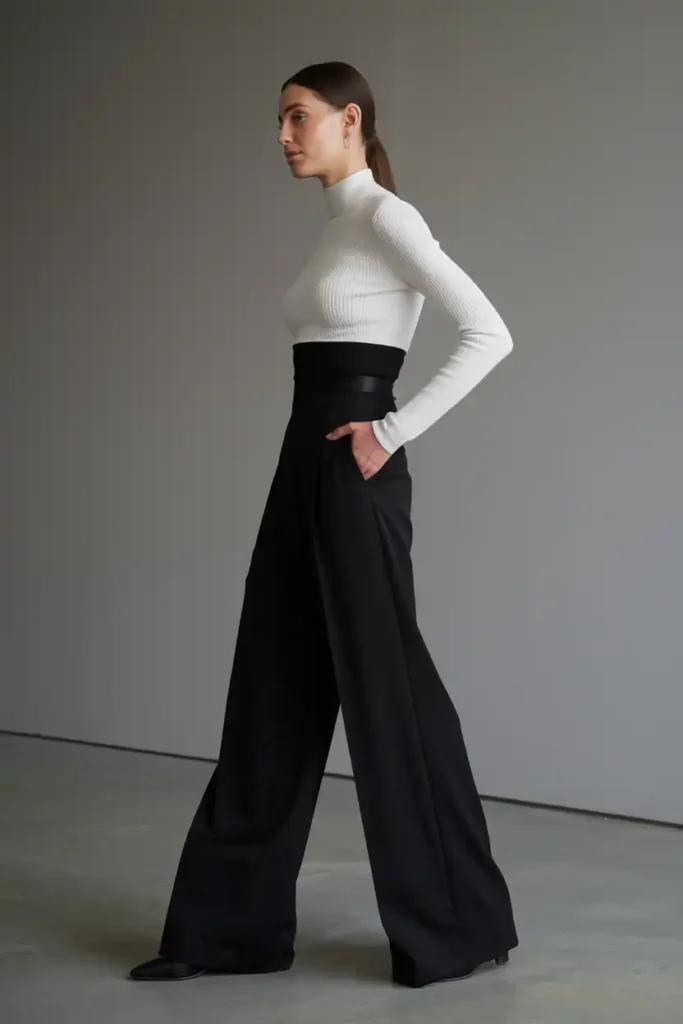
Most interview outfit problems start at the waistband. Pants that gap at the back make you tug at them all morning, and interviewers notice fidgeting far more than they notice fabric. Buy for your widest measurement, then take in the waist. That is the standard alteration and it runs $15 to $25.
Outfits with trousers give you the most flexibility because you can change the top and get four different looks from one pair. When you shop, prioritize these:
- A mid to high rise, so nothing shifts when you sit
- Wool blend or ponte knit rather than thin polyester, which creases in the car
- A hem that touches the top of your shoe with a slight break
- Real pockets that lie flat, or no pockets at all
- Black that reads truly black, not washed charcoal, under fluorescent light
I keep one pair of wide-leg black trousers hemmed for flats and a second pair hemmed for a low block heel. Buy one pair first and wear it to a real event before buying the second.
3. A Dress Shirt and Skirt Outfit for Traditional Offices
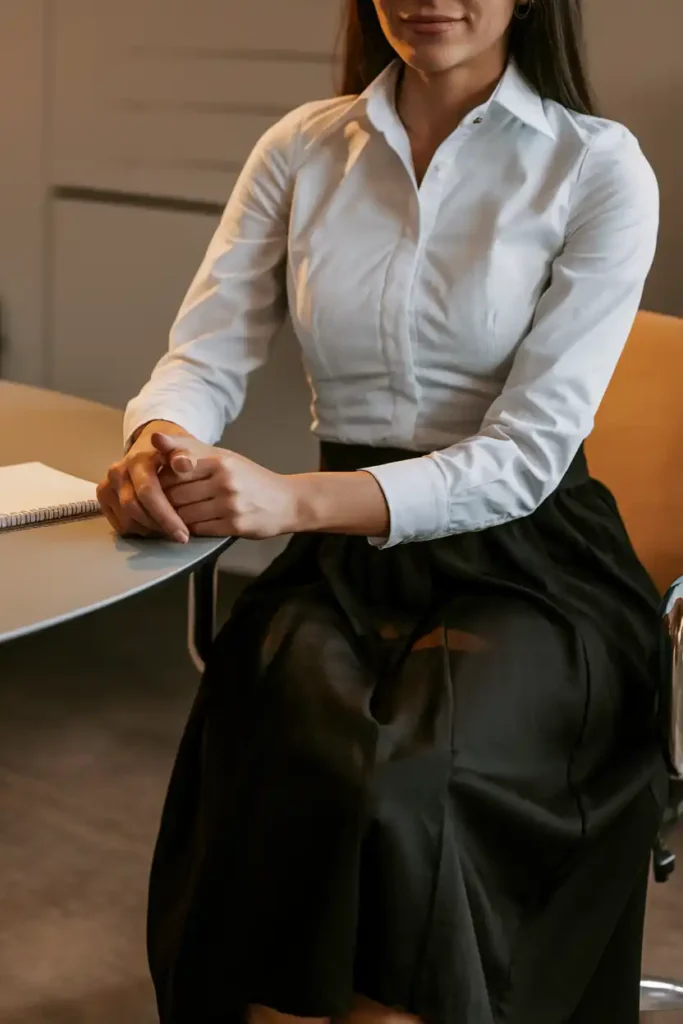
A dress shirt and skirt outfit signals that you understood the dress code without trying to look older than you are. It also solves a problem trousers cannot: if you run warm and the building has no air conditioning, a skirt keeps you comfortable enough to think clearly.
Length is the whole decision here. Measure while sitting, because a skirt that hits mid knee standing rides four to five inches higher once you are in a low chair. Aim for a hem that stays at or below the knee seated. A-line and pencil shapes both work, but A-line is more forgiving if you are unsure about the chair situation. Tuck the shirt fully, then pull about half an inch of fabric back out over the waistband so it blouses slightly. A flat tuck looks stiff and pulls open between the buttons. Practice the tuck in front of a mirror once so you are not fixing it in the lobby.
4. Why a Dark Gray Top Softens a Stark Contrast
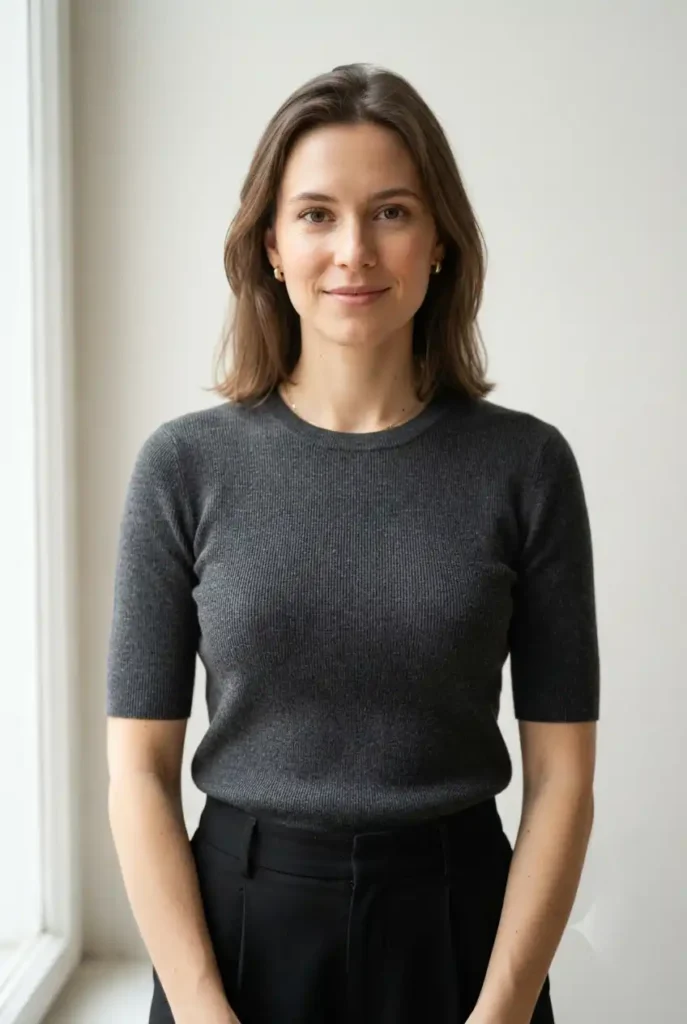
Pure white next to your face is harsh on some skin tones, and on camera it can blow out under overhead lights. A dark gray top outfit gives you the same clean look with less glare. This is the swap I recommend most often to people who tell me they feel washed out in photos.
Charcoal reads as neutral in every industry I have written for, including finance. Pair it with black pants and the two tones create a quiet layered effect rather than a flat block. Fine-gauge merino or a cotton modal blend both drape close to the body without clinging. Skip anything with visible fuzz, since it picks up lint from a car seat and shows on video. If you want a touch of contrast back, add a white collar underneath or a slim white cuff at the wrist. Order one gray top alongside your white shirt and compare them in daylight before you commit.
5. Building a Business Casual Outfit for Startup Interviews
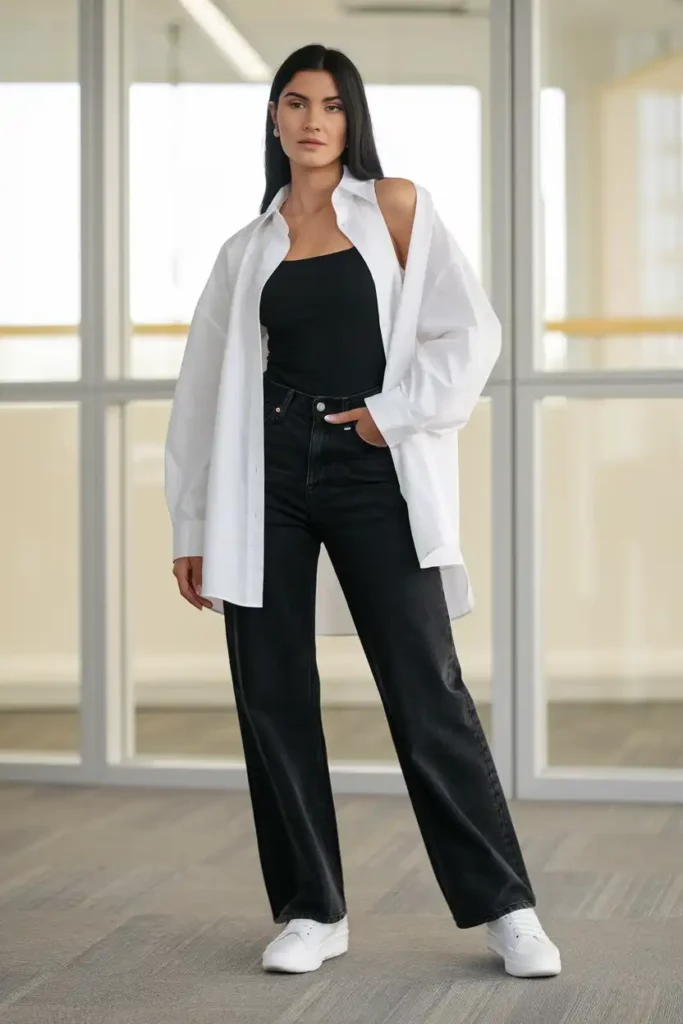
Startups and small agencies rarely expect a blazer, and showing up in a full suit can make you look like you did not research the company. A business casual outfit still needs structure though. Relaxed does not mean whatever you wore Saturday.
The formula I use: one fitted piece, one relaxed piece, one clean shoe. A fitted black tank under an open white shirt keeps the shape defined while the shirt adds the casual read. Straight-leg black jeans work if they are dark, unfaded, and free of distressing. Check the knee area under a lamp, since fading shows more in artificial light than daylight. White leather sneakers pass at most tech companies, but they must be genuinely clean. Wipe the midsoles with a magic eraser the night before. If the role touches sales or client work, swap the sneakers for a black loafer and keep everything else the same.
6. Modest Work Outfits Office Attire That Still Looks Current
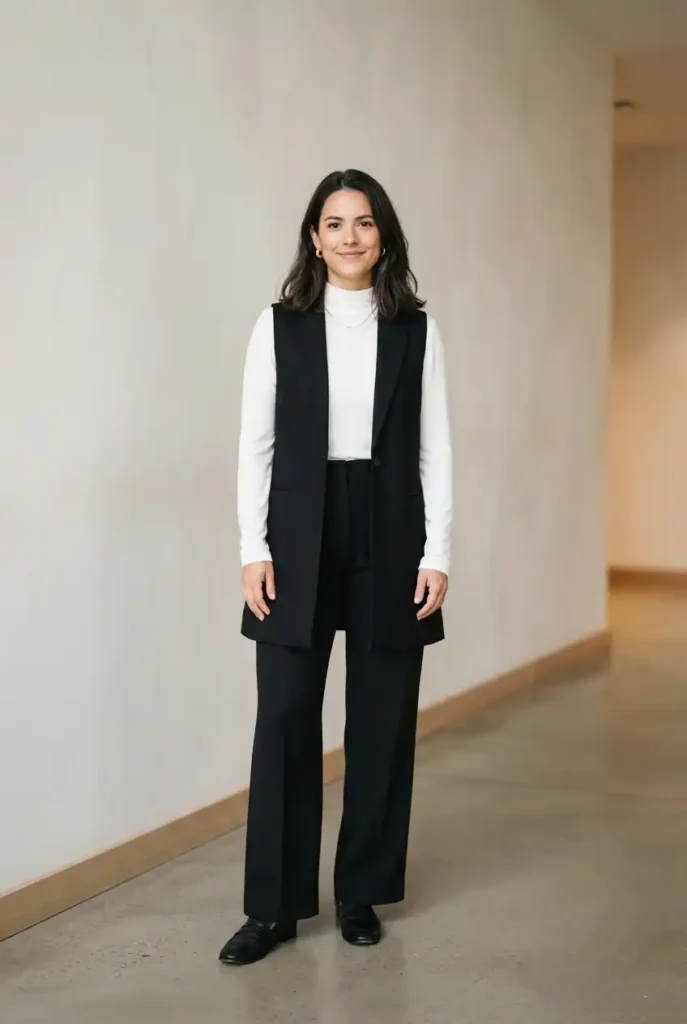
Coverage and current styling are not in conflict, though a lot of workwear sold as modest still looks like it was designed in 2009. Modest work outfits office attire works best when you let the silhouette do the interest instead of adding ruffles or extra detail.
Three things fix most of it:
- Choose a longline vest or a long open cardigan over a blazer, since it covers the hip without adding a boxy shoulder
- Buy blouses with a lined front panel so you skip the camisole layer and stay cooler
- Pick wide or straight legs rather than skinny, so the leg line stays clean and covered
If you wear a hijab, match it to the darker piece in your outfit rather than introducing a third color. Black scarf with black trousers reads as intentional. A jewel tone against a monochrome look pulls the eye upward, which is fine if that is what you want, but decide it deliberately. Set the whole thing out the night before and check sleeve length while raising your arms.
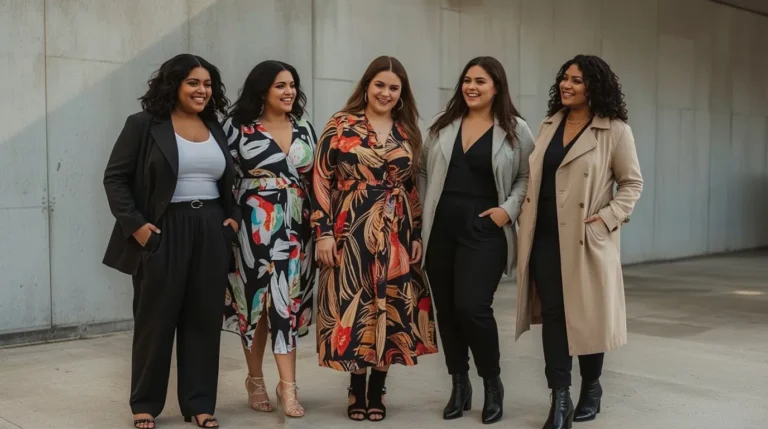
7. Plus Size Contemporary Fashion That Skips the Boxy Blazer
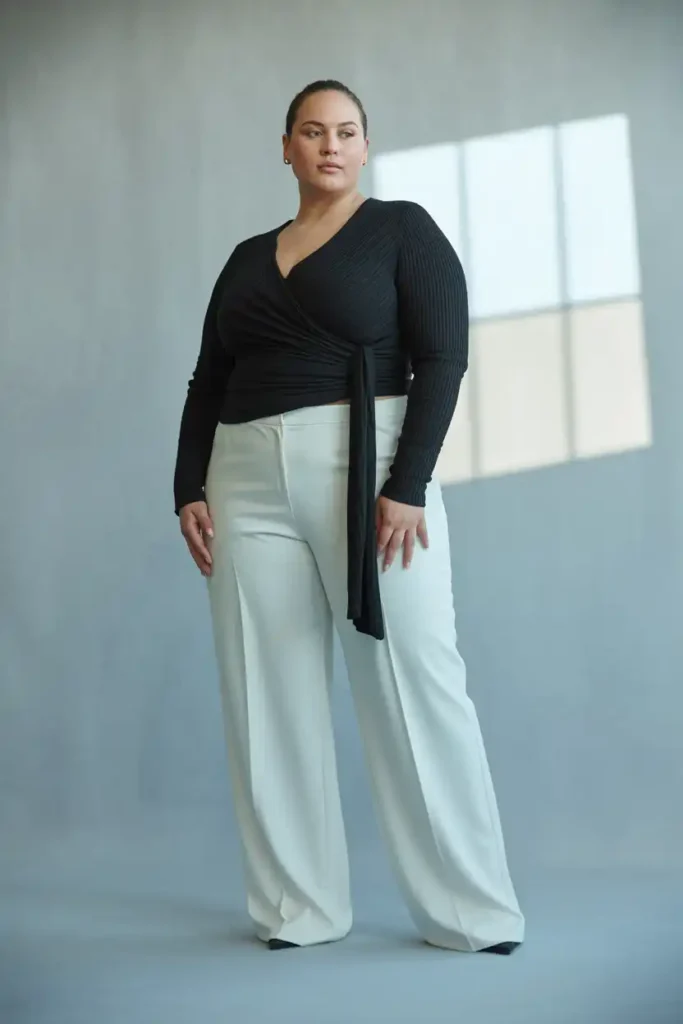
Standard plus size workwear runs boxy, and a stiff blazer over a boxy top gives you two layers of shapelessness. Plus size contemporary fashion has moved past this, but you have to know which shapes to look for rather than trusting the workwear section.
A knit wrap top does what a blazer is supposed to do. It creates a waist, covers the upper arm, and moves with you when you gesture. Pair it with a wide-leg trouser in the opposite color and the vertical line runs uninterrupted. Look for stretch woven fabric with at least 3 percent elastane, since rigid weaves are where the pulling happens across the hip and bust. Check the rise in the pants specifically. Many plus size trousers add width without adding rise, which is why the waistband rolls. If you find a pair that sits properly, buy two. Order a size up and a size down together, and return the one that loses.
8. The Monochrome Blazer Swap for Warm Interview Rooms
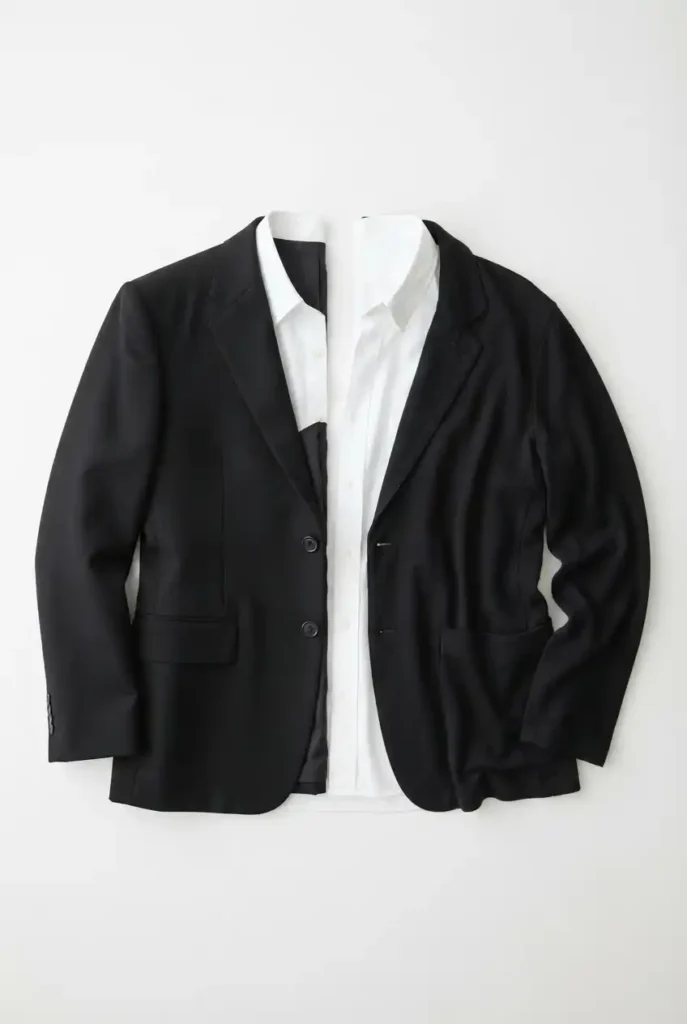
Interview rooms run hot. You sit under lights, your nerves raise your body temperature, and a lined wool blazer turns into a problem by minute fifteen. Sweating through your outfit is a real concern and nobody warns you about it.
Swap the lined blazer for an unlined knit one. It reads as tailored from three feet away, which is the only distance that matters, and it breathes. Ponte and milano knit both hold a shoulder line without an interior canvas. If the dress code genuinely requires a structured jacket, choose a half-lined version and wear a sleeveless shell underneath instead of a full sleeve shirt, so you have one less layer at the armpit. Keep the blazer on for the greeting and the first two minutes, then take it off if the interviewer has removed theirs. That mirroring reads as comfortable, not casual. Test your top layer by wearing it around the house for an hour first.
9. A Black and White Outfit for Panel Interviews
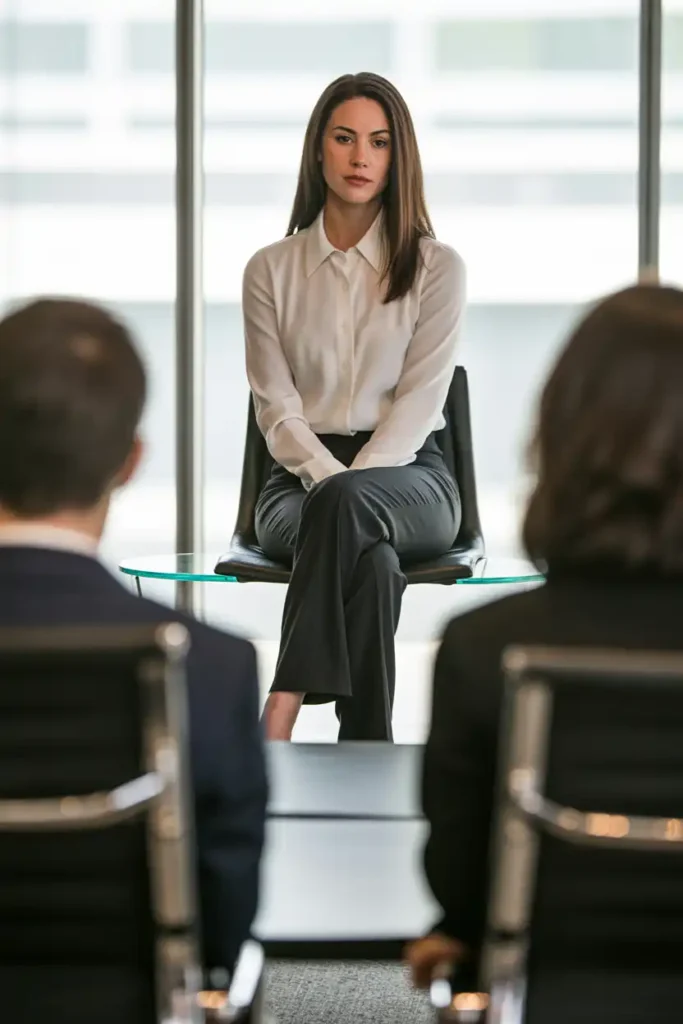
Panels are harder because three or four people see you from different angles. Something that looks fine head on can gape at the side or ride up when you turn to answer someone at the end of the table. A black and white outfit gives you clean lines from every seat, which is one less variable.
Focus on what happens when you rotate. Turn side to side in front of a mirror while seated and watch three points: the button between your bust, the shoulder seam, and the back hem of your top. If the shirt pulls out of your waistband when you twist, tuck it into your underwear as well as your pants. That sounds odd but it holds. Keep jewelry off your hands, since panel interviewers watch gestures closely and a stack of bracelets makes noise on a hard table. Sit through a mock question in the outfit and notice what you adjust.
10. Modest Dresses With Sleeves You Can Sit Down In
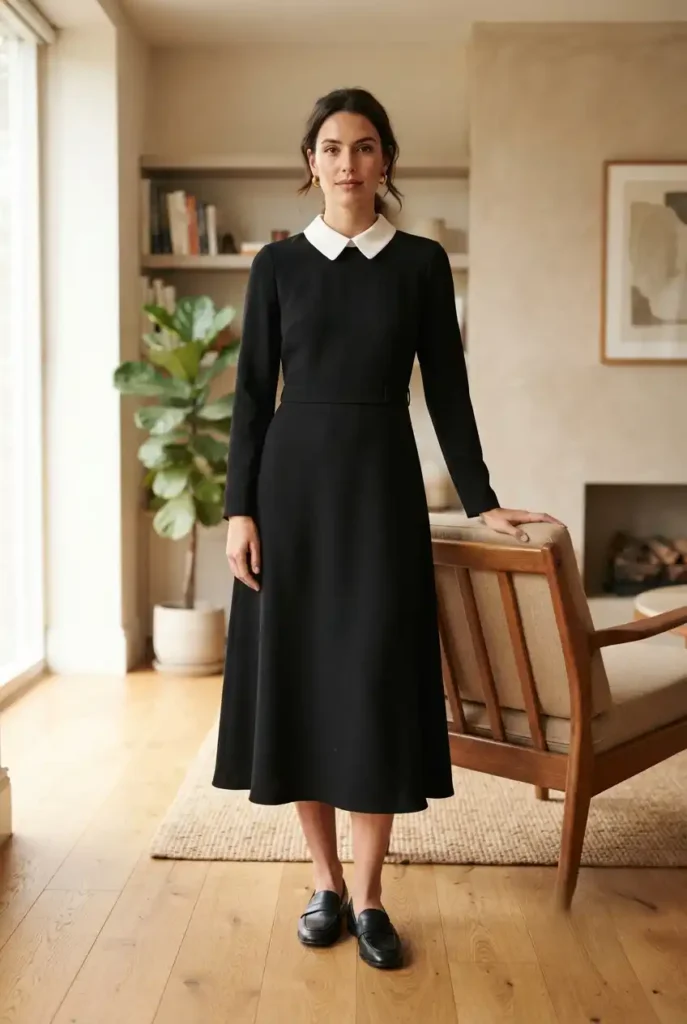
One dress is faster than assembling a two piece outfit at 7am, and on interview morning that matters. Modest dresses with real sleeves have gotten much easier to find in the last few years, though the sizing is inconsistent across brands.
Watch the armhole. A dress can have long sleeves and still restrict you if the armhole is cut high and narrow, which becomes obvious the moment you reach for a handshake or a water glass. Raise both arms above your head in the fitting room. If the whole dress lifts, the armhole is wrong regardless of how it looks standing still. Look for a waist seam rather than a straight shift shape, since the seam holds the silhouette when you sit. Ponte, crepe, and heavier viscose all resist creasing during a commute. Cotton poplin does not, and you will arrive with lap wrinkles. Buy the dress at least a week out so you have time to alter the hem.
11. Knitwear Instead of a Blazer for Creative Roles
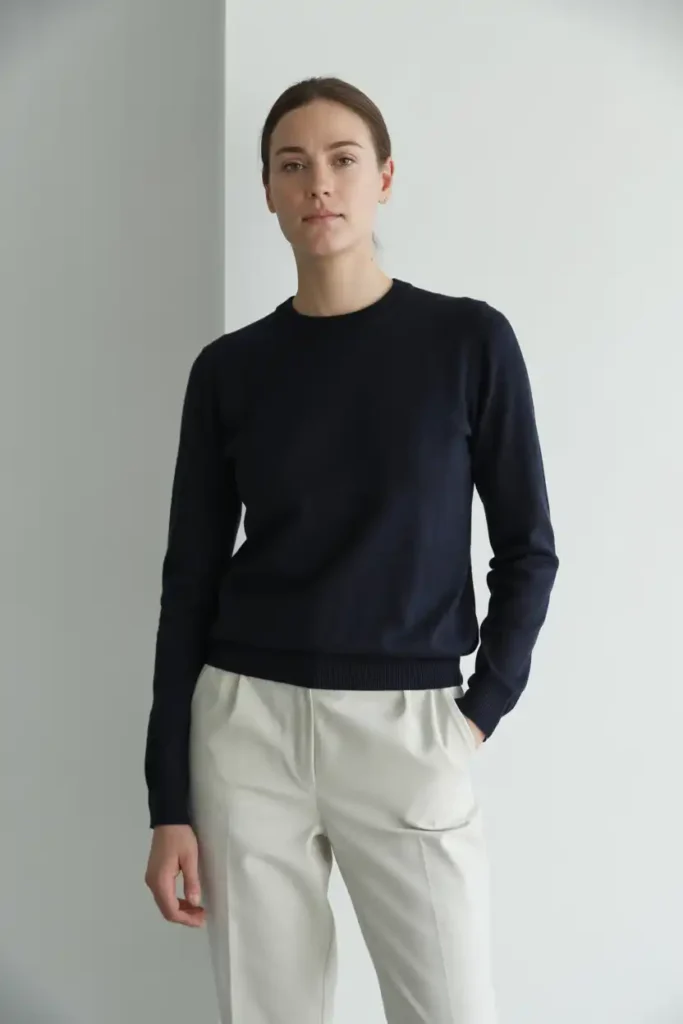
Design studios, editorial teams, and marketing agencies read a blazer as slightly formal and a good sweater as considered. Fine-gauge knitwear over tailored pants is the outfit I recommend most for creative interviews because it looks deliberate without looking corporate.
Quality shows immediately in knitwear, more than in any other category. Merino, cashmere blends, and long-staple cotton hold their surface. Cheap acrylic pills at the underarm and along the forearm within three wears, and interviewers sitting across a small table will see it. Run your hand across the sleeve under a bright light before you leave the house. Tuck the front hem only, leaving the back loose, so the waist reads without the bulk of a full tuck. Keep the neckline simple. Crew and mock neck both photograph better than a wide boat neck, which slides off the shoulder when you lean forward. Invest in one good sweater rather than three cheap ones.
12. What to Wear for a Video Interview From the Waist Up
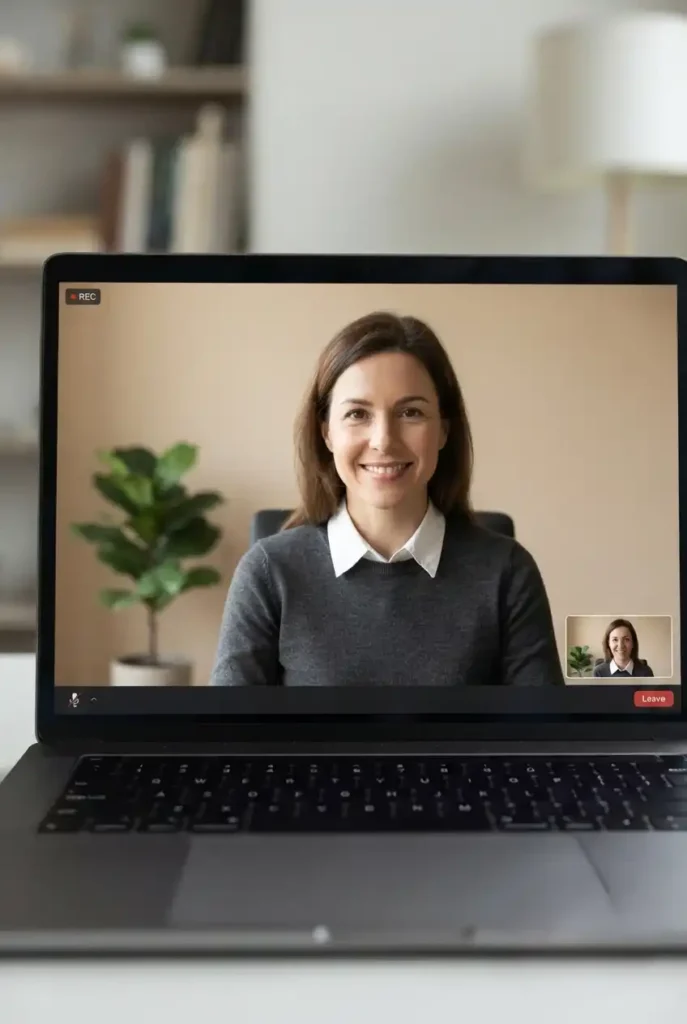
Video changes the rules. Pure white blooms under a webcam’s auto exposure and pulls light away from your face. Fine stripes and small checks create a moiré pattern that shimmers on screen and genuinely distracts people. Solid mid tones perform best.
Go with a dark gray or soft off-white on top and save the sharp black and white contrast for in person. Layer a white collar under a gray sweater if you want the crisp look without the glare. Test your setup properly: open your camera app, sit where you will sit, and look at yourself for thirty seconds. You will spot the problems immediately. Check that your collar sits flat, since one folded point under a sweater is all anyone will look at for forty minutes. Wear real pants anyway. You will stand up at some point, and knowing you look finished changes how you sound. Do the camera test the day before, not five minutes prior.
13. Shoes That Hold Up Through a Full Day of Interviews
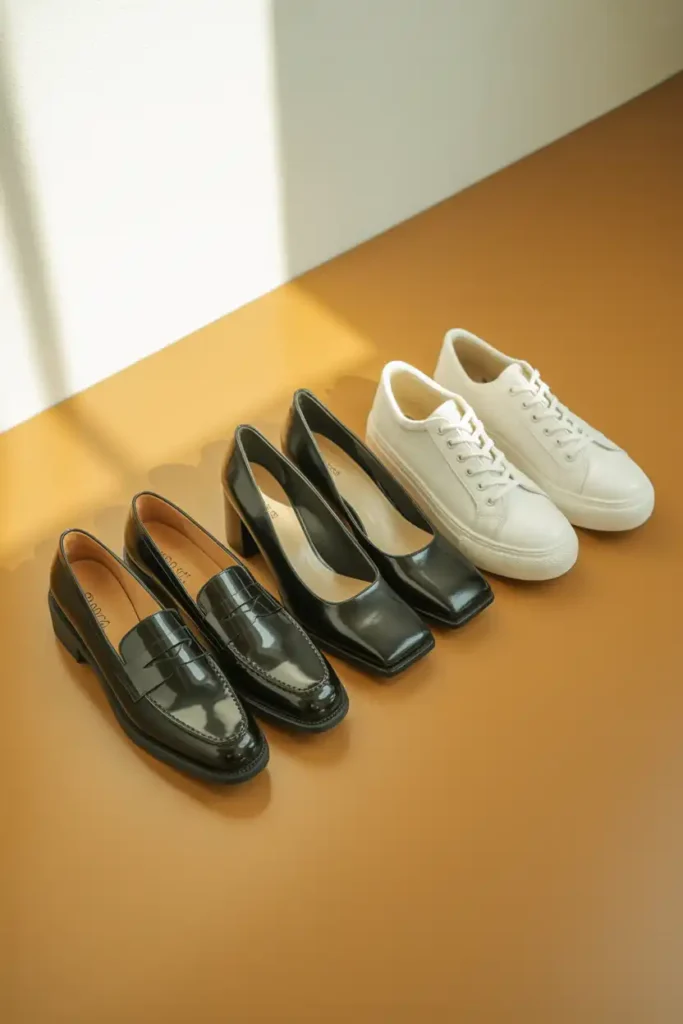
Final round interviews often mean three hours, a building tour, and a walk to lunch. Shoes decide whether you are present for that or counting minutes until you can sit. I have watched candidates lose their composure entirely over a heel they wore for the first time that morning.
Pick from these three and match to the setting:
- Black leather loafers for law, finance, government, and academia
- A low block heel, 2 inches or under, when you want more polish without balance issues
- Clean white leather sneakers for tech, startups, and creative studios
Wear them for at least six hours before the interview day. New leather rubs at the heel and the little toe, and the blister always arrives at hour two. Keep a pair of thin blister plasters in your bag regardless. Check the soles too, since worn heel caps are visible when you walk ahead of someone up a staircase. Break your chosen pair in this week.
14. Classy Streetwear Outfits Toned Down for Casual Companies
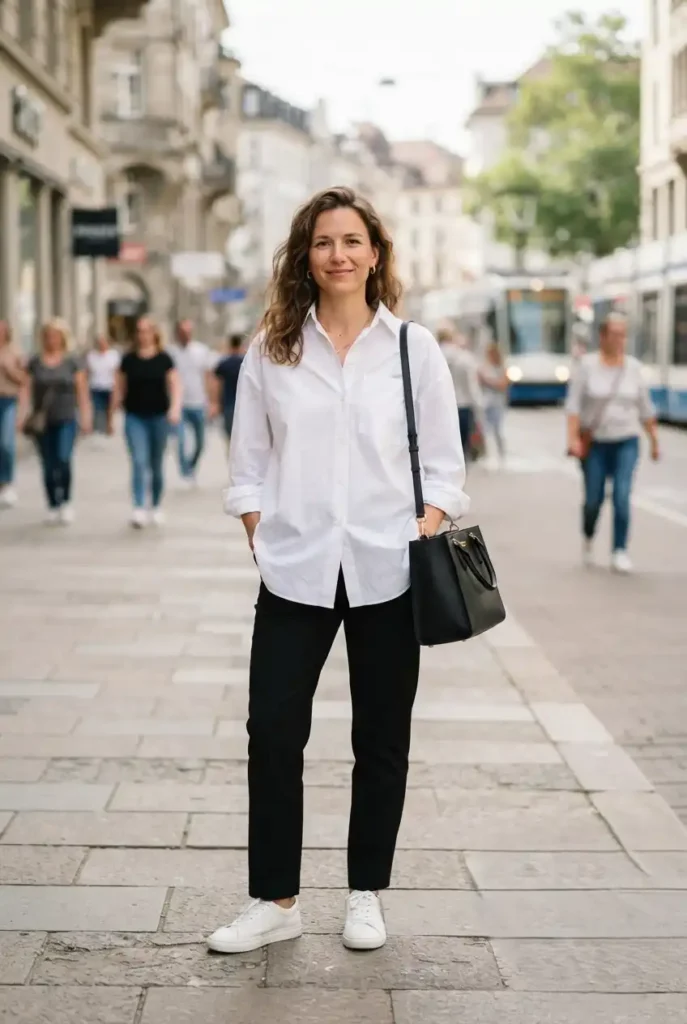
Some companies genuinely dress down, and arriving overdressed creates its own awkwardness. Classy streetwear outfits work here, but you have to strip out the elements that read as weekend: logos, graphics, distressed hems, and anything oversized on both top and bottom at once.
Keep one piece relaxed and one piece tailored. An oversized white shirt over straight black trousers holds the streetwear proportion while the trouser keeps it grounded. Add a structured bag rather than a backpack, since that single object does most of the work in shifting the outfit toward professional. Watch the fabric quality closely at this level of casual, because there is no blazer covering anything. Heavier cotton, real leather, and clean stitching are what separate this from an ordinary day off. Skip the cap and the chunky sneaker. If you are unsure how casual the office really is, look at the team page photos on their website and dress one step above what you see.
15. The Belt Trick That Fixes a Shapeless Silhouette
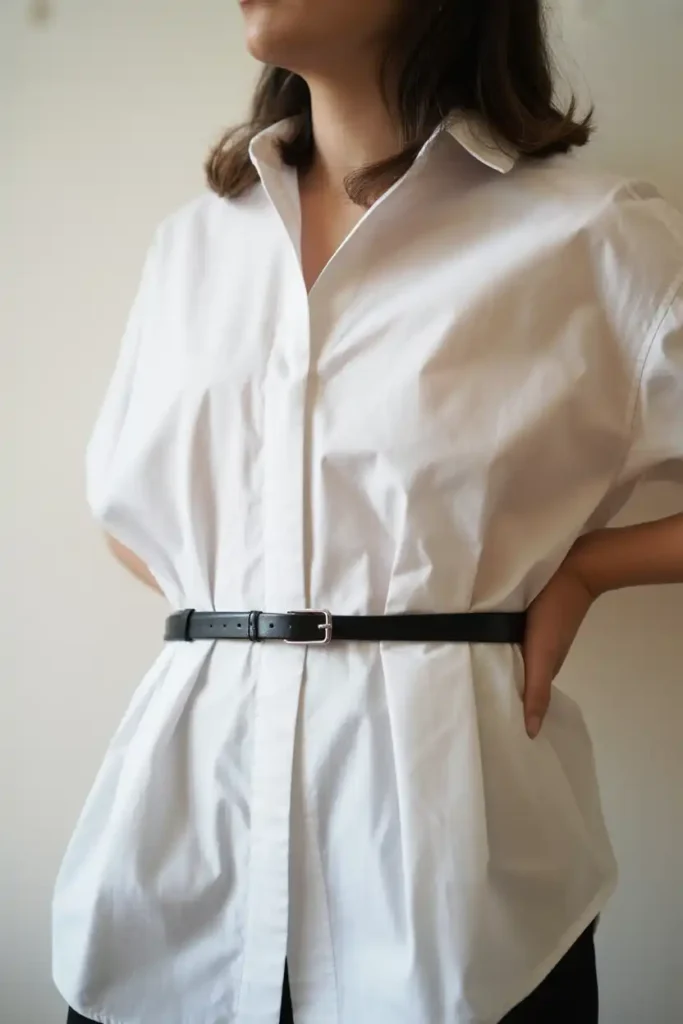
You get dressed, look in the mirror, and the outfit reads as fabric rather than shape. This happens most with oversized shirts and unstructured dresses. A slim belt at the natural waist fixes it in five seconds and costs less than any alteration.
Place it at your natural waist, the narrowest point, which sits higher than most people assume. Try it two inches above where you instinctively put it and see which looks better. A slim belt, three quarters of an inch to an inch, works better than a wide one for interviews because it defines without becoming the focus. Match the leather to your shoes if both are visible. If your top is white and your pants are black, a black belt continues the trouser line upward and makes your legs read longer. Buy one plain black leather belt with a small silver or gold buckle and use it with everything. Try it on your existing shirts tonight before buying anything new.
16. Layering for Cold Buildings Without Bulk
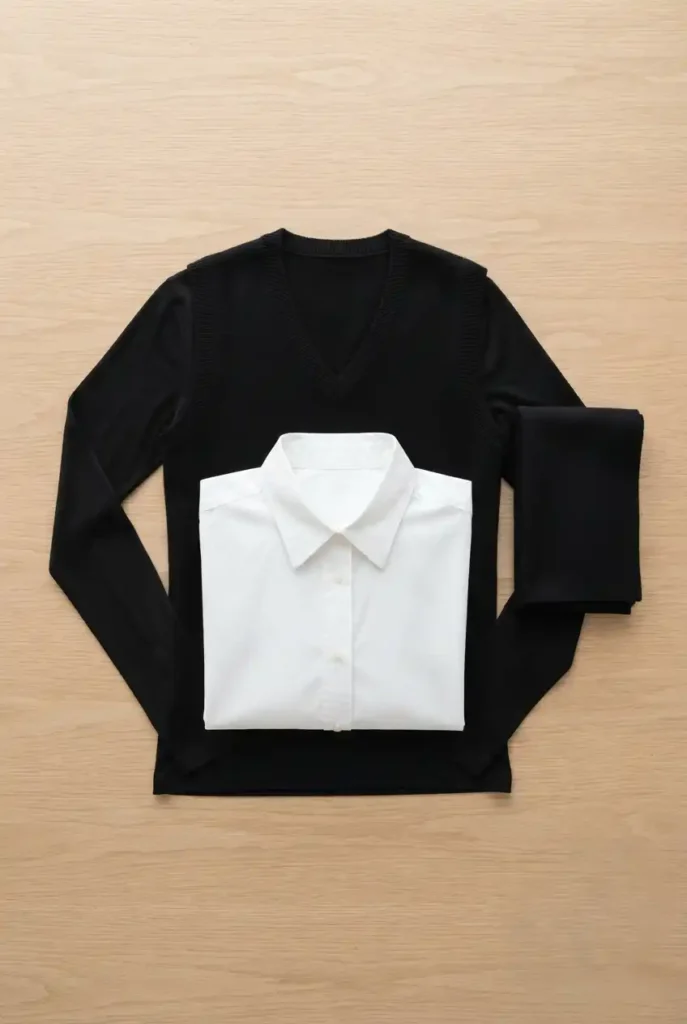
Office air conditioning runs cold year round in a lot of buildings, and shivering makes you look nervous when you are not. The mistake is adding a thick layer, which then has to come off and sit awkwardly in your lap for the rest of the meeting.
Layer thin instead. A merino base layer under a shirt adds real warmth at almost no volume and disappears entirely under the collar. A knit vest over the shirt covers your core without adding sleeve bulk, so your arms still move freely. Keep a thin scarf in your bag rather than around your neck. You can add it in a cold waiting room and remove it before you walk in without disturbing your outfit. Avoid anything static prone, since a polyester base layer will cling to your trousers and pull the whole line out of shape. Check what the layers look like together in daylight before the morning of.
17. Stylish Casual Looks for Second Round Interviews
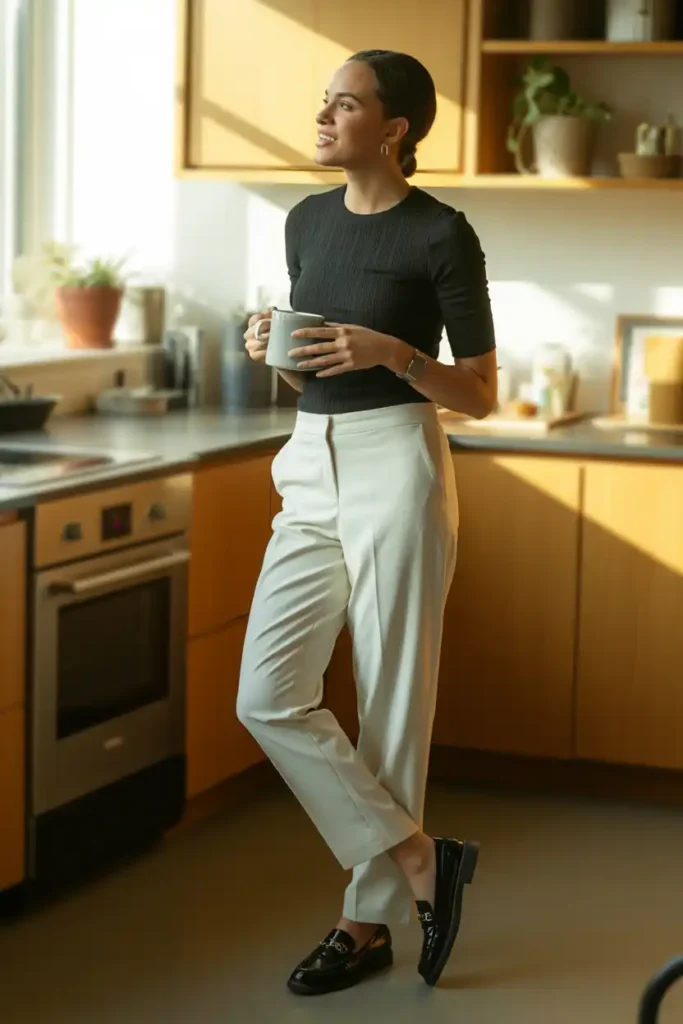
Second rounds are often less formal, sometimes over coffee or lunch with the team. Wearing the same level of formality as round one can feel stiff in that setting, but dropping too far reads as though you stopped trying once you got past the first gate.
Go one step down, not two. Keep the tailored trousers and swap the blazer for a fine knit. Keep the loafers. That single change shifts the register without losing the polish. Stylish casual works here because the goal has moved from proving competence to showing what you are like to work with. Choose white trousers only if you are confident about the venue, since a lunch interview and white pants together is a risk you do not need. If you wore black and white in round one, keep the same palette but change the shapes, so you look consistent rather than repetitive. Pick the outfit as soon as you get the invite, while the details are fresh.
18. Aesthetic Outfits for Girls Interviewing for First Jobs
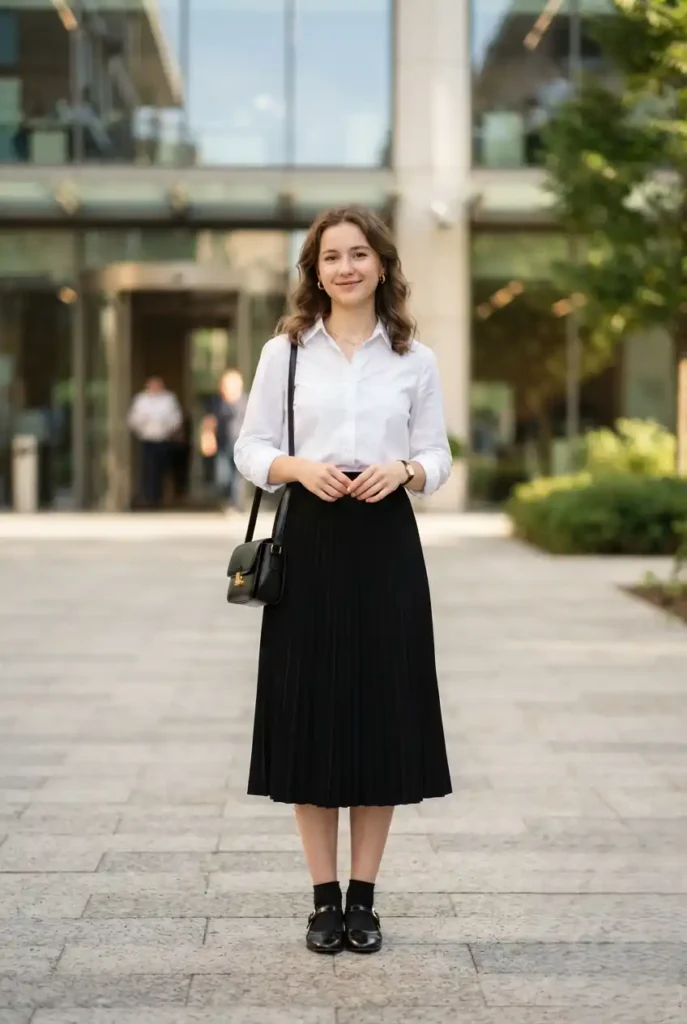
First interviews are intimidating partly because most workwear advice assumes you already own a suit. You do not need one. Aesthetic outfits for girls that already fill your closet can work with two small adjustments.
Take whatever you like wearing and reduce it. That means:
- One color story only, ideally two neutrals
- Skirt or dress hem at or below the knee, checked while sitting
- Closed toe flats instead of sandals or platform boots
- Hair tied or pinned so you are not touching it while answering
- Small stud earrings, and skip the rest
A pleated midi skirt with a white shirt is the version I recommend most because it costs very little, suits almost every body type, and never looks like a costume. Iron the shirt properly, including the collar and the cuffs, since that detail is what separates it from a school uniform look. Lay everything out the night before so the morning is just getting dressed.
19. Jewelry and Bag Choices That Stay Quiet
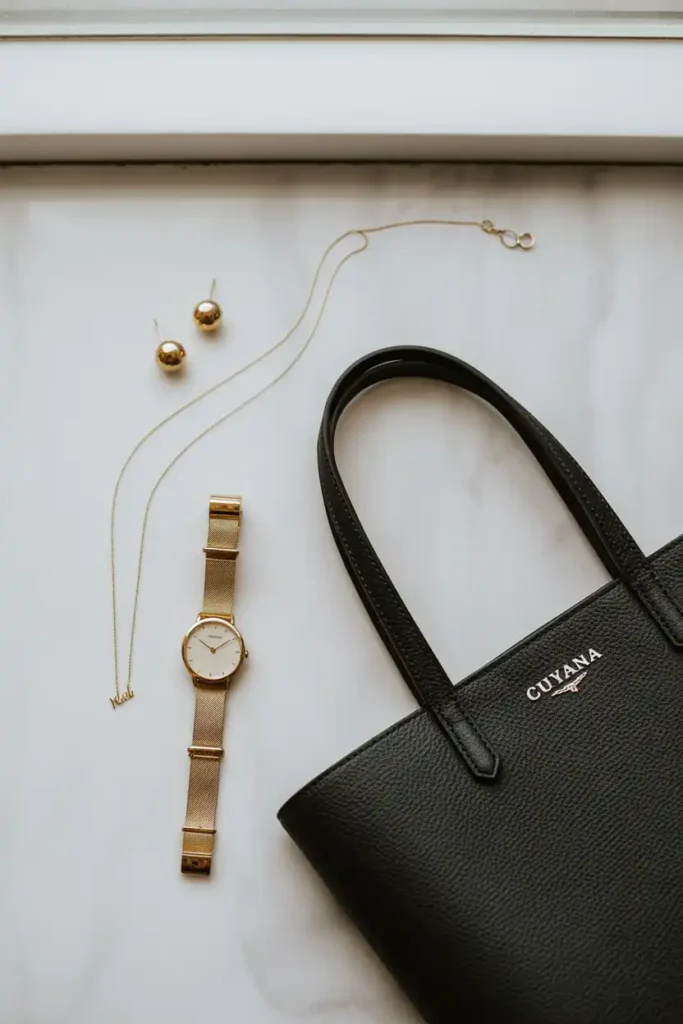
Accessories are where a careful outfit goes wrong. Anything that clicks, swings, or catches the light pulls attention away from what you are saying, and interviewers pick up on movement without realizing they are doing it.
Keep it to three pieces maximum: earrings, a necklace or a watch, and your bag. Studs over hoops, since hoops move when you nod. A thin chain sits flat and does not tangle with a collar. Skip bracelets entirely if the interview happens at a table, because the noise carries. Your bag should be structured enough to stand upright when you set it down and large enough to hold a folder without folding it. Black or tan leather both work. Check the inside too. Fishing through a chaotic bag for your notebook is a small moment that undercuts a composed entrance. Empty and repack your bag the night before with only what you need.
20. A Black and White Outfit That Travels Well
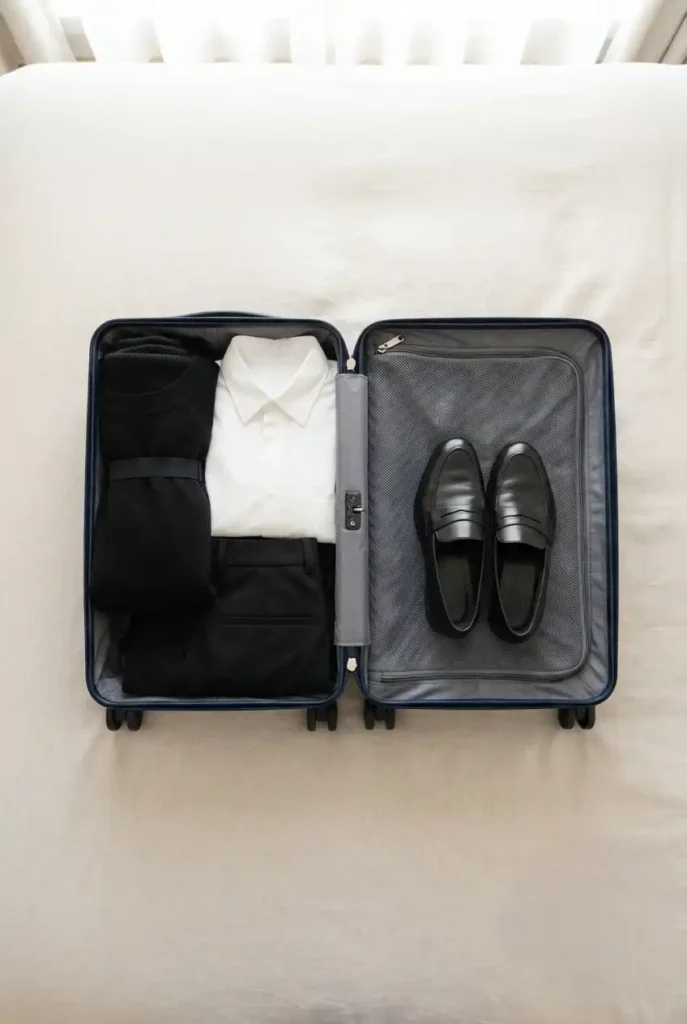
If your interview involves a flight or a two hour train, the outfit has to survive the journey. A black and white outfit built from the right fabrics arrives ready. The wrong ones arrive looking slept in and there is no iron in the station bathroom.
Choose ponte, crepe, merino, and wool blends. All four resist creasing and recover on a hanger within an hour. Avoid linen, cotton poplin, and untreated viscose for travel days regardless of how good they look at home. Roll the knits and fold the shirt over a plastic dry cleaning bag, which cuts crease lines significantly. Pack a travel steamer if you have room, or hang everything in the bathroom during a hot shower for ten minutes on arrival. Wear the loafers on the journey rather than packing them, since shoes take the most space. Do a trial pack the weekend before if you have never packed for an interview.
21. Fixing Wrinkles, Lint, and Fit the Night Before
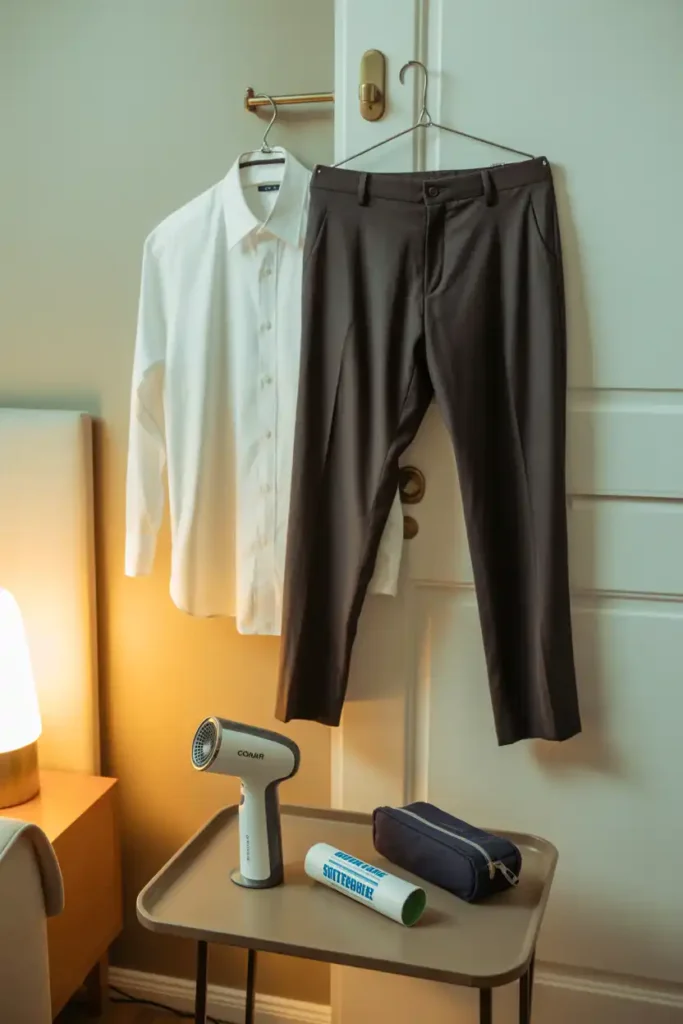
The night before is when interview outfits are actually made. Everything you leave until morning becomes a problem, because morning has no spare time and you will be thinking about your answers rather than your hem.
Work through it in order:
- Steam or iron the shirt, including collar, cuffs, and the placket between buttons
- Lint roll all black pieces twice, once each direction
- Check every button and the trouser hook, and sew anything loose
- Try the complete outfit on and sit down in it for two minutes
- Set out shoes, bag, and jewelry beside the clothes
That sit down test catches almost everything: a skirt that rides, a shirt that gapes, a waistband that digs. Fixing it at 9pm takes five minutes. Discovering it at 8am takes the outfit apart. Set a phone reminder for the night before so this actually happens.
22. Where to Shop When Your Budget Is Under $150
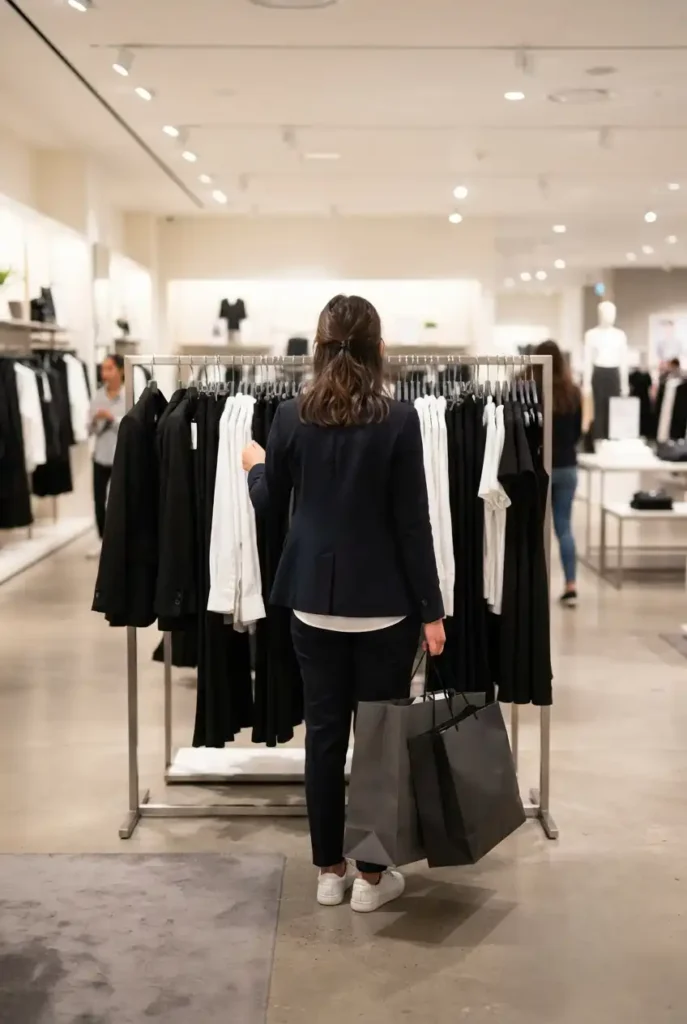
You can build a complete interview outfit for under $150 if you spend unevenly. Put the money into the trousers, since fit is the only thing people notice, and go cheap on the shirt because a well pressed inexpensive shirt looks identical from across a desk.
A realistic split: $70 to $85 on trousers, $30 on a shirt, $40 on shoes, and $20 held back for tailoring. Next clothes, Uniqlo, and Mango all sell workwear trousers in that range with decent fabric weight. Check the secondhand market too, since barely worn wool blend trousers turn up constantly on resale sites at a third of retail, and a $20 alteration makes almost anything fit properly. Buy one shirt and one pair of pants rather than three of each. You will wear them again for the second round and the first week of the job. Order early enough to leave a week for returns and the tailor.
FAQs
Is black and white too plain for an interview?
No. Interviewers remember what you said, not what you wore, and a neutral palette keeps their attention where you want it. If you want warmth, swap pure white for cream or add a dark gray top instead of adding color. Save any statement piece for after you have the job.
Should I wear a blazer to every interview?
Only for law, finance, government, and academia. For startups, agencies, and creative studios, a fine-gauge knit over tailored trousers reads as considered without looking corporate. Check the company’s team photos on their website and dress one step above what you see there.
How do I stop a white shirt from gaping between the buttons?
Buy for your bust measurement and have the shoulders taken in, which costs around $20. Check the gap while sitting, not standing. If it still pulls, a small piece of fashion tape between the buttons holds through a two hour interview.
What shoes work best for a full day of interviews?
Black leather loafers for formal offices, a block heel under two inches for extra polish, or clean white sneakers for tech. Wear them for at least six hours beforehand. New leather blisters at hour two, and a final round often runs three hours with a building tour.