Bandana Belt Mistakes That Cheapen Your Outfit
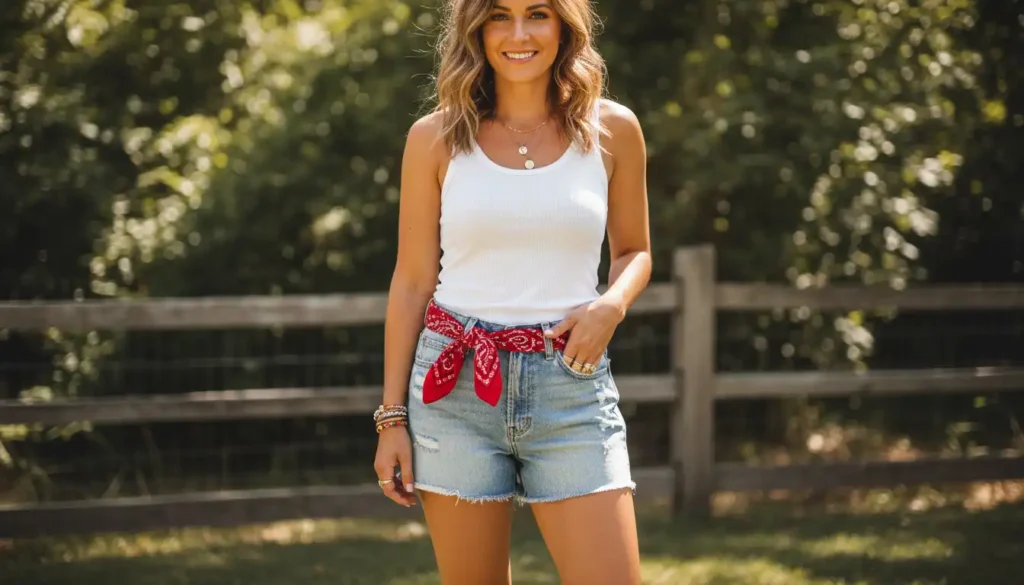
A bandana belt costs less than $15, but styled wrong it can drag down an outfit that took real effort. Bulky knots, shiny fabric, tails hanging to your thigh, a print fighting everything you own. Small mistakes, big damage. The good news is that every one of them has a quick fix, and most take under a minute. This guide walks through the exact mistakes that make a bandana belt look cheap and shows you what to do instead. Fix them once and the habit sticks.
Tying It Too Bulky at the Waist
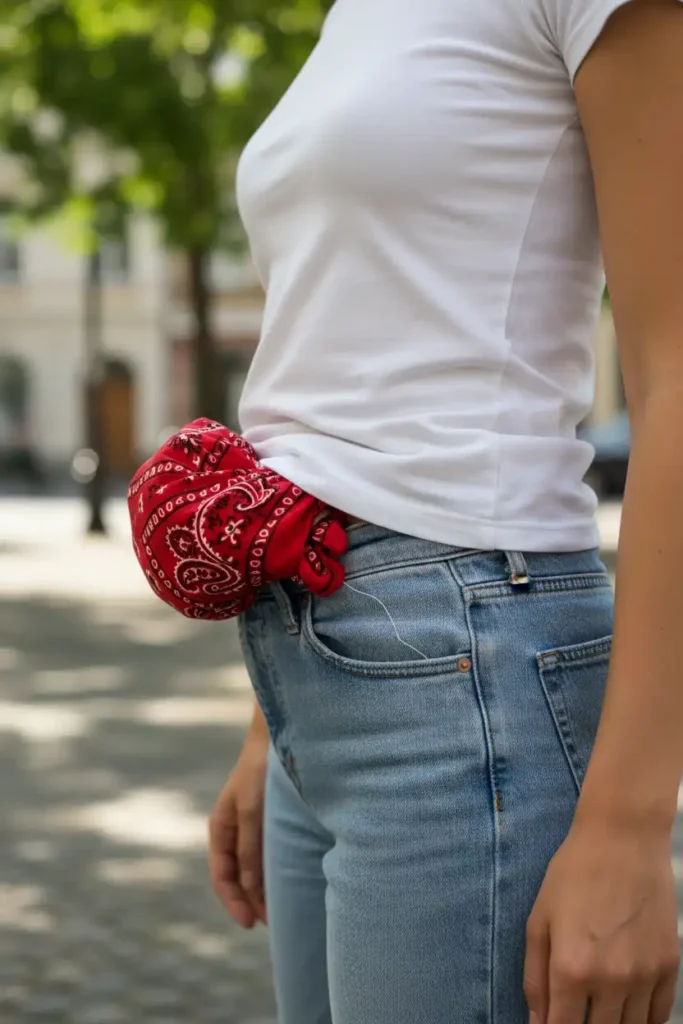
A fat knot sitting on your hip adds bulk exactly where you don’t want it. It reads as an afterthought, like you grabbed the bandana off the floor and tied it in the dark. The fix starts before you tie anything.
Fold the bandana into a flat strip about two inches wide, then wrap and knot it to the side rather than dead center. Press the knot flat with your palm. If it still bulges, switch to a single knot with tucked ends. Practice the fold once in front of a mirror and you’ll never go back.
Choosing Shiny Polyester Over Cotton
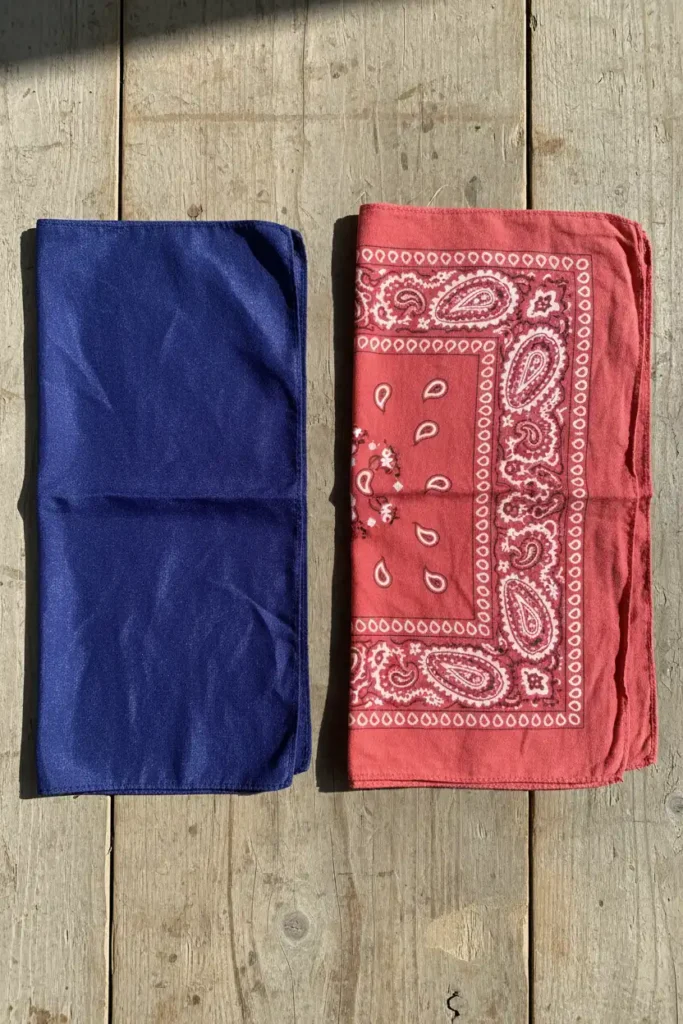
Shine is the fastest way to make any accessory look cheap. Polyester bandanas catch light in a plasticky way, and everyone can tell from across the room. Cotton drapes, folds flat, and softens with every wash.
Check the label before you buy. A 100% cotton bandana from Levi’s or Madewell costs under $15 and holds its shape all day. Cotton lace versions work too if you want texture without the gloss. Retire the polyester ones to your gym bag.
Ignoring the Rest of Your Color Story
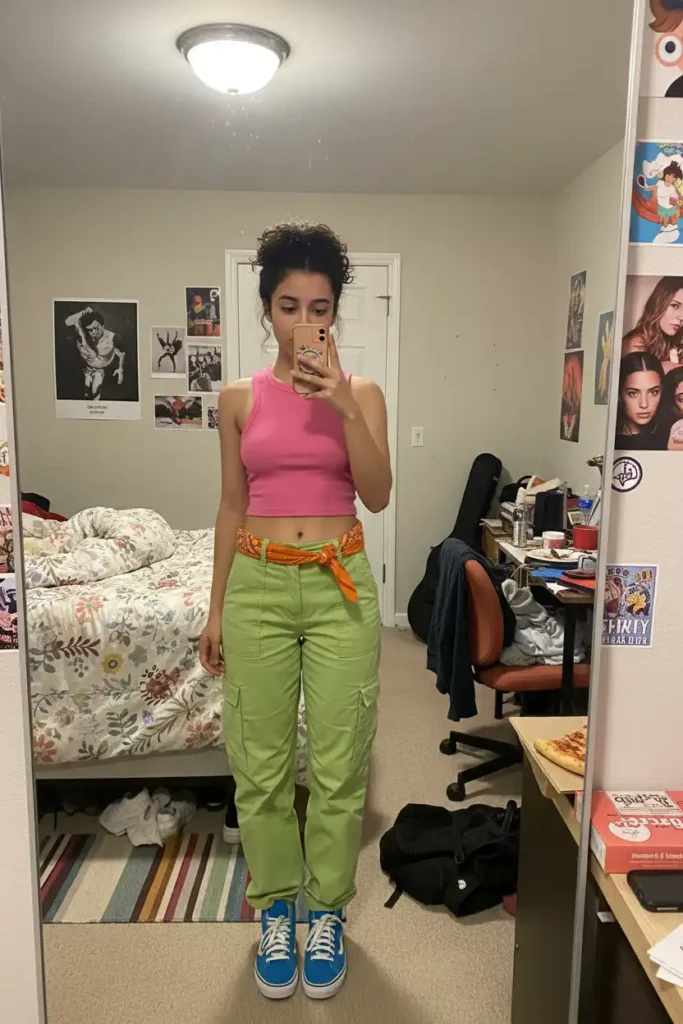
The belt isn’t the problem here. The problem is that nothing in the outfit talks to it. When your waist tie fights with your top, shoes, and bag, the whole look falls apart and the belt takes the blame.
Pick one color from the bandana’s print and repeat it somewhere else. Red and black fashion accessories make this easy: a red paisley bandana, black boots, red lip. Done. Two touchpoints of the same color is all you need.
Wearing It With the Wrong Rise of Jeans
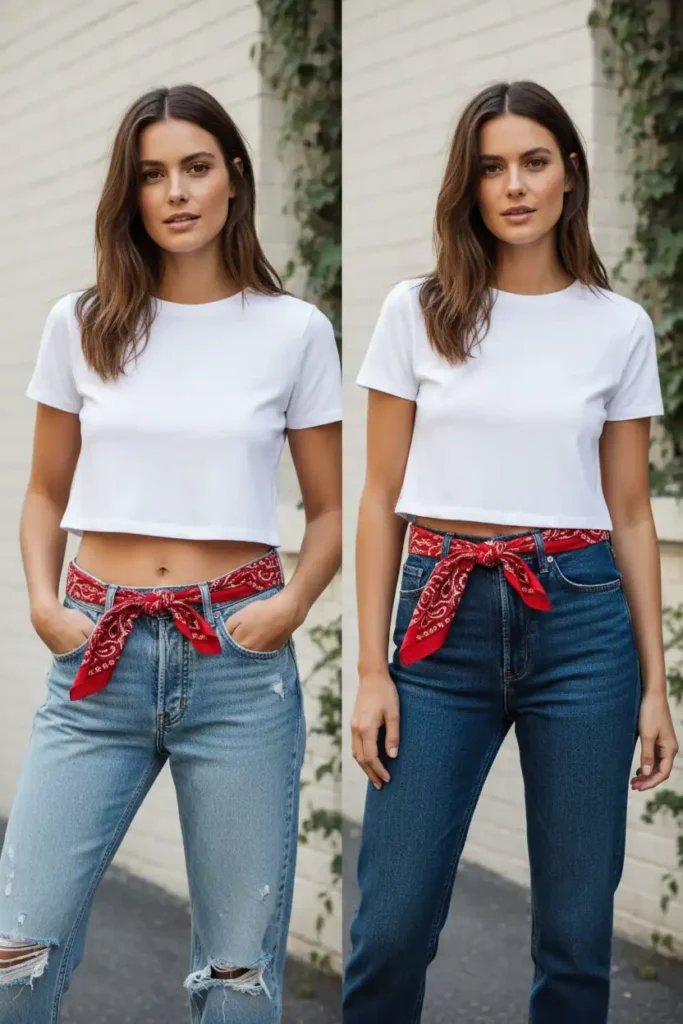
Low-rise jeans push the bandana down onto your hips where it slides, twists, and gaps. You end up adjusting it all day. That constant fidgeting is what people notice, not the accessory itself.
High-waisted or mid-rise denim gives the fabric a stable shelf to sit on. Agolde and Levi’s Ribcage styles work especially well because the waistband is firm. If you only own low-rise, thread the bandana through the belt loops instead of tying it above them.
Letting the Ends Hang Too Long
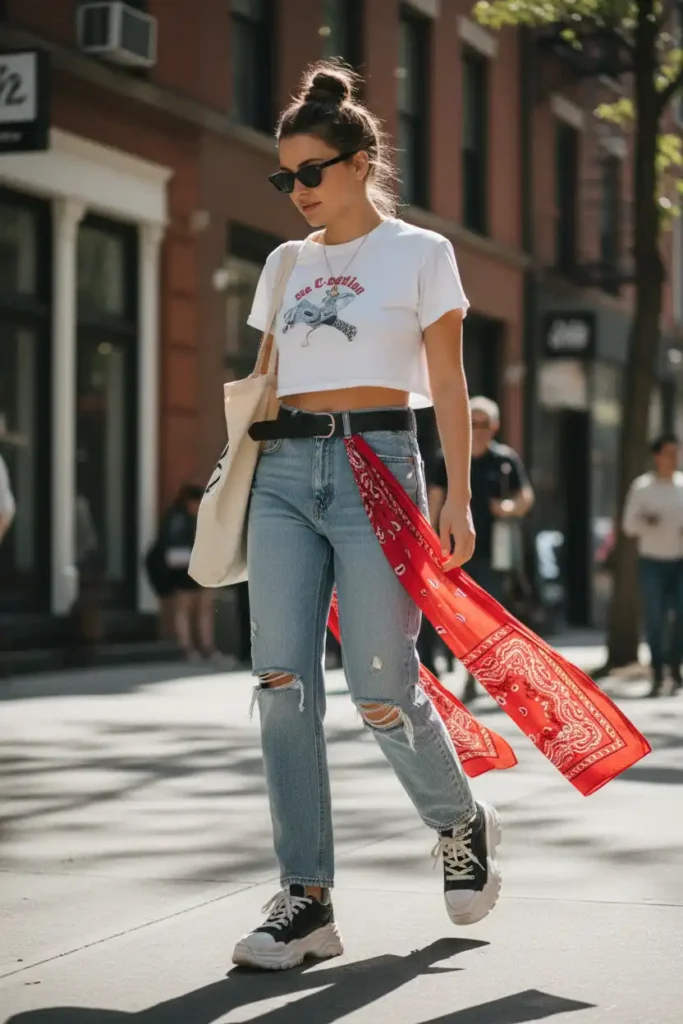
Long tails drag the eye downward and make your legs look shorter. They also snag on bags, door handles, and chair arms. There’s a difference between an intentional drape and fabric flapping around.
Aim for ends that fall four to six inches past the knot, no more. If your bandana is oversized, fold it smaller before tying. Want the longer look on purpose? Keep the bandana hanging from pants at the back pocket instead, where length reads as biker style rather than sloppy.
Skipping the Iron Completely
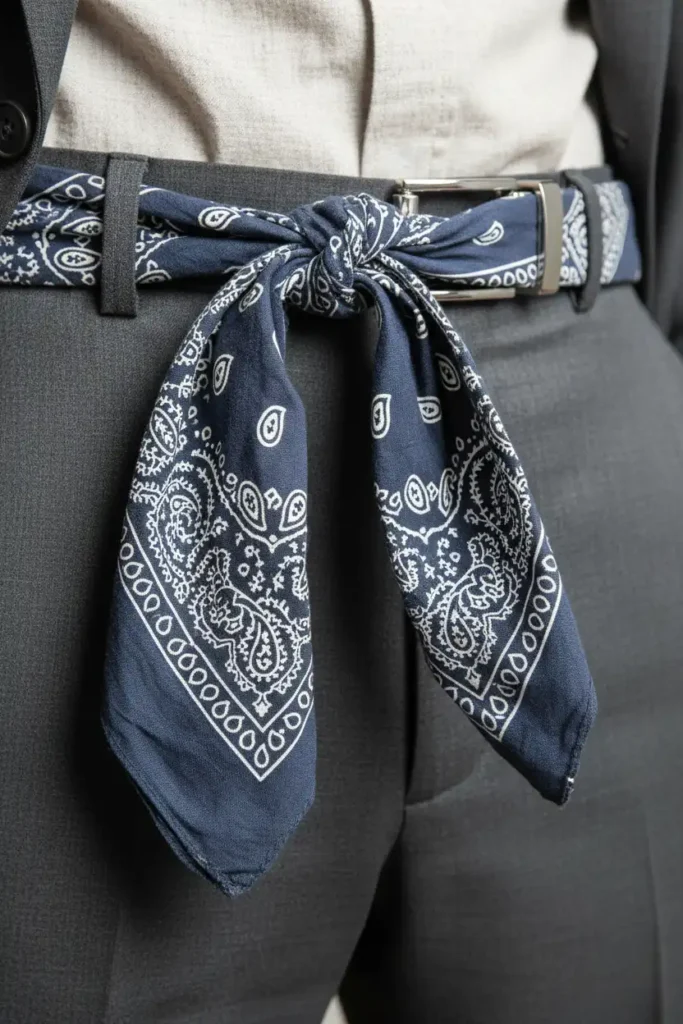
Wrinkles undo everything. You can style the perfect outfit, but a creased bandana at your waist signals that you didn’t care enough to spend ninety seconds with an iron. Cotton wrinkles hard, and those storage folds don’t shake out on their own.
Hit it with medium heat and a spritz of water before you tie it. No iron? Hang it in the bathroom while you shower. The steam relaxes most creases. Keep two or three bandanas pre-pressed and rolled in your drawer so you’re never stuck.
Forgetting the Belt Loops Exist
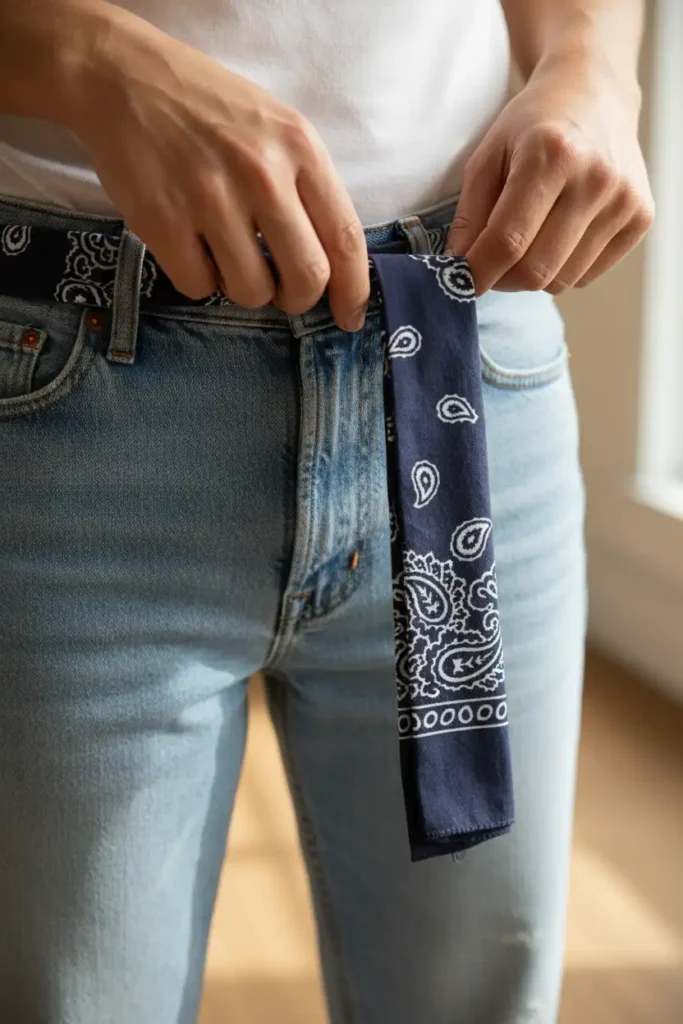
Tying the bandana over your waistband, floating free, is why it spins around by lunchtime. Your belt loops are right there and they solve the whole problem. Threading takes one extra minute.
Fold the bandana flat, thread it through every loop like a regular belt, and knot it at the front or side. This is the answer to how to tie bandana around waist searches that most tutorials skip. It stays put through sitting, walking, and reaching. Try it tomorrow with your most-worn jeans.
Pairing It With Competing Prints
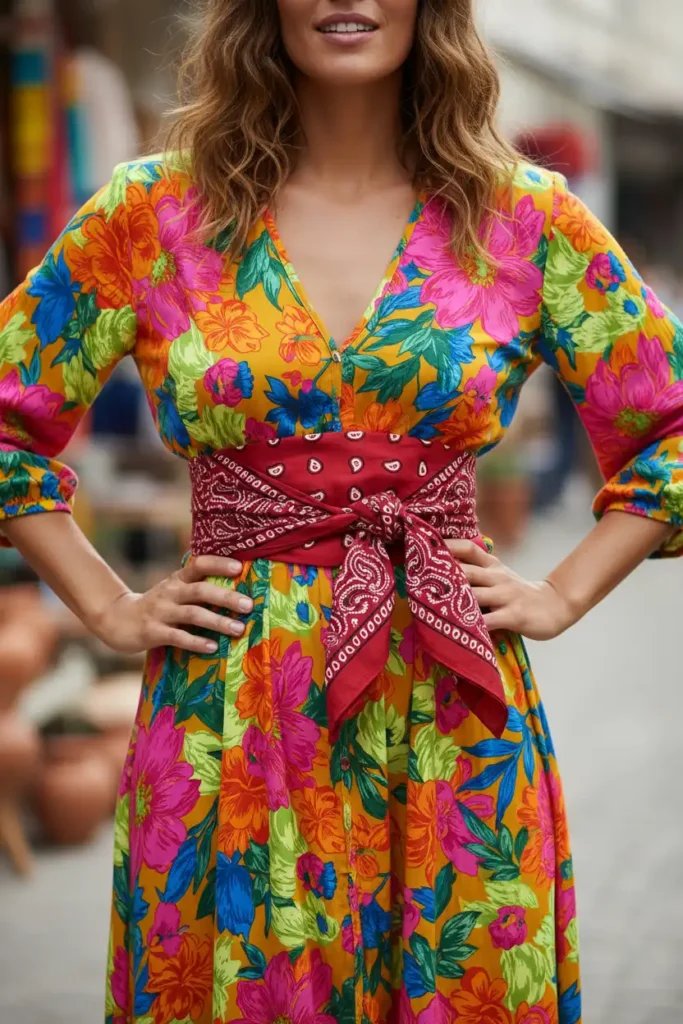
Paisley on top of florals on top of stripes overwhelms the eye. Nobody can tell what you meant to feature, so the whole outfit reads as noise. The bandana works best as the single pattern in the frame.
Keep everything else solid when your bandana has a busy print. A black slip dress, plain white tee, or solid denim gives the paisley room to work. If you must mix, keep one print tiny, like fine lace pattern texture, and one bold. Never two bold prints touching.
Treating It as an Afterthought With Shorts
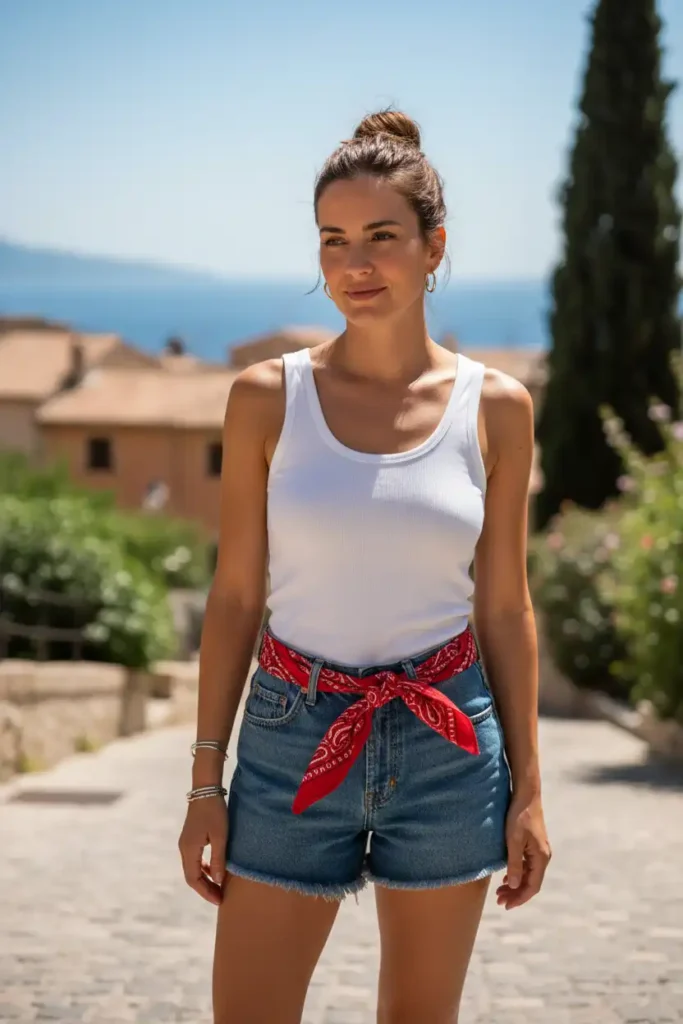
Shorts and a tank can look plain fast. A scarf with shorts fixes that, but only if you commit. Half-tied, drooping, or clashing with your top, it looks like you found the bandana on the way out the door.
Tuck your top in so the waist detail actually shows. Match the bandana to your sandals or bag. Cutoffs from Agolde or vintage Levi’s give you sturdy loops to work with. This is the easiest summer upgrade you can make for under $10.
Buying One Size and Expecting Every Style
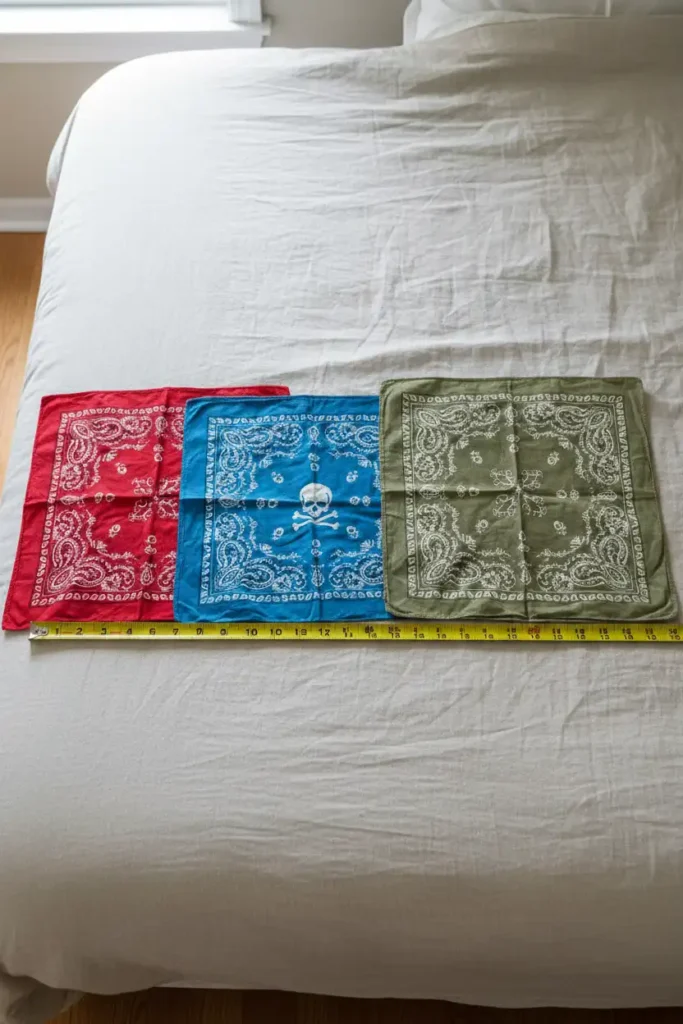
A standard 22-inch bandana barely wraps a waist over size 27. You end up with a tiny knot and no tails, or you can’t close it at all. Then you conclude the trend doesn’t work for you. It’s just the wrong size.
Measure your waist where you’ll wear it, then add 12 inches for the knot and tails. Most people need at least 27 inches of fabric corner to corner. Oversized bandanas from Free People or Amazon run 27 to 35 inches. Buy two sizes and you’re covered for every outfit.
Missing the Triangle Fold Entirely
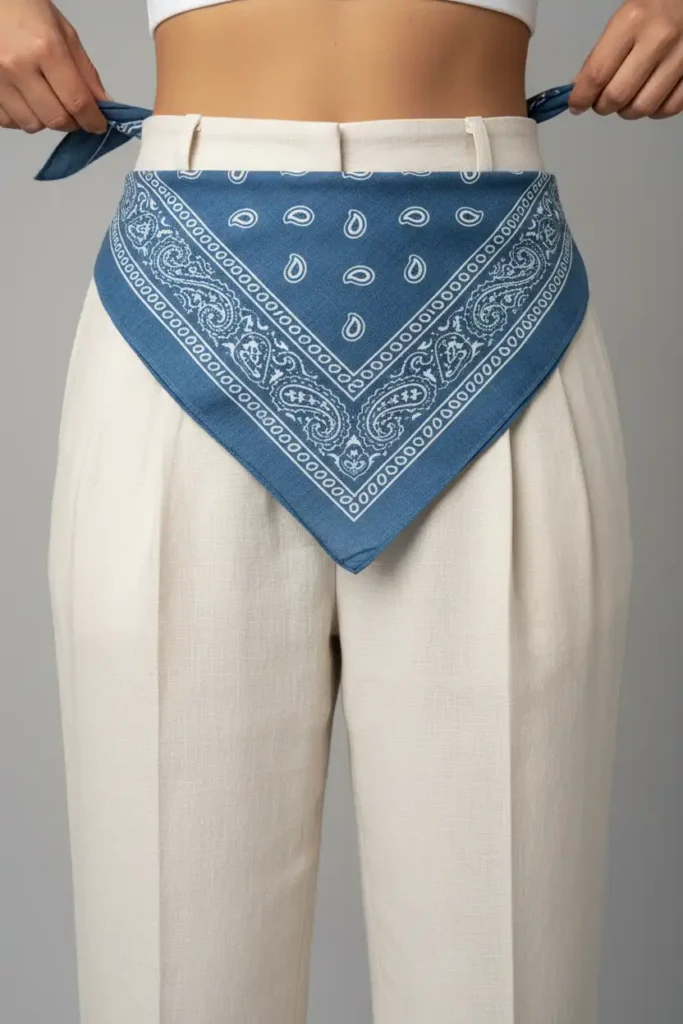
Most people only know the rolled-strip method. The triangle scarf fold gives you a completely different look: the point drapes down the front of your hip like a soft layer, closer to a sarong detail than a belt.
Fold the bandana in half diagonally, place the long edge along your waistband with the point at your hip or front, then knot behind or beside it. This works beautifully over fitted dresses and plain trousers. Try it once with a solid-color bandana before graduating to prints.
Clashing With Your Leather Pieces
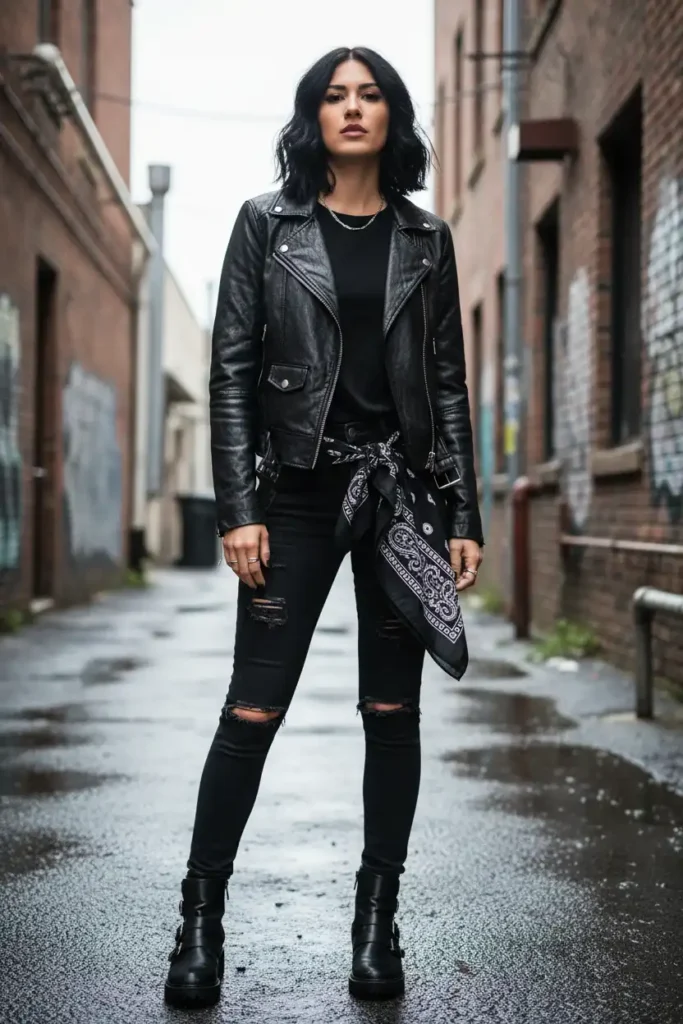
Biker style and bandanas share history, but a pastel gingham bandana against a hard leather moto jacket confuses the message. The textures and moods fight. Your accessories should agree on what the outfit is saying.
Going edgy? Choose black, deep red, or classic black-and-white paisley. Skull or chain prints work if the rest stays minimal. Keep hardware tones consistent too: silver zippers with cooler prints, brass with warmer ones. One mood per outfit.
Ignoring Brown and Earth Tones
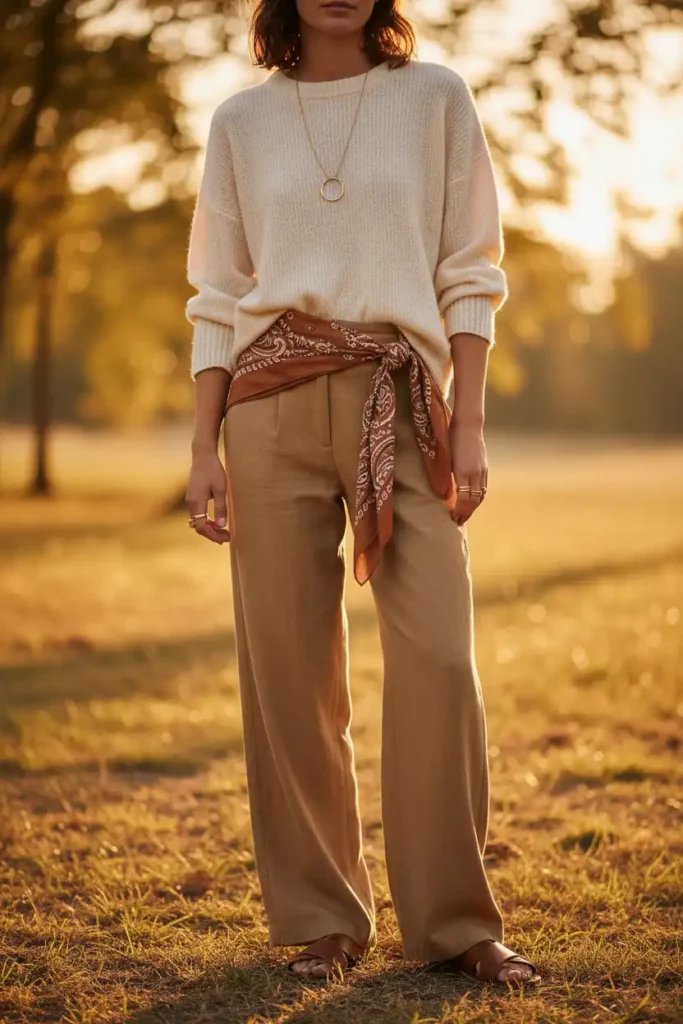
Everyone defaults to red or navy and skips the shades that flatter most skin tones. Brown fashion is having a real moment, and a rust, tobacco, or chocolate bandana against cream or tan looks expensive without trying.
Pull the brown from something you already own: your sandals, your bag strap, your sunglasses frames. Rust paisley with cream linen is a combination you can wear from May through October. Start with one earth-tone bandana and watch how often you reach for it.
Tying a Knot That Comes Undone by Noon
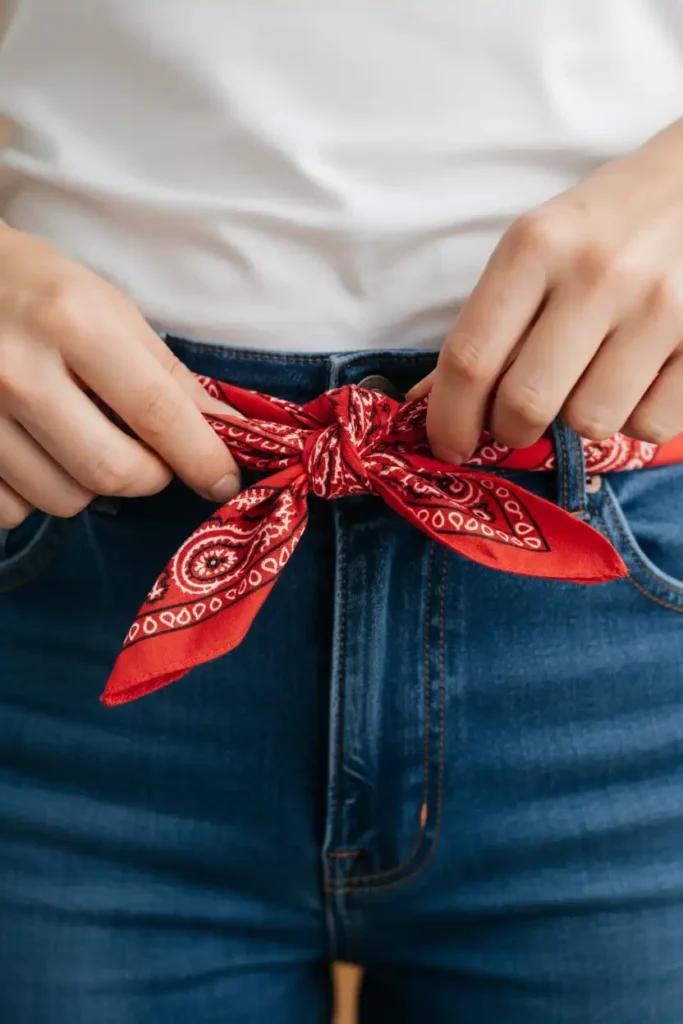
A granny knot slips. That’s just physics, and it’s why you retie your bandana four times a day. The square knot holds all day and lies flatter, which solves the bulk problem at the same time.
Right end over left and under, then left end over right and under. Pull tight. The tails should exit on the same side as the wraps, parallel to the belt. If they stick out perpendicular, you tied a granny knot. Redo it. Two practice runs and your hands will remember it forever.
Overloading the Waist With Other Accessories
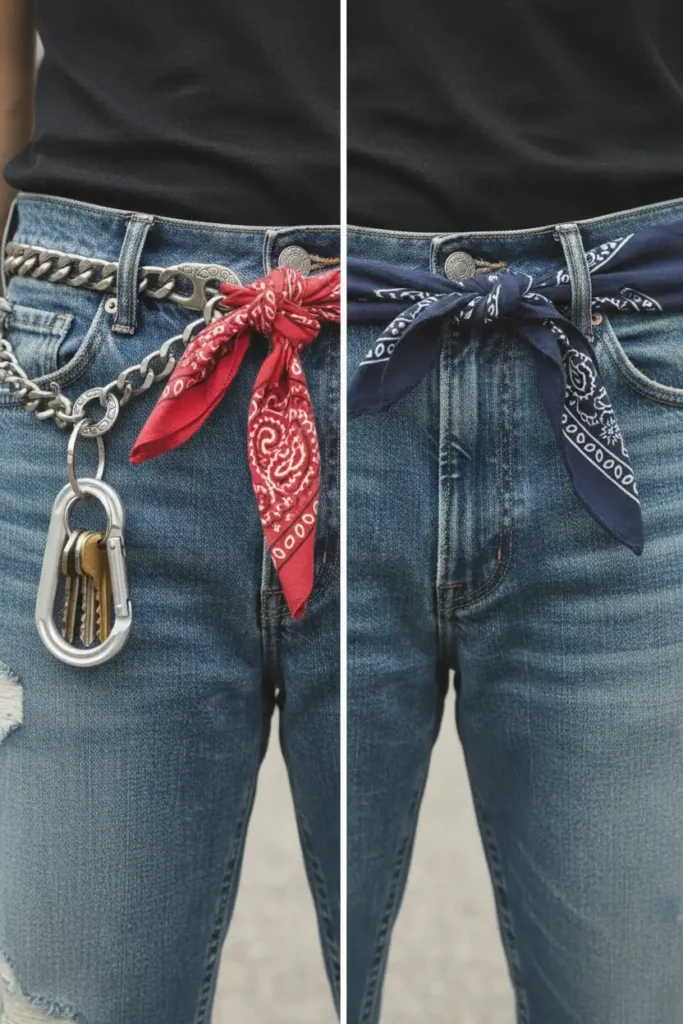
A bandana plus a chain belt plus a clipped keyring turns your waistline into a junk drawer. Each piece cancels the others out. When everything asks for attention, nothing gets it.
Let the bandana be the only thing happening at your waist. Move the chain to your neck, the keys to your bag. Everyday fashion outfits work on a simple rule: one focal point per zone. Waist, neck, ears, wrists. Pick your zones and leave the rest quiet.
Copying Runway Looks Without Adjusting for Real Life
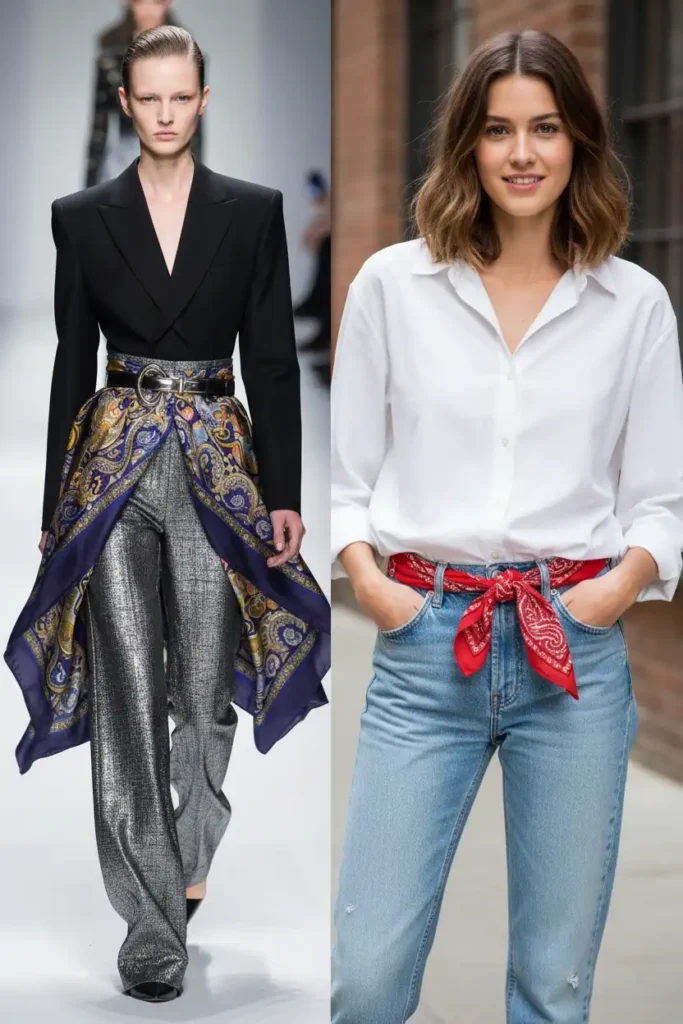
Runway styling from labels like Marlon Noah looks incredible under stage lights with a stylist standing three feet away. Copying it exactly, with layered silks and trailing ends, doesn’t survive a commute or a school pickup.
Steal the idea, not the execution. If the runway showed a draped triangle over trousers, do that with one cotton bandana instead of three silk scarves. Translate high-fashion proportion into one wearable move. Save the reference photo, then simplify it by half before you leave the house.
Wearing It Over the Wrong Fabric Weight
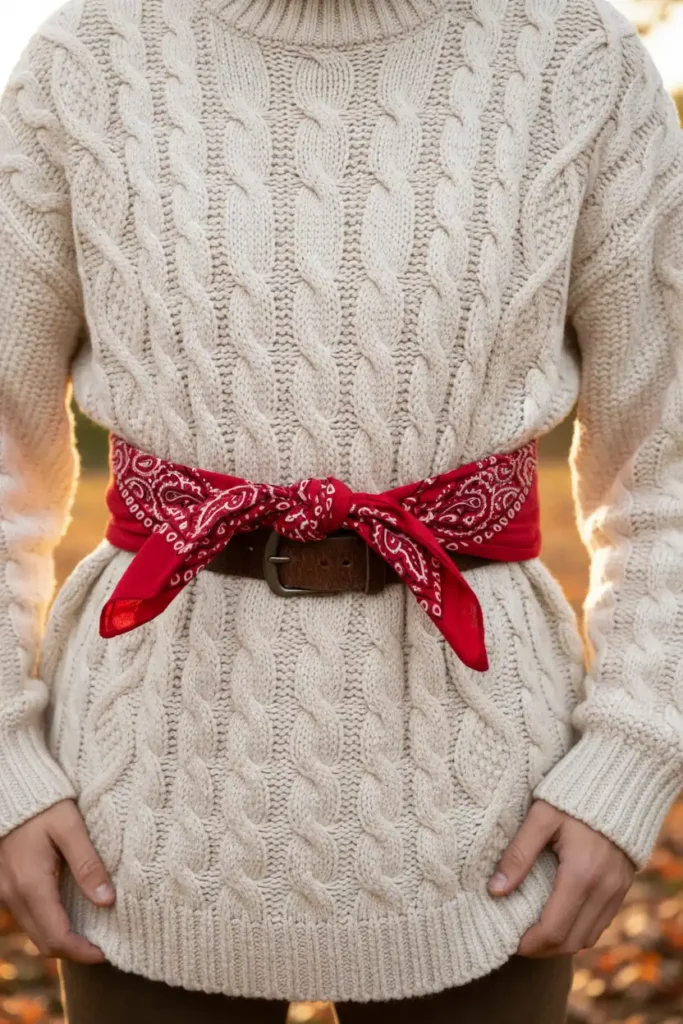
Tying a thin cotton square over a chunky sweater buries it. The knit swallows the bandana and adds bulk right at your middle. The waist definition you wanted turns into a lump.
Bandana belts need a smooth base: fitted tees, slip dresses, tucked button-downs, or denim waistbands. Wearing heavy knits? Skip the waist tie that day or layer the bandana at your neck instead. Match the accessory weight to the fabric weight and everything sits right.
Skipping Texture Play With Crochet and Lace
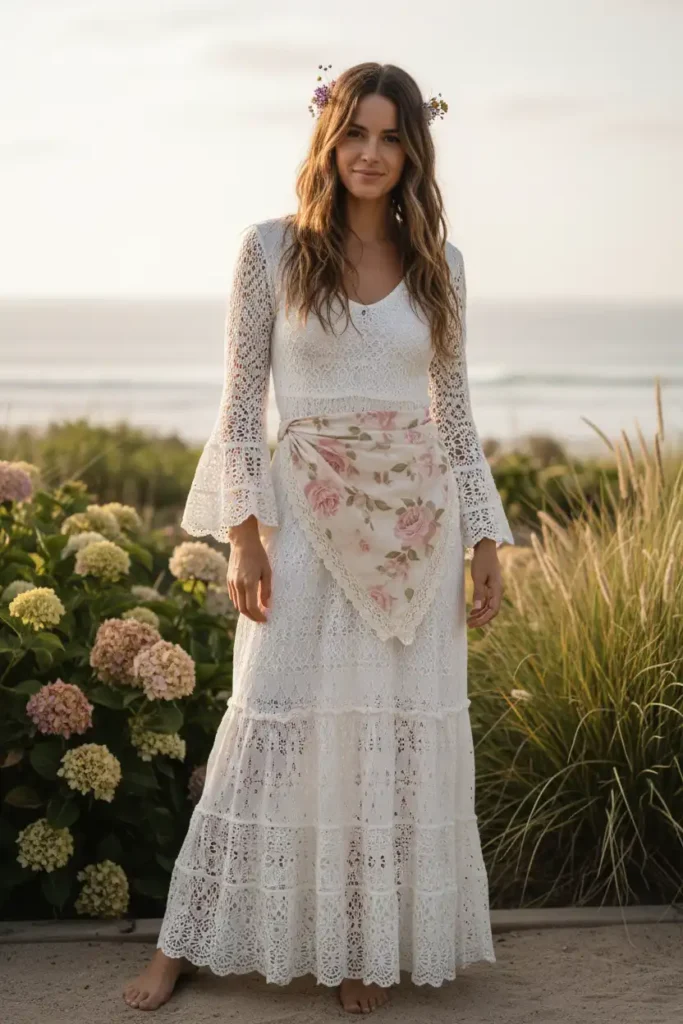
All-smooth outfits can fall flat. A bandana with a cotton lace edge or a crochet-trimmed hem adds dimension without adding color chaos. Texture is the styling tool most people forget they have.
Pair a lace-edged bandana with a boho crochet top or dress in the same color family: cream on cream, white on ivory. The repeated handmade texture ties the look together. Free People and Etsy sellers stock lace-trim bandanas for under $20. One texture echo makes an outfit look styled instead of assembled.
Positioning the Knot Where It Fights Your Body
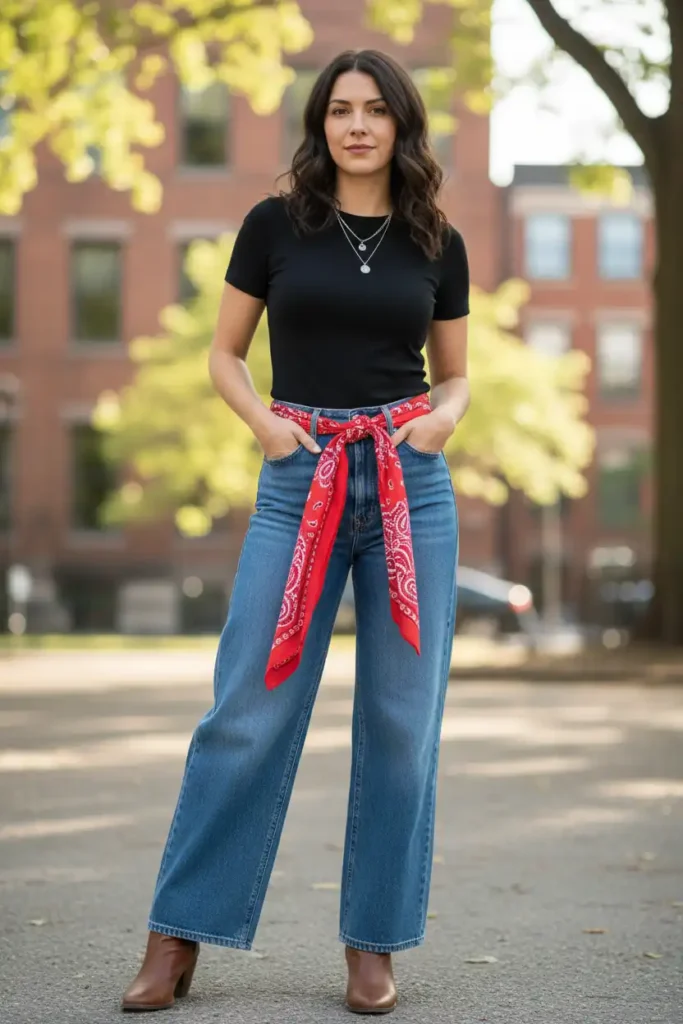
A center-front knot under a clingy top adds visual weight to your stomach. That has nothing to do with your body and everything to do with knot placement. Where you tie it changes the whole silhouette.
Move the knot to your side hip to draw the eye outward and lengthen your torso. Tie it at the back under an open shirt for a clean front line. Petite? Keep tails short and the knot small. Take three photos of the three placements and keep the winner.
Wearing It Faded, Frayed, and Past Its Life
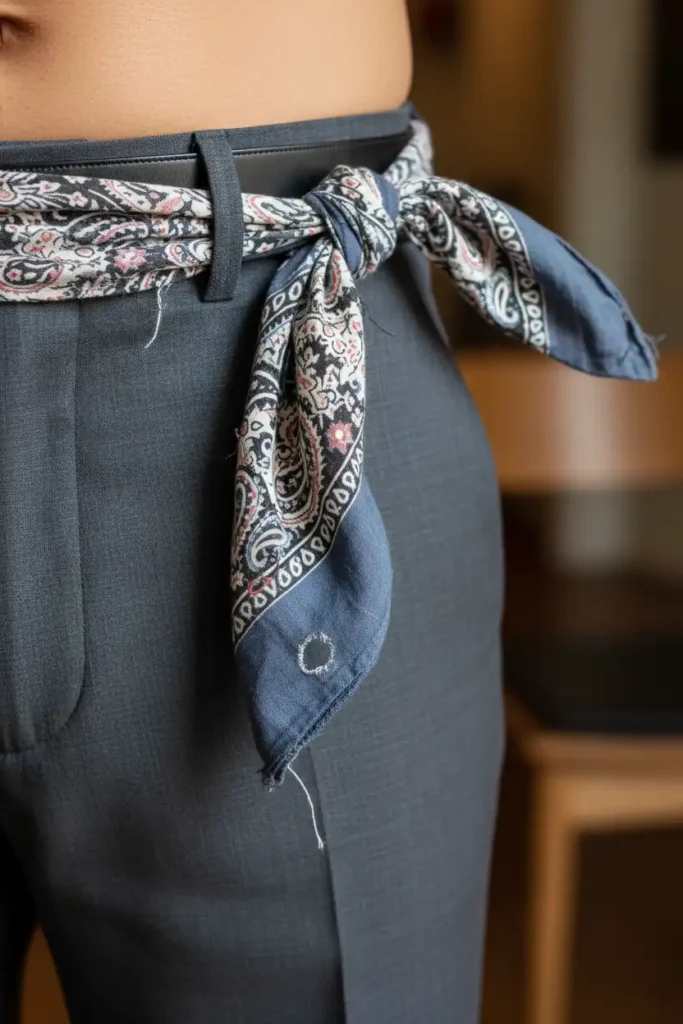
Vintage fade can look great. Fraying edges and holes cannot, at least not at your waist next to clean clothes. There’s a line between broken-in and broken-down, and your bandana crossed it two summers ago.
Inspect yours in daylight. Torn hem, thinning fabric, or a print faded to gray means it retires to hair-tie duty or cleaning rags. Replacements cost $8 to $15. Rotate two or three so no single one wears out fast. Cheap accessory, but condition is everything.
Never Practicing Before You Leave the House
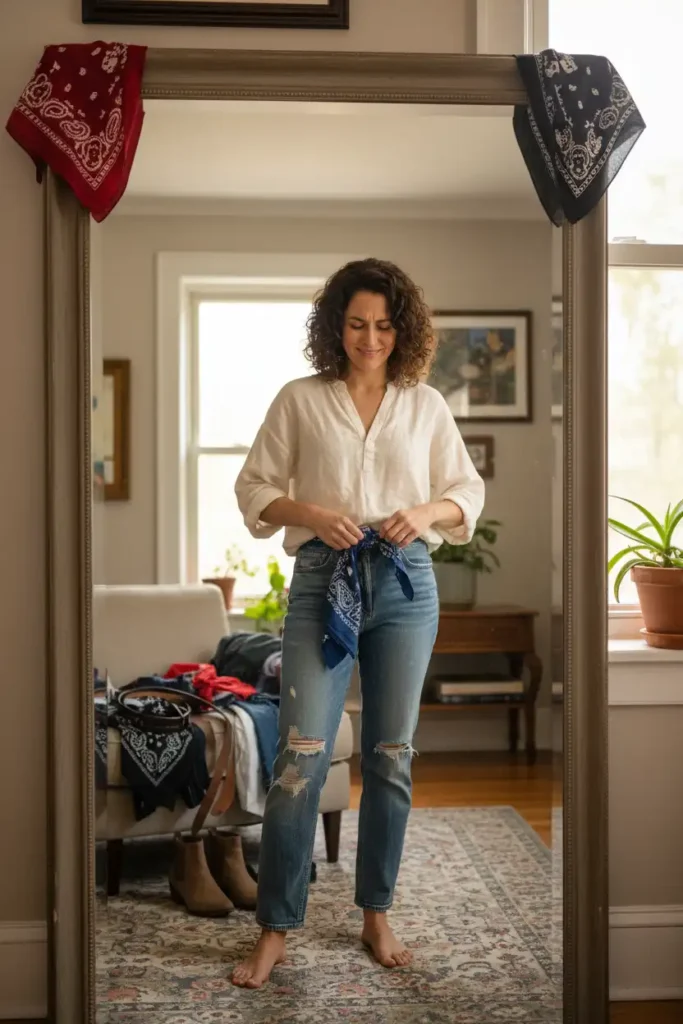
The biggest mistake isn’t a knot or a color. It’s tying the bandana for the first time at 7:45 a.m. with no time to fix it. Rushed styling always shows, and one bad morning convinces you the whole trend isn’t for you.
Spend ten minutes on a Sunday testing three folds, two knot positions, and your two most-worn bottoms. Photograph what works. Now you have a saved formula you can repeat in thirty seconds on any weekday. Practice once, wear it well all season.
FAQs
What size bandana do I need for a belt?
Measure your waist where you’ll wear it, then add 12 inches for the knot and tails. Most people need at least 27 inches corner to corner. A standard 22-inch bandana only works on smaller waists, so size up if you’re unsure.
How do I keep my bandana belt from slipping all day?
Two fixes. Thread it through your belt loops instead of tying it loose over the waistband, and use a square knot, not a granny knot. Right over left and under, then left over right and under. It holds until you untie it.
What fabric looks best for a bandana belt?
100% cotton. It folds flat, drapes well, and has no plastic shine. Skip polyester, which catches light and reads cheap from across the room. Iron it before wearing, since cotton creases hard in storage.
How do I stop the knot from looking bulky?
Fold the bandana into a flat two-inch strip before you tie it, move the knot to your side hip, and press it flat with your palm. If it still bulges, use a single knot and tuck the ends.
Can I wear a bandana belt with a dress?
Yes, as long as the fabric underneath is smooth. Fitted slips and t-shirt dresses work best. Try the triangle fold with the point draping down your hip and the knot tied at the side or back. Skip it over chunky knits, which swallow the fabric.