20 Cinderella Wedding Dress Ideas for a Fairytale Day
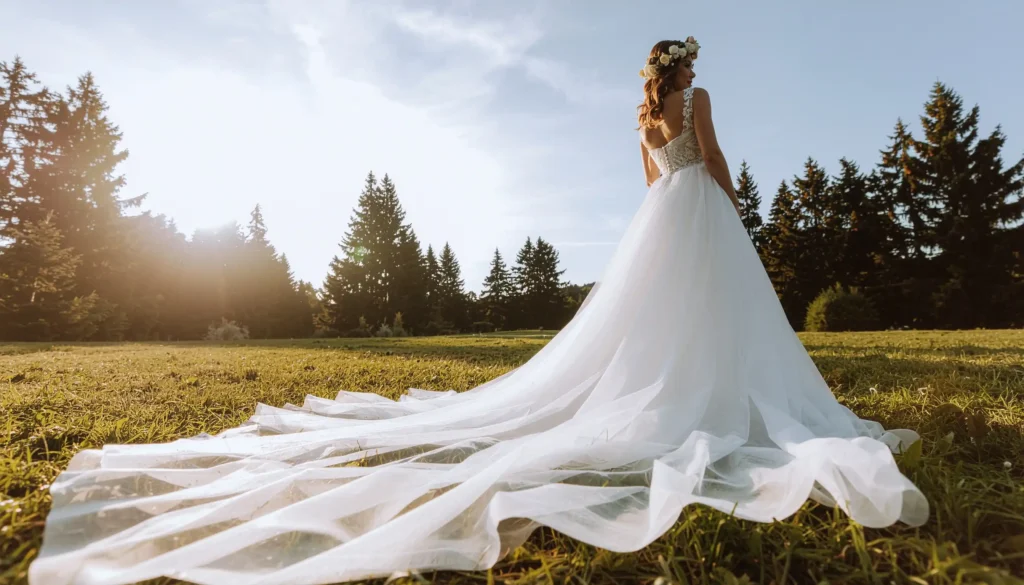
You have pictured the dress your whole life. The full skirt, the fitted bodice, the kind of silhouette that stops people when you walk in. A Cinderella wedding dress is not just a style choice. It is a specific feeling, and getting it right takes more than scrolling Pinterest for an hour. This guide covers 20 real, wearable ideas across different budgets, body types, and venues so you can walk into your first boutique appointment knowing exactly what to ask for.
1. The Classic Ball Gown Cinderella Wedding Dress
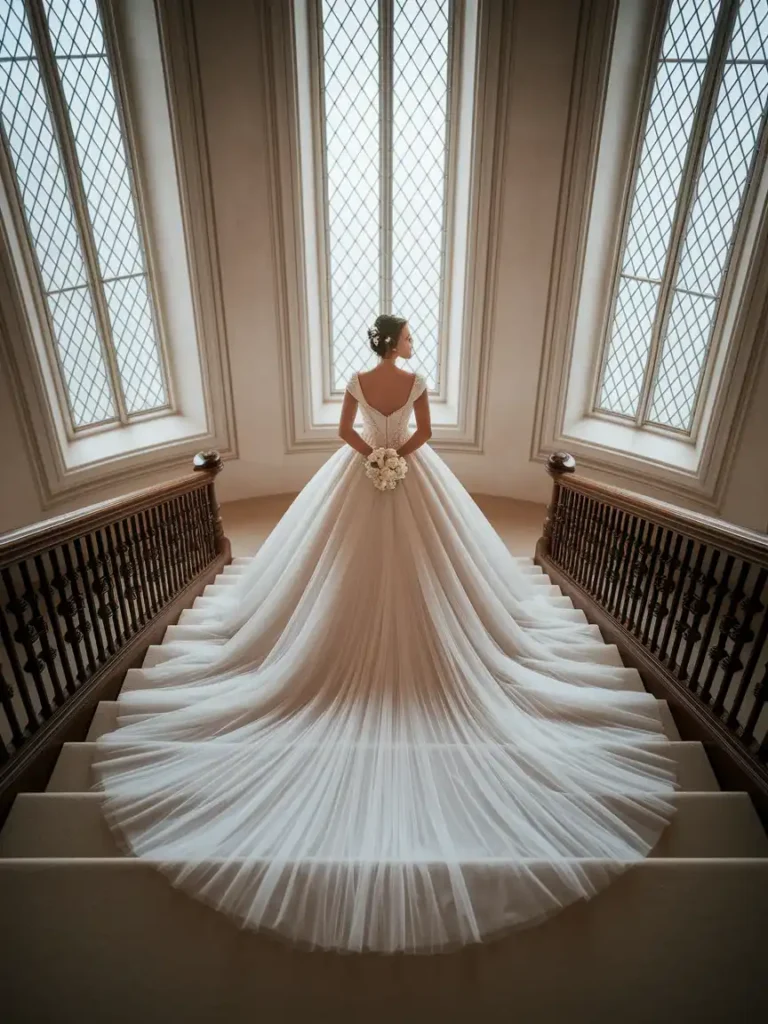
If you want the full princess moment, the classic ball gown is the one to go to. The silhouette works because of contrast: a fitted bodice that cinches your waist, paired with a skirt that has enough volume to fill the frame. Designers like Vera Wang and Monique Lhuillier have built entire bridal collections around this shape, and it consistently sells out for a reason.
Look for a gown with boning in the bodice so it holds its shape through the ceremony and reception. Tulle layers give the skirt that light, floaty quality without weighing you down. If you are petite, ask your seamstress to drop the waistline slightly so the proportions work in your favor.
2. Off-the-Shoulder Necklines That Feel Dreamy Without Being Overdone
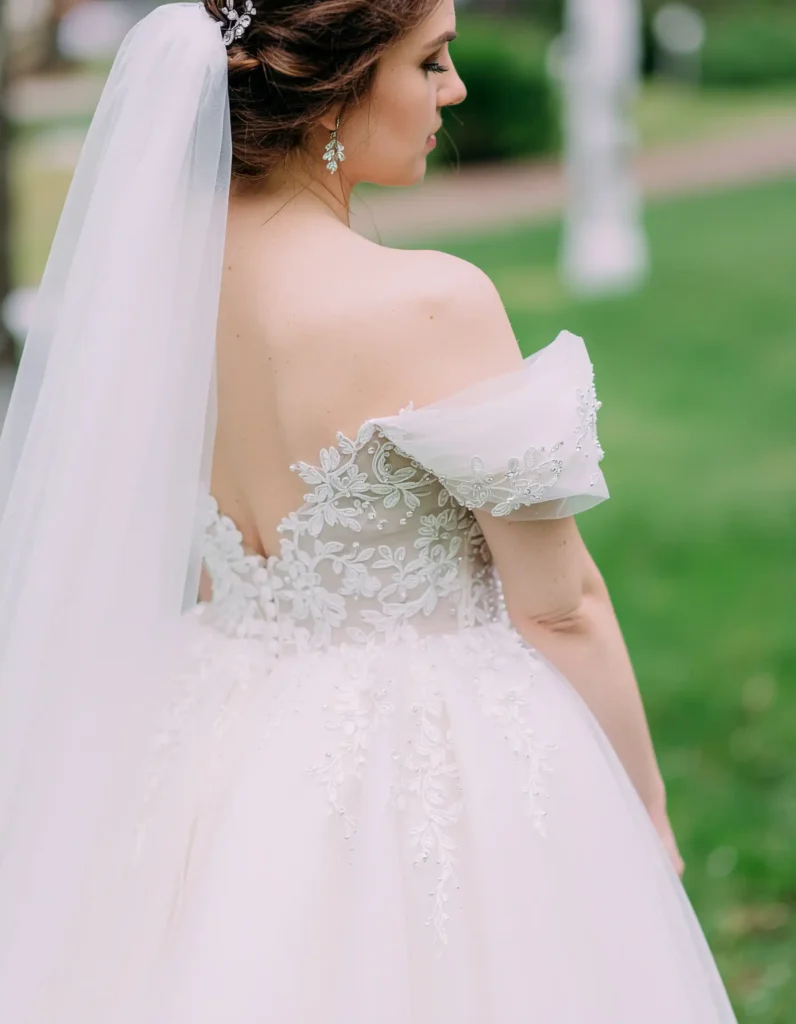
The off-the-shoulder neckline is one of the most flattering cuts for a princess-style gown. It draws the eye upward, makes your collarbone and shoulders the focal point, and adds a softness that a straight strapless neckline does not always achieve. It works especially well if you want a romantic feel without going into full vintage territory.
If you have broader shoulders, choose a style where the neckline sits slightly lower on the arm rather than right at the shoulder seam. This visually softens the line. Pair it with an updo so the neckline stays the focus. Jenny Yoo and Essense of Australia both carry strong off-the-shoulder options at mid-range price points.
3. Corset Bodice Styles for a Cinched, Defined Waist
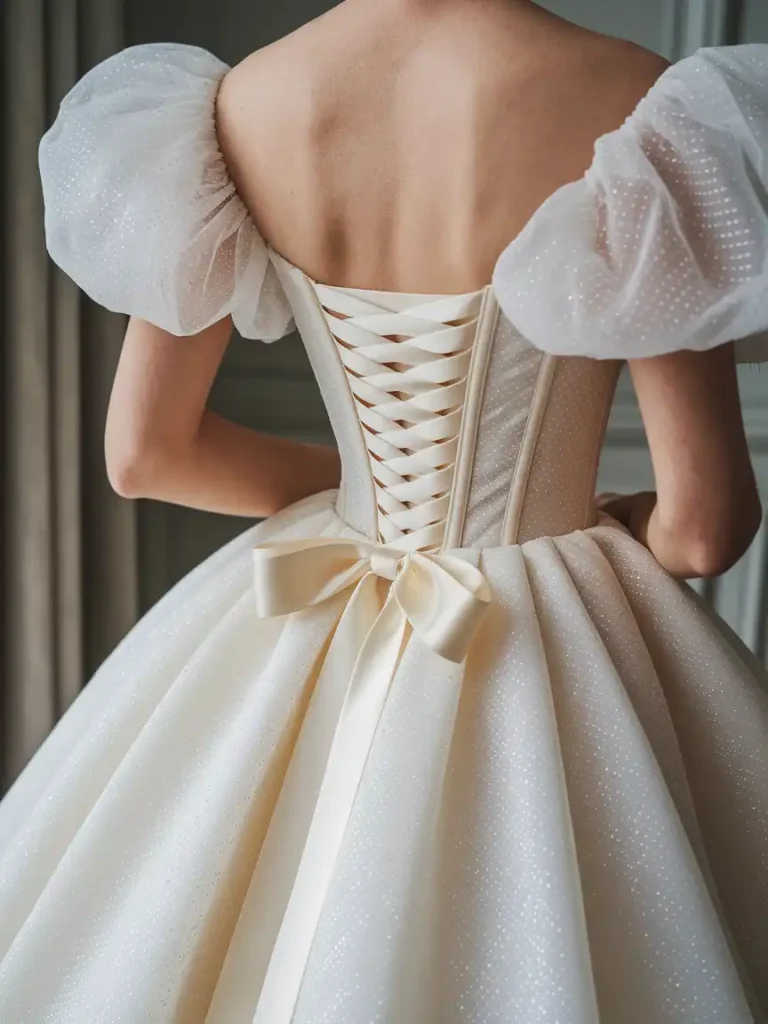
A corset bodice does the structural work so you do not have to. It cinches your waist, supports your bust, and gives the gown that defined silhouette that reads as very intentionally bridal. For a fairytale-inspired look, this is one of the most practical choices you can make because the fit does not rely as heavily on custom alterations.
Back lacing is particularly useful because it gives you some flexibility on the wedding day, whether your body changes slightly or you just need to breathe through a five-course dinner. Choose a bodice with steel or spiral boning rather than plastic, which can buckle under pressure. Most reputable bridal boutiques will show you the construction before you commit.
4. Cinderella Wedding Dress With a Cathedral Train
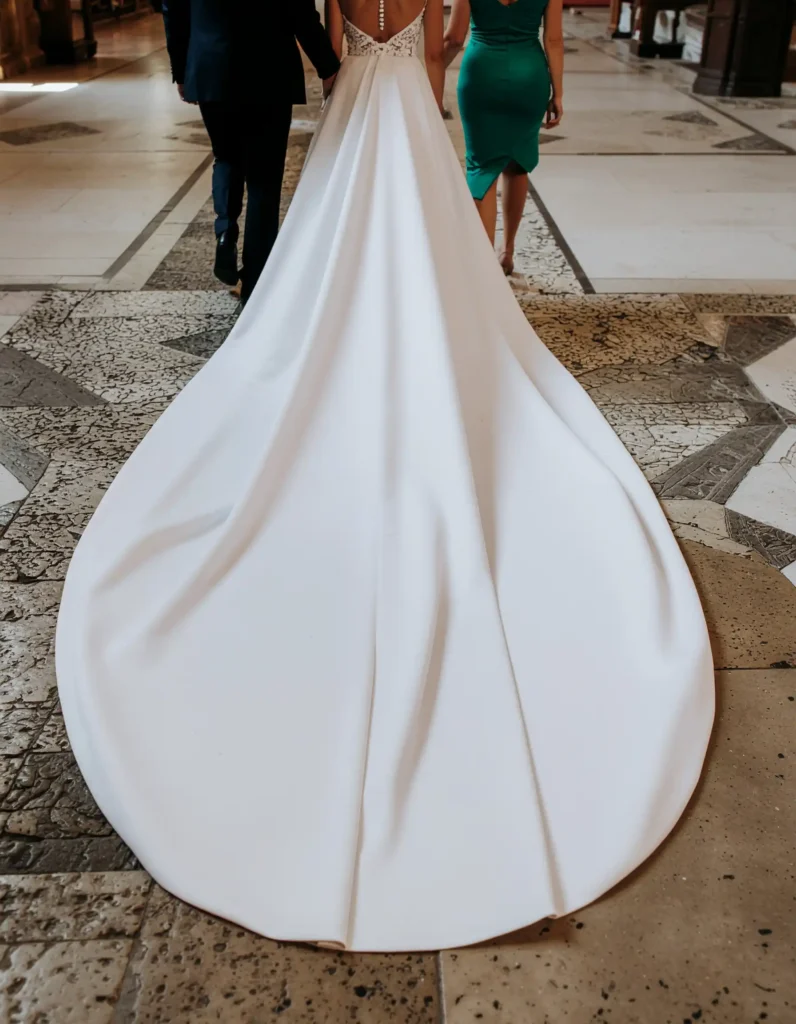
The cathedral train is the defining detail of a true princess silhouette. It photographs beautifully, especially in churches or grand venues, and gives your walk down the aisle real visual weight. The standard length is between six and eight feet from the waist. Anything shorter is technically a chapel train, which is still lovely but a different effect.
Before you commit to a cathedral train, think practically. You will need at least one person helping you manage it during the ceremony. Bustle options are worth discussing with your seamstress early, not as an afterthought. A French bustle, where the train loops up in sections, keeps the skirt full at the reception without the drag.
5. Beaded and Crystal Embellishment That Earns Its Place
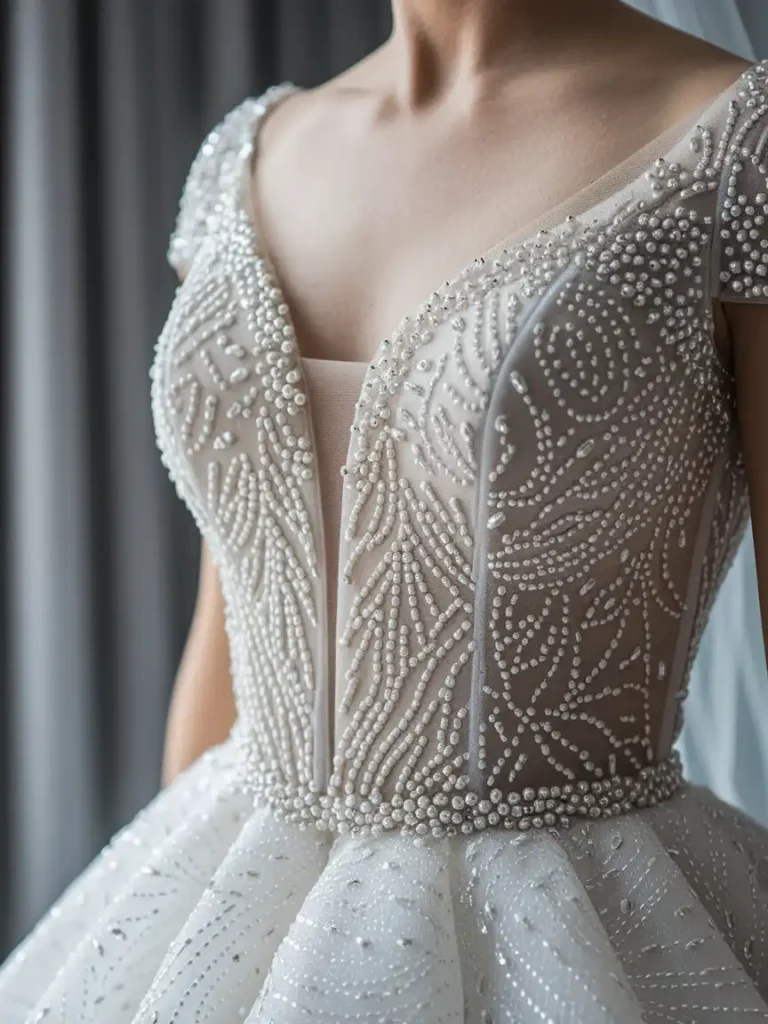
Heavy beading can make or break a gown depending on how it is distributed. When it is concentrated at the bodice and waistline, it draws attention to your silhouette. When it covers the entire skirt, it can read as heavy and dated, particularly in photos where it competes with everything else in the frame.
Ask to see the gown in different lighting conditions before you buy. A boutique’s spotlight makes every embellishment look better than it will in a candlelit reception hall. Swarovski crystal appliques tend to photograph better than plastic rhinestones because they refract light more cleanly. If you love sparkle but want it subtle, consider a gown with crystal trim only at the hem and waist.
6. Puffy Sleeves for a Fairytale Bridal Look
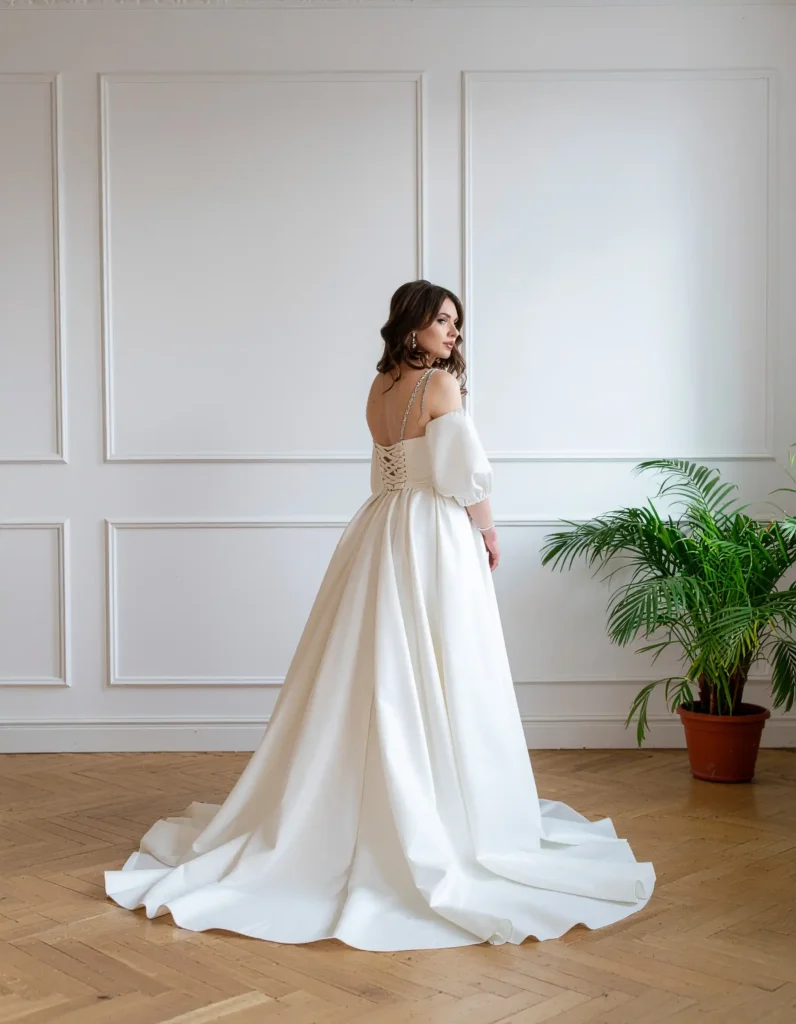
Puffed sleeves came back in a serious way after the 2020 bridal seasons and they have stayed relevant because they do something specific: they add drama without requiring embellishment. If you want a gown that reads as theatrical but still bridal, the puffed sleeve is a direct route there. They reference a very specific kind of storybook dress without being costume-y when done in the right fabric.
Structured organza or taffeta holds the puff shape through a full day better than softer fabrics like chiffon, which tend to collapse. If you are concerned about looking too costume-like, choose a sleeve that is puffed only at the cap and transitions smoothly into a fitted lower sleeve. Amsale and Monique Lhuillier both do this well.
7. Illusion Necklines and Sheer Tulle Bodices Done Right
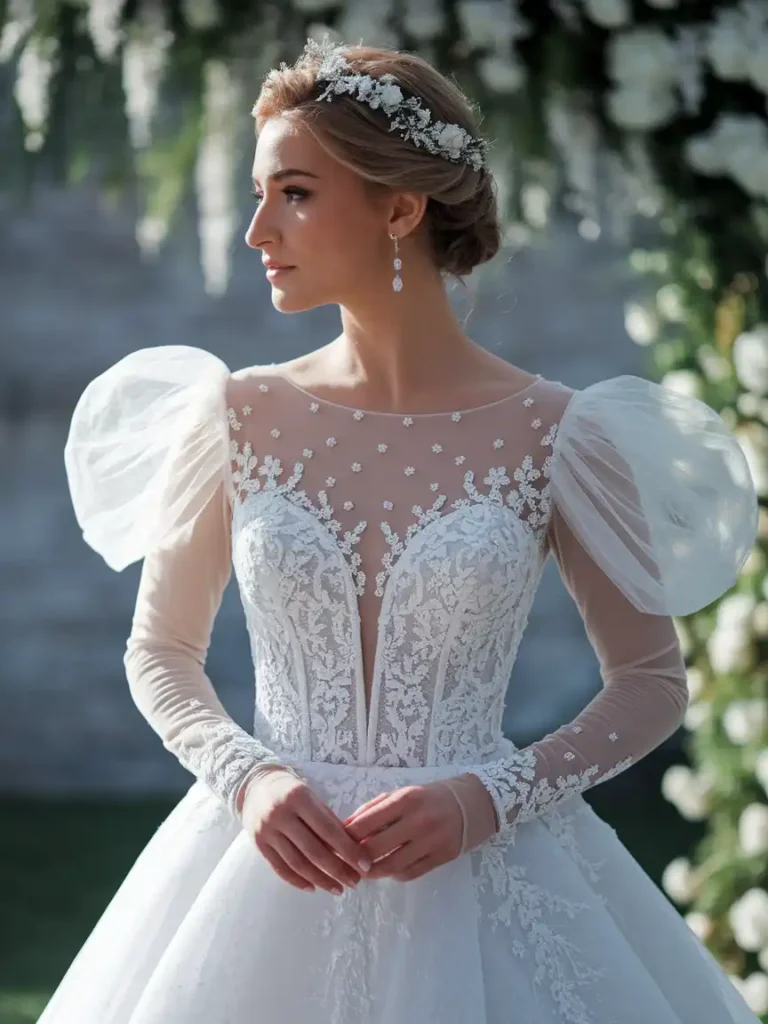
An illusion neckline is a smart option if you want coverage without the bulk of a high-neck gown. The sheer tulle panel gives the appearance of a covered neckline while actually leaving the skin visible, which keeps the look light and bridal rather than formal or modest in an overpowering way. It also photographs beautifully because the lace appliques seem to float.
The key is making sure the appliques are well-placed. If the placement does not account for your bust line, the pattern will sit awkwardly and the effect is lost. Always try the gown on, not just view it on a hanger, and ask the consultant to check the placement against your actual measurements. Galia Lahav and Berta both produce illusion bodices with precise, flattering applique work.
8. The Best Fabrics for Achieving That Full Skirt Volume
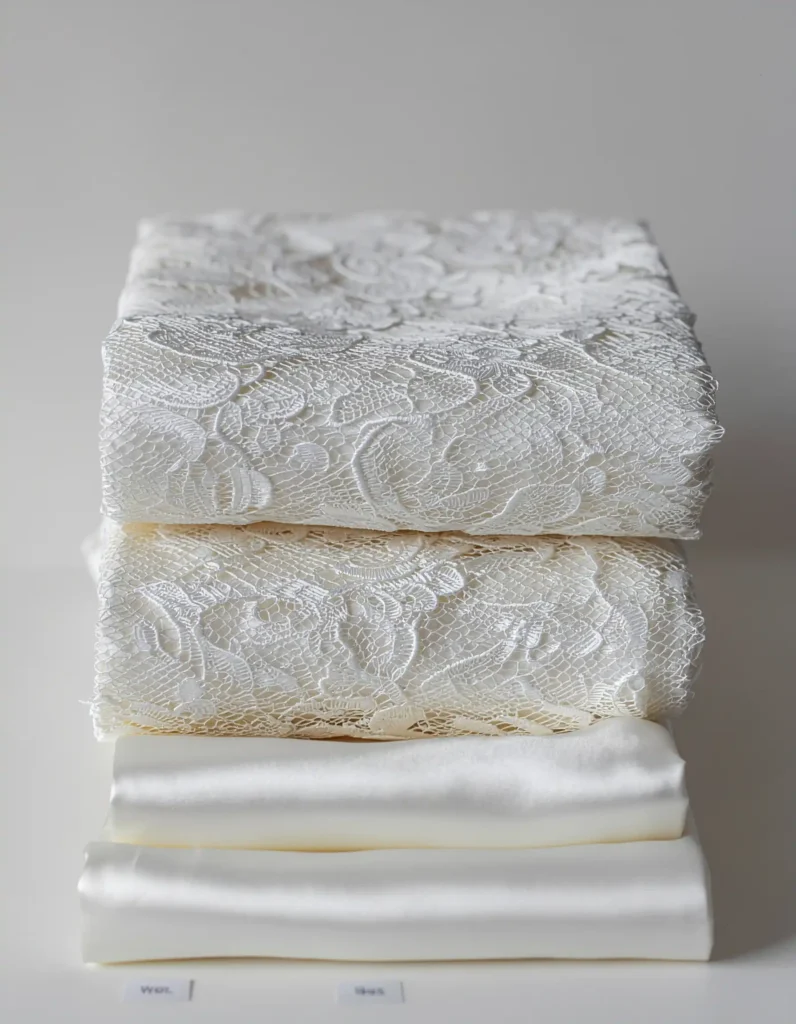
The skirt volume comes entirely from fabric choice and layering. Tulle is the standard for a reason: it is lightweight, holds shape, and layers well. A good full skirt typically uses multiple layers, sometimes eight to twelve, with a stiffer base layer and softer layers on top to create dimension without stiffness at the surface.
- Tulle: Best for maximum volume, light, and airy. Works well for outdoor and indoor venues.
- Mikado: Structured and smooth, less volume but a cleaner silhouette. Better for minimalist ballgowns.
- Duchess satin: Heavier, formal, and slightly stiff. Gives a sharp, polished look but adds weight.
- Organza: Crisp and sheer, good for creating structured layers with a lighter feel than satin.
Ask your boutique specifically how many layers the skirt contains and what the base fabric is. This directly affects how the gown moves and photographs.
9. How to Choose the Right Shade of White for Your Skin Tone
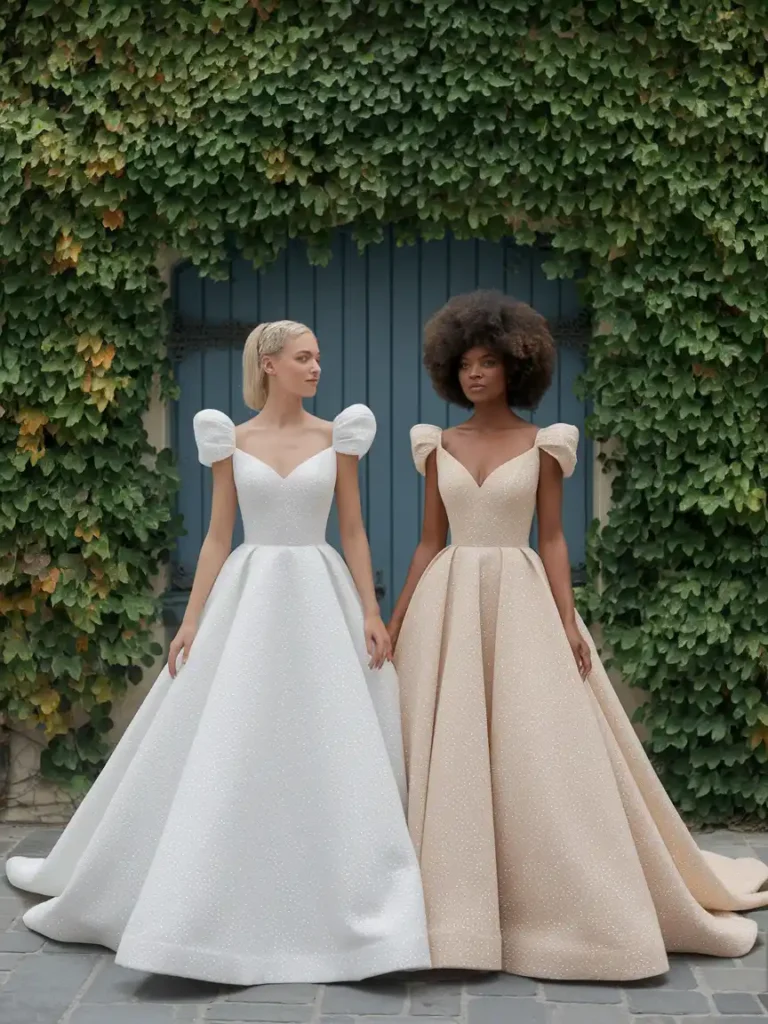
True white, ivory, champagne, and blush are not interchangeable. The shade you choose interacts directly with your skin tone, and picking the wrong one can make your complexion look washed out or sallow in photos. This is one of the most overlooked decisions in bridal shopping and one of the easiest to get right with a basic test.
Hold swatches against your bare face, not your clothed chest, in natural daylight. If your skin looks clearer and your eyes brighter, that shade works. As a general rule:
- Cool skin tones (pink undertones): True white and soft white tend to work well.
- Warm skin tones (yellow or olive undertones): Ivory, champagne, or blush usually photograph better.
- Deep skin tones: True white, stark ivory, and blush all work, but avoid very pale champagne which can disappear against deeper complexions.
Your bridal consultant can pull swatches before you try gowns on. Ask them to do it.
10. Princess-Style Gowns That Work for Outdoor Ceremonies
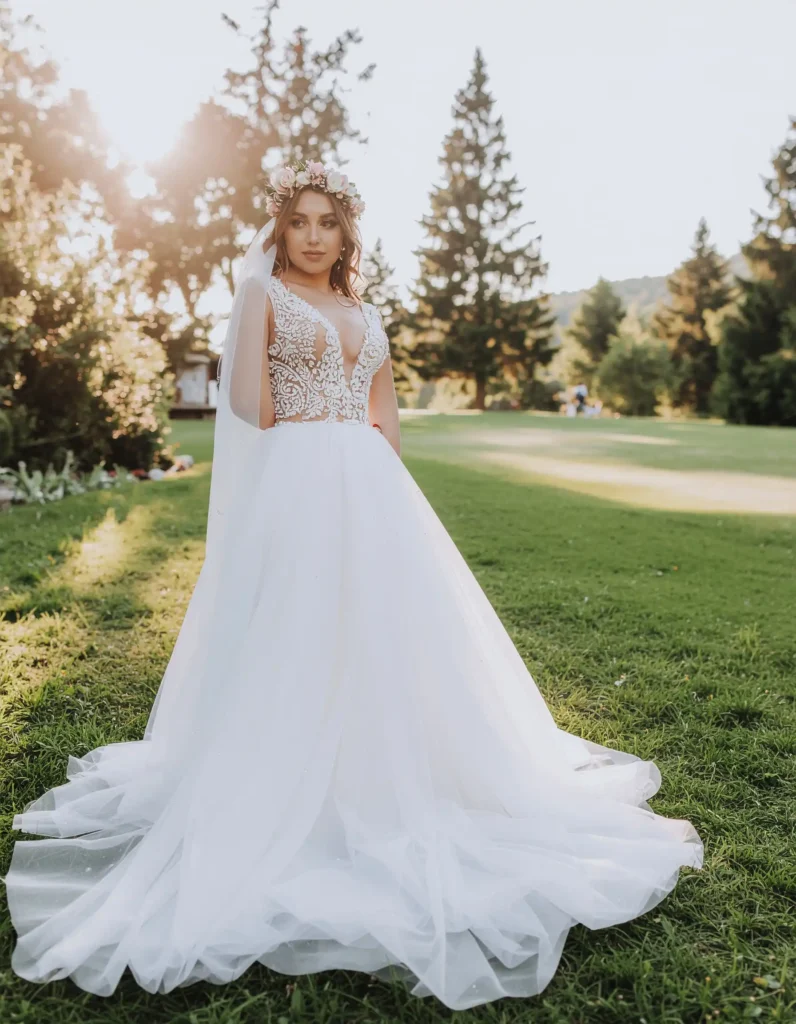
An outdoor ceremony does not mean you have to scale down the gown. A full ball gown works in garden and vineyard settings, but fabric choice matters more than it does indoors. Heavy satin and structured mikado can feel stifling on warm days and will show every wrinkle from sitting. Layered tulle, by contrast, breathes better and moves naturally in an outdoor setting.
Consider the terrain before you decide on the train length. A cathedral train on a grass lawn is difficult to manage and will pick up dirt and moisture even in dry weather. A sweep or chapel train, which grazes the floor rather than extending behind you, is a more practical choice for outdoor venues. You still get the bridal silhouette without the logistics problem.
11. Lace Overlay Skirts for a Vintage Bridal Touch
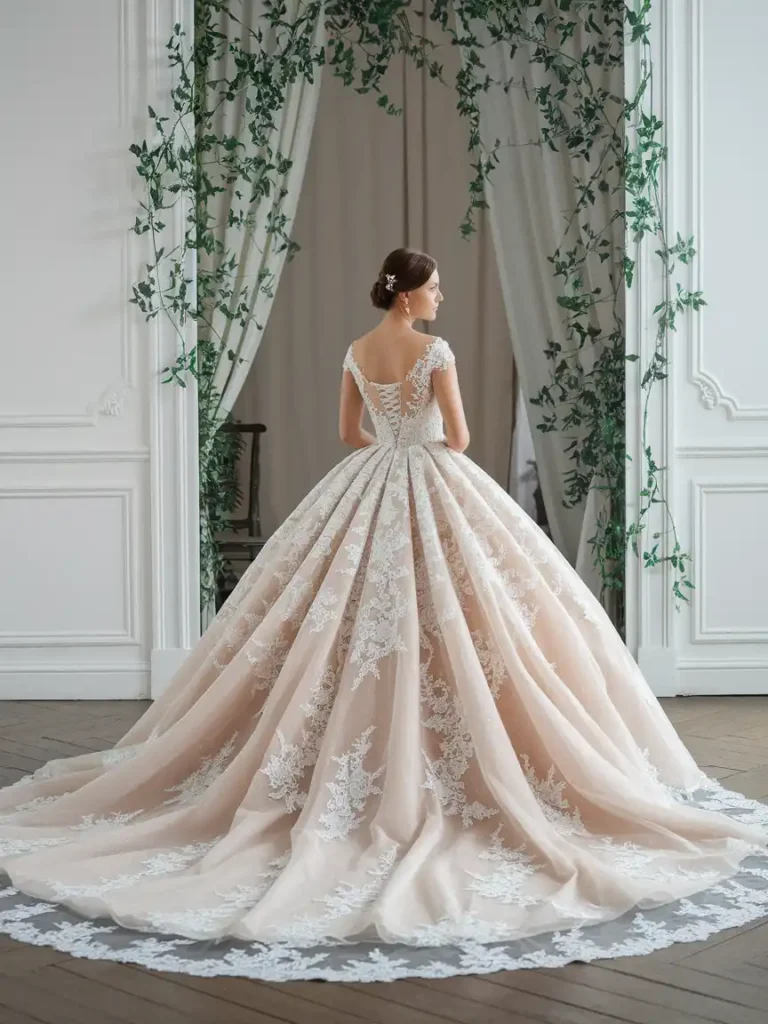
A lace overlay on a full skirt adds texture and a vintage quality that plain tulle does not have. The lace sits over the tulle and catches the light differently throughout the day, which means your photos will look different in morning light versus golden hour. It is a detail that tends to read better in print and high-resolution photos than on a phone screen, so trust how it looks in person.
The density of the lace matters. A heavy Chantilly lace will make the skirt feel and look heavier. A lighter guipure or Alençon lace lets the tulle underneath show through and keeps the look airy. If you want vintage feel without the weight, ask specifically for a lace applique overlay rather than a full lace fabric layer.
12. Bow Details and Satin Sashes That Add Structure
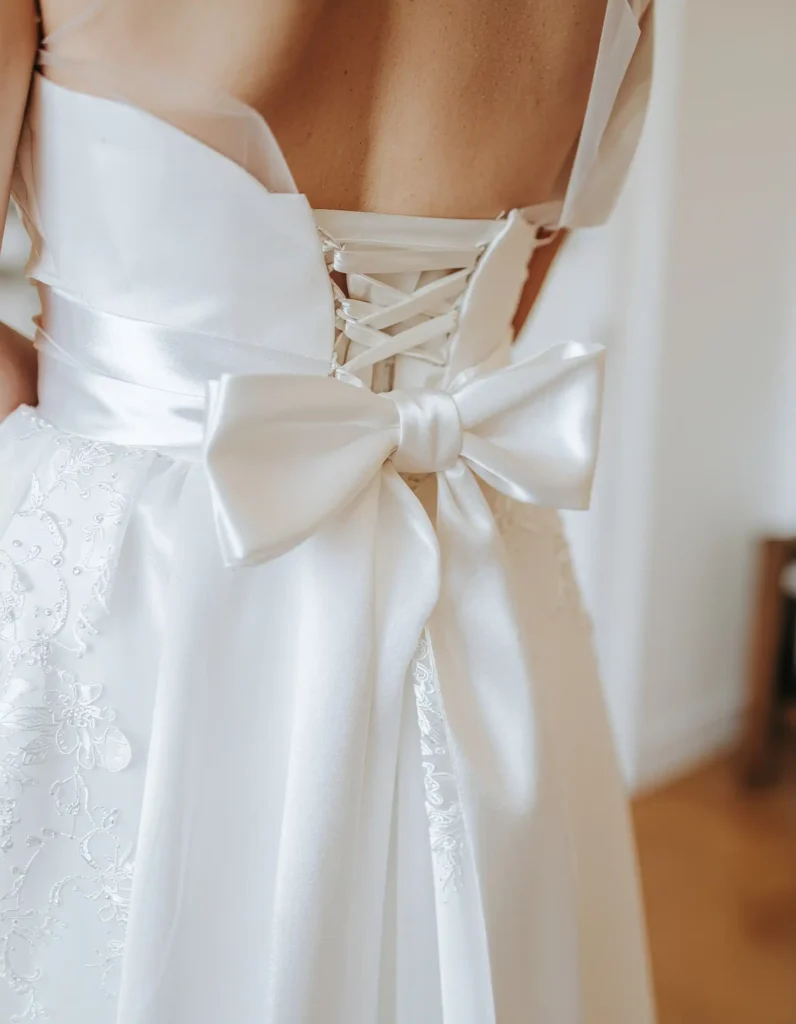
A bow or sash at the waist is one of the few embellishments that serves a real function: it marks your waistline and gives the gown a clear focal point at the back. In photos, especially from behind as you walk down the aisle, a bow draws the eye and breaks the expanse of fabric in a way that reads as intentional rather than decorative.
Choose a sash in the same fabric as the gown for a clean, built-in look. A contrast sash, say ivory satin on a lace gown, can work but requires more confidence in your styling choices. Pre-tied bows are easier to manage on the wedding day than loose sashes, which need to be tied and adjusted. Check whether the bow is removable if you want the option to change the look for the reception.
13. Cinderella Wedding Dress Inspiration for Plus-Size Brides
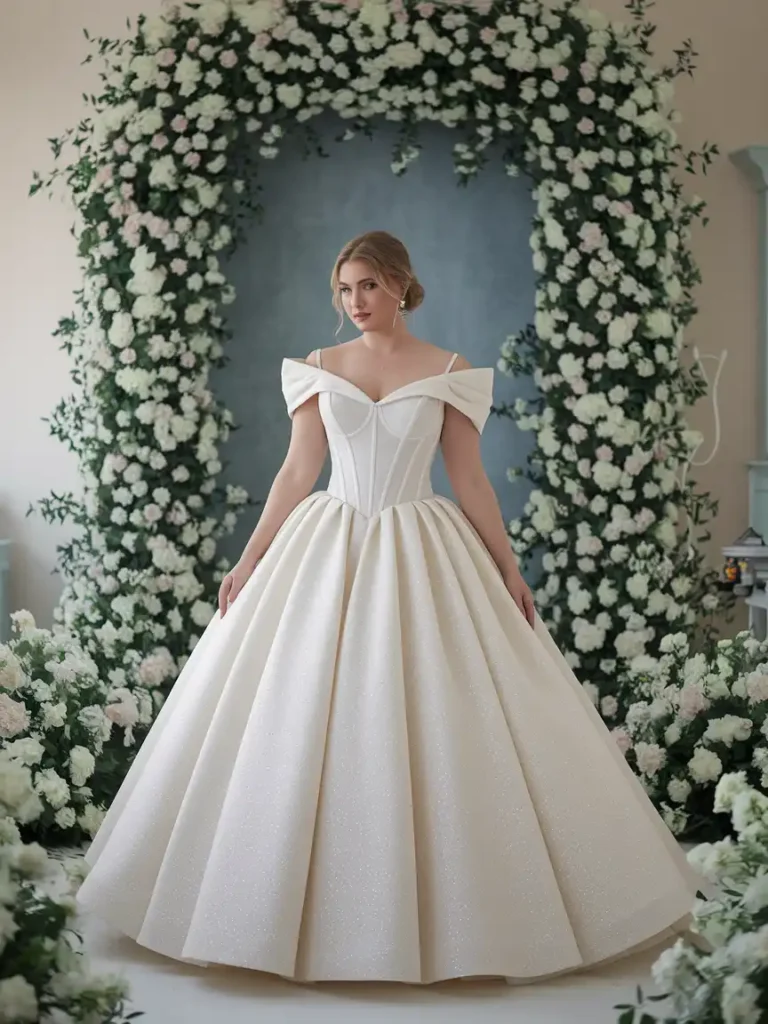
The ball gown silhouette is genuinely one of the most flattering options for plus-size frames because the full skirt creates proportion balance between the upper and lower body. The key is fit at the bodice. A well-fitted corset bodice holds everything in place and gives you a defined waist, which is the visual anchor the whole look depends on.
Seek out designers who specialize in extended sizing rather than brands that simply size up their standard gowns. Designers like Stella York, Essence of Australia, and Rebecca Ingram build plus-size bridal with construction adjustments rather than fabric additions. Request that the alteration timeline begins earlier than standard, usually 12 to 16 weeks before the wedding, because structured gowns in larger sizes require more fitting appointments to get right.
14. Floral Appliques That Stay Bridal, Not Costume
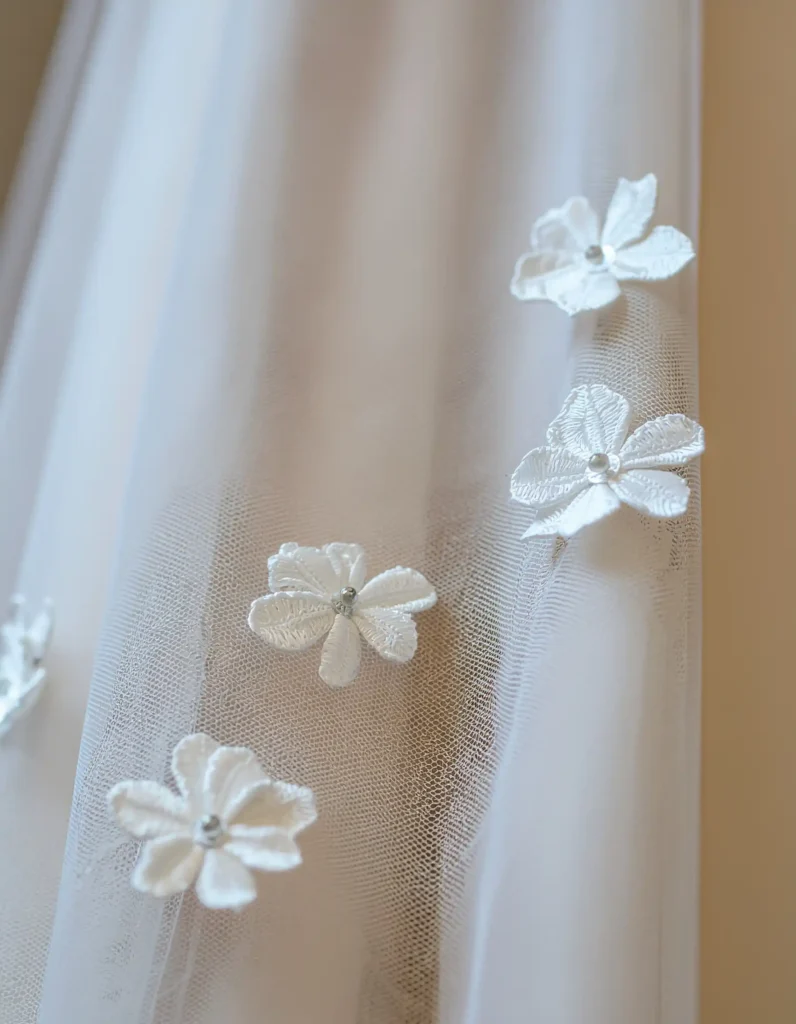
Three-dimensional floral appliques are a detail that separates a good ball gown from a forgettable one. When placed well, across the hem, climbing from the train to the hip, or scattered lightly across a skirt, they add depth that flat fabric cannot achieve. The challenge is scale. Oversized flowers on a petite frame overwhelm. Small, delicate appliques on a very large skirt get lost.
Ask your boutique to show you where the appliques hit on your body specifically, not just how they look on the sample. If the largest cluster lands at a point you do not want emphasized, that is useful information before you buy. Gowns with removable appliques exist, and they give you more control over the final look.
15. Long Sleeves on a Ball Gown: Making It Work for Winter Weddings
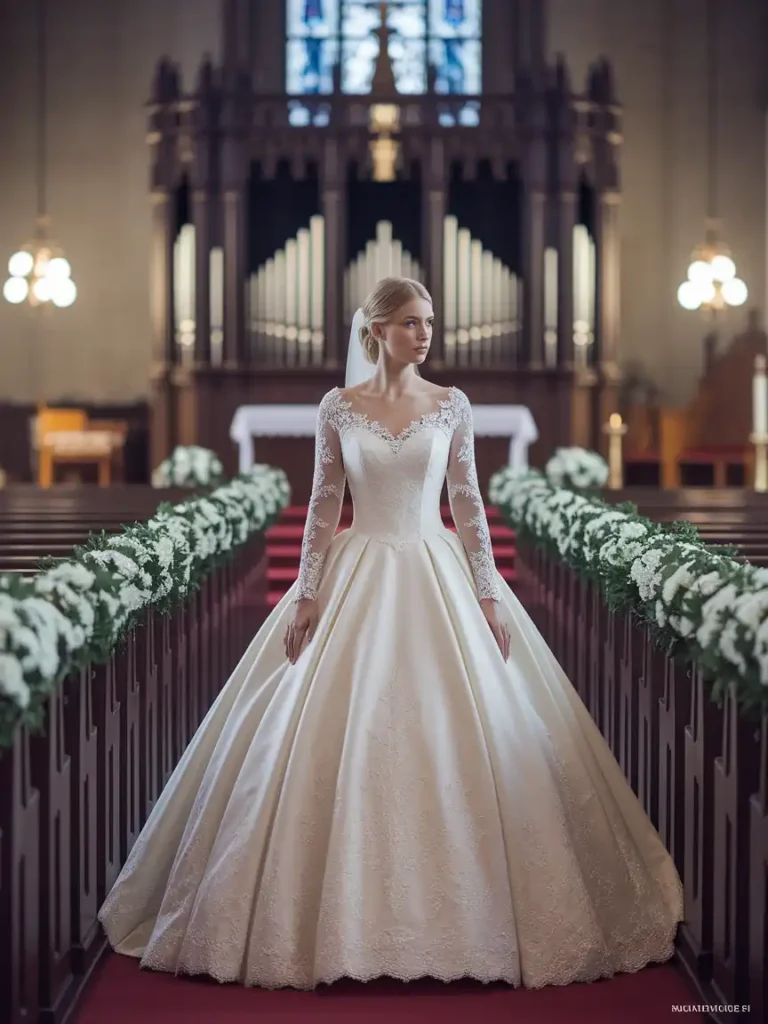
A long-sleeved ball gown is a winter wedding staple and for good reason. It keeps you warm without requiring a cover-up that interrupts the silhouette, and lace sleeves in particular photograph with a lot of detail and texture. The key is proportions. A fitted lace sleeve on a voluminous skirt works because neither element is competing. Both are doing something distinct.
If the venue is warm despite the season, look for illusion sleeves where the base is sheer tulle with lace appliques rather than a fully lined sleeve. This gives you the visual of a long sleeve with significantly more breathability. Ask about sleeve weight at the fitting and move your arms fully overhead and to the sides. You will be raising your bouquet and hugging people all day, so the fit needs to allow for real movement.
16. How Veils Work With Full Skirt Silhouettes
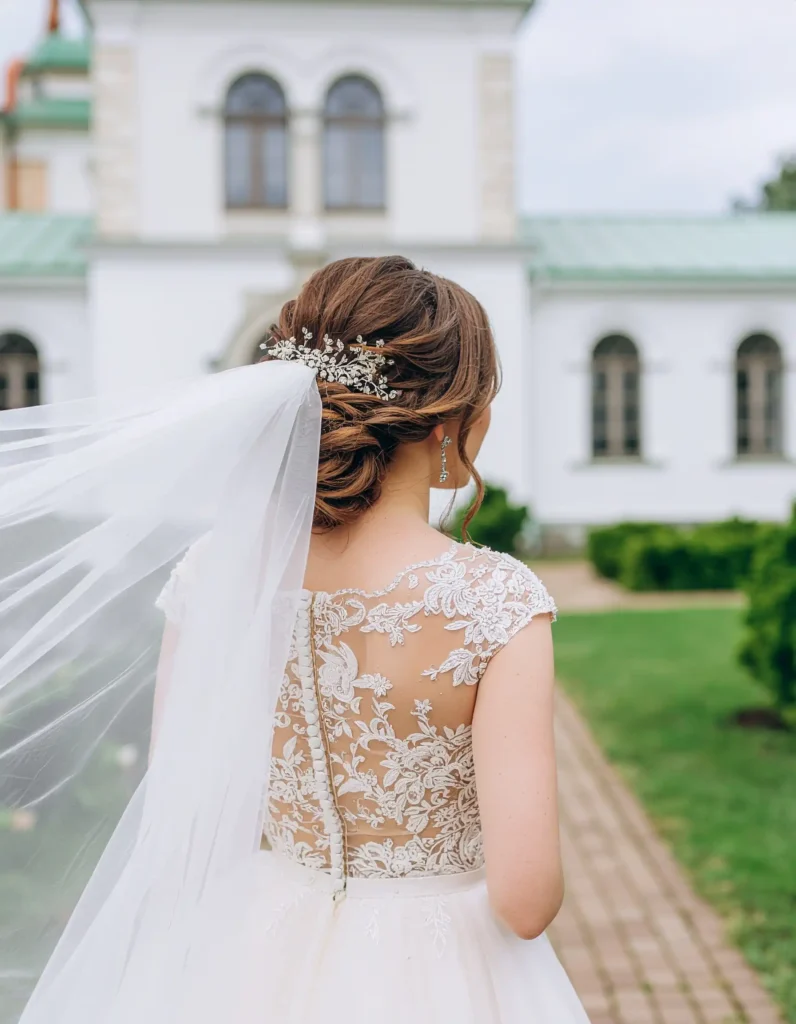
The veil you choose needs to work with the scale of your skirt, not against it. A short blusher or elbow-length veil on a full ball gown can look disconnected, like two separate decisions that never talked to each other. A cathedral or chapel veil that matches the train length echoes the scale of the skirt and ties the look together as one continuous silhouette.
Cathedral veils can feel heavy by the end of a long ceremony. Consider whether you will remove the veil for the reception, and if so, how it is attached. A simple comb attachment is easy to remove. An elaborate pinned-in arrangement requires help and takes time. Your hairstyle also affects how the veil sits: a low bun keeps the attachment point lower and softer, while a high updo positions the veil higher and more formal.
17. Budget-Friendly Options That Still Deliver the Princess Look
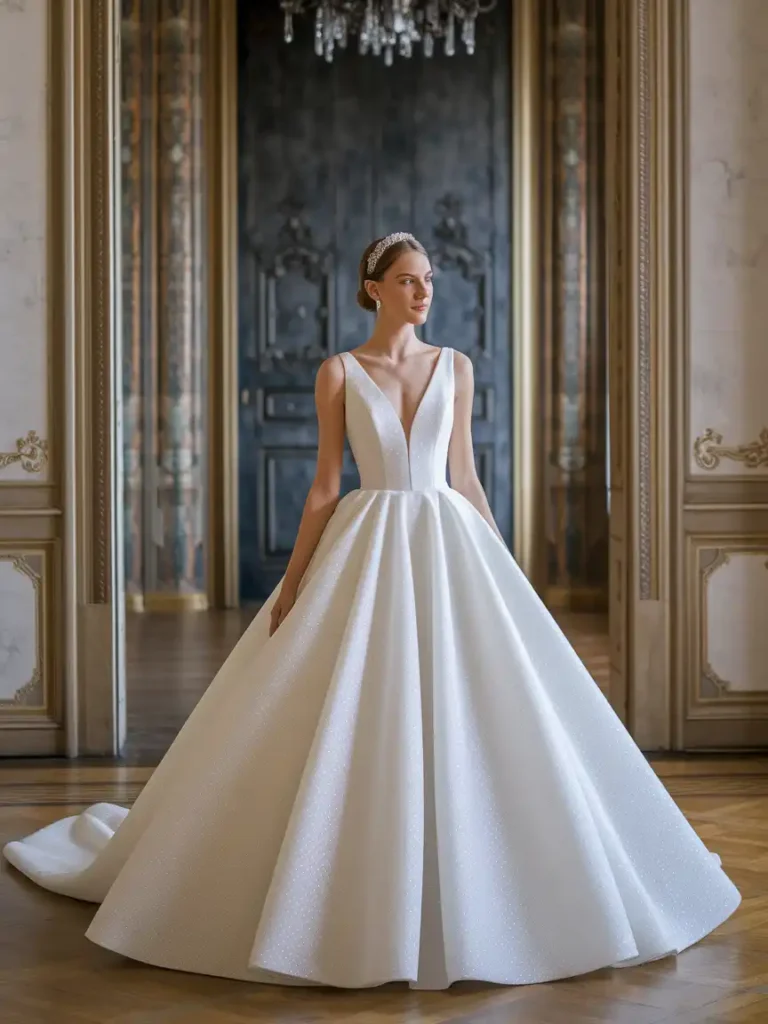
You do not need to spend five figures to get a full princess silhouette. Brands like Rebecca Ingram, Stella York, and Essense of Australia consistently produce ball gowns in the $1,000 to $2,000 range that photograph beautifully. The construction is not identical to a Vera Wang, but the silhouette, which is what reads in photos, absolutely holds up.
Where budget gowns tend to cut corners is in the lining, the boning quality, and the number of tulle layers. You can address the first two in alterations: a tailor can add boning or replace a scratchy lining for a few hundred dollars. The tulle layers are harder to change, so if you try on a gown and the skirt feels flat, ask the boutique if underskirts or petticoats are available to add volume.
18. The Role of a Petticoat or Crinoline in Getting Real Volume
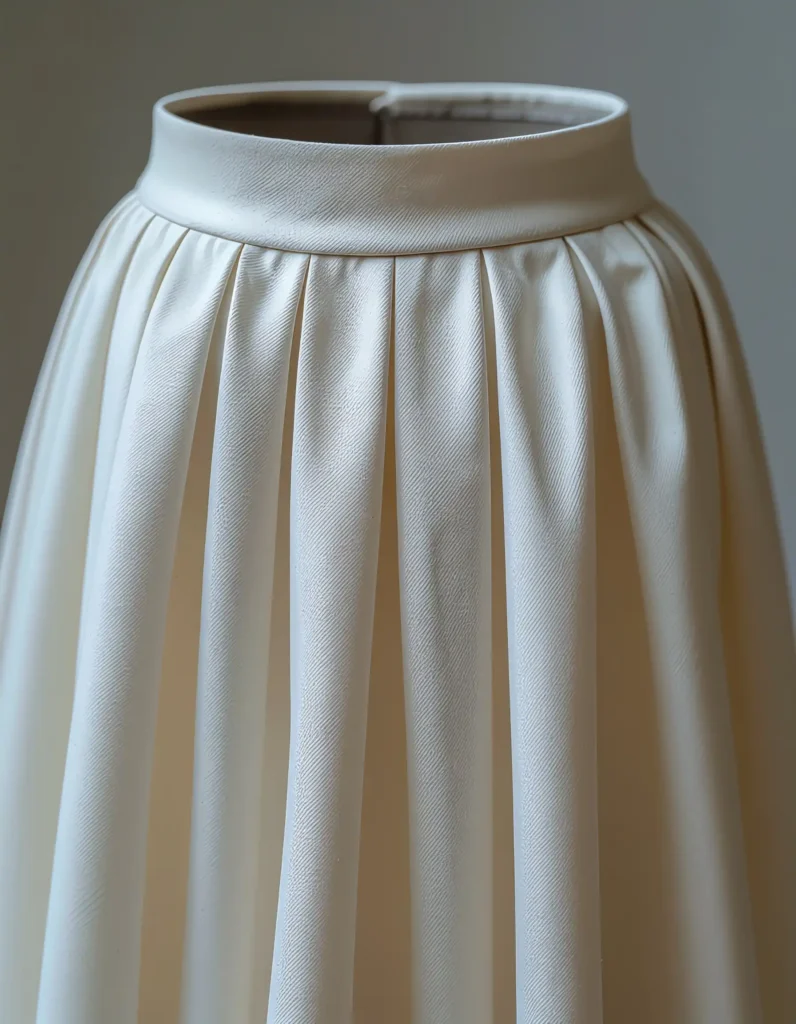
If the gown you love does not have quite enough volume on its own, a petticoat solves the problem without requiring you to find a different dress. A horsehair or nylon crinoline worn underneath can add significant shape, and modern options are lighter than the ones associated with 1950s bridal wear. You can also choose the level of volume: soft and slightly full, or structured and dramatic.
The fit of the petticoat matters as much as the gown itself. It should attach at the natural waist without sliding or bunching during the day. If it moves, it changes the shape of the skirt in photos. Try the full combination at your final fitting, not just in the store on first try. Make sure you can still walk naturally and that the skirt shape stays consistent when you sit down.
19. Accessories That Complement the Fairytale Silhouette
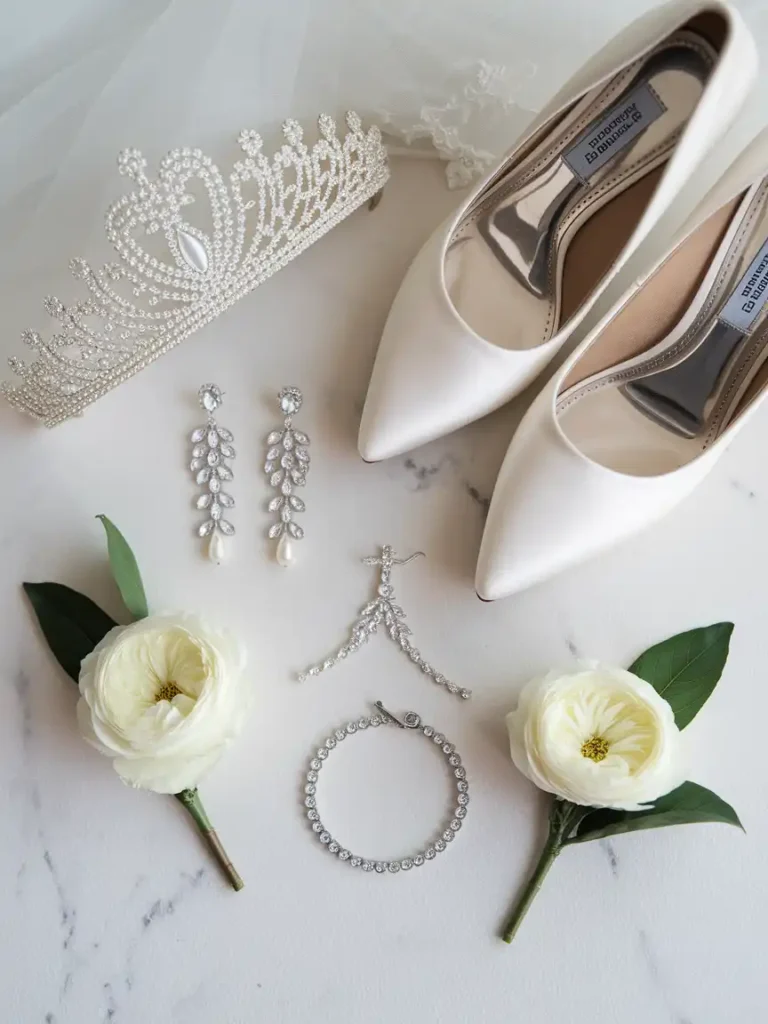
With a full ball gown, the dress is already doing the most visual work. Your accessories should support the look, not add more noise. A tiara is the obvious choice for a princess-inspired look and it works best when it is proportionate to your hairstyle. A large tiara on a simple updo reads well. A large tiara on an already elaborate hairstyle creates too much competition at the top of the frame.
- Earrings: Drop or chandelier styles work well because the neckline and skirt are both formal. Studs can disappear in photos.
- Necklace: Skip it if you have a decorated neckline. If your neckline is plain, a single strand of pearls or a delicate pendant is enough.
- Shoes: Low block heels or kitten heels are more practical under a heavy gown than stilettos, which can catch on tulle layers.
- Gloves: Elbow-length satin gloves are having a real resurgence and look considered rather than costume when kept simple.
20. Real Brides in Cinderella Wedding Dresses: What Actually Worked
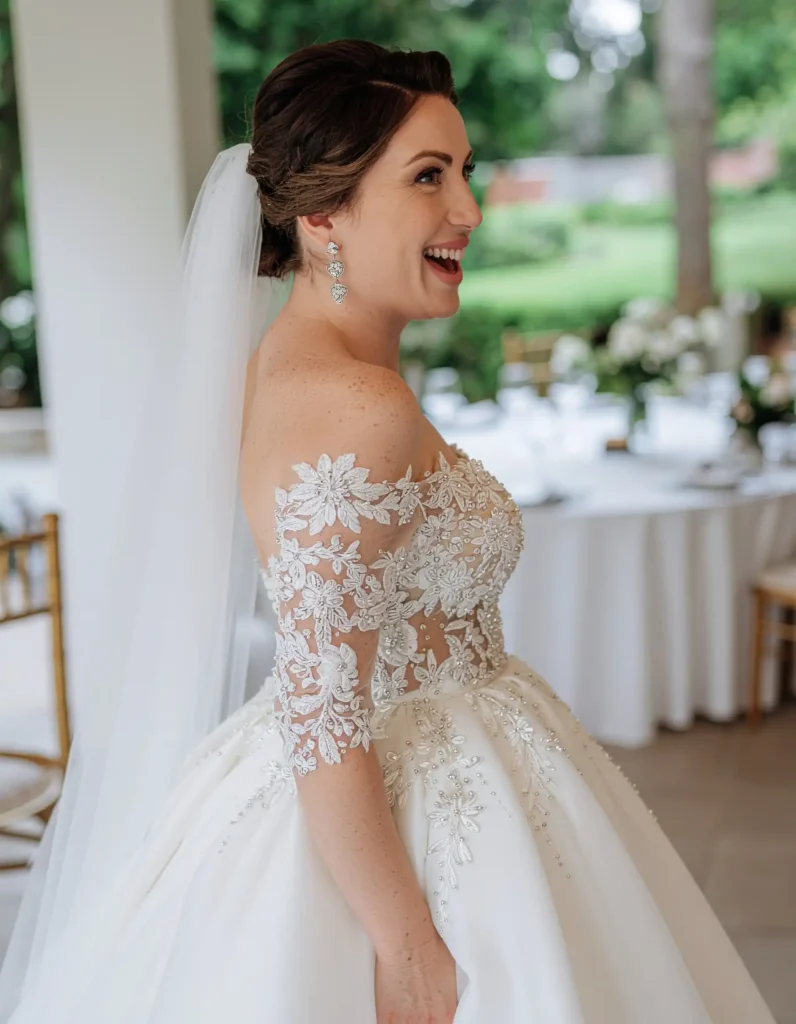
Real bridal photos tell you things that styled editorial shoots do not. In editorial shots, the gown is steamed, pinned, and photographed in controlled lighting by a professional crew. At your actual wedding, the dress needs to hold up through dancing, eating, outdoor walks, and long hugs. Real bride photos show you how the skirt sits after hours of wear, how the bodice holds without constant adjusting, and how the gown moves in candid moments.
When you research gowns online, look specifically for real wedding reviews and photos on sites like The Knot, Style Me Pretty, and bridal subreddits. Read reviews that mention specific alterations the bride needed, how the gown held up through the day, and whether the size ran small or large. This gives you practical information that no product listing or boutique consultant will volunteer upfront. The more specific the review, the more useful it is.
Conclusion:
The right dress is out there. Whether you want full cathedral drama or a simpler ball gown that still reads as bridal, these ideas give you a real starting point. Book appointments at two or three boutiques, try on more than you think you need to, and trust what actually fits your body over what looks good on someone else. Your Cinderella wedding dress should feel like yours, not a version of someone else’s vision.