22 Aesthetic Vampire PFP Options Worth Saving
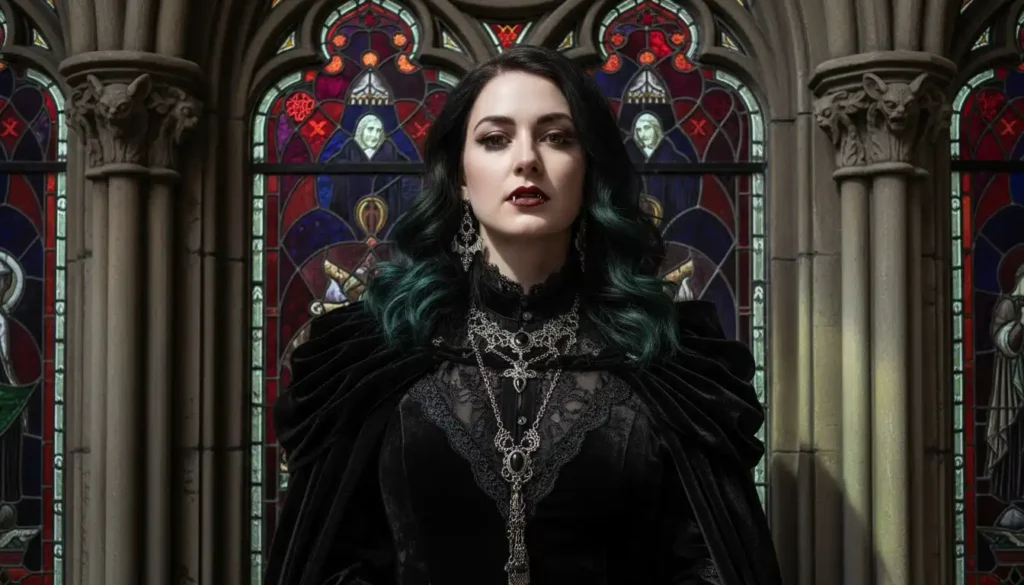
Your profile picture says something before you do. If you want it to say something dark, deliberate, and visually sharp, a vampire PFP is one of the strongest aesthetic choices you can make. This list covers 22 options across styles: illustrated, photographic, soft goth, and full gothic drama. Whether you want something subtle or something that stops the scroll entirely, there’s a specific option here for how you want to show up online. Start scrolling and save the ones that fit.
1. The Classic Vampire PFP That Never Goes Out of Style
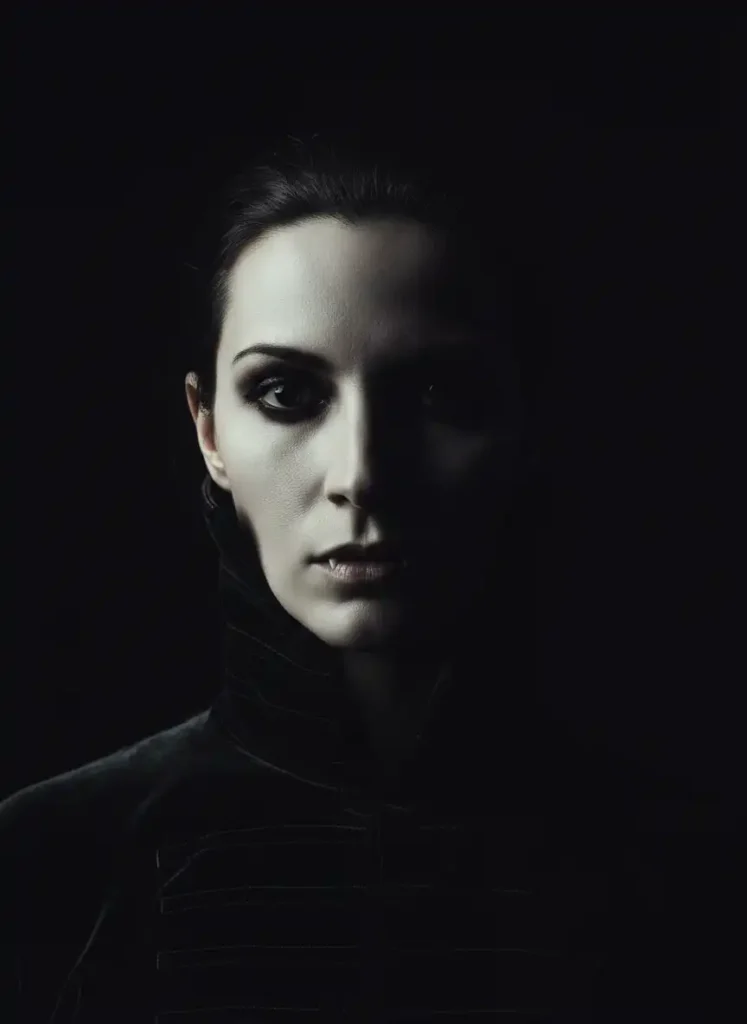
Sharp contrast. No color noise. Just a face that commands attention. This is the kind of vampire profile picture that works across every platform, whether you’re on Pinterest, Tumblr, or Discord. The composition is simple but the visual weight is heavy, and that’s what makes it memorable.
If you’ve been scrolling through pfp options feeling like everything looks either too costume-y or too basic, this is where to start. Go for high-contrast black and white photography with a strong jawline angle or a side-lit face. It photographs well at small sizes, which matters when your picture renders as a 40px circle.
2. Cool Dark PFP for the One Who Keeps It Minimal
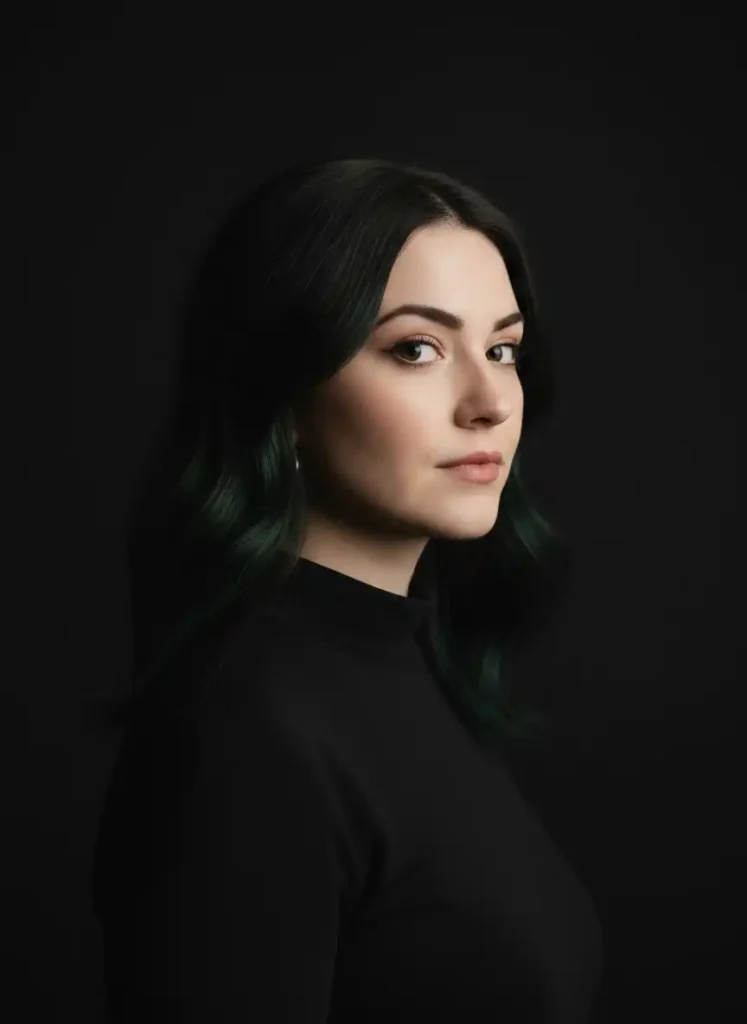
Not every dark aesthetic needs fangs and dramatic capes. A cool dark pfp can be quiet and still carry that same unsettling energy. Think less theatrical, more cold. The kind of image that makes people stop scrolling but doesn’t explain itself.
If your current profile picture feels too loud or too polished, strip it back. Use flat lighting, wear black, and lose the background entirely. The restraint is the point. A neutral or slightly downward gaze reads more intense than a direct stare, which often just looks like a standard photo. One adjustment makes a significant difference.
3. Emo Profile Picture with a Vampire Edge
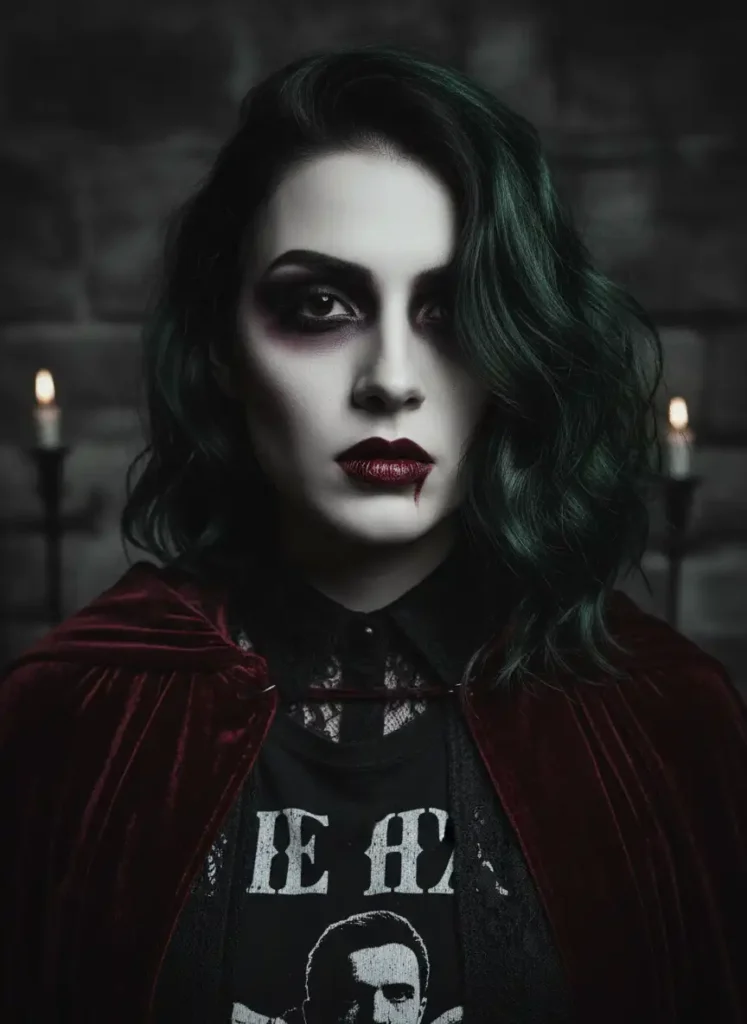
The emo profile picture and vampire aesthetic overlap more than people give credit for. Both lean on dark eyes, pale skin, and a certain detachment from the camera. What separates a strong pfp from a weak one here is intentionality in the editing. Oversaturation kills the mood. So does a cluttered background.
Desaturate your image by about 30 to 40 percent and pull down the warmth. If you’re editing in Lightroom or VSCO, drop the highlights and lift the shadows slightly so the image feels flat in a cinematic way, not washed out. Keep the only real contrast in your eyes and lips.
4. Dark PFP Aesthetic Inspired by Victorian Gothic
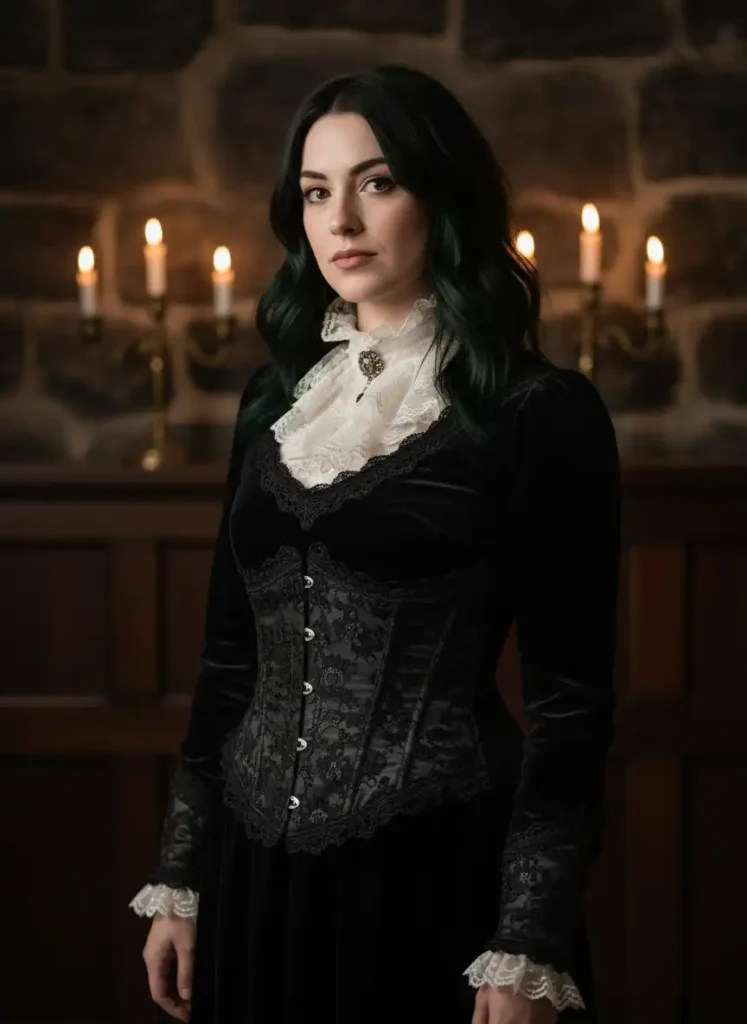
Victorian gothic is one of the most cohesive visual references for a dark pfp aesthetic. The silhouettes read immediately, the palette is already correct (black, burgundy, ivory), and the clothing carries historical weight that makes even a basic phone photo look considered.
You don’t need a full costume shoot to achieve this. A high-collar black jacket or white ruffled blouse photographed against a textured dark wall already reads Victorian if your lighting is warm and slightly dim. Use a ring light behind the camera pointed away from you, or shoot near a single lamp rather than in daylight.
5. Black and White Aesthetic That Hits Differently at Night
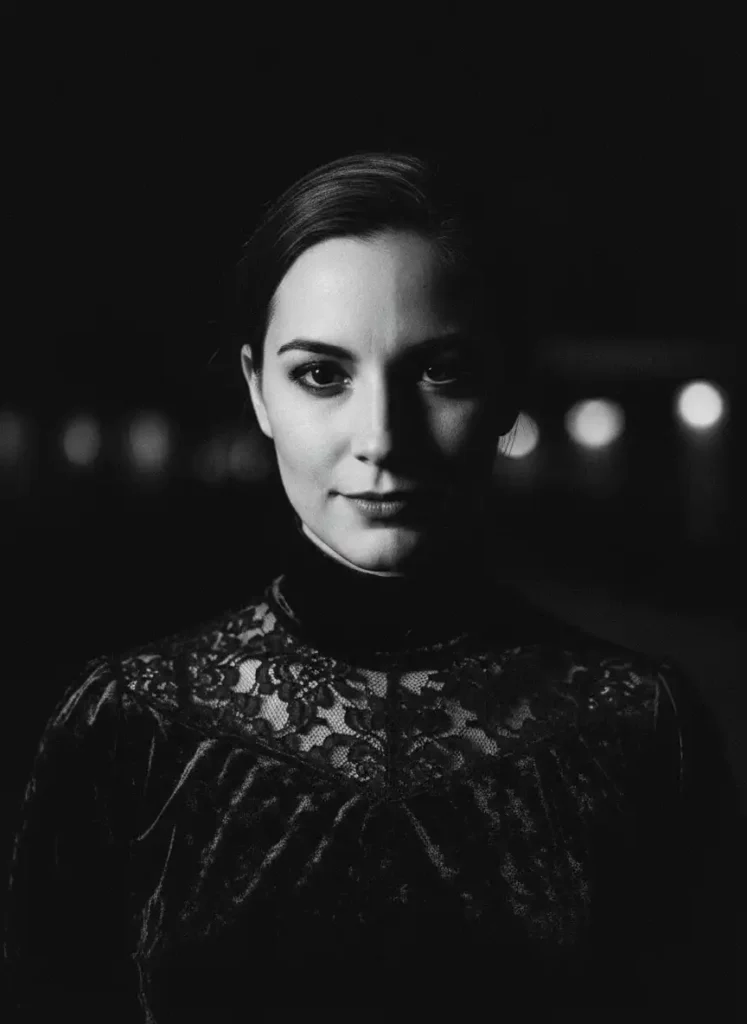
A black and white aesthetic photograph strips away everything that isn’t structure. No color to distract, no warm skin tones softening the edges. What remains is shape, shadow, and expression. That’s why it works so well as a vampire pfp.
When you shoot in black and white (or convert in post), pay attention to texture. Velvet, lace, and leather all behave differently in greyscale and they add dimension that solid colors can’t once the color is removed. Shoot in RAW if you can and convert manually so you control exactly how dark the darks go. Most phone edits flatten the shadows too much.
6. Dracula Vibe Done Without Looking Like a Halloween Costume
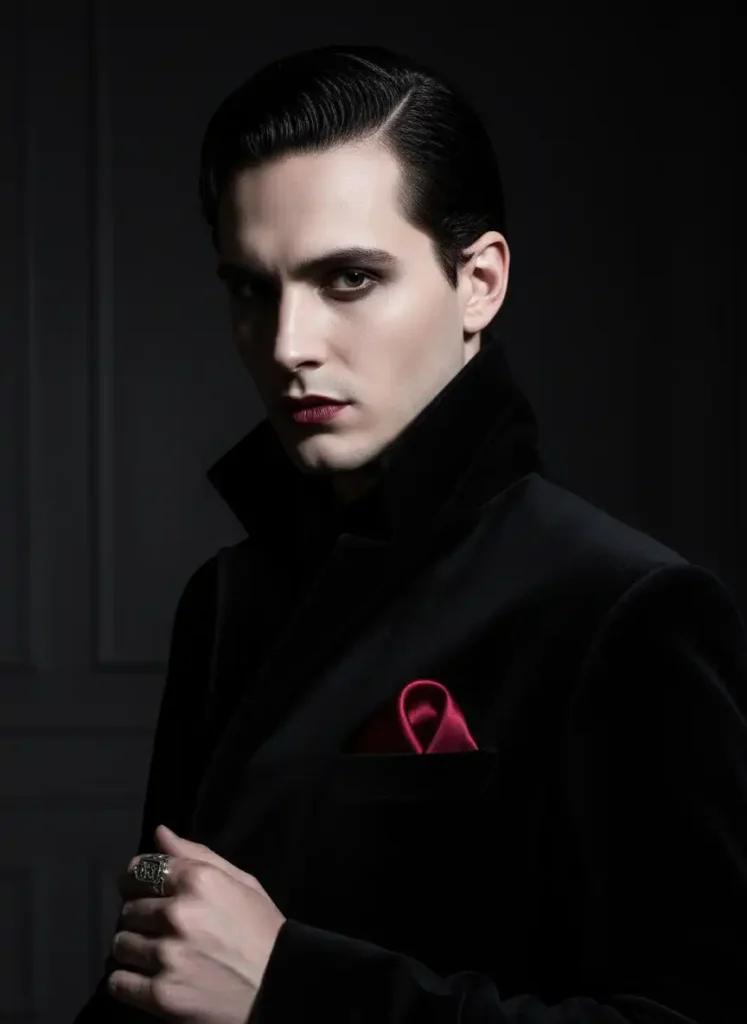
The Dracula vibe is specific. It’s aristocratic, deliberate, and slightly menacing in a composed way. The mistake most people make is going too literal. Plastic fangs and Halloween capes read as a costume, not an aesthetic. The goal is to suggest Dracula without labeling it.
Stick to tailored silhouettes. A structured jacket with wide lapels, slicked or dramatically textured hair, and one controlled accent in deep red or burgundy does the work without overselling it. The expression matters a lot here too. Slightly raised chin, direct gaze, no smile. That’s the composition.
7. Vampire Avatar for Anime and Digital Art Fans
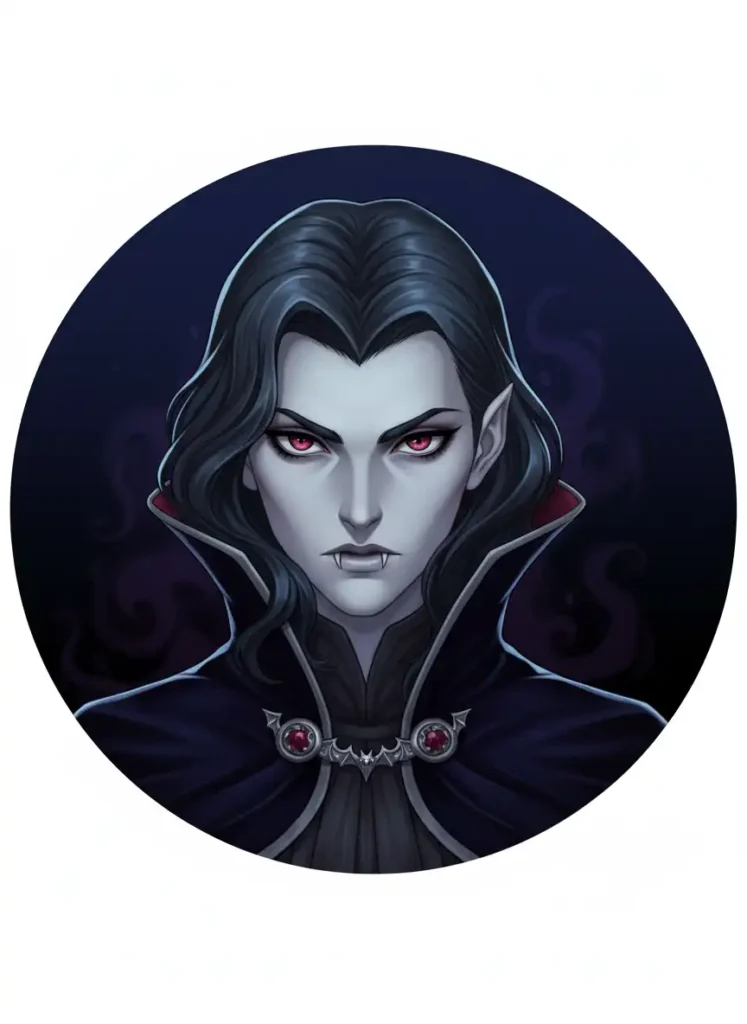
If you want a vampire avatar that clearly belongs to the digital space, illustrated options are worth considering. They’re platform-neutral, they resize without losing quality, and they don’t require you to put your own face online. For people who want a strong aesthetic identity without a personal photo, this is the practical choice.
When choosing or commissioning an anime-style vampire avatar, look for:
- Sharp contrast between skin tone and hair color
- Eyes that are vivid but not cartoonishly oversized
- Minimal background so the face reads at small sizes
- An expression that’s composed, not exaggerated
Avoid designs that look like they’re from a mid-2000s mobile game. Clean linework and limited color palette (three to four max) will always look more current.
8. Pfp Vampire Look with Blood-Red Lip as the Only Color
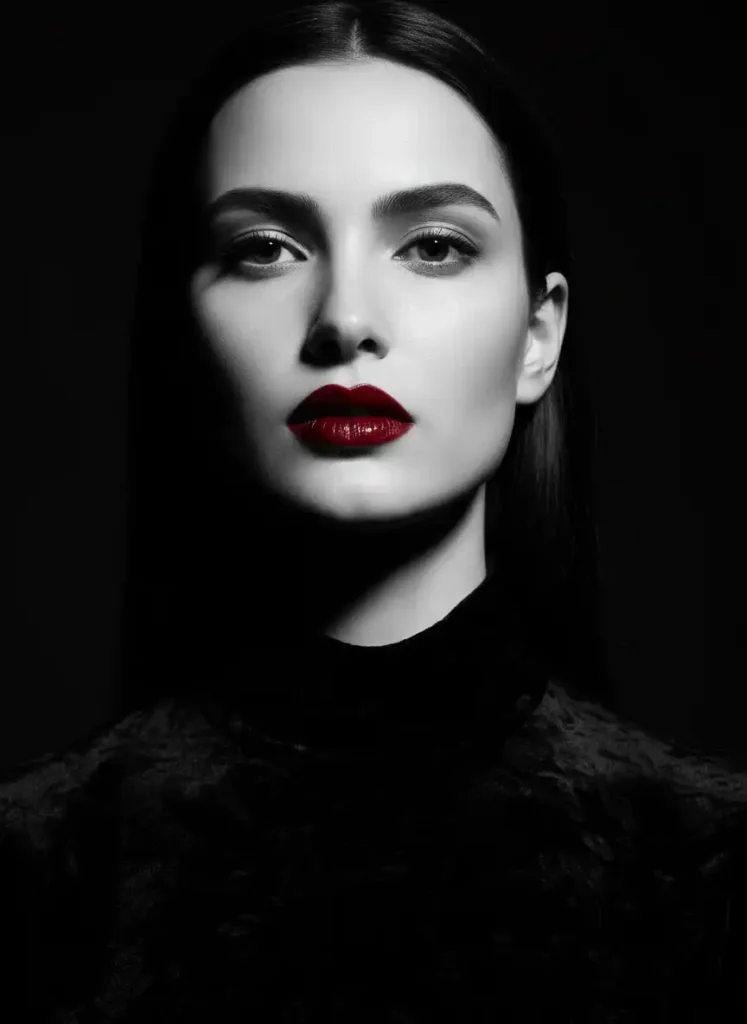
Color-blocking your pfp to a single accent is a strong compositional choice. When everything else is black, white, and grey, a pfp vampire look built around one blood-red element pulls focus in a way that’s hard to ignore. It’s also one of the cleaner ways to make a dark profile picture stand out in a feed of muted thumbnails.
To get this right, shoot in color and then desaturate selectively. In Snapseed, use the selective tool to desaturate every tone except reds. In Photoshop, use Hue/Saturation with a layer mask to keep the lip color intact. The result reads as deliberate and editorial rather than a filter applied by accident.
9. Vamp Queen Energy: Profile Pictures That Lead
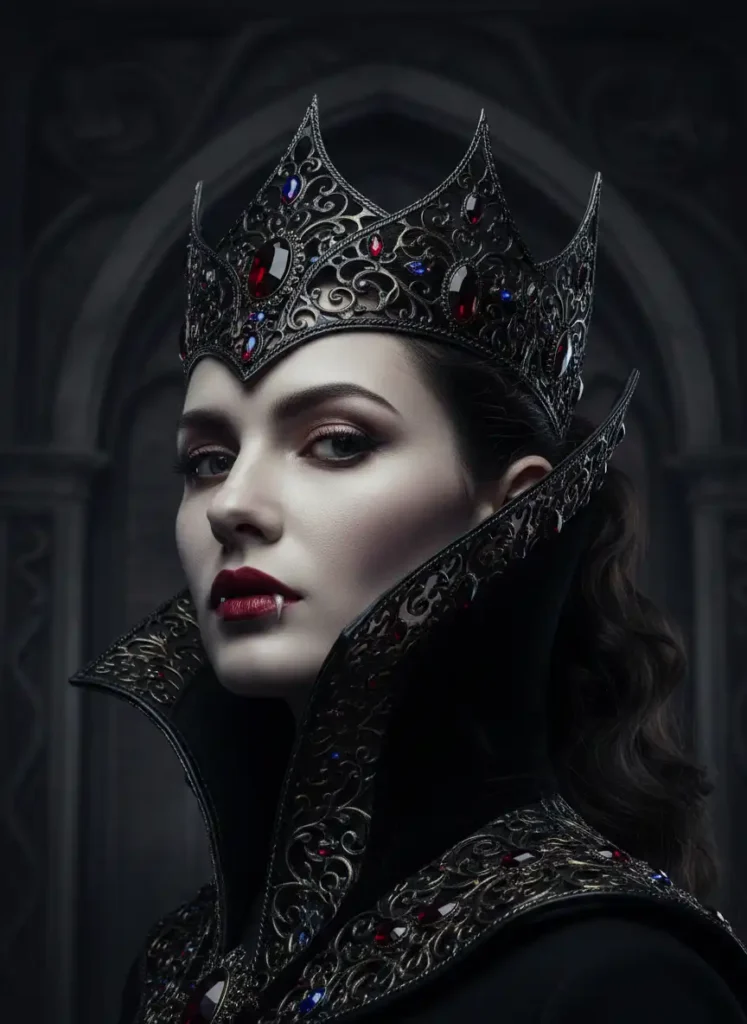
Vamp queen isn’t just a vibe. It’s a specific visual posture. The camera angle is low looking up. The expression is controlled. The styling signals power through structure and height, not volume or excess.
If you want your profile picture to project that kind of authority, angle your phone camera slightly below your chin instead of eye level. Wear something with structure at the neckline: a high collar, stacked jewelry, or an elevated shoulder. Keep the background dark and the lighting sharp. That composition reads differently than a standard selfie, and it will.
10. Dark Art Profile Picture Inspired by Gothic Illustration
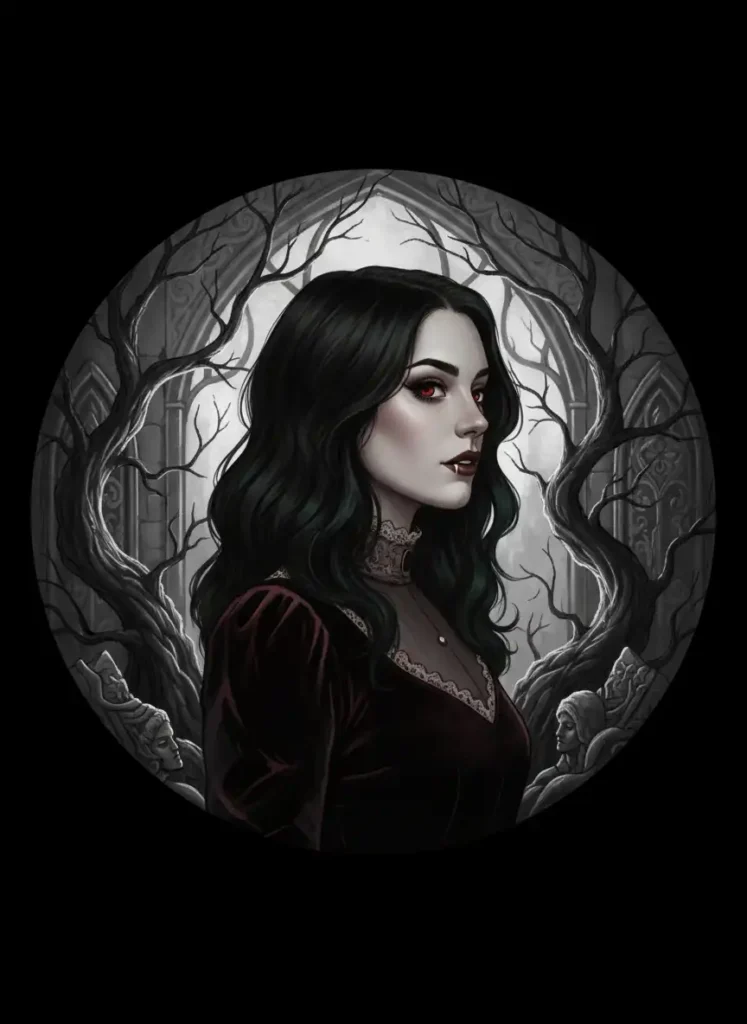
Dark art as a pfp reference works because it gives photography an intentional, crafted quality. You’re not just posting a photo. You’re posting something that looks like it belongs in a gallery, or at least on a well-curated Tumblr page from 2012 that everyone still talks about.
To create this effect with a regular photo, edit toward a painted look by reducing midtones, sharpening edges, and slightly increasing grain. Apps like Prisma or Photoshop’s oil paint filter can push this further. Then shoot against or in front of something architectural: iron gates, stone walls, arched doorways. The context does half the work before you’ve touched an edit.
11. Vampire 80s Aesthetic: Retro Gothic Profile Photos
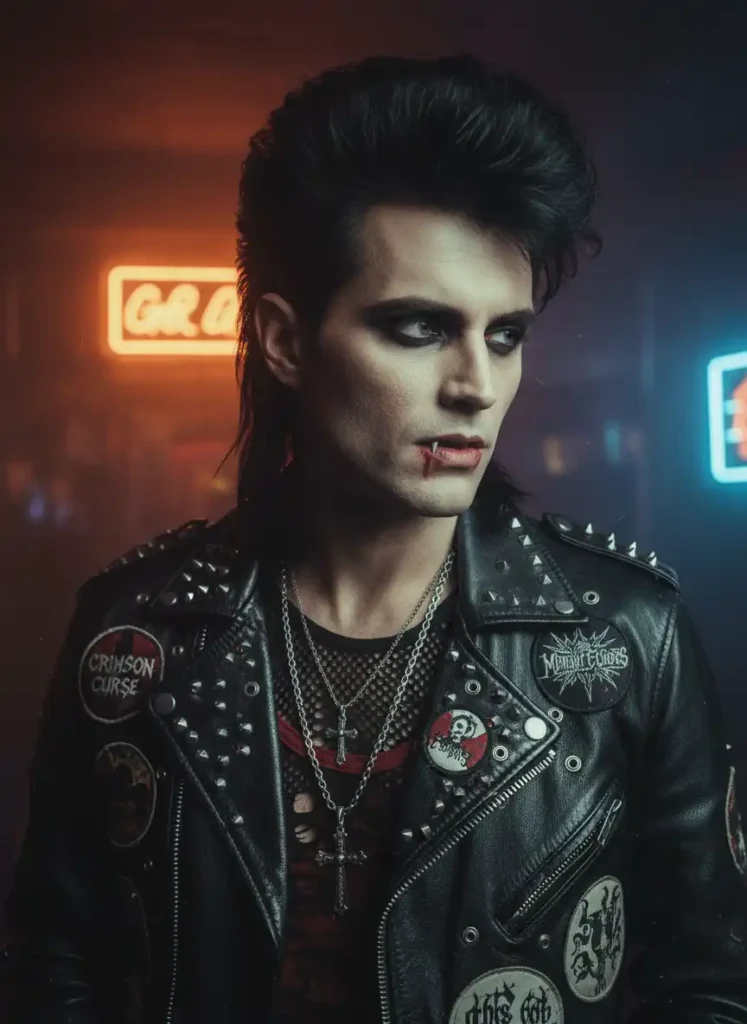
The Vampire 80s look pulls from films like The Lost Boys and Fright Night. It’s not polished gothic. It’s street-level, slightly grungy, and worn-in. The clothes look lived-in. The makeup looks like it’s been on since midnight. The photo should feel like a still from a VHS tape.
To edit for this look:
- Lift the blacks slightly (don’t crush them to pure black)
- Add a slight warm cast to highlights and cool cast to shadows
- Use a film grain preset, not digital noise
- Desaturate skin tones but let the leather and hair hold more contrast
Avoid overly sharp, clean edits. The slight imperfection is what makes it read as 80s rather than modern gothic.
12. Goth Profile Picture with Strong Architectural Context
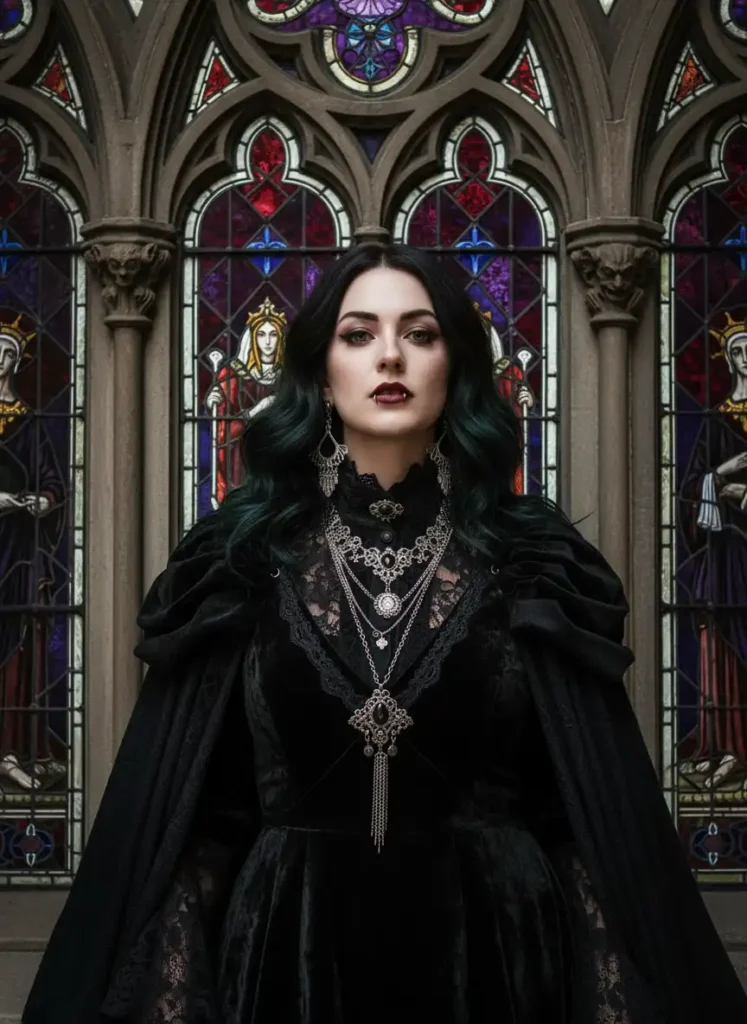
Most profile pictures treat the background as an afterthought. A goth aesthetic is one of the few where the background actively builds the image. Gothic architecture in the frame does more visual work per pixel than almost any other setting.
You don’t need to travel to find this. Most cities have:
- Old church exteriors with stone archways
- Wrought-iron cemetery gates
- University buildings with gothic revival architecture
- Stone bridge underpasses with carved details
Shoot in the early morning or on an overcast day. Flat natural light against dark stone looks intentional rather than accidental. Position yourself so the architectural lines draw the eye toward your face.
13. Black and White Vampire Photography with Film Grain
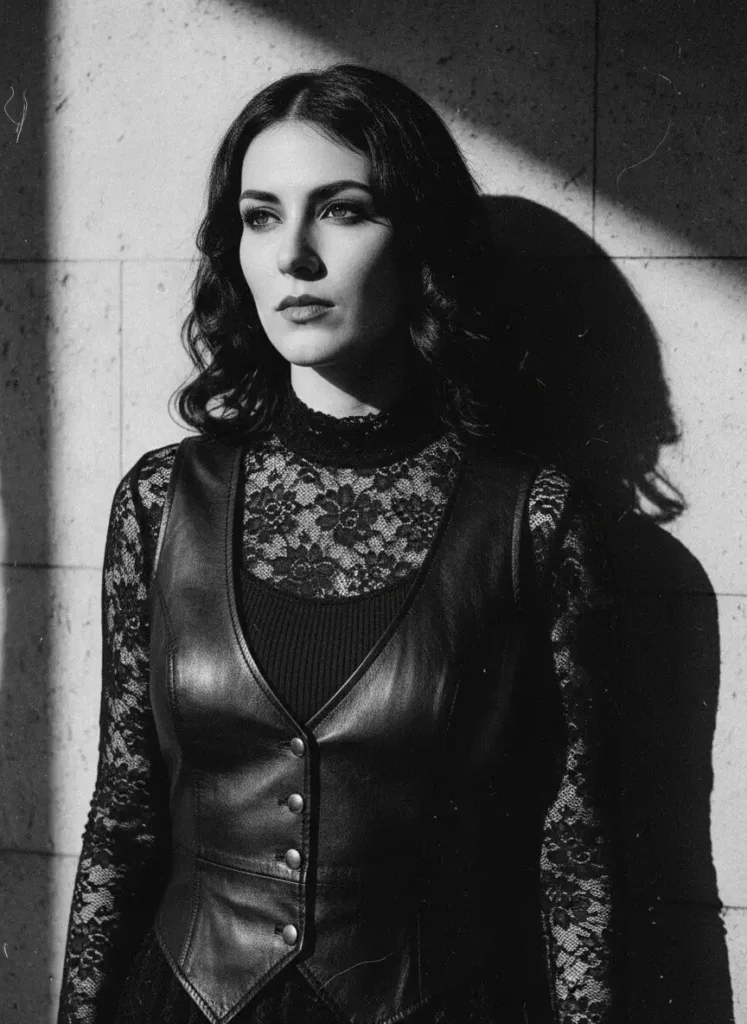
Film grain is one of the fastest ways to make a digital photo look considered. It adds visual texture, softens over-sharp edges, and gives the image the feel of something intentional rather than captured on a phone. For black and white vampire photography specifically, grain reinforces the darkness of the image.
In Lightroom, pull the grain slider to between 30 and 50 with a roughness of 60 or higher. In VSCO, the film presets (particularly B1 through B6) add grain with authentic distribution. The goal is grain that’s visible at full size but still reads cleanly as a circle thumbnail. Test at small size before you finalize.
14. Tattoo Portfolio Shot Styled as a Dark Aesthetic PFP
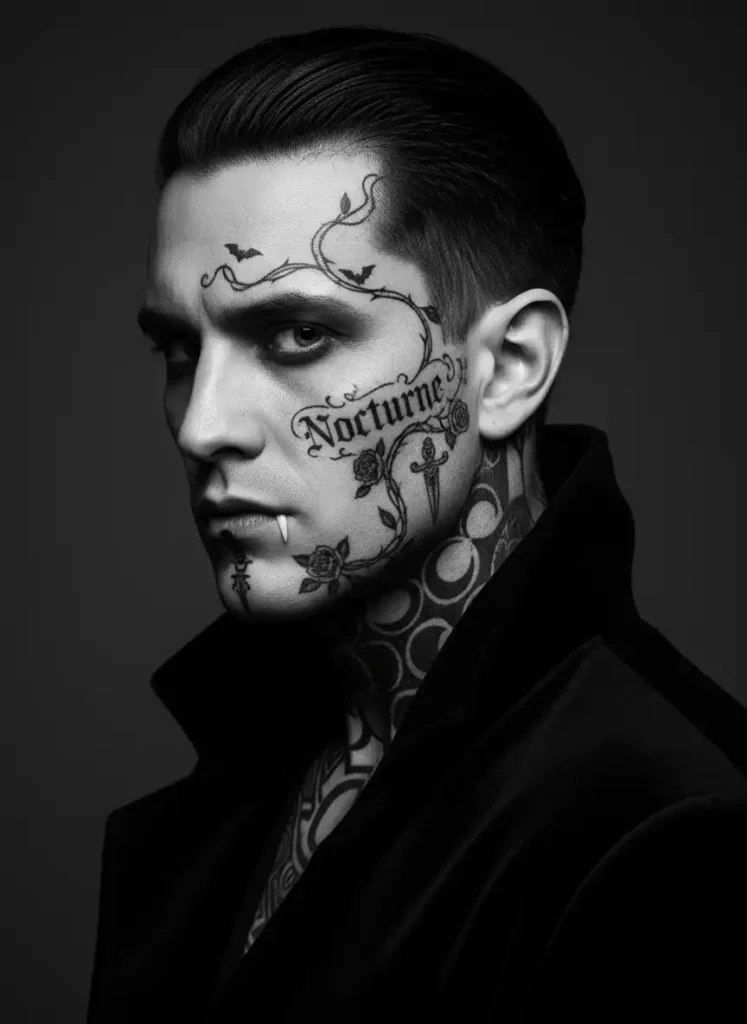
If you have dark-themed tattoos, your tattoo portfolio shot and your vampire pfp can be the same image. You just need to shoot for both purposes at once. Most tattoo photos are lit flat and straight-on for documentation. The shift to a pfp-ready shot comes from changing the lighting angle and framing the face within the image.
Position the shot so your face, the tattoo, and the negative space form a clear triangle of visual interest. One well-placed gothic tattoo in the foreground with your face slightly behind it reads as layered and intentional. Avoid full-body shots because they lose detail at profile picture size.
15. Crimson and Black: When Color Enters the Dark Aesthetic
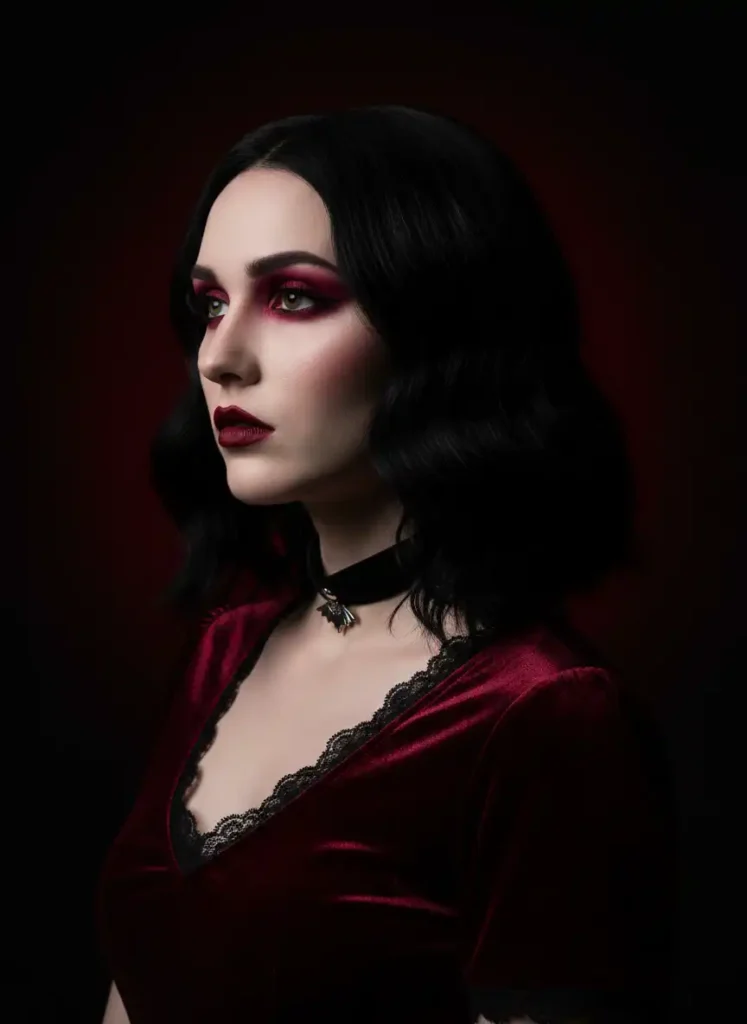
Crimson is the one color that belongs in vampire aesthetics without breaking the darkness of the image. When everything else is black, a precise red element functions as visual punctuation. It draws the eye, suggests blood without stating it, and keeps the image from reading as just another dark pfp.
The key is restraint. One red element. Not red lips and red eyeshadow and a red background. Pick one: a deep wine lip, a dark red light cast against a black background, or a crimson piece of fabric. Edit so the red pops without blowing out into orange. Pull saturation on every other color and leave the red channel alone.
16. Soft Goth Vampire PFP for a Less Intense Look
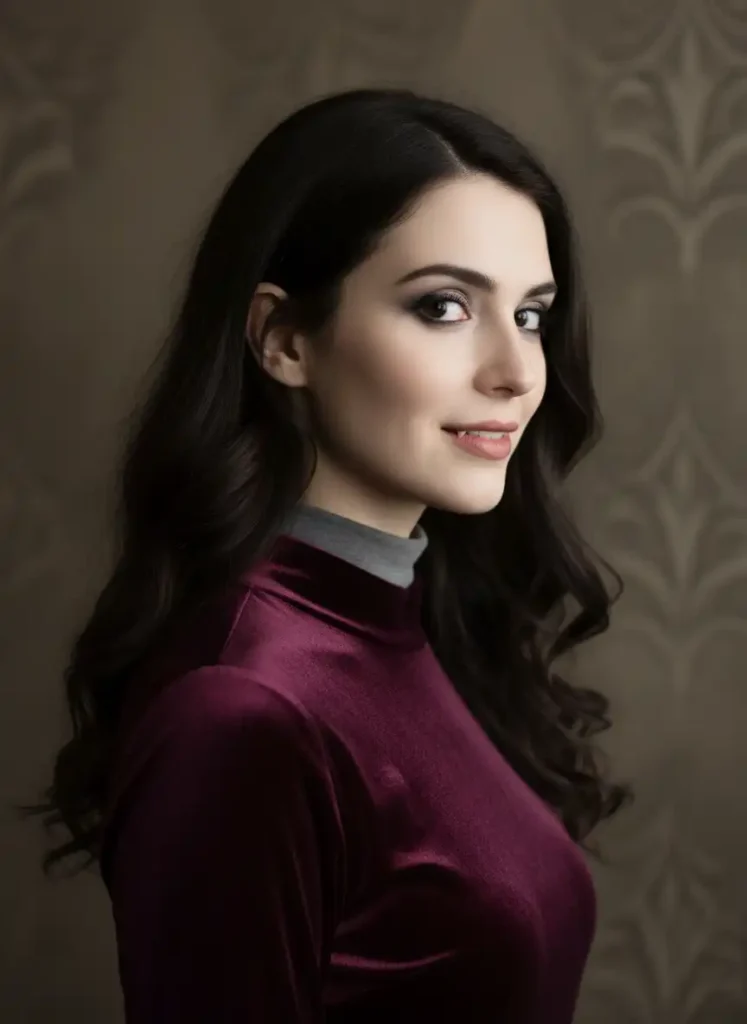
Not everyone wants an intense profile picture. If you’re building a personal brand or using your pfp across professional platforms, a soft goth vampire look gives you the aesthetic without the confrontational visual weight of a dramatic, high-contrast shot.
This works particularly well on platforms like Instagram and Pinterest where a slightly warmer, more approachable dark tone performs better in feeds. The soft goth pfp still reads as intentional and aesthetic-forward, it just doesn’t intimidate. Use cool-toned diffused lighting rather than single-point dramatic shadow, and go for deep plum or charcoal instead of pure black.
17. Night Portrait as a Natural Vampire Avatar
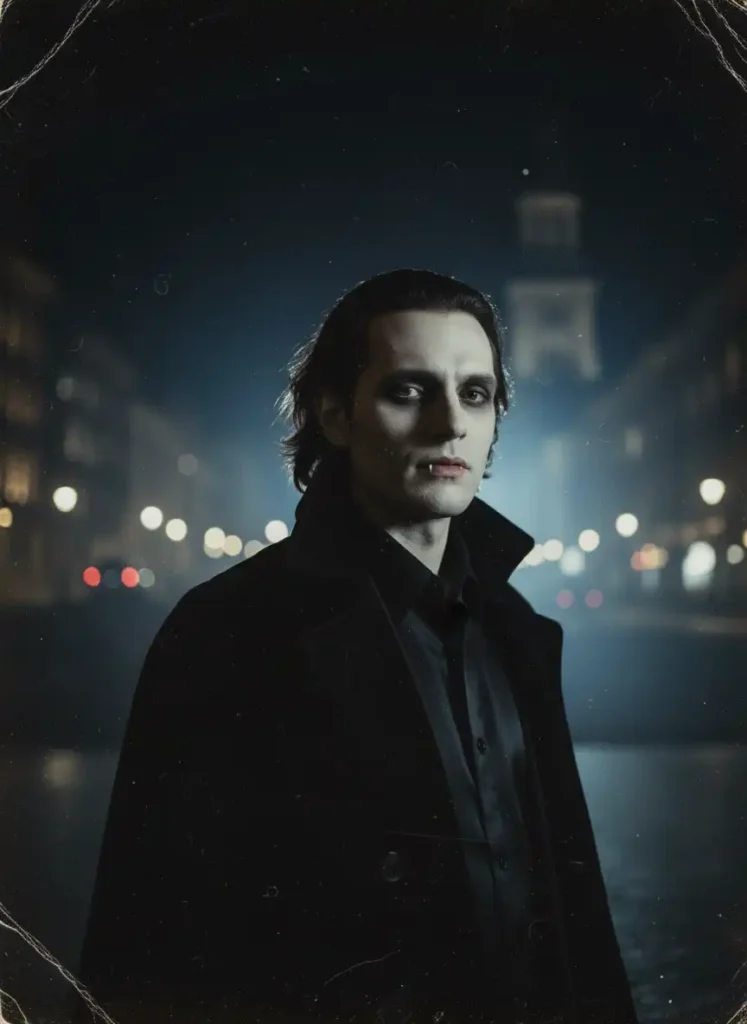
Night portraiture is one of the most accessible ways to create a natural-looking vampire avatar without heavy editing. The environment does the mood work for you. Streetlight from below creates shadow under the eyes. Neon light at a distance adds color cast. Fog or fine rain in the air softens and diffuses edges.
Use your phone’s Night Mode but lower the exposure slightly after shooting so the background stays dark rather than lifting into grey. Stand under a single light source rather than between two. The uneven light against a completely dark background is the exact composition that reads as vampire without any post-processing reference to it.
18. The Masked or Partially Obscured Dark Profile Picture
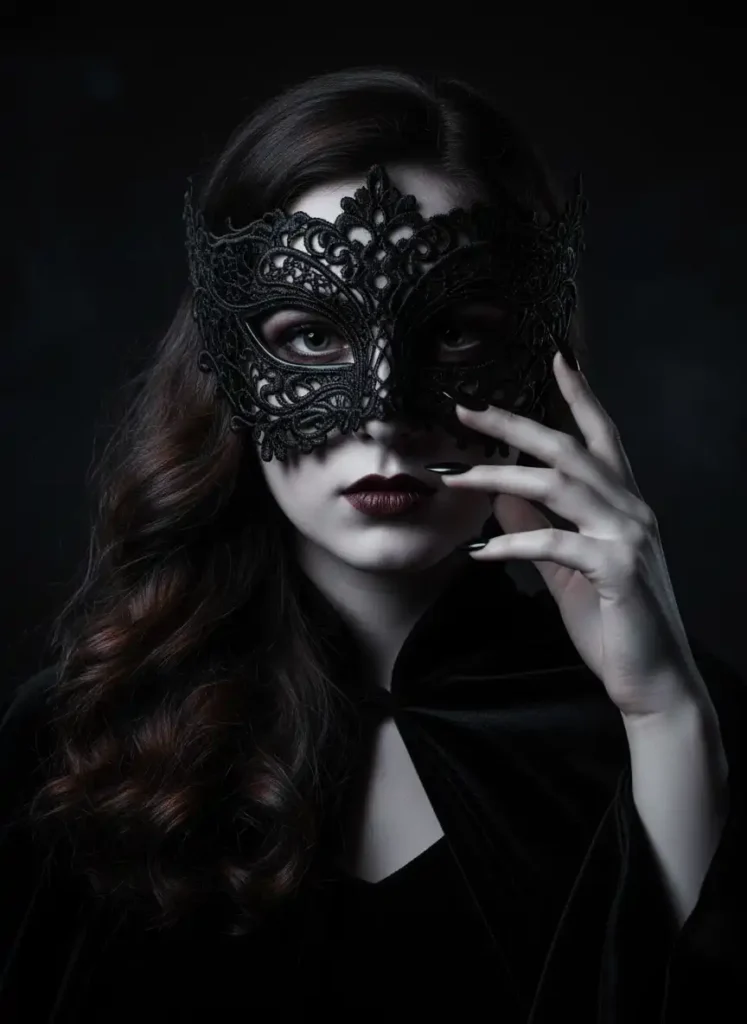
There’s something specifically interesting about a profile picture that withholds. Partial obscuring is a stronger compositional choice than full-face photos in many cases because it creates a question. The viewer fills in what they can’t see, which makes the image stick in memory longer.
For a vampire pfp this reads particularly well because mystery is native to the aesthetic. Use a hood, a mask, or simply position your hair across one side of your face. The visible eye needs to be the sharpest, most lit element in the frame. Everything else can fall into shadow. Shoot with a single light source directly on the exposed side of your face.
19. Porcelain Skin and Dark Eyes: The Classic Vampire Color Story
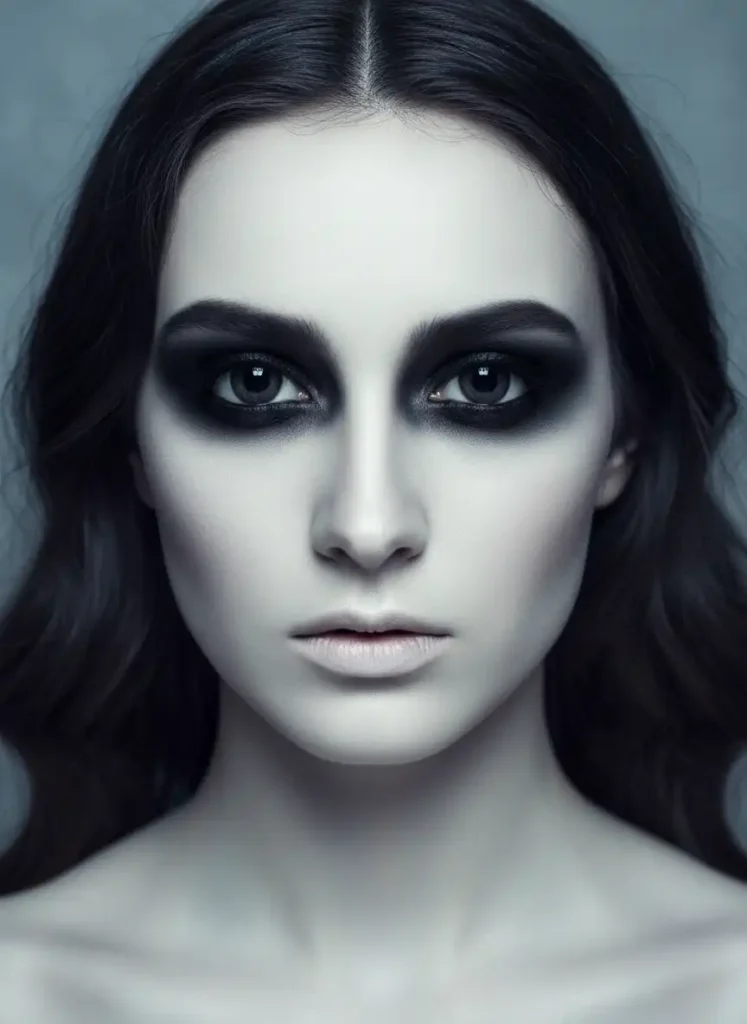
Pale skin against dark eyes is the foundational visual language of the vampire aesthetic across almost every version of it, from Nosferatu to modern film. It’s a color story with immediate cultural recognition, which is exactly what you want in a profile picture.
If your natural skin tone isn’t pale, you can still use the same compositional logic: create contrast between the eye area and the rest of the face through heavy eye makeup and cool-toned lighting. Cool white LED lighting will desaturate warm skin tones. Pull warmth out in post-editing and let the eye makeup carry the darkness of the image.
20. Gothic Fantasy Illustration as a Vampire PFP Option
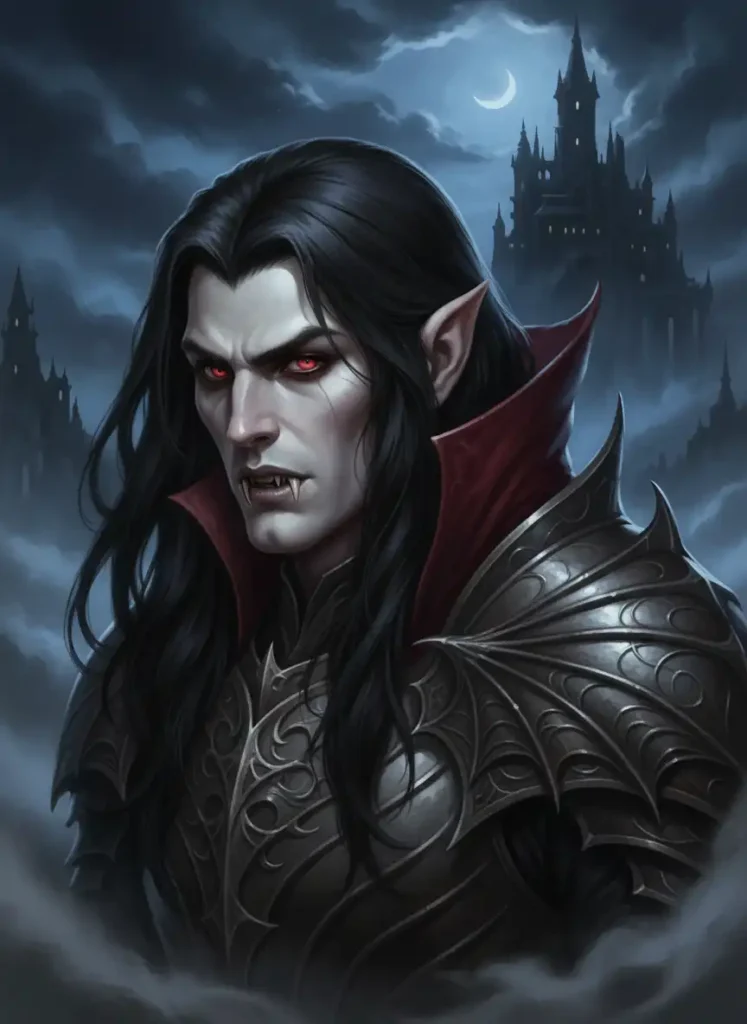
Illustrated pfps have a strong presence in online spaces where people use alternative identities or personas. A gothic fantasy vampire illustration communicates aesthetic commitment without putting your own face in the photo. For creators who want to separate their online persona from their physical identity, this is a practical and visually strong choice.
When choosing gothic fantasy art for a pfp, look for:
- Semi-realistic proportions (not chibi or super-deformed)
- Strong light source that creates shadow and dimension
- A limited color palette of three to five tones
- An expression that’s composed and intentional, not action-pose
Commission from artists on ArtStation or DeviantArt who specialize in dark fantasy portraiture. Always secure rights for profile use before posting.
21. Layered Black Outfit as the Visual Base for Any Dark PFP
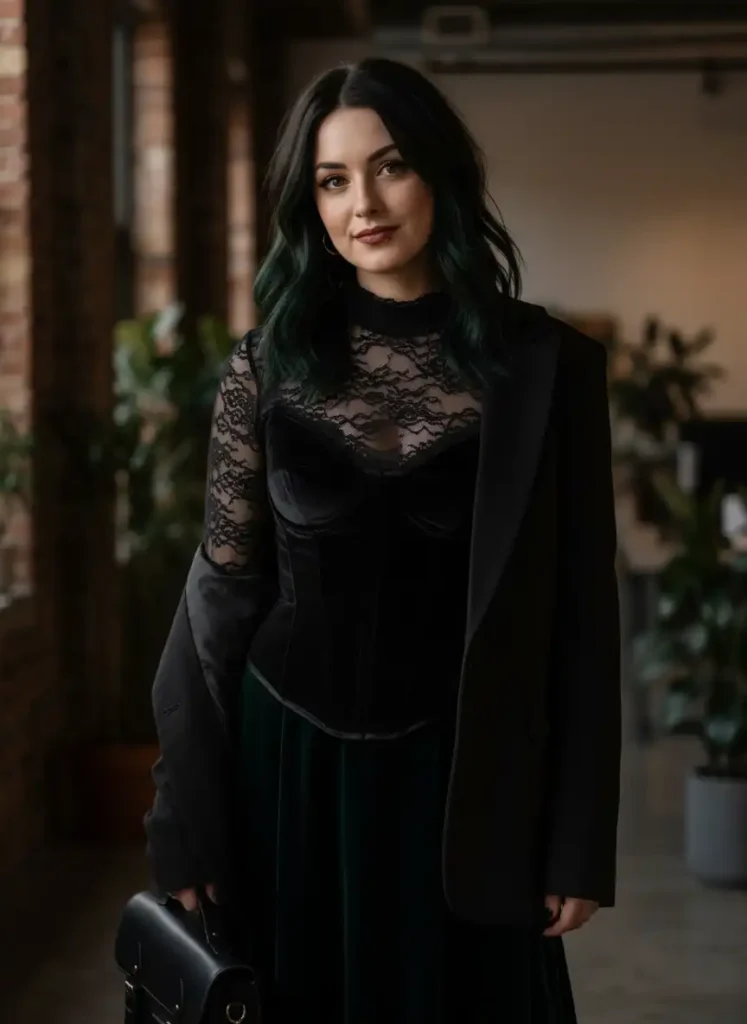
One of the most common problems with dark profile pictures is that they read as flat. Single-layer black clothing against a black background just becomes a void. Layering multiple black textures solves this because each fabric reflects light differently and creates visible distinction between the layers.
Lace over mesh over matte fabric is the classic combination. Velvet against cotton shows a difference. Even black denim layered under a structured coat reads as dimensional because of the sheen difference. When you shoot layered black, use a light source from the side, not straight on. Side light rakes across the surface and makes every texture visible.
22. The Minimalist Vampire PFP: One Element, Full Impact
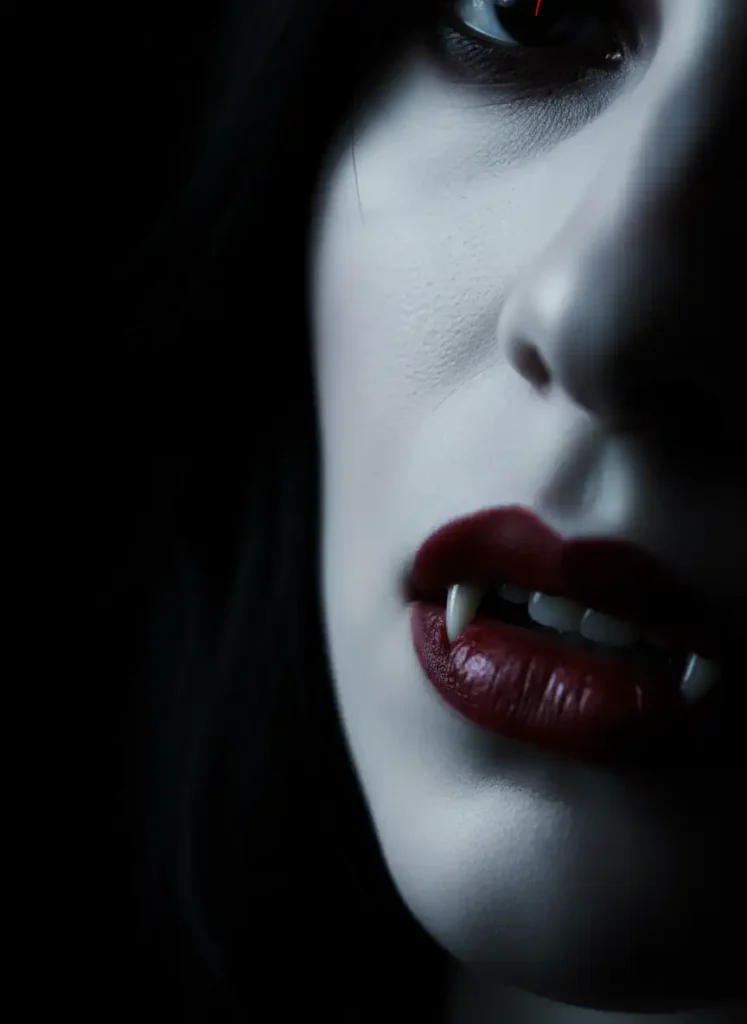
The most memorable profile pictures are often the ones that show less. A full-face shot at 40 pixels competes with every other full-face shot. An extreme close-up of one specific detail is distinctive because it’s unexpected at pfp size.
Pick one element that encapsulates the aesthetic you’re after and build the entire shot around it. A fang, an eye with a dark limbal ring contact, a neck with gothic jewelry. Get physically close or use portrait mode to isolate it sharply. Black out everything else. The cropped, abstract framing will stop the scroll in a way that a standard portrait won’t, and it will still read clearly at thumbnail size.
Conclusion:
A good vampire PFP does not need to scream. The right image, shot or chosen with intention, carries weight on its own. Pick the style that matches how you actually want to be seen, not just what looks dark for the sake of it. Save two or three options from this list and test them. You’ll know the right one when it feels like it belongs to you.