Beach Wedding Dress Styles for Outdoor Ceremonies
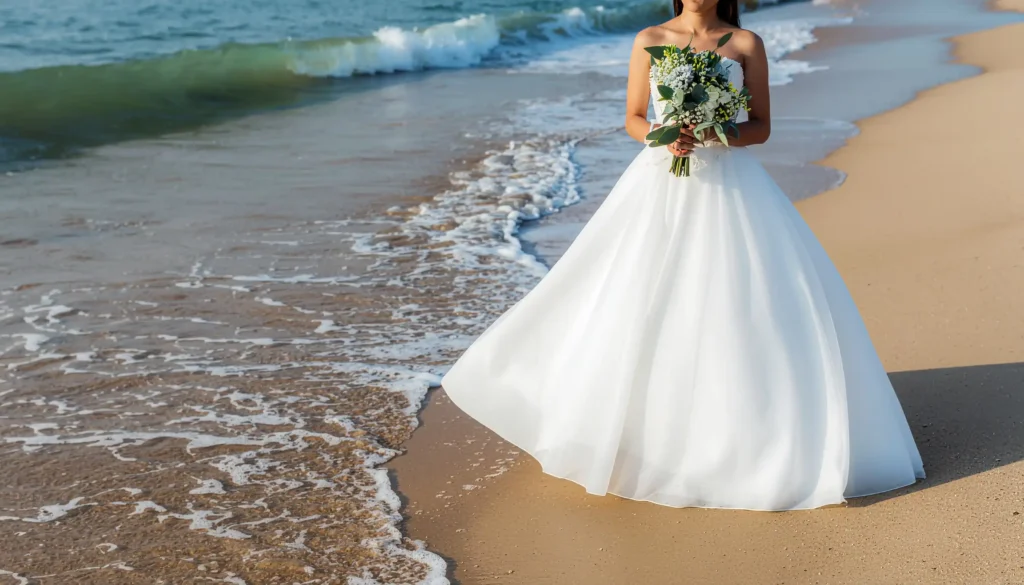
A beach wedding dress does more than look beautiful. It has to survive wind, sand, heat, and hours of wear without making you miserable. The right fabric keeps you cool. The right silhouette photographs well in natural light. The right fit means you’re not adjusting anything during your ceremony. Whether you’re planning a barefoot elopement or a full outdoor celebration, this guide covers the styles, cuts, and practical details that actually matter when you’re getting married outside.
1. Lightweight Beach Wedding Dress Styles That Move With You
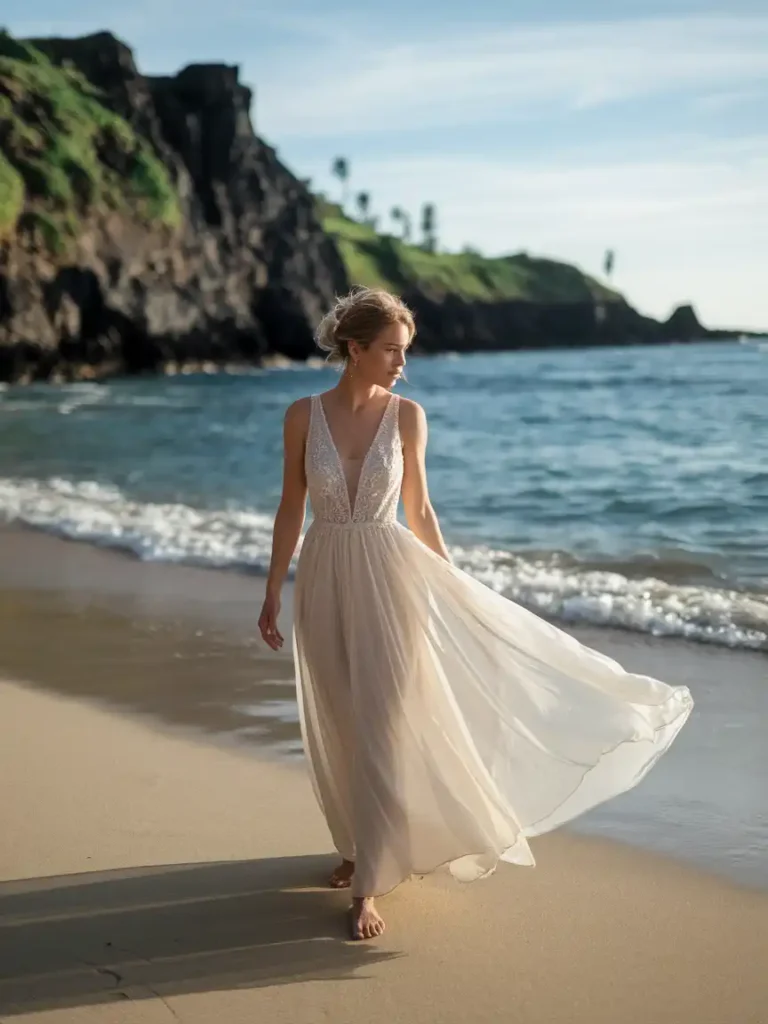
Fabric choice matters more at a beach ceremony than almost anywhere else. Chiffon, organza, and soft tulle move well in coastal wind without bunching or clinging. Heavier fabrics like satin and thick lace trap heat and feel stiff in photos. If you’re getting married outdoors in warm weather, fabric is the first decision, not the silhouette.
Look for gowns labeled “flowy” or “destination-ready” when you’re browsing. Designers like Wtoo by Watters and Jenny Yoo consistently produce lightweight options in the $800 to $2,000 range. If budget is tight, BHLDN and Azazie both carry chiffon styles under $400 that photograph beautifully in natural light. Try the dress on outside if you can, even briefly, to see how it actually moves.
2. Bohemian Bridal Wear for an Effortless Outdoor Look
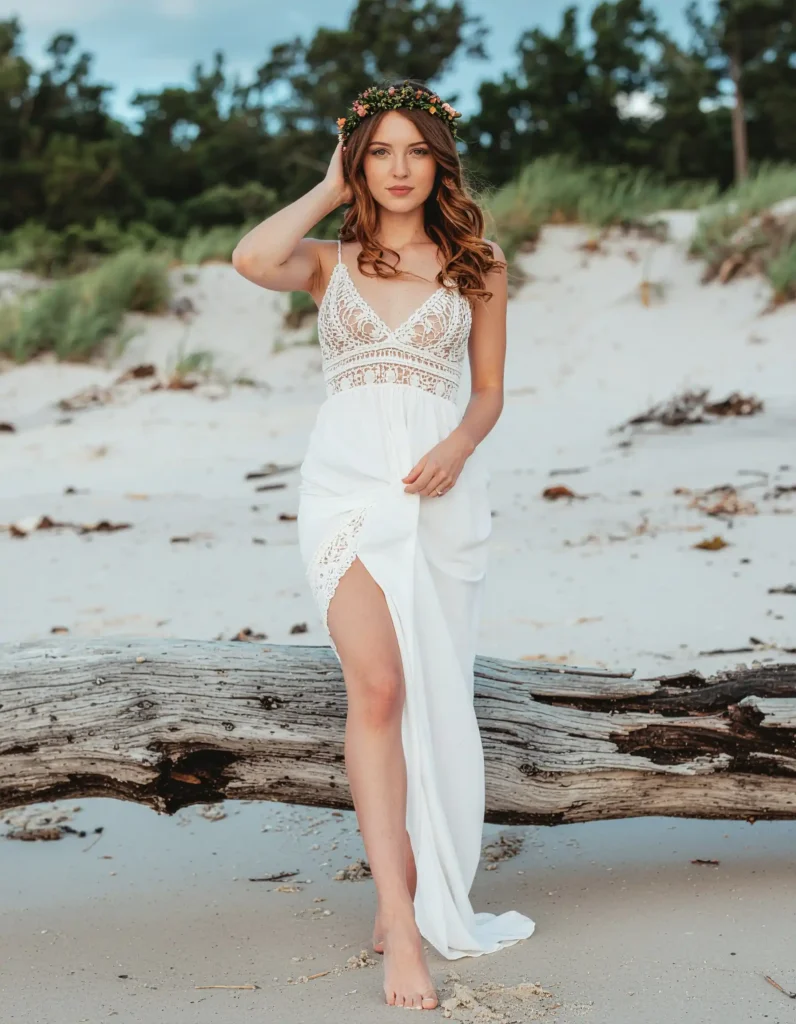
Bohemian bridal style works naturally for beach ceremonies because it doesn’t fight the setting. Lace overlays, embroidered bodices, and open backs all photograph well in coastal light. The relaxed structure also means you’re not fighting a corset all day. If your venue is informal or you’re going barefoot, a boho dress fits without looking underdressed.
Key boho details to look for:
- Lace or crochet trim along the neckline, hem, or sleeves
- Tiered or handkerchief skirts that move in the wind without tangling
- Low or open back with tassel or ribbon tie detail
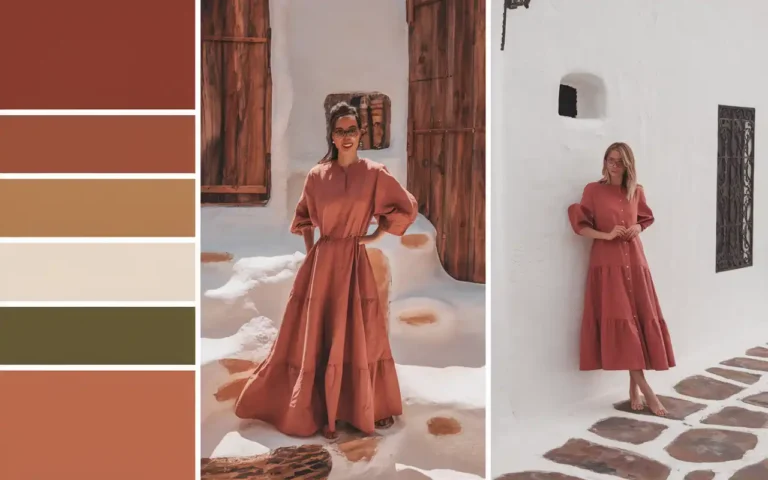
- Earthy tones like ivory, champagne, or blush instead of bright white
Brands like Free People’s wedding line, Spell & The Gypsy, and Stone Cold Fox specialize in exactly this aesthetic. Search “boho bridal gown” or “festival wedding dress” to find similar styles at different price points.
3. Short Beach Wedding Dress Ideas for Casual Ceremonies
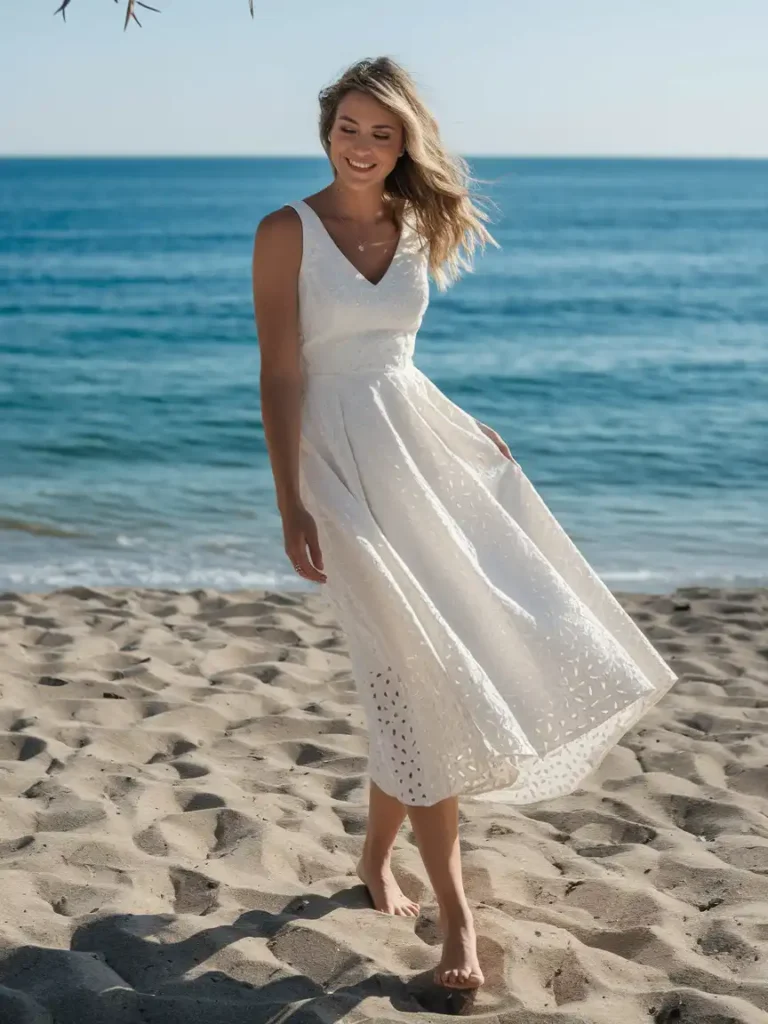
A short dress is one of the most practical choices for a beach ceremony. Sand, wind, and uneven terrain all become easier to manage when your hem sits at the knee or mid-calf. You can also move freely, sit comfortably during a boat ride to your venue, and actually enjoy the reception without worrying about your train.
Short doesn’t mean casual in a bad way. A structured mini with a fitted bodice looks intentional. A midi with lace detailing reads elegant without the formality of a full-length gown. If you’re hosting fewer than 30 guests or doing a destination elopement, a shorter silhouette often fits the tone better than a cathedral gown. Reformation, Amsale, and Vera Wang all produce shorter bridal options worth looking at.
4. Flowy Lace Wedding Dress Options That Work Outdoors
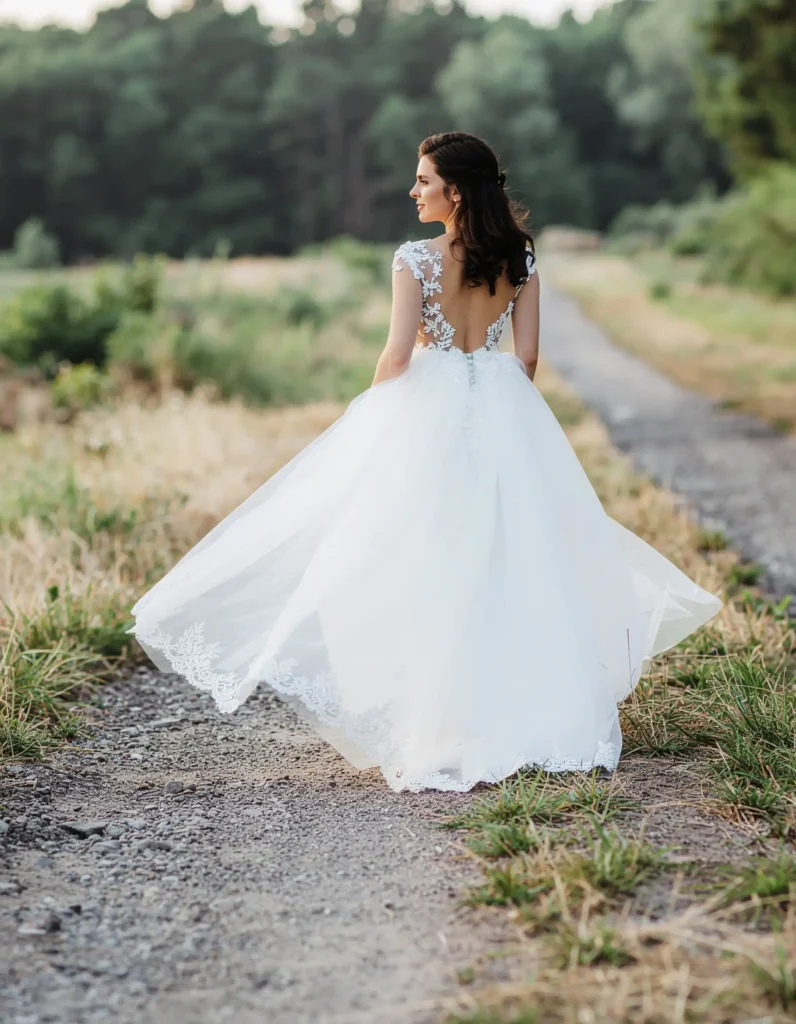
Lace is one of the most requested fabrics for outdoor bridal looks, but not all lace works at the beach. Stiff Alençon lace holds its shape but can feel heavy and look formal against a casual coastal backdrop. Softer Chantilly lace or lace overlay on chiffon gives you the romantic detail without the weight.
If you love lace, ask your bridal consultant specifically for “soft lace” or “lace-trimmed chiffon.” The distinction matters in how the dress moves and photographs. Allure Bridals and Essense of Australia both carry flowy lace styles that balance the delicate look with a dress that actually functions outdoors. Avoid fully lined stiff lace gowns if your ceremony is in direct sun or high humidity.
5. Plus Size Beach Wedding Dress Styles Worth Knowing
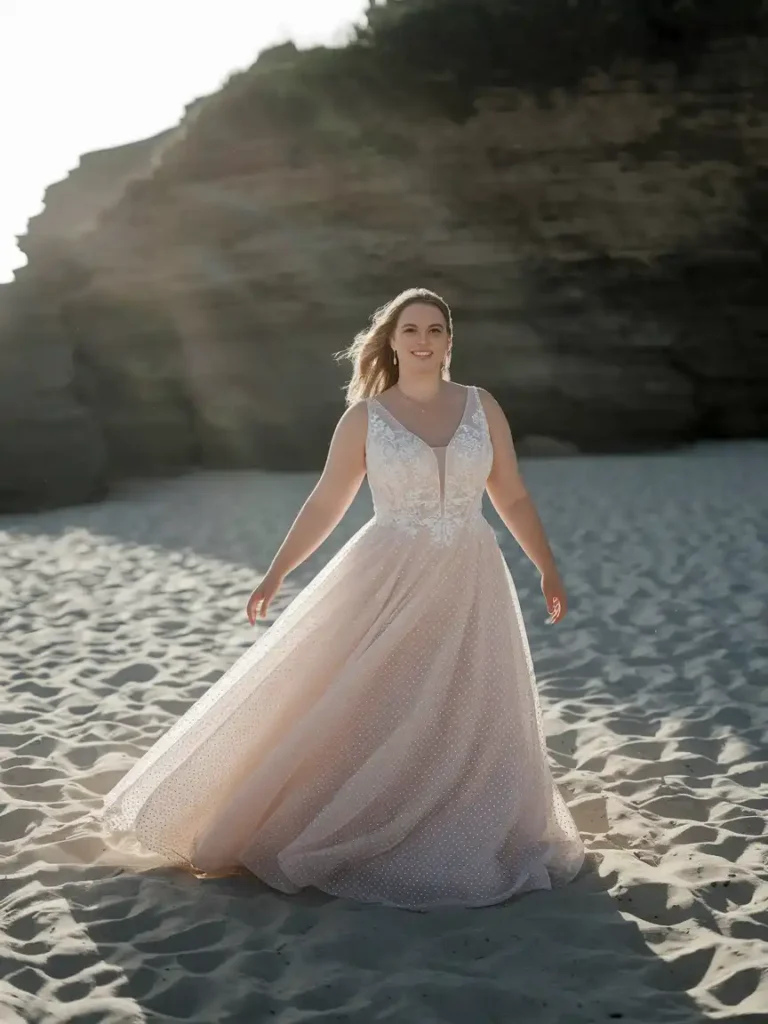
Finding the right fit as a plus size bride at the beach comes down to silhouette and support. A-line and empire waist cuts are consistently reliable because they don’t cling at the hip and allow airflow. Avoid bias-cut styles if you’re concerned about fabric pulling, and skip anything with an unlined skirt in harsh sunlight.
Some specific options to try:
- Cocomelody carries plus size beach-appropriate gowns starting around $200
- David’s Bridal has a wide extended size range with dedicated beach styles
- Azazie offers custom sizing with try-at-home options, which is practical if you’re buying remotely for a destination wedding
Always request a full lining, even in lightweight fabrics. It makes the dress more comfortable to wear all day and improves how it photographs on the beach.
6. A-Line Silhouettes for Sandy Venues
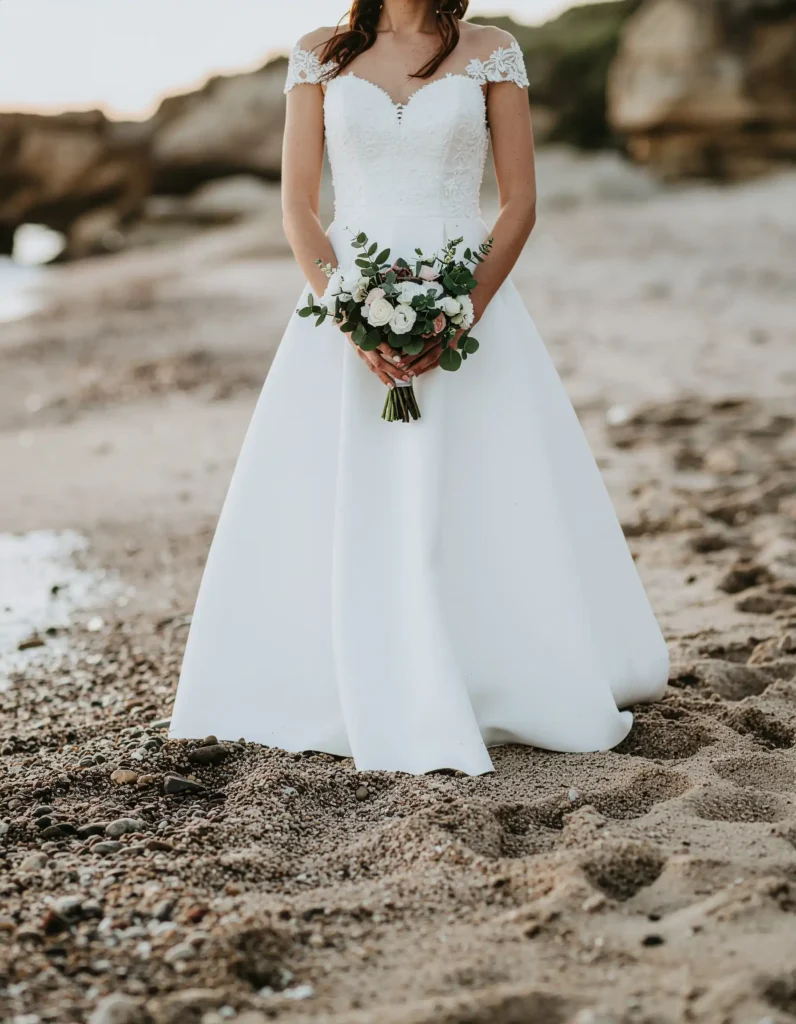
The A-line silhouette is the most universally flattering cut for outdoor ceremonies. It skims the waist without constricting, the skirt doesn’t collect sand the way a cathedral train does, and the shape reads formal enough for a real wedding without feeling overdressed on a beach. It photographs cleanly from every angle.
If you haven’t locked in a silhouette yet, start with A-line when you go to appointments. It works across most body types and most beach settings. Pair it with minimal accessories so the dress stays the focus. A simple belt or sash at the waist adds shape without complicating the look. Pronovias, Morilee, and Stella York all produce A-line beach-appropriate styles at a range of price points.
7. Strapless Gowns and the Wind Problem
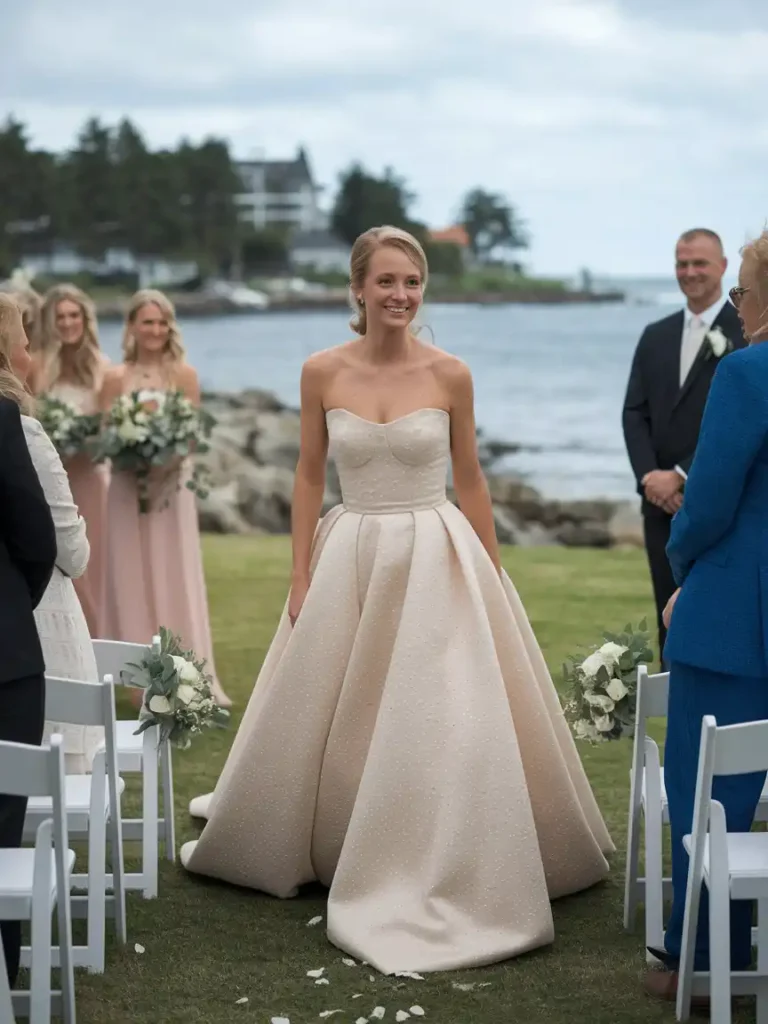
Strapless dresses are popular for beach weddings, but wind creates a real issue if the bodice doesn’t fit correctly. A poorly fitted strapless gown requires constant readjustment, and that’s the last thing you want during your ceremony photos. The fix is proper boning and a skilled alterations job, not just going up a size.
If you’re set on strapless, budget for a thorough alterations appointment. Tell your seamstress exactly where you’ll be wearing it, including the wind conditions. Some brides also add thin clear bra straps or convertible straps for backup. Another option is a draped or twist-knot neckline that mimics the strapless look but stays in place more reliably. It’s a minor change with a real difference on the day.
8. Long Sleeves at the Beach: When It Works
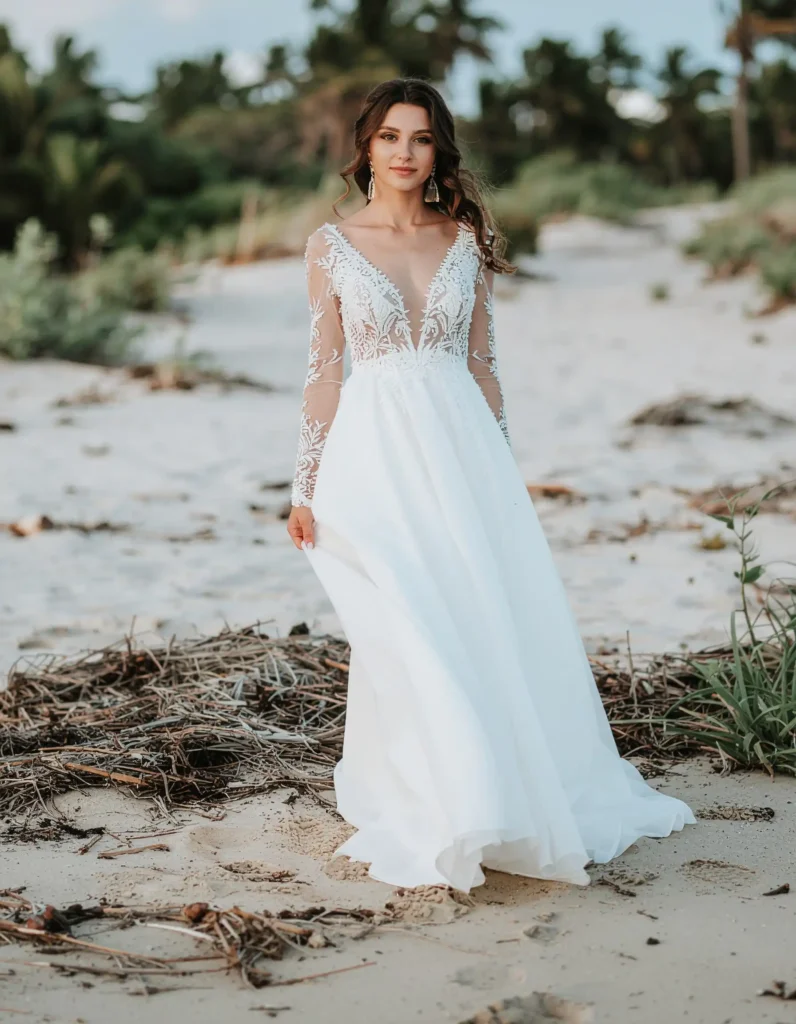
Long sleeves on a beach dress sound counterintuitive, but sheer or lace sleeves are actually practical in coastal settings. They protect your arms from sunburn during a midday ceremony, reduce the need for sunscreen that can stain fabric, and give coverage if you’re marrying in a location where bare shoulders aren’t appropriate.
The key is the fabric. Sheer chiffon or silk organza sleeves add almost no warmth. Stretch lace sleeves are similarly lightweight. Avoid any sleeve in a thicker material if you’re in a hot climate. Pronovias and Rebecca Ingram both carry beach-appropriate styles with sheer sleeves. Look for gowns described as “illusion sleeve” in bridal catalogs as a starting point.
9. What to Know About Train Length Outdoors
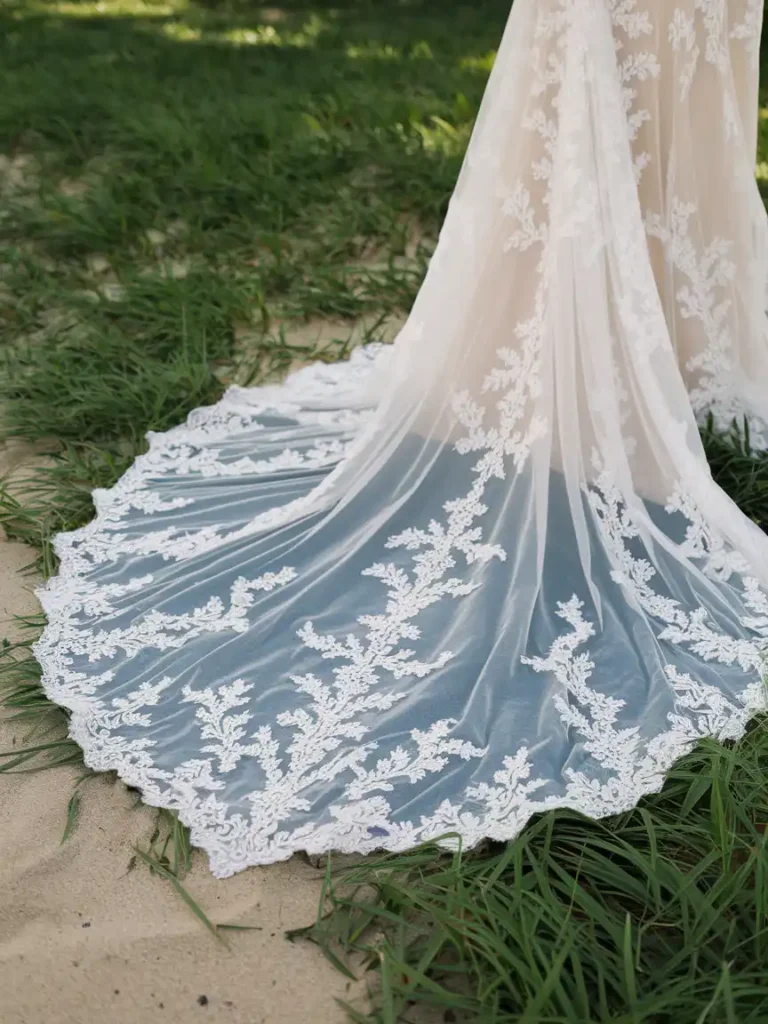
Cathedral trains look stunning in editorial photos. At an actual beach ceremony, they collect sand, require a dedicated person to manage, and make walking across uneven ground genuinely difficult. Unless you have a paved ceremony area and help at every step, consider a sweep or short chapel train instead.
Sweep trains extend just a few inches past the hem and still give you the trailing effect without the hassle. If you’ve fallen for a gown with a longer train, ask your seamstress whether it can be bustled tightly or shortened. Most good seamstresses can take a chapel train to a sweep for under $100. It’s a practical adjustment that won’t compromise the look.
10. Color Options Beyond White for a Coastal Ceremony
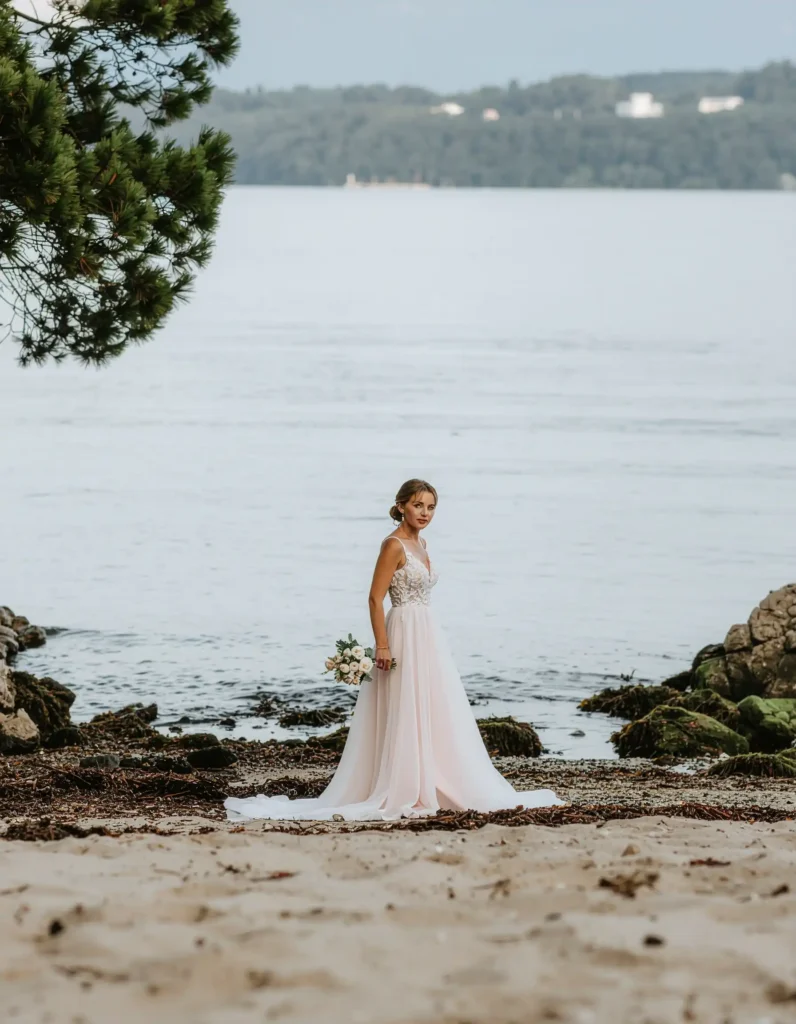
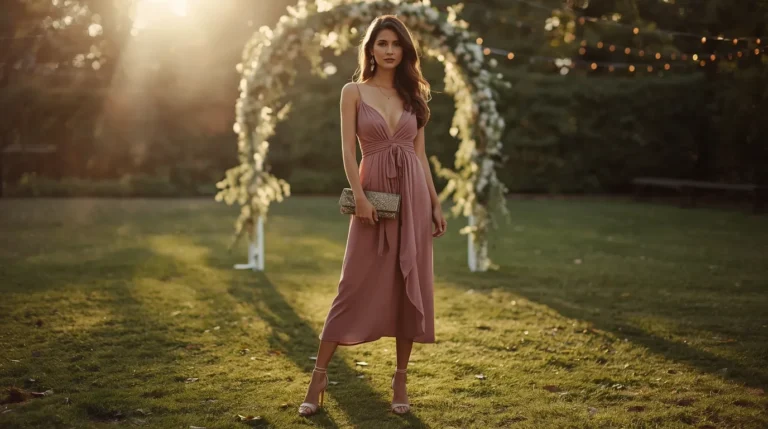
White isn’t the only option, and at the beach, it sometimes isn’t even the best one. Bright white can wash out in direct sunlight and reflect harshly in photos. Ivory photographs warmer and more naturally in outdoor light. Blush reads as deliberately chosen and works well against a sandy or sunset backdrop.
If you want something more distinctive, pale sage and dusty blue have both appeared consistently in bridal collections over the past few seasons. Vera Wang’s bridal line has featured non-white options for years. Berta and Monique Lhuillier both do muted champagne tones that work beautifully outdoors. Confirm your venue has no specific color expectations before you commit, especially if it’s a religious ceremony.
11. Destination Wedding Packing: Getting Your Dress There
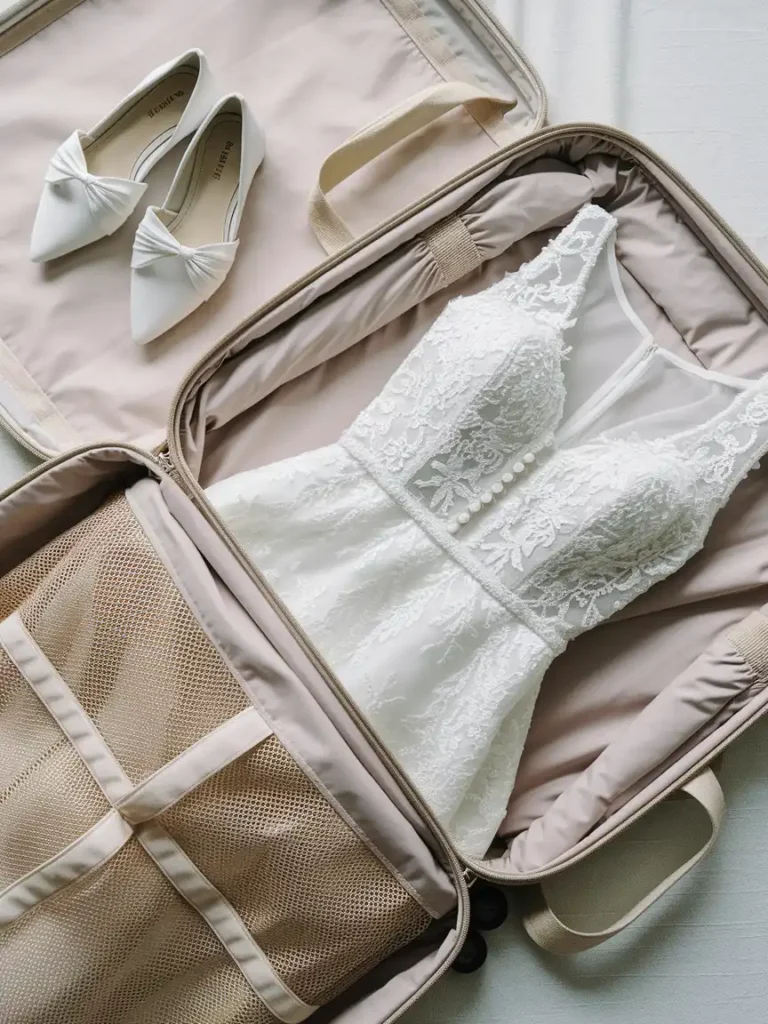
Traveling with a wedding dress for a destination beach ceremony requires planning before you leave home. Most airlines allow a garment bag as a carry-on if you ask a flight attendant to hang it in the crew closet. Don’t check a wedding dress unless it’s your only option.
A few things that actually help:
- Roll lightweight chiffon or organza gowns in acid-free tissue instead of folding at sharp angles
- Use a sturdy garment bag with a hook, not a flimsy plastic cover
- Steam, don’t iron, when you arrive. Most hotels have steamers available on request
- Pack a mini sewing kit with safety pins, double-sided tape, and a needle and thread
If you’re working with a destination wedding planner, confirm whether they have a dressing space and a steamer on site. Many do, and knowing that ahead of time removes one concern.
12. Shoes, Sandals, and Going Barefoot
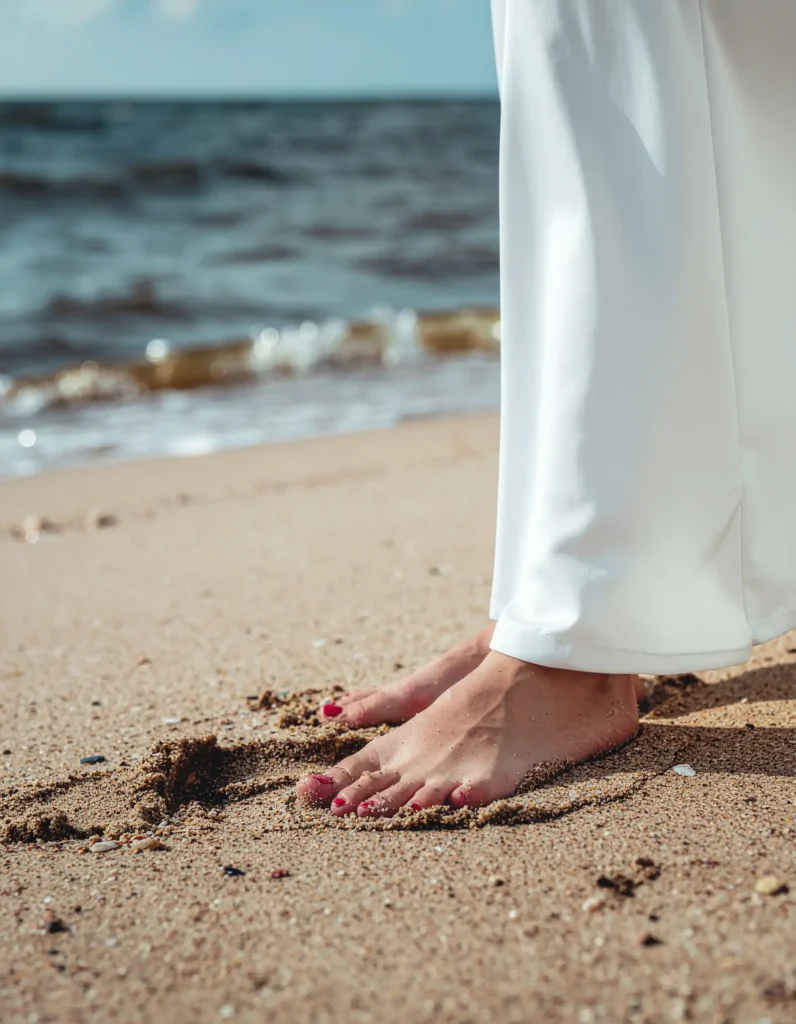
Heel height is a practical decision at a beach ceremony, not just a style one. Standard heels sink into sand immediately and make walking genuinely uncomfortable. Wedge heels distribute weight better and give you height without the sinking issue. Flat sandals and bare feet are both entirely appropriate for beach settings.
If you want height, try block heels or wedge sandals. Badgley Mischka and Bella Belle both make bridal wedges that photograph well. If you’re going barefoot, think about the walk from the car to the ceremony site and whether you need shoes for part of it. A simple pair of flat slides you can slip off at the sand line solves the problem cleanly. Your comfort during a ceremony that could last 30 to 60 minutes matters more than any style decision.
13. Fit and Alterations for Outdoor Ceremony Comfort
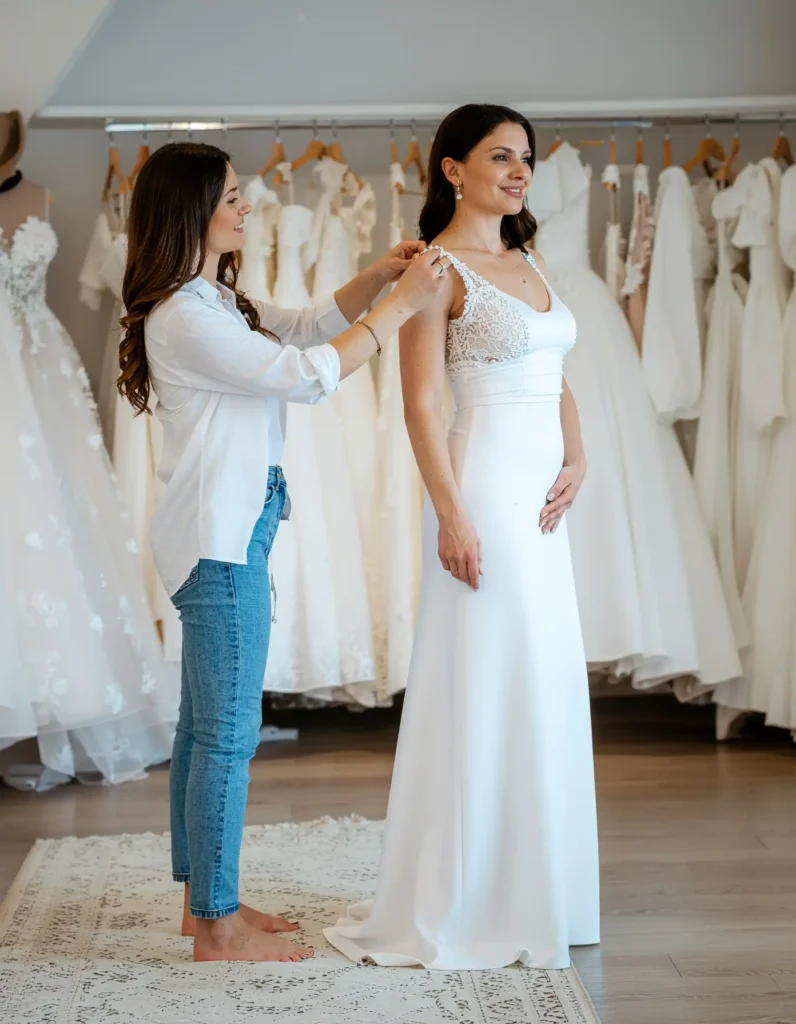
A dress that fits well in a bridal suite can feel completely different after two hours outdoors in heat and humidity. Your body changes slightly in warm weather. Alterations should account for that, not just for how you look standing still in a climate-controlled room.
Tell your seamstress your ceremony will be outdoors and in what climate. Ask specifically about the waistband, the boning, and the hem length in relation to your footwear. Build in a final fitting within four to six weeks of the wedding date so there’s still time to adjust. If you’re losing or gaining weight, communicate that clearly. Good alterations are worth the cost. Budget at least $300 to $600 for a full alteration job on a structured gown, more if the dress needs significant work.
14. Accessorizing a Simple Beach Ceremony Gown
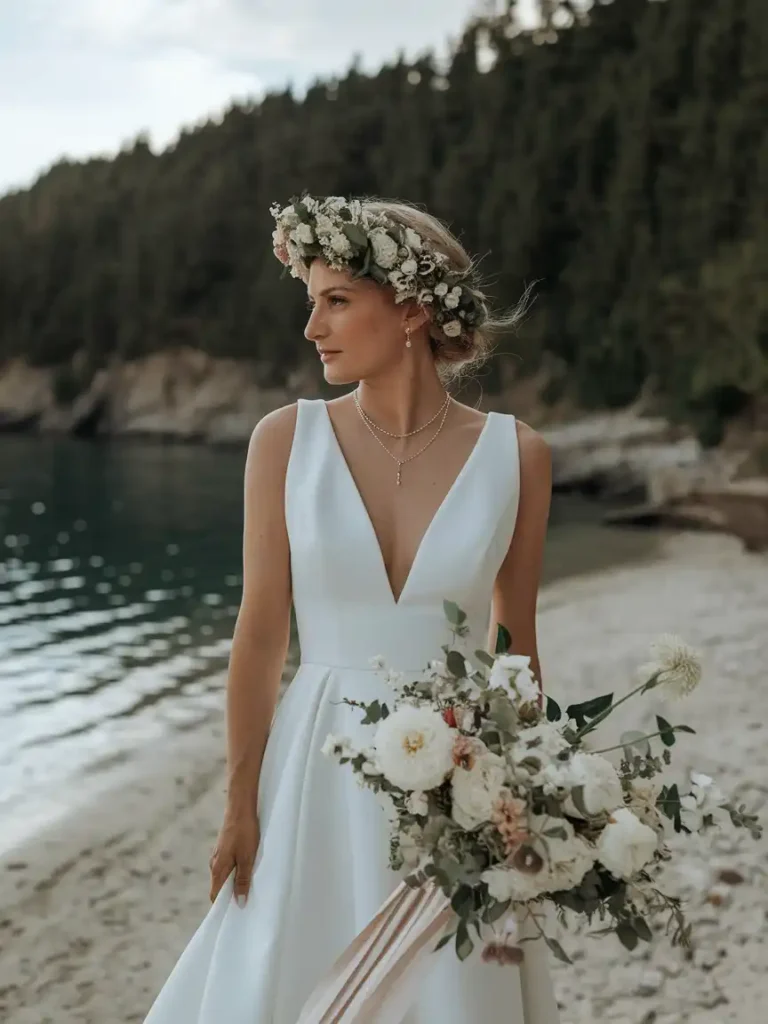
A simple dress is often the smartest choice for the beach, but it does put more pressure on your accessories to finish the look. The coastal setting already gives you natural texture and color, so you don’t need to overdo it. One or two well-chosen pieces do more than a full set of matched jewelry.
A delicate gold necklace, pearl drop earrings, or a single hair cuff are all good starting points. Flower crowns work if the rest of the styling is kept relaxed. Avoid anything heavy or dangling that catches wind. For the veil, a shorter fingertip or elbow-length style is much easier to manage outdoors than a cathedral length. If you skip the veil entirely, a single hair vine or fresh flowers are practical and look natural in photos.
15. How Weather Affects What You Should Wear
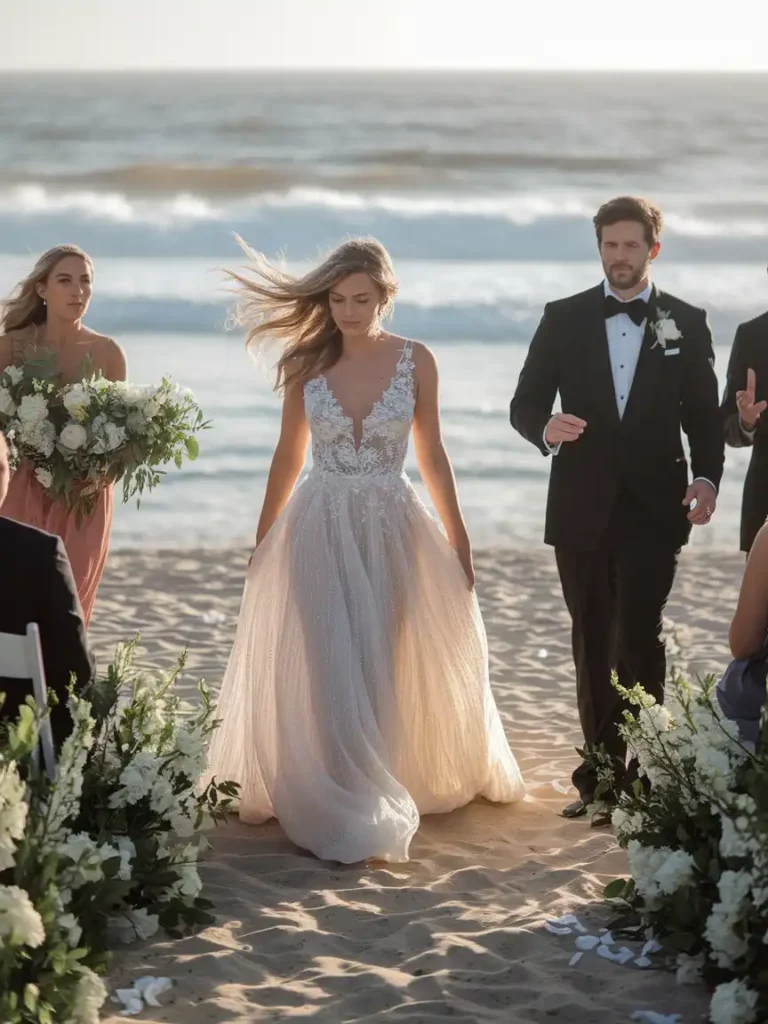
Weather planning is part of choosing the right outdoor wedding dress. A full sun midday ceremony in July calls for different fabric choices than a late afternoon autumn beach wedding. Humidity, wind, and temperature all affect how your dress looks and how comfortable you’ll be.
For hot, humid climates, prioritize fabric breathability over aesthetics. Chiffon over a slip lining is cooler than a fully lined gown. For cooler coastal weddings, a long sleeve dress or a bridal jacket gives you warmth without looking informal. If your ceremony is timed for golden hour, ivory and champagne tones photograph especially well in that light. Check the average weather for your venue date over the past few years, not just a one-day forecast. It gives you a better basis for your fabric and silhouette decision.
16. Lining and Undergarments You Actually Need
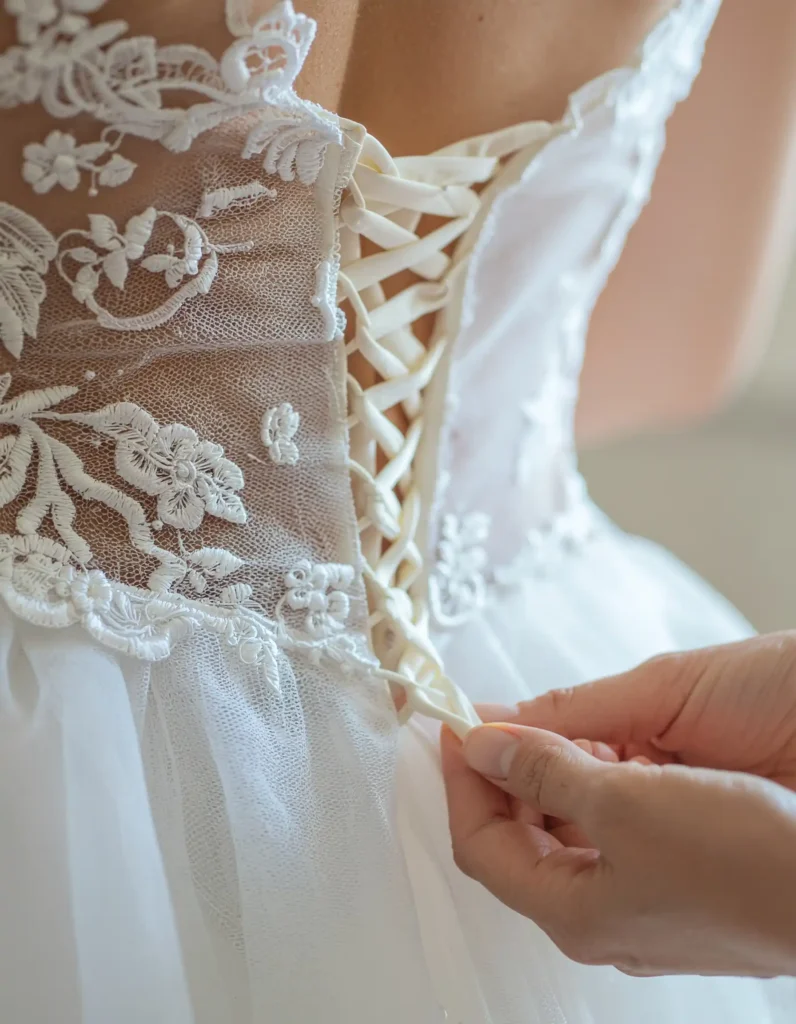
Sheer and lightweight fabrics can be beautiful, but they require the right foundation underneath. An unlined chiffon skirt in direct sunlight will show everything. A proper lining or a well-fitted slip solves this completely, but you need to check before you commit to the dress.
When you try on any lightweight or lace gown, step outside the fitting room if possible and check it near a window or in natural light. Ask whether the dress comes with a built-in lining. If not, ask whether one can be added. A seamstress can add a full lining to most gowns for between $80 and $150. Also confirm what undergarment works under the dress, especially if it’s strapless or has a low back. Some gowns have built-in boning that eliminates the need for a separate bra. Know what you need before the wedding day.
17. Gowns That Work for Both Ceremony and Reception
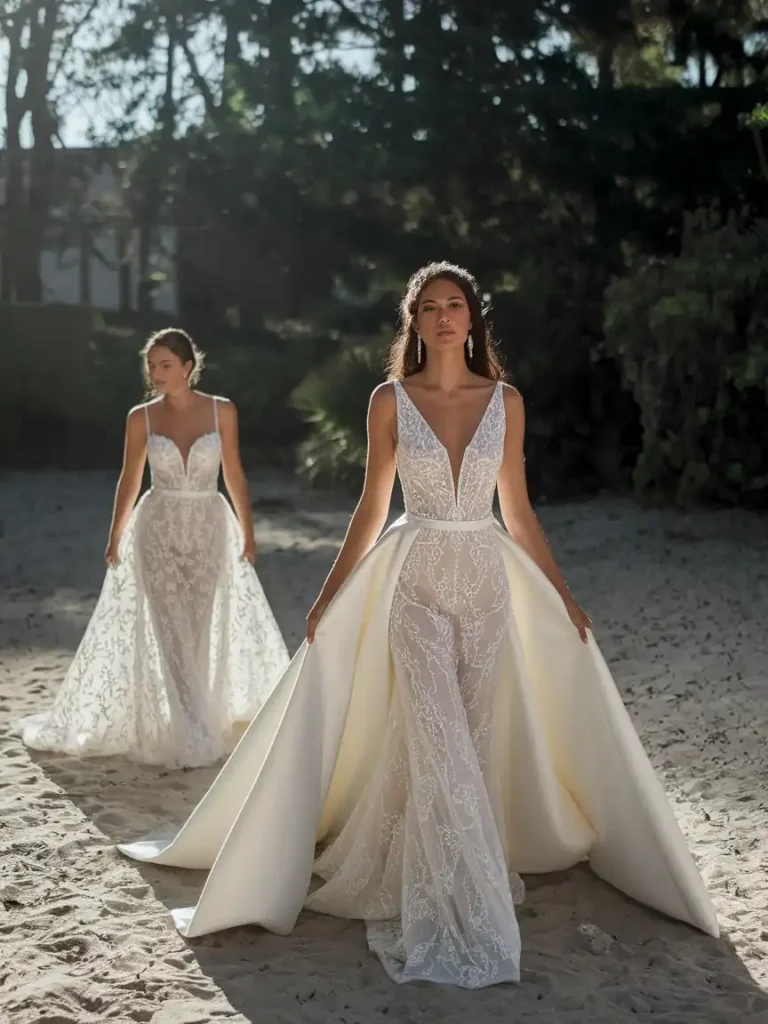
If your ceremony is on the beach and your reception is at a different venue or involves dancing, a two-in-one dress saves you a full outfit change. Detachable skirts, overskirts, and capes are increasingly common in bridal collections. You keep the elegance for photos and switch to something easier to move in for the night.
Hayley Paige, Wtoo, and Maggie Sottero all produce gowns with detachable elements in their current collections. If you can’t find a two-piece style you love, ask your seamstress about adding a snap or button to your existing train so it bustles flat. A short reception dress that pairs with your ceremony top is another practical option. It’s worth thinking about early in your shopping process so the transition is planned, not improvised.
18. Budget-Friendly Beach Ceremony Dresses That Don’t Look Cheap
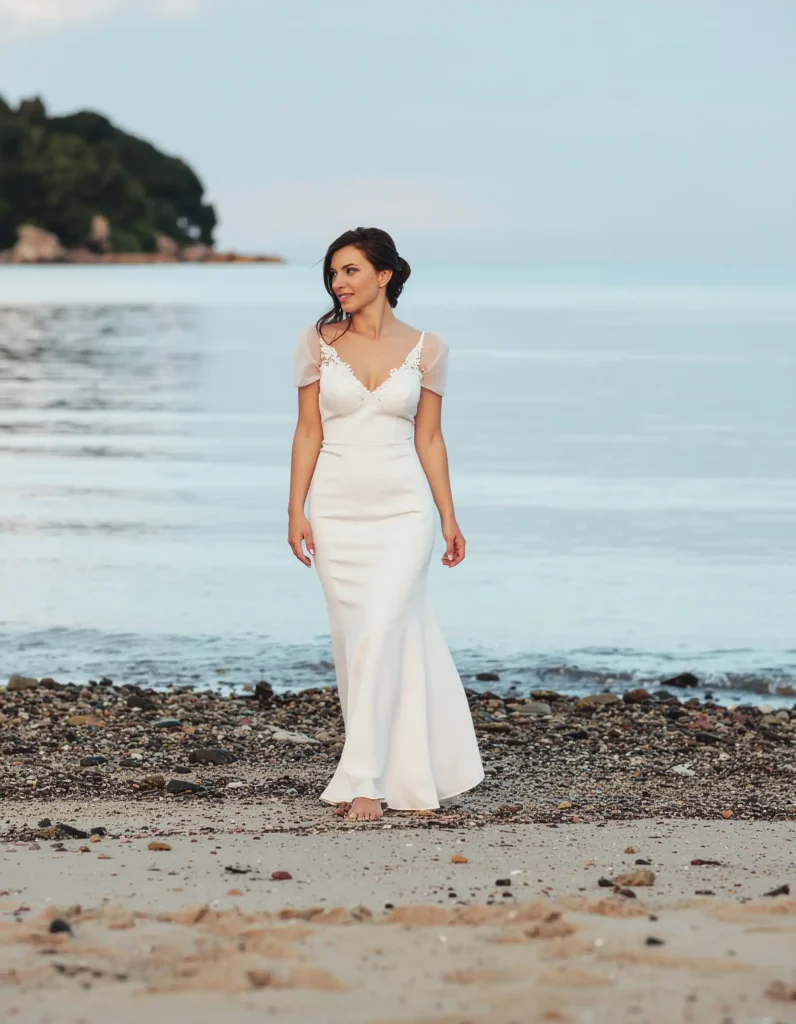
You don’t need to spend $3,000 to look good at a beach ceremony. Some of the most photographed beach wedding looks come from dresses in the $200 to $600 range, because simple silhouettes in good fabric often read more elegantly than heavily embellished gowns at any price point.
Retailers worth looking at in this range:
- BHLDN ($300 to $900): Wide range of beach-appropriate styles in quality fabrics
- Azazie ($200 to $600): Custom sizing, good chiffon options, try-at-home program
- Lulus ($100 to $300): Solid for short or semi-formal beach ceremonies
- Amazon Bridal ($80 to $250): Quality varies, but buyer reviews with photos are genuinely useful
Always read reviews that include real photos, not just product images. The fabric and fit are the two things you cannot compromise on regardless of price. A $250 dress that fits well beats a $1,500 dress that doesn’t.
19. How to Style Your Hair for an Outdoor Ceremony
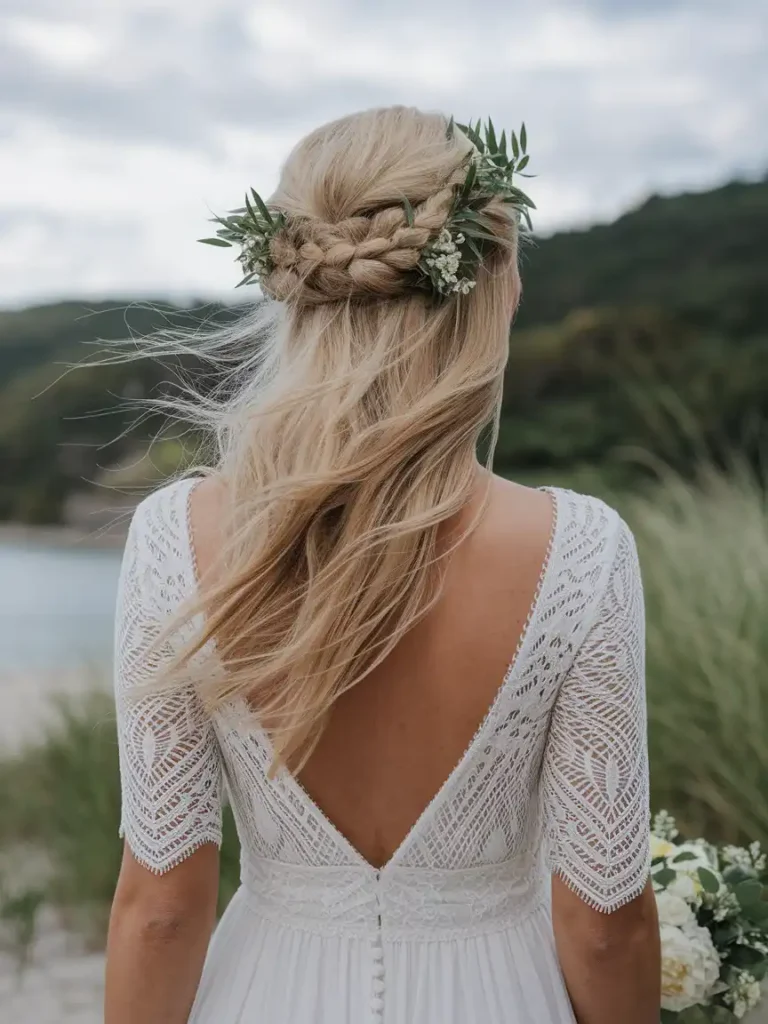
Hair at a beach ceremony takes wind and humidity into account, or it doesn’t survive the day. Loose blowouts that look perfect at 9 AM can look deflated by noon in ocean air. Styles that work with movement rather than against it last longer and photograph better.
Low buns, braided updos, and loose French twists all hold up reliably outdoors. If you want your hair down, beach waves are more forgiving than a sleek blowout because the texture hides wind damage. Use humidity-resistant products, not just hairspray. Salt spray and a light-hold mousse give you texture that looks intentional even when it’s windswept. Talk to your hairstylist about the specific venue conditions. A good stylist will ask. If they don’t, bring it up yourself.
20. Real Questions to Ask at Your Bridal Appointment
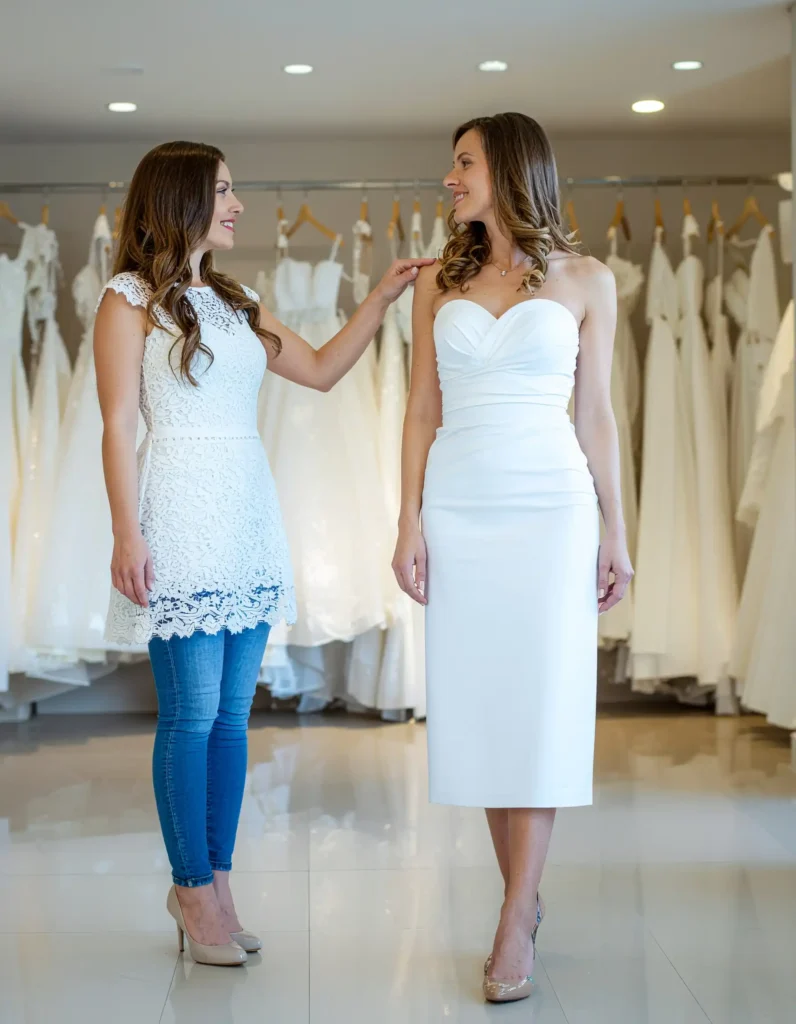
Most bridal consultants are excellent at what they do, but they don’t always know you’re shopping for a beach ceremony unless you say so. The questions you ask upfront change the dresses they pull and the advice they give. Be specific from the start.
Questions worth asking directly:
- “Which of these fabrics holds up in heat and humidity?”
- “Does this dress have a full lining, and if not, can one be added?”
- “How does this silhouette work in wind?”
- “What’s the alterations timeline and cost for this gown?”
- “Do you have experience fitting dresses for outdoor or destination ceremonies?”
Bring photos of your venue. Show the consultant the setting, not just a general style board. The more context they have, the more useful the appointment becomes. A two-hour session with the right information upfront saves you from returning three more times.
Conclusion:
Your beach wedding dress should work for you, not against you. Prioritize fabric, fit, and comfort over trends. The dress that moves well, photographs naturally, and keeps you comfortable all day will always be the right choice. Use this guide to narrow down your options, ask better questions at your bridal appointments, and shop with a clear picture of what your ceremony actually requires. The best decision is an informed one.