20 Burgundy Hair Ideas for Dark Hair Without Bleach
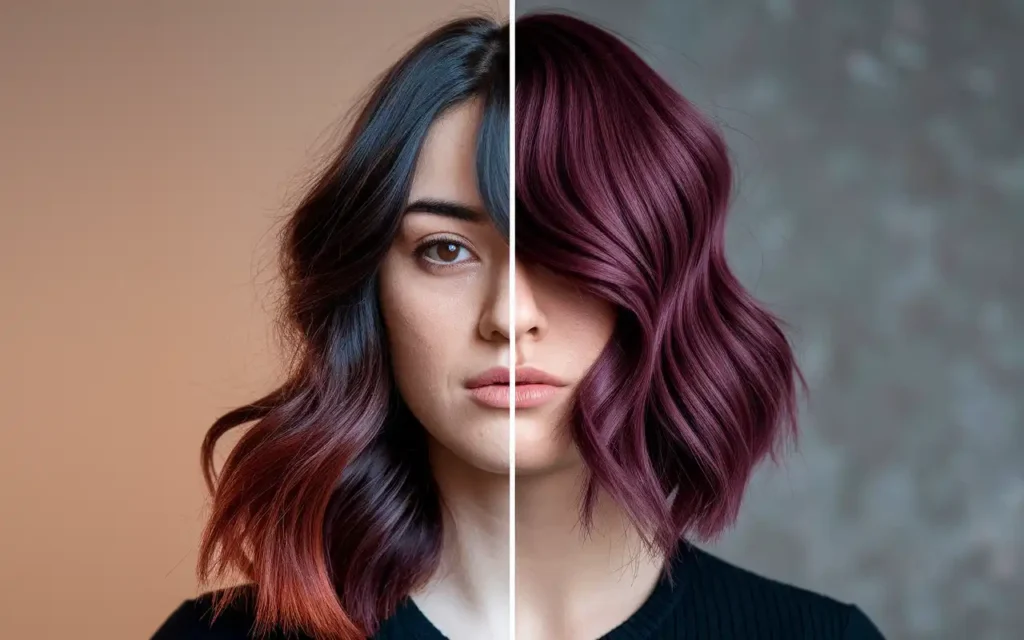
If you have dark hair and have been dreaming about going burgundy, you do not need bleach to pull it off. That’s one of the best things about this color. Burgundy sits in a range that dark hair can absorb beautifully, especially in warmer, deeper tones. The result looks intentional, rich, and modern without the damage that comes with lifting your natural color first. This list covers 20 real, wearable ideas that work specifically on dark hair. Some are subtle. Some are bold. All of them skip the bleach entirely.
1. Deep Cherry Burgundy All Over
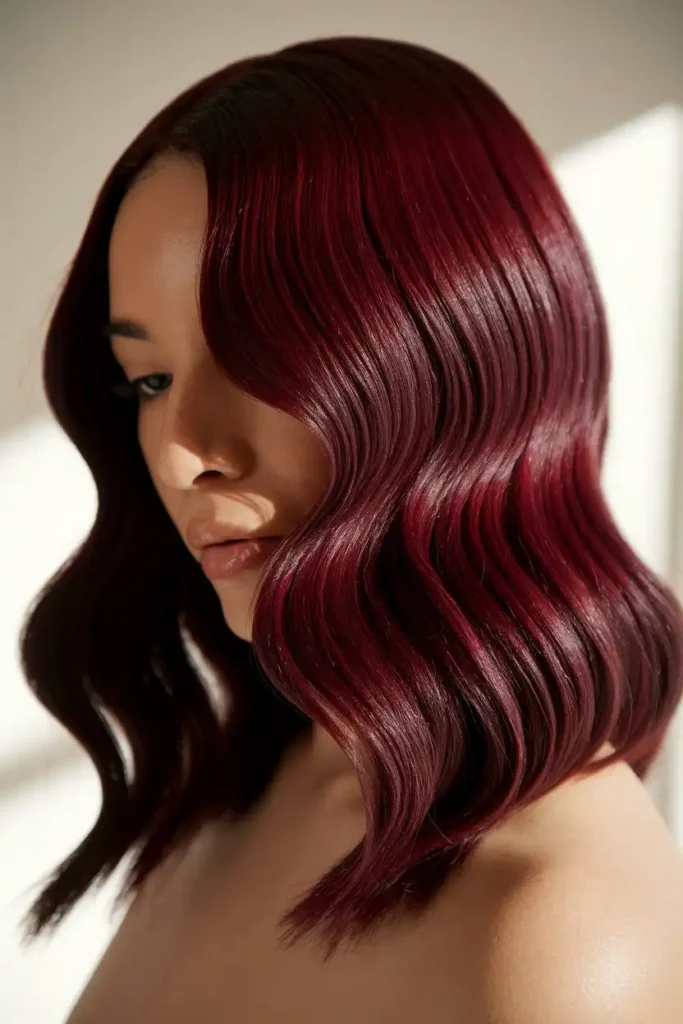
Deep cherry burgundy is the most forgiving starting point for dark hair without bleach. The color is close enough to very dark brown that it absorbs without needing your hair lifted first, but the warmth it brings is immediately noticeable when light hits it.
This shade works especially well on black and dark brown hair because the contrast stays low and the result looks polished rather than patchy. It’s the kind of color that reads as “did something different” without announcing itself too loudly.
2. Plum-Tinted Dark Burgundy
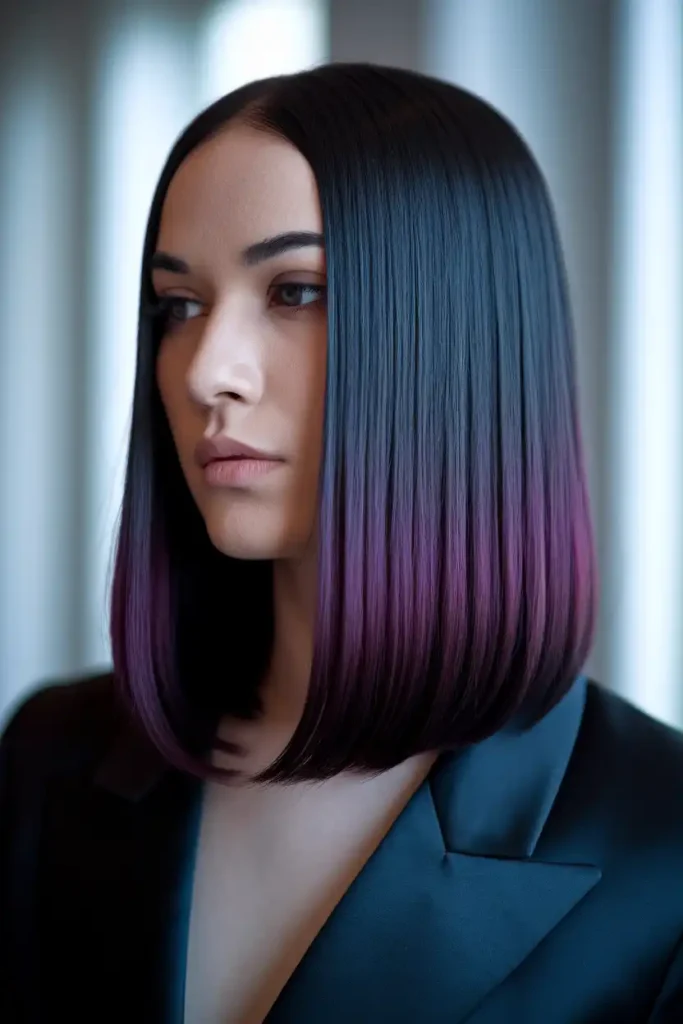
Plum-tinted burgundy sits right at the intersection of purple and red, making it a popular choice for anyone with dark hair who wants a color that feels a little unexpected. You get depth without brightness, and the cool tone plays well against darker complexions.
Because this shade leans more violet than warm red, it tends to last a bit differently than cherry-based burgundies. It can fade into a softer mauve over time, which honestly looks great too. If you’re using a semi-permanent color, plan for a refresh every 4 to 6 weeks to keep the tone vivid.
3. Burgundy Balayage on Natural Black Hair
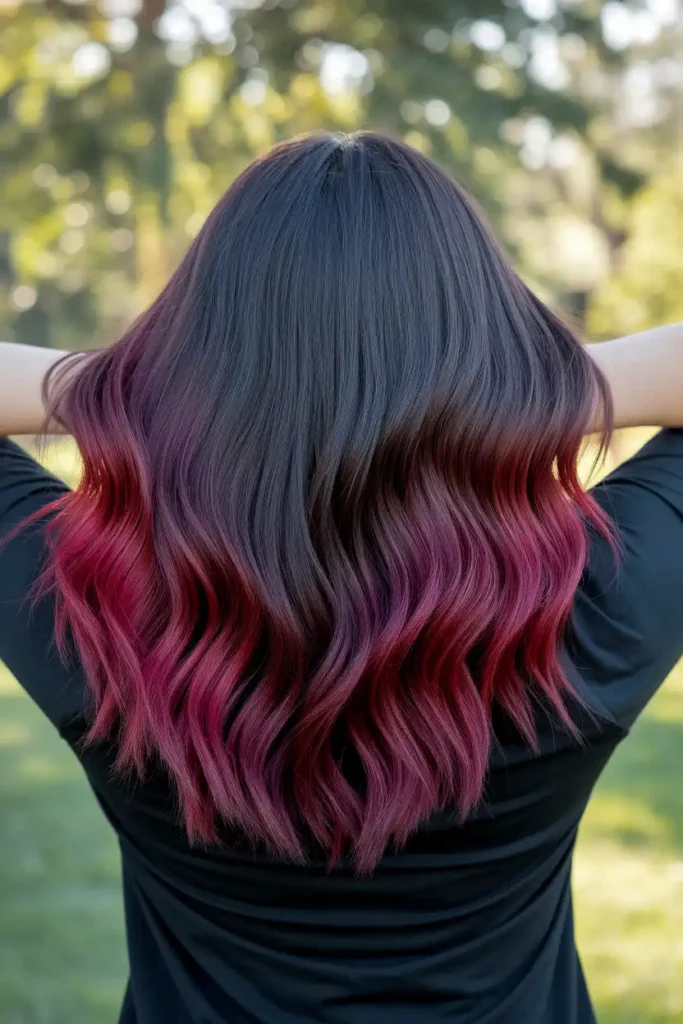
Balayage on dark hair without bleach is absolutely possible when you’re working with a vivid color like burgundy. The technique involves painting the color in sweeping sections so the result looks natural and sun-kissed rather than uniform. On black hair, the contrast can be subtle or more defined depending on how much product is applied.
The key here is using a high-lift or direct dye formula that’s designed for dark hair. Some colorists will use a mild developer rather than full bleach to open the cuticle slightly, which allows the burgundy to deposit without stripping. The payoff is a multidimensional look that shifts beautifully in different lighting.
4. Burgundy Highlights on Dark Brown Hair
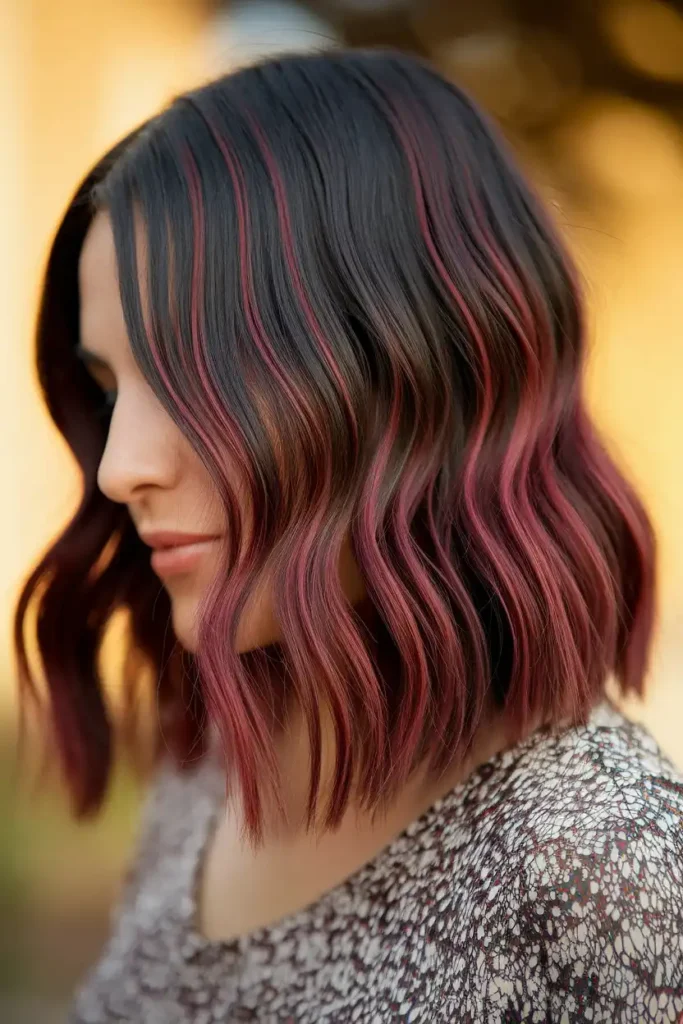
Highlights are one of the most natural ways to bring burgundy into dark hair without changing the whole look. Instead of doing an all-over color, you weave thin sections of a warm red-burgundy through dark brown hair and the result feels like your natural color has just gotten richer.
This approach is especially flattering on medium to dark brown hair where the base color and the highlight share similar warmth. The tones blend rather than clash, and the overall effect reads as natural dimension rather than obvious color treatment. If you want more impact, you can gradually increase the number of highlights over time.
5. Wine Red Burgundy on Thick Dark Hair
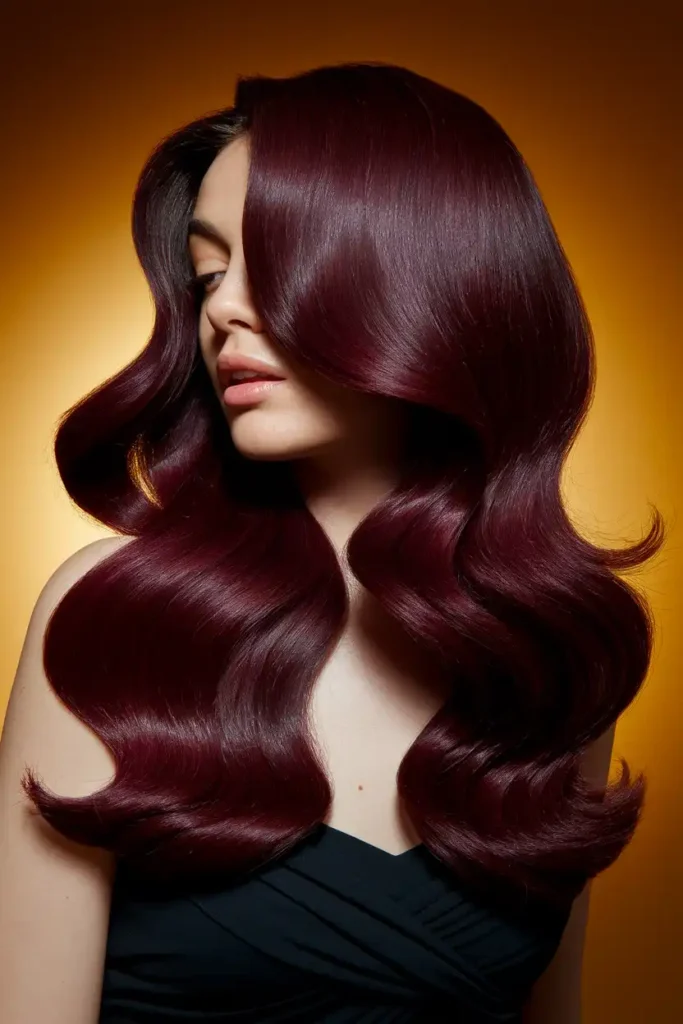
Thick dark hair holds color differently than fine hair, and wine red burgundy benefits from that density. The color saturates evenly across the hair shaft and the result looks intensely pigmented, especially under warm lighting. It’s one of those shades that looks more expensive when there’s more hair to fill.
Thick hair also tends to show color fade more slowly because there’s more surface area to hold the pigment. Maintenance-wise, this is a practical advantage. A gloss treatment every few weeks can revive the warmth between full color appointments and extends the life of the shade significantly.
6. Soft Burgundy Tint on Dark Hair Ends
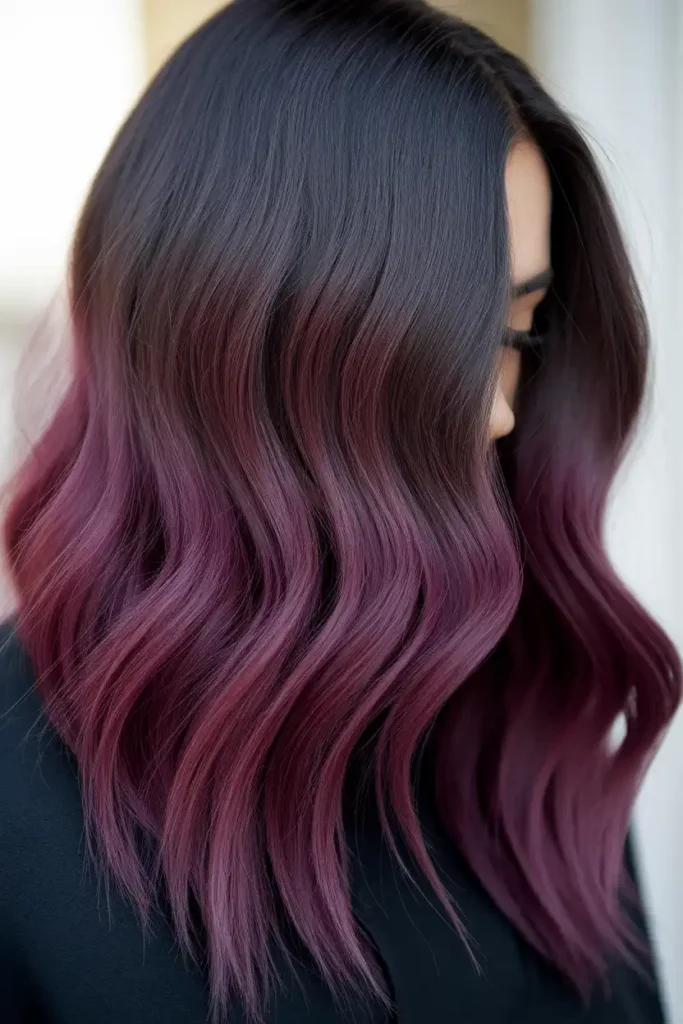
If you’re not ready to commit to full color, a soft tint applied only to the ends is a low-risk way to try burgundy on dark hair. The technique is simple: apply a direct dye or tinted conditioner to the last several inches of the hair and let it sit. The color deposits on the outside of the cuticle and fades gradually.
This approach is especially good for first-timers because it’s easy to adjust or let fade without significant consequence. You can always build on it. Start with a very diluted formula mixed with a clear conditioner, assess how much color you want, and add more from there. It’s one of the most beginner-friendly ways to try a new direction.
7. Bold Burgundy on Short Dark Hair
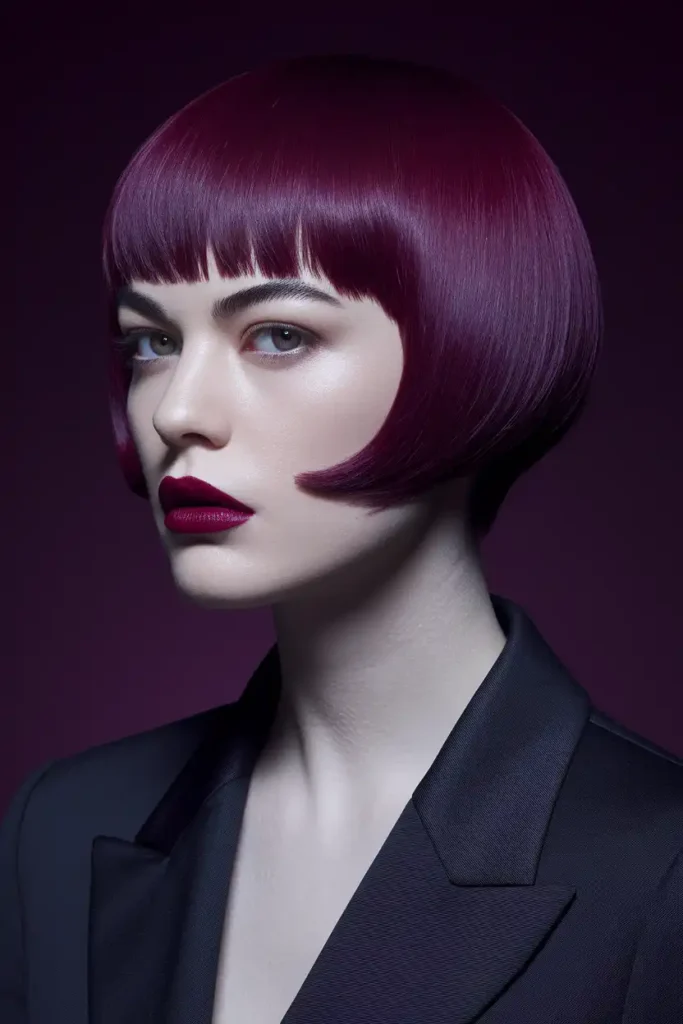
Short hair actually makes a bold burgundy color easier to maintain and more impactful to look at. There’s less hair to color, which means the application is faster and more even, and the saturation tends to look more consistent. On a pixie or short bob, the color becomes the focal point of the whole look.
For dark hair specifically, going bold on a short cut with a deep burgundy means the color can be applied over your natural base without any lightening. A professional colorist using a direct pigment over a dark base will get strong, lasting results. The shorter the hair, the easier it is to touch up as it grows.
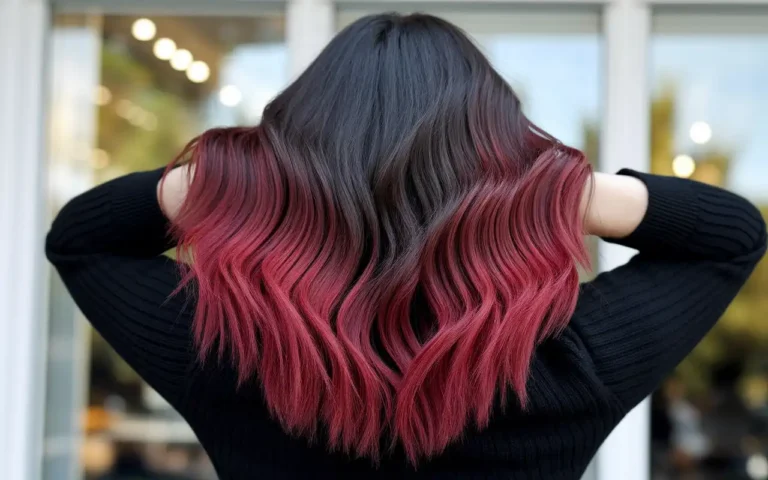
8. Dark Burgundy Ombre From Root to Tip
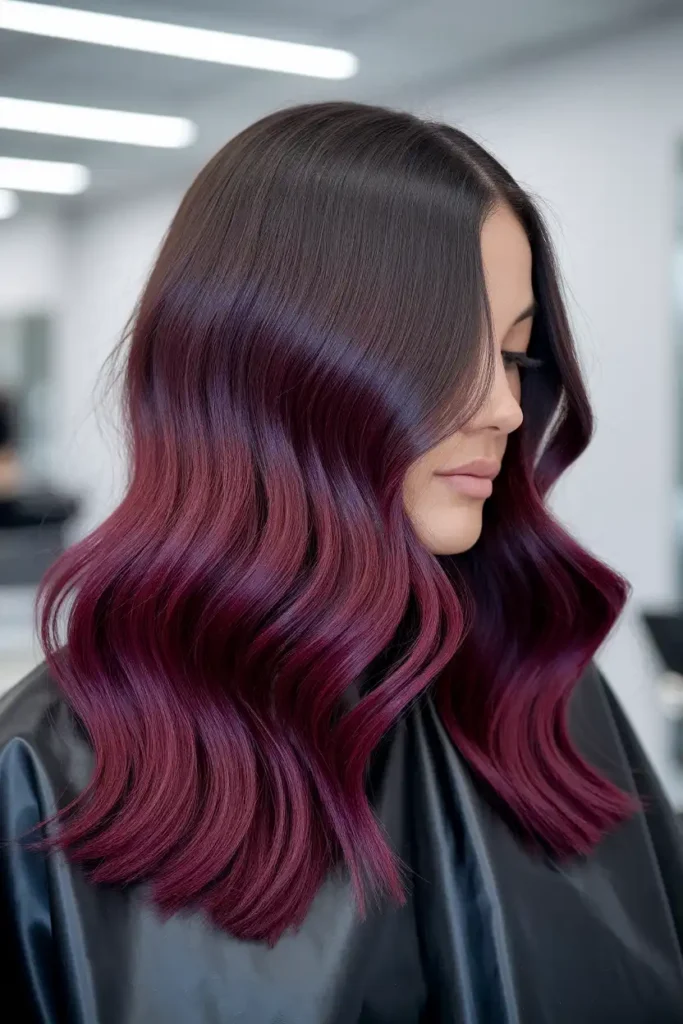
Ombre remains one of the cleanest ways to add color to dark hair because it works with your natural root line rather than against it. Starting with a dark natural base and graduating to burgundy toward the ends creates a look that grows out gracefully. You won’t end up with an obvious regrowth line because the roots are already dark.
The transition can be as gradual or as defined as you want. A blended, soft melt looks more casual and wearable every day. A sharper transition reads as more intentional and editorial. Either way, the technique eliminates the need to bleach your roots and gives you flexibility on how dramatic you want to go.
9. Burgundy Gloss Treatment for Subtle Shine
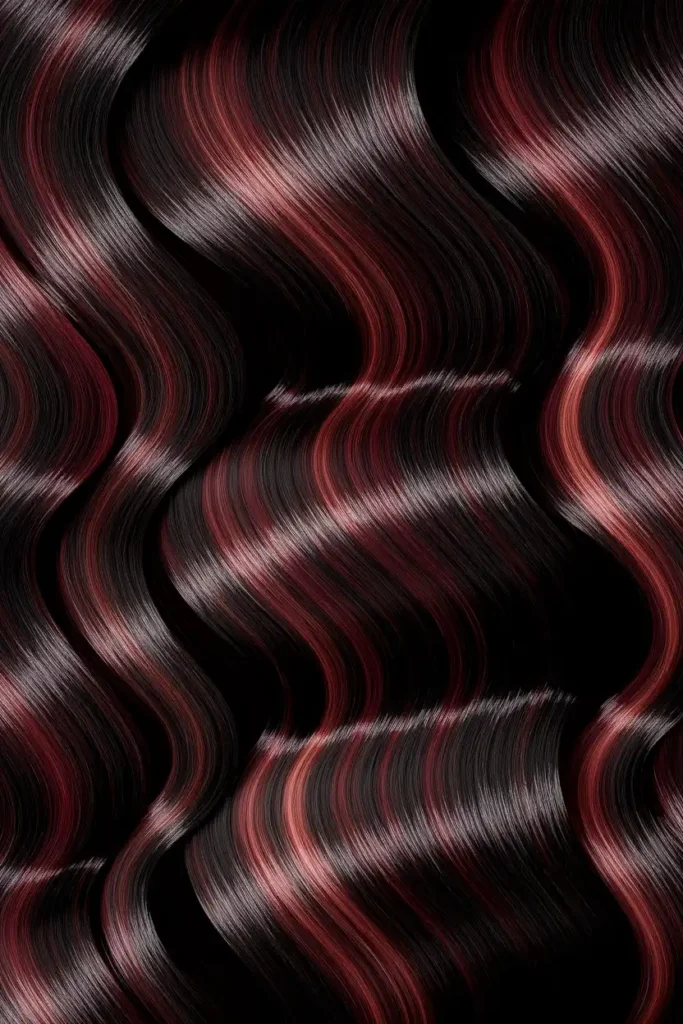
A burgundy gloss treatment is one of the most underrated options for dark hair. Rather than fully depositing color, a gloss sits on the surface of the cuticle and adds warmth and tone without dramatically changing your base. It’s essentially a shine treatment with color benefits.
This is a great starting point if you’re unsure whether you want to commit to full color. The results are temporary, lasting around 4 to 6 weeks before fading, and they won’t leave a harsh line as they grow out. Many salons offer gloss as an add-on service and it can be done in under 30 minutes.
10. Burgundy Tinted Braids on Dark Natural Hair
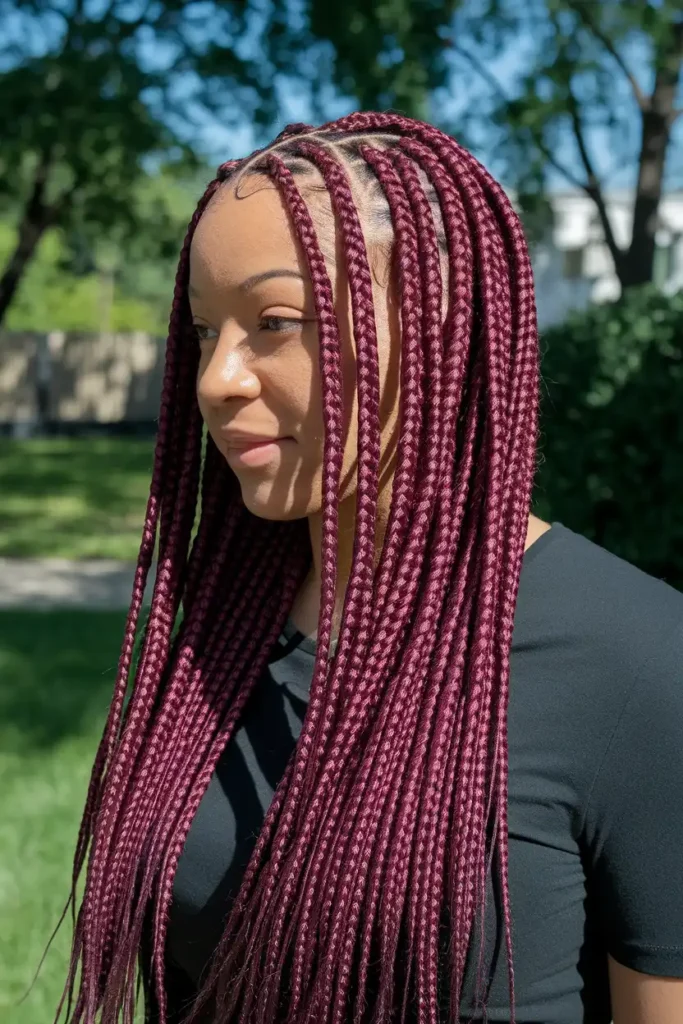
For those with natural hair who prefer protective styles, incorporating burgundy-colored extensions into braids is a smart and damage-free way to experiment with the tone. You preserve your own hair entirely while still getting the color payoff. The extensions do the heavy lifting.
This works beautifully with box braids, knotless braids, and twists. You can use fully burgundy extensions for a dramatic look or mix them with black extensions to keep things subtle. The beauty of this approach is that when you take the braids out, your natural hair is untouched and you can decide how much further you want to take the color journey.
11. Dark Burgundy on Wavy Hair
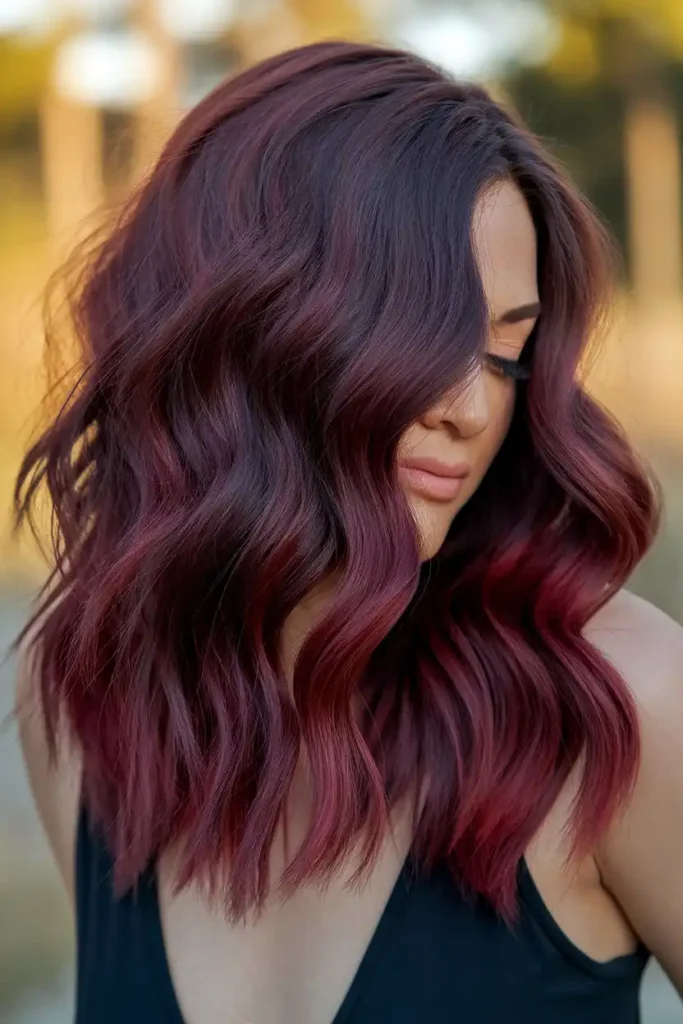
Wavy hair and burgundy are a natural match. The texture of the waves creates natural variation in how the color reflects light, which means even a single, all-over application looks dimensional without any additional highlighting technique.
On dark hair specifically, the waves catch the warm red tones beautifully, especially in natural sunlight. The result tends to look more complex than it actually is to achieve. If your natural hair is wavy or you regularly use a curling technique to add wave texture, an all-over dark burgundy application will look noticeably richer than it would on straight hair.
12. Burgundy Money Piece on Dark Hair
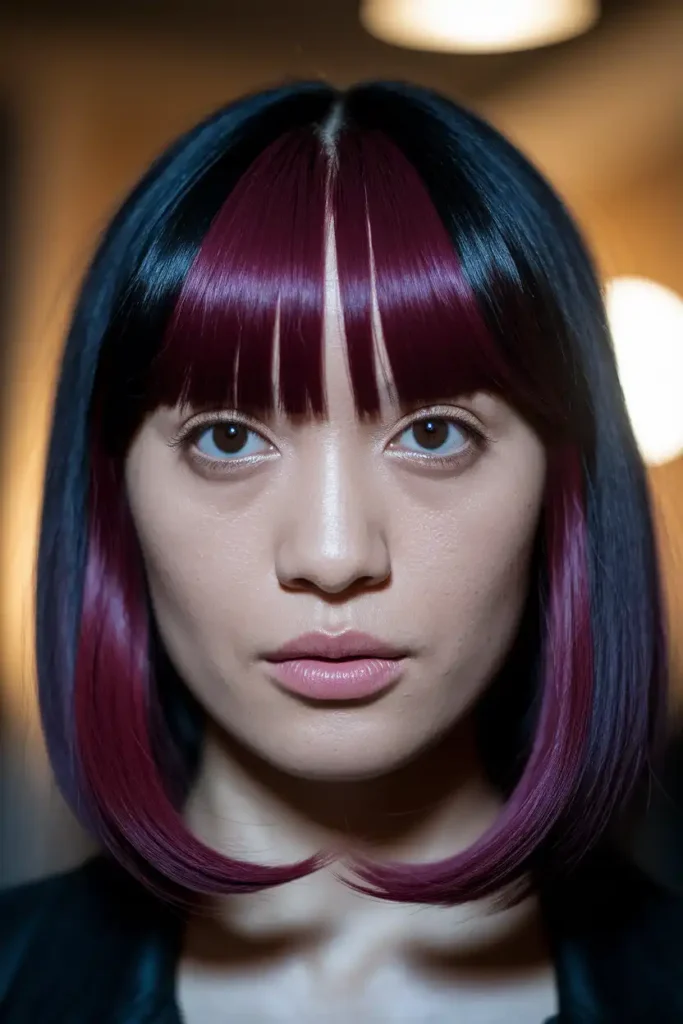
Money piece highlighting involves adding color only to the front sections of hair that frame your face. It’s strategic and impactful without requiring any commitment to the rest of the hair. On dark hair, a burgundy money piece reads as bold and intentional.
The face-framing placement means the color is always visible and always catches the light when your hair falls forward. It’s also one of the more affordable color services at a salon because it requires minimal product and time. For a DIY version, you can use a vivid direct dye on just those front pieces at home with clean sectioning.
13. Brown to Burgundy Color Melt
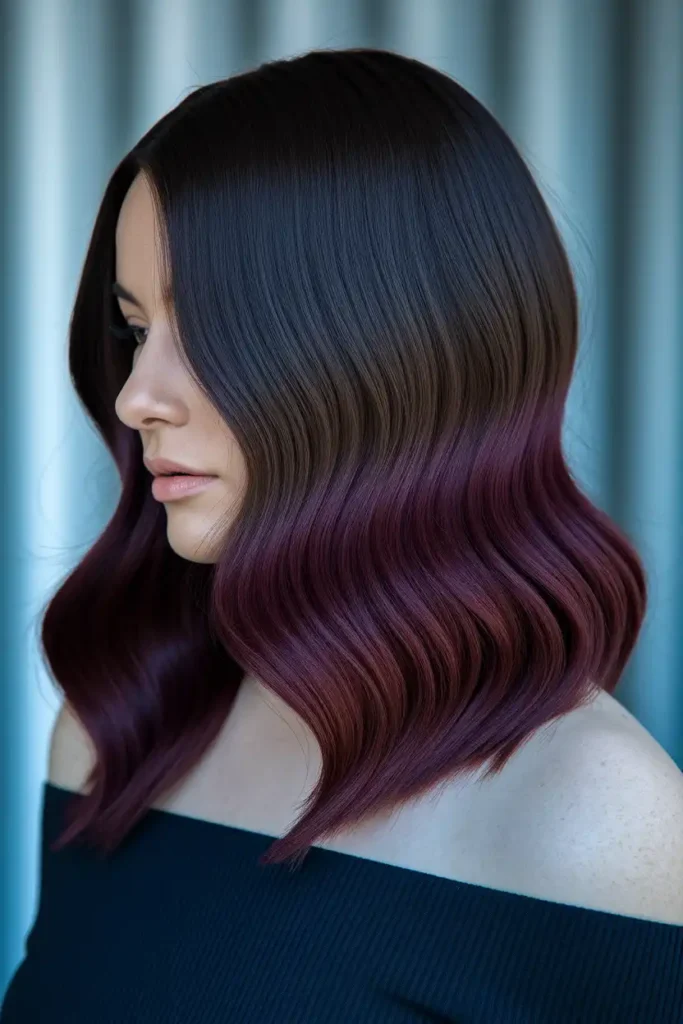
A color melt between dark brown and burgundy is one of the most elegant techniques available for dark hair. Unlike ombre, which creates a distinct light-to-dark transition, a melt blurs the boundary between two colors so the shift is almost imperceptible until you look closely.
This works particularly well because dark brown and burgundy sit close to each other on the color wheel. They share enough warmth that the melt looks cohesive rather than contrasting. It’s a sophisticated result that requires a skilled colorist but is worth the investment if you want something that looks completely natural.
14. Burgundy Color on 4C Natural Hair
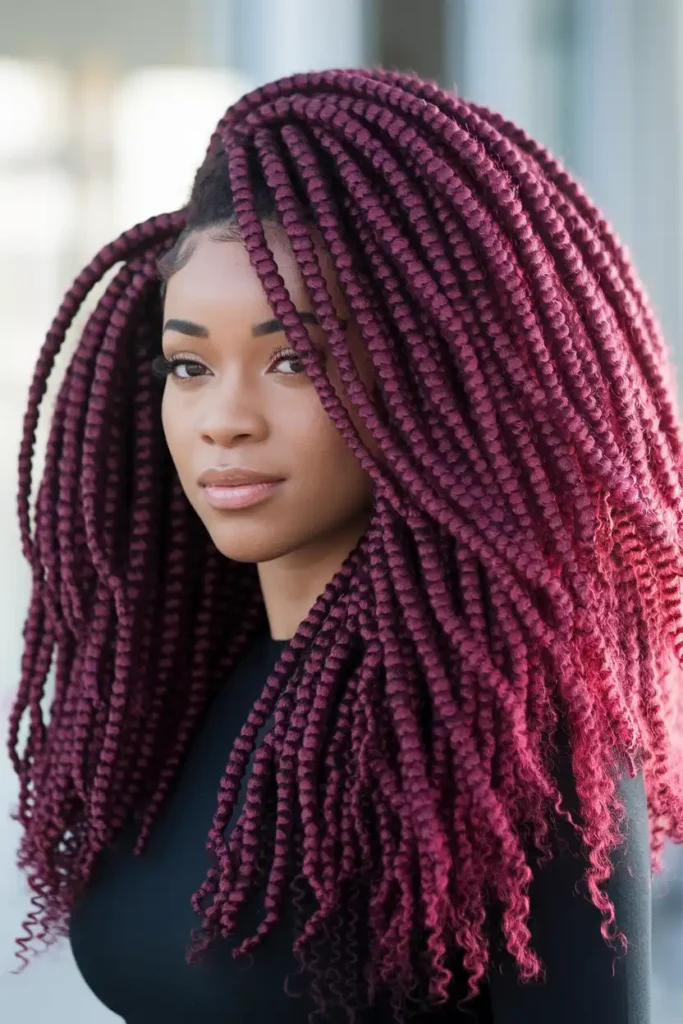
4C hair can absolutely take burgundy color, and the result is stunning when the hair is healthy and moisturized going in. Because 4C hair has a tightly coiled pattern, the color sits in the strands and glows when the hair is stretched or styled in a twist-out or wash-and-go.
It’s important to prioritize a deep conditioning treatment before and after any color service on 4C hair. The porosity of tightly coiled hair means it can absorb dye quickly and also release it faster than straight hair. Using a color-safe sulfate-free shampoo and a weekly conditioning mask will significantly extend the vibrancy and health of the color.
15. Burgundy Ribbon Highlights
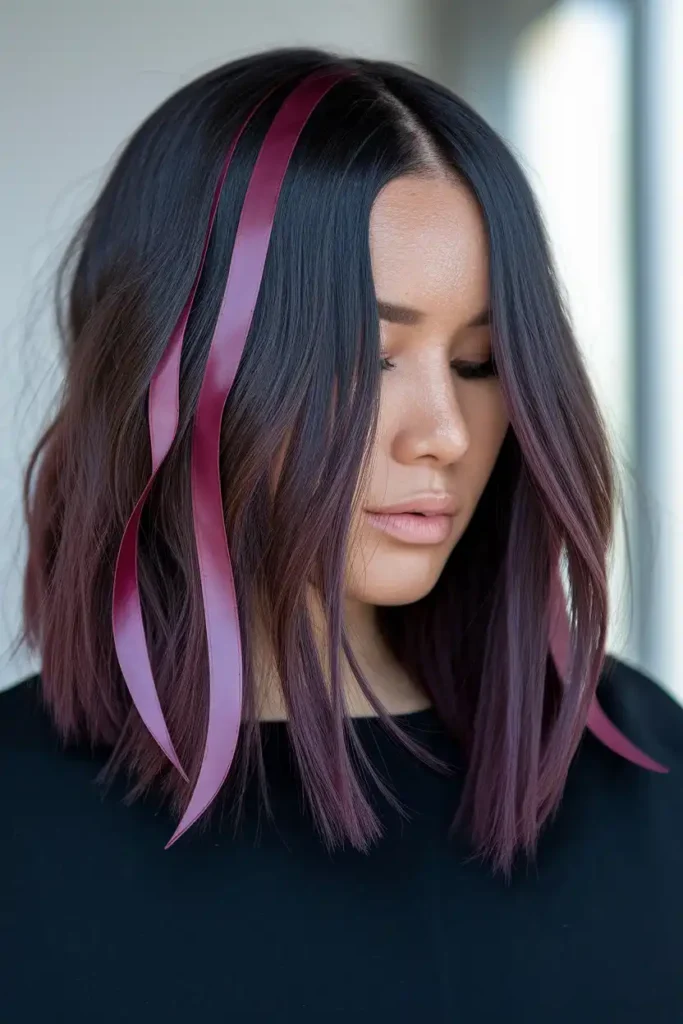
Ribbon highlights are a bolder, more visible version of traditional highlights. Instead of fine woven sections, they involve thicker panels of color placed in deliberate locations. On dark hair, a few burgundy ribbon highlights stand out clearly and create a striking effect without altering the overall tone of your base.
This style works best when the placement is intentional. A colorist will typically place the ribbons on the top layer of hair where they catch the most light. The result from above looks like your hair has natural red variation. From the front, the color appears when you part or move your hair.
16. Burgundy Hair on Locs
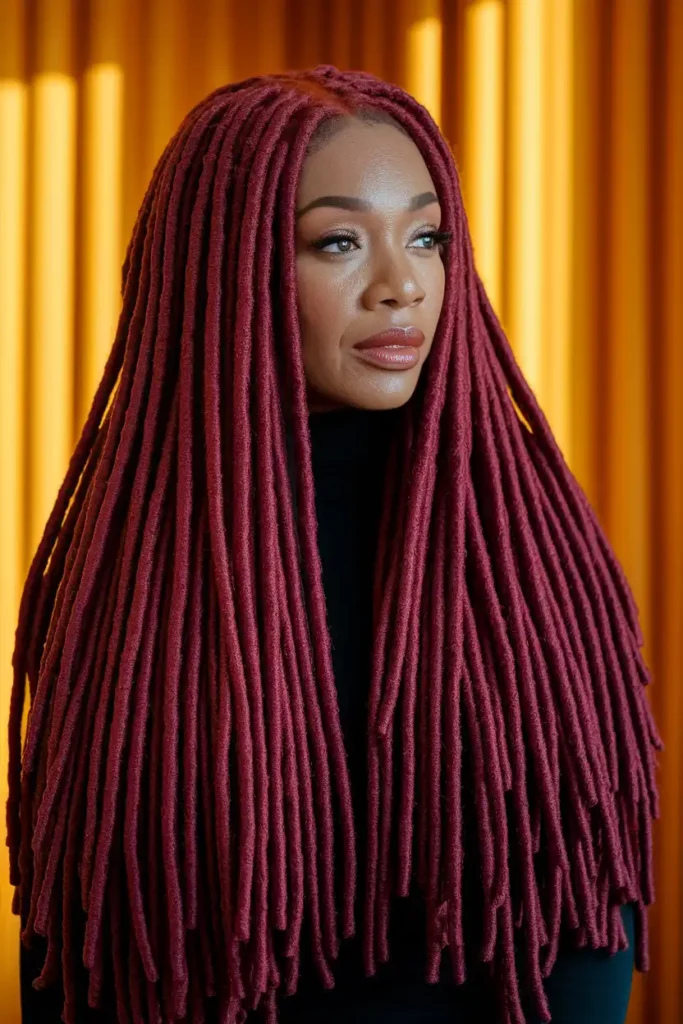
Coloring locs with burgundy is straightforward, and the results are often more dramatic than on loose hair because locs hold color intensely. The compact structure of a loc means the pigment saturates deeply and the color tends to last longer before fading compared to other hair types.
Direct dyes and semi-permanent formulas work well on locs without the need for any lightening. Applying the color evenly through the length and allowing adequate processing time is key. Darker locs will show the burgundy more as a subtle warmth, while lighter or already-colored locs will pick up the tone more vividly.
17. Two-Tone Dark and Burgundy Layers
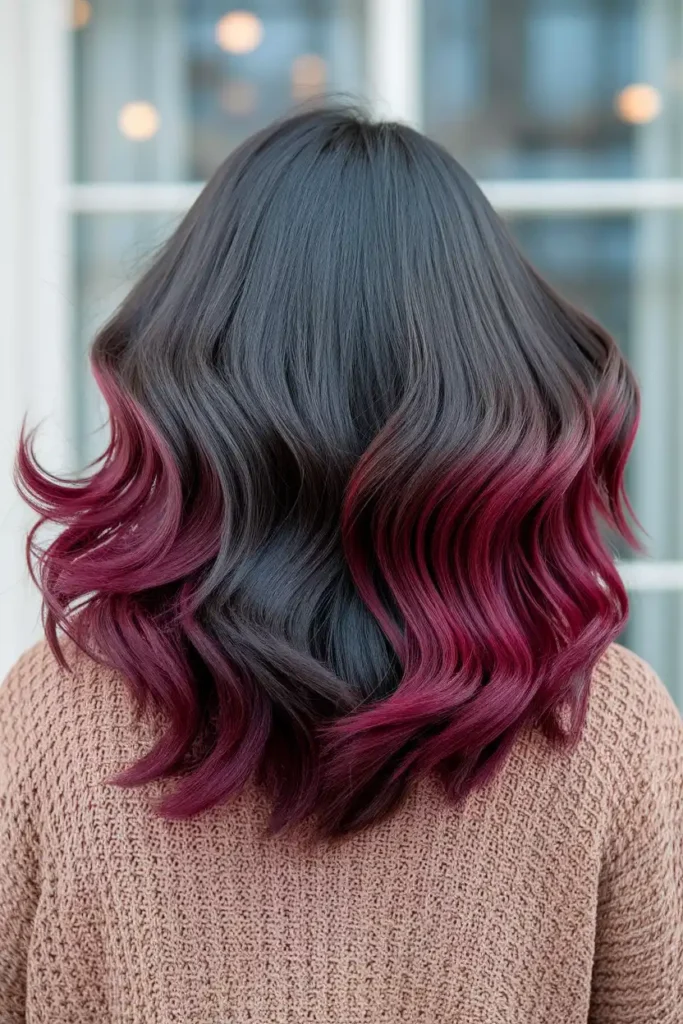
Two-tone color is a technique where the underneath layers of hair are colored differently from the top layer. You keep the top sections of your hair dark and natural, and the underneath gets a vivid burgundy treatment. It’s hidden when the hair sits flat but revealed beautifully when you move, tie your hair up, or let the wind hit it.
This is a clever approach for people who want color but work in environments where very visible hair color might be an issue. With the hair down, you look conventional. With the hair up in a ponytail or bun, the burgundy underneath becomes the entire visual. It’s practical and genuinely fun.
18. Burgundy Toner on Dark Hair With Existing Warmth
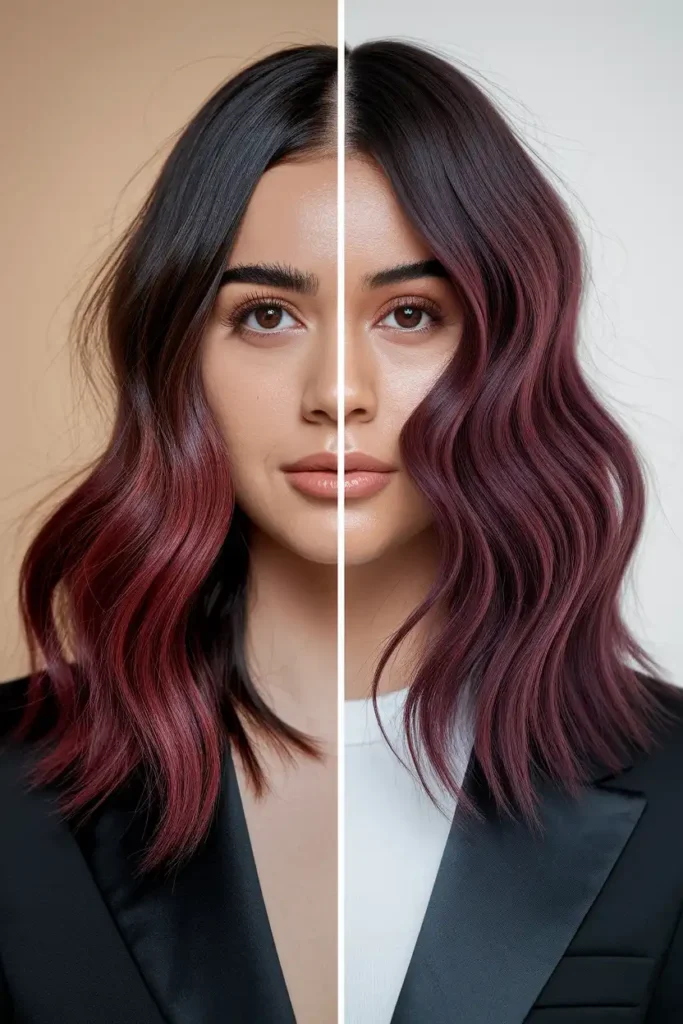
If your dark hair already has warm undertones, whether from sun exposure, previous color, or natural variation, a burgundy toner can pull all those tones into a cohesive direction. Rather than fighting the warmth, you use it. A burgundy toner deposits just enough pigment to shift orange or brassy tones into something intentional.
Toners are low-commitment and relatively affordable. They don’t penetrate the hair shaft deeply, so they fade gently rather than leaving a hard line. For dark hair with existing warmth, this is often the most efficient way to get a burgundy result without any dramatic service.
19. Burgundy Hair on a Dark Layered Cut
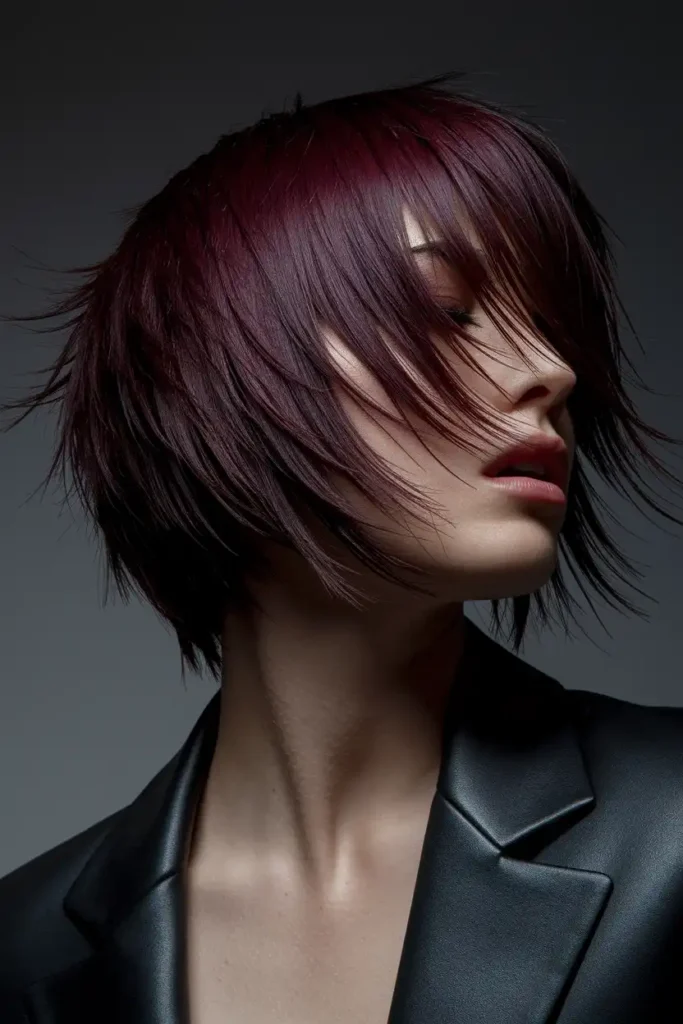
The combination of a layered cut and burgundy color is particularly effective because the layers themselves create natural light and shadow variation. Even a single all-over color application looks more complex on layered hair because different sections catch the light differently.
If you already have a layered cut or are considering one, pairing it with a deep burgundy is a simple way to maximize the impact of both the cut and the color. The layers add movement and the color adds depth. Together, they make dark hair look noticeably more dynamic.
20. Burgundy Hair Maintained With Tinted Shampoo
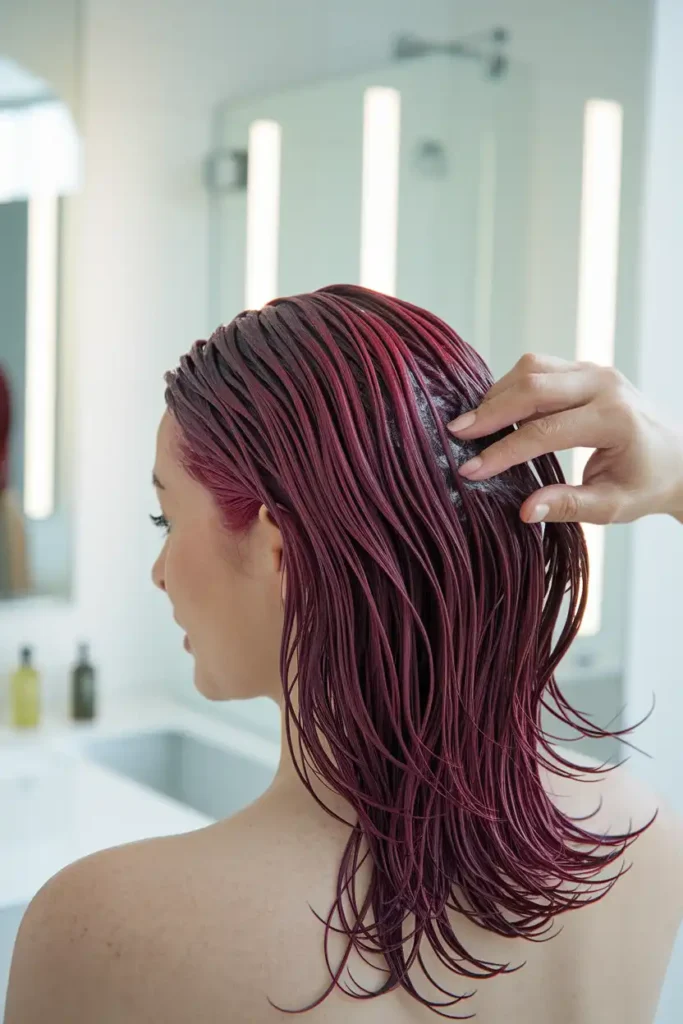
Getting burgundy on dark hair is one thing. Keeping it looking fresh is another. One of the most effective tools for maintaining the vibrancy of burgundy on dark hair without salon visits is a color-depositing or tinted shampoo. These products add a small amount of red or burgundy pigment every time you wash, slowing the fade significantly.
Brands like Overtone, Celeb Luxury, and dpHUE make color-depositing formulas specifically for red and burgundy tones. Using one two to three times a week in place of your regular shampoo can extend the life of your color by weeks. Pair it with a sulfate-free conditioner and avoid washing with hot water, which opens the cuticle and releases color faster.
Conclusion:
Dark hair is one of the best canvases for burgundy because the color doesn’t need to compete with a lighter base. Every shade on this list is achievable without bleach, which means less damage, less cost, and a lot more flexibility.
Whether you go all over, add a few highlights, or start with just a tinted gloss, the key is picking a technique that fits your lifestyle and your commitment level. Burgundy can be a low-maintenance, gradual change or a full bold statement. Either way, dark hair handles it beautifully.