20 Dance Practice Outfits Approved by Real Dance Studios
Whether you’re logging hours at the barre or running hip-hop choreography for the fifth time today, what you wear to practice matters more than most people think. These are the looks that real dance studios actually see on their floors, worn by dancers who know the difference between cute and functional. Every outfit on this list earns its spot.
1. The Classic Black Leotard and High-Waisted Leggings Combo
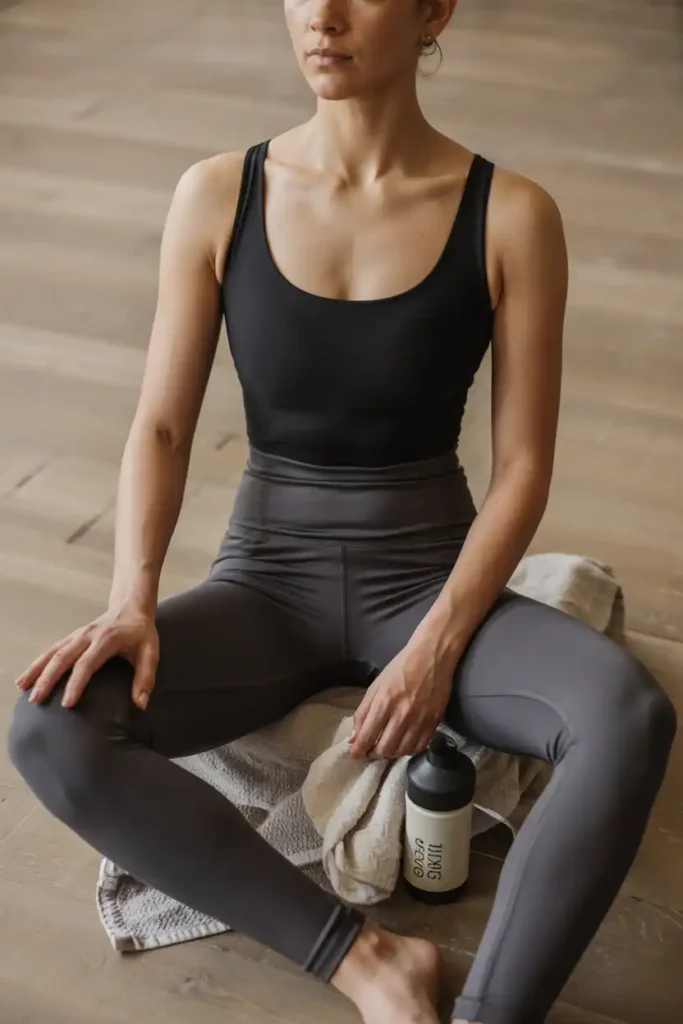
There is a reason this combination has never left the studio floor. The black leotard anchors the silhouette while high-waisted leggings offer core support without restricting movement. Ballet and contemporary dancers especially swear by this pairing because it lets instructors see body alignment clearly, which is something baggy clothes simply cannot offer.
Beyond functionality, this look carries a timeless confidence. It communicates that the dancer is here to work. Studios from New York to Los Angeles consistently see this as the baseline standard, and for good reason. When in doubt, this is the outfit that never gets it wrong.
2. Fitted Crop Tank and Dance Shorts for Hip-Hop Training
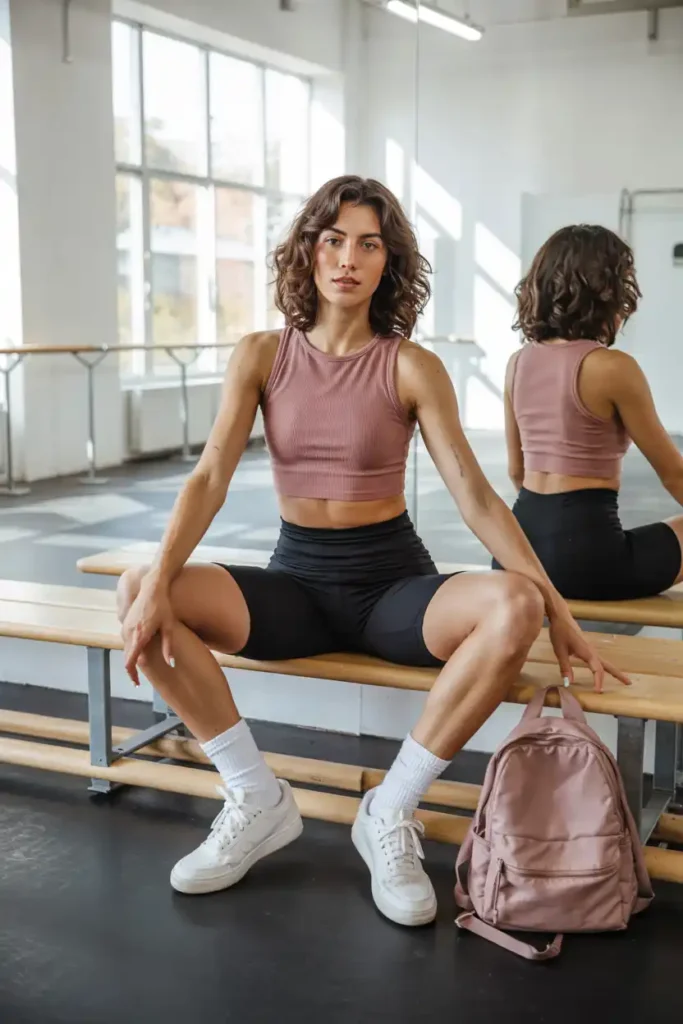
Hip-hop training demands outfits that allow explosive movement without riding up or falling out of place. A snug crop tank keeps things secure while the shorter hemline prevents overheating during high-intensity sessions. Dance shorts, specifically those with a fitted compression layer, give dancers the freedom to kick, drop, and freestyle without second-guessing their outfit.
This combination also reads incredibly well in studio mirror reflections, which is where most dancers spend a good portion of their time self-correcting. The contrast between a light-toned top and dark shorts creates a visual line that helps dancers track their own movement, a subtle but genuinely useful benefit that seasoned instructors often point out.
3. Flowy Wrap Skirt Over a Fitted Base Layer
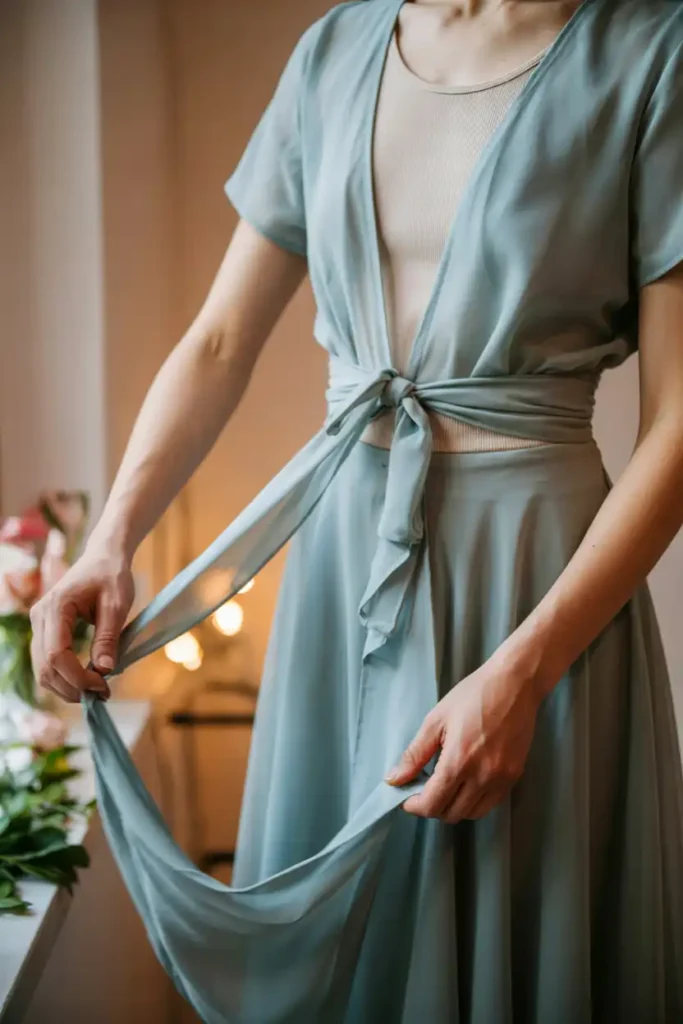
Wrap skirts have been a staple in ballet and contemporary dance studios for decades, and they are not going anywhere. Worn over a leotard or base layer, they add a layer of warmth to the hips and lower back during warm-up, which helps prevent muscle strain. Instructors often encourage this look because it supports proper hip engagement before full movement begins.
There is also something deeply motivating about wearing something beautiful to practice. The movement of a chiffon wrap skirt during a pirouette or a grand jeté adds a visual poetry that reminds dancers why they fell in love with the art form in the first place. It is both practical and genuinely uplifting to wear.
4. Sports Bra and Wide-Leg Sweatpants for Modern Dance
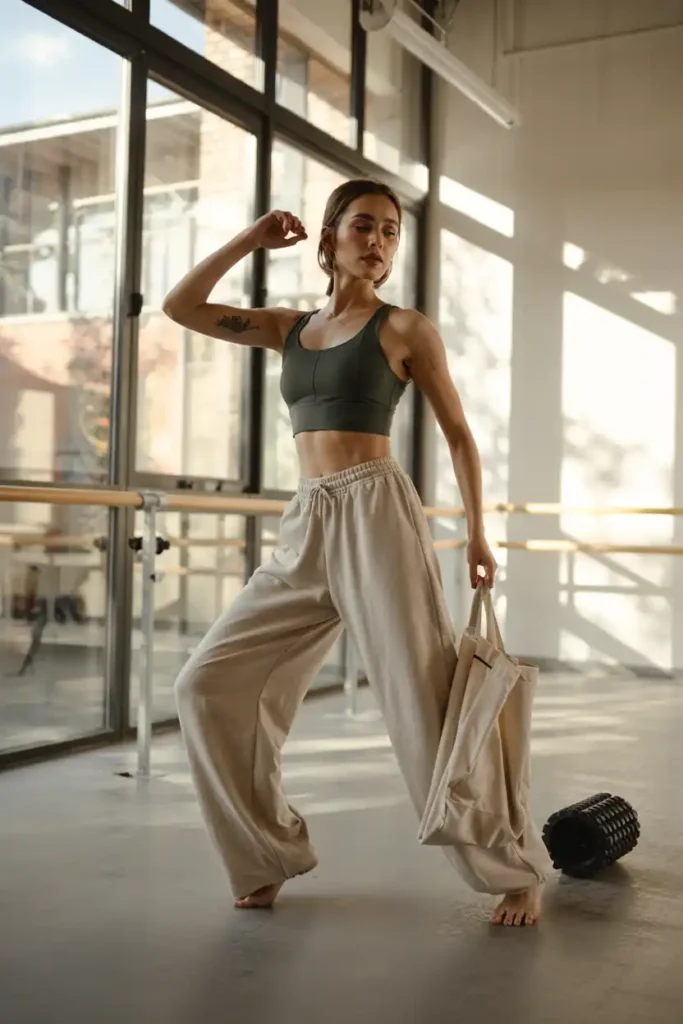
Modern dance calls for something different than the tight silhouettes of ballet. Wide-leg sweatpants allow for the full range of floor work, extensions, and rolls that define the genre. Paired with a supportive longline sports bra, this outfit keeps everything in place during complex sequences while still feeling relaxed and expressive, which aligns perfectly with the philosophy of modern dance itself.
Studios that specialize in contemporary and modern movement consistently see this silhouette on their most experienced dancers. The wide leg is not just a fashion moment. It is a deliberate choice that allows the dancer to feel grounded and free at the same time. That balance between structure and flow is something the best practice outfits always manage to achieve.
5. Mesh Overlay Top and Seamless Leggings
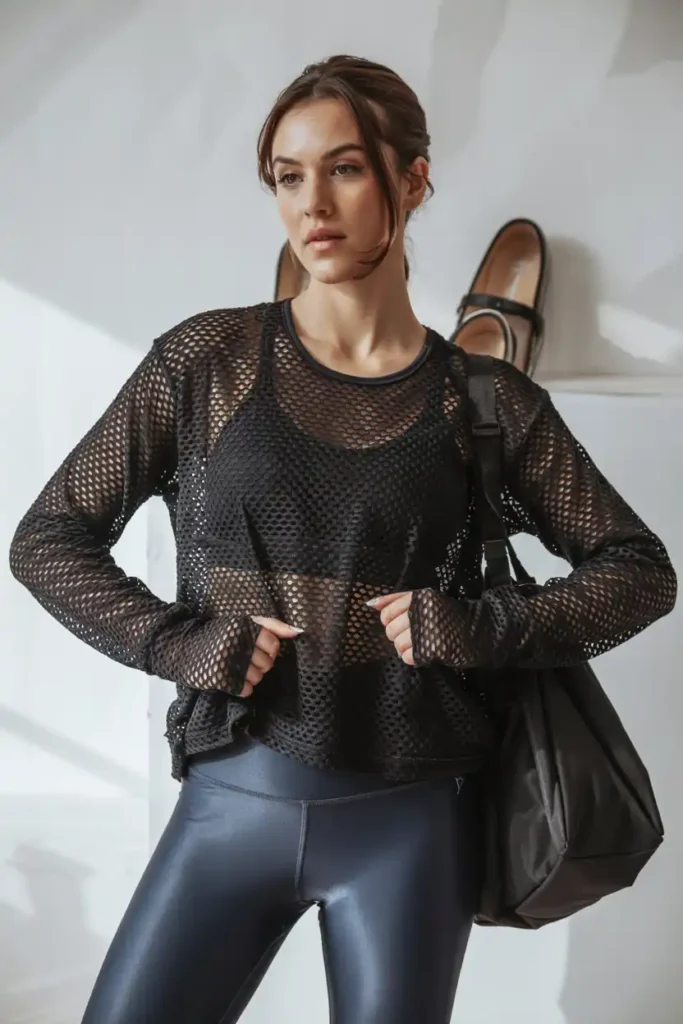
Mesh overlay tops have made a serious entrance into studio culture and they have earned their place. They provide just enough coverage to feel put-together while allowing maximum breathability during intense rehearsals. The layered look also photographs beautifully in studio settings, which matters more than ever in an era where dance content is shared widely and class photos become part of a dancer’s personal brand.
Seamless leggings underneath complete the picture. Their lack of seams means no chafing during floor work and no distracting lines during technique corrections. Studios that work with advanced students particularly appreciate this combination because it balances aesthetics with total freedom of movement, something that cheap or poorly constructed dancewear consistently fails to deliver.
6. Ribbed Two-Piece Set in Earth Tones
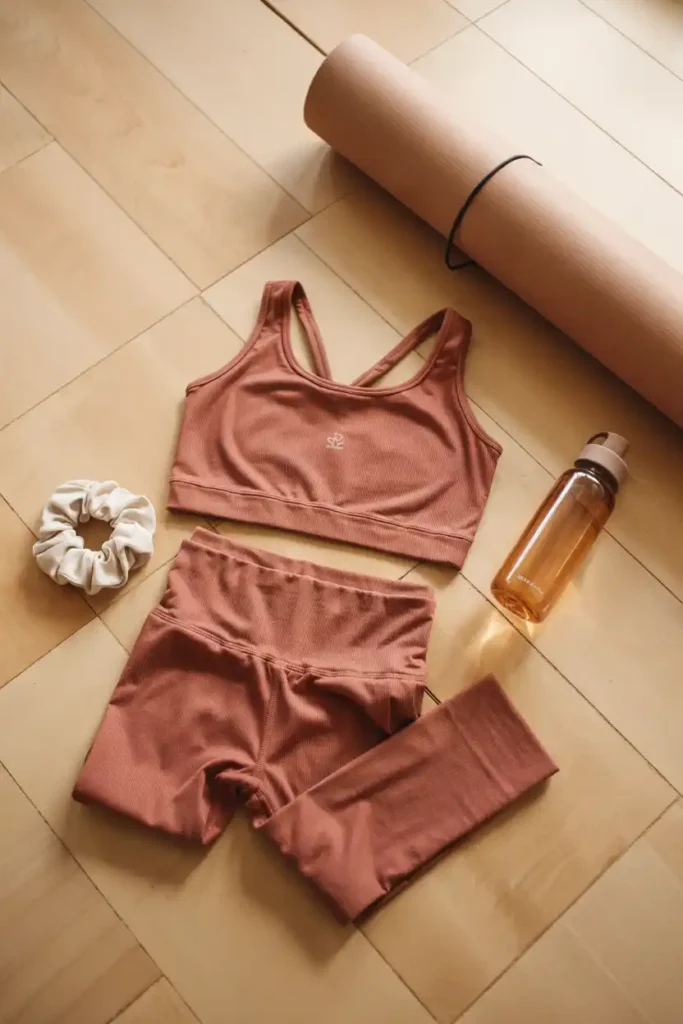
Matching sets have become one of the most practical choices in active dancewear, and the ribbed earth-tone version in particular has found a loyal following in contemporary and lyrical studios. The ribbed fabric has a natural compression quality that supports muscles without feeling restrictive. Earth tones like terracotta, sage, and warm camel also complement a wide range of skin tones, which makes these sets universally flattering.
The cohesive look of a matching two-piece also simplifies the getting-ready routine before an early morning class, which is something most dedicated dancers appreciate deeply. There is a quiet confidence that comes with wearing a well-thought-out set. It signals intention. It says the dancer showed up prepared, and that energy carries into the practice itself.
7. Long-Sleeve Fitted Thermal Top and Dance Tights
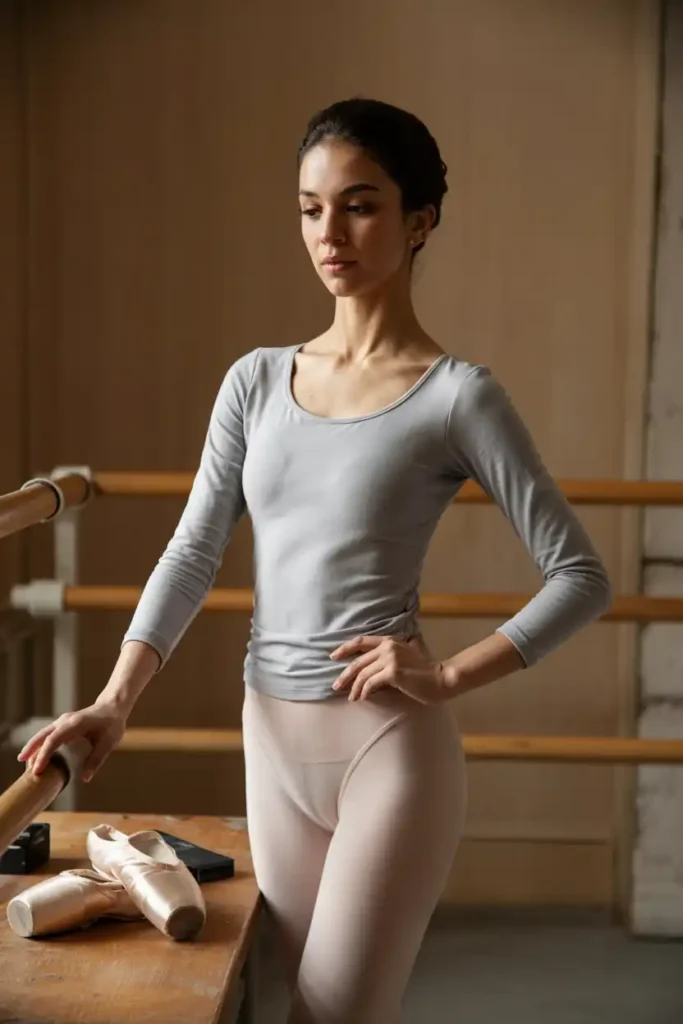
Colder months bring a different set of wardrobe challenges to the studio, and a fitted thermal long-sleeve top solves most of them elegantly. It keeps the back and core warm without adding bulk, which is essential for instructors who need to observe technique. Worn with classic dance tights, this combination is beloved in ballet and pointe work settings where warmth and visibility of line must coexist.
Thermals designed specifically for dance have a four-way stretch that off-the-rack athletic tops simply do not replicate. That difference becomes obvious the moment a dancer attempts a full port de bras or a deep cambré. The fabric moves with the body seamlessly, and the warmth it provides to muscles during a cool-morning barre warm-up genuinely reduces injury risk. Studios in colder climates consider this pairing an absolute essential.
8. Tie-Dye Set for Contemporary and Jazz Classes
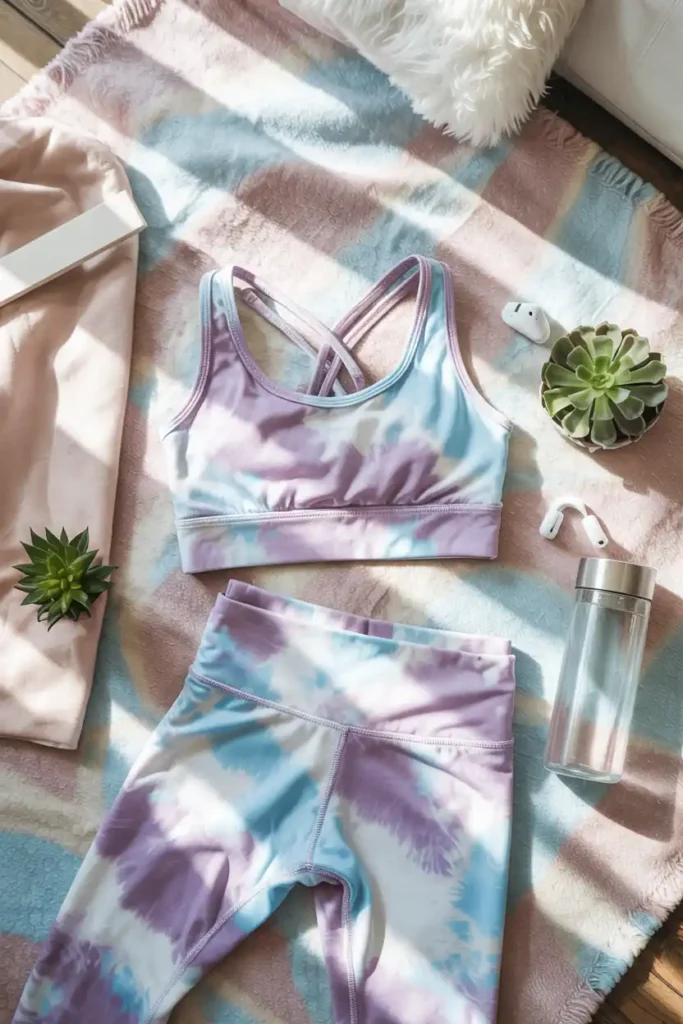
Not every practice needs to look austere, and jazz and contemporary studios tend to embrace color and personality in their dress codes more than most. A coordinated tie-dye set brings visual energy into the room and often lightens the mood of a long, demanding rehearsal. Teachers in these genres frequently comment that when students feel expressive in their clothing, that energy shows up in their movement quality.
Beyond the aesthetic, the technical quality of a good tie-dye set should not be overlooked. The best versions use a performance fabric that wicks moisture and maintains shape through hours of repetitive movement. The print also has a practical advantage: it disguises sweat marks during particularly intense sessions, which is a genuinely useful quality that solid-color sets cannot offer.
9. Oversized Hoodie Over Dance Shorts During Warm-Up
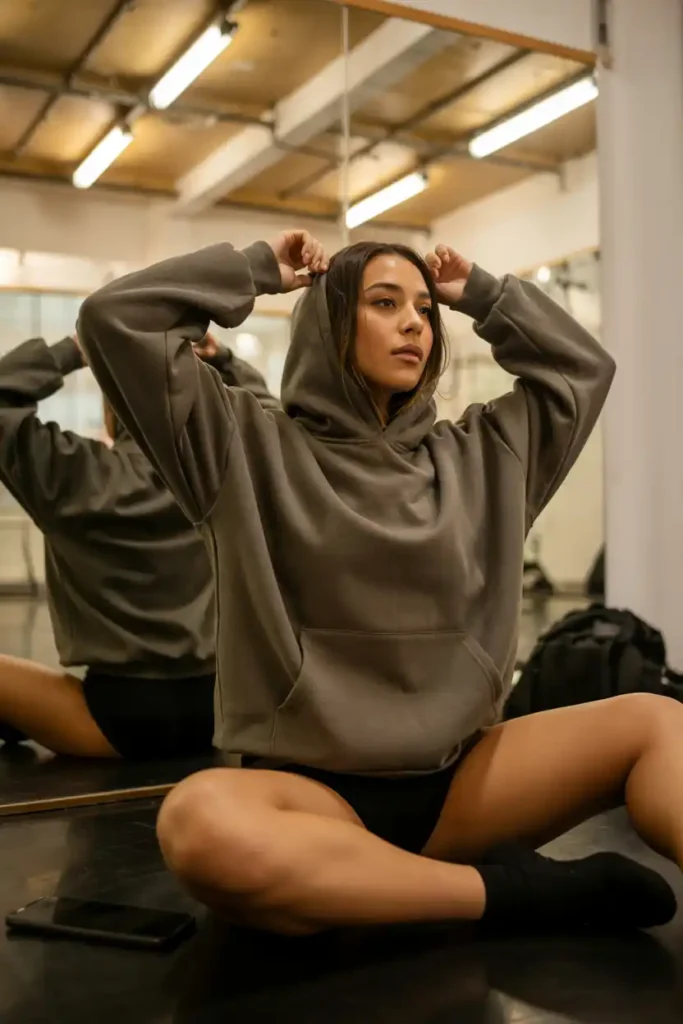
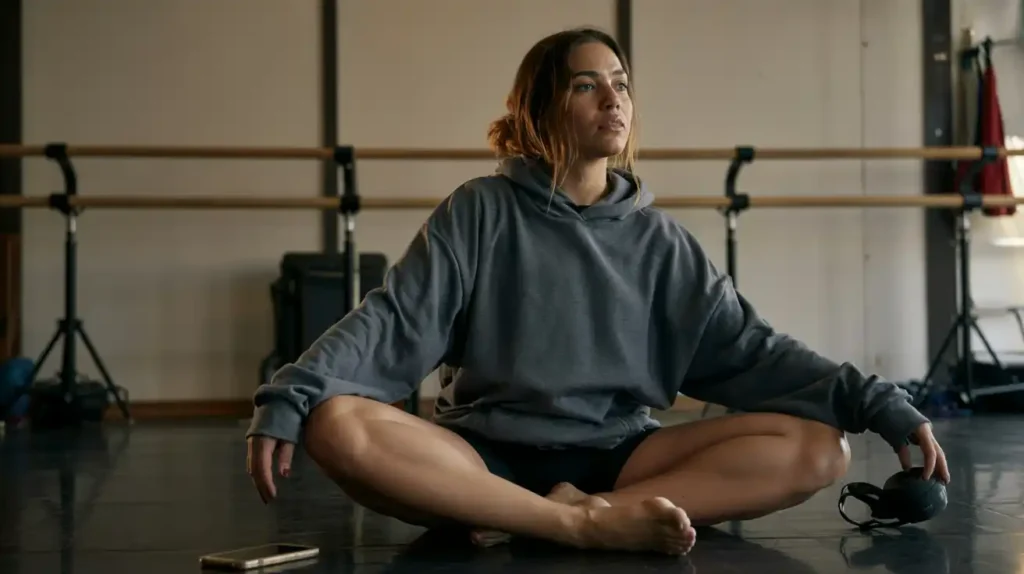
The oversized hoodie is arguably the most universal warm-up layer in any dance studio, regardless of the genre. It traps body heat efficiently during the pre-class stretch and is easy to pull off the moment the body reaches working temperature. Dancers who skip this layer and jump straight into movement cold are far more susceptible to pulls and strains, something studio physiotherapists and teachers emphasize regularly.
There is also something deeply comforting and human about arriving to a studio in a big cozy hoodie. It signals that the body is being taken care of before the work begins. The best studio environments celebrate that kind of intentional self-care. When practice is sustainable, it leads to longer, healthier dance careers, and the humble hoodie plays a small but real role in that.
10. Pastel Unitard for Ballet Intensive Programs
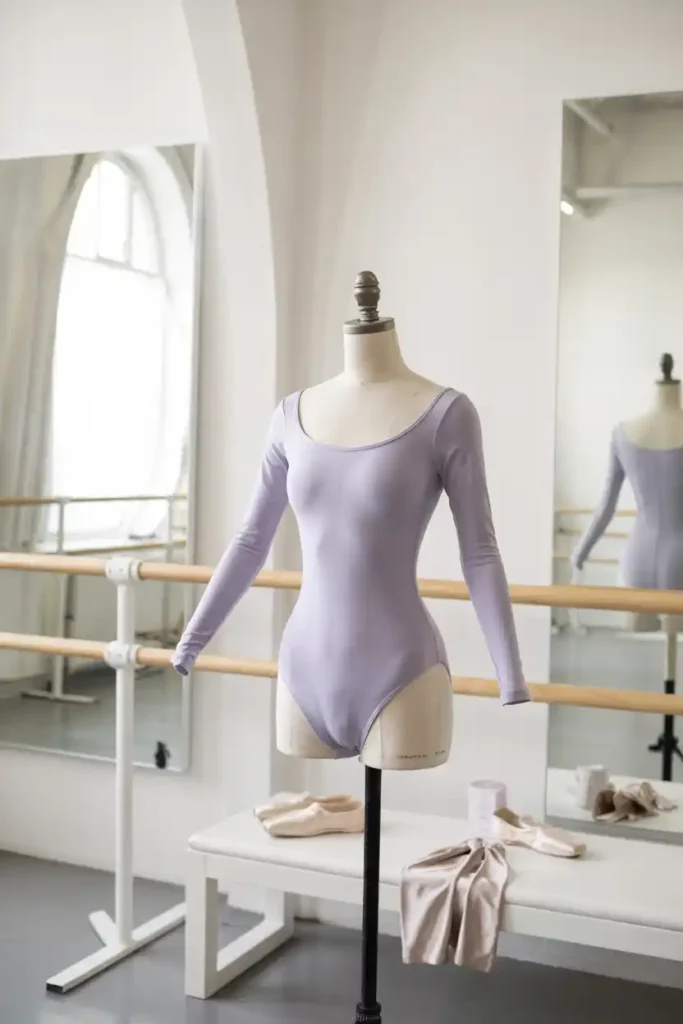
Unitards have experienced a genuine revival in ballet intensive programs, and it is not hard to understand why. The single-piece construction eliminates any gap between top and bottom, keeping the torso visually clean and allowing teachers to assess posture and line without distraction. Many prestigious summer intensives and year-round programs have incorporated them into their official dress codes for precisely this reason.
Pastel shades like lavender, blush, and soft mint have become particularly popular because they photograph beautifully under studio lighting and offer a softer alternative to the traditional black or white. Dancers who wear them often describe feeling unusually aligned and composed, a psychological effect that well-designed dancewear consistently produces. When the outfit works with the body rather than against it, confidence follows naturally.
11. Cutout Sports Bra and Full-Length Leggings for Acro Training
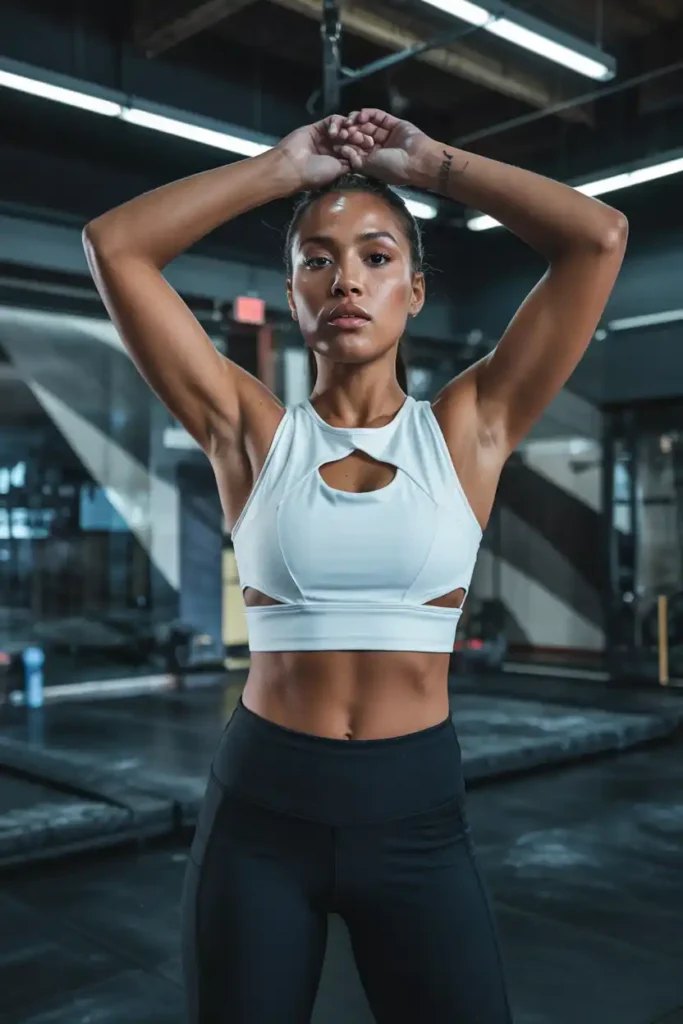
Acrobatics and acro dance require gear that stays put through inversions, tumbling passes, and partner work. A cutout sports bra offers maximum support while the strategic openings allow full skin ventilation, which matters when the body temperature spikes quickly during this kind of training. Full-length leggings protect the legs during floor contact and reduce friction during sliding movements, a practical detail that acro dancers genuinely appreciate.
The geometric aesthetic of cutout designs also reads as intentional and performance-forward, which fits the energy of acro training perfectly. Studios that specialize in this discipline tend to attract dancers who take their physical conditioning seriously, and their outfits reflect that commitment. This look performs exactly as hard as the dancer wearing it.
12. Seamless Bralette and Bike Shorts for Street Jazz
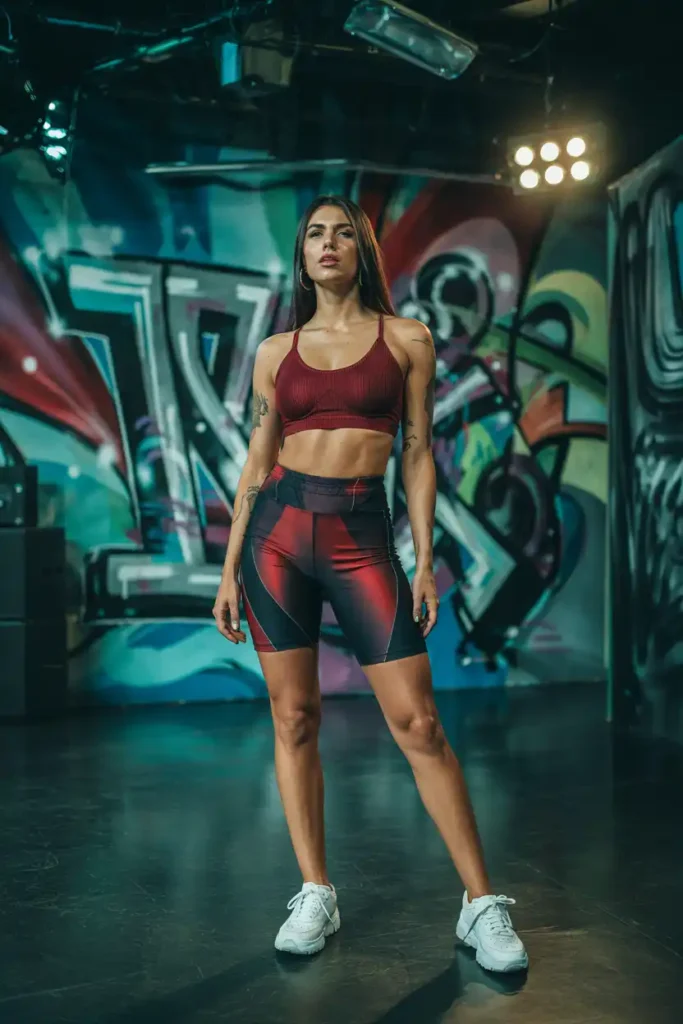
Street jazz sits at the intersection of commercial dance and artistic expression, and the outfit choices in this genre reflect that energy. Bike shorts provide freedom of movement for hip-heavy choreography while staying securely in place during fast, dynamic sequences. A seamless bralette keeps the look clean and intentional without sacrificing comfort during a three-hour rehearsal block.
The color story matters in this genre more than in almost any other. Bold, saturated shades like deep red, cobalt, and electric yellow show up frequently because they project energy and attitude from the very first eight-count. Studio directors and choreographers working in this space consistently emphasize that how a dancer presents themselves in practice shapes how they show up in performance, and this outfit nails that message.
13. Lace-Trim Camisole Leotard for Lyrical Dance
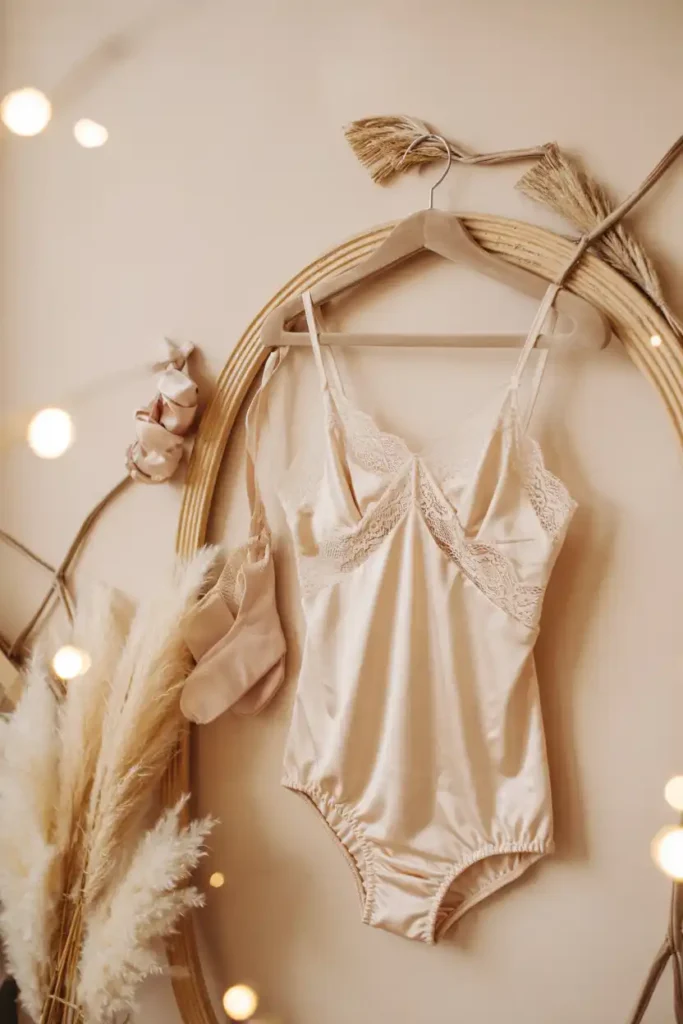
Lyrical dance is deeply emotional by nature, and the clothing worn during practice should support that expressive quality. A lace-trim camisole leotard strikes a perfect balance between elegance and functionality. The delicate lace detail elevates the visual aesthetic without adding unnecessary bulk, and the camisole straps allow full shoulder mobility for the sweeping arm movements that define the genre.
Studios that teach lyrical and contemporary fusion often encourage dancers to wear pieces that make them feel emotionally connected to their movement. This is not vanity; it is craft. When a dancer feels beautiful and free in what they are wearing, that feeling translates directly into the quality of their performance. The right outfit can actually unlock something in a dancer’s expressive range that a purely utilitarian one cannot.
14. Compression Shorts and Loose Tank for Latin Dance
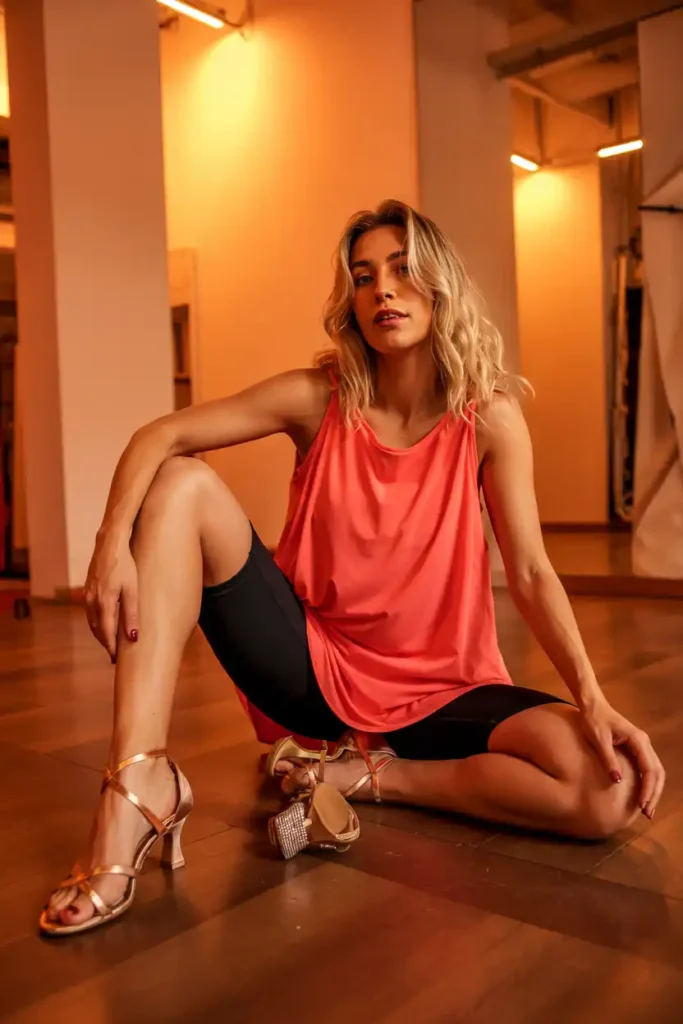
Latin dance styles like salsa, cha-cha, and bachata place enormous physical demands on the hips, legs, and core. Compression shorts provide the muscular support needed for fast hip isolations and quick weight transfers, while a looser tank allows the torso to breathe freely through what can be very warm, energetic rehearsals. Together they form a practical and stylish foundation for this demanding genre.
The relaxed quality of a loose tank also allows the instructor to observe ribcage movement and upper body articulation, which are critical technical points in Latin technique. Studios that focus heavily on latin styles are particularly attentive to how clothing interacts with the body’s natural lines. Getting this balance right is something experienced latin dancers learn early in their training.
15. Velvet Crop Top and Joggers for Tap Dance Class
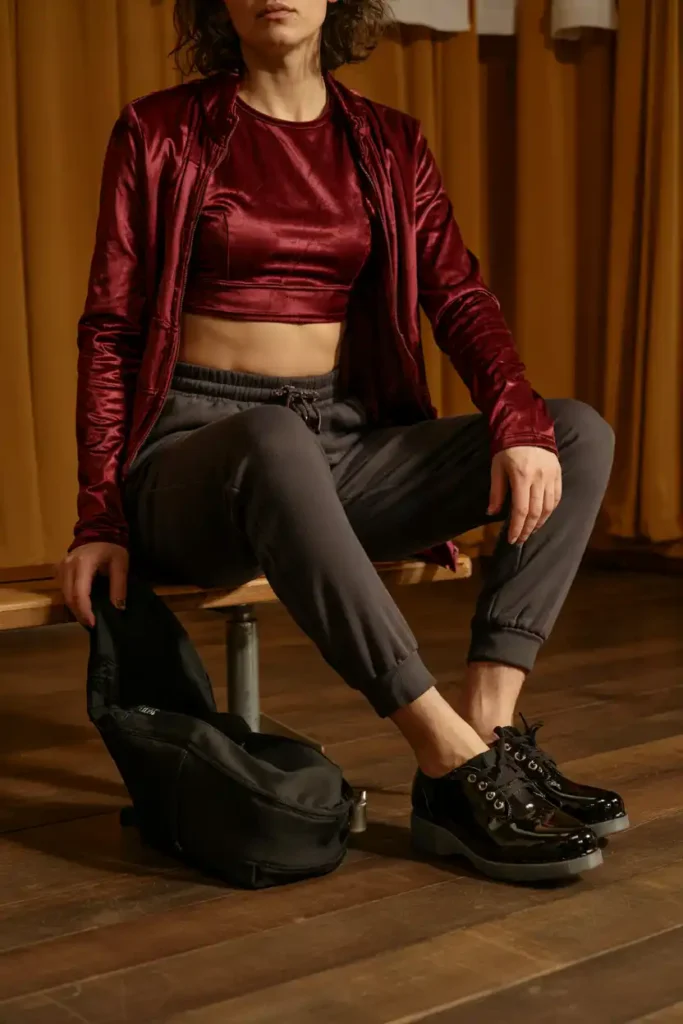
Tap dance has a distinct theatrical culture, and even in practice settings, dancers tend to gravitate toward outfits with a bit more personality. A velvet crop top brings texture and visual richness to the studio without being overly formal. Slim-fit joggers allow the legs to move freely and drop into rhythmic footwork without restriction, while still being polished enough for an observed class or videotaped rehearsal.
There is also a practical acoustic element worth mentioning: tap studios are all about sound, and an outfit that fits properly means fewer distractions during precision rhythm work. Baggy fabric that swishes or brushes against the floor can actually interfere with the clarity of sound a tap dancer needs to hear. The right fit is both an aesthetic and a technical choice in this genre.
16. Color-Block Set for High-Energy Cardio Dance Classes
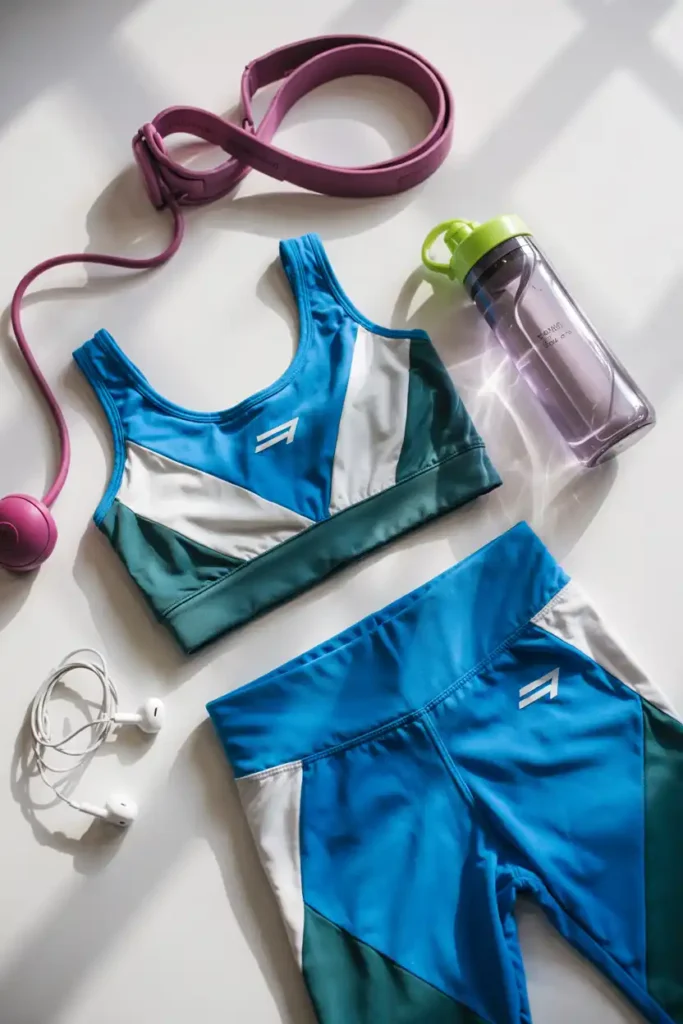
Cardio-based dance formats like Zumba, dance fitness, and aerobics-inspired classes thrive on energy, and color-block activewear feeds directly into that atmosphere. The bold geometric panels create visual interest and photograph vividly, which makes them a popular choice for classes that are frequently filmed or streamed. Fabric-wise, the best color-block sets use moisture-wicking performance material that handles sustained cardio output with ease.
These outfits also have a genuinely motivating psychological effect. Research in behavioral science consistently points to the influence of clothing on mood and performance, and in high-energy dance settings, bold color choices are strongly linked to increased effort and enjoyment. Studios that run cardio dance programs know this and actively encourage dancers to bring brightness and energy through their wardrobe.
17. Wrap Crop Top and Flared Dance Pants for Ballroom Prep
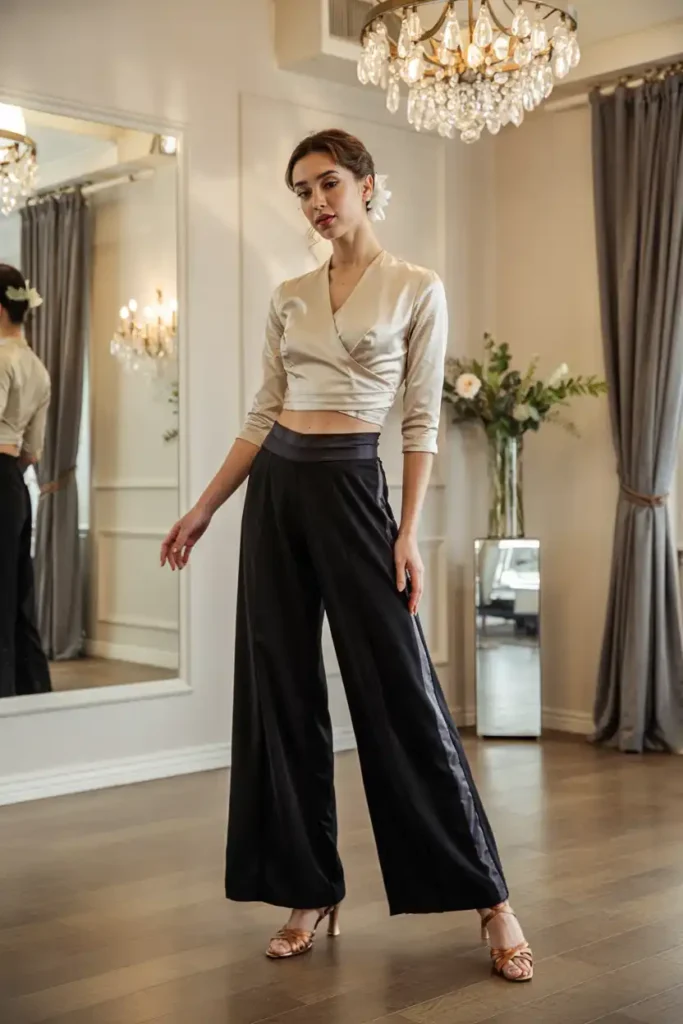
Ballroom practice attire occupies a unique space between athletic and theatrical, and this combination captures it perfectly. Flared dance pants echo the silhouette of competition skirts and help dancers feel the flow and timing of their hip movements during practice, which is an essential part of developing ballroom technique. A wrap crop top keeps the upper body visible for posture corrections while adding a touch of elegance to the rehearsal setting.
Many ballroom coaches actively encourage students to practice in clothing that approximates competition wear because it helps develop performance quality from the very beginning of the learning process. When a dancer can feel the fabric responding to their movement, their body learns to fill that space with intention. This outfit is a training tool as much as it is a fashion choice.
18. Basic Black Fitted Tee and Convertible Dance Tights
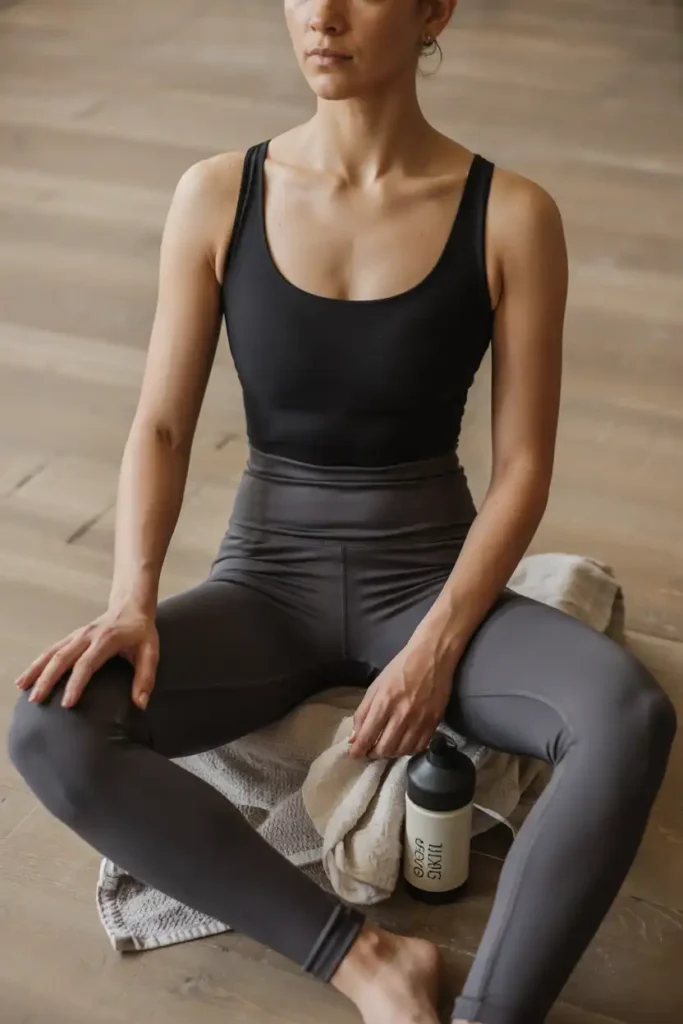
Sometimes the most reliable outfit is the most straightforward one, and this combination has appeared consistently on professional studio floors for years. A well-fitted black tee provides upper body coverage for dress codes requiring more modest attire while keeping the silhouette streamlined. Convertible tights are beloved for their versatility since they can transition from footed to footless depending on the footwear the class requires.
This is also the outfit that travels well. Dancers who move between multiple studio locations, schools, or genres in a single day often gravitate toward basics that work universally. There is nothing wrong with a simple, well-executed classic. In fact, most seasoned dancers will tell you that the longer they train, the more they appreciate the reliable over the trendy.
19. Sheer Overlay Skirt and Bodysuit for Musical Theatre Dance
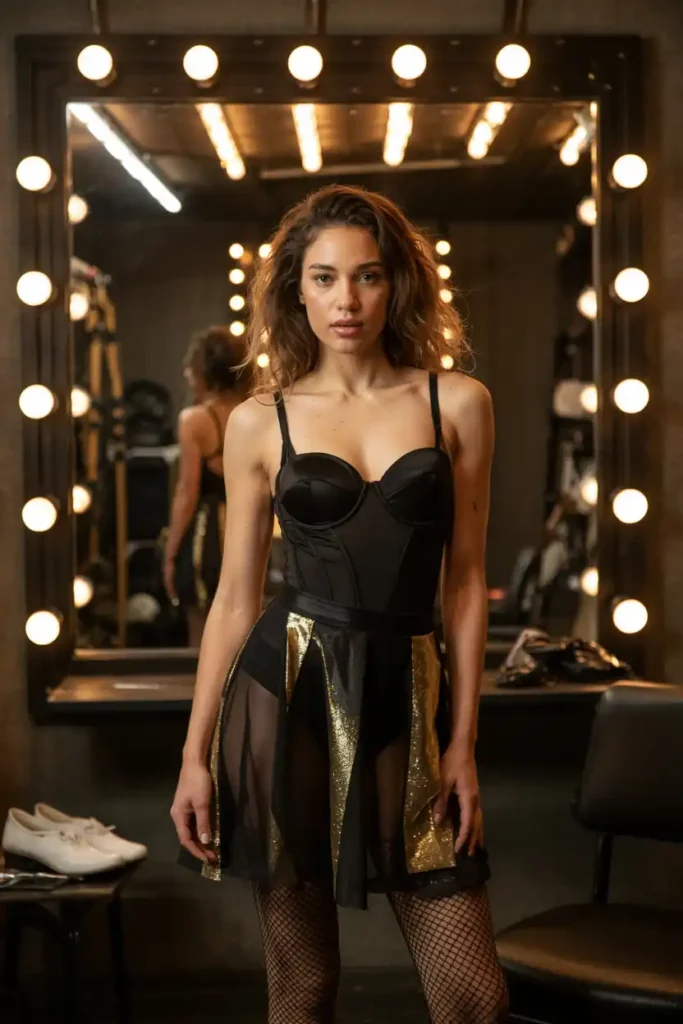
Musical theatre dance blends technical training with theatrical storytelling, and the dress code in these studios tends to reflect that dual identity. A sheer overlay skirt worn over a bodysuit offers the best of both worlds. It provides the freedom of movement needed for jazz technique and character work while visually connecting the dancer to the performance context they are preparing for.
Bodysuits keep everything secure during lifts, extensions, and high kicks, eliminating any mid-sequence wardrobe concerns. Many musical theatre programs use showcase and performance opportunities throughout the year, and practicing in an outfit that resembles performance attire helps dancers build the physical confidence and stage presence that distinguish great musical theatre performers from technically proficient but unexpressive ones.
20. Gradient Leggings and Matching Sports Bra for the All-Day Dancer
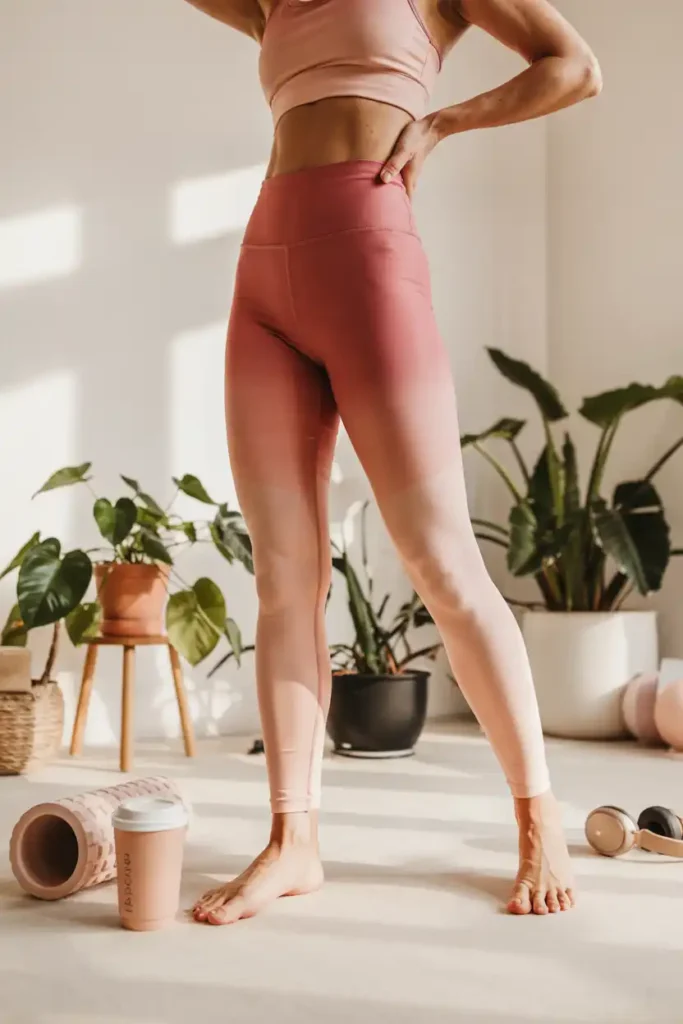
For dancers who spend full days moving between barre classes, rehearsals, conditioning sessions, and choreography workshops, the all-day outfit needs to perform across every context without compromising comfort or style. Gradient leggings with a coordinated sports bra answer that call beautifully. The fabric in quality versions uses a four-way stretch with compression support that holds its shape through an eight-hour studio day without sagging or pilling.
The visual appeal of a gradient design also evolves throughout the day in a way that solid colors simply do not. As light changes from morning to afternoon in a studio setting, the tones shift and the outfit feels fresh across multiple sessions. Dancers who invest in well-made gradient sets frequently report wearing them as their go-to choice because they remove decision fatigue from the equation entirely, and that mental clarity is genuinely valuable when the real work is on the studio floor.
21. What K-Pop Idols Actually Wear to Dance Practice (And What Studios Allow)
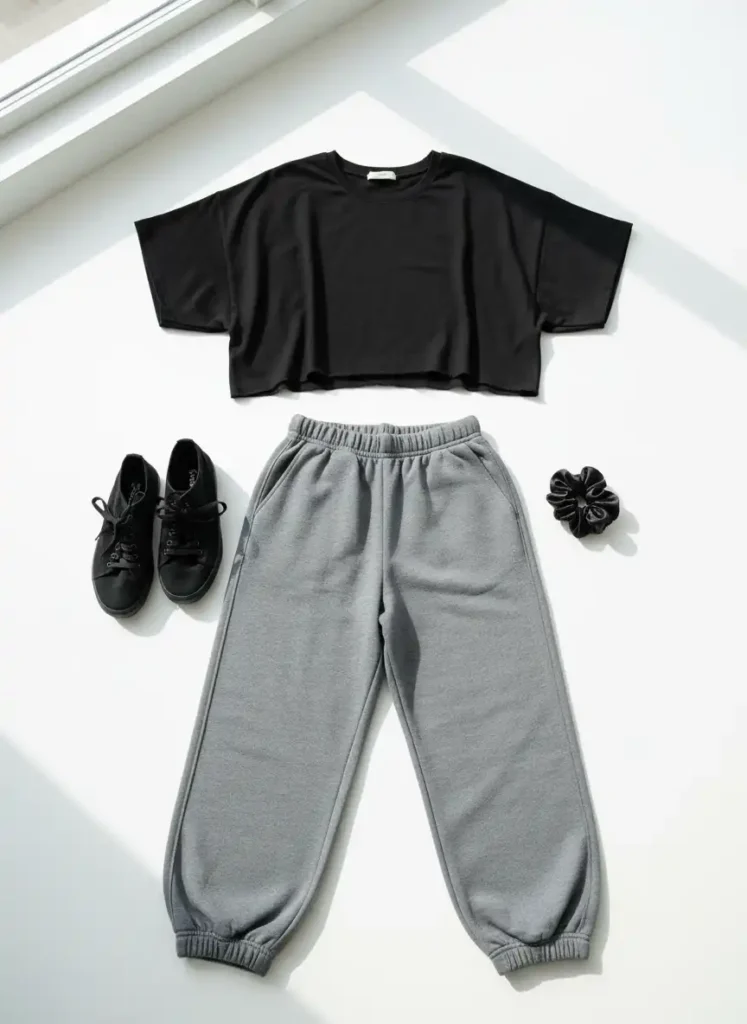
If you search “K-pop dance practice outfit”, you’ll see a lot of aesthetic gym-wear that looks great in photos but doesn’t hold up during an actual two-hour rehearsal. Real studios, including SM Entertainment’s practice rooms and HYBE’s training floors, favor simple, movement-friendly basics. Oversized crop tops paired with high-waist wide-leg sweatpants are the most common combination because they don’t restrict hip movement and look clean on mirror-facing rehearsal footage.
For shoes, most K-pop practice spaces require jazz sneakers or split-sole dance sneakers rather than regular trainers. Brands like Bloch and Capezio are standard, and they run between $40 and $70. Avoid chunky sneakers during high-intensity choreo sessions since ankle support matters more than aesthetics when you’re running through a routine for the fifth time.
One practical rule most studios apply: avoid anything with zippers, studs, or hardware that could scratch mirrors or scratch other dancers during partner work.
22. The K-Pop Dance Practice Aesthetic: How to Get the Look Without Sacrificing Function
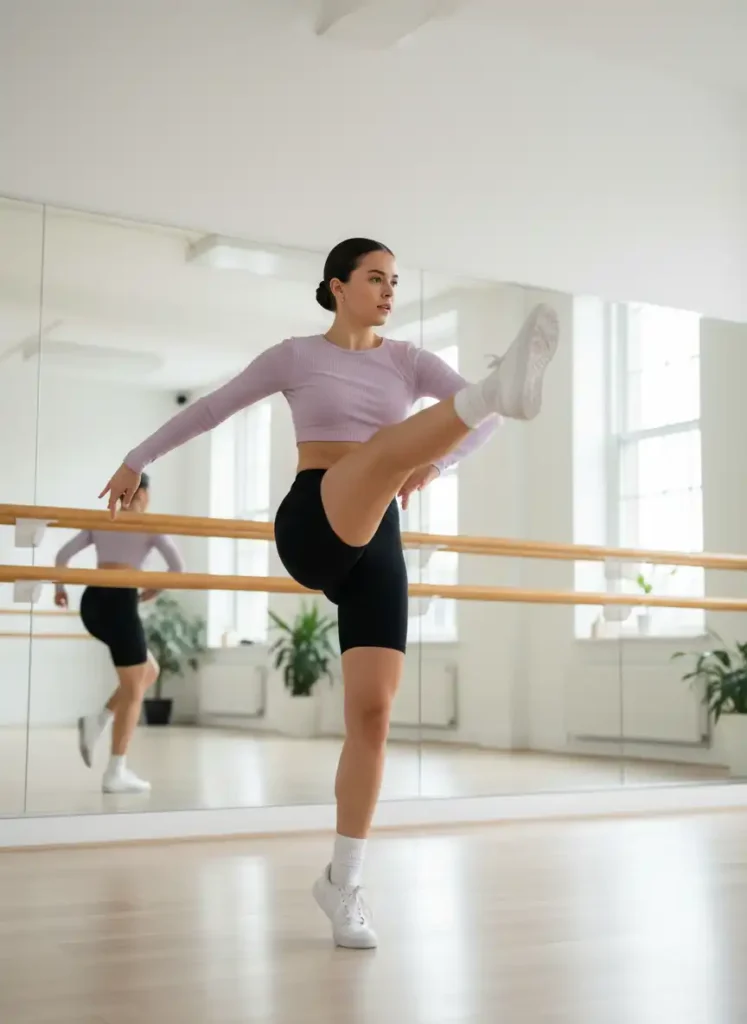
The K-pop practice room aesthetic has a specific look: fitted but not tight, coordinated but not matchy-matchy, and always clean. Biker shorts with a fitted long-sleeve crop are the most replicated combination on Pinterest boards dedicated to this style. Pastel tones like lavender, baby blue, and blush pink are popular because they photograph well under fluorescent rehearsal room lighting.
If you want to wear this in an actual class rather than just for the photo, go with a moisture-wicking fabric. Cotton looks soft but gets heavy fast. Look for polyester-spandex blends with at least 4-way stretch. ASOS and YesStyle both stock affordable K-pop-adjacent activewear in the $15 to $40 range that works for real movement.
Keep accessories minimal. A thin headband or slicked-back bun works well because it stays out of your face during fast head movements. Most studios also ask dancers to remove dangling earrings before class for safety reasons.
23. K-Pop Dance Practice Outfits for Beginners: What to Actually Buy First
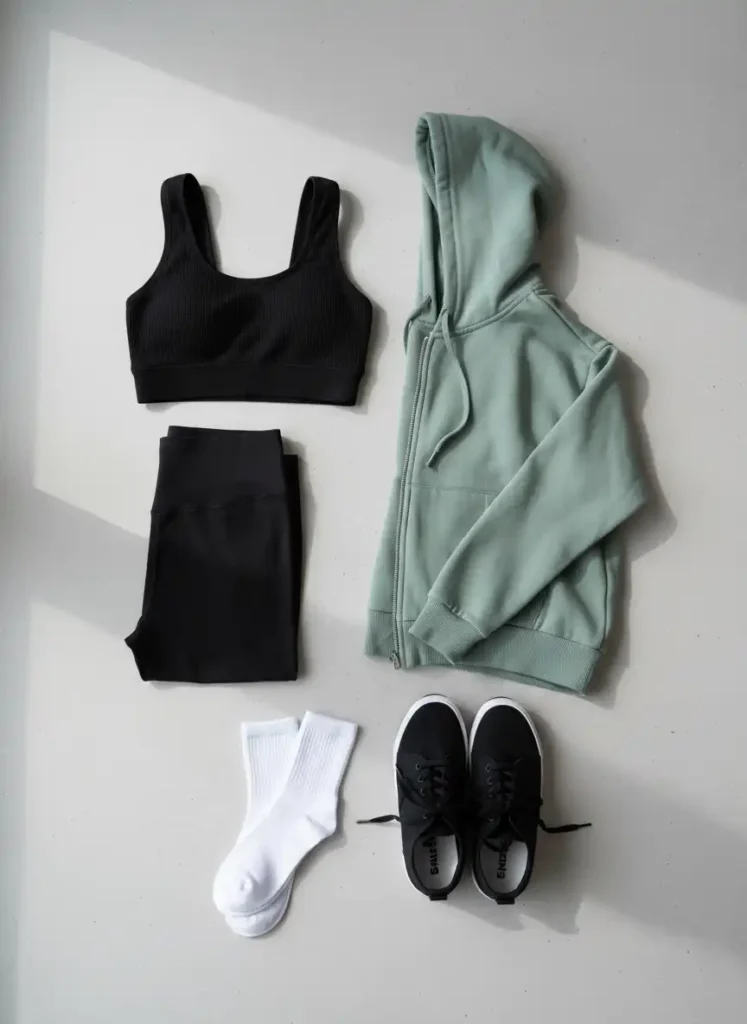
If you’re starting a K-pop dance class for the first time, you don’t need to buy a full curated outfit before your first session. Most beginner-level studios only require that you wear something fitted enough that the instructor can see your alignment, and shoes with a clean, non-marking sole.
A solid starting point: one pair of high-waist leggings (Uniqlo’s AIRism leggings at around $30 are a good practical option), a fitted sports bra or crop top, and a zip hoodie you can layer over. The hoodie matters more than most people think because studio air conditioning can make warm-up uncomfortable, and you’ll want to come out of it easily once you start moving.
Once you know you’ll be going regularly, invest in split-sole dance sneakers. These flex with your foot during popping and locking movements in a way standard cross-trainers can’t. Bloch’s Boost DRT is one of the most recommended options in K-pop dance communities, retailing at around $65, and they’re studio-approved in most classes.