Y2K Hairstyles Black Women With Natural Hair Can Try
The early 2000s had a specific energy when it came to hair. Bold, experimental, and unapologetically expressive. Black women were at the center of some of the most iconic looks of that era, and natural hair was very much part of that story. If you lived through it, you remember the butterfly clips, the crimped edges, the chunky twists. If you didn’t, you’re about to discover why everyone keeps going back to it.
This guide covers 21 styles that actually work for natural hair textures, from 4A to 4C, so you’re not just looking at trends that were never designed with you in mind.
1. Chunky Two-Strand Twists With Colorful Tips
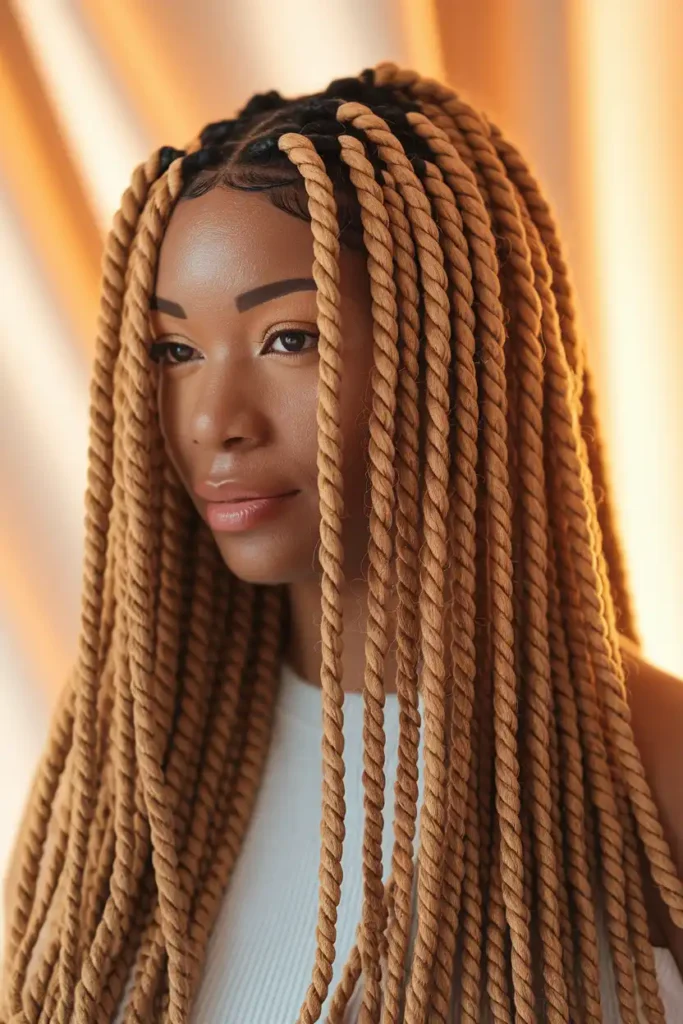
Chunky two-strand twists were everywhere in the early 2000s, and they translated beautifully across natural hair textures. What made them feel distinctly Y2K was the color at the tips. Whether it was bleached blonde, auburn, or even a flash of burgundy, that color contrast gave the style a deliberate, fashion-forward edge.
You don’t need a salon appointment to pull this off. Twist your hair in sections using a butter or cream, and once you’re done, dip just the last inch or two in a semi-permanent color or clip on pre-colored extensions for a no-commitment version. The look holds well for a week and gets better as it settles.
2. Crimped Natural Hair With a Center Part
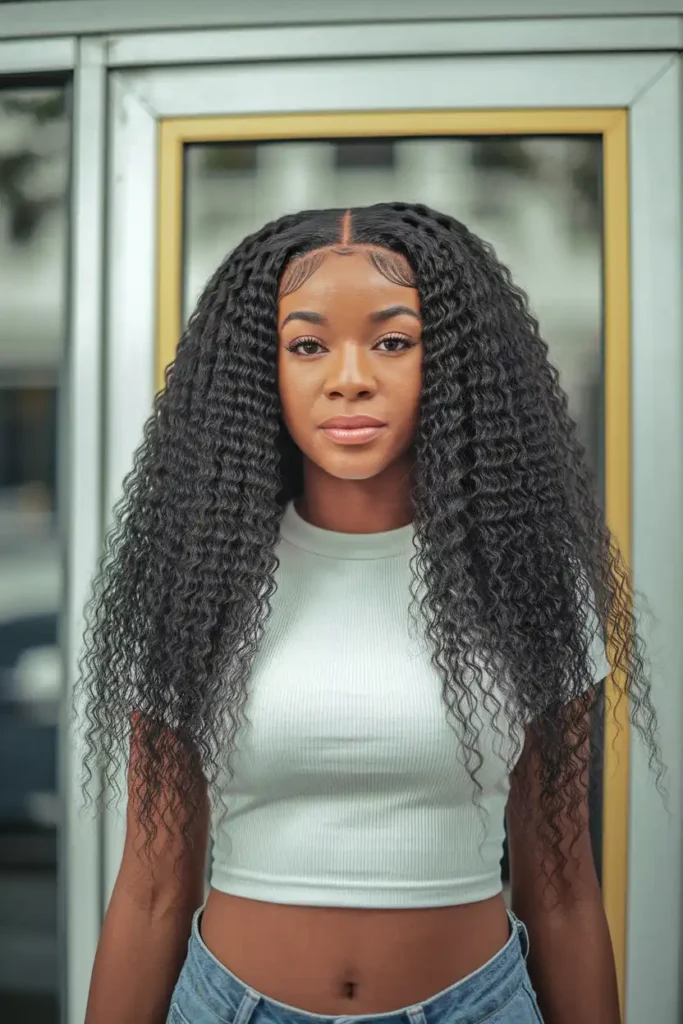
Crimping was one of those styling moves that required zero technical skill but delivered maximum impact. On natural hair, the results are especially dramatic because the existing curl pattern interacts with the crimped texture to create something layered and full.
Use a small crimping iron on stretched hair for the tightest, most defined effect. If your hair is already in a blowout or banding stretch, work in small sections for even coverage. The center part is key here because it keeps the style looking intentional and pulls the whole Y2K reference together without you having to say a word.
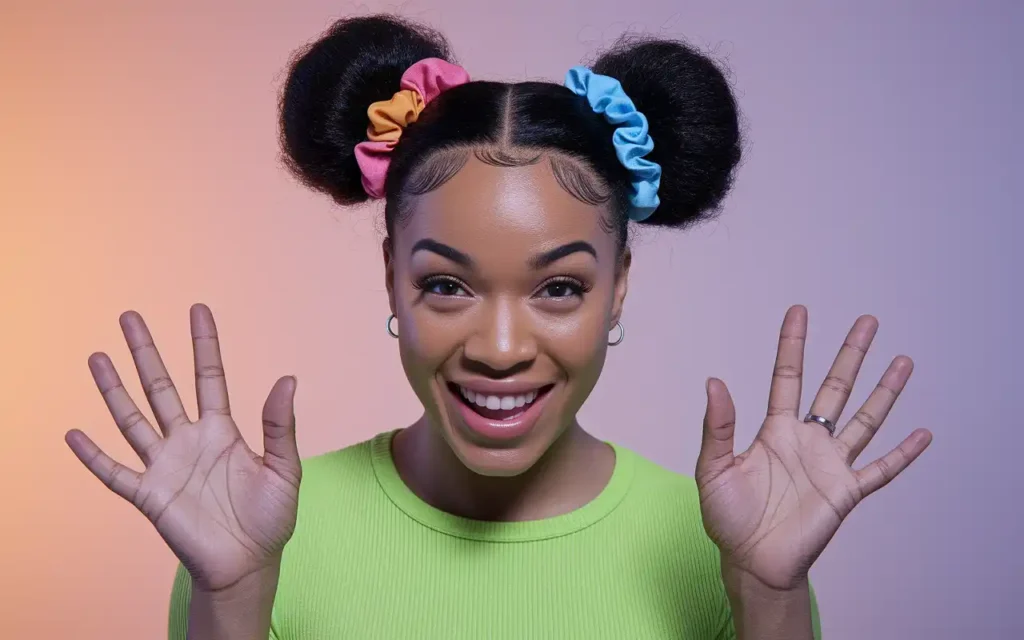
3. Space Buns With Coily Texture Showing
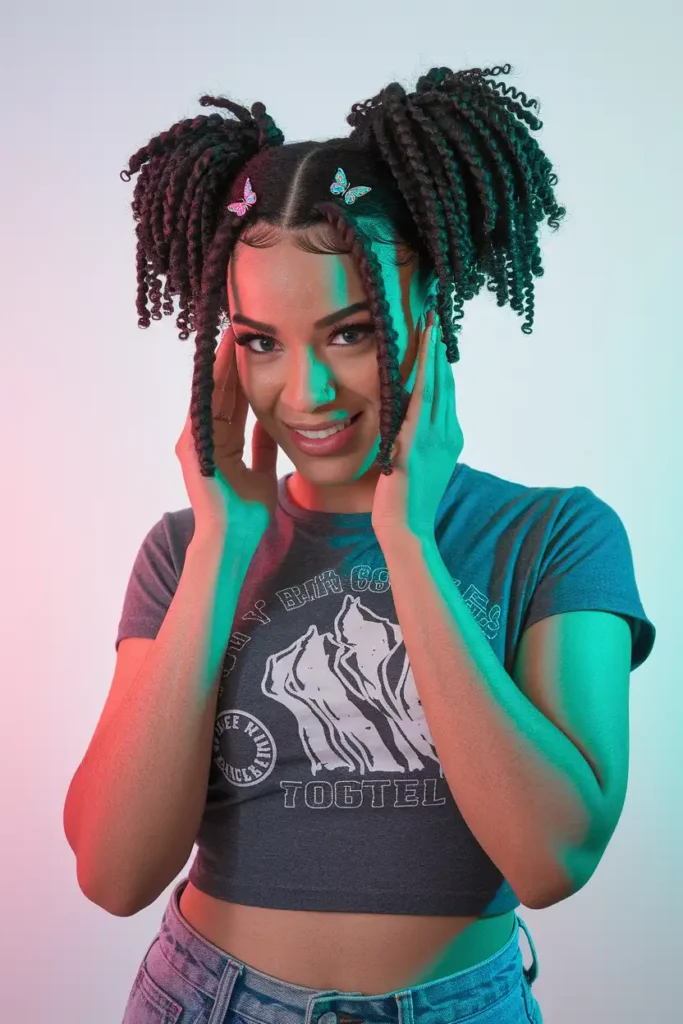
Space buns became a signature of the Y2K era, and they look even better on natural hair because the texture gives the buns real body. Smooth buns are fine, but buns that show your coil pattern? That’s the version worth trying.
Divide your hair down the middle, gather each side into a high ponytail, and wrap the hair around itself into a bun. Don’t overthink the smoothness. Let the coils breathe, secure with a scrunchie in a bold color, and add a few clips along the part if you want to push the nostalgia further.
4. Half-Up Puff With Baby Hair Laid Flat
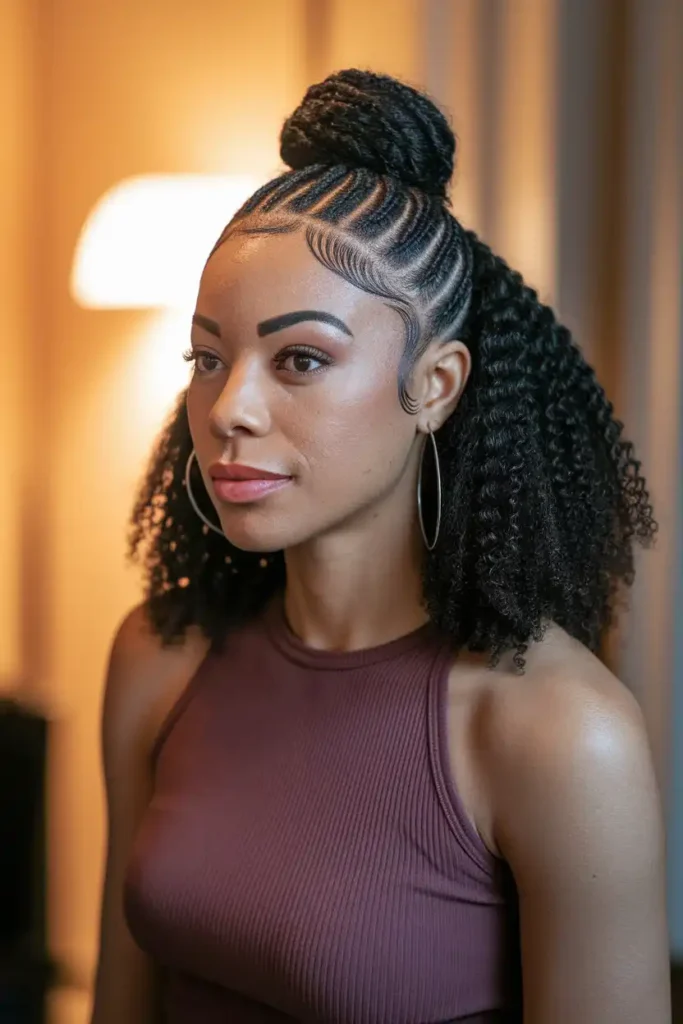
The half-up puff is one of those styles that never actually left, but the Y2K version of it had a specific detail that made it stand out: the edges. Laid edges weren’t just about neatness. They were part of the style itself, with intentional swirls and waves designed to be seen.
Use a firm edge control and a soft-bristle brush to lay your edges into a pattern before the top section is secured. Keep the puff round and full by fluffing from underneath. This style works best on hair that’s been moisturized and stretched slightly, so the puff has shape without looking dry or undefined.
5. Bantu Knots Worn Out as an Everyday Look
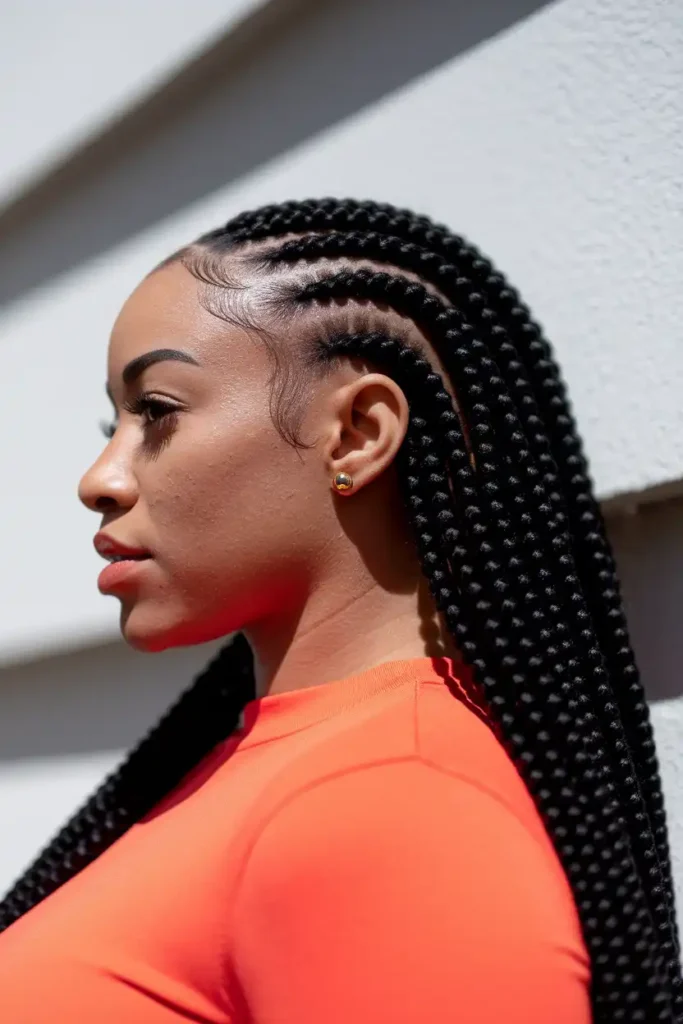
Bantu knots were not just a protective style in the early 2000s. They were a full statement. Wearing them out, not as a precursor to a knot-out but as the finished look, was a way Black women owned their cultural identity through styling.
Section your hair into equal parts and twist each section around itself from root to tip, coiling it tightly and securing with a pin or tucking the end underneath. The size of each section determines the size of your knot, so go smaller for a more intricate look and larger for something bolder. Keep your scalp moisturized between the sections because dryness shows on this style.
6. Cornrows With Beaded Ends
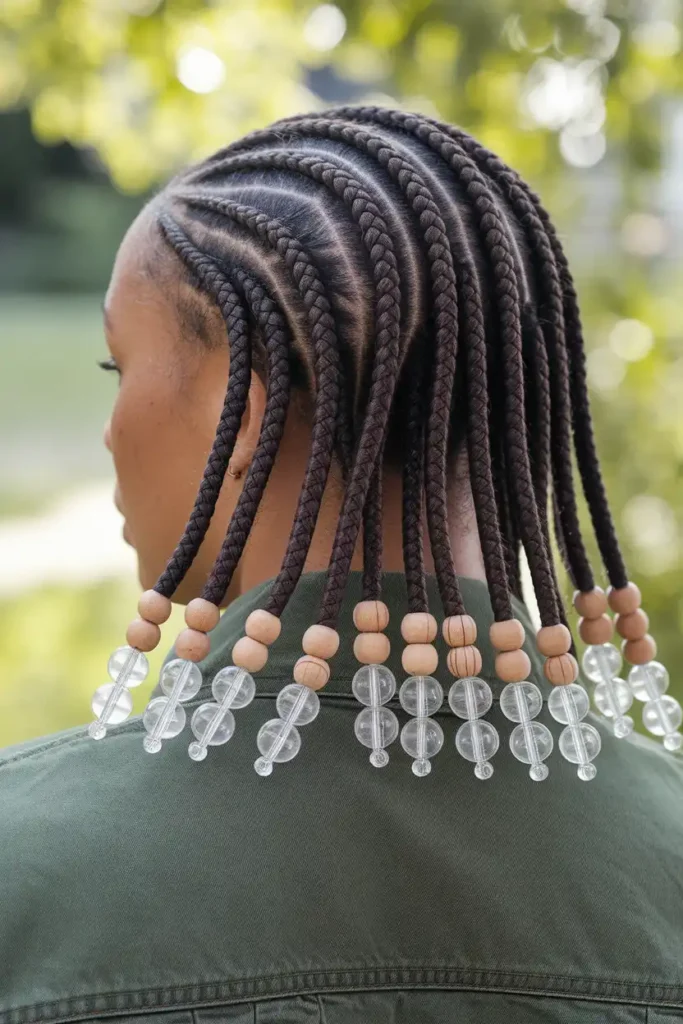
Beads on braids are one of the clearest visual references to Y2K styling for Black women. The combination of cornrows and beaded ends was practical and decorative, and it held up through school days, weekends, and everything in between.
If you’re doing your own cornrows, work from front to back in clean rows and add beads by threading them onto each braid before tying off. Mix different bead sizes and materials for a more textured look. Wooden beads with clear or gold accents hit that early 2000s aesthetic without looking like a costume.
7. Twist-Out With a Slicked Side Part
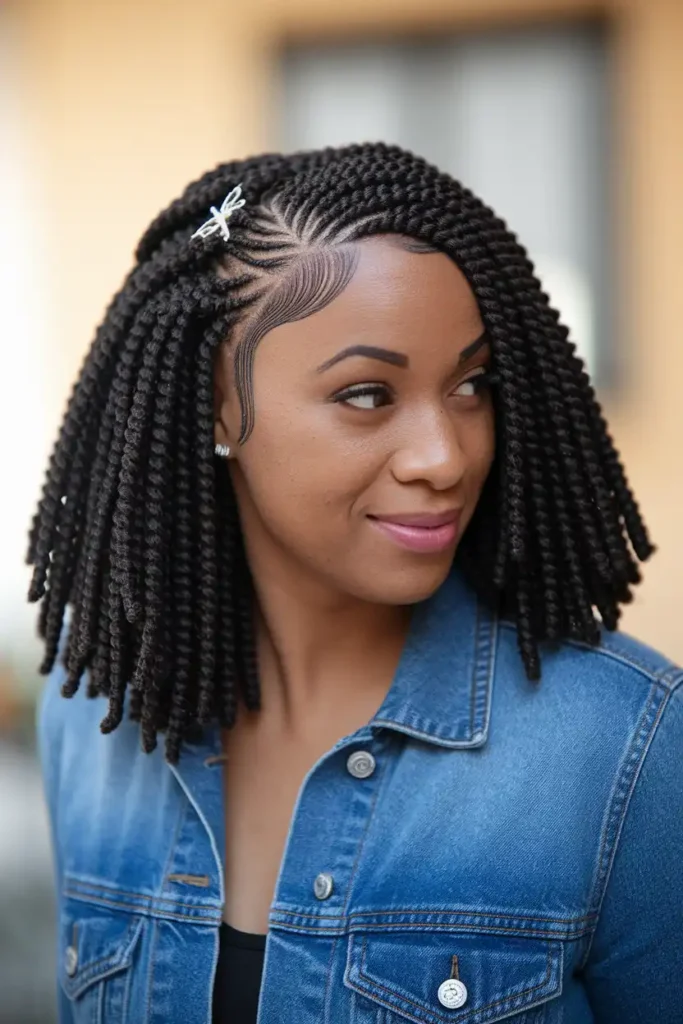
Twist-outs got a very specific upgrade during the Y2K era. The deep side part with a slicked section was the detail that moved the style from basic to intentional. That contrast between the defined coils and the smooth, flat section near the part gave the look structure.
Do your twist-out on slightly stretched hair for more length and separation. Once you unravel in the morning, use your fingers instead of a pick or brush to maintain the definition. Apply a small amount of edge control only to the side part section, smoothing with a fine-tooth comb or a brush specifically made for edges.
8. High Puff With Butterfly Clips Around the Edges
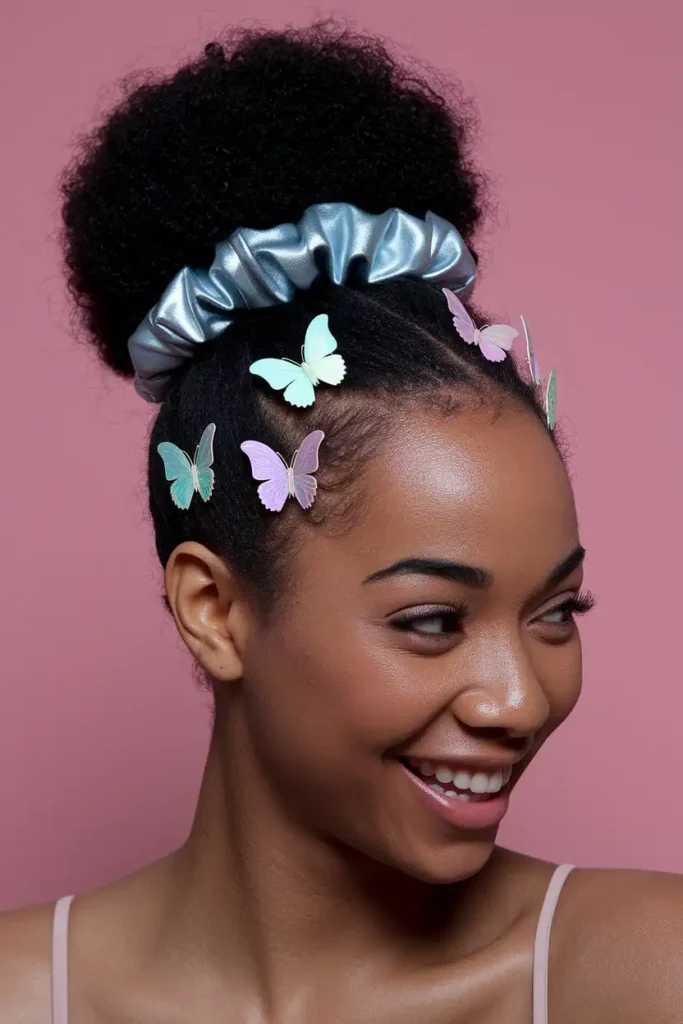
The high puff is arguably the most effortless natural hairstyle in existence, but the Y2K version had one specific upgrade: clips. Not tucked away or hidden, but placed visibly and deliberately around the base, in the hair, along the part. That was the move.
Stretch your hair before gathering it up so the puff is full but not too tight. Use a satin scrunchie to avoid breakage at the edges. Then add clips wherever they feel right. There’s no formal rule. Some people placed them in a row, others scattered them. The point was that they were seen.
9. Box Braids With Gold Thread Woven In
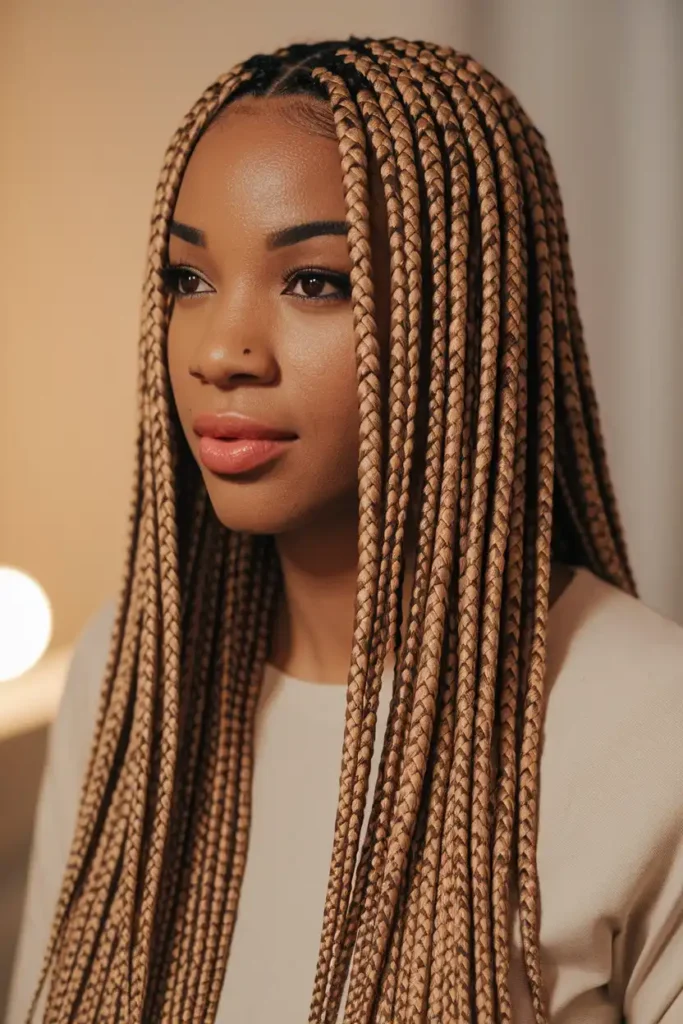
Gold thread woven into box braids was a detail that separated regular braids from a styled look. It wasn’t about covering the hair. One or two threads per selected braid, running alongside the extension hair from root to about halfway down, gave the whole style a glow under any lighting.
When you or your braider is installing the braids, fold the gold thread in half and braid it alongside the extension hair. A thin embroidery thread works just as well as the metallic kind. You don’t need it in every braid for the effect to land. Spacing it out actually creates more visual interest.
10. Flat Twists With a Decorative Front Section
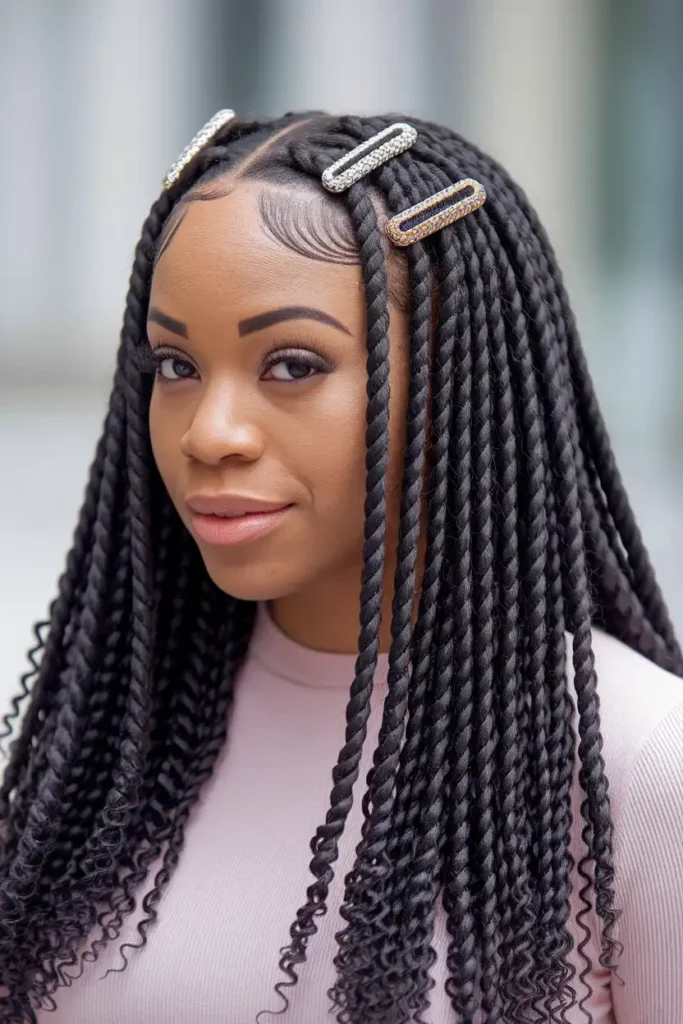
Flat twists were a staple for natural hair during the Y2K era, especially as a way to keep the front section styled while the rest of the hair was left loose. The contrast between the structured front and the free-hanging curls in the back was a look in itself.
Part out the front section from ear to ear and work in flat twists that follow the curve of your head. Secure them at the crown with a small elastic or clip. The rest of your hair can be in a twist-out, a wash-and-go, or even loose stretched hair. The flat twists do the heavy lifting for the overall look.
11. Pressed Natural Hair With Bone-Straight Ends
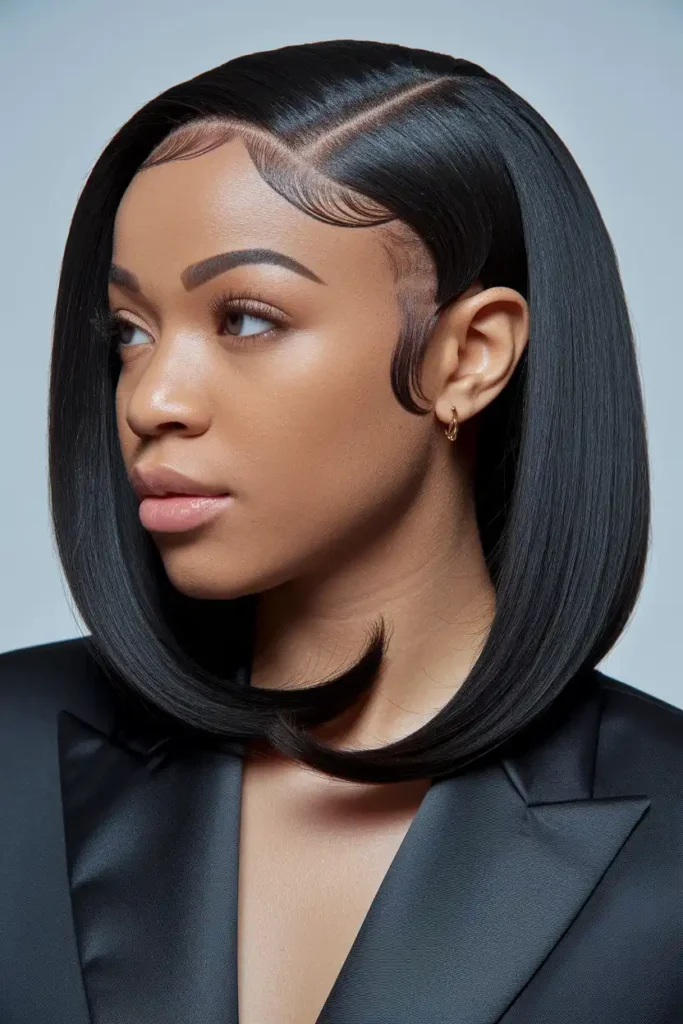
Heat-straightened natural hair was very much part of the Y2K look for Black women, and the goal was always length and smoothness. The “bone straight” press was a rite of passage, usually done for a special occasion, a school picture, or just because you wanted to.
Use a good heat protectant before you start and work in small sections with a flat iron set between 380 and 400 degrees depending on your thickness and porosity. The flip at the ends is optional but it’s what makes it feel era-accurate. Wrap your hair at night to preserve the press and avoid moisture until you’re ready to revert.
12. Kinky Twists With Colorful Extensions
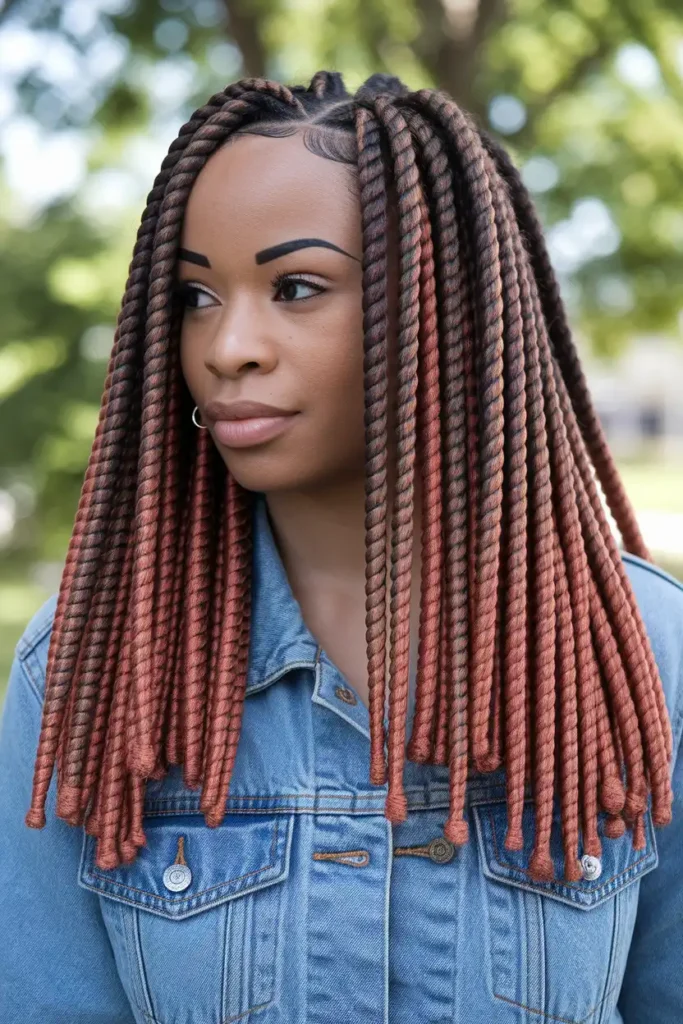
Kinky twists were one of the most practical Y2K styles for natural hair because they mimicked the texture of natural coils rather than trying to look like straight extensions. The color variation, usually a slightly lighter shade woven in with the darker base color, gave them dimension.
When choosing extension hair for kinky twists, look for “kinky bulk” or “afro kinky” extension hair that matches or complements your natural texture. The install involves twisting your natural hair along with the extension from root to tip. The result lasts four to six weeks with proper nighttime wrapping and scalp care.
13. Afro Puff Ponytail With Hoop Earrings
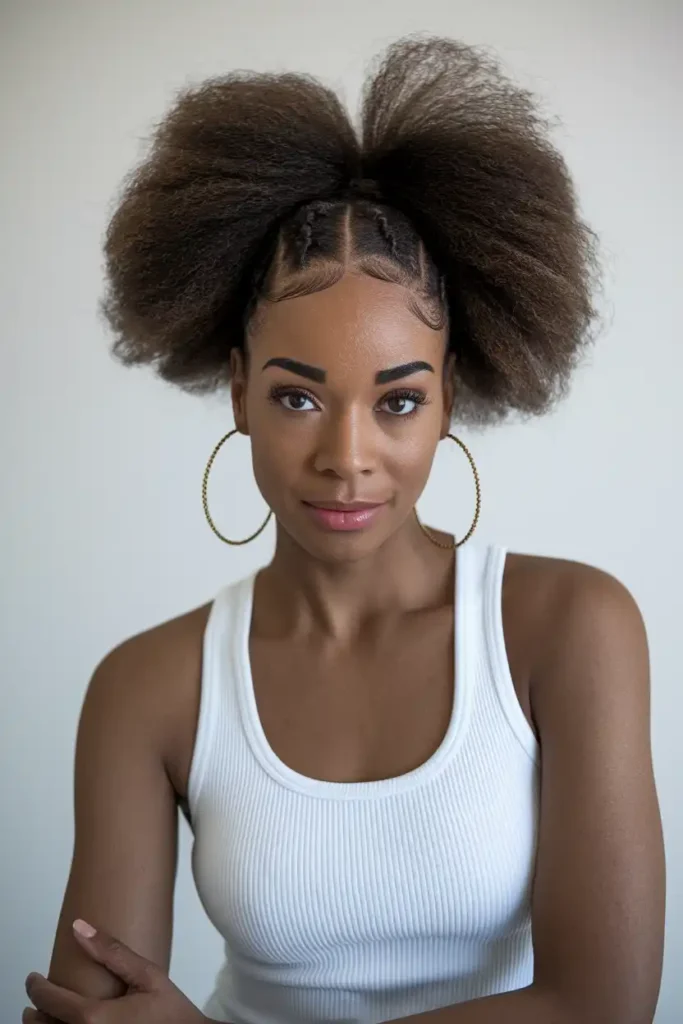
The low afro puff worn like a ponytail was a style that worked for every length and every texture of natural hair. What made it feel like Y2K was the size. The bigger, the better. And the earrings were always part of the equation.
Fluff your hair outward from the roots before securing it. Gathering it at the nape rather than the crown gives it a different shape than the typical high puff, and it pairs better with statement earrings because the neck is more visible. Use a wide elastic band or a thick scrunchie so there’s no breakage where the band sits.
14. Mini Braids With Beads and a Middle Part
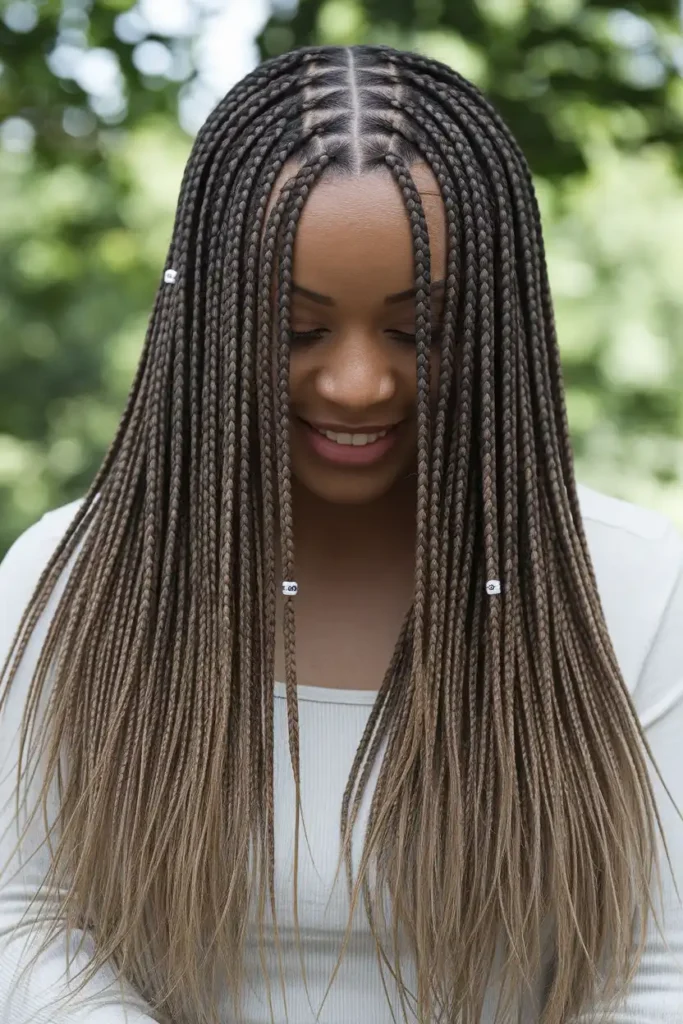
Mini braids were a time investment but the payoff lasted for weeks. The center part gave them a symmetrical, structured base, and the beads added personality without requiring you to change the style entirely.
The key with mini braids on natural hair is sectioning. Consistent, even sections create a uniform look that holds the style together even as the braids age. Add beads before tying off the ends and mix different finishes, such as matte wooden beads with shiny metal cuffs, for more visual variety.
15. Twist-Out Bob With Defined Curls
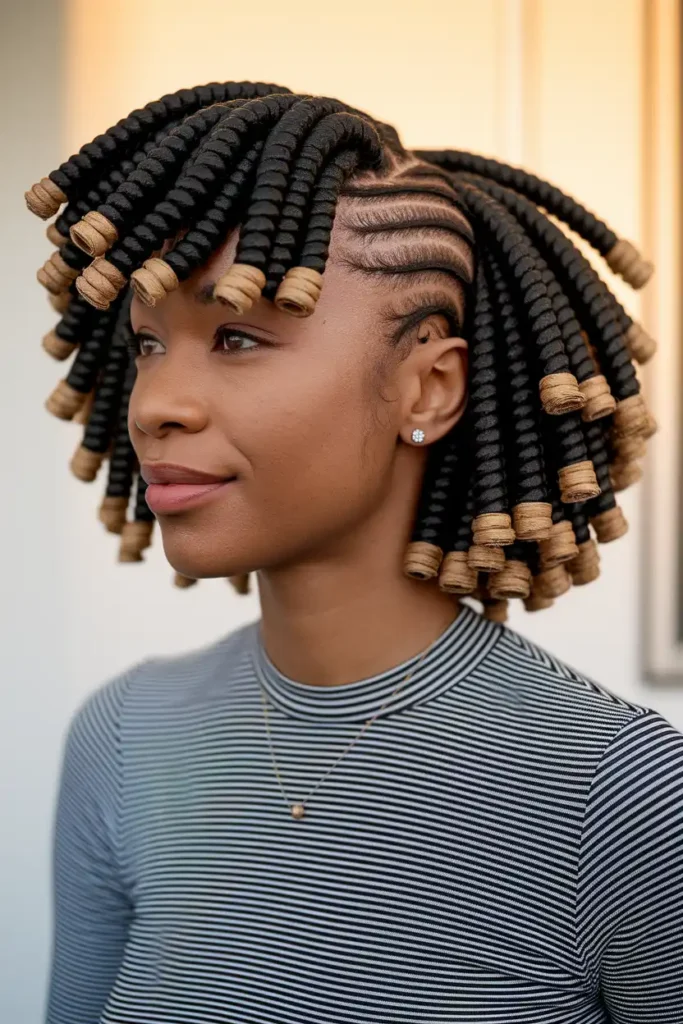
The twist-out bob is a style that works because it uses the natural shrinkage of your hair to your advantage rather than trying to fight it. What makes it feel Y2K is the deliberate shaping, rounding the ends, adding a part, tucking one side.
Twist your hair in small to medium sections and let it dry fully before unraveling. The length you’ll get depends on your shrinkage, but typically hair that is shoulder-length stretched will give you a chin-length result when twisted. Once it’s out, shape it by cutting any uneven ends and use a small amount of oil to seal the definition.
16. Faux Locs With Colored Wrapping
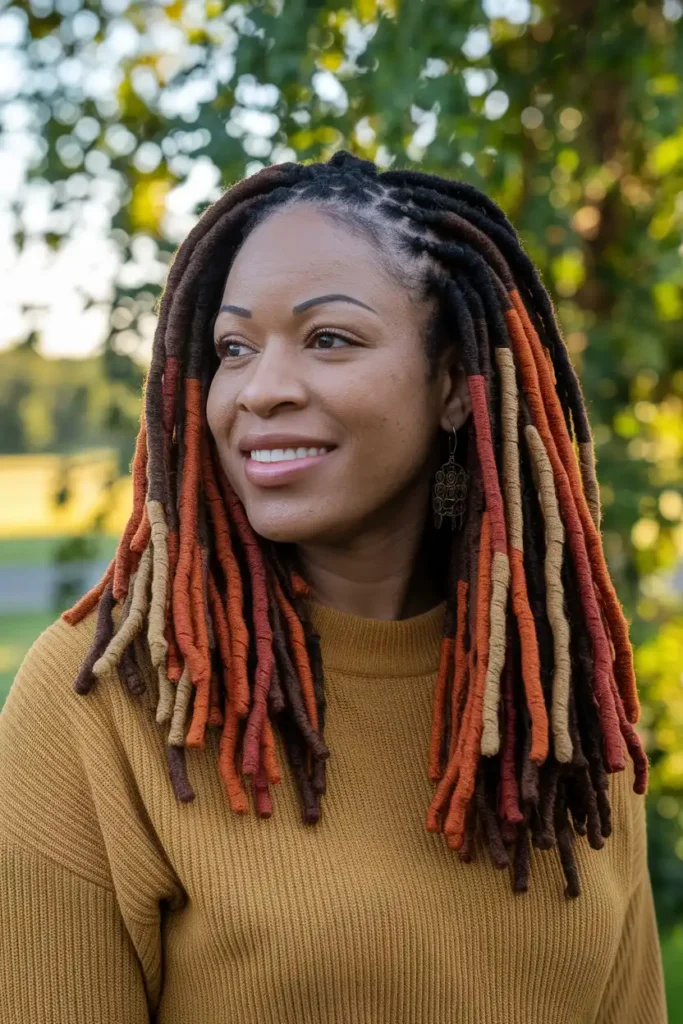
Faux locs weren’t always called faux locs in the early 2000s, but the silhouette and the wrapped detail were absolutely present. Black women were wrapping sections of their braids and locs in thread and yarn long before it became a mainstream trend moment.
For the wrapped sections, use embroidery thread or thin yarn in a color that contrasts with the base of your locs. Wrap tightly from a starting point on the loc and work down in a tight spiral. Tuck the end under the last few wraps to secure it. This is a detail you can add to existing locs or faux locs without reinstalling anything.
17. Cornrows Into a High Ponytail
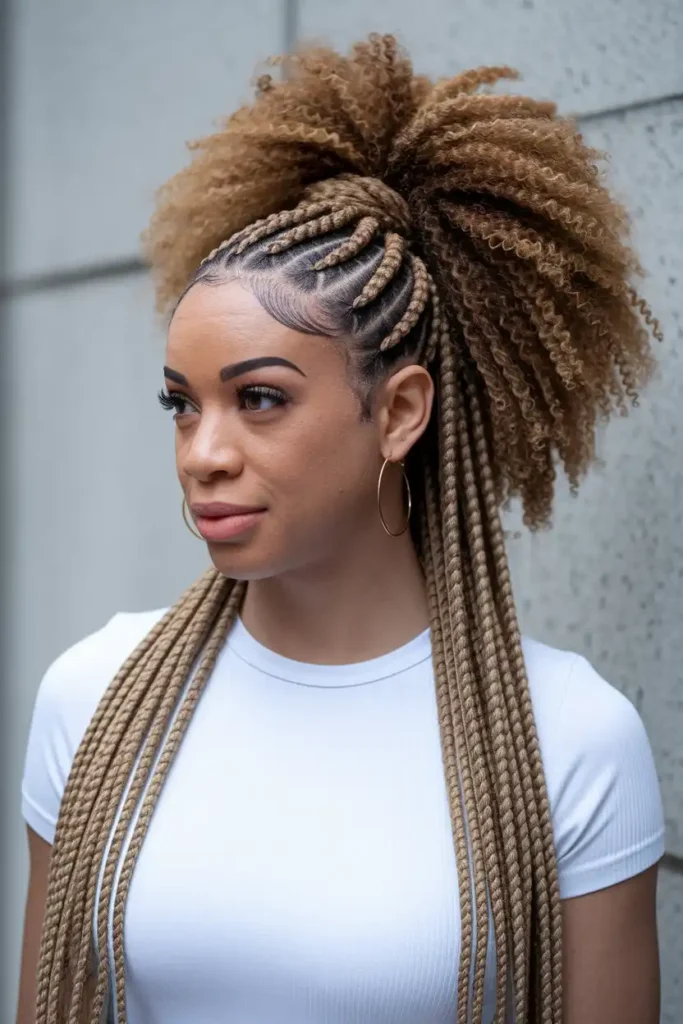
This was a style that showed up in music videos, school hallways, and family reunions in equal measure. The cornrows added structure to what could have been a simple ponytail, and the natural puff at the top gave it volume and presence.
Have someone cornrow your hair back from your hairline in rows that feed toward the crown. Leave enough hair out at the crown to form a full puff or ponytail. Secure with a thick elastic and fluff the top section outward once it’s up. This style holds up well under scarves and hats while keeping your edges protected.
18. Headband With a Stretched Wash-and-Go
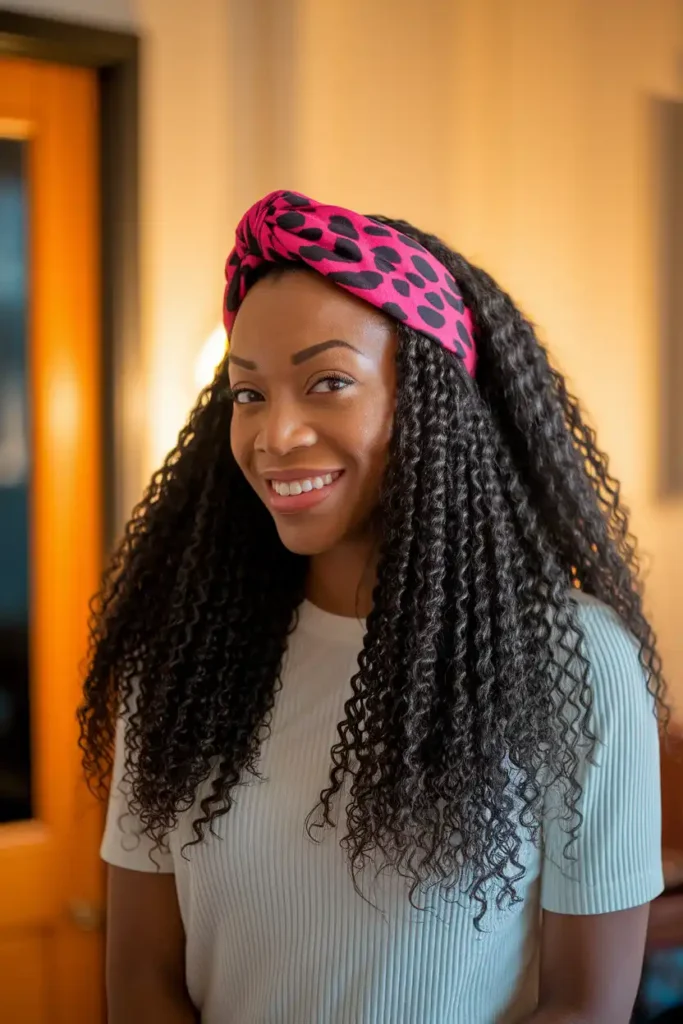
Wide headbands in bold prints were a Y2K essential, and they looked especially good against stretched natural hair because the headband created a clear contrast with the curl texture behind it.
Apply your leave-in and gel on soaking wet hair, then let it dry with medium-sized sections divided and separated to encourage stretch rather than clumping. Once your wash-and-go is dry, push the headband back about an inch from your hairline and adjust it so it sits flat. This is a five-minute morning style once your hair is already done.
19. Braided Updo With Loose Coils at the Crown
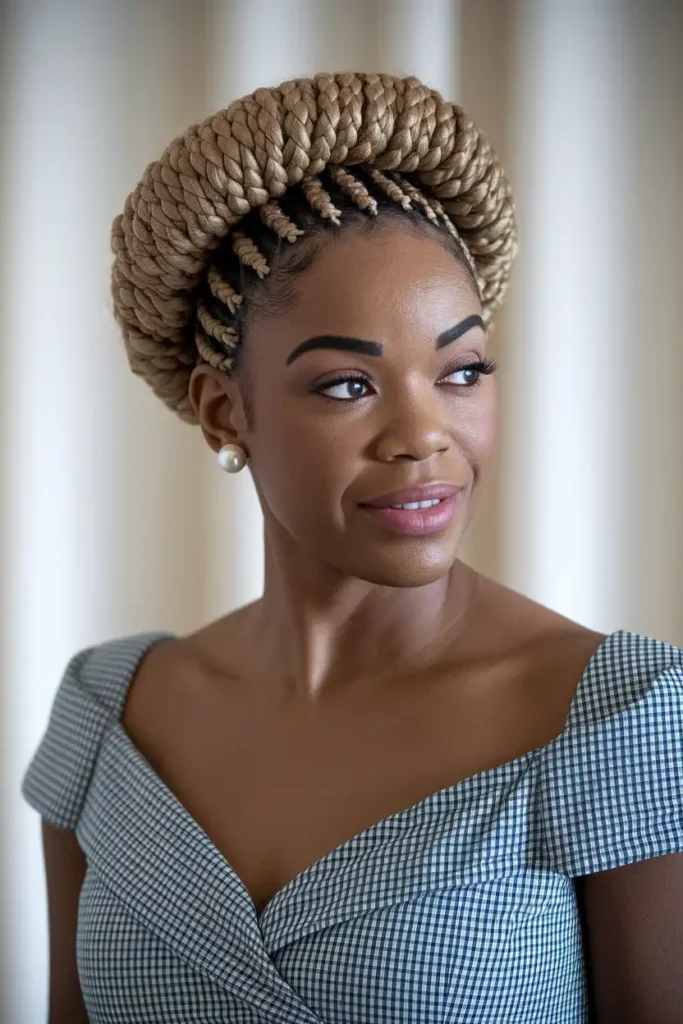
Braided updos with loose coils at the top were a way to wear natural hair to more formal settings during the Y2K era. They balanced structure with softness and worked well for events where something “done” was expected but straight hair wasn’t the goal.
Braid or flat-twist the sides and back of your hair leading up toward the crown. Gather the remaining hair at the top, fluff it slightly, and pin it into a rounded shape using bobby pins that match your hair color. Leave a few coils loose at the front for a less rigid finish. This style holds for a full day and photographs beautifully.
20. Crochet Braids With Wavy Natural Texture
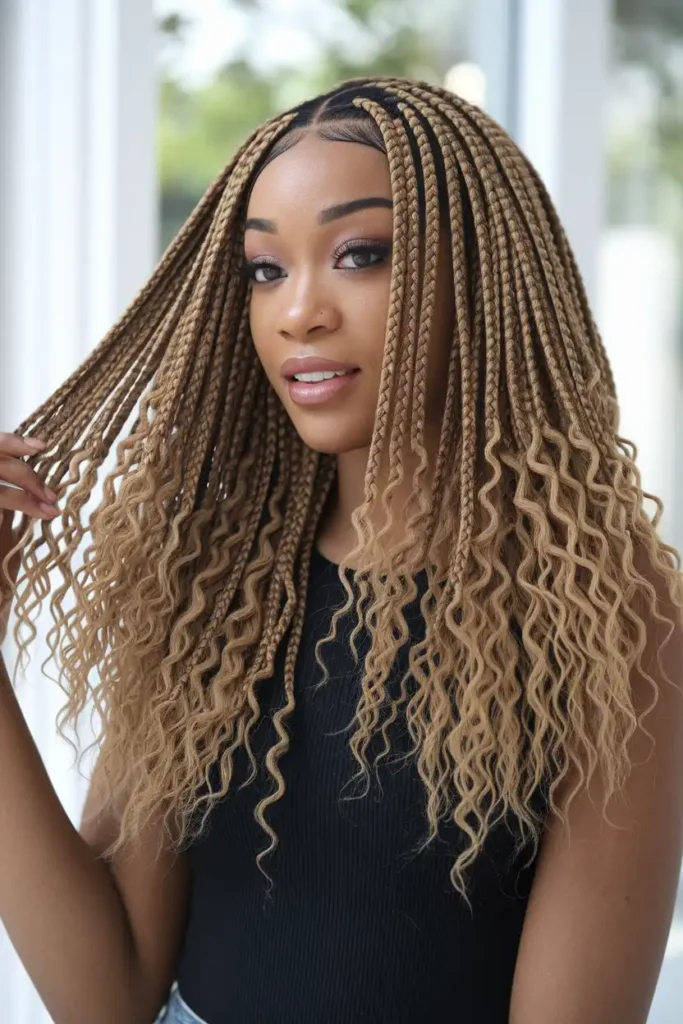
Crochet braids became increasingly popular in the early 2000s because they offered a temporary way to add length and volume without committing to a full weave. Choosing extension hair that matched or complemented a natural curl pattern made the style feel more cohesive.
Look for crochet extension hair labeled “natural wave,” “bohemian,” or “Afro kinky” depending on how closely you want it to match your own texture. The install involves cornrowing your hair flat to the scalp and using a latch hook to pull extension hair through the cornrows. The result lasts four to six weeks and requires only light moisturizing between the extensions to stay fresh.
21. Two Puffs With a Zigzag Part
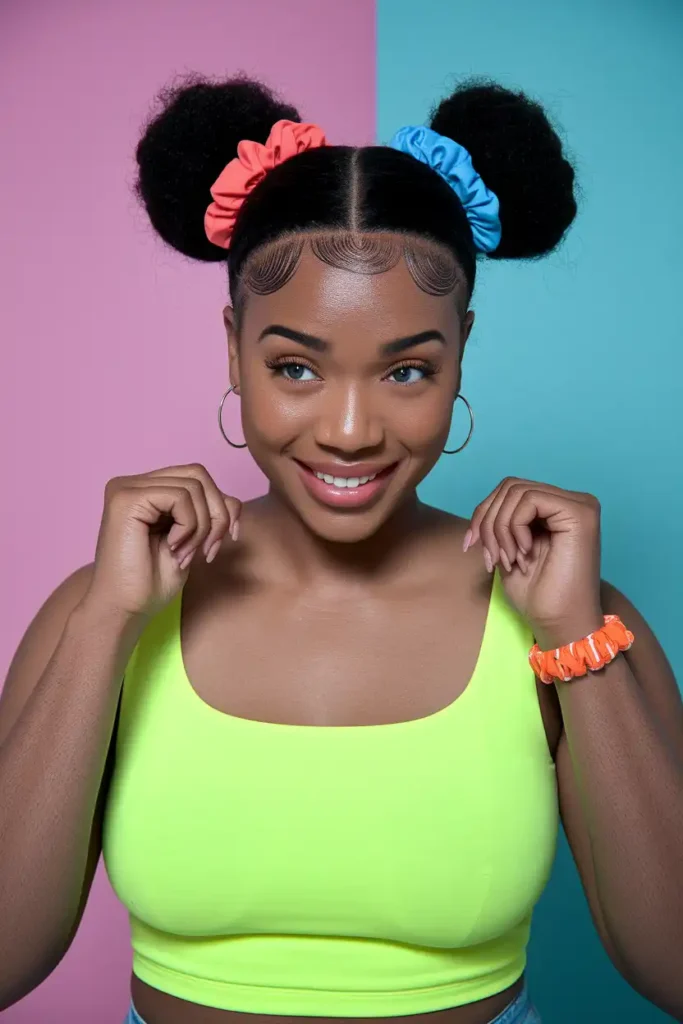
The zigzag part was a specific detail that showed up constantly during the Y2K era, from school photos to music videos. It took two puffs, which would have been a standard style on their own, and added a layer of intentionality that made the whole look feel curated.
Use the pointed end of a rat-tail comb to draw your zigzag from the front center of your hairline to the nape of your neck. Work slowly and adjust as you go. Once the part is set, gather each side into a puff and secure with a scrunchie that contrasts with your hair color. Keep the zigzag defined by smoothing the skin along the part with a damp cloth before the hair dries.
Conclusion:
Y2K hairstyles for Black women with natural hair weren’t trends borrowed from somewhere else. They were developed, worn, and made iconic by Black women who worked with their own textures and found ways to make every style their own. The looks covered here are just the starting point. Most of them take under 30 minutes once you know your hair and what it needs. Start with the ones that match your current length and texture, and adjust from there.