Transition to Gray Hair in Your 40s: A Practical Guide
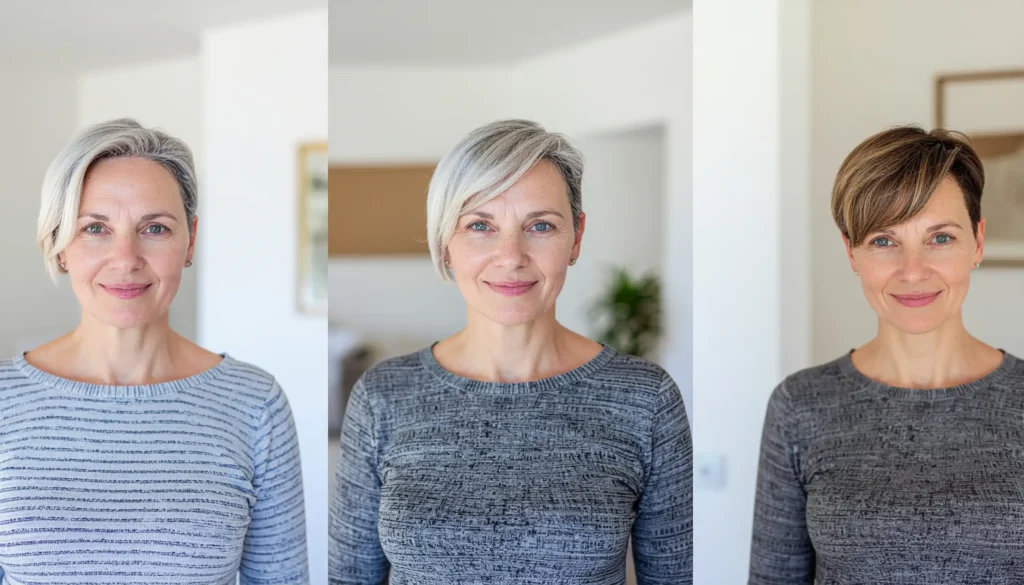
The grow-out phase is the part nobody warns you about. Your roots come in silver, your ends stay dark, and for a few months, the whole thing looks unfinished. But the right haircut changes that completely. A well-chosen cut removes old color faster, softens the contrast, and makes your transition to gray hair look like a choice you made deliberately. These 20 haircuts are the ones that actually work, chosen for real hair, real grow-out stages, and real life.
1. The Right Haircut Makes Your Transition to Gray Hair Look Planned, Not Accidental
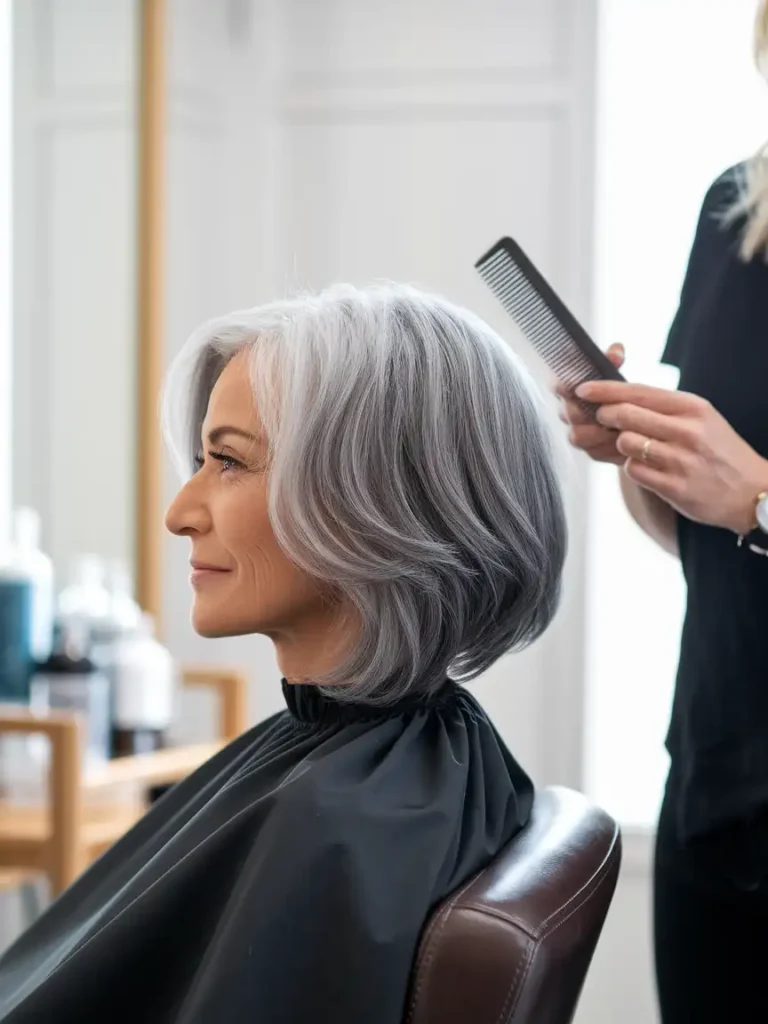
When you stop coloring and start growing out your gray, the first few months can feel messy. The line between your natural gray roots and your old color makes it obvious you’re in a transition, and not always in a flattering way. The right haircut fixes that. A well-placed cut removes the bulk of the old color faster, shapes what’s left, and makes the grow-out look like a decision you made on purpose.
Shorter cuts, layered bobs, and textured styles work best at this stage because they reduce the contrast between old and new. Ask your stylist specifically about removing the demarcation line through cut and shape, not just color. That one conversation changes everything about how your hair looks over the next six months.
2. Why a Layered Bob Is the Most Recommended Cut for the Gray Hair Transition

The layered bob keeps showing up on every gray hair transition board for a reason. It works. Layers break up the grow-out line visually, so your eye travels through the hair instead of stopping at a harsh contrast. It also gives fine or thinning hair, which is common in this stage, more body and movement without needing much product.
Ask your stylist to cut in soft, face-framing layers rather than blunt ends. Blunt cuts make the two-tone line more obvious. Face-framing layers draw attention up toward your features instead of toward the mid-shaft where the old color sits. If you’re not ready to go shorter, a longer layered lob works the same way. The key is layers, not length.
3. Pixie Cuts and the Transition to Gray Hair: The Fastest Way Through
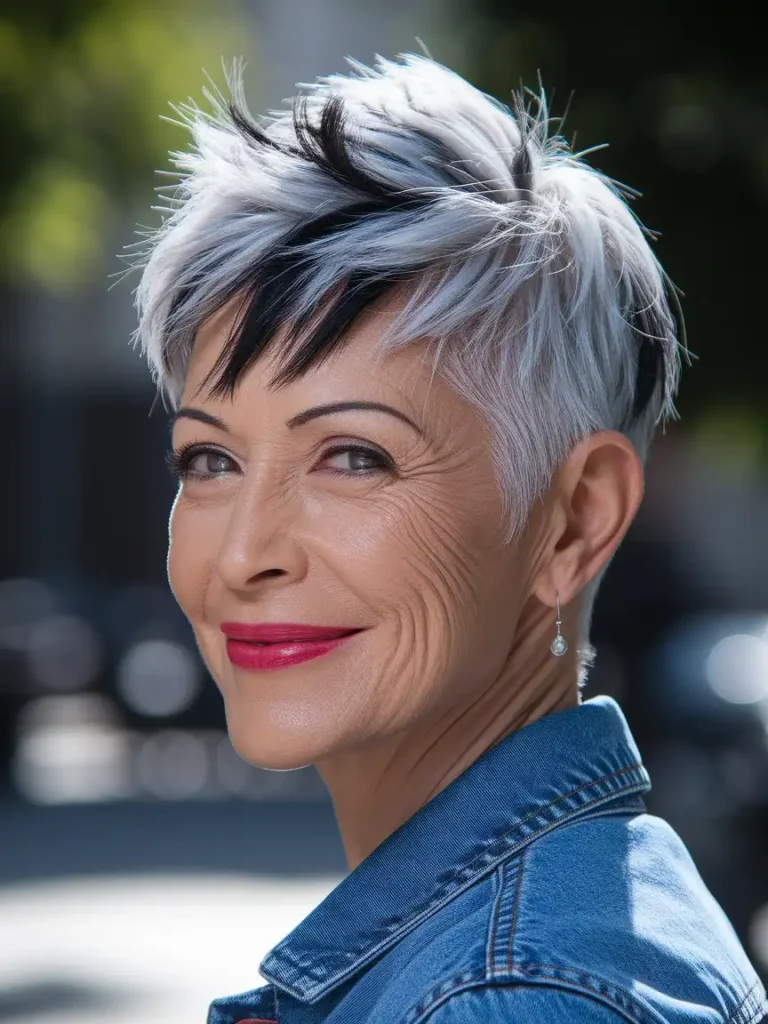
If you want the grow-out phase over fast, a pixie cut is the most direct route. Cutting your hair short removes the majority of your previously colored length in one appointment. What’s left is mostly your new growth, which means you spend far less time managing two different colors on the same strand.
This works especially well if your gray is coming in thick and defined at the crown. Many women find their natural gray is actually more striking than their old color, and a pixie lets that come through immediately. It’s a bigger commitment than a trim, but for most people who do it, the relief of being done with the transition quickly outweighs the adjustment period.
4. How to Transition to Gray Hair With Highlights Without a Harsh Grow-Out Line
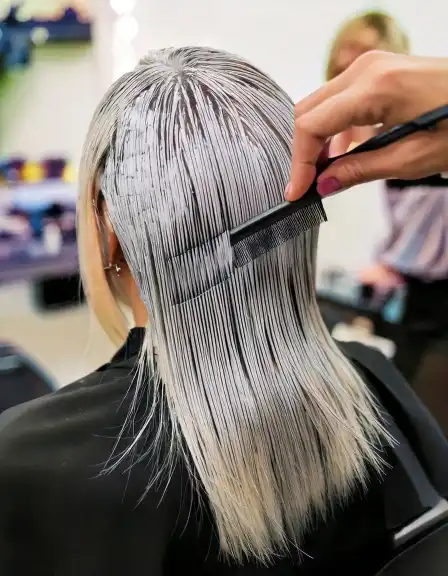
Highlights are one of the most practical tools for managing the transition to gray hair without going cold turkey. By weaving in lighter pieces near your roots, your colorist can soften the contrast between your natural gray and your existing color. The result looks blended rather than grown out.
Ask specifically for highlights that match your incoming gray tone, not bright blonde. The goal is to close the gap between your gray roots and your old color so the line becomes gradual rather than sharp. Every appointment moves you a step closer to your natural gray with less visible evidence of the grow-out. This approach works well if you want to transition slowly without a drastic change at any single appointment.
5. The Shag Haircut Is Having a Moment and It’s Perfect for Gray Hair

The shag is a cut built on texture and layers, which makes it one of the best options for women growing out color. All that texture naturally disguises the grow-out line because no single section of hair sits flat or uniform long enough for the contrast to be noticeable.
Curtain bangs with a shag are particularly useful during the transition because they soften the face and distract from any awkward sections at the crown. The cut works on straight, wavy, and curly hair. If you air-dry naturally and don’t want to spend time styling, a shag with a little curl cream or texturizing spray gets you 90% of the way to great hair with almost no effort.
6. Face Shape Matters: Choosing the Best Haircut for Your Gray Transition

Not every gray-friendly cut looks good on every face. This is where a lot of women go wrong. They choose a haircut based on what looks good on someone else’s hair without accounting for their own face shape. A cut that works on an oval face can overwhelm a rounder one if the proportions aren’t adjusted.
Here’s a quick guide:
- Round face: Go for cuts with volume at the crown and length past the chin to elongate.
- Oval face: Most cuts work, including pixies and bobs. You have more flexibility.
- Square face: Soft layers and side-swept bangs reduce the angularity.
- Heart face: Chin-length bobs and lobs balance a wider forehead.
- Long face: Avoid cuts that add height at the top. A lob with width works better.
Take your face shape to your stylist appointment and ask them to adjust the cut to suit your proportions, not just your hair texture.
7. How Curtain Bangs Help During the Gray Hair Transition
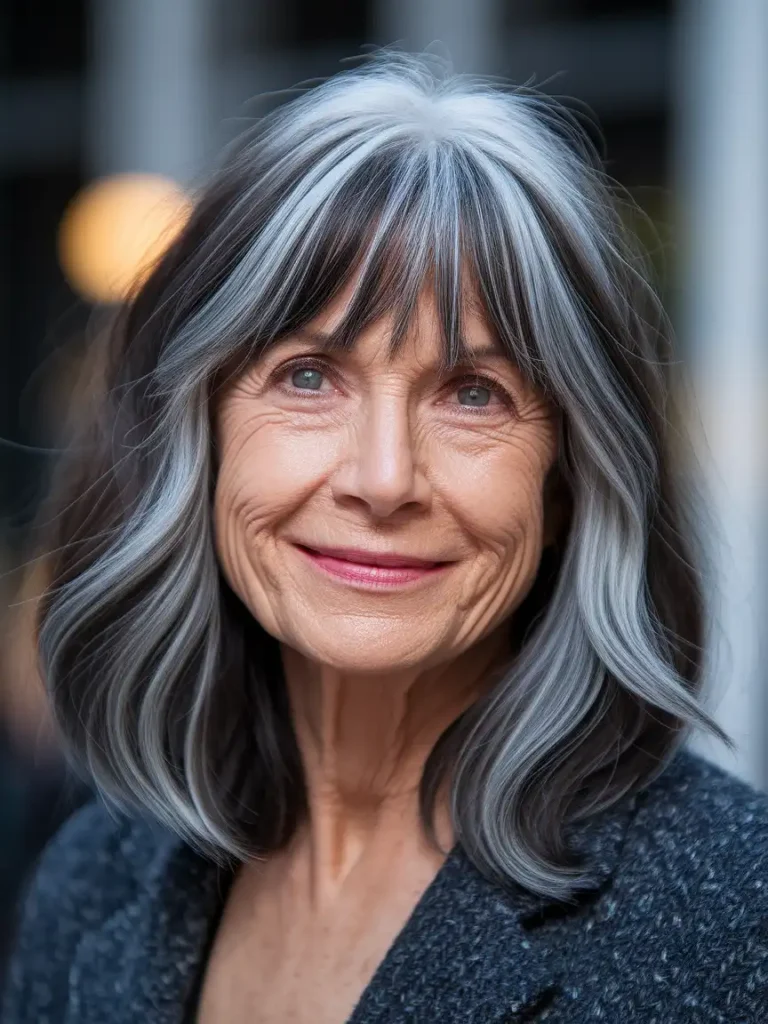
Curtain bangs solve a specific problem during the gray transition: they draw attention to your face rather than to the grow-out happening behind them. While the rest of your hair is in an in-between phase, bangs give your style a finished focal point that looks intentional.
They also require minimal maintenance if you wear them air-dried or lightly blown out. If your incoming gray is concentrated at the temples or crown, curtain bangs shift the eye away from those areas while the rest catches up. Ask your stylist to keep them soft and longer rather than blunt and short. A heavier bang can look dated and adds more upkeep than most people want during an already demanding hair phase.
8. The Lob (Long Bob) Is the Most Versatile Cut for Growing Out Gray Hair
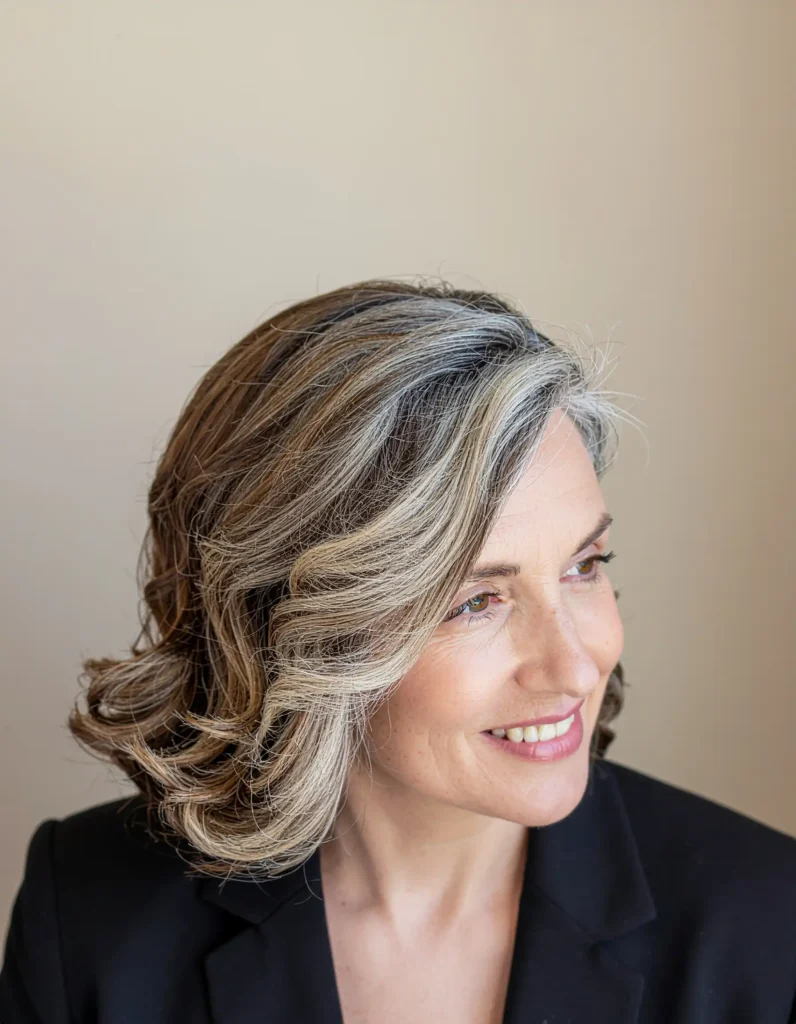
The lob sits right at the sweet spot between short and long, which makes it useful for almost every stage of the gray transition. It’s long enough to pull back when your hair feels uncooperative and short enough that you’re not carrying several inches of old color around with you.
Layers are what separate a good lob from a flat one during the transition. A lob without movement just hangs there, and that makes the grow-out line more visible. With soft layers and a little wave, whether natural or from a diffuser, the hair moves and blends much better. This is also one of the easiest cuts to grow out if you eventually want longer hair, so you’re not locked in.
9. Best Haircut to Transition to Gray Hair If You Have Fine or Thinning Hair
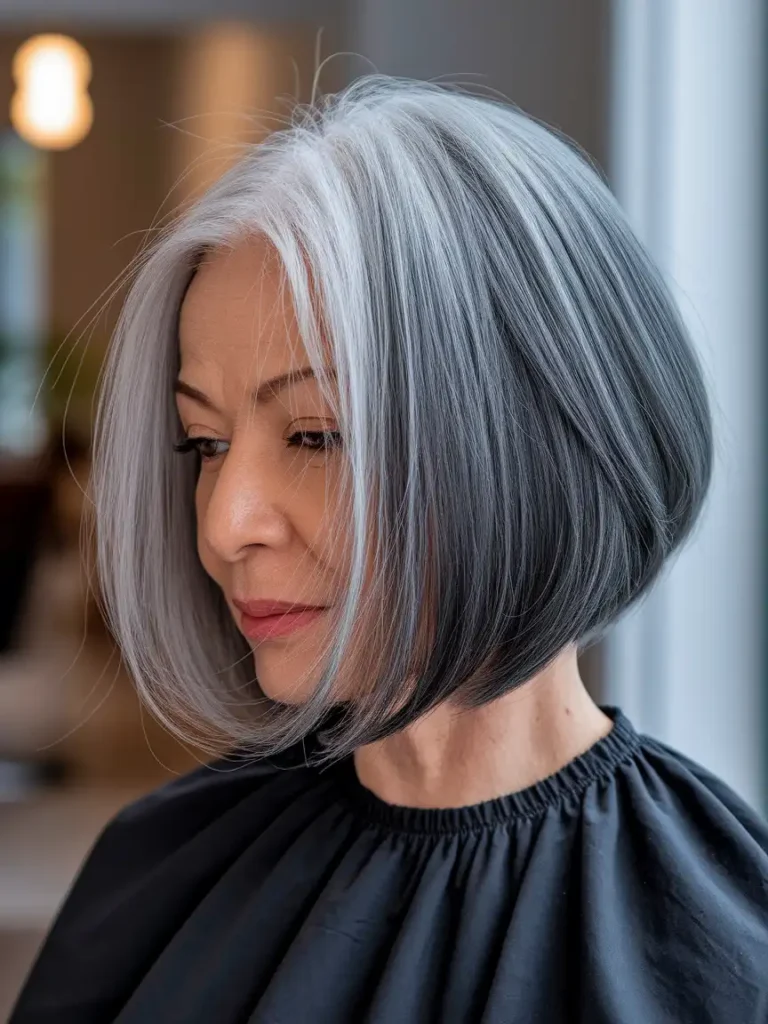
Fine hair during the gray transition needs a different approach than thick hair. When hair is fine, the grow-out can look especially stark because there is less volume to soften it. The right cut compensates for that.
Here’s what works best for fine, transitioning hair:
- Blunt lob or bob at jaw length: Adds the appearance of thickness by keeping ends dense.
- Avoid very long lengths: Weight pulls fine hair flat, making it look thinner.
- Soft layers, not heavy ones: Too much layering removes bulk from already-thin strands.
- Ask for a dusting, not a full cut: Small trims keep the length while removing damage that makes thin hair look worse.
- Dry cuts work well for fine hair: They let your stylist see exactly how the hair falls and behaves naturally.
A volumizing mousse on damp hair before diffusing gives fine gray-transitioning hair the texture it needs to look full and finished.
10. Gray Hair Transition With Lowlights: A Gentler Option Than Going Cold Turkey
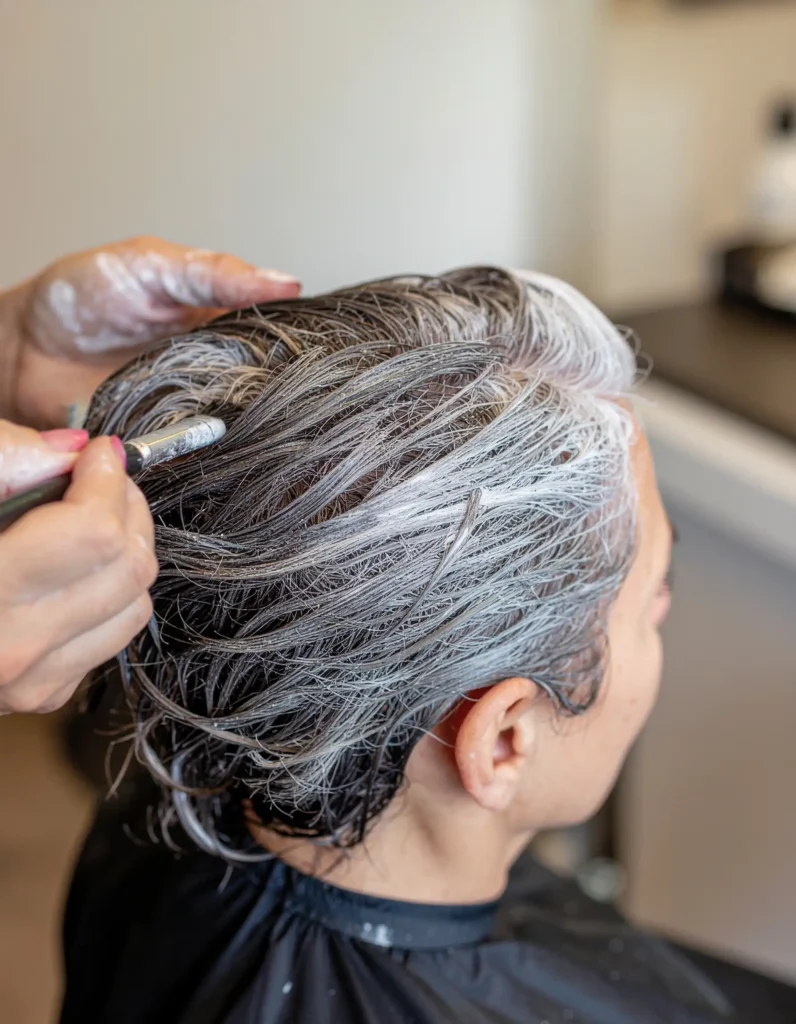
Lowlights during the gray transition work differently than highlights. Instead of lifting the color up, they add deeper pieces that blend into your natural gray and soften the overall contrast. This is particularly useful if your natural gray is coming in stark white or very light silver, which can look disconnected from any remaining darker length.
A good colorist will add lowlights in shades that sit between your incoming gray and your existing color, creating a gradation rather than a two-tone effect. You don’t need a full head of lowlights to see the difference. Even a partial application around the face and crown can change how the whole head reads. Ask for a shade that’s two levels deeper than your natural gray, not your old dye color.
11. How to Use a Haircut to Remove the Demarcation Line Faster
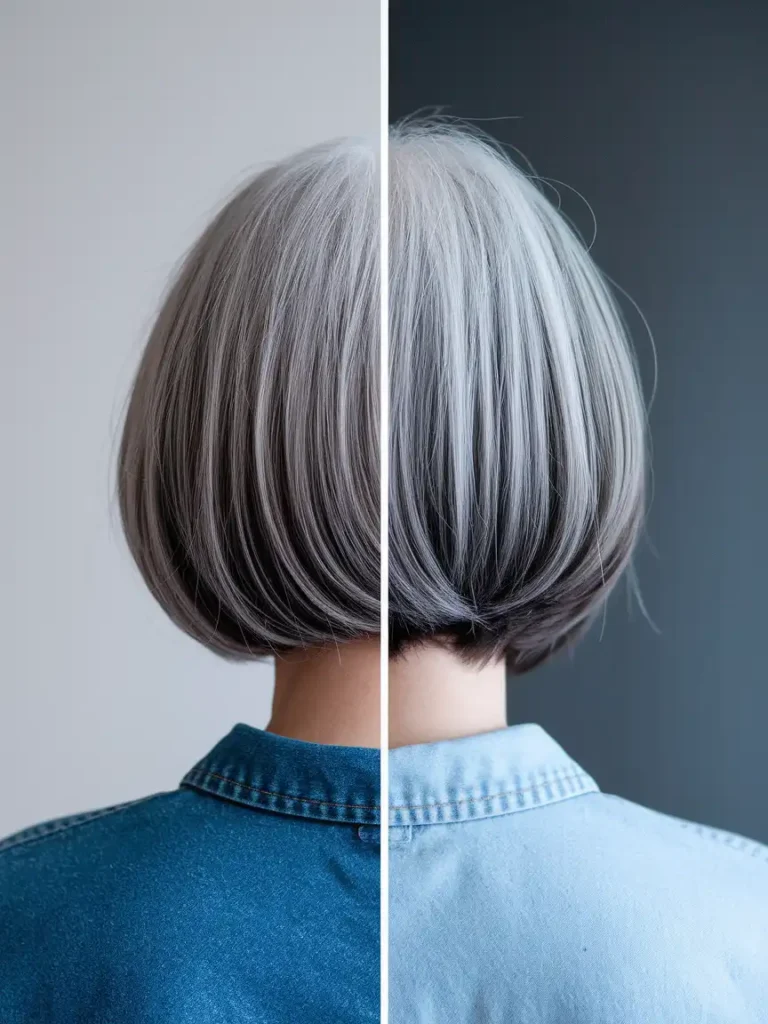
The demarcation line is the clearest sign of a hair color transition, and for many women, it’s the part they want gone the fastest. A haircut is the most direct way to deal with it. Every inch you cut removes old color and brings you closer to a head of hair that’s entirely your natural gray.
You don’t have to go dramatically short all at once. Regular trims every six to eight weeks, timed with your gray grow-in rate, progressively remove the old color while keeping your style intact. If your hair grows about half an inch a month, you can calculate roughly how long your full transition will take and plan your cuts accordingly. Being strategic about trim timing means you’re always shortening the gap.
12. The Textured Crop: A Bold Cut That Makes Gray Hair Look Expensive
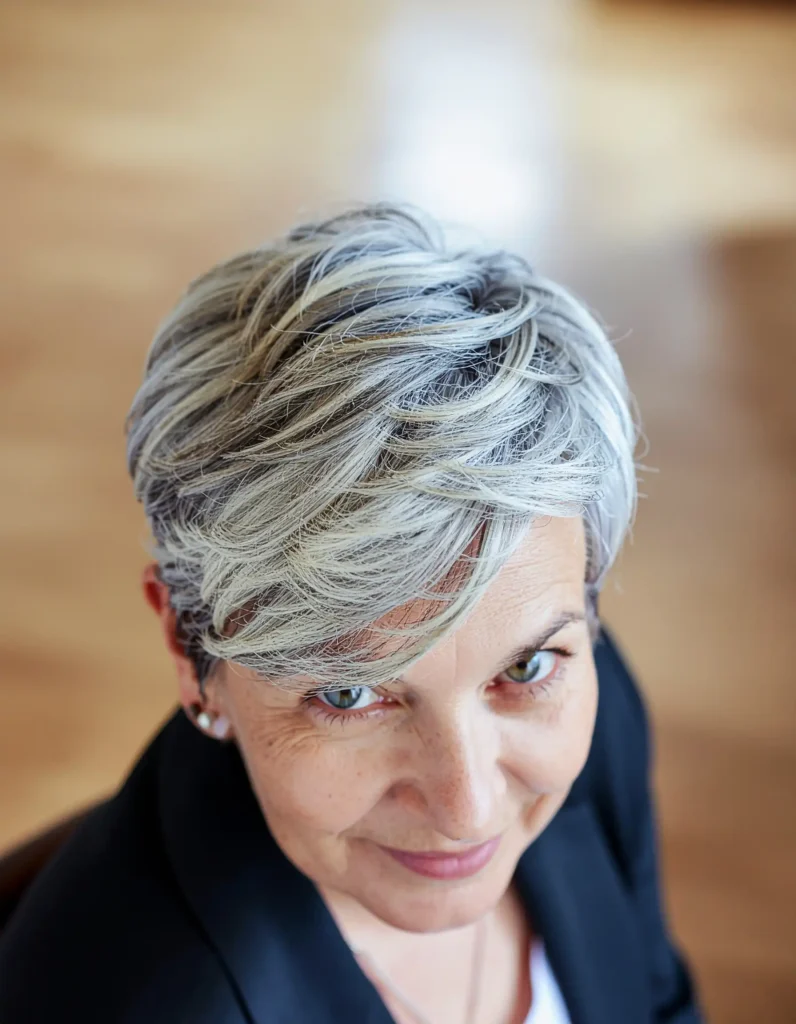
A textured crop is not the same as a basic short cut. The texture, whether achieved through point-cutting, razor work, or a dry cut technique, is what gives the style its character. For gray hair specifically, texture breaks up the uniformity of silver tones and makes the color look dimensional rather than flat.
This cut suits women who want to stop fighting their hair. Gray and silver tones tend to be more coarse and can be resistant to smooth styling. A textured crop works with that resistance rather than against it. Product-wise, a small amount of paste or wax worked through dry hair gives you definition without looking overdone. This is genuinely one of the lowest-maintenance options for the transition.
13. Best Haircuts for Transitioning to Gray Hair in Your 40s
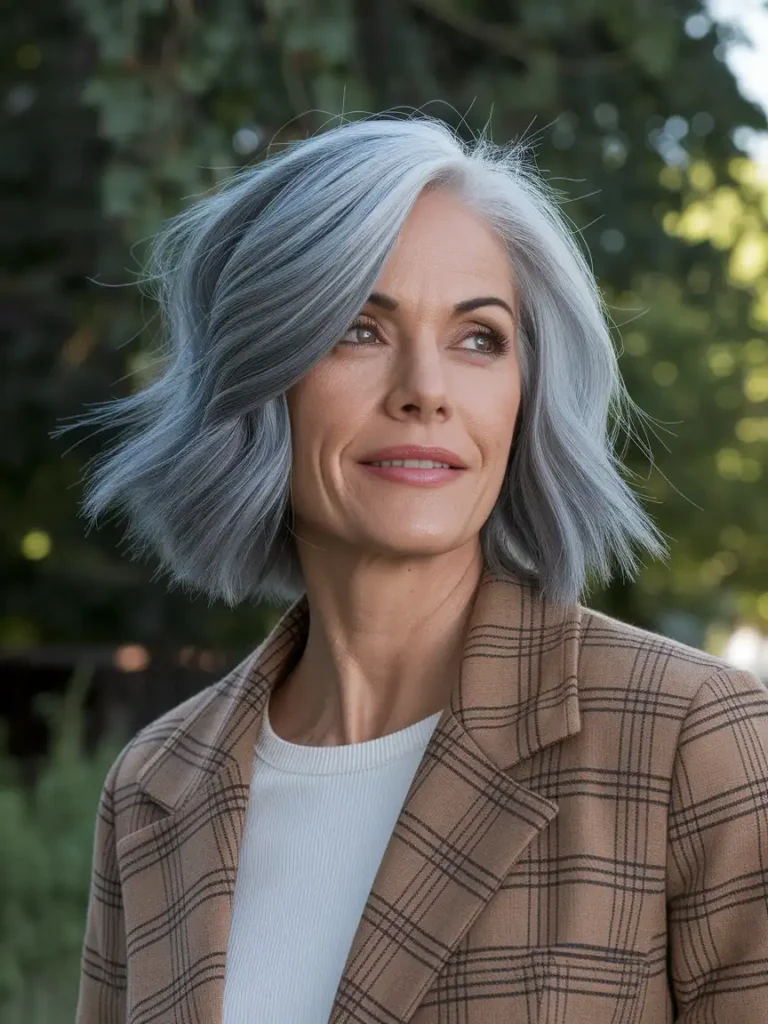
Your 40s are when the gray transition tends to feel most complicated. You’re often still dealing with significant color history, your hair texture may have changed, and you’re trying to find a look that feels current rather than like you’ve just given up on your hair.
The cuts that work best in this decade tend to be mid-length with movement:
- Layered lob: Modern, low maintenance, works on most hair types.
- Shag with curtain bangs: Adds a current, intentional feel to the grow-out.
- Soft layered bob: Polished enough for work, relaxed enough for everyday.
- Avoid very blunt bobs: They can read as severe during a transition, especially with a visible color line.
The goal in your 40s is to look like you chose this style, not like you’re waiting out a phase. The right cut does that for you.
14. How to Talk to Your Stylist About a Gray Hair Transition Haircut

A lot of gray transition frustration happens because of miscommunication at the salon. You go in wanting a blended, intentional grow-out and come out with a standard trim that changes nothing. Being specific with your stylist makes a real difference.
Here’s how to have that conversation:
- Show photos: Find two or three images of the grow-out stage you’re targeting, not just the end result.
- Say the word “demarcation line”: Your stylist will immediately understand the issue you’re trying to solve.
- Ask about timing: How many appointments will it take? What should you do between visits?
- Discuss color options: Ask whether highlights, lowlights, or toning could help the cut do its job better.
- Set expectations: Understand that a good transition takes six months to a year. A stylist who promises faster is cutting corners.
Going in prepared saves you both time and turns an awkward grow-out into a managed process.
15. Gray Blending Techniques Your Stylist Can Use Alongside Your Haircut
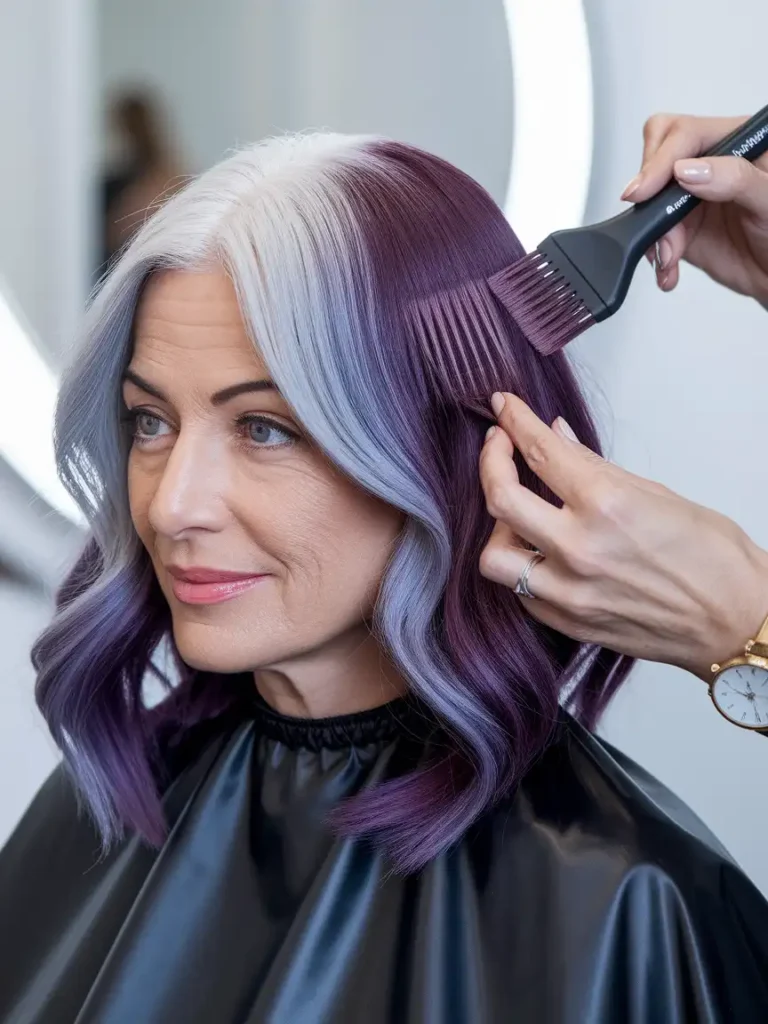
Gray blending is a color technique that works alongside your haircut, not instead of it. The idea is to meet your natural gray in the middle by lightening or toning parts of your existing color so the two don’t sit side by side in stark contrast.
Common gray blending techniques include:
- Balayage: Freehand color painted through the mid-lengths to soften the transition zone.
- Root smudge: A technique that blurs the line between your gray roots and the rest of your hair.
- Toning: A gloss or toner applied over existing color to shift it closer to your gray’s natural tone.
- Highlights placed near the root: Makes the grow-in look gradual rather than sudden.
None of these require a full color application. Most can be done quickly and cost less than a full color service. Ask your colorist which technique suits your current grow-in stage best.
16. Growing Out Gray Hair With Long Layers: What Works and What Doesn’t
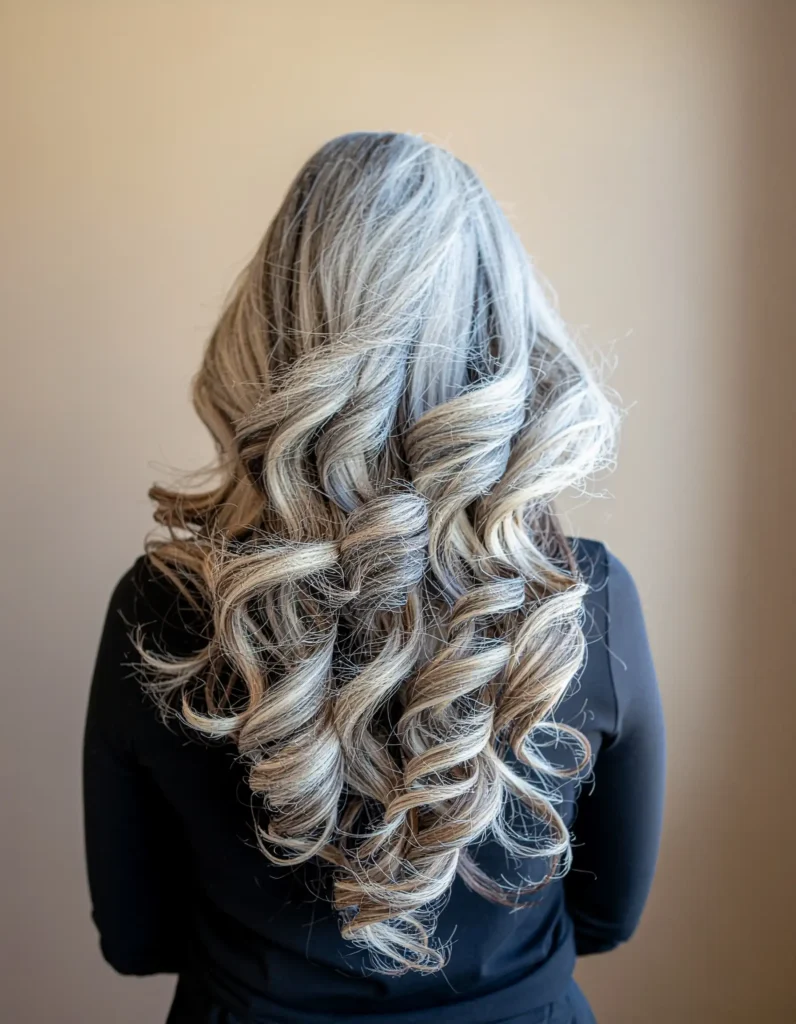
Long hair during the gray transition gets complicated fast. The longer your hair, the more color history it carries, and that means the grow-out line can sit in the middle of your length for a very long time. Long layers help but don’t fully solve the problem.
What works with long layered hair:
- Regular trims every 8 weeks to keep progressing toward your natural color.
- Face-framing layers that draw attention upward, away from the color line.
- A toner or gloss every few months to keep existing color from going brassy next to cool gray.
What doesn’t work:
- Keeping all the length and doing nothing: The grow-out just gets longer and more obvious.
- Heavy, uniform layers: These make the contrast between sections more visible, not less.
If you love your length, a small progressive trim schedule gets you there. It just takes longer.
17. The Best Gray Hair Transition Styles for Curly and Wavy Hair
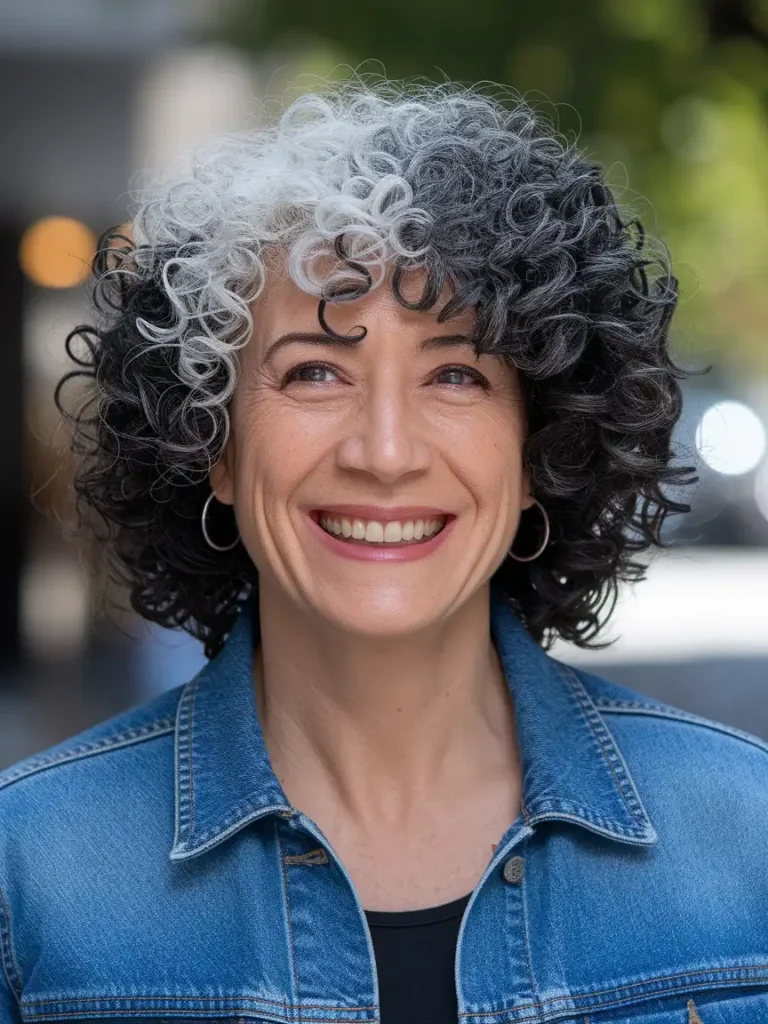
Curly and wavy hair actually handles the gray transition better than straight hair in many ways. The natural texture breaks up the demarcation line on its own because no two curls sit exactly the same way. The grow-out line that looks harsh on straight hair reads as textured dimension on curls.
The best cuts for curly gray transitions are those that keep the curl structure intact. Ask for a dry cut if possible, because curly hair behaves very differently wet versus dry. A curl specialist who understands the gray transition is worth finding. As for products, gray and silver curls tend to be more porous, so a deep conditioning treatment every two weeks keeps them from looking dull or frizzy. A curl-defining cream over a leave-in conditioner gives you shine and hold without heaviness.
18. How Often to Cut Your Hair During the Gray Hair Transition
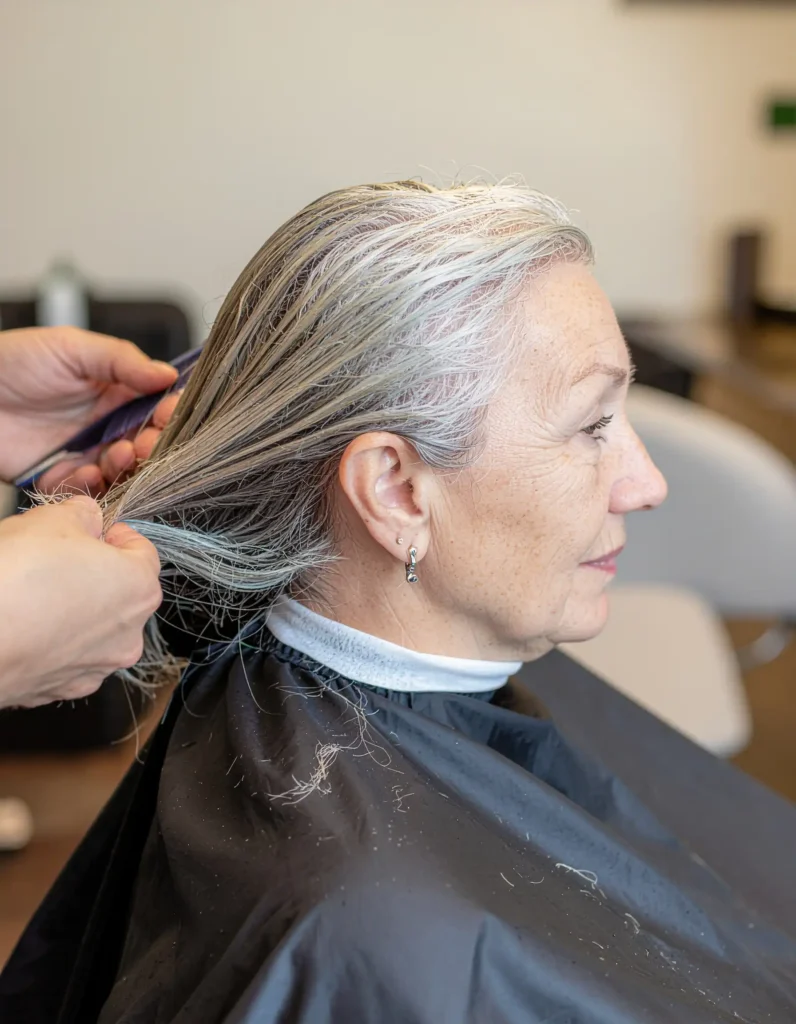
The gray transition is not the time to stretch out your haircut appointments. Regular trims are actually one of the most effective tools you have for moving through the grow-out phase faster and keeping it looking clean.
A general schedule that works for most people:
- Every 6 weeks if you’re cutting aggressively toward your natural gray and want the transition done quickly.
- Every 8 weeks if you’re maintaining length and progressing more gradually.
- Every 10 to 12 weeks only if your hair is very long and you’re making minimal cuts while managing with color techniques.
In between cuts, a root touch-up toner or root blurring spray can keep the grow-out from looking unkempt. These are temporary solutions, but they bridge the gap between appointments without committing to more color. Set a trim schedule at the beginning of your transition and stick to it.
19. Choosing the Right Stylist for Your Gray Hair Transition
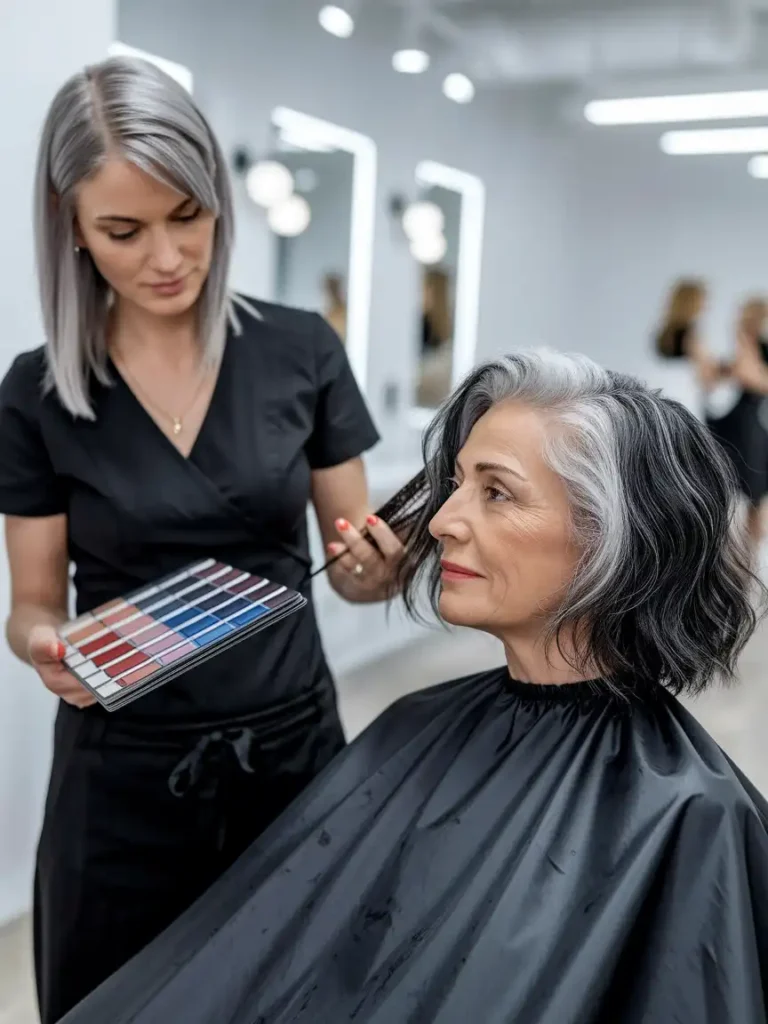
The gray transition is a multi-appointment process, not a one-time cut. That means who you work with matters more than usual. A stylist who has done this transition before, repeatedly and successfully, will approach your hair completely differently than one who hasn’t.
When looking for the right person:
- Search specifically for “gray hair transition specialist” or “going gray stylist” in your area.
- Look at their portfolio: Do they have before-and-afters of actual transitions, not just finished gray styles?
- Ask upfront: Have they managed the demarcation line and grow-out before? What techniques do they use?
- Be wary of stylists who push you toward full re-coloring: Some will default to what they know rather than managing the transition properly.
One consultation appointment before you commit saves you from ending up with a haircut that doesn’t serve your actual goal.
20. What to Expect Month by Month When You Transition to Gray Hair

No one tells you exactly how the transition timeline looks until you’re in it. Having a rough idea of what to expect each month keeps you from panicking and reaching for the box dye.
Here’s a general breakdown:
- Months 1 to 2: New gray growth is visible at the roots. This is the hardest stage visually.
- Months 3 to 4: About 2 inches of natural growth. A good haircut removes some of the old color and makes this stage more manageable.
- Months 5 to 6: The transition zone becomes more even if you’ve been trimming consistently.
- Months 7 to 9: Significant natural growth is visible. Most of the old color is at or past the ends.
- Months 10 to 12: For shorter to medium hair, you may be fully transitioned. Long hair takes 18 to 24 months.
Progress photos every month help you see what’s actually happening rather than getting stuck on one hard week. Take them. You will want to look back.
Conclusion:
Your gray is coming in whether you plan for it or not. The difference between a transition that looks messy and one that looks intentional usually comes down to one good haircut. Start with a stylist who understands the grow-out process, be consistent with your trims, and stop fighting what your hair is doing naturally. The women who come out of this phase looking their best are not the ones who waited it out. They made a plan.