22 Small Patio Ideas to Maximize Your Compact Space
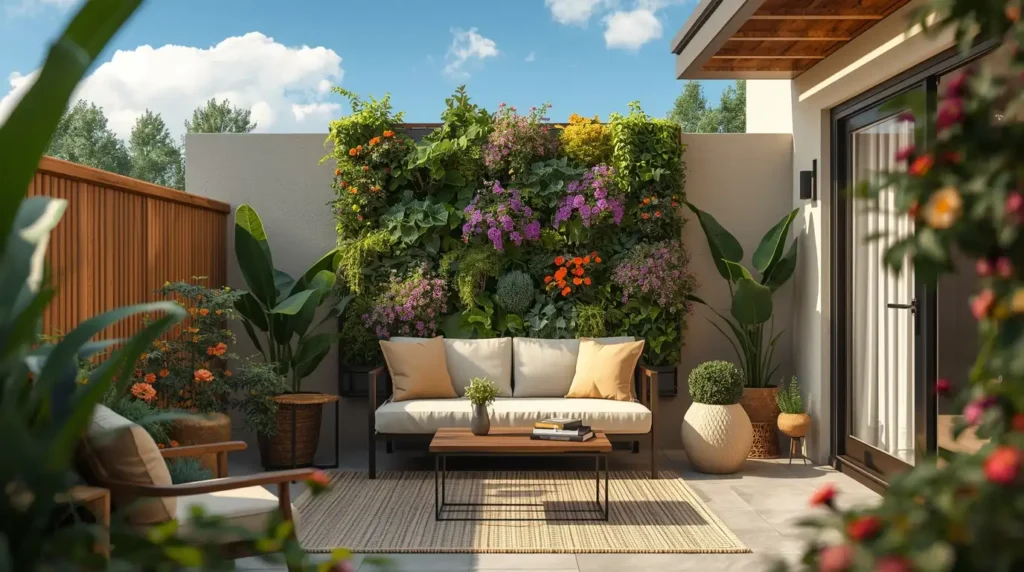
There is something truly special about stepping outside with a cup of coffee in hand, even if your outdoor space measures just a few feet across. I have spent years helping friends and clients transform their cramped balconies, narrow side yards, and petite urban patios into spaces they actually want to live in. The secret is not about having more square footage; it is about making every inch work harder and smarter. Whether you are starting from a bare concrete slab or looking to refresh a tired setup, the right small patio ideas can turn even the tiniest corner into your favorite spot at home. In this guide, I will walk you through 23 creative, real world solutions that prioritize flow, function, and plenty of style, because great design should never be limited by size.
1. Start with a Neutral Foundation to Visually Expand
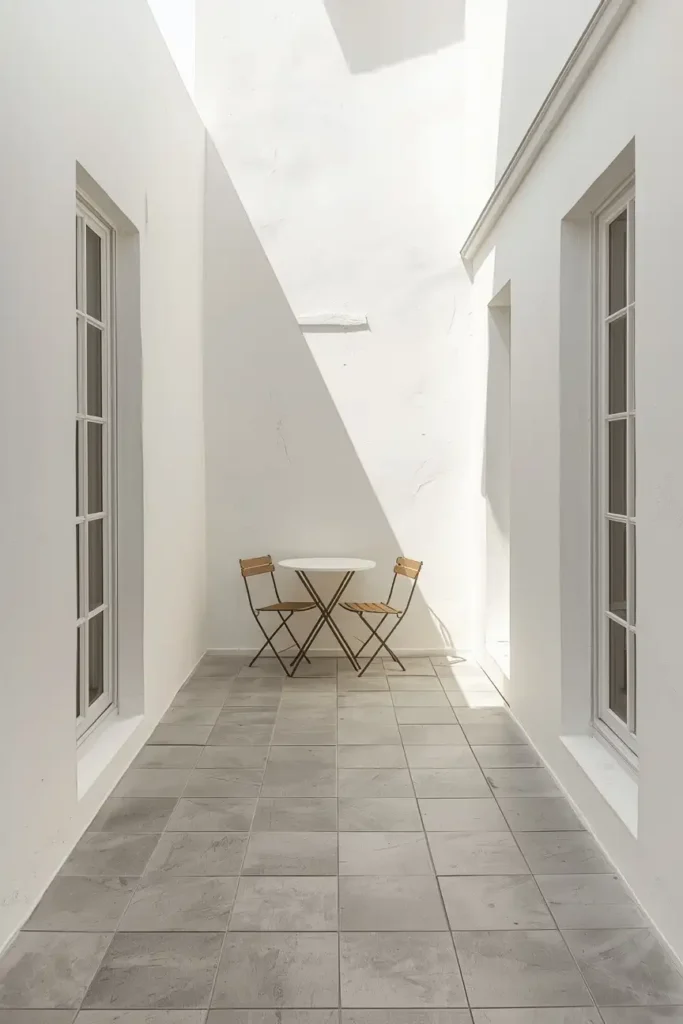
When you are working with a compact footprint, your choice of base colors matters more than you might think. I learned this the hard way after trying to make a bold, dark charcoal patio work in a space that was already fighting for sunlight. The moment I switched to a palette of crisp whites, warm ivories, and soft greiges, the entire area seemed to breathe. Light colors reflect the sun rather than absorb it, tricking the eye into perceiving depth where there is none.
By keeping the foundation neutral, you also gain the freedom to swap out accent pieces as your tastes change. Think of your floor, walls, and major furniture as the canvas. A neutral base doesn’t have to feel boring; instead, it acts as a blank slate that makes your greenery and textiles pop, creating a cohesive look that feels intentional rather than cramped.
2. Choose Slim Profile Furniture for Airflow
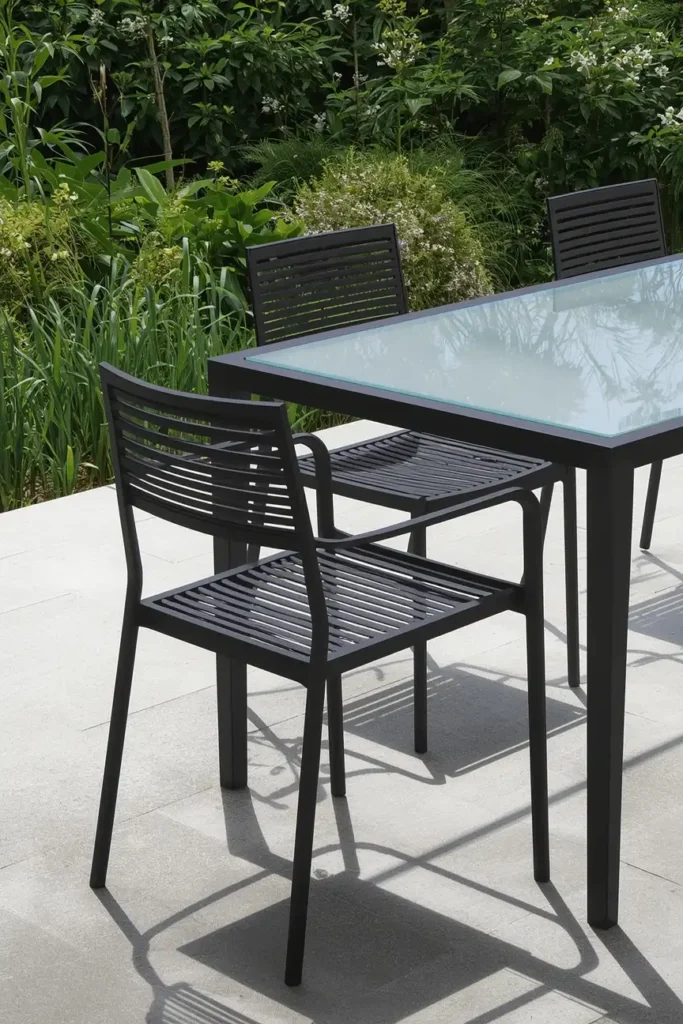
One of the biggest mistakes I see in small outdoor spaces is bulky, overstuffed furniture that looks like it belongs on a sprawling suburban deck. In a compact setting, every inch of visual weight counts. Opting for furniture with slim profiles, such as pieces with open slats, woven rope details, or wire legs, allows light and air to pass through. This transparency prevents the space from feeling like a storage unit for furniture and instead maintains a sense of openness.
I also recommend looking for pieces that are raised off the ground. When a sofa or chair sits directly on the floor, it creates a visual block. By choosing furniture with exposed legs, you allow the eye to travel under the pieces, which instantly makes the square footage feel larger than it actually is. It is a simple structural trick that designers use to maintain flow in tight quarters.
3. Utilize Rail Planters for Greenery Without Clutter
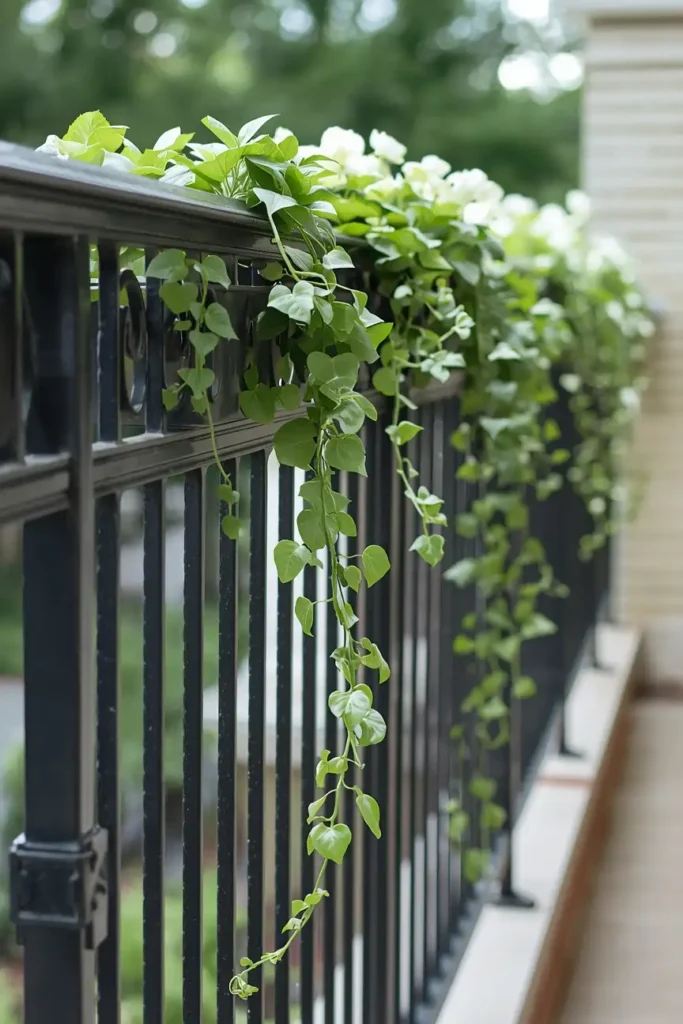
Greenery is essential for making a small patio feel like a true sanctuary, but pots scattered across the ground can quickly create an obstacle course. I discovered that the secret to lush landscaping in a limited area is to go vertical, specifically using the railings. Rail planters are a game changer because they utilize dead space that usually goes unnoticed. They allow you to cultivate a dense, jungle like atmosphere without sacrificing precious square footage for seating or dining.
When selecting planters, consistency is key. Rather than buying a mishmash of mismatched terra cotta pots, stick to a uniform color palette for the containers—such as all black metal or all white ceramic. This uniformity creates a sense of order and calm. The trailing vines soften the hard edges of the railing and walls, adding a romantic, organic feel that draws the eye up and outward, blurring the boundaries of your patio.
4. Install a Wall Mounted Bar for Flexible Dining
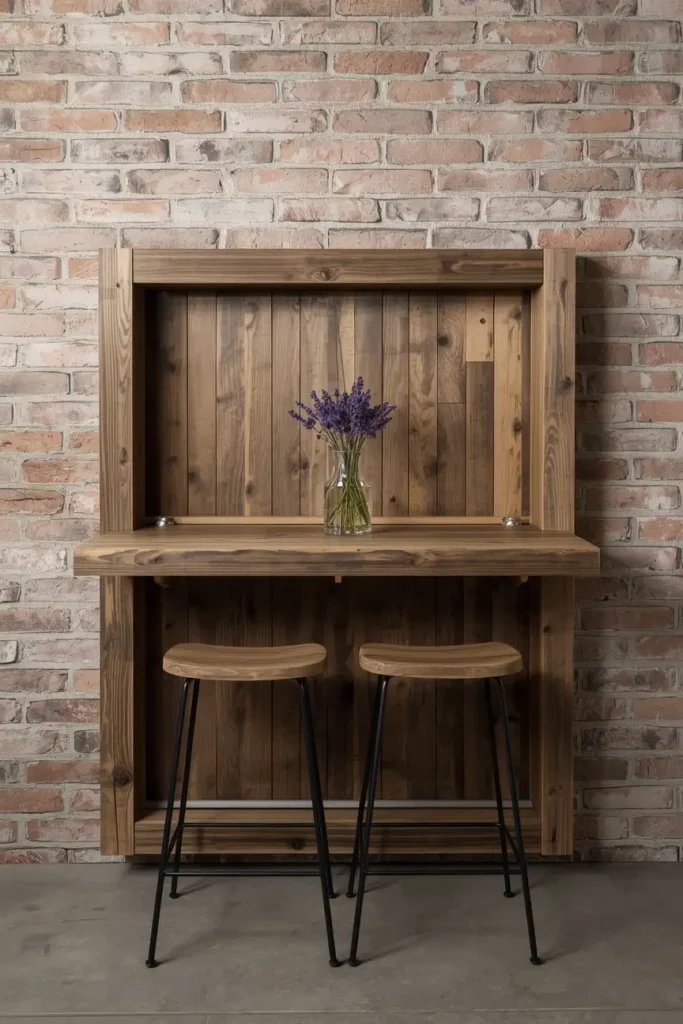
If you love to entertain but lack the room for a permanent dining table, a wall mounted bar is the solution you have been looking for. I installed one in my own city patio last summer, and it completely changed how we use the space. When not in use, it folds down to virtually nothing, allowing you to reclaim the floor space for yoga, gardening, or just letting the dog lounge in the sun. When guests arrive, it transforms into a stylish serving station or an intimate two person dining spot.
This setup encourages flexibility. You are no longer locked into a rigid furniture layout where a table dictates the flow of traffic. It invites people to stand and mingle or sit for a quick bite without feeling confined. Plus, the act of mounting furniture to the wall reinforces the idea that in small spaces, we need to think beyond what sits on the ground and start utilizing the vertical planes around us.
5. Define Zones with an Outdoor Rug
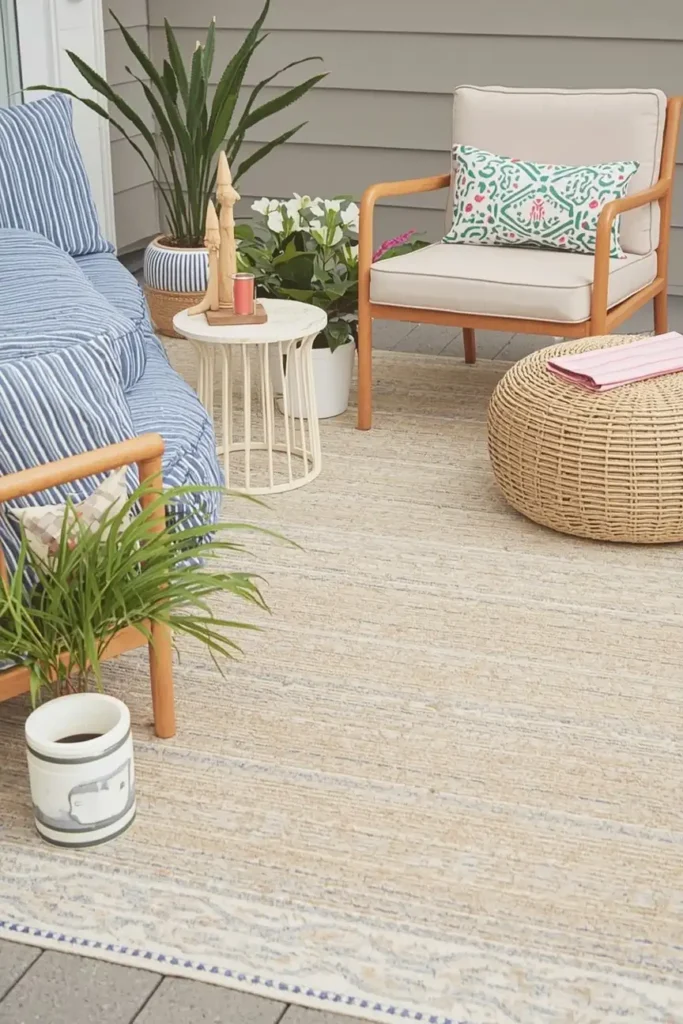
In an open concept patio, it can be difficult to distinguish where the seating ends and the walkway begins. This lack of definition can make a small space feel chaotic and unorganized. Introducing an outdoor rug is the quickest way to establish a designated zone. It acts as a visual anchor, telling your eye exactly where the seating area starts and stops. Without it, furniture can feel like it is floating aimlessly.
I always advise choosing a rug that is slightly larger than your furniture grouping. A common mistake is buying a rug that is too small, which makes the furniture look cramped. You want the front legs of your chairs and sofa to comfortably rest on the rug. This connection ties the pieces together, creating the illusion of a larger, more cohesive floor plan. It also adds a layer of texture that softens hardscape surfaces like concrete or stone.
6. Hang String Lights to Draw the Eye Upward
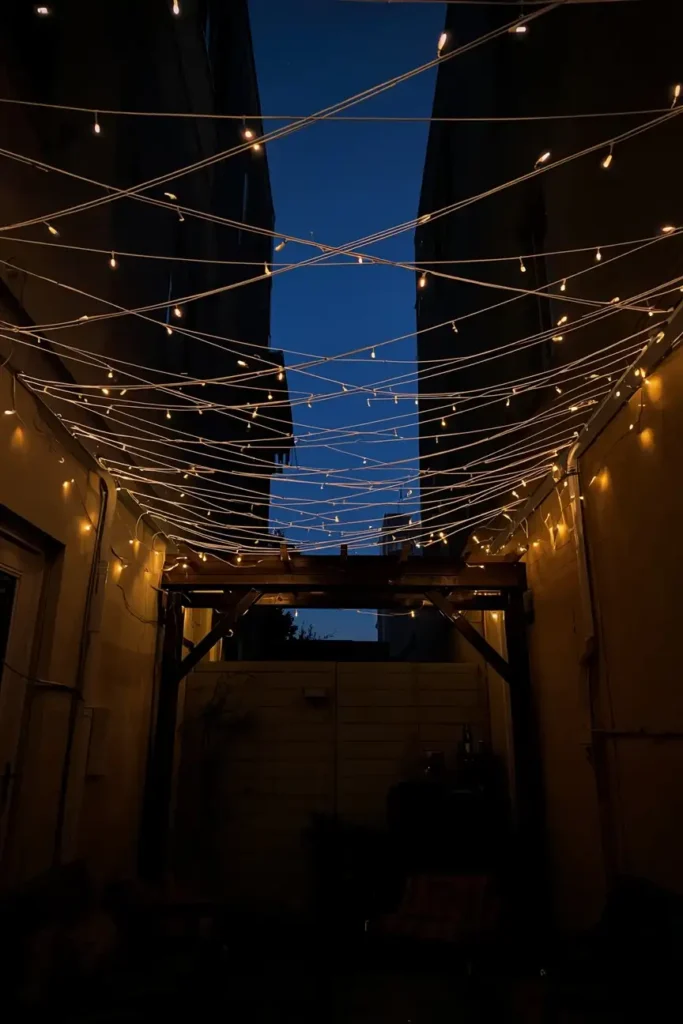
Lighting is often treated as an afterthought, but in a small patio, it is a powerful tool for architectural illusion. When you hang string lights overhead, you shift the focal point of the room from the limited floor space to the air above. This creates a sense of volume and height, making the patio feel like a full room rather than a narrow alley. I love the way a simple canopy of bulbs can instantly create intimacy and a festive atmosphere without taking up a single inch of physical space.
Beyond the aesthetic appeal, this vertical lighting serves a practical purpose. It eliminates the need for bulky floor lamps or table lamps that would clutter your surfaces. By running the lights from the house out to a fence or a tall post, you are effectively defining the boundaries of your space with light, which feels magical at night. It turns a small concrete slab into a cozy, inviting escape that you will want to use long after the sun goes down.
7. Incorporate a Compact Bistro Set for Two
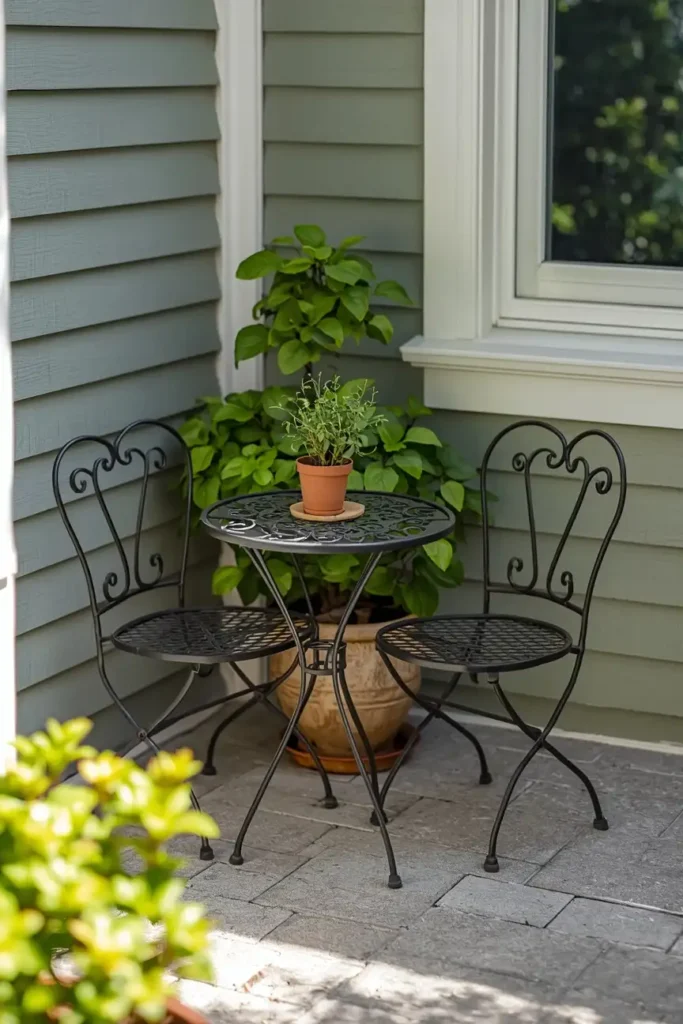
There is a reason bistro sets have remained a staple for small space living for decades. They are designed with intimacy and scale in mind. A round table, specifically, is a better choice than a square or rectangle when you are trying to maximize a tight footprint. Round edges eliminate sharp corners that can impede traffic flow, and they naturally encourage conversation because everyone is facing the center.
If you are working with a balcony or a narrow side yard, a bistro set allows you to have a functional dining or coffee spot without overwhelming the area. I recommend measuring carefully before you buy; you want to ensure there is enough room to pull the chairs out without hitting the wall. The goal is to create a dedicated spot for morning coffee or evening wine that feels intentional and quaint, rather than like you tried to squeeze a full dining set into a closet.
8. Add a Vertical Succulent Wall for Texture
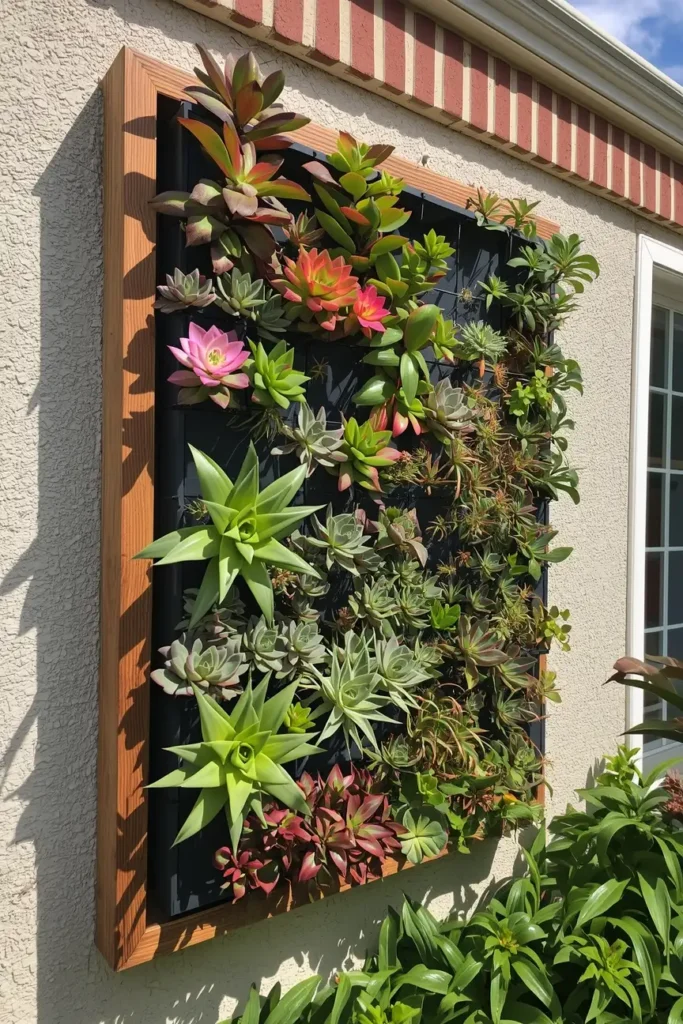
For those who love the look of a lush garden but are running out of floor space, a vertical succulent wall is the ultimate solution. It turns gardening into an art form. Succulents are particularly well suited for this because they are low maintenance, drought tolerant, and come in a stunning variety of shapes and colors. Installing a living wall transforms a blank, boring fence or wall into a dynamic focal point that feels like high end design.
What I appreciate most about this approach is how it adds depth. A flat wall offers no dimension, but a wall filled with textured foliage creates shadows and interest. It invites people to look closer. This is also a fantastic option for renters who might not be allowed to drill into the ground or build permanent structures. Many vertical planters are designed to hang like art, allowing you to bring the garden to eye level where it can be truly appreciated.
9. Nest Tables for Versatile Surface Space
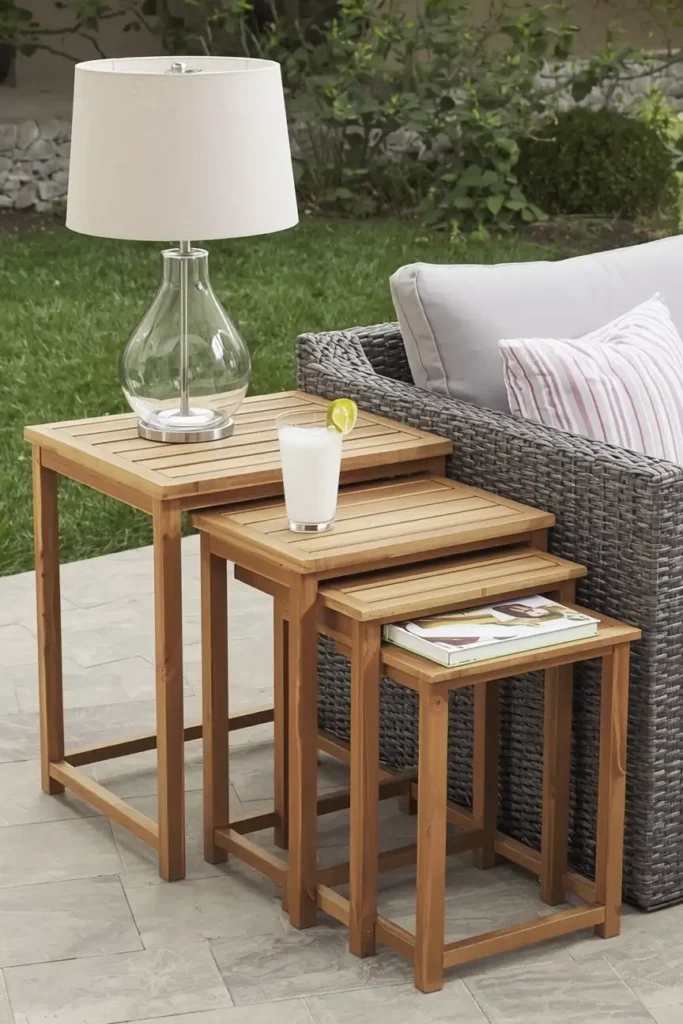
Surface space is a premium commodity in a compact patio. You need a place to set down a drink, a book, or a plate, but a bulky coffee table can kill the flow of movement. Nesting tables offer the perfect compromise. When you need extra surface space for entertaining, you can pull them apart to create multiple side tables. When you need to reclaim the floor for movement or storage, they slide neatly back together into a single, compact unit.
This flexibility is invaluable. I often tell readers to think of these tables as functional accessories rather than permanent fixtures. They allow you to adapt the space to your needs in real time. If you are hosting a party, you can scatter them around the seating area to provide ample places for guests to rest their items. If you are practicing yoga or doing some outdoor cleaning, they stack away to give you a clean, open slate.
10. Use a Privacy Screen to Block Distractions
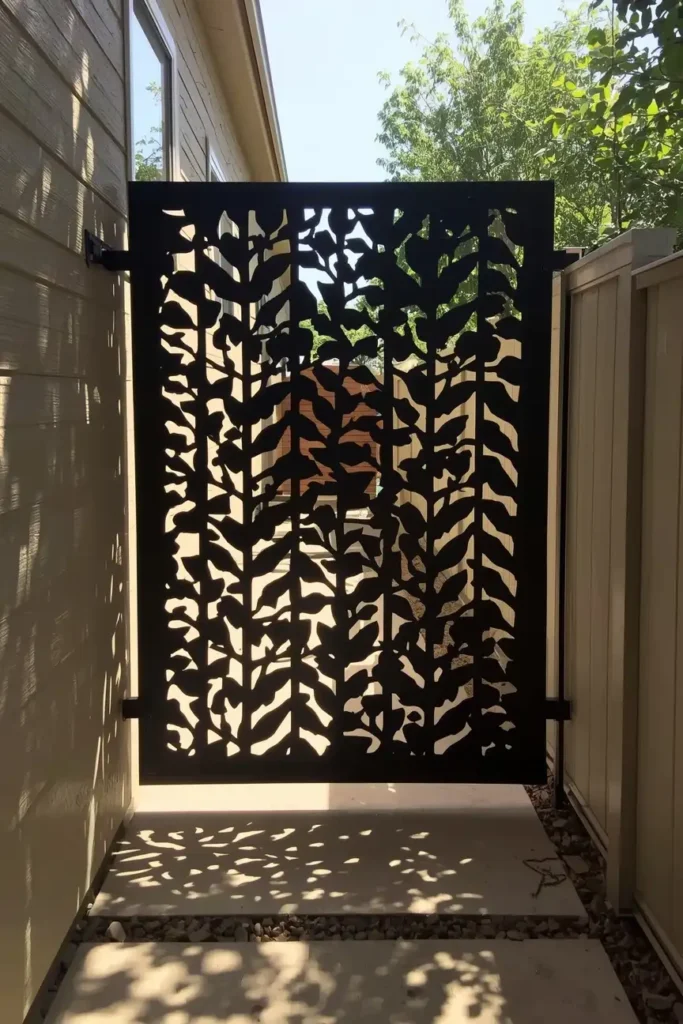
Nothing makes a small patio feel smaller than feeling exposed to the neighbors or a busy street. When you feel like you are on display, it is hard to relax. Installing a privacy screen is about more than just blocking a view; it is about psychologically defining your territory. When the space feels enclosed, it automatically feels more like an outdoor room and less like an exposed ledge.
There are so many beautiful options available today that go beyond the standard bamboo roll. I love using decorative metal screens or slatted wood panels because they offer privacy while still allowing airflow and dappled light to filter through. They act as a backdrop for your plants and furniture, creating a sense of depth. By blocking the distractions of the outside world, you force the focus inward onto your carefully curated space, making it feel larger because it feels complete.
11. Opt for Stackable or Foldable Seating
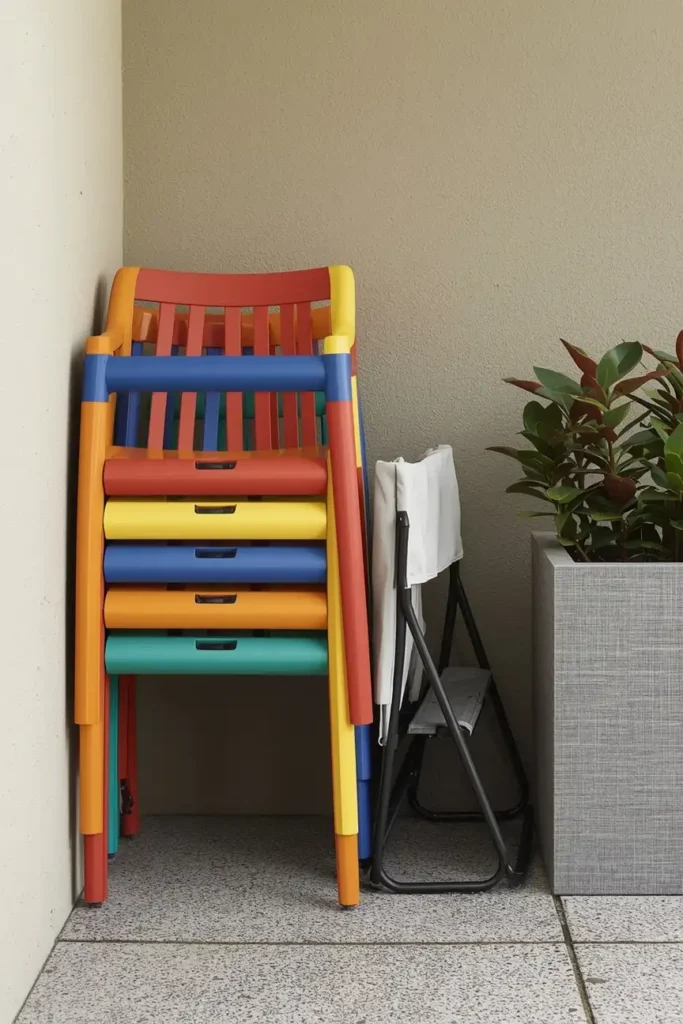
Flexibility is the cornerstone of small space living. While it is nice to have a permanent sofa or bench, your auxiliary seating should be mobile. Stackable chairs and folding seating allow you to accommodate guests without cluttering your patio 24/7. When it is just you at home, you can store them away to enjoy the open space. When the book club or family comes over, you can easily pull out the extra seats.
This strategy prevents the dreaded “storage shed” look where furniture is piled up because there is nowhere else to put it. By choosing pieces that are designed to collapse or stack, you maintain a clean, minimalist aesthetic most of the time. It also gives you the freedom to rearrange your layout on a whim. If the sun shifts and you want to follow the shade, it is easy to move these lightweight pieces around without a struggle.
12. Install a Cantilever Umbrella for Shade Without a Base
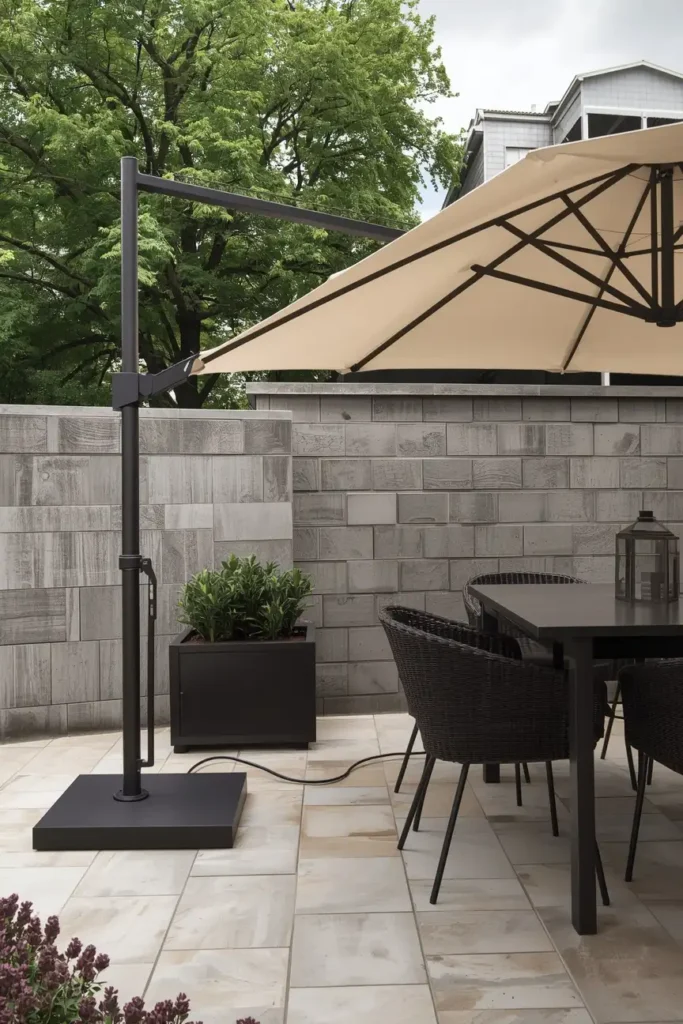
Traditional patio umbrellas are problematic for small spaces. They require a heavy, bulky base right in the middle of your furniture arrangement, which creates a tripping hazard and breaks up the flow of the room. A cantilever umbrella solves this problem entirely. Because the pole is offset to the side, the umbrella can hang over the seating area like a floating canopy, leaving the ground completely clear.
I consider this a worthwhile investment for anyone who struggles with afternoon sun. The freedom to position the shade exactly where you need it without sacrificing floor space is liberating. You can tuck the base into a corner behind a plant or against the house, effectively hiding the mechanism. This allows you to place your dining or lounge furniture in the optimal position without having to work around a pole sticking up through the center of your table.
13. Embrace Mirrors to Double the Visual Space
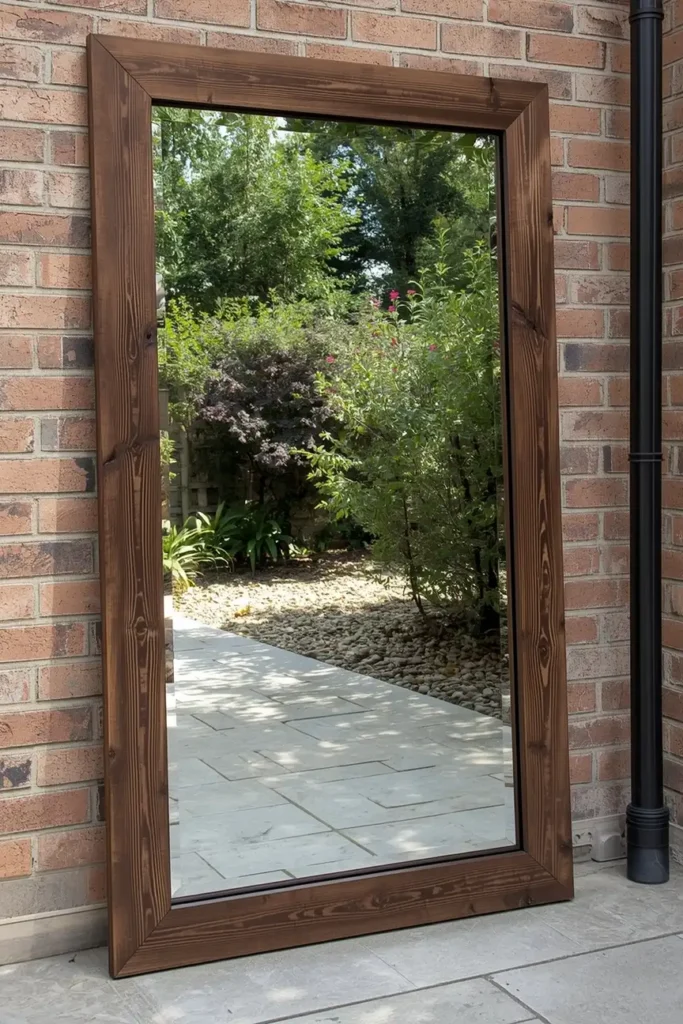
Using a mirror outdoors might seem unconventional, but it is one of the oldest tricks in the interior design book that translates beautifully to the patio. A well placed mirror can effectively double the perceived size of your space by reflecting light and greenery. When you look into the mirror, your eye sees depth, making a 10 foot patio feel like a 20 foot space. It is an instant psychological expansion.
You do need to be careful about material selection; standard indoor mirrors will not hold up to humidity and temperature changes. Look for acrylic mirrors or those specifically treated for outdoor use. Place it strategically so it reflects your favorite element—perhaps a flowering vine or a water feature. Just be mindful of where the sun hits; you want to reflect the garden, not blind your guests with a harsh glare during afternoon cocktails.
14. Build a Low Profile Platform Deck
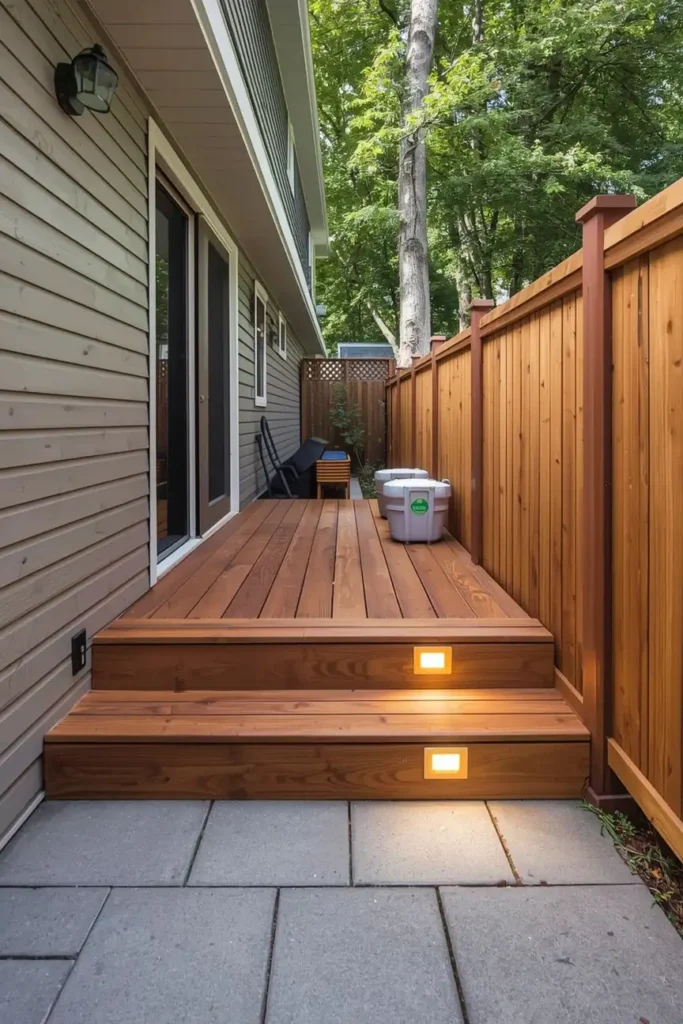
If your patio is currently a concrete slab that feels cold and utilitarian, building a low profile platform deck can completely transform the vibe. By adding a layer of wood, you introduce warmth and texture that concrete simply cannot provide. Furthermore, a deck allows you to level uneven ground and create a distinct platform that separates the patio from the rest of the yard, giving it a sense of permanence and intentionality.
You don’t need a massive construction project. Even a floating deck that sits just a few inches off the ground can make a dramatic difference. I love this approach because it allows you to dictate the exact shape of your space. You can build it to fit perfectly within an awkward nook or to curve around a tree. It creates a clean, finished edge that visually contains the space, preventing the eye from wandering into messy garden beds or uneven grass.
15. Use Hanging Chairs for a Fun, Space Saving Swing
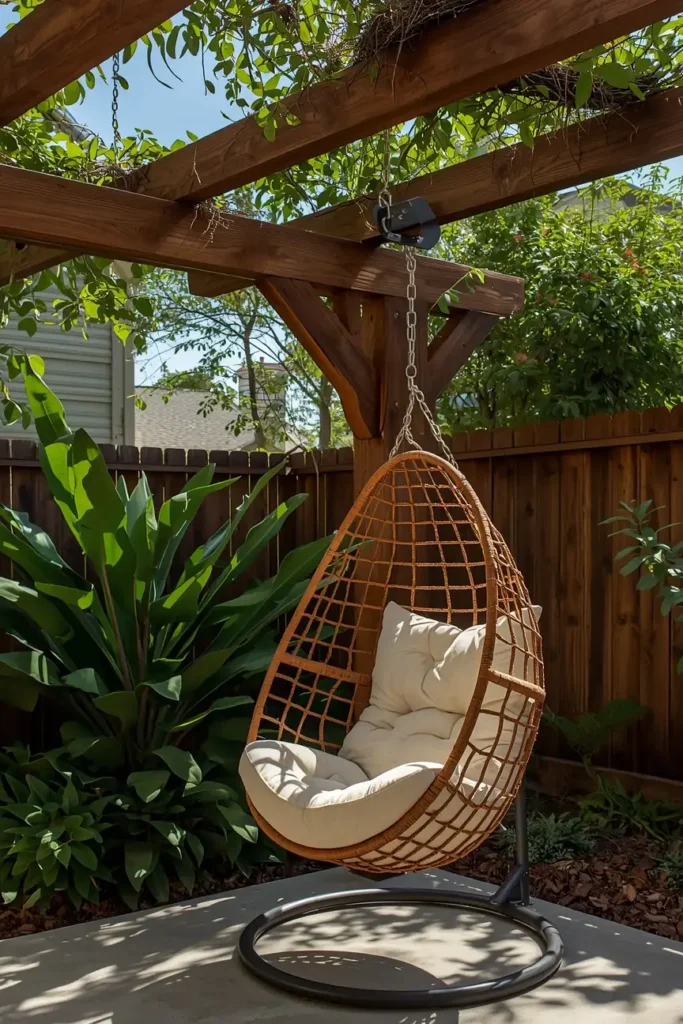
Sometimes maximizing space means rethinking how we sit altogether. A hanging chair or swing seat utilizes vertical space to provide seating that takes up a fraction of the footprint of a standard chair. Because the chair hangs from above, the base is free of legs that clutter the floor. It adds a playful, bohemian element to the patio while serving as a functional spot to curl up with a book.
From an experiential standpoint, hanging chairs also create a sense of gentle motion that is incredibly relaxing. They are a fantastic alternative to a bulky chaise lounge. If you have a sturdy overhead structure like a beam or a pergola, this is a great way to add seating without cramming more furniture onto the ground. It draws the eye upward and fills the middle ground of the space, adding visual interest at multiple levels.
16. Incorporate Reflective Surfaces and Glass
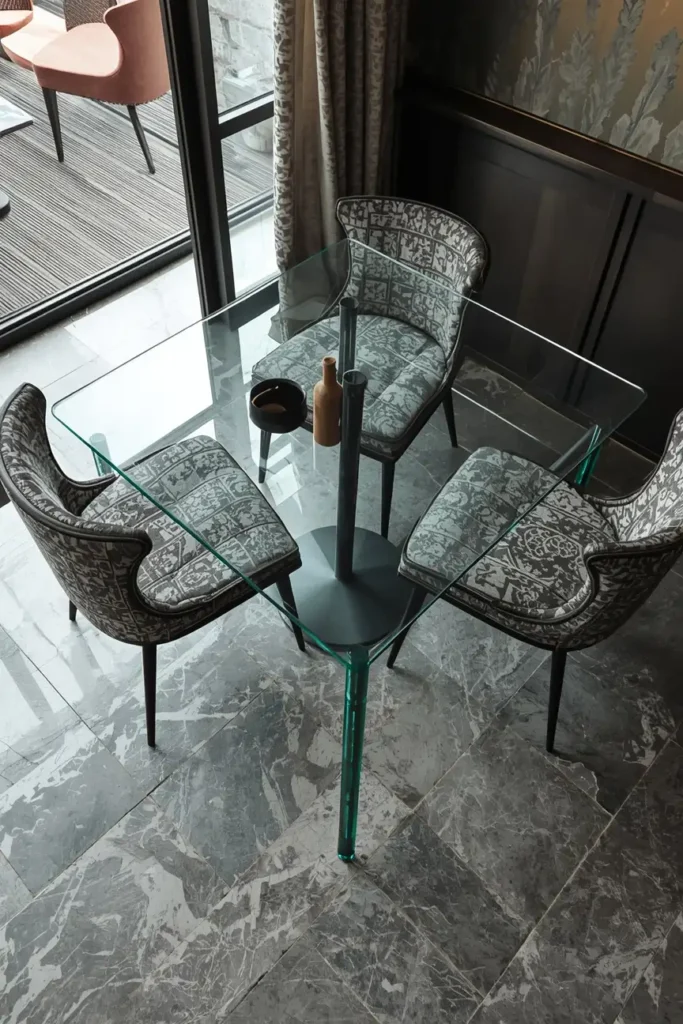
When you are dealing with tight dimensions, you want your furniture to work hard without being seen. Glass and acrylic furniture are the ultimate tools for this. A glass table top allows you to have a full dining surface without the visual bulk of a solid wood or metal top. Your eye travels straight through the table, seeing the ground beneath, which prevents the space from feeling blocked or congested.
I often recommend this for balconies where a heavy table would overwhelm the railing views. The transparency keeps the focus on the surrounding scenery rather than the furniture itself. Pairing a glass table with acrylic or clear polycarbonate chairs takes this concept a step further. It is almost like having invisible furniture, allowing you to host a dinner party for four in a space that normally only feels comfortable for one.
17. Create an Indoor Outdoor Connection
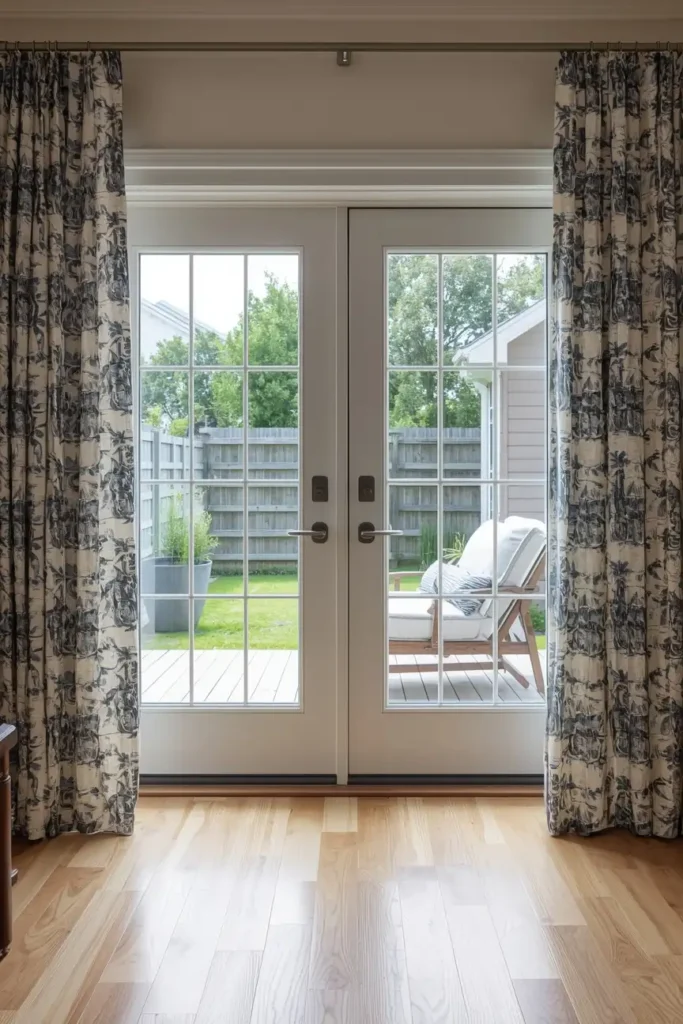
One of the most effective ways to make a small patio feel larger is to stop treating it as a separate entity and start treating it as an extension of your home. When you visually connect the indoor space with the outdoor space, your eye no longer sees the patio as a tiny box outside; it sees it as a larger room attached to your living area. This is achieved by using consistent materials, such as matching floor tiles or a similar color palette.
Even if you cannot change the flooring, you can use textiles to bridge the gap. Using the same outdoor rug color as your indoor rug, or hanging curtains that match your indoor drapes, creates a visual flow. When the sliding glass doors are open, the spaces merge into one larger entertaining area. This is especially powerful for small patios because it effectively adds the square footage of your indoor room to the outdoor experience, making both feel more spacious.
18. Utilize a Rolling Cart for Mobile Storage
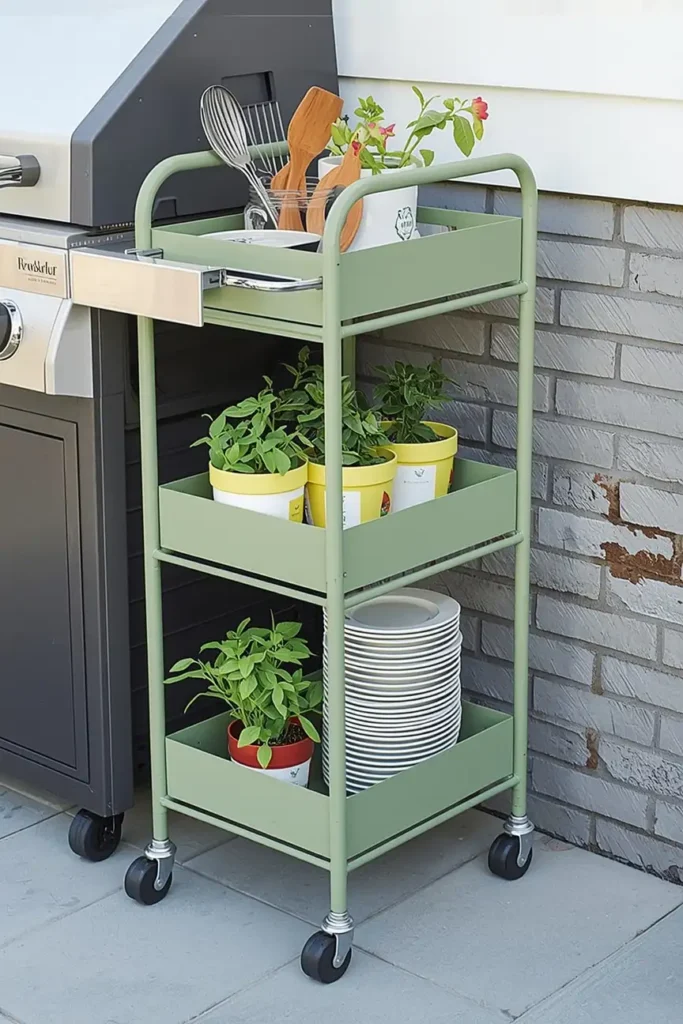
Storage is often the biggest headache for a small patio. Where do you put the grilling tools, the extra napkins, or the citronella candles without cluttering your surfaces? A rolling cart is the perfect solution because it is narrow, mobile, and multifunctional. Unlike a fixed cabinet, a cart can be moved to the dining area to serve as a buffet station during a party, then rolled back to the grill area for cooking prep.
I appreciate the flexibility this offers. You can use it as a bar cart, a gardening station, or a portable kitchen island. Because it is on wheels, you never have to commit to a permanent layout. If you need to hose down the patio, you simply roll the cart out of the way. It keeps all your essentials organized and contained without requiring you to install bulky permanent storage units that would eat up valuable visual space.
19. Choose Lightweight Terracotta for Easy Rearrangement
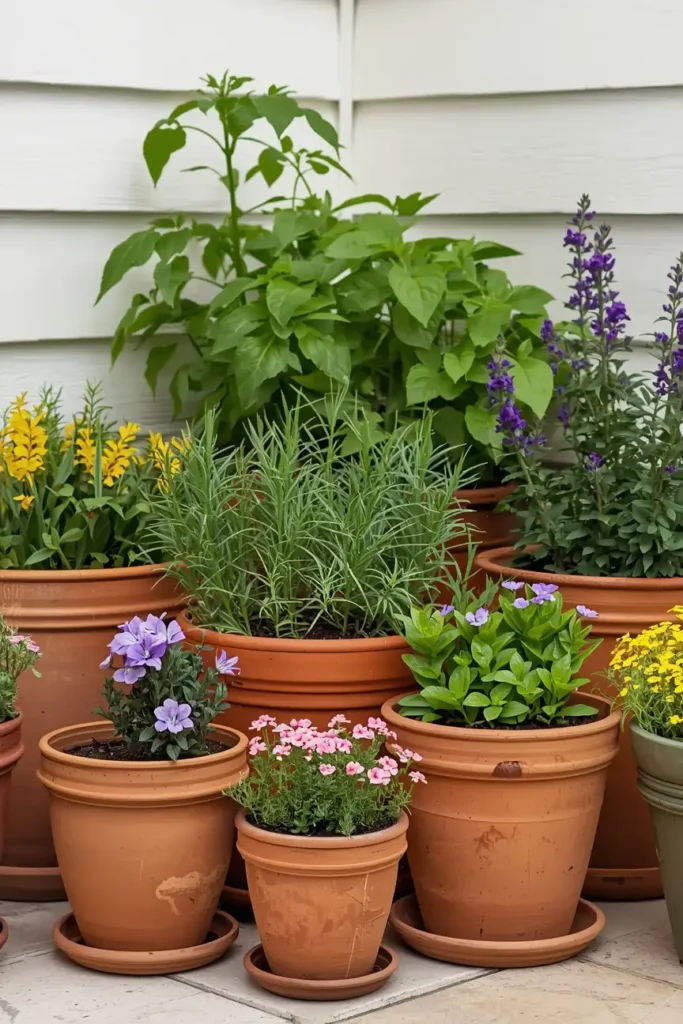
While large, permanent planters have their place, they can be a hindrance in a small space if you ever want to change your layout. I prefer using lightweight terracotta or fiberstone pots because they allow me to be fluid with my design. If I am hosting a large gathering, I can easily move the plants to the edges to open up the center. If a particular plant isn’t thriving in the sun, I can move it to a shadier spot without breaking my back.
This ability to rearrange is crucial for keeping a small space feeling fresh. Stagnant layouts can make a small patio feel boring or claustrophobic. By keeping your greenery mobile, you give yourself the power to edit the space seasonally. In the summer, you might want a dense jungle feel; in the winter, you might want a more sparse, minimalist look to reflect the light. Lightweight pots give you that creative control.
20. Paint the Fence a Dark, Dramatic Color
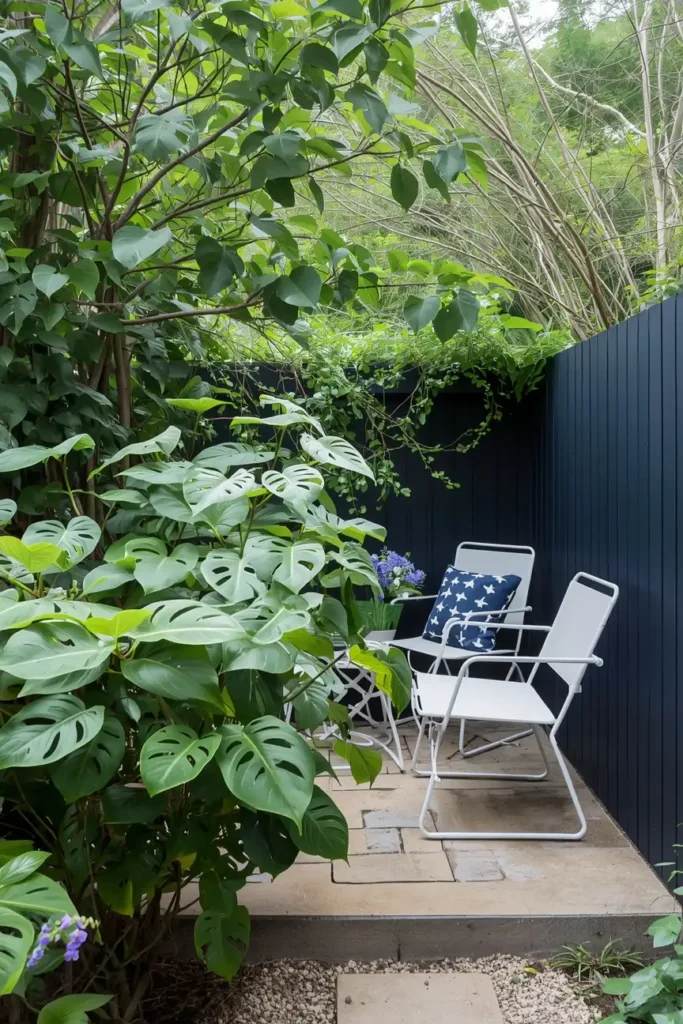
Conventional wisdom might tell you to paint everything white to make a small space feel bigger, but there is a compelling argument for going dark when it comes to fence lines. Painting your fence a deep, moody color like charcoal, navy, or forest green can actually create the illusion of depth. The dark color recedes, making the boundary of your property feel further away than it actually is. It blurs the line between your space and the shadows beyond.
Additionally, a dark backdrop makes your furniture, textiles, and plants pop with incredible vibrancy. It turns your patio into a stage where the greenery is the star. I have used this trick in my own garden, and the transformation was dramatic. It added a sense of sophistication and coziness that a plain wood fence could never achieve, making the area feel like a secluded retreat rather than a subdivided lot.
21. Install Corner Shelving for Display and Storage
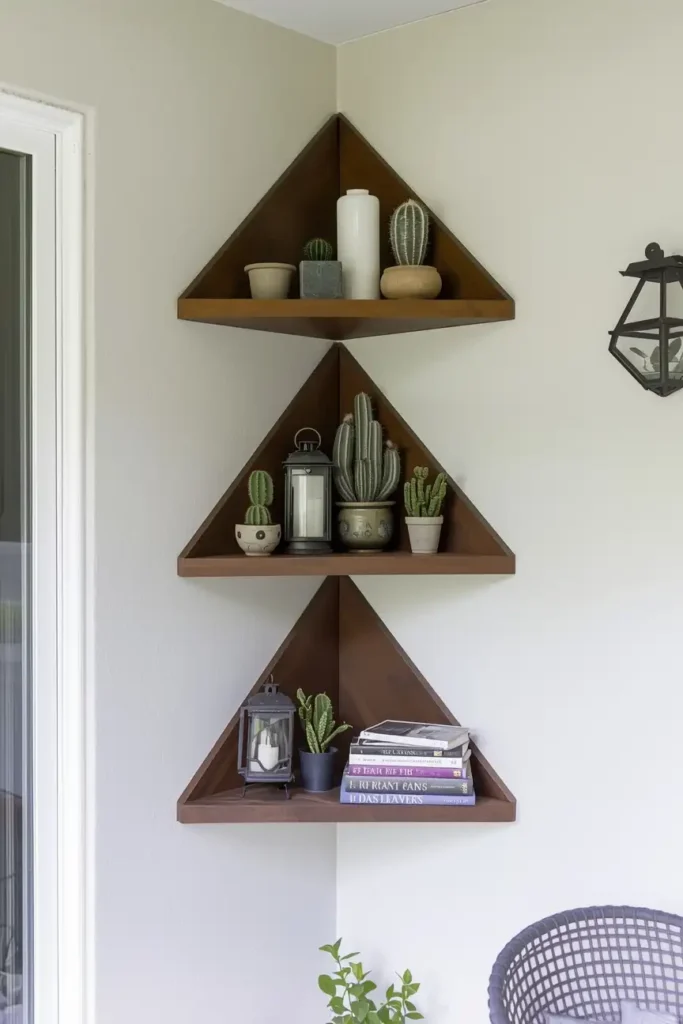
Corners are often the most underutilized real estate in a small patio. People tend to leave them empty because they don’t know how to fit furniture into a 90 degree angle. By installing corner shelving, you can transform that dead zone into a functional storage and display area. Triangular or right angled shelves fit seamlessly into the corner, providing surface space without jutting out into the walkway.
This is a great way to add personality to your space. You can use the shelves to display your collection of vintage lanterns, propagation stations for your plants, or even a small outdoor speaker. It keeps these items off your tabletops and floor, reducing clutter while adding vertical interest. It is a high impact, low footprint solution that shows you are maximizing every inch of your environment.
22. Use a Bench with Hidden Storage
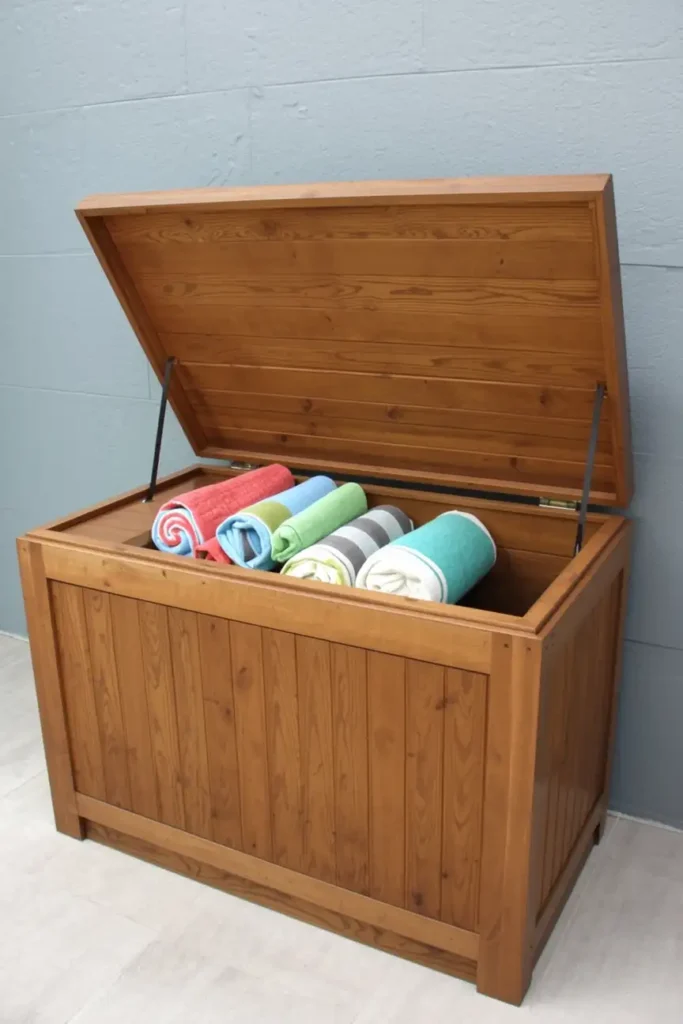
In a small patio, every piece of furniture should ideally serve at least two purposes. A storage bench is the ultimate dual purpose item. It provides comfortable seating for guests, which is essential for entertaining, while simultaneously hiding away the items that would otherwise create visual clutter. Cushions, throws, children’s toys, and bug spray can all be tucked neatly inside, leaving the patio looking clean and serene.
I love the clean lines that a storage bench offers. It eliminates the need for a separate storage box that might look like an afterthought. When choosing one, make sure to look for materials like teak, cedar, or all weather wicker that can handle exposure to the elements. A well made storage bench will keep your belongings safe from moisture while providing a sturdy, attractive seating solution that anchors the space.
23. Add a Water Feature for Tranquility
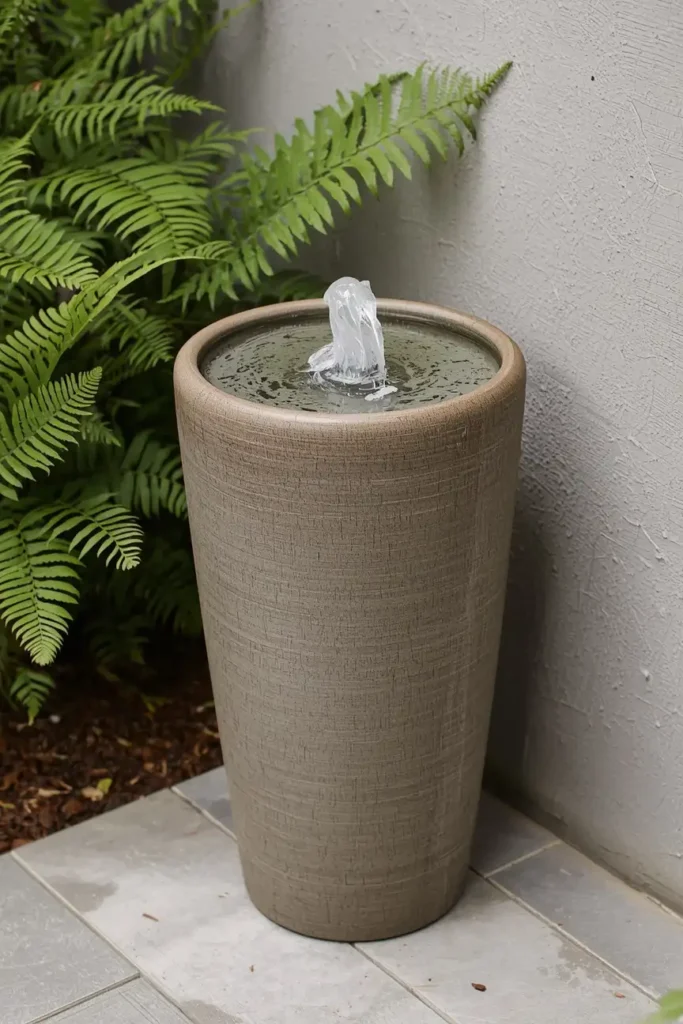
Finally, never underestimate the power of sensory elements to transform how you perceive a space. A small water feature, even a simple bubbling ceramic pot or a wall mounted spout, introduces the soothing sound of moving water. This auditory element serves a dual purpose: it masks city noise like traffic or neighbors, and it creates a psychological sense of expansion. When your ears hear the sound of nature, your brain relaxes and stops focusing on the physical constraints of the walls around you.
You don’t need a massive pond or a complex installation. Today’s market offers fantastic self contained fountains that are perfect for patios and balconies. The sight and sound of water adds a luxurious, spa like quality that elevates the entire experience. It encourages you to slow down and linger, turning your compact patio from a simple outdoor area into a true sanctuary where you genuinely want to spend your time.
Conclusion:
Creating a beautiful outdoor space does not require a sprawling backyard or a major renovation budget. As these 23 ideas show, the magic lies in thoughtful choices: furniture that pulls double duty, vertical surfaces that become garden walls, and lighting that transforms a small footprint into an inviting escape. I hope this collection leaves you feeling inspired and equipped to look at your own patio with fresh eyes. Start with just one or two changes that resonate with your lifestyle, and watch how quickly your compact space begins to feel like a true extension of your home. Now go enjoy that fresh air,you have earned it.