21 Expert Tips for Decorating Your Office at Work Beautifully
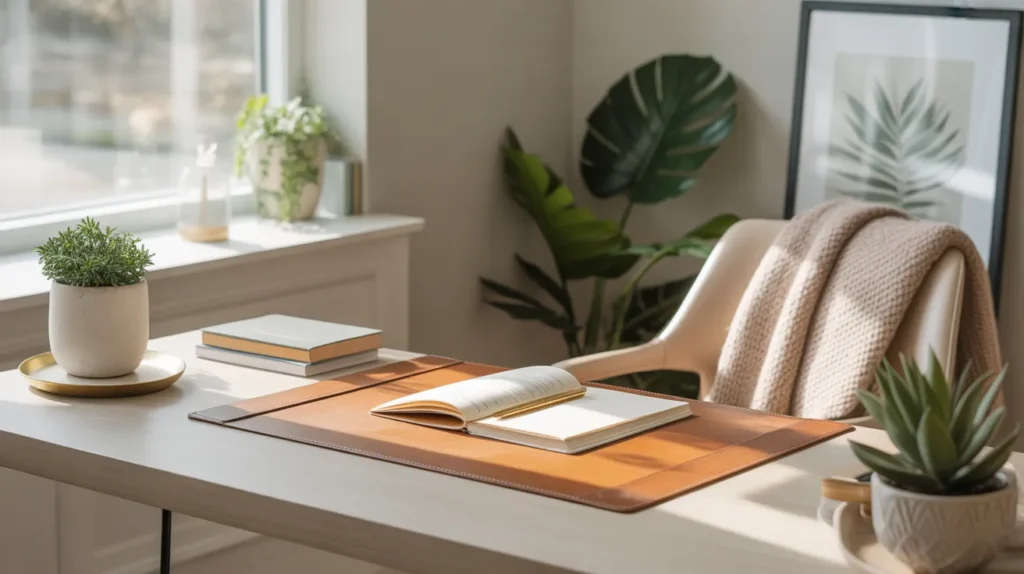
Your workspace is more than just a place to get things done. It is a reflection of who you are, what you value, and the kind of energy you want to bring to your day. Whether you have a private office, a shared desk, or a small corner in an open-plan space, the way you style that environment matters. These 21 expert tips will walk you through the process of decorating your office at work beautifully, covering everything from color and plants to lighting, personal touches, and everything in between.
1. Start With a Clear Vision for Your Space
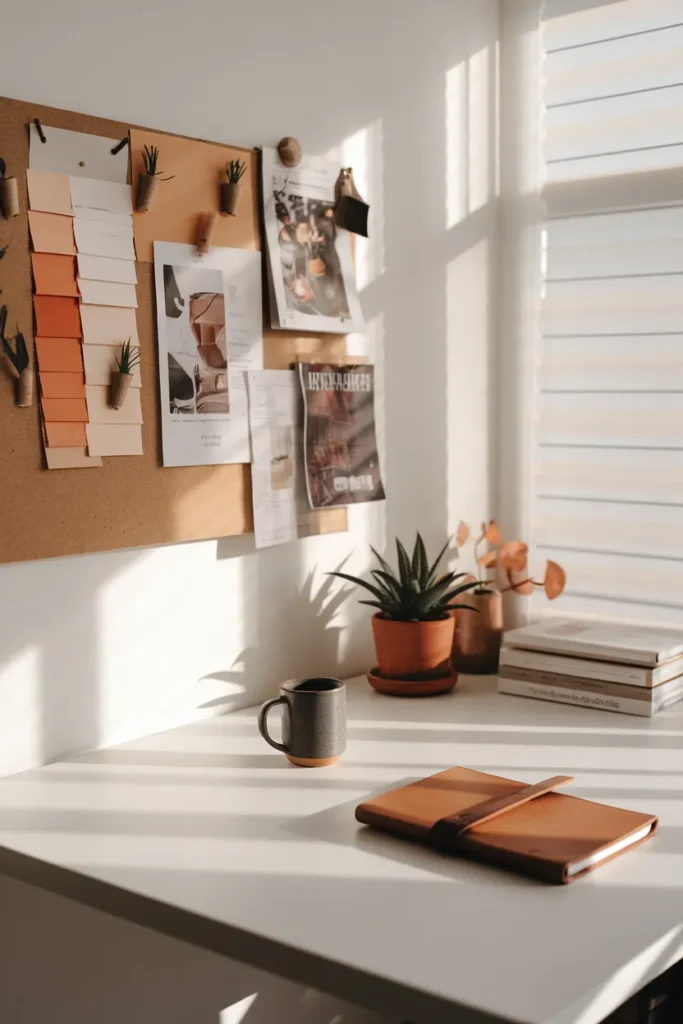
Before you move a single item on your desk, take a moment to think about what kind of environment actually makes you feel good. Do you thrive in minimal, clutter-free spaces? Or do you feel more inspired surrounded by color and layers of personal touches? Getting clear on your aesthetic before you start decorating your office at work saves you both time and money in the long run.
Think about how you spend most of your day at that desk and what small changes could make the biggest difference. A quick scroll through Pinterest or a few saved Instagram posts can help you identify patterns in what draws your eye. Whether you lean toward earthy Japandi vibes or bright maximalist energy, having a loose vision acts like a creative anchor for everything else you bring into the space.
2. Choose a Color Palette That Energizes You
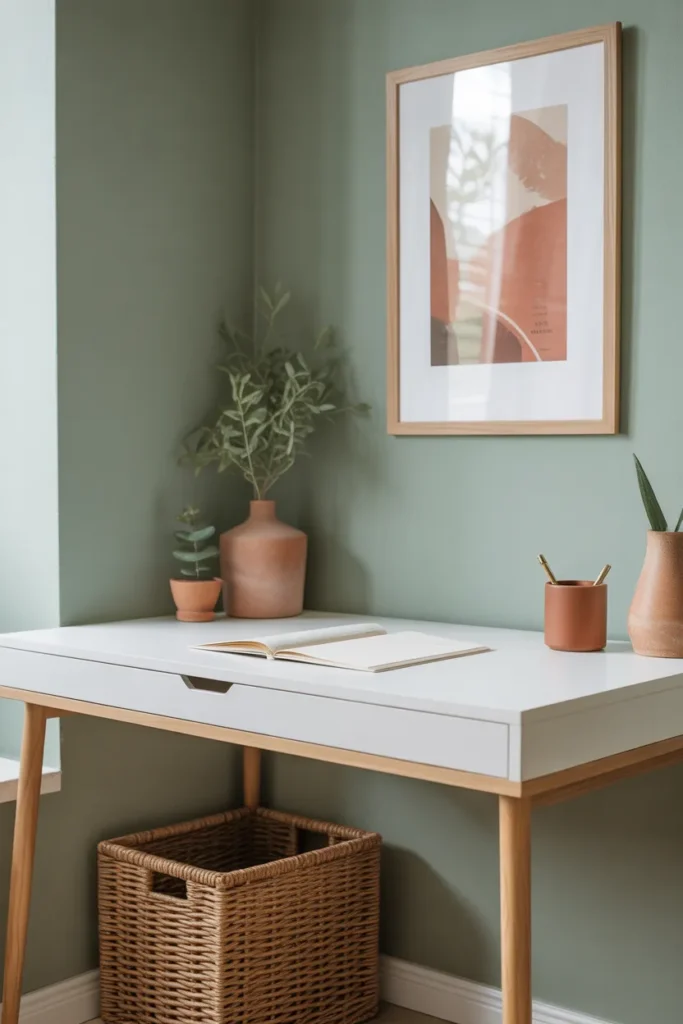
Color has a direct effect on mood and focus, which is why it deserves more thought than most people give it when decorating their office at work. You do not need to repaint a wall to introduce color. A few carefully chosen accessories in a cohesive palette can completely shift the energy of a space. Right now, dusty greens, warm terracottas, and soft creams are dominating the lifestyle and interiors space, and they translate beautifully to a work desk.
If your workplace has neutral or white walls, consider that a blank canvas rather than a limitation. Layer in your palette through a desk mat, a couple of decorative objects, and even the color of your notebooks or folders. The trick is to keep it to two or three tones so things feel curated rather than chaotic. When your environment feels visually intentional, it is a lot easier to settle in and do your best work.
3. Invest in a Desk Mat That Doubles as Decor
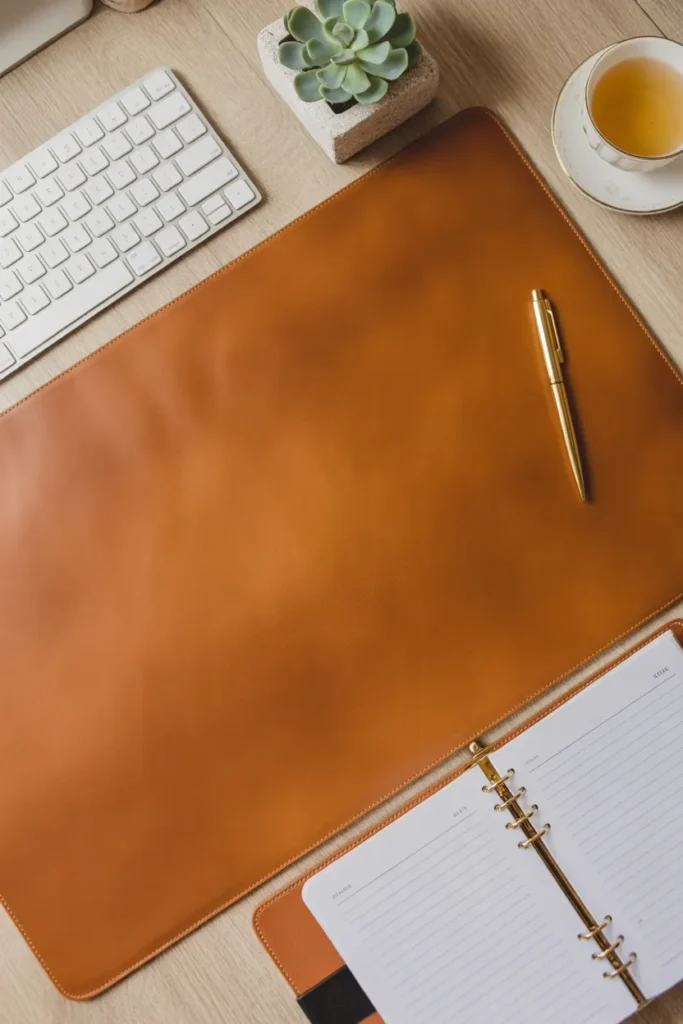
A quality desk mat is one of the easiest single purchases that can instantly elevate how your workspace looks and feels. It anchors the desk visually, protects the surface, and gives you a defined area where everything has a place. Leather or vegan leather mats in neutral shades like caramel, slate gray, or muted olive have been everywhere on home office mood boards lately, and they work just as well in a traditional office setting.
Beyond aesthetics, a good desk mat is genuinely functional. It gives your wrists a softer surface during long typing sessions and makes it easier to keep your desk tidy since everything sits on one clean base. Pair it with matching small accessories like a pen holder or tray in a similar material and you have the foundation of a well-designed workspace without overcomplicating things.
4. Bring in at Least One Living Plant
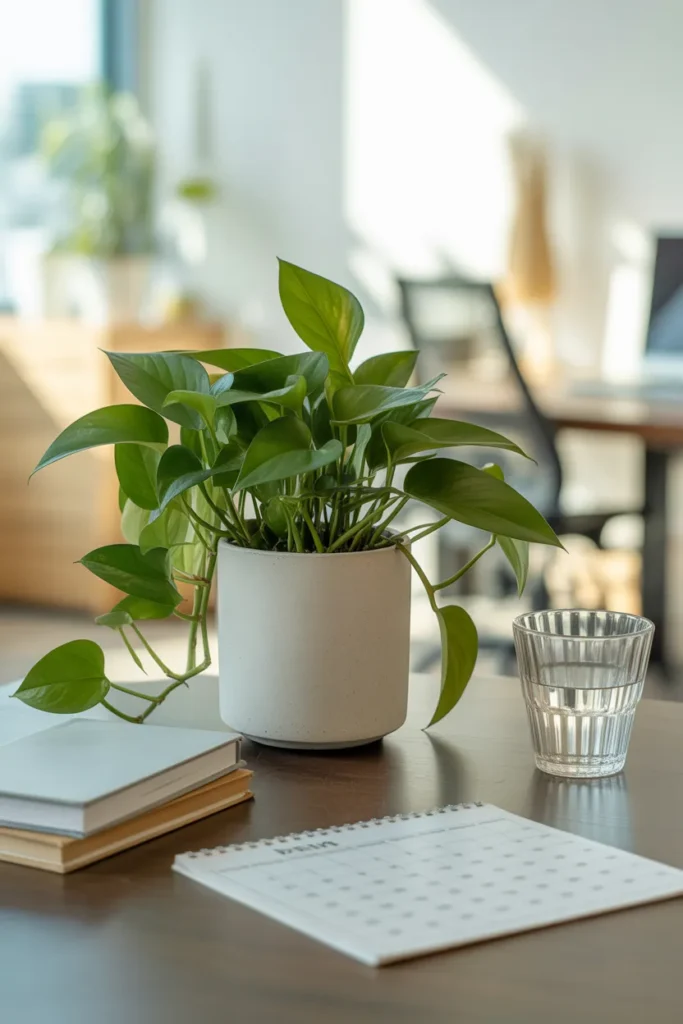
There is a reason plants appear in nearly every beautifully styled office photo you come across. They add life, texture, and a breath of freshness to spaces that can otherwise feel flat and corporate. When you are decorating your office at work, even a single small plant makes the environment feel more human and less institutional. Low-maintenance options like pothos, snake plants, or ZZ plants are practically impossible to kill and look great year-round.
Research consistently shows that having plants nearby can reduce stress and improve focus, so this is one of those additions that is both aesthetic and genuinely practical. If natural light is limited at your desk, look for varieties that thrive in lower light conditions or invest in a small grow light that doubles as a warm ambient lamp. A single plant in a beautiful pot goes a very long way.
5. Use Framed Art to Express Your Personality
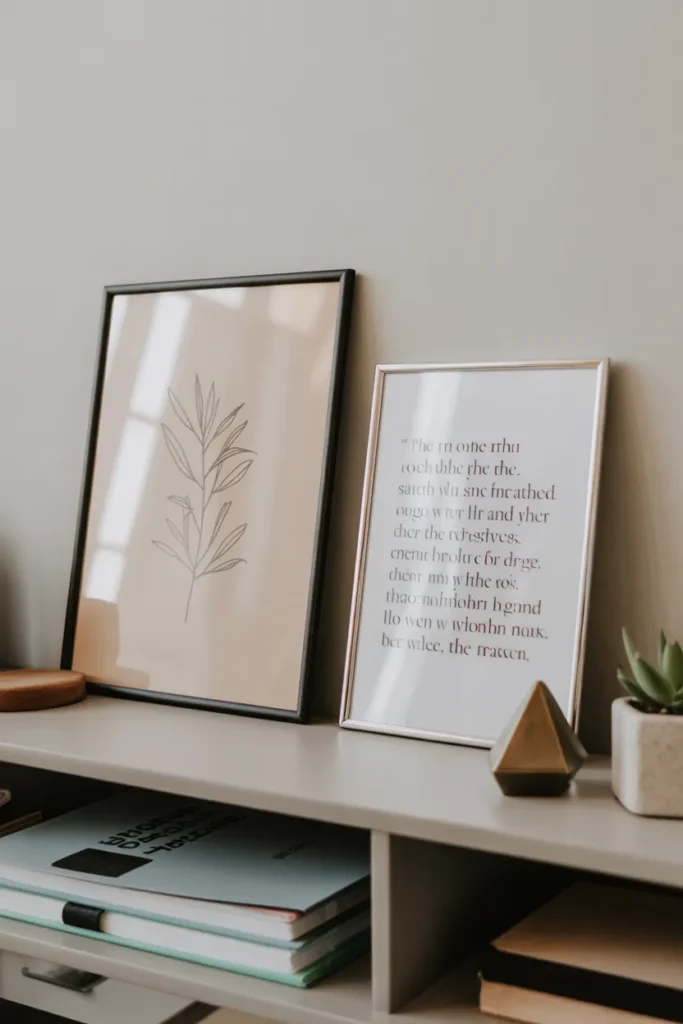
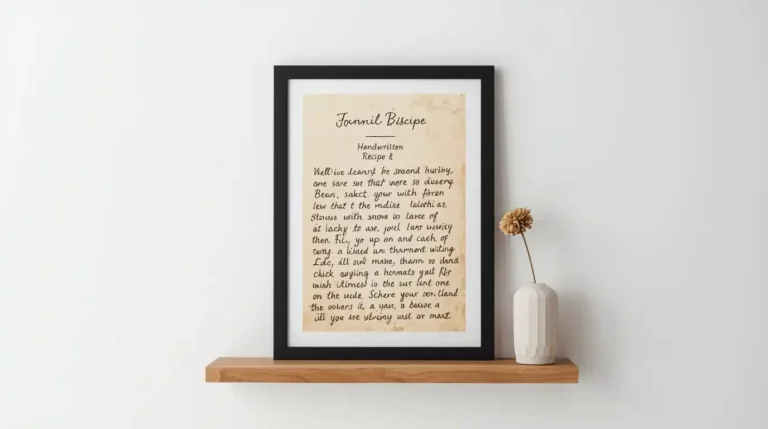
Art is one of the most personal ways to make a space feel like yours, even when you are not at home. A few small framed prints on your desk or pinned to a corkboard above your workspace bring warmth and character that generic office supplies simply cannot match. The key is choosing pieces that genuinely resonate with you, whether that is a calm botanical sketch, an abstract print, or even a favorite quote in a typeface you love.
You do not need to spend a lot to find pieces that feel special. Printable art from sites like Etsy makes it easy to download and frame something tailored to your taste for just a few dollars. Mix sizes and keep frames simple and cohesive so the overall look feels intentional. Art that reflects your interests or values can also spark great conversations with coworkers and subtly communicate who you are without saying a word.
6. Organize With Stylish Storage Solutions
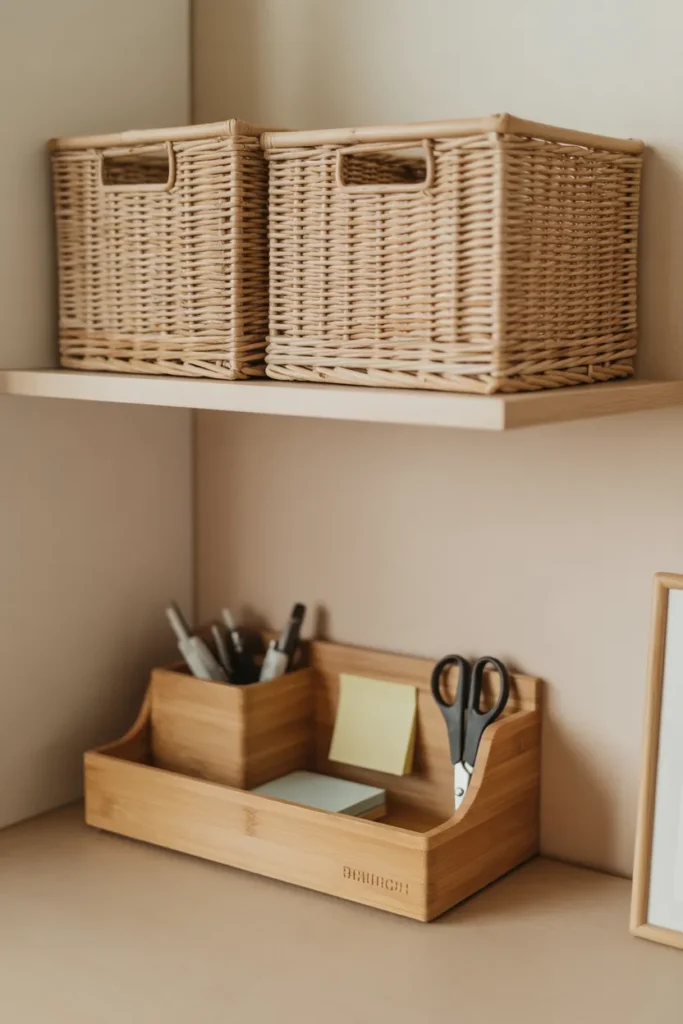
Organization and decoration do not have to be separate priorities. When you choose storage pieces that are visually appealing, they serve double duty by keeping your desk tidy while also looking like a considered part of the overall design. Rattan baskets, ceramic trays, bamboo organizers, and leather-wrapped bins are all trending right now and feel much more elevated than the standard plastic desk caddies most offices default to.
Start by taking stock of what you actually need to access every day and finding stylish homes for those things within arm’s reach. Everything else can be tucked away. A clean desk surface does more for the look of your workspace than any single decorative item, and when storage pieces are beautiful in their own right, staying tidy starts to feel like part of the aesthetic rather than a chore.
7. Layer Lighting for Warmth and Function
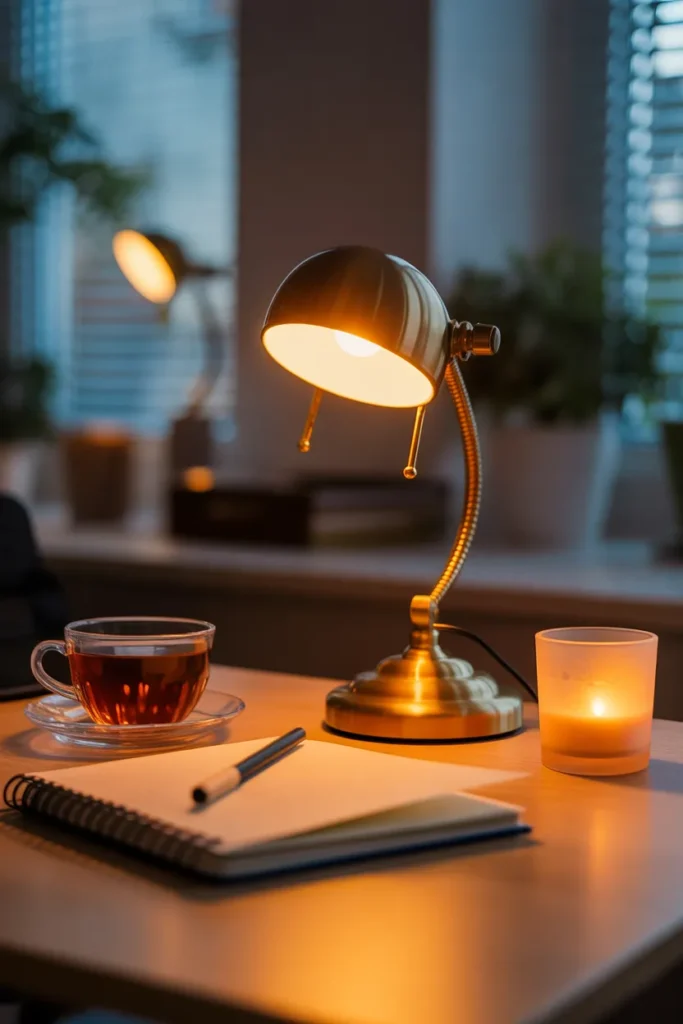
Overhead fluorescent lighting is the enemy of a beautiful and comfortable workspace. If you have any ability to introduce your own lighting, a small desk lamp can completely transform the feel of your setup. Warm-toned LED bulbs in a stylish fixture, whether it is an arched brass lamp, a minimalist matte black design, or even a soft clip-on light, add dimension and personality that harsh overhead lighting strips away.
Good task lighting also reduces eye strain during long work days, which means this is an investment that pays off in comfort as much as in style. If overhead lighting cannot be changed, you can soften the effect by adding a small LED lamp with a diffuser or even a frosted glass candle holder with a battery-operated tea light to bring a warmer tone to your immediate environment. Small lighting adjustments make one of the most dramatic differences in how a space feels.
8. Personalize With Meaningful Objects
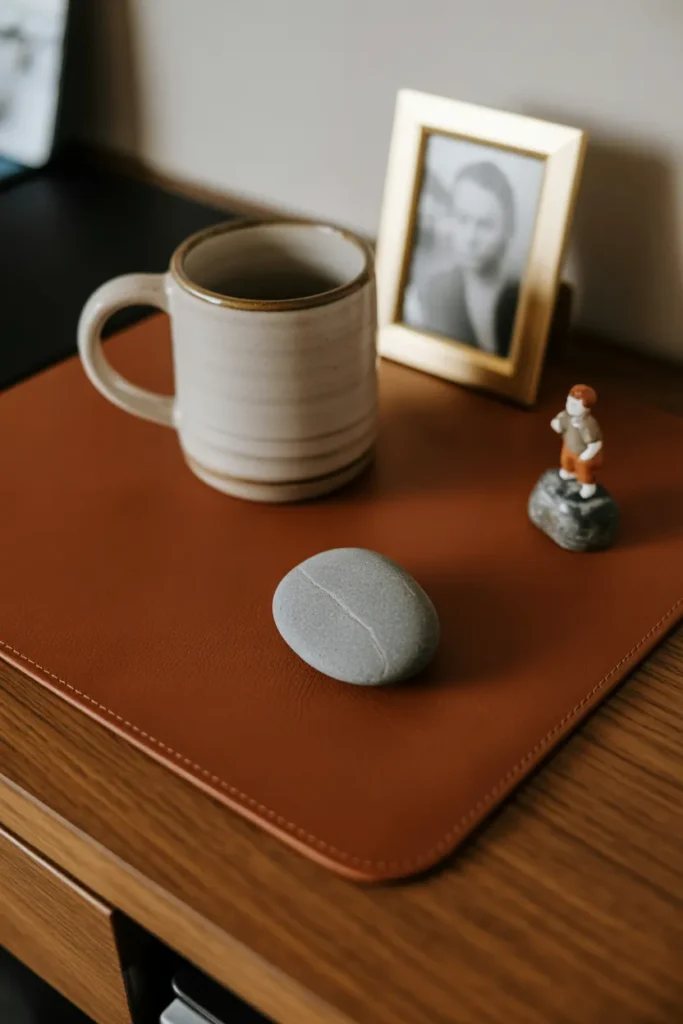
The objects that mean something to you are what make a space feel lived in and genuinely yours rather than a catalog photo. A small photo of someone you love, a memento from a trip that changed you, or even a smooth stone you picked up on a walk all tell a story. When decorating your office at work, resist the temptation to keep everything purely functional or purely aesthetic. Personal items are the thread that ties the whole space back to you.
The key to incorporating personal items without making your desk feel cluttered is curation. Choose three to five objects that matter and display them with intention, giving each one a bit of space to breathe. Rotate them occasionally so the space stays fresh and does not start to feel like a static display. Meaningful objects also act as little anchors during stressful workdays, offering a quiet reminder of what matters most.
9. Use a Pegboard or Corkboard for Visual Planning
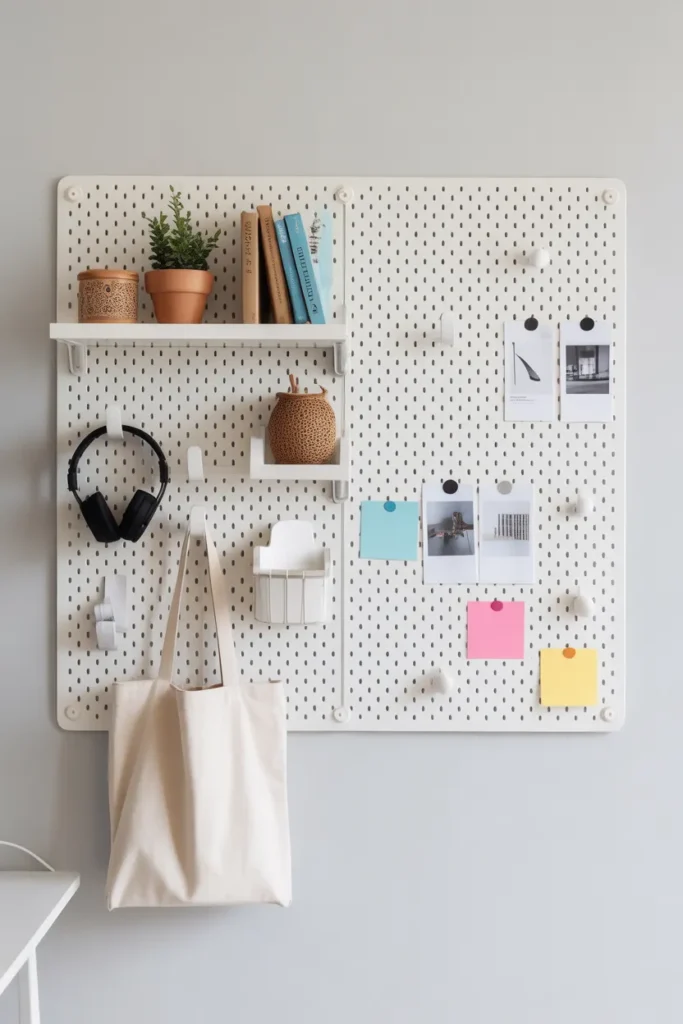
A pegboard or corkboard above your desk can function as both an organizational tool and a genuine design feature. When styled thoughtfully, it becomes a vertical extension of your workspace personality, holding everything from task lists and inspiration clippings to small plants and everyday tools. This trend has been strong in creative industries for years and is now showing up in more traditional office environments as people invest more in personalizing their professional spaces.
The beauty of a pegboard in particular is its flexibility. You can rearrange it entirely depending on a project or season, which keeps the space feeling fresh without requiring a full overhaul. Paint the board in a muted accent color that complements your desk palette, and mix practical hooks and shelves with purely decorative elements like a small framed print or a trailing plant. The result is a workspace that works hard and looks great doing it.
10. Add Texture Through Fabric and Materials
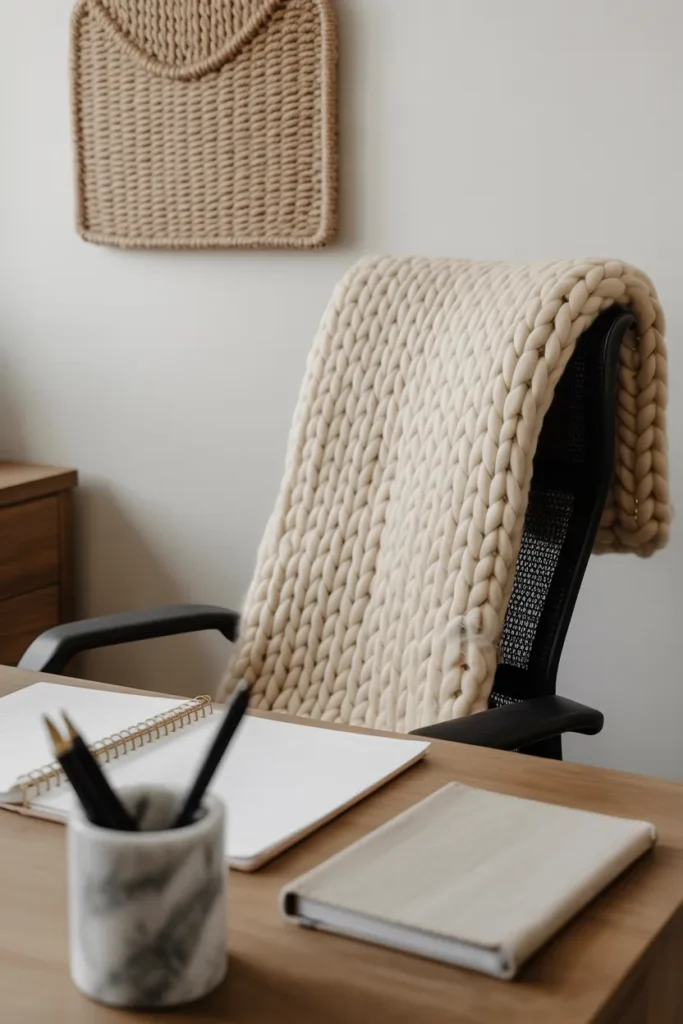
Texture is one of the most underrated tools in interior styling, and it applies just as much to a work desk as it does to a living room. Mixing materials, such as the smoothness of marble, the warmth of woven rattan, the softness of linen or cotton, and the coolness of ceramic, creates a sensory richness that makes a space feel genuinely designed rather than just assembled. When you look around your desk and everything is the same material, the space tends to feel one-dimensional.
You do not need a lot of items to introduce texture. A linen-covered notebook, a small woven tray, a ceramic mug for your pens, or even a fabric coaster can shift the feel dramatically. A small throw over the back of your chair is another simple addition that adds warmth and comfort, especially in air-conditioned offices that tend to run cold. These sensory layers are what make a space feel genuinely inviting to sit in for hours at a time.
11. Create a Scent Ritual to Anchor Your Focus
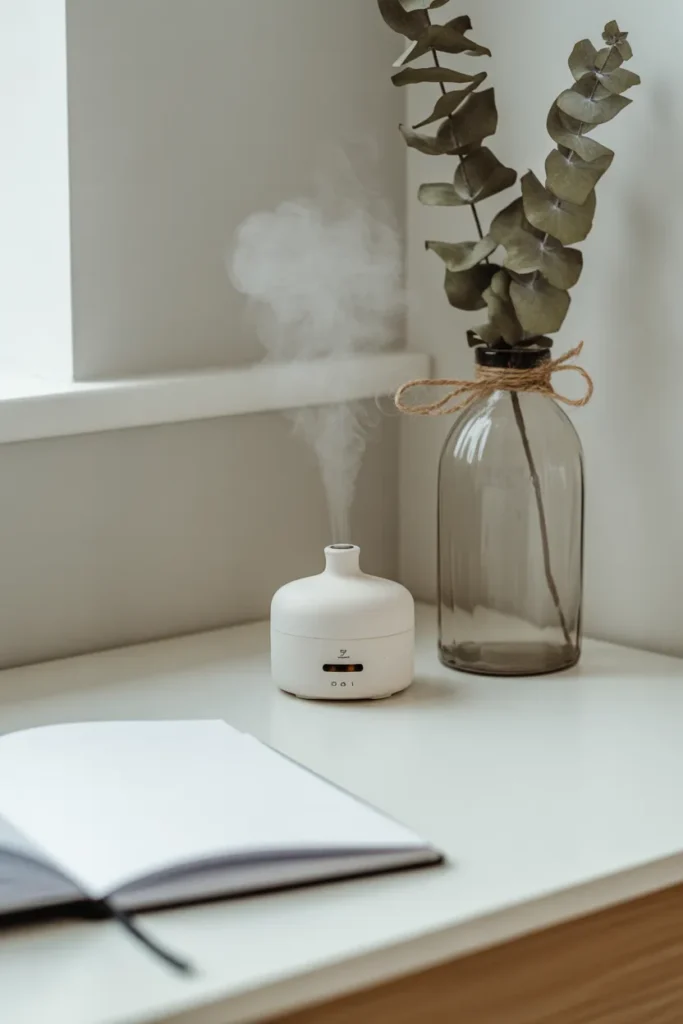
Scent is one of the most powerful yet overlooked tools for creating a focused, comfortable work environment. A small reed diffuser or a personal essential oil roller kept at your desk can act as a ritual cue that signals your brain it is time to concentrate. Scents like eucalyptus, peppermint, and rosemary are associated with improved alertness and mental clarity, while lavender and cedarwood are better for unwinding after a high-pressure stretch.
In an office setting, it is important to be considerate of coworkers with sensitivities, so opt for subtle diffusers rather than candles with strong throw. A reed diffuser with a light, clean fragrance or even a small bunch of dried herbs like eucalyptus or lavender adds an organic, botanical element to your desk that looks beautiful and quietly perfumes your immediate space. It is a small ritual that over time becomes a meaningful part of how you transition into and out of deep work.
12. Maximize a Small Desk With Vertical Space
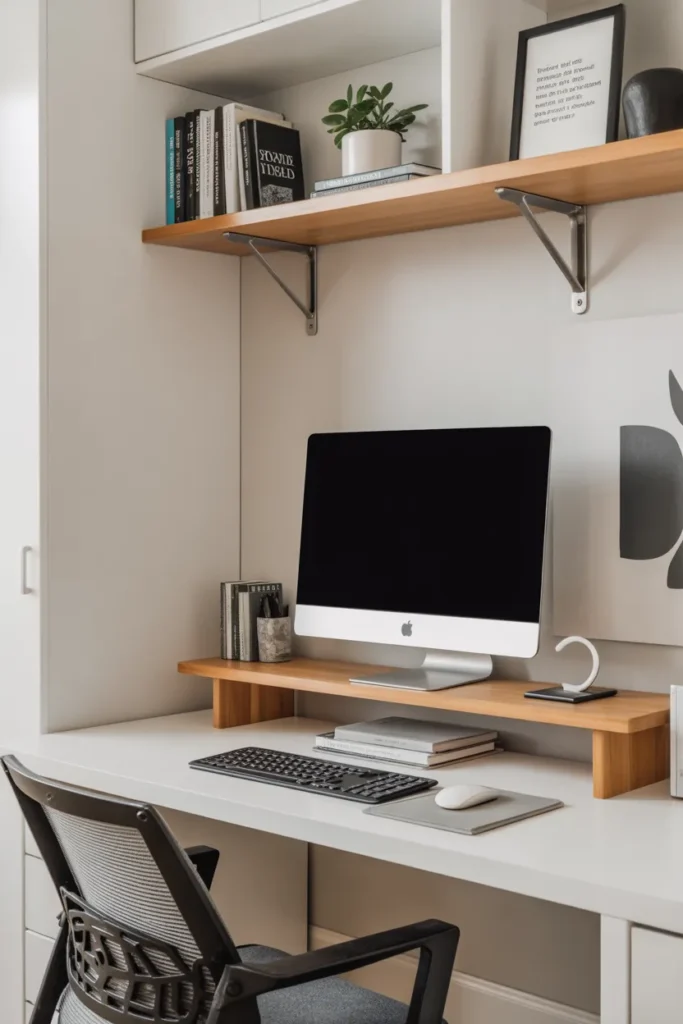
Working with a small desk does not mean you have to sacrifice style or functionality. The secret is thinking vertically. A monitor riser instantly creates a second level of storage on your desk surface while also improving your posture by bringing your screen to eye level. Above-desk shelving, small floating ledges, or a wall-mounted pegboard can hold items that would otherwise crowd your workspace, freeing up the surface for the things you actually use.
Small desks also benefit greatly from edited, intentional styling. Rather than displaying everything you own, choose a tight edit of items that are both beautiful and functional. A single plant, one framed print, and a tidy organizer carry more visual weight and feel more polished than a cluttered collection of things. Thinking about vertical real estate is especially useful when decorating your office at work in an open-plan environment where desk space is at a premium.
13. Incorporate Seasonal Touches to Keep Things Fresh
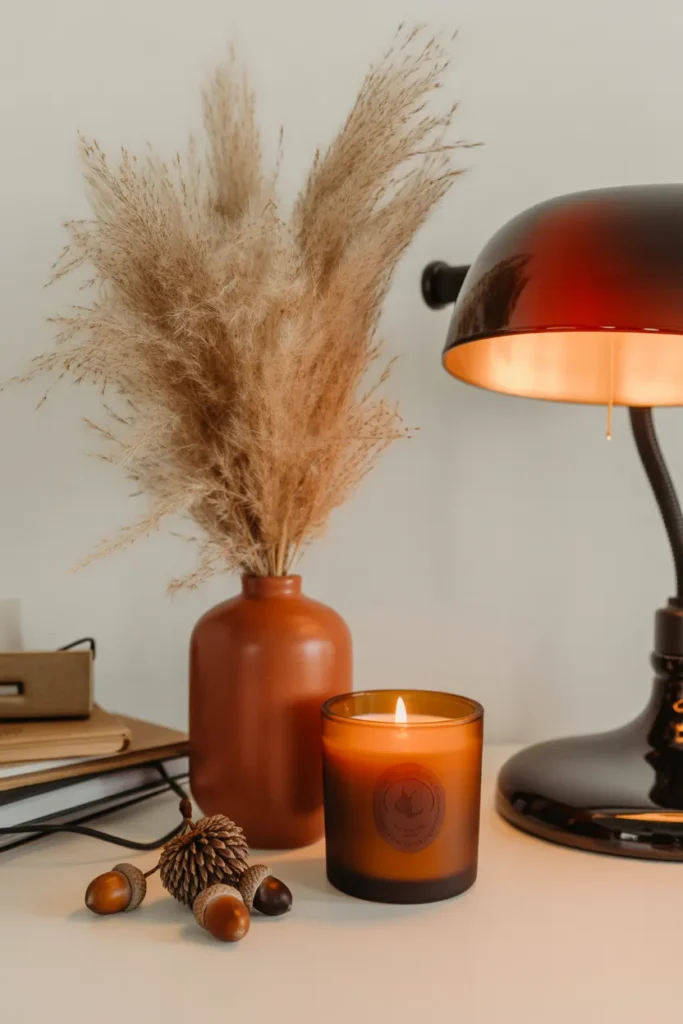
One of the easiest ways to keep your workspace from feeling stale over time is to introduce small seasonal accents that evolve with the time of year. This does not mean overhauling your entire setup every three months. It can be as simple as swapping a vase of fresh flowers for dried pampas grass in autumn, adding a small taper candle in a winter shade for the colder months, or placing a few pressed botanicals under a glass paperweight in spring.
Seasonal touches keep the space feeling alive and connected to the world outside, which matters more than you might think during long work stretches when you rarely leave your desk. They also give you a low-effort reason to reset and tidy the space a few times a year, which is a natural opportunity to reassess what is working and what needs refreshing. Small seasonal changes are one of the most joyful and underrated parts of maintaining a workspace you genuinely love.
14. Curate a Mini Bookshelf or Reading Corner
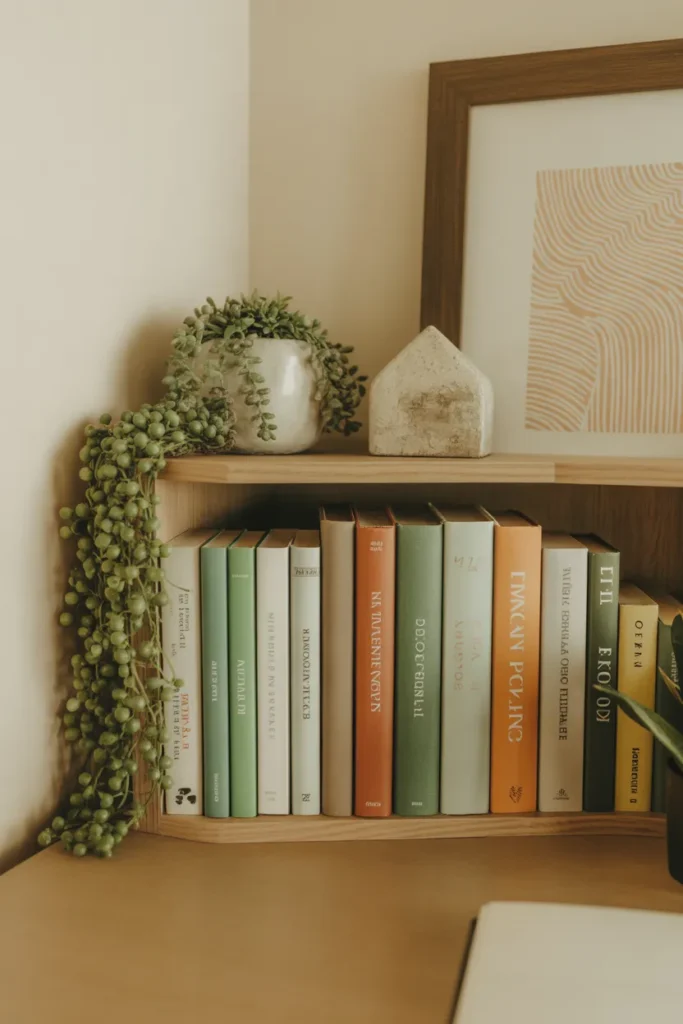
If your workspace allows for even a slim bookshelf or a small stack of books on a floating ledge, the addition brings incredible warmth and intellectual character to the environment. Books are simultaneously functional and decorative, especially when arranged by color or organized in a way that reflects your interests and aesthetic. A few beautiful spines can do more for the personality of a space than almost any other single element.
The books do not all need to be work-related. A mix of professional references, design or photography books, and a novel or two creates a space that feels like it belongs to a whole, curious person rather than just an employee. If you have a small corner or windowsill nearby, a handful of volumes paired with a small plant and one decorative object creates a micro reading corner that makes even the busiest office feel like a place you genuinely want to be.
15. Upgrade Your Chair or Add a Supportive Cushion
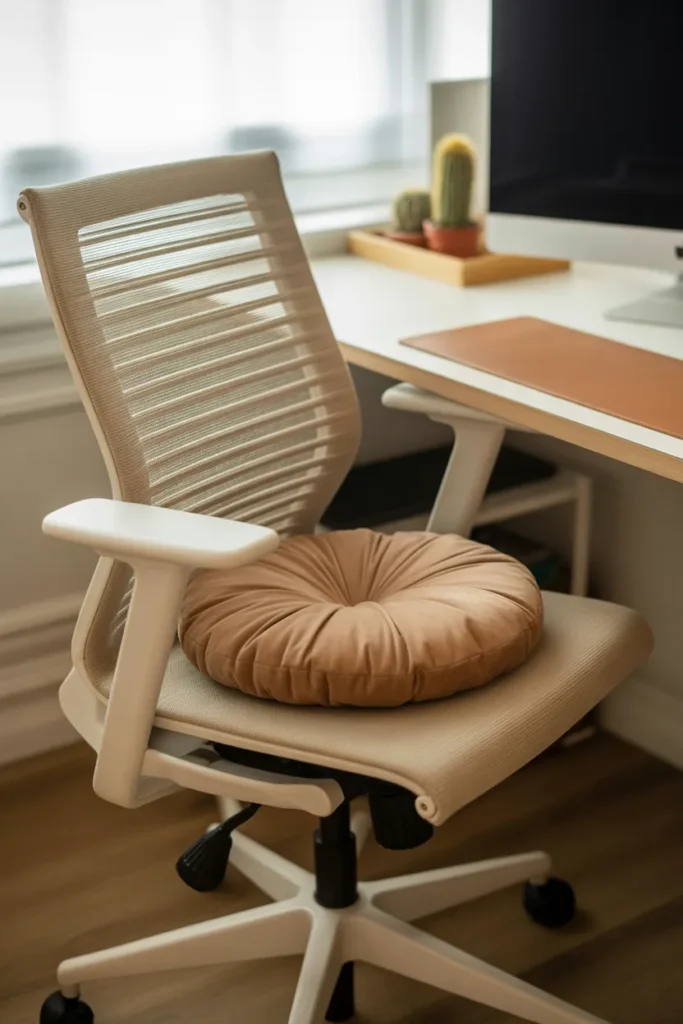
Your chair is both the most used and most overlooked element of your workspace. If you cannot replace it entirely, a beautiful and supportive seat cushion can make a significant difference in both comfort and aesthetics. Linen, boucle, or cotton covers in neutral or earthy tones add a soft, styled quality to even the most generic desk chair, and the support benefit during long sitting sessions is very real.
Lumbar support pillows are another addition worth considering, especially if you find yourself slouching during long stretches of concentrated work. Many come in attractive fabrics and minimalist designs that look intentional rather than purely therapeutic. When your body is comfortable, your focus improves, and that connection between physical ease and mental clarity is something worth investing in when thinking about how to make your workspace perform better at every level.
16. Display Inspirational Quotes With Intention
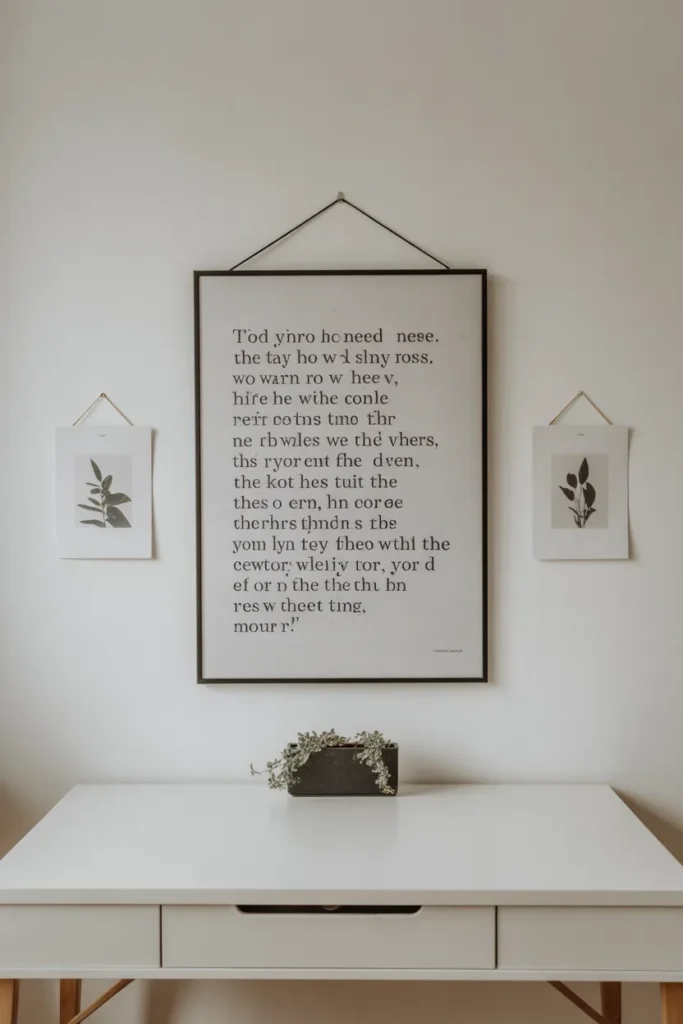
A well-chosen quote can serve as a daily reset, a source of grounding on a difficult day, or simply a visual element that reflects your values and mindset. The difference between an inspirational quote that elevates a space and one that feels generic comes down almost entirely to presentation. A simple print in a beautiful typeface, properly framed and intentionally placed, carries a quiet authority that a mass-produced office poster never will.
Choose something that genuinely resonates with you rather than something broadly uplifting. It might be a line from a book that changed how you think, a phrase from a mentor, or a simple reminder about the kind of work you want to do and the way you want to show up. When the words mean something specific to you, they have a completely different energy than a quote you have seen a thousand times before. That specificity is what makes a space feel authentically personal.
17. Add a Mirror to Brighten and Expand the Space
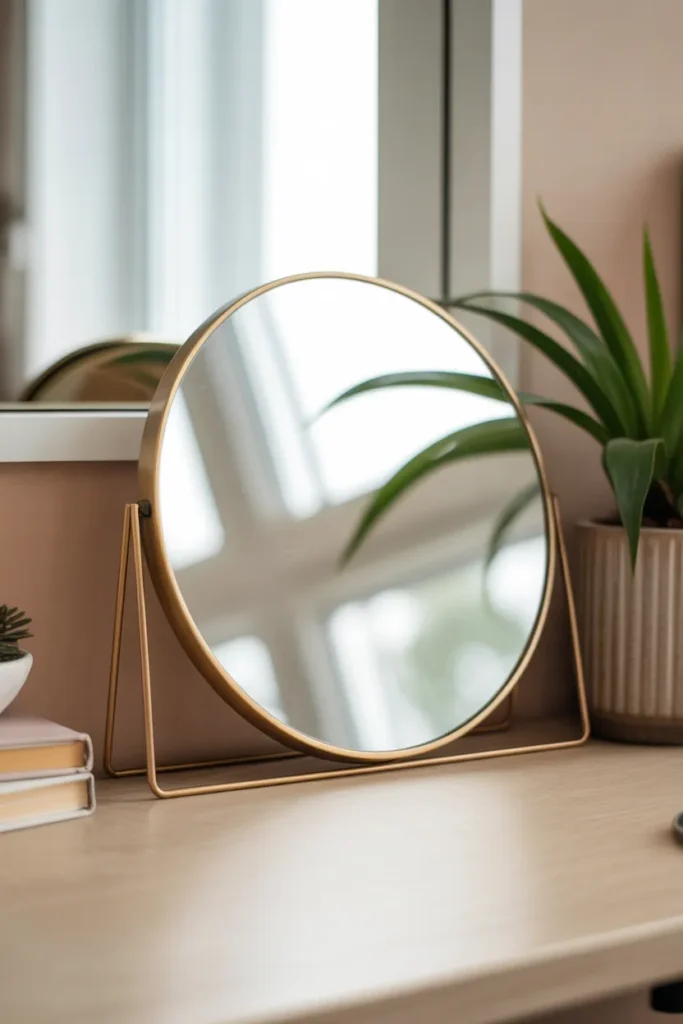
A small mirror might not be the most obvious addition to a work desk, but it is a clever styling trick borrowed from interior design. Even a small round mirror in a simple frame reflects light and makes a space feel larger and brighter, which is especially useful in darker office environments or windowless rooms. It also adds a touch of elegance that is unexpected in a work context, which is part of its charm.
Beyond its practical effect on light, a mirror adds depth and dimension to a desk display in a way that flat objects simply cannot. Lean it casually against the wall behind your monitor or on a shelf, and let it pick up reflections from nearby plants, light fixtures, or art. It is the kind of low-key detail that makes a styled space look more considered and layered, even when the rest of the setup is relatively minimal.
18. Keep Cables Tidy for an Instantly Cleaner Look
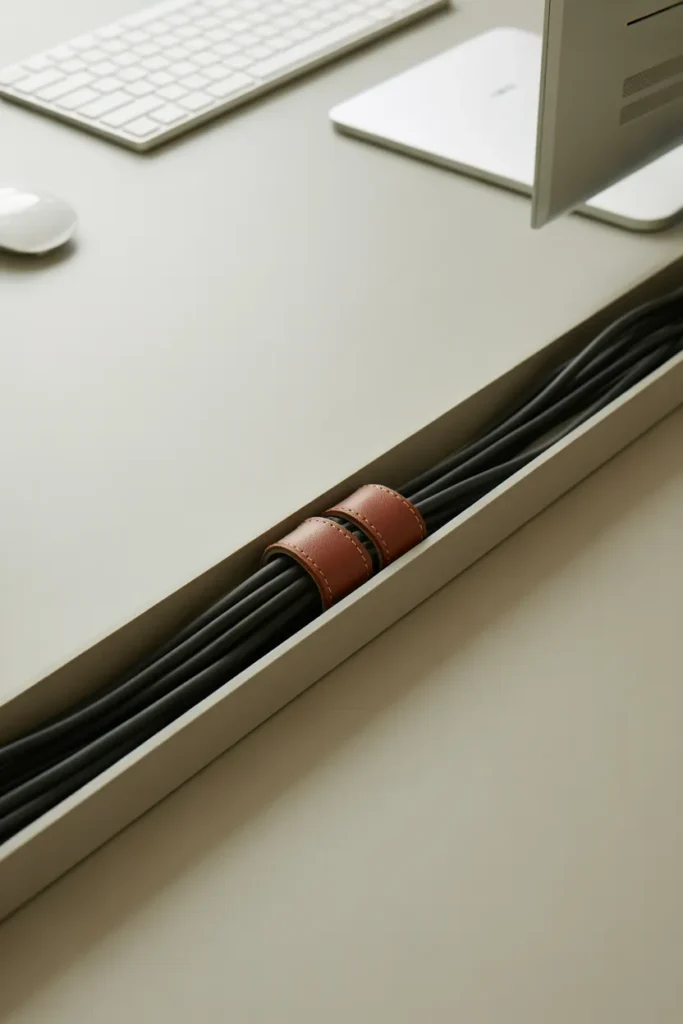
Few things undermine a beautifully styled desk faster than a tangle of visible cables. Cable management is one of those behind-the-scenes investments that has an outsized effect on how put-together a workspace looks. Simple solutions like adhesive cable clips along the underside of the desk, braided cable sleeves, or a slim cable management tray can take a chaotic cord situation and make it virtually disappear.
For a more elevated solution, leather cable ties in a color that matches your desk mat or accessories add a small but meaningful touch that shows attention to detail. Some desk setups now route cables entirely out of sight using cable management boxes placed under the desk, which gives the whole surface a genuinely wireless look even when nothing actually is. When the surface is free of visual clutter, everything you have intentionally placed there gets to shine properly.
19. Introduce a Theme Without Going Overboard
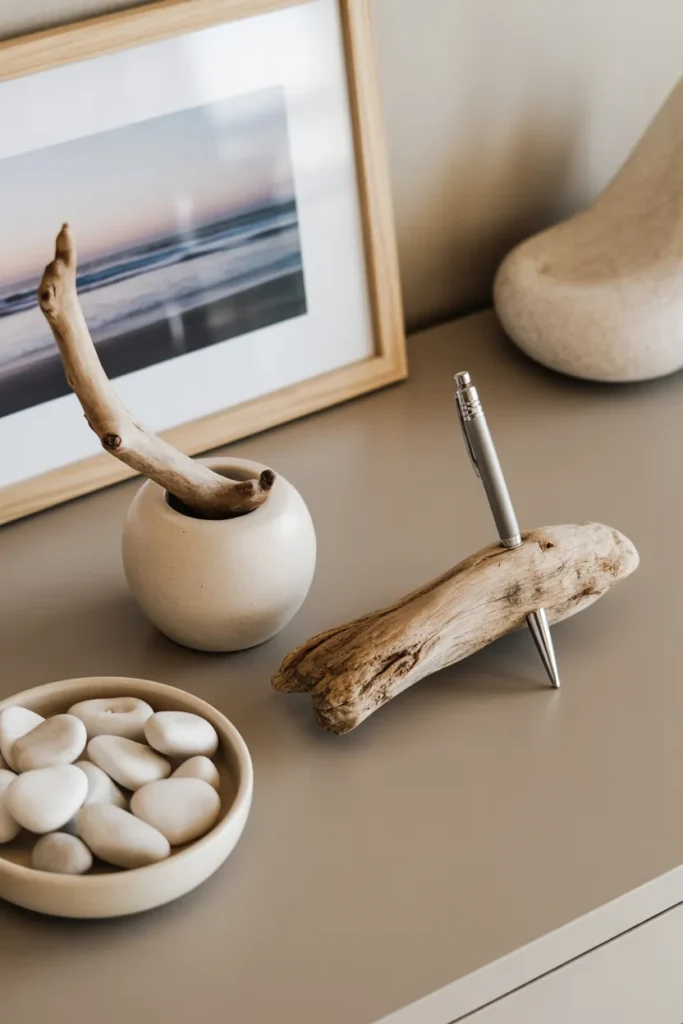
Having a loose theme for your workspace is different from turning it into a themed novelty display. A theme in the interior design sense is more like a consistent feeling or reference point that ties your choices together. Maybe it is the feeling of a coastal morning, a Japanese tea house, a Parisian studio, or a cottage garden. When you know the feeling you are after, every object decision becomes easier because you are always asking whether it fits that world.
The key to keeping a theme from feeling costumey or overdone is restraint. Instead of buying every item that matches your theme literally, look for objects that carry its spirit in a more subtle way. A smooth stone, a quiet color palette, a particular texture or scent all communicate a sense of place without spelling it out. The most beautifully themed workspaces are the ones where you feel something before you consciously identify what it is.
20. Use a Vision Board to Stay Motivated and Inspired
A vision board at your desk is one of the most intentional things you can add to a workspace. Unlike a generic motivational poster, a vision board is deeply personal. It holds images, words, and objects that speak specifically to your goals and the life you are working toward. Seeing it every day keeps you connected to your bigger picture on the days when the small tasks feel overwhelming or uninspiring.
Treat the board itself as a design object. Choose images with a cohesive color palette, use beautiful card stock or heavyweight paper for any handwritten elements, and edit ruthlessly so that only the things that truly light you up make it onto the board. A vision board that is overcrowded loses its power. One that is carefully curated and visually beautiful becomes something you look forward to seeing every time you sit down to work.
21. Revisit and Refresh Your Setup Regularly
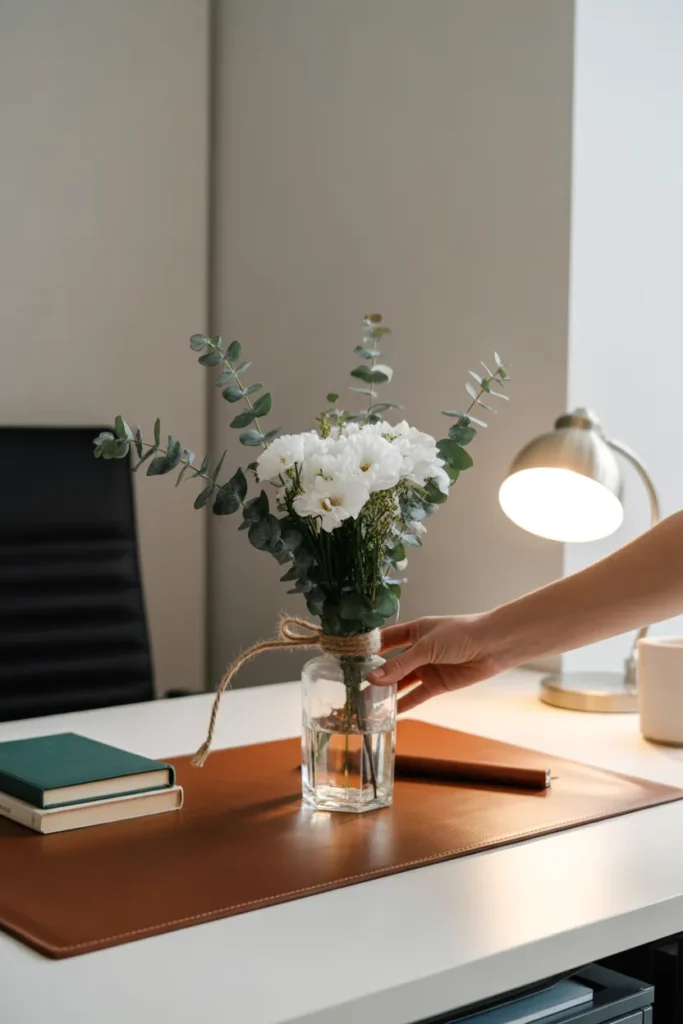
Decorating your office at work is not a one-time project. It is an ongoing, evolving practice. The most beautiful and functional workspaces are tended to regularly, with small updates that reflect who you are becoming and what you currently need from your environment. Setting aside fifteen minutes once a month to clear, clean, and reassess your setup is one of the best habits you can build around your workspace.
Use those moments to remove anything that has stopped serving you, replace anything that has worn out, and add one small fresh element, whether that is a new plant, a different print, or simply a different arrangement of what you already have. Over time, this practice turns your desk into a living reflection of your growth and taste. The goal was never to have the perfect setup on day one. The goal is to build a space that keeps growing with you.
Conclusion:
Decorating your office at work is one of the most rewarding investments you can make in your daily experience. When your environment reflects your personality, supports your focus, and brings you small moments of beauty throughout the day, work itself feels different. Start with one or two changes, build from there, and trust that even the smallest intentional detail adds up to something meaningful over time.