20 Samba Outfit Styles Worth Pinning Right Now
A samba outfit should look intentional, not like you grabbed the first thing with fringe on it. Whether you’re dressing for a class, a themed event, or just want to bring that energy into your everyday wardrobe, the right pieces make a real difference. This list covers 20 styles that actually work, across different body types, budgets, and occasions. No filler looks. Just outfits worth your time.
1. The Classic Red Fringe Dress That Started It All
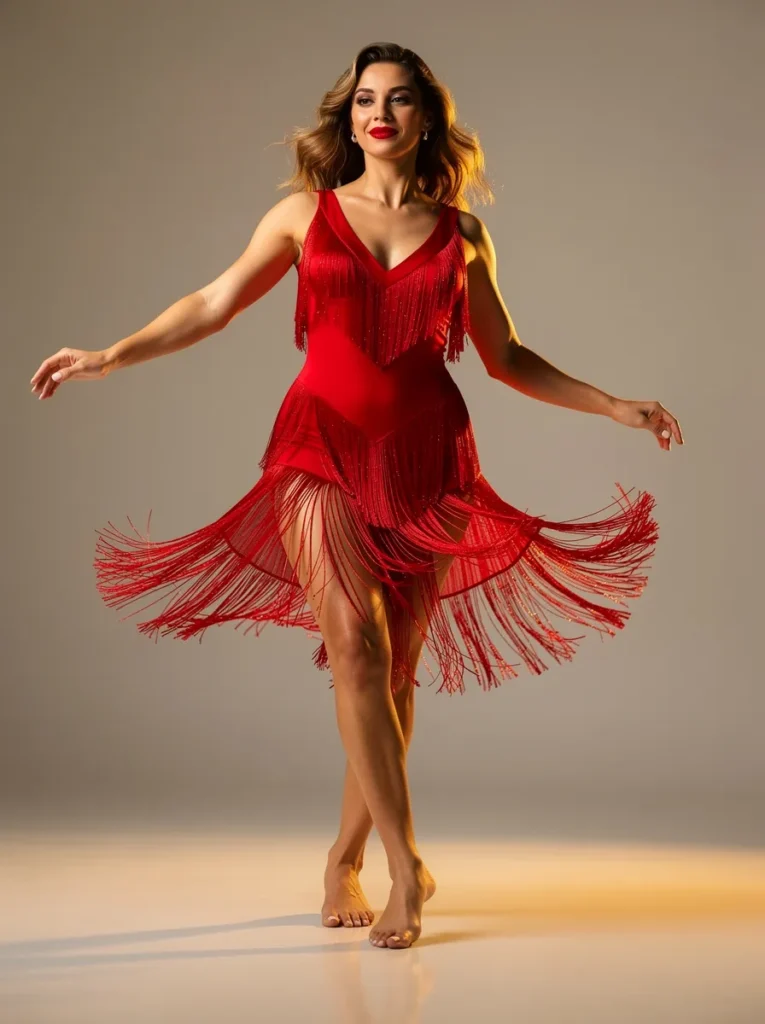
The red fringe dress is the most recognized silhouette in samba style, and for good reason. It moves with your body, it photographs well, and it reads as intentional rather than costume-like. If you’re building a samba-inspired wardrobe from scratch, this is where you start.
Look for dresses where the fringe falls from the hip down, not from the shoulder. That placement creates the illusion of longer legs and lets the fringe move more freely. Pair it with nude or tan heels, keep jewelry minimal, and let the dress do the work.
2. How to Pull Off Gold Sequins Without Looking Overdressed
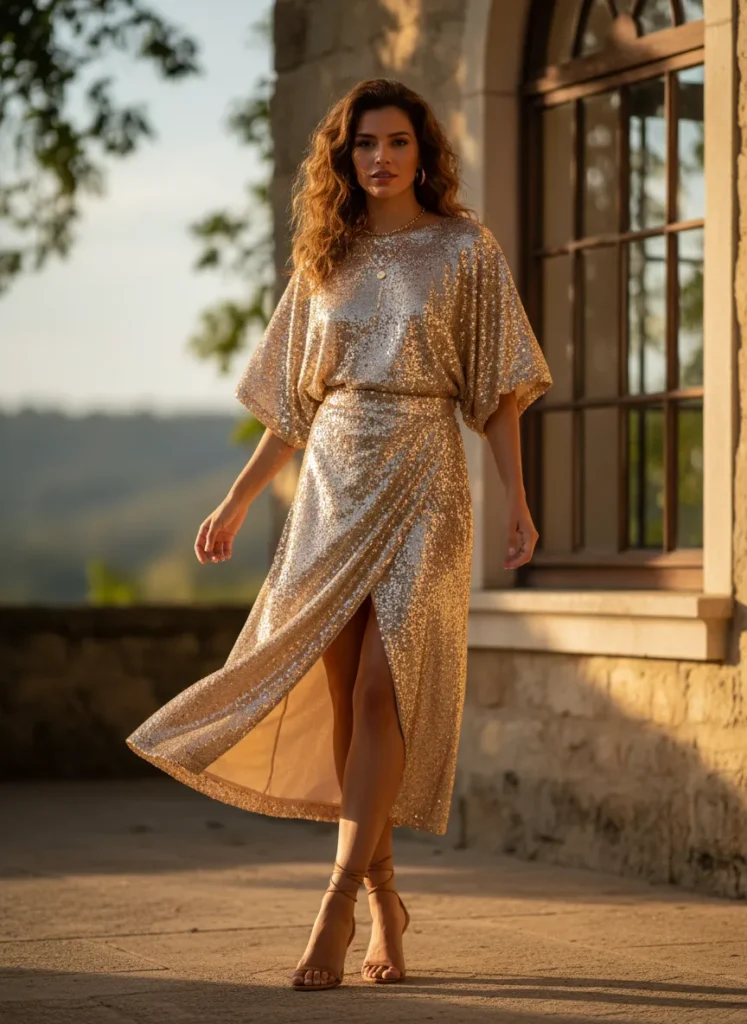
Sequins intimidate a lot of people because they’re associated with New Year’s Eve or stage performances. But a well-cut gold sequin set, worn with flat sandals and no statement jewelry, reads more “fashion-forward” than “going to prom.” The key is contrast. Dress down the sparkle so the outfit feels balanced.
Stick to one sequin piece at a time if you’re new to the look. A sequin top with wide-leg trousers works better for most occasions than a full head-to-toe look. Save the matching set for events where you actually want to be noticed.
3. Samba Outfit Looks That Work for Curvy Body Types
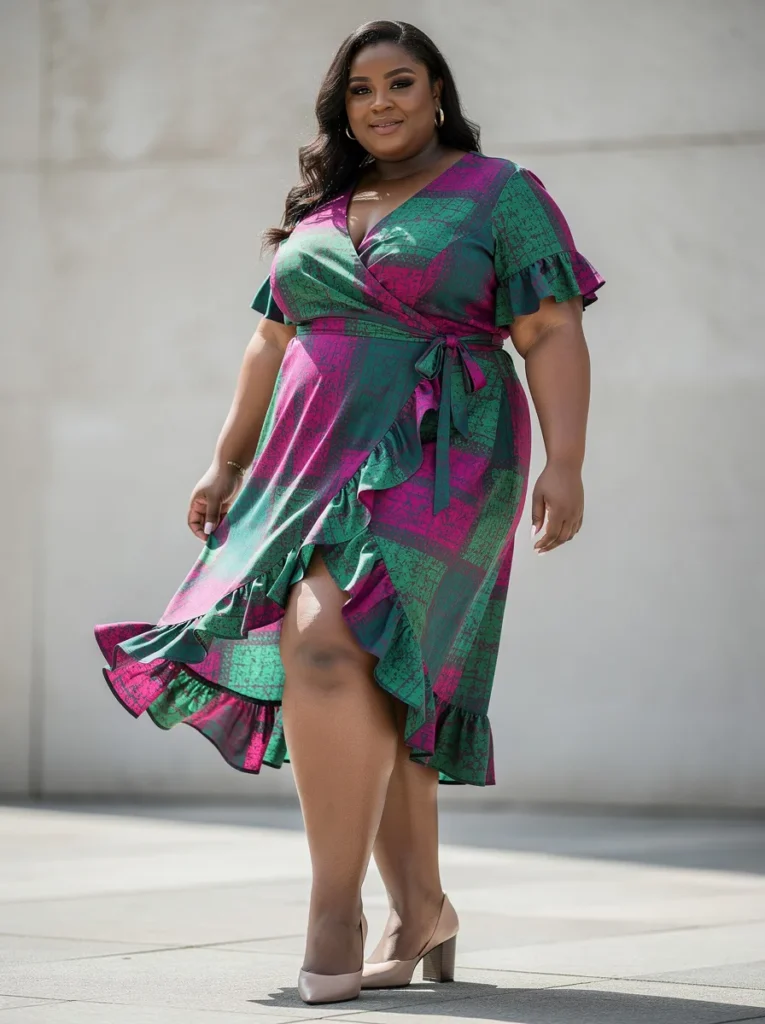
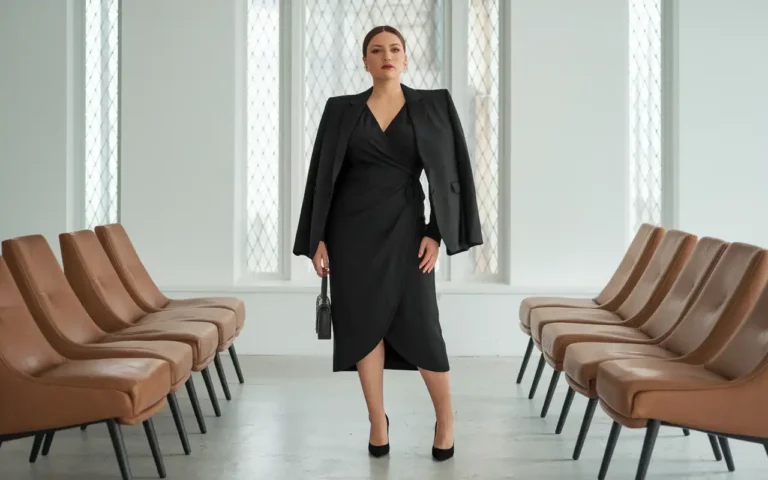
Wrap silhouettes are consistently the most flattering cut for curvier frames because they follow your actual shape instead of fighting it. A ruffle hem adds visual interest at the bottom, which balances wider hips rather than drawing attention to them. You’re not hiding anything. You’re just choosing cuts that work with your proportions.
Block heels give you height without sacrificing stability, which matters when you’re dancing or standing for long periods. If you want to add color, go jewel tones like deep teal, burgundy, or cobalt. These read as intentional and polished, and they photograph beautifully in both indoor and outdoor settings.
4. Two-Piece Sets That Look Expensive on Any Budget
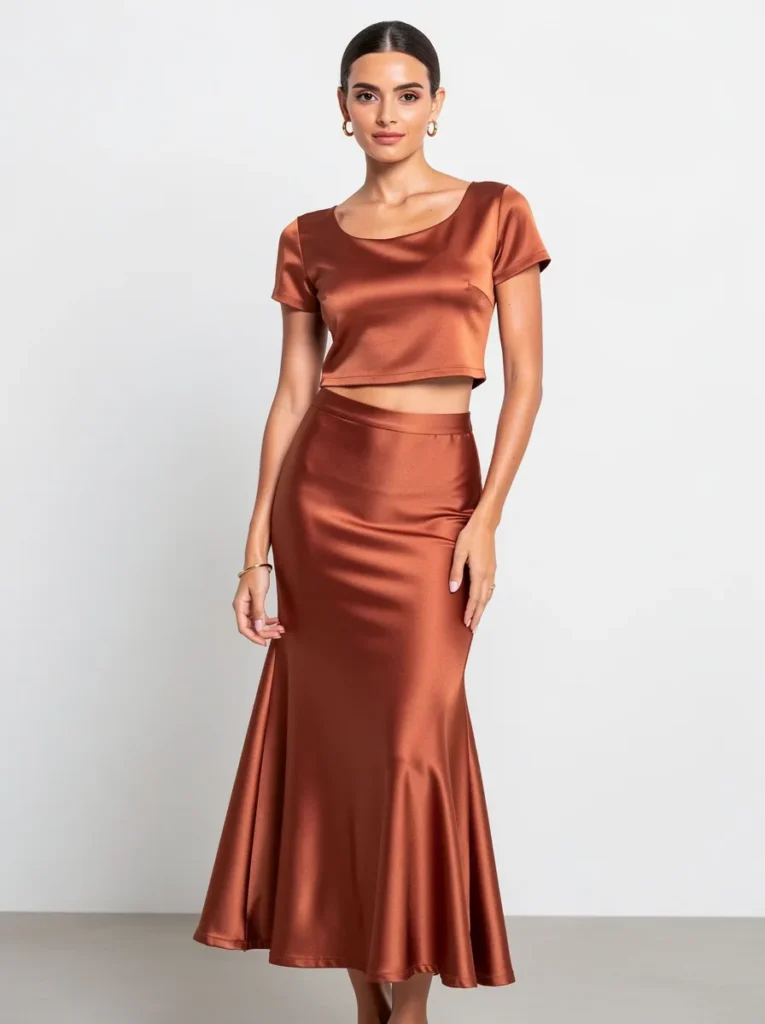
Matching sets look put-together without much effort, which makes them a strong choice when you want a finished look but don’t have time to style every piece separately. Terracotta, burnt orange, and warm coral all photograph well and sit in the color family most associated with Latin dance aesthetics.
The fit matters more than the price. A $30 set that fits your waist and hips correctly will look better than a $150 set that pulls or gaps. If you’re shopping online, check the size chart and read reviews from people with a similar body type before ordering.
5. When to Wear Feathers (and When to Skip Them)
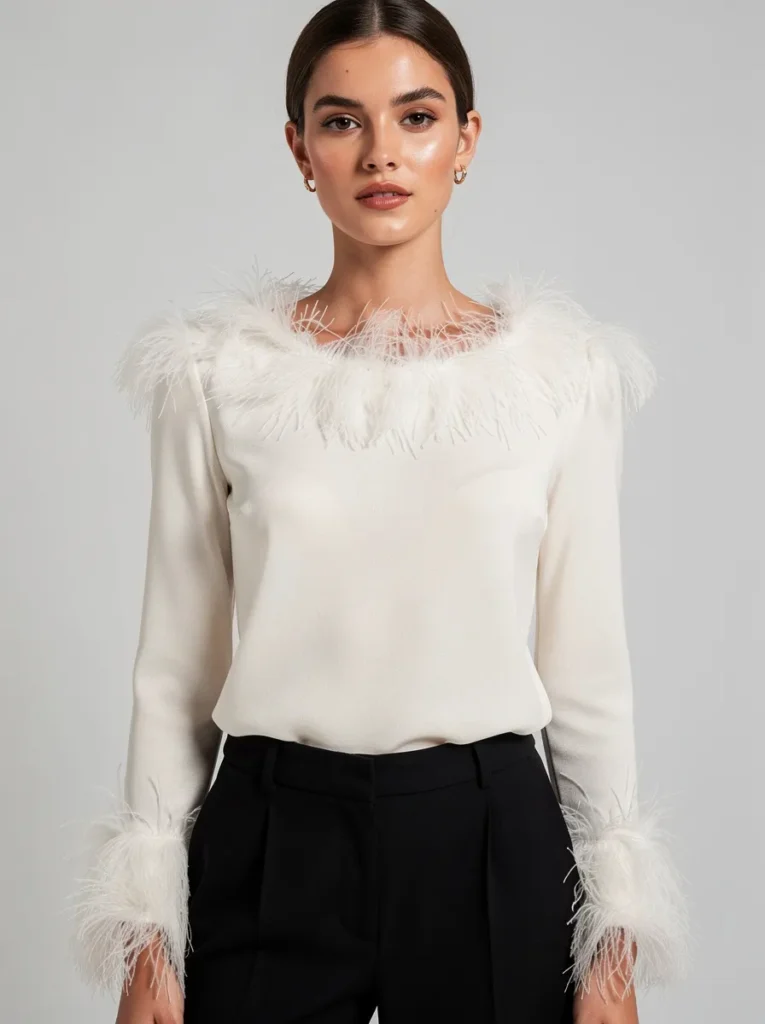
Feathers work best when they’re used in one specific spot: collar, cuffs, or hem. Wearing them in multiple places at once tips the look from fashion into costume territory, which is rarely what you’re going for outside of a performance. Choose one focal point and keep everything else clean.
Ivory and white feather trims photograph better than colored ones in most lighting conditions. If you’re wearing feathers to an event, avoid sitting near candles or open flames, and be prepared for them to shed slightly throughout the evening. It happens with even high-quality pieces.
6. Bold Color Combinations That Actually Work Together
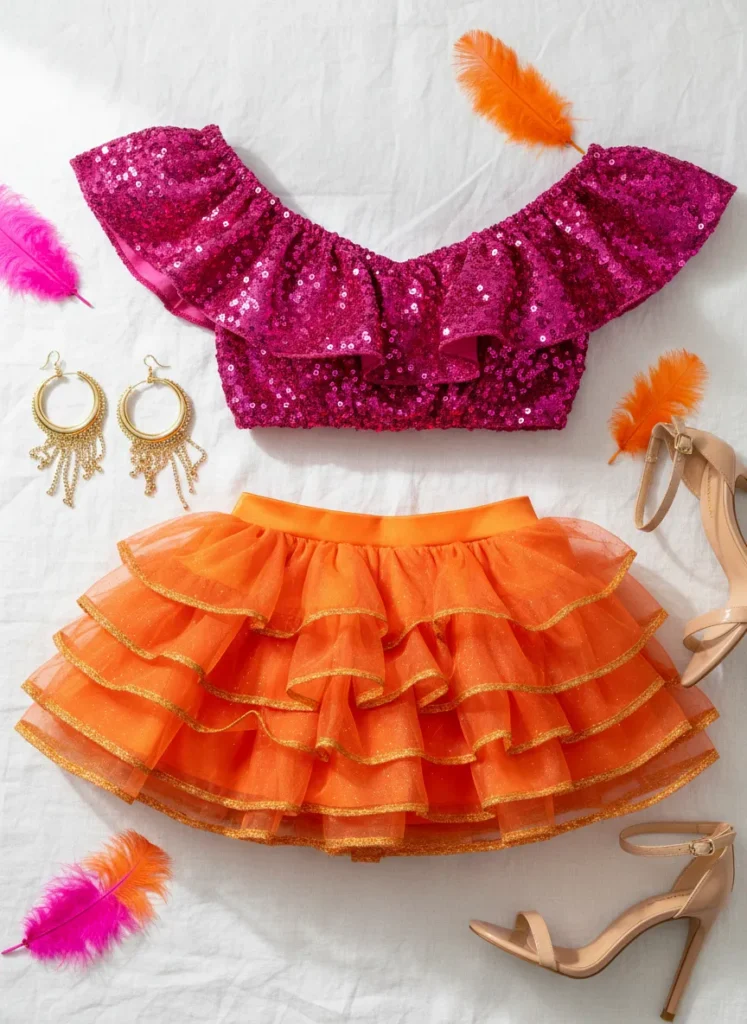
Color-blocking works when the colors you choose share a similar level of saturation. Bright pink and bright orange are both high-intensity colors, so they pair without one washing out the other. Mixing a bold color with a muted one often looks unintentional, even if it wasn’t.
Use accessories as your buffer. Nude heels and gold jewelry act as neutrals between two strong colors. If you’re unsure whether a combination works, photograph the outfit before you leave. Your eye catches things on a screen that it misses in a mirror.
7. Styling Ruffle Skirts for Movement and Photos
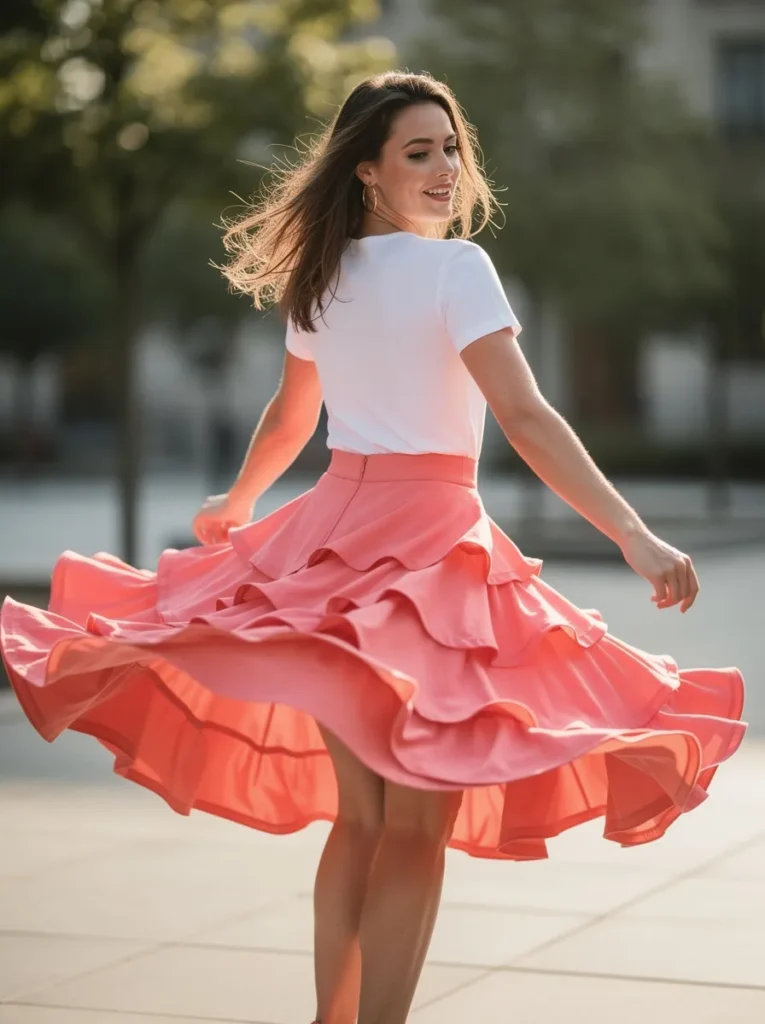
Ruffle skirts were made to move. The tiered construction means that even a small turn or spin fans the fabric outward, which makes for strong photos whether you’re shooting intentional content or just capturing a candid moment. For the best visual effect, spin toward the camera, not away from it.
Keep the top fitted and tucked to balance the volume of the skirt. A loose top with a ruffle skirt adds bulk in the middle and disrupts the proportions. Opt for a bodysuit or a fitted crop top instead. This keeps the waist defined without requiring any extra effort.
8. What to Wear If You Want the Look Without the Fringe
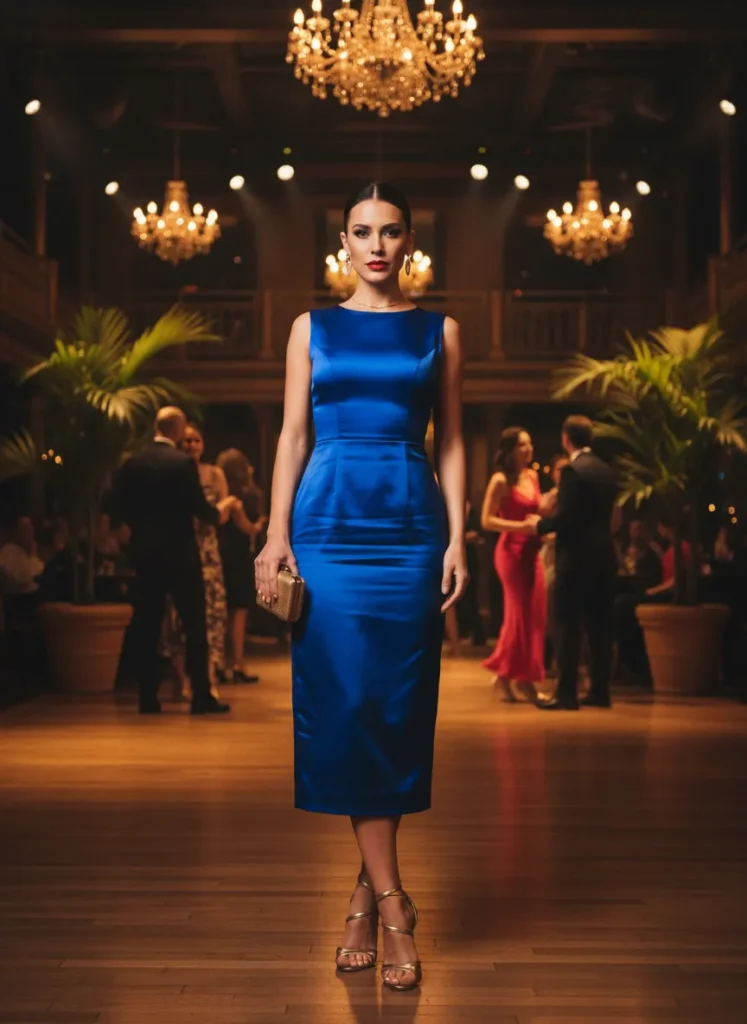
Fringe is the most recognizable part of the samba aesthetic, but it’s not the only way to get the look. A well-cut satin dress in a strong color, royal blue, deep red, or emerald green, reads as dance-inspired without the fringe movement. The color does the work instead.
Satin is forgiving on camera because it reflects light naturally. You don’t need additional shimmer or embellishment. If you want to add texture, a beaded clutch or strappy heel with metallic hardware is enough. Keep the silhouette clean and the color doing the talking.
9. The Role of Heels in Getting the Silhouette Right
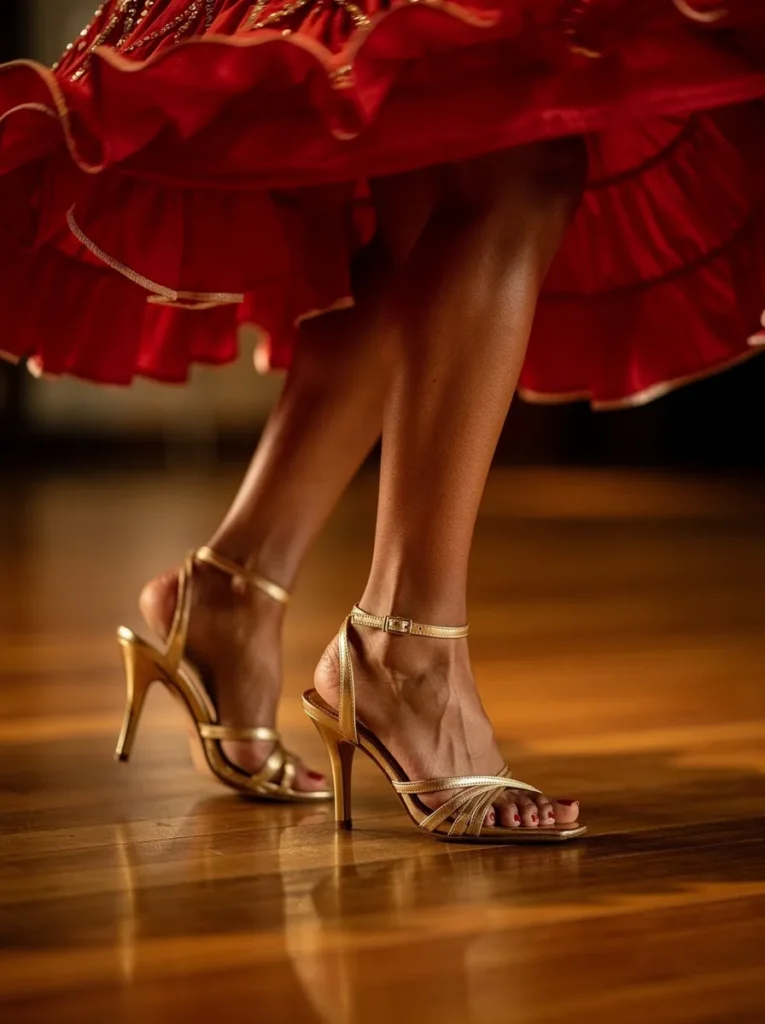
The heel you choose changes the entire proportion of the look. A chunky platform adds height but can make the silhouette feel heavier. A thin stiletto elongates the leg but isn’t always practical. For most samba-inspired outfits, a strappy mid-height heel, around 3 inches, hits the best balance.
Gold and nude are the most versatile options because they don’t compete with bold dress colors. Black heels work but can visually cut the leg at the ankle, which shortens the silhouette. If you’re wearing a hem that hits at or below the knee, nude is almost always the stronger choice.
10. How Petite Women Can Wear Bold Looks Without Feeling Overwhelmed
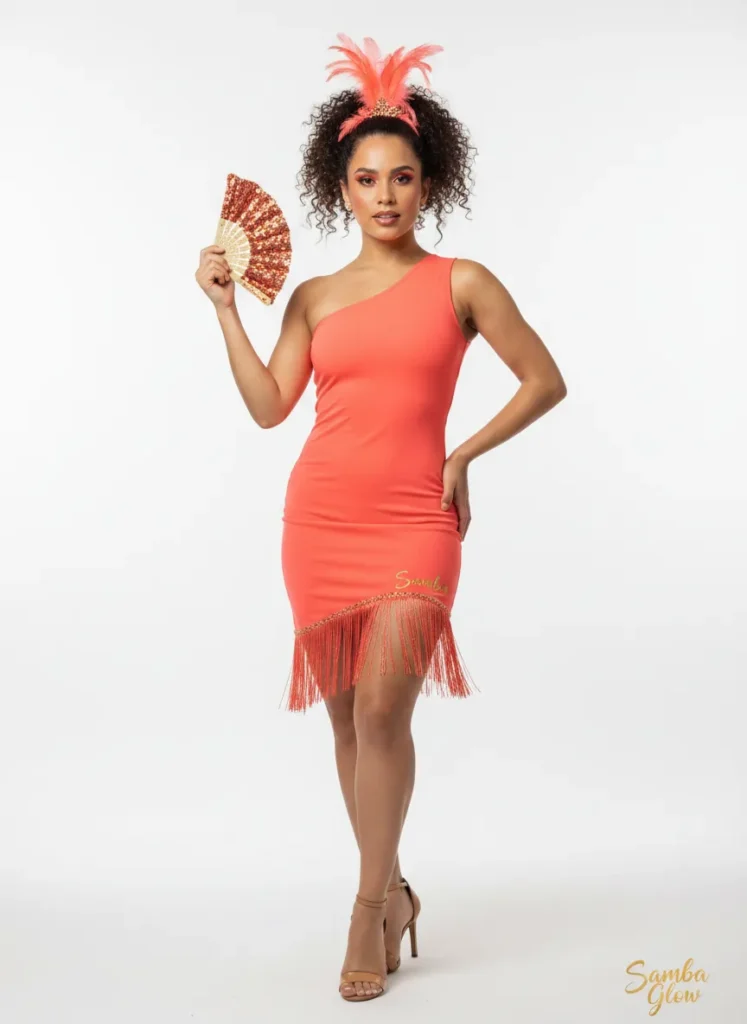
The main challenge for petite women in bold outfits is proportion. Too much fabric or too many details and the look wears you instead of the other way around. A one-shoulder mini dress solves this cleanly: it gives the eye something to focus on at the neckline while keeping the hemline short to show leg.
Avoid wide belts, oversized accessories, or anything that visually cuts your torso in half. Nude heels that match your skin tone create a longer leg line, which adds height without a platform. The goal is a clean, uninterrupted line from shoulder to toe.
11. The Best Fabrics for a Samba-Inspired Look
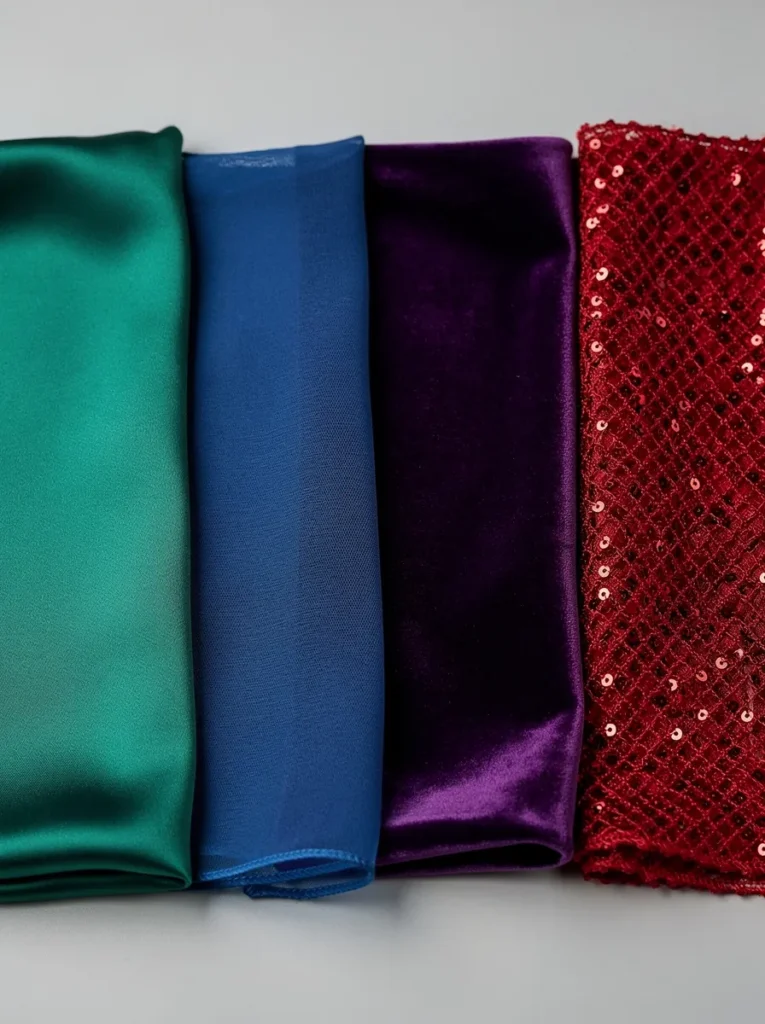
Fabric choice affects how your outfit moves, photographs, and feels after two hours of wear. For samba-inspired looks, four fabrics consistently perform best:
- Stretch satin: Moves smoothly, reflects light well, holds its shape through movement.
- Chiffon: Lightweight, creates natural flow and volume without adding bulk.
- Sequin mesh: Adds sparkle without the stiffness of solid sequin panels.
- Stretch velvet: Rich texture, holds color depth well in low light, comfortable for extended wear.
Avoid stiff cotton or rigid structured fabrics. They don’t move the way the aesthetic requires, and they photograph flat under stage or event lighting.
12. How to Accessorize Without Overdoing It
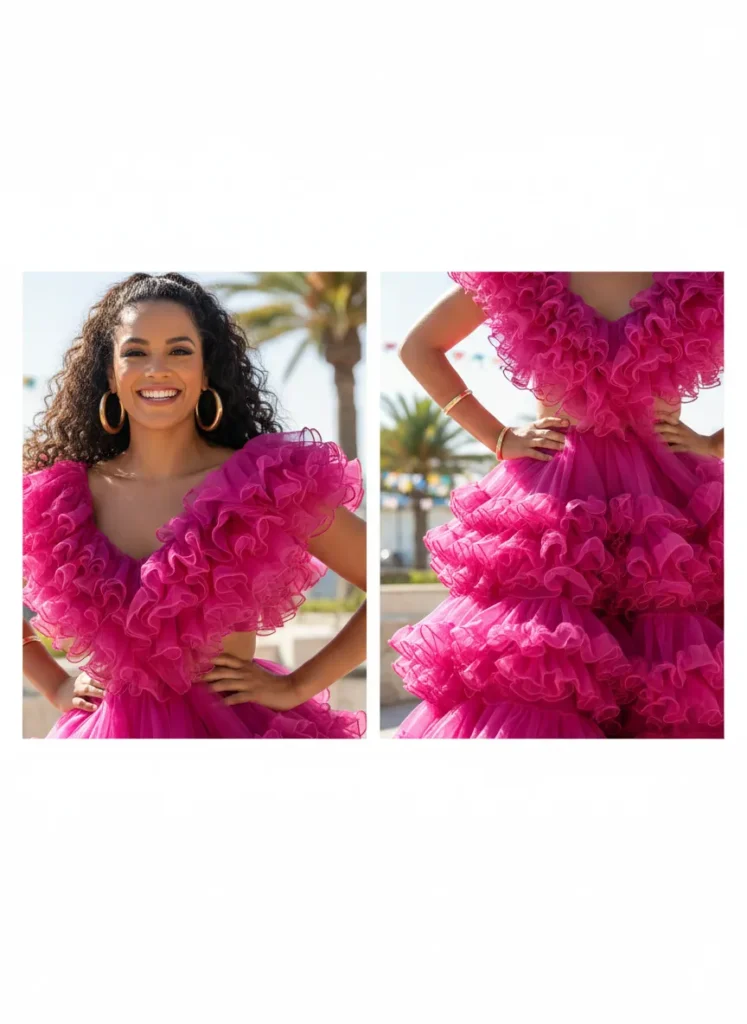
When the outfit is already doing a lot, the accessories should stay quiet. One pair of earrings and one bracelet is usually enough. Adding a necklace, rings, statement earrings, and a bold bag all at once creates visual noise that takes away from the outfit itself.
Choose accessories in one metal tone and commit to it. Gold works with warm tones like red, orange, coral, and yellow. Silver reads better with cooler tones like cobalt, emerald, and icy pink. Mixing metals is fine in everyday looks but can feel chaotic in a bold outfit that already has strong color.
13. Outfit Ideas for Women Who Prefer Modest Coverage
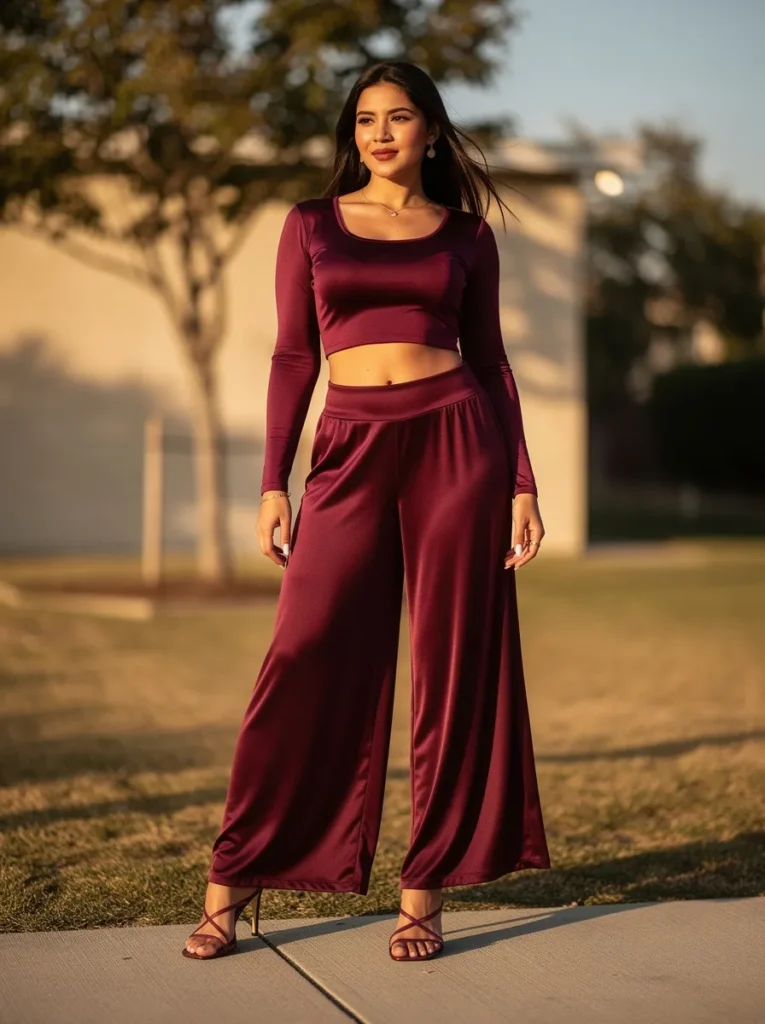
Coverage and bold style are not mutually exclusive. A matching palazzo set in a rich jewel tone reads as intentional and striking without showing much skin. The wide leg creates visual drama and movement, especially in lightweight fabrics that catch the air when you walk.
Long sleeves work here because the rest of the outfit is fitted and structured. The proportions stay balanced. If you want to add color contrast, a bright strappy heel is enough. You don’t need to cut out the neckline or shorten the hem to make the look feel fashion-forward.
14. Samba Outfit Colors That Photograph Best
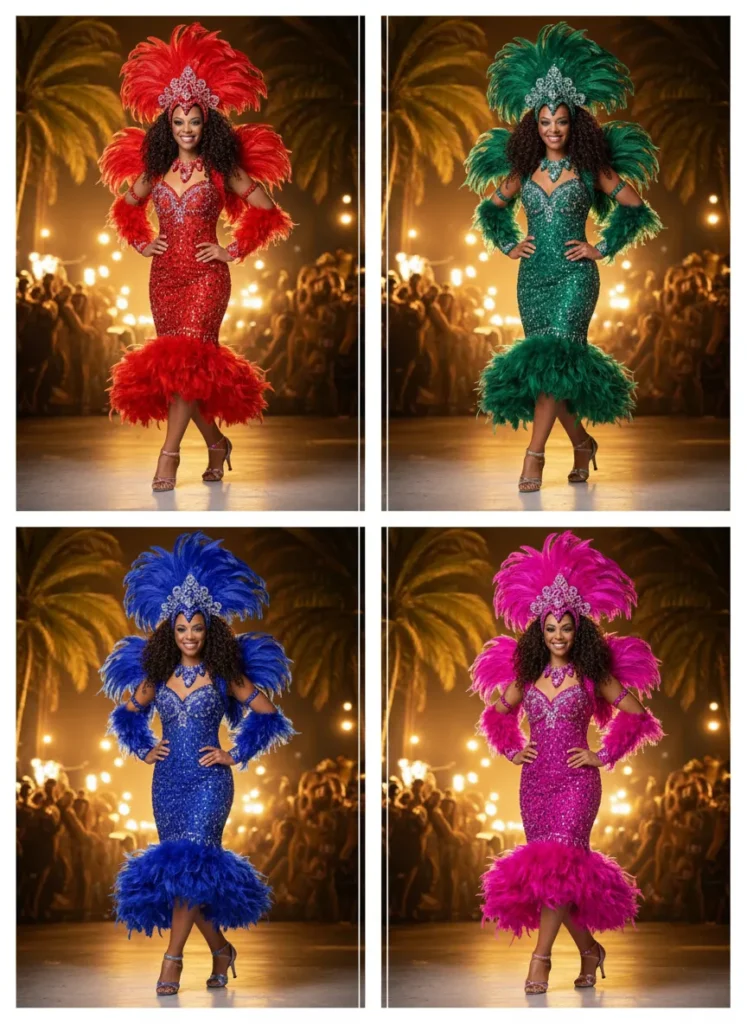
Not every color performs the same on camera. Some look vivid in person and wash out in photos. Others that seem too bold in a mirror translate perfectly under venue or outdoor lighting. The colors that consistently photograph best are:
- Red: High contrast against most backgrounds, reads as bold without needing embellishment.
- Emerald green: Rich and saturated, holds depth in low light.
- Royal blue: Photographs cleanly, works in both natural and artificial light.
- Fuchsia: High visibility, stands out in crowd shots and close-ups alike.
Avoid pastel versions of these colors if you’re shooting under warm or dim lighting. They tend to grey out and lose their impact.
15. Going From Practice to Party in the Same Outfit
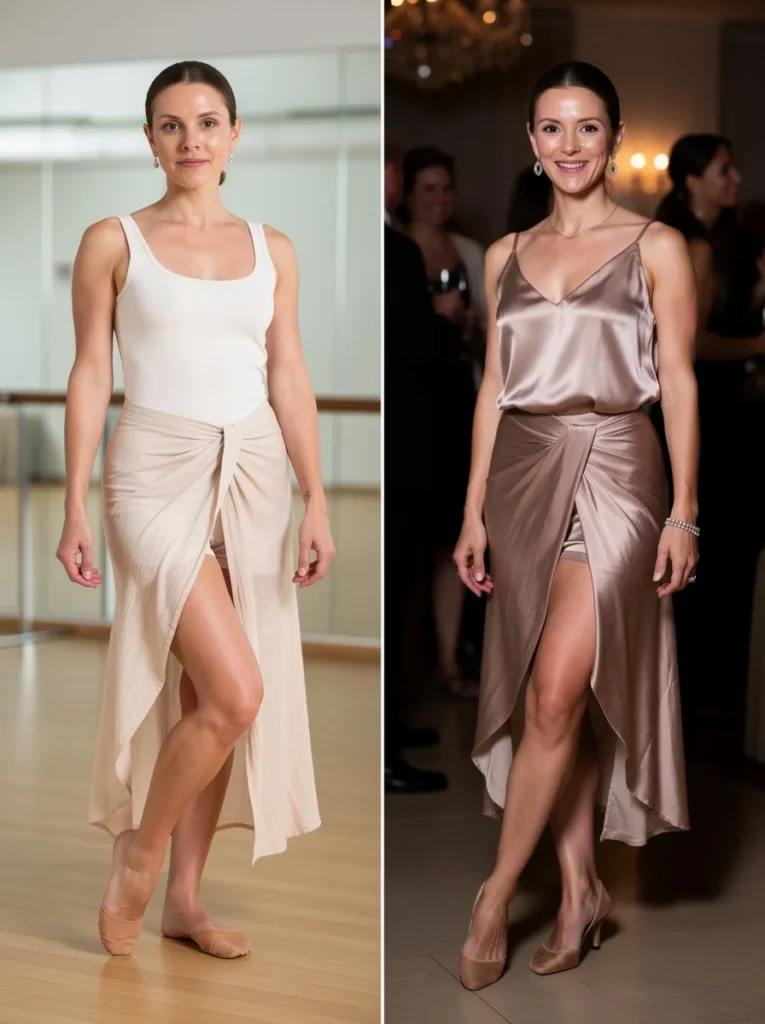
A wrap skirt is one of the most practical pieces in this style of dressing because it transitions cleanly between settings. In a dance studio or rehearsal, pair it with a fitted tank and flats. For an evening out, swap to a satin or metallic top and heels. Same skirt, different context, two complete looks.
This approach works best when the skirt is in a neutral or versatile color: black, deep red, or navy. These tones pair with a wider range of tops and don’t read as too casual or too formal in either setting. One skirt, built into the rotation, pulls consistent weight in your wardrobe.
16. What Real Dancers Wear Versus What’s Sold as “Samba Style
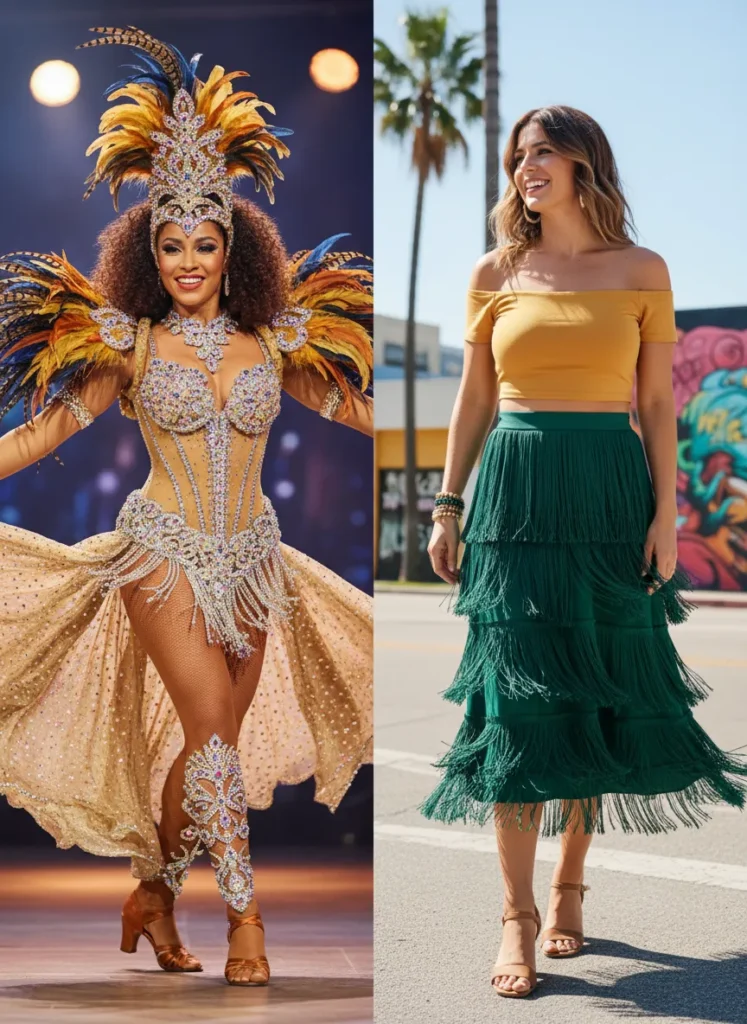
There’s a real gap between performance costumes and wearable samba-inspired fashion. Competition costumes are built for visibility under stage lighting at a distance. They’re heavily embellished, structurally reinforced, and designed to hold a specific shape through demanding movement. They’re not streetwear.
Wearable samba style borrows the color, movement, and energy of dance fashion without the construction. Fringe skirts, bold colors, and fluid fabrics capture the aesthetic. You don’t need rhinestones sewn into a boned bodice to get the look. Simpler pieces, well-fitted and correctly colored, will always read better in real life.
17. The Best Samba Outfit for a Themed Party or Event
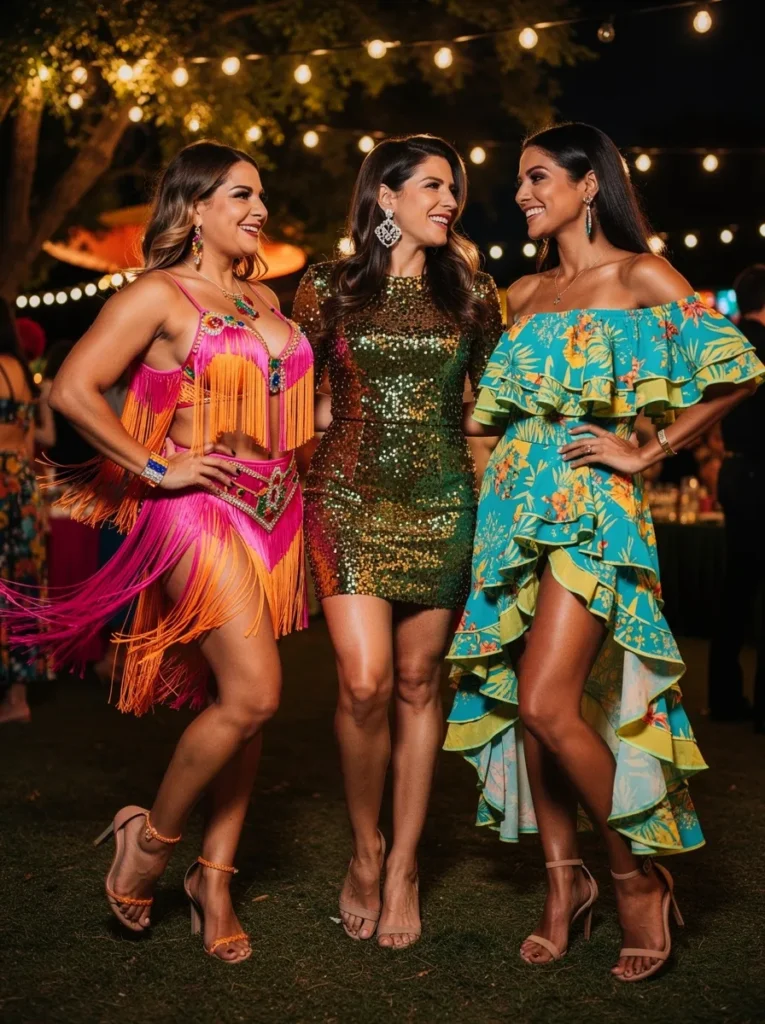
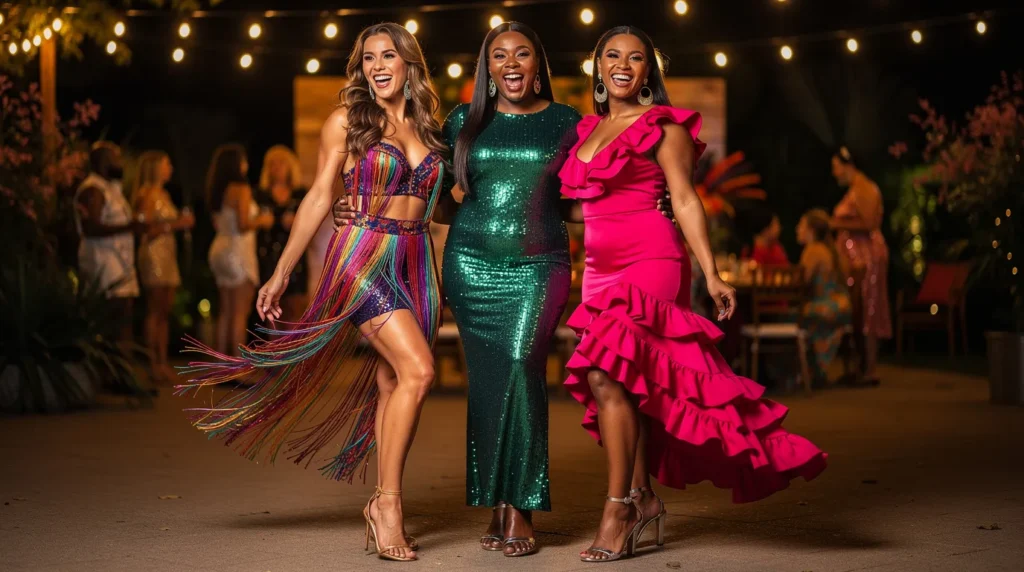
Themed events give you permission to commit to the aesthetic without second-guessing. For a themed party, the fringe dress, the sequin two-piece, and the ruffle midi are all appropriate. The only mistake is going too understated and not leaning into the theme at all.
If you’re going as a group, coordinate by color family rather than matching exactly. Three people in different shades of red and gold look intentional. Three people in the exact same dress look like a uniform. Give each look a distinct piece: one does fringe, one does sequins, one does ruffles. Same energy, different execution.
18. How to Dress for a Samba Class Without Standing Out for the Wrong Reasons
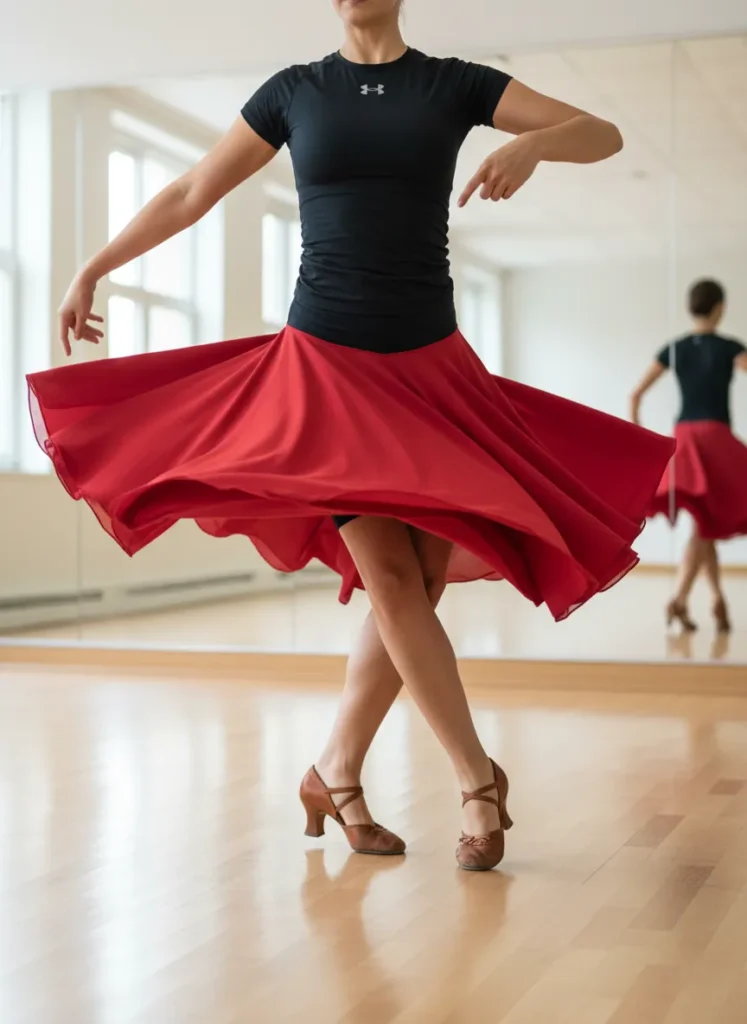
A samba class is not a performance. Dressing too elaborately on day one signals you misread the room, and dressing too casually in stiff denim or restrictive clothing makes it harder to move and learn. The right balance is practical but intentional.
- Practice skirt with shorts underneath: Gives you the visual of a skirt while keeping you covered during spins and footwork.
- Fitted athletic top: Lets the instructor see your posture and shoulder alignment.
- Character heels or Latin dance shoes: Not required but strongly recommended. They change how you hold your weight and make learning footwork easier.
Save the full performance look for showcases or social dances, not your first Tuesday evening class.
19. How to Shop for These Looks on a Real Budget
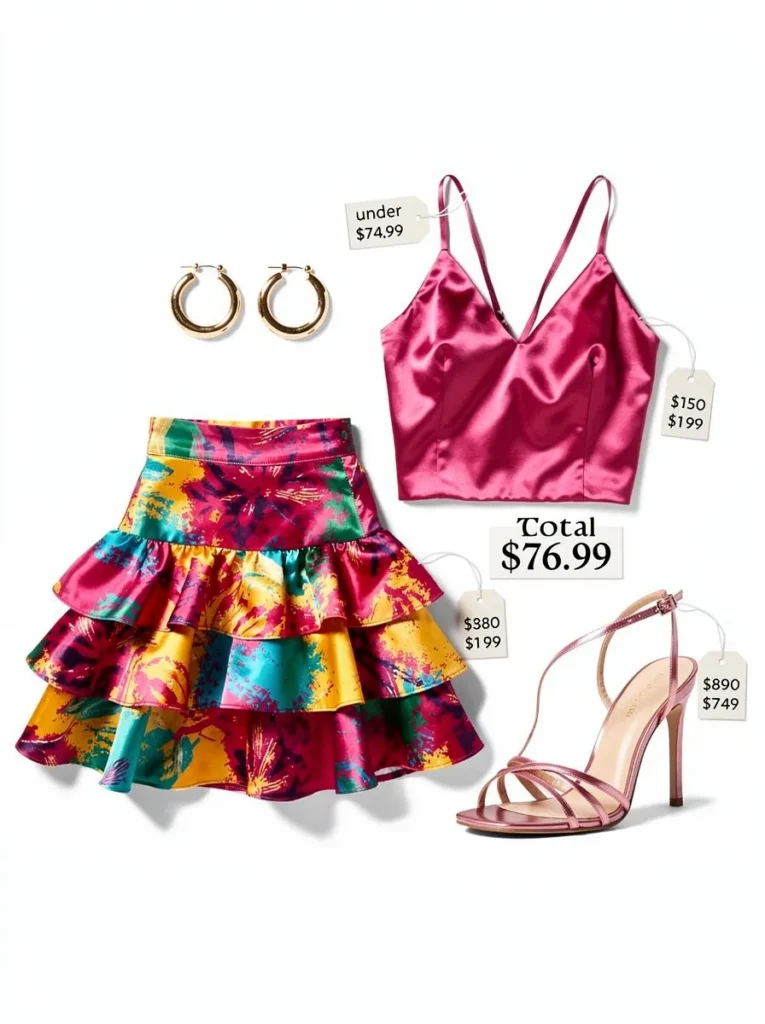
You don’t need to spend $300 to pull off a strong look. Budget retailers like Shein, ASOS, and Zara consistently carry fringe skirts, ruffle dresses, and satin separates at accessible price points, often under $40 per piece. The key is knowing what to prioritize.
Spend slightly more on footwear and fit. A $15 dress that fits poorly looks cheap. The same dress in the right size looks intentional. Order one size up if you’re between sizes for skirts and dresses, as Latin and dance-inspired styles tend to run small through the hips. Read reviews specifically from people who mention body shape, not just general praise.
20. Prints That Work and Prints That Don’t
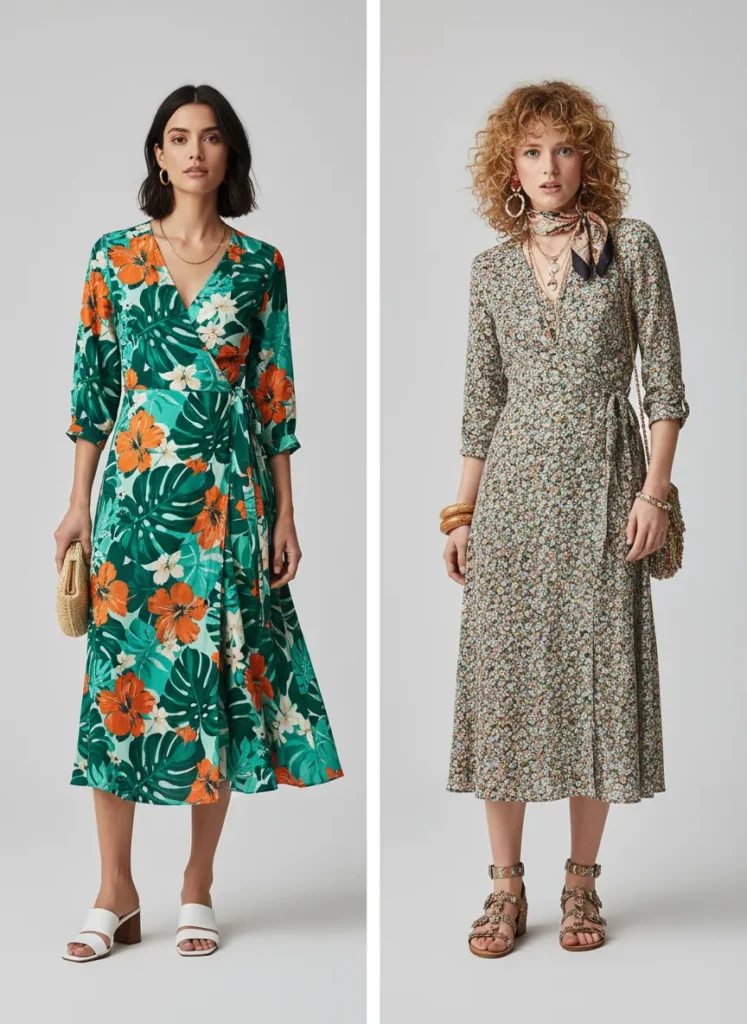
Large-scale prints read as bold and intentional. Small, busy prints tend to disappear or look cluttered, especially in photos or from a distance. For a samba-inspired look, go for prints with clear shapes and strong color contrast: tropical florals, abstract color blocks, or geometric patterns in two or three colors.
Avoid prints that mix too many colors or have a repeating small motif. They photograph as visual noise and compete with the movement of ruffles or fringe. If the print already has a lot going on, pair it with solid accessories in one of the colors already in the fabric. This ties the look together without adding more competing elements.
Conclusion:
Finding a samba outfit that fits your body, your budget, and the occasion you’re dressing for takes more thought than most style guides admit. The 20 looks covered here give you a starting point that’s actually usable. Pick two or three that match what you already own, build from there, and stop second-guessing every piece. Style gets easier when you stop chasing trends and start buying pieces with a clear purpose.